Showing posts with label Trip Report. Show all posts

Friday, November 16, 2018

Trip Report: Zilker Botanical Garden

While we were in Austin we visited Zilker Botanical Garden. There was a special event going on while we were there with local vendors with art, plants, and other things for sale. One of the vendors was a local nursery that had some rare plants for sale, including a small Frankincense tree about 6 inches tall, selling for $250! I talked to the owner and he said that it was a cutting from their parent plant, which isn't very large and that the cuttings are difficult to root. I bought a small Curry Tree for $6 for my friend who had been looking for one of these for years.

The sun shines brightly through the canopy,
nearly preventing us from seeing the dino statue across the lotus pond.

Ammonite fossils are used as paving stones by the lotus pond.

Posing in front of a waterfall in the Prehistoric Garden


Alligator Plant (Acanthus montanus)

We really enjoyed the Hartman Prehistoric Garden, which consists of plants from families that have been on earth for millions of years: cycads, ferns, palms. This garden was inspired by dinosaur tracks and an ancient turtle fossil that were found inside the gardens in 1992. At one spot there are paving stones that are actual ammonite fossils, which is really cool. They also have a bronze dinosaur statue in view across a pond.

Southern Dogface (Zerene cesonia) enjoying a Coreopsis

American Snout (Libytheana carinenta) enjoying a Coreopsis

The butterfly garden was rather unkempt looking, but the bushy flowering plants were absolutely covered in butterflies enjoying the nectar. I think most of the plants were Blue Mistflower (Conoclinium coelestinum). We saw at least 10 species, likely a few more: Queens, American Snouts, Sachems, Gulf Fritillaries, Red Admirals, Monarchs, Pipevine Swallowtail, White-striped Longtail, Southern Dogface, and a couple of Skippers I didn't identify.

Queen (Danaus gilippus) butterfly enjoying some nectar
from the Blue Mistflower (Conoclinium coelestinum)

Queen (Danaus gilippus) butterflies enjoying... each other.

A few other quick things to note:

Coral Fungi, probably from the genus Ramaria

This is not a plant, but I have admired photos of Coral Fungi before but not seen one in person. Along the path in one part of the gardens I noticed a bunch of these on the ground. So beautiful!

A real rock turned into an outdoor light along the pathway

The gardens have these really cool lights along the path. They were not illuminated while we were there visiting in the daytime, but I noticed one when I was bent down inspecting the fungi. They are actual rocks - not those fake plastic ones - that have been cut in half and had lights installed in them. What a cool idea!

Thaumatophyllum bipinnatifidum mislabeled as both a Philodendron (almost right) 
and a Monstera (definitely not right).
It's not unusual to find plants mislabeled in a botanic garden, but it still surprises me every time I see it... In all fairness, this plant used to belong to the genus Philodendron and only recently moved to the new genus of Thaumatophyllum. But still, Monstera deliciosa is a very different plant and in a separate genus.

Tuesday, November 13, 2018

Trip Report: Treaty Oak

For my birthday weekend my wife and I went down to Austin for a few days sans kiddos. Our itinerary was mostly made up of places to eat and a few activities sprinkled in between. On Sunday morning we visited a famous tree, Treaty Oak, which my wife remembered having visited when she was young. This oak tree is thought to be about 500 years old and is the only member of a group of 14 trees that once stood in this location in what is today downtown Austin. In 1989 someone poisoned the tree and severely damaged it. That is when my wife traveled with her family to see it. Thankfully the tree pulled through and still stands.

My wife at Treaty Oak in downtown Austin
The plaque reads:
The Caldwell Treat-Oak Park
Estimated to have been a majestic tree of about 100 years when Columbus first landed on North American shores, this live oak tree has been pronounced the most perfect specimen of a tree in North America, and its picture hangs in the Hall of Fame of Forestry at Washington.
Formerly standing as the center of a group of trees called "The Council Oaks," this tree takes its name from its role in the history of the Lone Star State. Stephen F. Austin is reputed to have signed the first boundary line agreement between Indians and whites under the canopy of its branches; battles and important conferences have been planned, pacts signed, and feasts and religious ceremonies celebrated in its shade.
The Treaty Oak was purchased by the City of Austin in 1937 to stand as a living and fitting symbol of the mighty state it has watched develop.
We were both surprised to see how much of the tree lies on the ground. I don't know if this is characteristic of the species (Texas Live Oak, Quercus fusiformis), or if it has more to do with the vandalism, or the age of this particular tree.

Treaty Oak acorns

While we were visiting the tree I noticed some acorn caps on the branches at eye level and realized there must be some dropped acorns nearby. We searched around and found 5 that were brown and "ripe." I brought these home and soaked them in a bowl of water to see if any floated, which means the acorn is not viable. They all sunk and I decided I would plant them the next day. But I forgot.

Treaty Oak acorn beginning to germinate
More than a week passed before I noticed the bowl of acorns! I was worried at first when I saw they looked different, but on closer inspection I realized they were sprouting. I went ahead and potted the five acorns and watered them well (since they were used to being saturated and seemed happy with the situation). If I am successful I will have some offspring from a famous tree, which is kind of fun. Updates to come!

Monday, August 27, 2018

Trip Report: Exploring Austin, part 4

I've written about finding interesting Bauhinia, Catalpa, and Persimmon trees in the Austin area in previous posts.

Mexican Buckeye (Ungnadia speciosa)
On my first morning in Austin I went to a small natural area known as Stillhouse Hollow Nature Preserve, nestled into a neighborhood. The sign at the entrance told about an endangered species, the Karst Invertebrate, which lives in limestone caves. This area is also home to the endangered bird species Golden-cheeked Warblers and Black-capped Vireos. There is a nice path through this park and then an overlook. Near the overlook are signs asking that people stay on the path and respect the native flora and fauna, one of which is this endangered species living underground. I would have loved to explore off the path and find this little cave dweller, but I stuck to the rules and observed from the path only.

Mexican Buckeye (Ungnadia speciosa) seed pod
One item of interest off the path and out of reach was a shrub that had distinct seed pods. After using iNaturalist to identify this as a buckeye I assumed this was a species that I had seen in bloom once or twice before, one of the Aesculus genus. However, I learned that this was a Mexican Buckeye (Ungnadia speciosa). Thankfully even though this plant was well off the path, I came across this plant at nearly every other park I visited in the Austin area and was able to collect seeds from other plants.
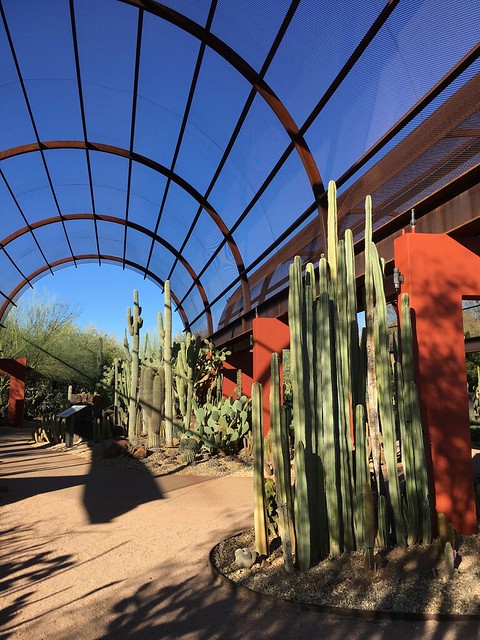
Photo by iNaturalist observer caliche_kid.
I researched germination methods for each of the species I brought home. Most require some form of cold stratification and spring planting. This species was the exception, suggesting germination of fresh seeds. I went ahead and planted some of the seeds, setting aside some others to try in the spring if this first batch wasn't successful. In the week after planting the seeds we had consistent rains every few days - unusual for August. After just 10 days I noticed that the seeds had sprouted and were growing vigorously.

Mexican Buckeye (Ungnadia speciosa) seedlings - off to the races!
10 days after planting
Mexican Buckeye (Ungnadia speciosa) seedlings.
15 days after planting.
I'm not exactly sure where I will plant these bushes. From what I can find online they are probably only hardy in zones 8 and greater, but I think my parents' land near Lake Texoma (zone 7b) might work. I'll probably wait to see how many plants I have. If I have plenty then I'll test some in that climate and keep others potted in my greenhouse as insurance.

Friday, August 24, 2018

Trip Report: Exploring Austin, part 3

In my last two posts I talked about plants that I found along the Colorado River in downtown Austin.

On a different day I went to St. Edward's Park to do some birding and I noticed one tree had small green fruits on it - about the size of a pecan with it's outer green shell still attached. iNaturalist to the rescue again, I learned that this was a Texas Persimmon Tree (Diospyros texana). My admiration for native Persimmon trees is well known to readers of this blog, and I was very excited to learn that there is more than one species that grows natively in the United States. I saw a larger specimen of this tree when I visited Mayfield Park and Nature Preserve, this one marked with a placard.

Texas Persimmon at Mayfield Park and Nature Preserve


I also found this tree growing at Commons Ford Ranch Metropolitan Park. I collected a couple of fruits and harvested the seeds. Since I had good luck germinating some native persimmons last year, I am trying the same method: removing all fruit from the seeds, placing them in a pot of soil outdoors, and leaving them alone through the fall and winter. I may move this pot into a slightly warmer spot over the coldest part of the winter, just in case they aren't quite as hardy as I'm hoping, but I do want them to experience the cold they would naturally in the Austin area. Here are some photos of the fruits and flowers by other iNaturalist observers.

Photo by iNaturalist observer butterflies4fun.
Photo by iNaturalist observer manesalinas.

I've done some research on this species (good info here and here) and found that it is likely hardy where I live in central Oklahoma, so I plan to try growing in here. It is also a recommended species for greater landscaping use, being small, nicely formed, attractive bark, naturally feeding wildlife, and drought tolerant. As the placard mentions above, the fruit is small but edible. Hopefully I'll have a chance to try one some day.

Wednesday, August 22, 2018

Trip Report: Exploring Austin, part 2

In my last post I talked about finding a native species of Bauhinia along the Colorado River in downtown Austin.

Catalpa leaves and seed pods

Also along this path I came across a large Catalpa tree. I am familiar with these trees growing in Oklahoma. They are easily distinguished by their large leaves, showy flowers in the spring, and long green seed pods through the summer into the fall. The tree along the path was in seed pod stage and the pods were longer and more slender (pencil size or skinnier) than those I am used to seeing (finger size or thicker). Comparing images on iNaturalist and reading some articles online, I believe this is the Northern Catalpa (Catalpa speciosa), whereas the species I see at home is the Southern Catalpa (Catalpa bignonioides). This is a bit ironic since I am finding the northern species to the south of where I am used to seeing the southern species. Anyway, I believe this is correct.

Catalpa seed pods
True to form, I collected the seeds from these long seed pods shown in the photo and will plant them next spring.

I have a few more posts related to my time in Austin, so stay tuned!

Monday, August 20, 2018

Trip Report: Exploring Austin, part 1

I spent two weeks in Austin this summer, taking a training course to be a Red Hat System Administrator. In the evenings I traipsed around the metro area, birding in local parks and natural areas and doing my normal thing - observing and logging everything new species (to me) using the iNaturalist app.

I visited 10 different parks during my two weeks and covered a lot of ground. I observed a few new species of birds (Black-crested Titmice, Least Grebe, Pectoral Sandpiper), several new dragon/damselflies (Swift Setwing, Marl Pennant, Kiowa Dancer, Dusky Dancer, Checkered Setwing, American Rubyspot), several new plants, and even found a nice gastropod fossil. But this is a plant blog, so let me dive in to more detail about some of the plants.

Small bilobed leaves of the Anacacho Orchid tree (Bauhinia lunarioides)

Along the Colorado River in Austin there is a nice walking trail that is well used by locals walking their dogs, cycling, and jogging, as well as to observe bats at the Congress Avenue Bridge. (I sort of stumbled along this myself and was treated to quite the spectacle around sunset.) Along this path I came across a couple of really neat plants. The first was a small shrubby tree (probably about 6' tall and about the same width that was covered in opened seed pods. There was nothing too remarkable about the tree except that the seed pods had all split open in a spiraling fashion and they were pretty conspicuous. Upon closer examination I realized the leaves were the distinct shape of a Bauhinia, which greatly excited me. I took some photos and uploaded the observation to iNaturalist, which suggested the name of Anacacho Orchid (Bauhinia lunarioides), a native of central and southern Texas into northern Mexico. This species has small and deeply split leaves, almost appearing as two leaves. The flowers (which appear in the spring) are white (or occasionally pink) and showy. I don't have any of my own photos of flowers to show, but the photos below are from iNaturalist observations (here and here).
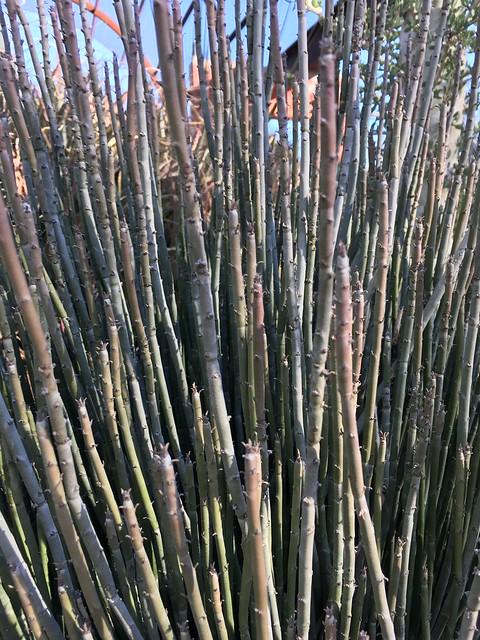
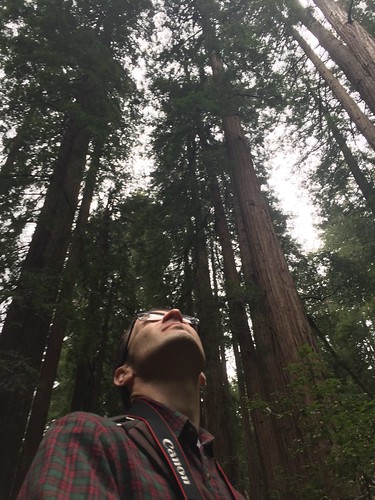
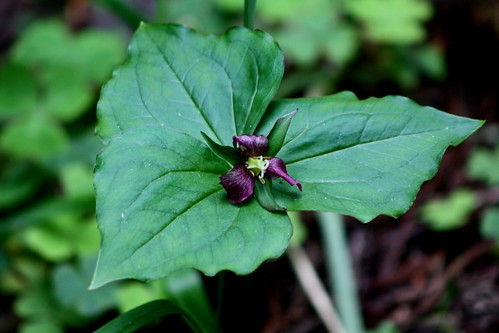
Photo by iNaturalist user anschad.

Photo by iNaturalist user johnkarges.

Of course I collected a handful of seeds and brought them home for experimentation. I have started other species of Bauhinia from seed and they have germinated easily and been a fairly easy plant to grow, although they are tropical and cannot winter outdoors in my climate. This species appears to be a little more hardy, but not enough (zone 8) to overwinter in central Oklahoma (zone 7). It's not clear to me whether the tree was growing naturally along the path or had been planted there. I'm guessing the latter but who knows?

Part 2 coming later this week!

Monday, February 12, 2018

Trip Report: Desert Botanical Garden

I recently traveled to Phoenix for work and managed to get some free time for exploring the Desert Botanical Garden, which was conveniently close to my hotel and the airport. Before going to Phoenix I looked for some good birding hotspots and was really excited to see that one of the best places to go birding in Phoenix is a botanic garden. Two birds with one stone! (plants and birds)

Untitled
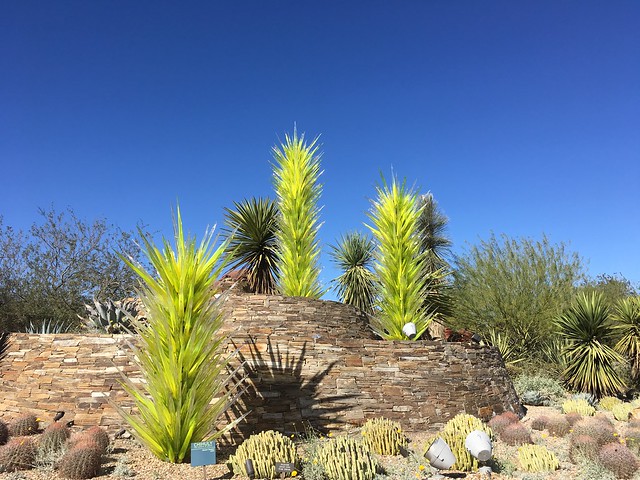
Chihuly glass at entrance

Untitled

While I'm at it - a bird in the hand is worth nothing compared to two birds in a bush! Who wants a bird in their hand? A bird in the bush is much easier to photograph, and you're photographing the bush at the same time! Plants and birds, that's what I'm talking about!

IMG_6921

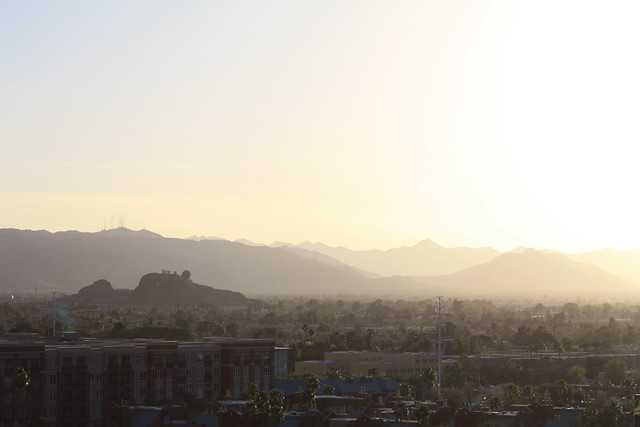
Phoenix is a beautiful city and I enjoyed it much more than I expected. I'm sure the 79 degree high temperature each day helped, almost 60 degrees warmer than back home.

Untitled

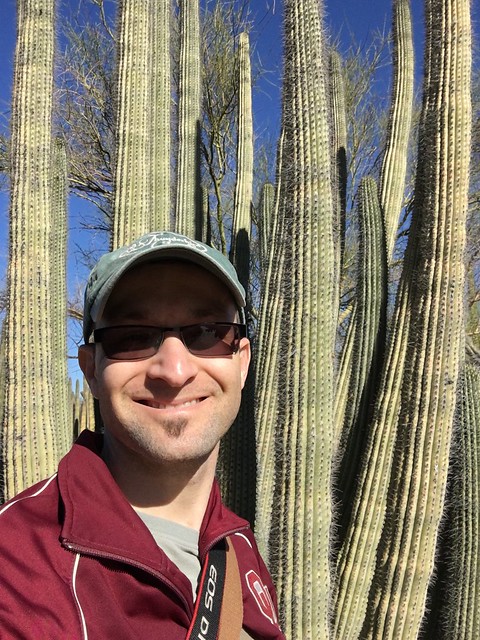
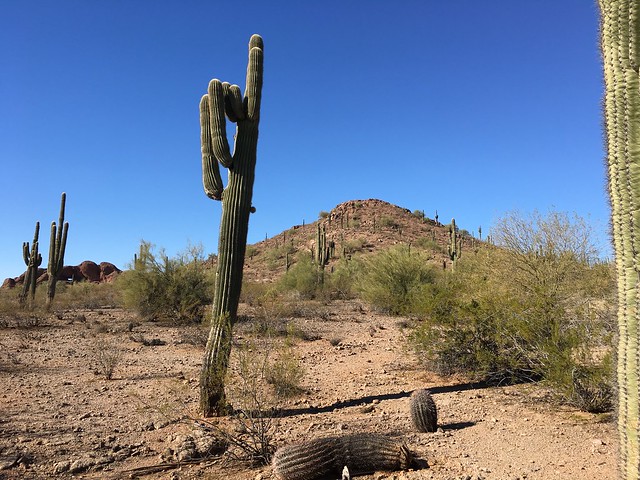
The Desert Botanical Garden is a beautiful, well maintained garden with lots of interesting plants. The entry garden is awesome and wandering just a bit further in there is a cacophony of sound - Gila Woodpeckers, Verdins, and Costa's Hummingbirds constantly trilling, chirping, and whistling. I really liked the Desert Wildflower Loop, which was particularly buzzing with hummingbirds. The Sonoran Desert Nature Loop is in more open scenery with many Saguaro cacti in sight.

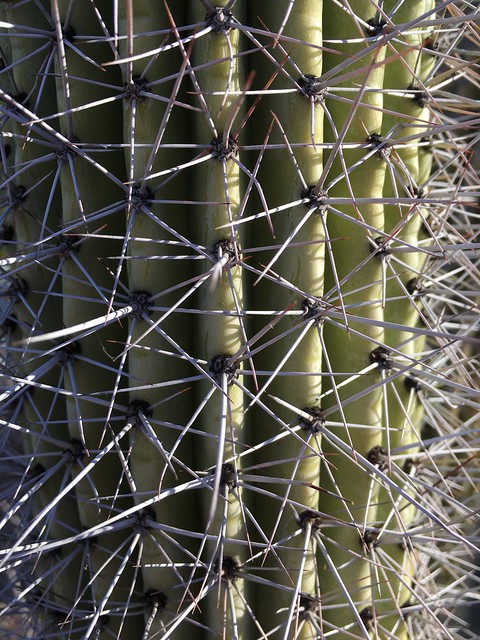
Saguaro

The Cacti and Succulent Galleries are made up of some large metal structures that provide shade and protection for some smaller and more tender plants, such as Lithops, Stapelia, Kalanchoe, and Aloe.

Untitled

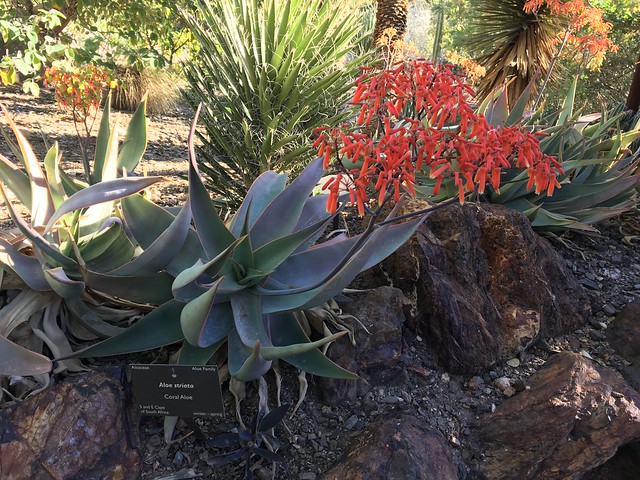
There were several Aloe in bloom while I was there. Their vibrant flowers contrasting with the wide solid green leaves are something to see.

Aloe striata - Coral Aloe

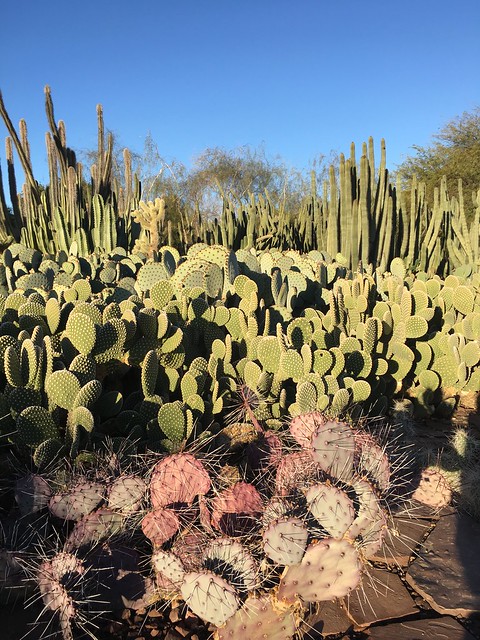
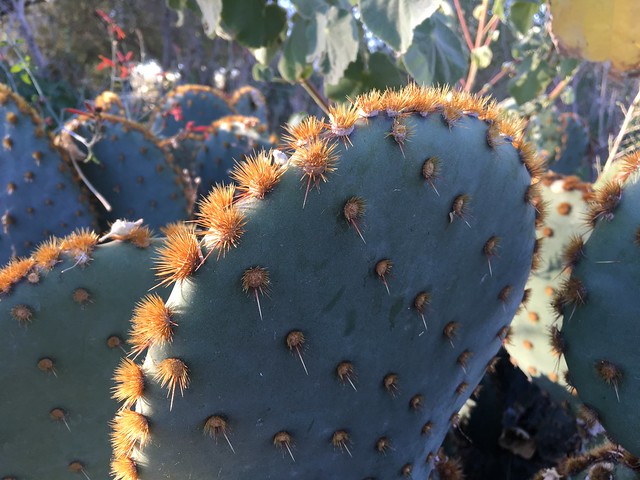
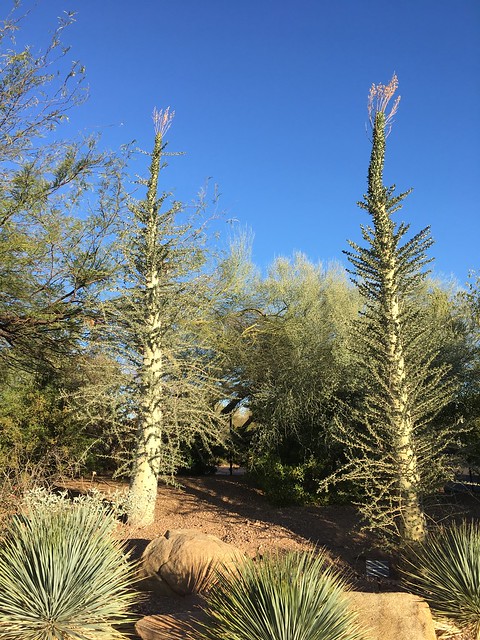
I am not a big collector of cacti and succulents, but seeing these plants growing in mass and in their natural habitat was really fun. There was plenty that caught my eye, from the purple-tinted Prickly Pears (Opuntia gosseliniana var. santa-rita), to the spiny mounds of Jumping Cholla (Cylindropuntia fulgida), the cone-shaped Boojum Trees (Fouquieria columnaris), and the towering native Saguaro (Carnegiea gigantea).

Opuntia aciculata - Chenille Prickly Pear

Fouquieria columnaris - Boojum Tree

Euphorbia antisyphilitica - Candelilla

I managed to add 13 new bird species to my life list, which is more than I expected.

You can see more of my photos from the Desert Botanical Garden here.

Monday, August 14, 2017

Trip Report: Muir Woods

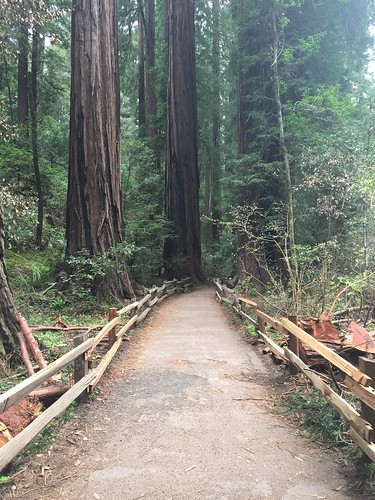
While on vacation in California in March we crossed the Golden Gate Bridge and drove through the beautiful Marin Headlands to Muir Woods. There is a really nice trail that heads back from the visitor's center into the woods.  This was the most crowded National Park I have visited in recent memory, but it was still enjoyable.

Untitled
Yours truly looking up at the giant Coast Redwoods

Trillium
Trillium sp.
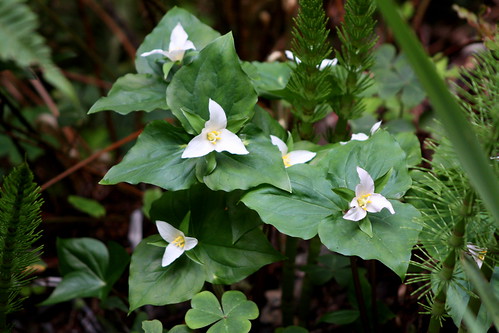
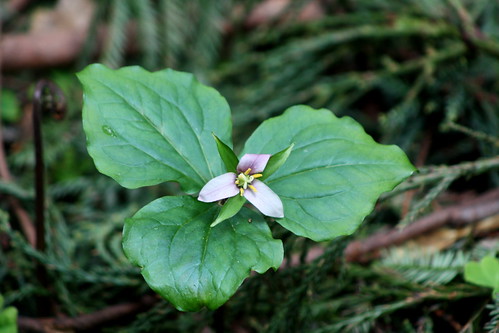
The woods are made up of giant Coast Redwoods (Sequoia sempervirens), a smattering of understory trees that shrink in comparison, and a lot of ground cover plants (ferns, Trillium, and others). I was really taken with the Trilliums, having admired photos of them for a long time and having tried unsuccessfully to grow some myself. I uploaded my observations to iNaturalist and it appears most, if not all, of these were Pacific Trillium (Trillium ovatum).

Trillium
Trillium ovatum

Trillium
Trillium ovatum
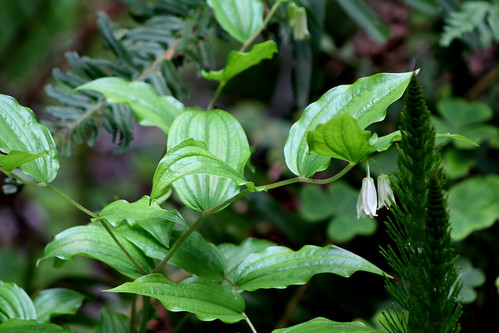
There was also a really pretty flowering plant whose white flowers hung from the plant like those of Solomon's Seal (Polygonatum).  Someone identified it as a Fairybell (Prosartes) on iNaturalist, but I'm not sure which species - Prosartes hookeri or Prosartes smithii.

Prosartes sp.
Prosartes sp.
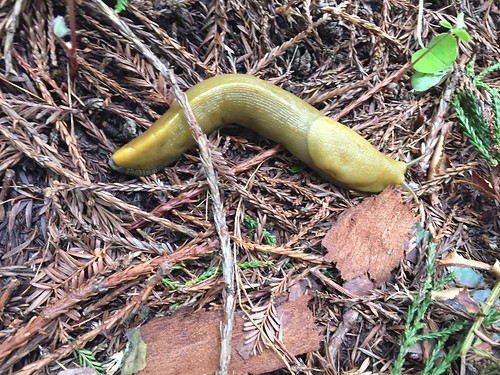
Oh yeah, I also saw a few neat birds and a really cool banana slug.  That thing was big!  I probably would have seen more birds had there been fewer people, but I was really happy to see so many people enjoying the park.

Banana Slug
Banana slug (Ariolimax)

Untitled
Happy Trails!

Tuesday, June 13, 2017

Trip Report: Wichita wildflowers

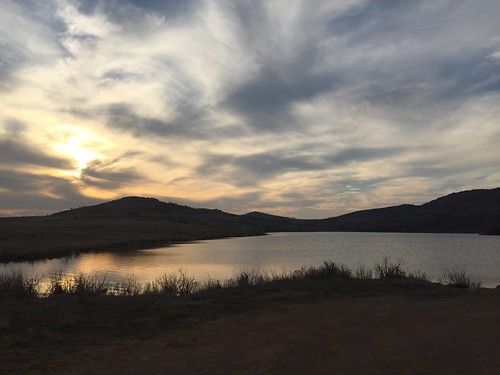
Back in April my family went camping in the Wichita Mountains of southwest Oklahoma.  We planned a camping trip down there more than a year ago, which was postponed due to rain.  The same thing happened on our rescheduled date.  I was really happy that this time around the weather was cooperative - in fact, it was more than cooperative, it was perfect!

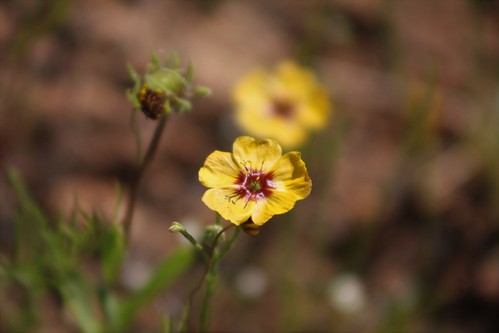
Plains Flax (Linum puberulum)

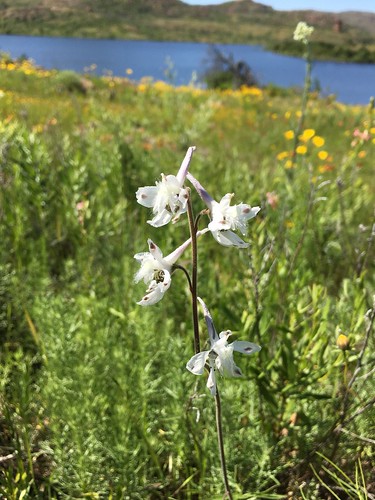
Prairie Larkspur (Delphinium carolinianum ssp. virescens)

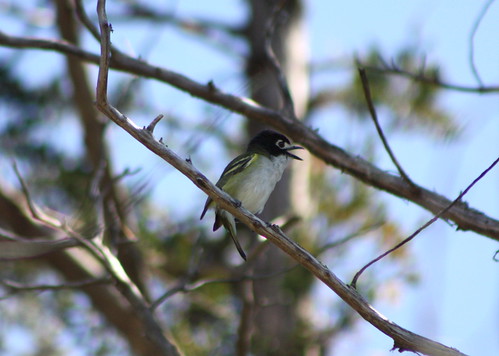
A significant motivator for camping in this location is that the Black-capped Vireo, an endangered species, nests in this area and it is one of the few places in the United States where this species can be reliably found.  I was successful with the vireo and added a total of 7 new species of my life bird list (Black-capped Vireo, Cave Swallow, Black-headed Grosbeak, Rock Wren, Canyon Wren, Chuck-will's-widow, and Rufous-crowned Sparrow).

Black-capped Vireo
Black-capped Vireo

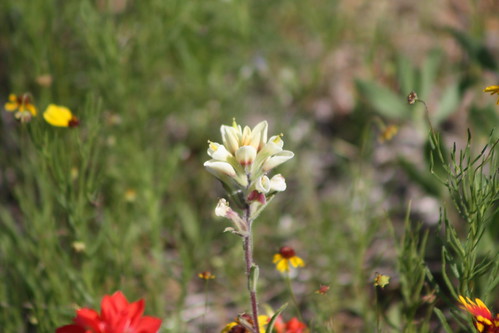
unusual color variant of Texas Paintbrush (Castilleja indivisa)
unusual white form of Indian Paintbrush (Castilleja indivisa)

We saw some other wild animals besides birds - rabbits, TONS of prairie dogs, bison, and lizards.  Ever since the Oklahoma Virtual Spring BioBlitz in April I have been logging as many wild living species as I can - plants, animals, insects, fungi, what-have-you.  I spent a lot of this trip taking pictures to upload to iNaturalist.org.  And once we were home I spent a lot of time trying to identify everything I had seen.  Each picture is a fun puzzle and process of discovery.

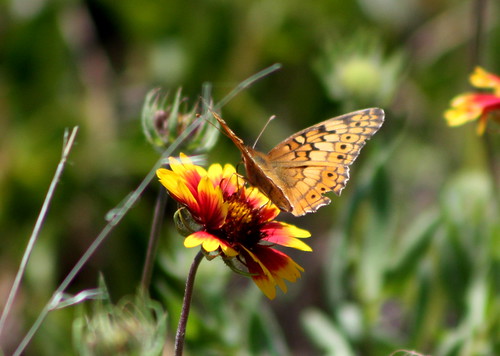
Variegated Fritillary

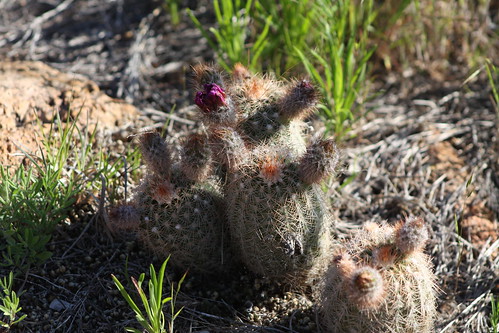
Lace hedgehog Cactus (Echinocereus reichenbachii)
Lace Hedgehog Cactus (Echinocereus reichenbachii)

There were many wildflowers in bloom in the Wichitas - Opuntia, Yucca, and Echinocereus cacti, Gallardia, Gaura, Linum, Castilleja, Delphinium, and more.

Opuntia sp.
Opuntia

Kern's Flower Scarab (Euphoria kernii) in Opuntia
Opuntia with pollinator, Kern's Flower Scarab

My full album can be seen here:

Wichita Mountains