Showing posts with label Phalaenopsis. Show all posts

Wednesday, February 7, 2018

Encyclia spikes in January?

This is the time of year when I usually find several Phalaenopsis spiking or blooming in my greenhouse, but little else going on with my orchids. Most of my orchid collection is from the genus Encyclia and those plants typically bloom for me in the heat of the summer. Appallingly, I never have any of my favorite Encyclia in bloom during the annual local orchid show, so if I enter any plants they are just run of the mill Phalaenopsis. Something is different this year.

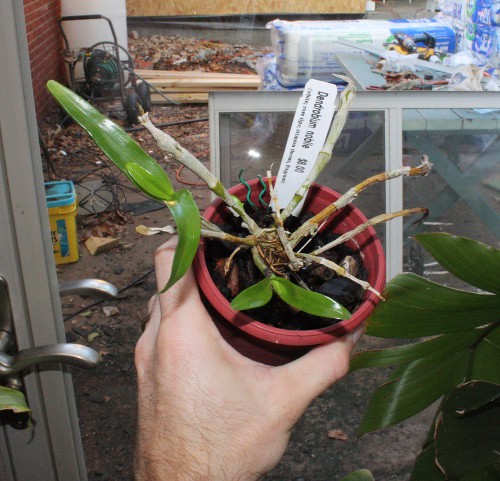
I don’t know why, but I have 3 Encyclia plants spiking right now, in addition to 2 Phalaenopsis and 1 Dendrobium. Two of the spiking Encyclia will be first earned blooms for me, so perhaps these species typically bloom earlier, but the other spiking Encyclia is one that bloomed last summer for me. It looks like I might actually have some Encyclia to enter in the orchid show this year!

Encyclia angustiloba
Encyclia hanburyi
Encyclia Faerie Glen (diota x mooreana)
Phalaenopsis NOID
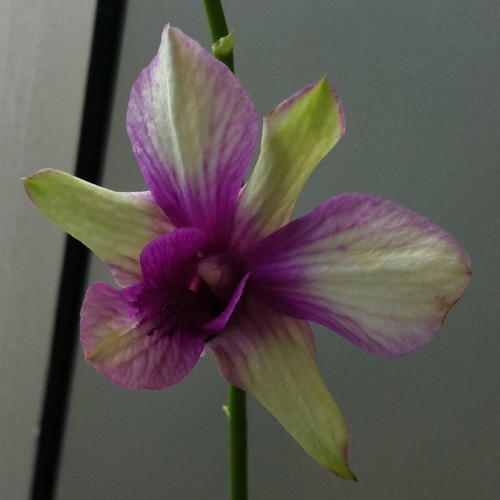
Dtps. Jiaho's Pink Girl
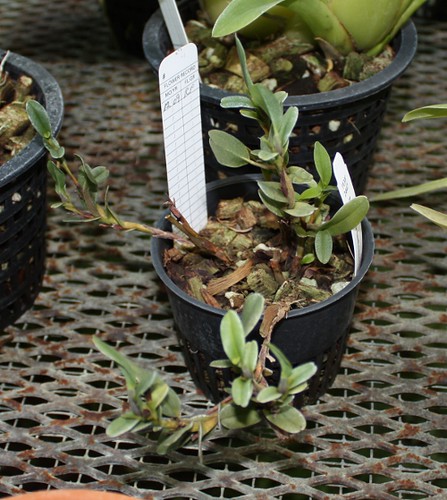
Dendrobium anceps

Monday, May 21, 2012

Trip Report: OKC Orchid Show, part 1

For the last four or five years I have attended the Oklahoma Orchid Society (OOS) show on Mother's Day weekend in Oklahoma City. Last year when I attended I decided to go ahead and join the OOS. So this year, when it was time to put on the show, I found myself on the other side, showing up on Friday to help set up the show before it was open to the public.

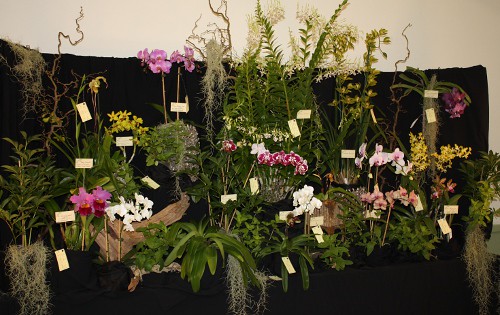
brian_truong_exhibit
Brian Truong's (a.k.a. Okie Orchids) exhibit
It was a very busy weekend, including three graduation ceremonies and two Mother's Day meals. I took off work on Friday to help setup the OOS exhibit and to help the vendors bring in their plants. It was a fun experience and I understand the whole process much better now. Christie joined me with the setup and was the official label maker for the plants displayed in the OOS exhibit.

jewel_orchid
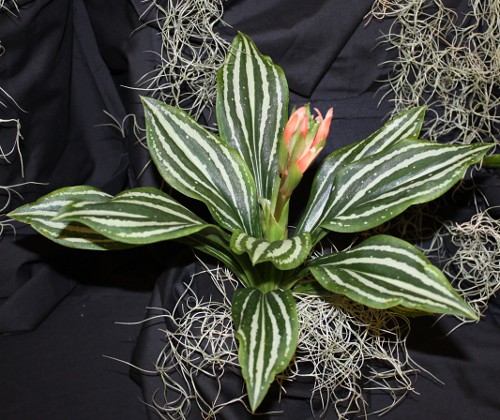
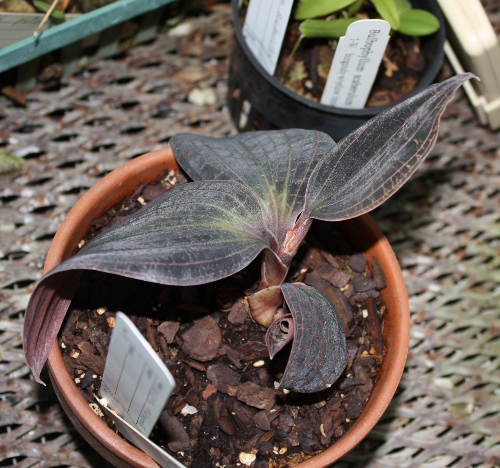
Unknown jewel orchid
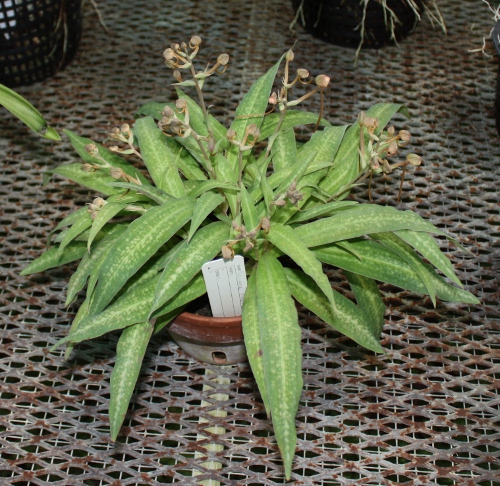
This time around I entered three of my own orchids, including the jewel orchid pictured below, which got a 2nd place ribbon. Plants are classified in different categories and my jewel orchid would have been competing against the plant pictured above, which received a first place ribbon. My other two orchids both received first place ribbons, so I am now 5 for 5 with the plants I have shown in orchid shows!

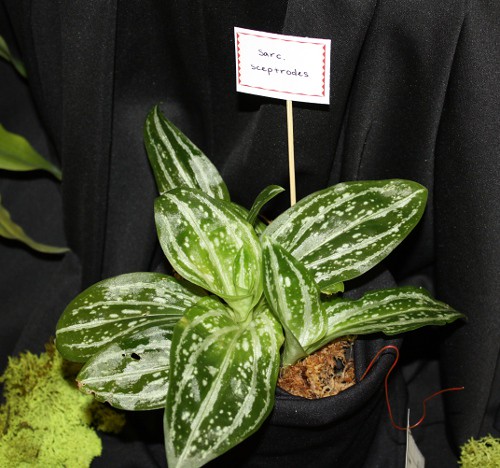
sarc_sceptrodes
Sarcoglottis sceptrodes
The Stelis pictured below was on display in our OOS exhibit. It is a neat little plant, named after one of the guys who had that gigantic exhibit in Wichita a couple of weeks ago.

stelis_scabrata_bryon
Stelis scabrata 'Bryon'
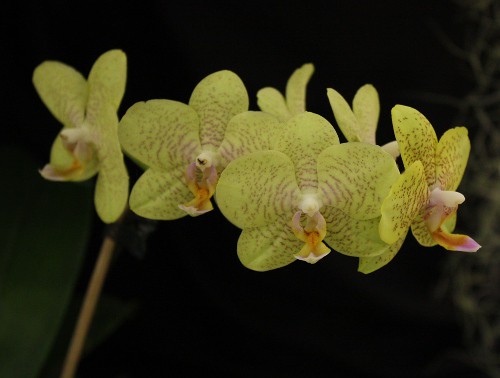
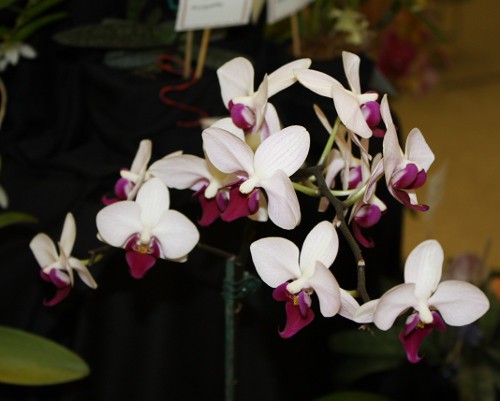
There were two little Phalaenopsis-type orchids in our exhibit that had really nice little flowers (both pictured below).

phal_yellow
Nice yellow Phalaenopsis
dtps_little_gem_stripe
Dtps. Little Gem Stripe
Sarah Pratt of Timbucktoo Orchids came down from the Wichita area and set up both a nice exhibit and had a vendor table. Her exhibit included a big Stanhopea embreei (below) which was still in bud when we helped her unload, but had opened on Sunday when I was helping tear down. I hope that it opened on Saturday when the judges made their rounds and the bulk of the crowd was there.

stan_embreei_full
Stanhopea embreei
stan_embreei
Stanhopea embreei, closeup of flowers
I know I have shown Grammatophyllum pictures several times, but it is such a cool plant, that I just have to show them off again (below). This plant gets gigantic, but that won't stop me from growing one some day.

gramm_scriptum
Grammatophyllum scriptum
In Wichita I was discussing orchids with my friends and learned that the correct pronunciation of the genus Coelogyne is "suh-LODGE-uh-nee." I won't try and figure out how I was saying it in my head up until then, but it was significantly different enough that I didn't even know what plant Steve was talking about when he was saying this name. Later when we were by the labeled plant it suddenly dawned on me that that was the name Steve had been saying earlier.

coelogyne_speciosa
Coelogyne speciosa
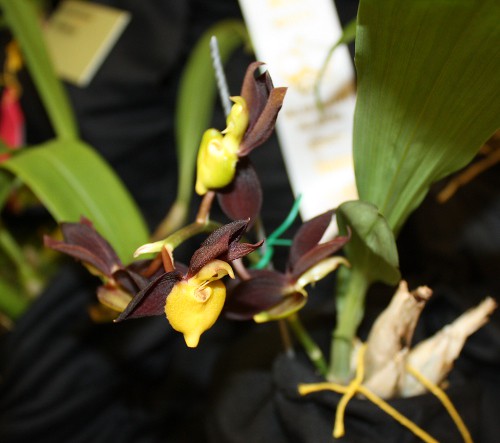
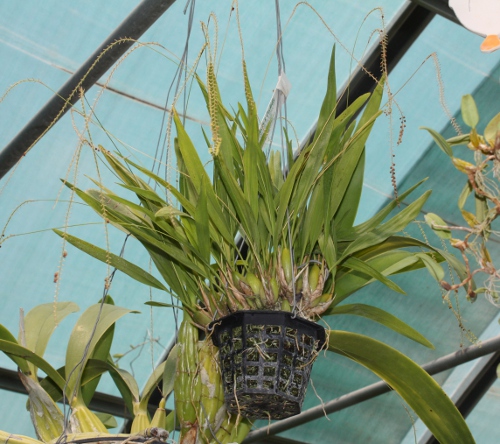
Both Catasetums and Coelogyne tend to grow from large pseudobulbs with pendulous or semi-upright spikes of flowers. I haven't grown either of these genera before. There were a couple of nice specimens at the show.

catasetum_tenebrosum
Catasetum tenebrosum
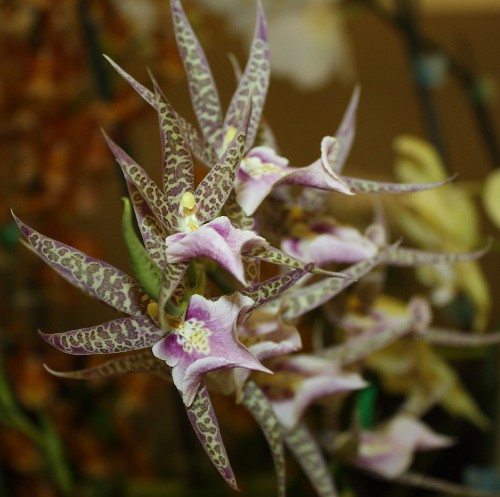
There was a really interesting intergeneric hybrid (I think) orchid for sale from Orchid Konnection. I couldn't find a tag on either of the two plants for sale, but Christie and I both stopped and noticed this one. It was just very unusual colors and markings for this type of orchid (below). It remains a mystery for now... [Update: The plant has been tentatively identified by commenter Peaches!]

unknown_star
Really neat plant for sale from Orchid Konnection, probably Bllra. Patricia McCully 'Pacific Matriarch'
I have some more photos to share, so stay tuned for the second part.

Thursday, May 10, 2012

Trip Report: Orchid Show in Wichita, uncommon orchids

This is the fourth post in a 5 part series.  Part 1 focused on the exhibits; part 2 on the Slippers and Vandas; and part 3 on the Dendrobiums and Encyclias.  This time around, I'm going to show some pictures of some nice orchids you just don't see every day.

Phalaenopsis is the most widely known orchid, the one that you can find for sale in grocery stores and hardware stores.  So, I am kind of starting off this post of "uncommon orchids" with one of the most common orchids there is!  They are so popular for a number of reasons, one being that they are not too hard to grow and to get to re-flower.  Most orchid growers have some of these on hand in their collections because they know they bloom reliably each year.

phal_interesting_pattern2
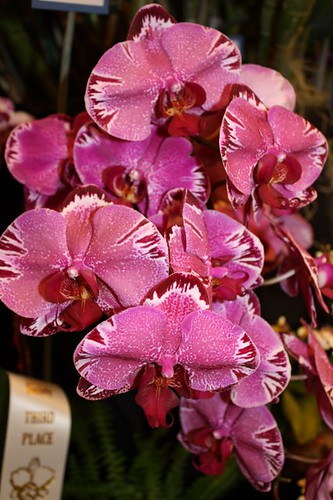
Phalaenopsis with "brush strokes"
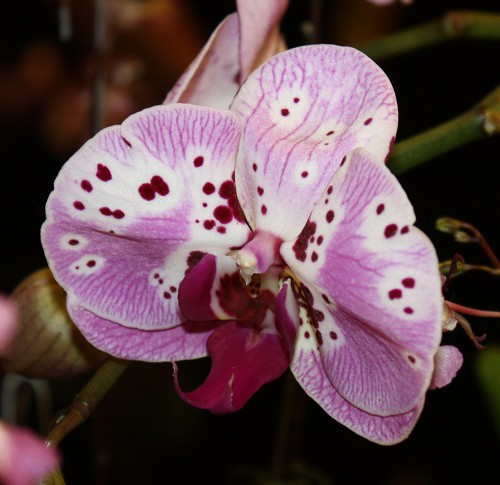
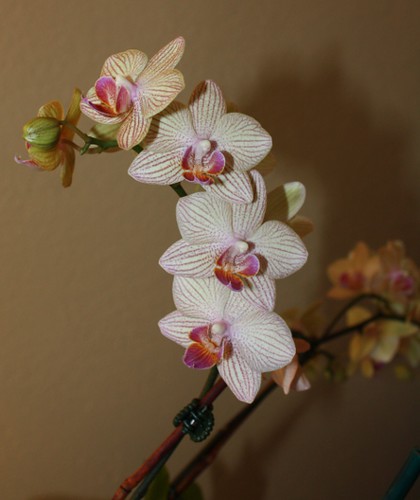
Another reason they are so popular is because of the hybridization potential.  It seems the hybridizers always have something a little new with these orchids - a new color combination or a new pattern.  The Phalaenopsis pictured above is a fairly new pattern, with what looks like brush strokes near the edges.  I remember a year or two ago I saw my first harlequin (patches of color) Phalaenopsis.  This year, the pattern that was new to me is kind of hard to describe.  It looks like some drops of color have been splashed onto the flowers and repelled other colors.  There is a sort of white halo around these dots.

phal_interesting_pattern
Phalaenopsis with interesting color pattern
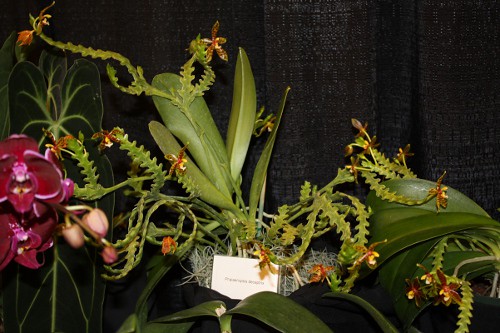
There were other nice hybrid Phalaenopsis with all sorts of different colors and patterns.  There was a really neat specimen of Phalaenopsis deceptrix cornu-cervi (below) on display, too.  The blooms from this orchid emerge from a weird, zigzag spike.  When the flowers are finished, it looks like this plant has two distinct types of leaves.  I don't know what people normally do when they have this plant and it finishes flowering, but I would have trouble cutting off those weird spikes.  I would want to leave them on the plant.

phal_deceptrix
Phalaenopsis cornu-cervi (labeled Phalaenopsis deceptrix)
Eulophia guineensis is a really nice flower, which looks similar to some Encyclias, except that the lip is much larger than the petals and sepals, which are always pointing upwards.  Also, the plant is different morphologically and is terrestrial, whereas Encyclias are epiphytic.  Eulophias are native to equatorial Africa and this species is probably one of the more common ones to find in someone's collection.

eulophia_guineensis
Eulophia guineensis
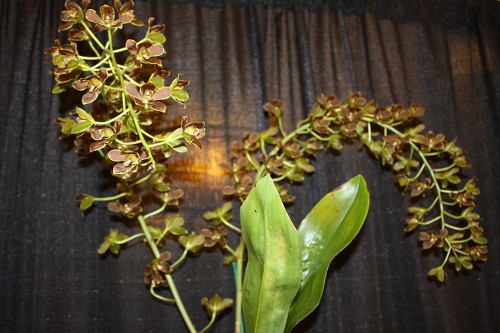
Grammatophyllum is the genus of "giant orchids."  These plants get really large and can become very heavy with time.  I like how their roots point upwards (not shown in this photo).  They have very neat blooms of brown and yellow.  Usually they are pretty spotted, like a leopard.  This particular plant was named Leopard and yet, the blooms weren't really spotted.  It was more like the brown had taken over all but the edge of the petals, which retained the yellow coloring.

gramm_leopard
Grammatophyllum Leopard
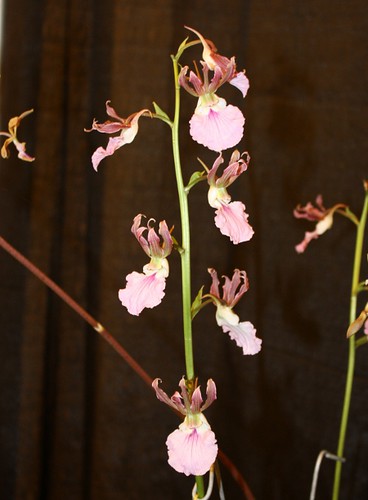
The plant below belongs to the Mexicoa genus, which I had never heard of.  It was a nicely grown plant with some neat little yellow flowers.  I think that Mexicoa is a monotypic genus, because I can't find any references to a species other than this one.  Apparently, it used to be Oncidium ghiesbrechtiana, but has unique floral features that allowed it to be moved to its own genus.

mexicoa_ghiesbrechtiana
Mexicoa ghiesbrechtiana
My friend, Leland, who lives in Hawaii is on the brink of being sucked into the orchid vortex.  The orchid of his dreams is Bulbophyllum phalaenopsis.  (Why did they let someone give a genus name in place of the specific epithet?)  The species gets very large leaves that look like those of the Phalaenopsis genus.  You don't even notice the psuedobulbs much due to the large leaves.  When this plant blooms, it creates this hanging purple tongue of flowers that smell like a thousand dead elephants.  Prairie Orchids had this plant for sale for $75, which is not out of the ordinary for this species.

bulb_phalaenopsis
Bulbophyllum phalaenopsis
The final two orchids are both Pleurothallis and were both for sale at vendor's booths.  I just have one little Pleurothallis and I really like it.  They tend to be cool to intermediate growers and don't need much light.  I keep mine on the kitchen windowsill inside and it has been growing well for me.  I probably need to fertilize it because it was blooming this time last year when I bought it and it is bigger this year and not blooming.

pleurothallis_ornata
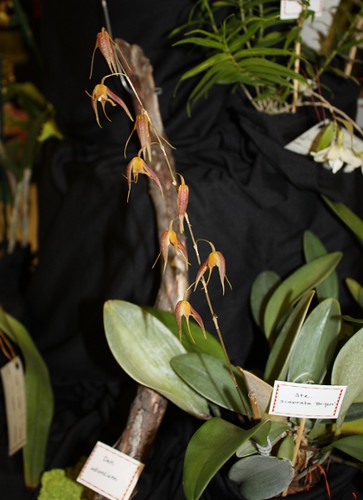
Pleurothallis ornata for sale at Andy's Orchids booth
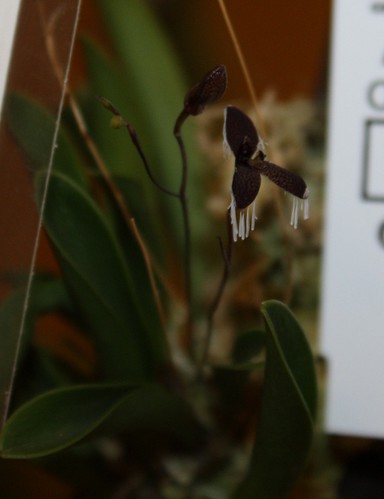
Pleurothallis ornata (above) has these cool little icicles (not the technical term) hanging from the blooms.  Now the photo above doesn't show scale, but these little flowers are smaller than a dime.  Generally people that grow Pleurothallis and related genera are interested in miniatures and oddballs.  I'll be trying more of these in the future.

Now, prepare yourself.  The photo you are about to see is amazing...

pleurothallis_dilemma
Pleurothallis dilemma for sale at Ecuagenera booth
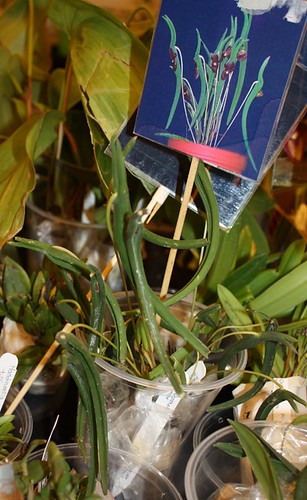
By far the most bizarre plant at the show was this Pleurothallis dilemma (above).  Eat your heart out, cucumber orchid!  This thing is like the "conjoined twin green bean" orchid.  It was for sale at the Ecuagenera table and I really wish I had bought it now.  Of course, my allowance is better off, but man, is this ever a neat little oddity!  (There is a better photo here.)

Friday, October 28, 2011

Plant Find: My Florida plant acquisitions

While in Florida I got a LOT of plants.  Most of these were either aroids or orchids.  First, let me show you the aroids I got.
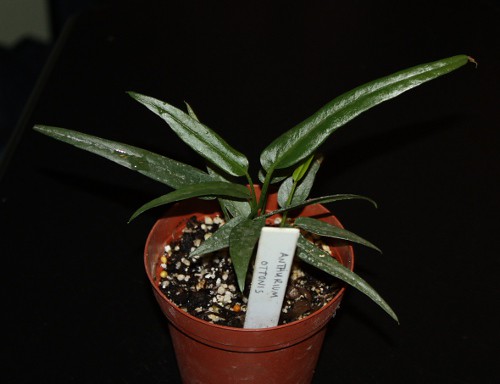
anth_ottonis
Anthurium ottonis
Anthurium ottonis

This little Anthurium attracted me with its lanceolate leaves.  It is a very healthy little plant and I look forward to seeing this grow into a mature specimen.
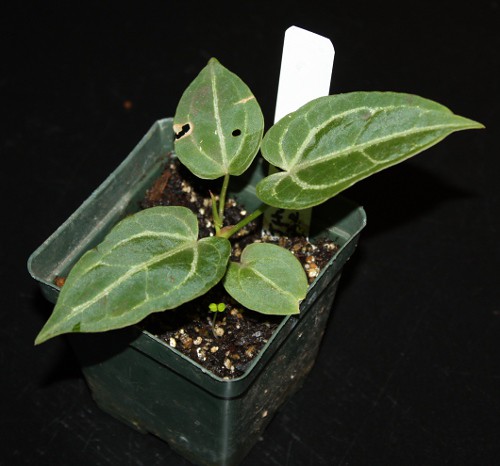
anth_crystallinum
Anthurium crystallinum

This is one of the velvety Anthuriums with prominent iridescent veins.  Again, this is just a small plant, but if it likes my growing conditions then it will become a beautiful large plant within a year or two.
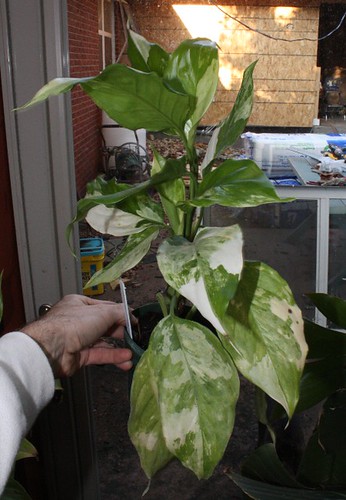
ag_modestum_variegated
Aglaonema modestum variegated

This is actually the only Aglaonema I purchased at the show.  There were a couple others that I eyed, but ultimately I ran out of packing room (and money), so I stopped with this one.  It is one of the few variegated Aglaonemas in cultivation.  Most Aglaonemas have interesting leaf patterns, with various shades of green and some silvers, but few have white patches like this one.
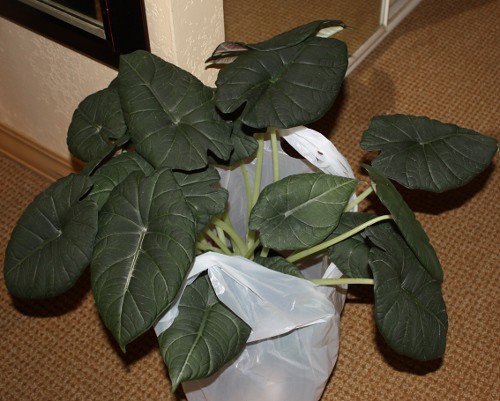
alo_maharani
Alocasia 'Maharani'
Alocasia 'Maharani'

This is one I had never seen before.  It is a beautiful Alocasia with dark leaves that have a rough texture and a rigidity unlike any of my other plants.  I'm really hoping this isn't a high maintenance plant, but it might be.  For now it seems pretty happy, sitting in a very shady spot on the floor of my greenhouse.

Dieffenbachia oerstedii - no picture


I hadn't heard of this Dieffenbachia before, but it was a species and it was from Dr. Croat, so how could I pass it up!?!  Dieffenbachias are a really neat genus of aroids that I enjoy, though I don't have too many in my collection.  This particular species develops a strong white midrib at maturity, which is striking in contrast to the otherwise dark green leaves.
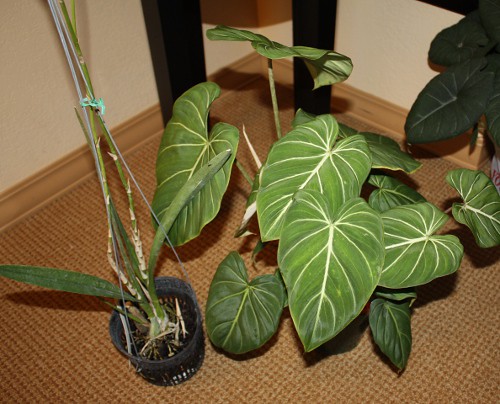
philo_gloriosum_enc_plicata
Encyclia plicata (in mesh basket) and Philodendron gloriosum

Philodendron gloriosum

Christie and I both fell in love with this Philodendron and decided to buy it out of our general budget, rather than my plant allowance.  Since then it has gone by the moniker of "family plant."

The IAS show and sale is set up with the show plants in the middle of the room.  Along one wall are vendors with plants for sale and along another wall are plants for sale that will benefit the IAS.  Dr. Croat brought a bunch of items from the Missouri Botanical Garden for sale at the IAS show.  These plants are either species that were wild collected or propagated from his wild collections.

Pinellia pinnatipartita (IAS show)

The one exception, I believe, was a big trash bag full of Pinellia pinnatipartitas, which I think Dr. Croat had yanked out of his yard to thin out his own crop.  There was a sign on the bag, boldly announcing "Guaranteed success!"  As if that weren't enticing enough, they were marked $1.  So, naturally, I got one.  Taylor picked through the bag for me and found a really nice, large tuber and it was one that had just fruited, so I have a bunch of seeds in addition to the healthy tuber.

tubers of Pinellia ternata (IAS show) - no picture

Pinellias are one of the aroid genera with several varieties hardy in my zone.  For now, I have potted these tubers of Pinellia ternata and put them in the greenhouse.  However, I plan to plant them outdoors next spring and then let them stay outside for good.  I want to develop a little garden of hardy aroids.
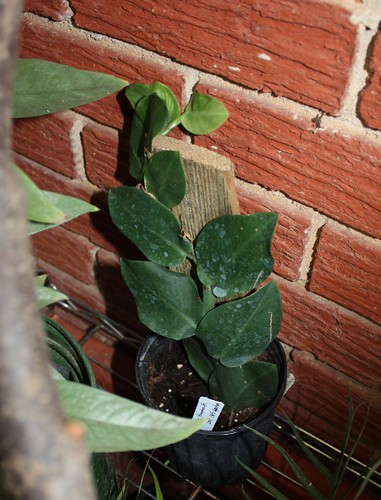
rhaph_hayi
Rhaphidophora hayi
Rhaphidophora hayi (IAS auction)

This is really my first shingling aroid.  I made up a tentative list of plants I would like to purchase at the IAS show before I left.  Not really knowing what I would find, it was just a wishlist of things I was hoping to find.  One of the items was "a shingling aroid."  There were some for sale, but I was overlooking them for other plants.  Then there was one available at the auction and I ended up getting an excellent deal on this little plant, donated by Palm Hammock.  It is now propped against the back wall of the greenhouse, where I am hoping it will start to shingle up on the brick wall of the house.

Now, here are the plants I purchased, which are not aroids.
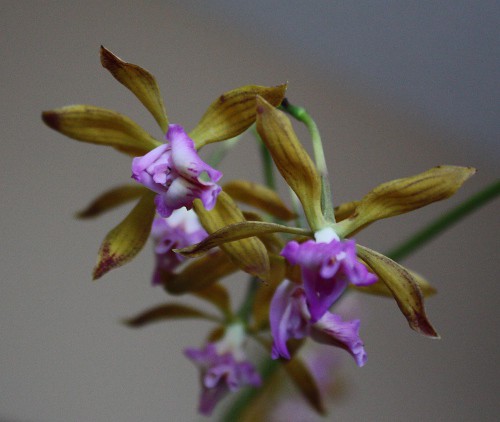

enc_plicata
Encyclia plicata blooms
Encyclia plicata (above) and Encyclia tampensis (below) - both from Ruben in Orchids

As mentioned in a previous post, I purchased two Encyclias at Ruben in Orchids.  One of them (Encyclia plicata) had a long bloom spike with these really neat flowers (above) and was growing in a mesh basket.  The other (below) was on my wishlist of plants to purchase in Florida.  It is the "Florida Butterfly Orchid" (Encyclia tampensis) and the plant that I kept seeing all over my everglades boardwalk.  It is a mature, mounted plant and had already finished blooming, with several dead bloom spikes on it when I purchased it.  Next year I hope to have as many spikes as it had this last summer.
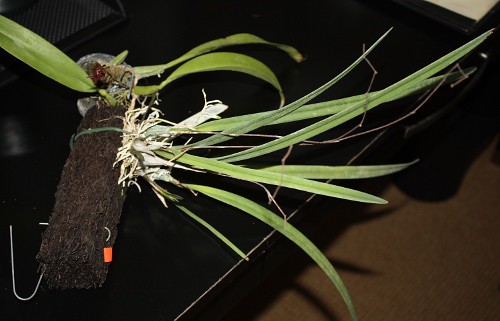
enc_tampensis
Encyclia tampensis


dend_nobile
Dendrobium nobile
Dendrobium nobile (from R.F. Orchids)

I purchased two cheap orchids at R.F. Orchids - one a species Dendrobium nobile (above) and the other a hybrid Vanda. The Dendrobium was a collection of keikis that had been cut off mature plants and bundled together for $8.   The Vanda is young now, but someday it should look like a mixture of the parents, which are pictured below.
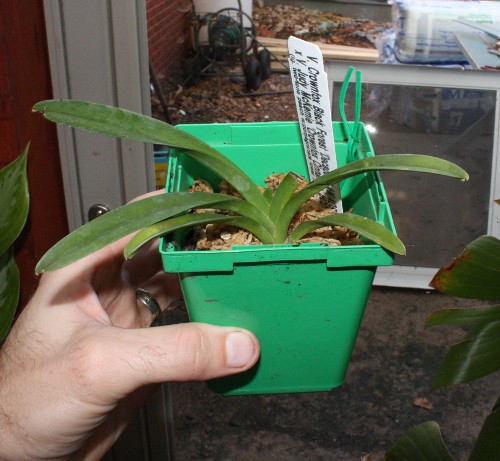
vanda_hybrid
Vanda hybrid
Vanda hybrid (V. Crownfox Black Forest x V. Judie McKemie) (from R.F. Orchids)
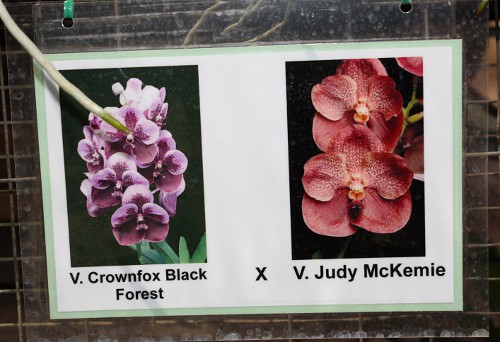
my_vanda_hybrid
Vanda hybrid parents
dendrobium_noid
A nice Dendrobium in bloom
Dendrobium in bloom (from The Banyan Garden in the Keys)

There are still a couple of "trip reports" I plan to write in the coming weeks about special planty places I visited while in Florida.  One of those places is called The Banyan Garden, which is located on the island of Islamorada in the Florida Keys.  I bought this cheap and beautiful blooming Dendrobium there.
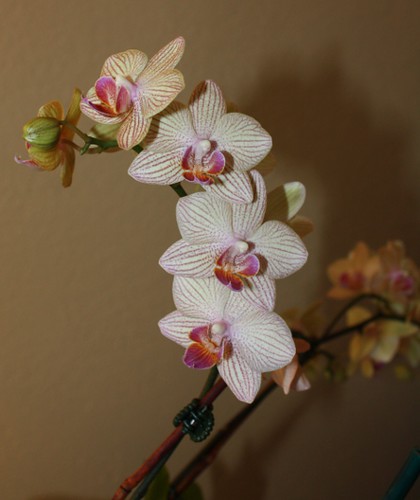
cheap_orchid
My favorite cheap Phalaenopsis
Phalaenopsis in bloom (from Redlands roadside stand)

I already told you about my steals in south Miami - orchid country.  Here are their pictures, again.
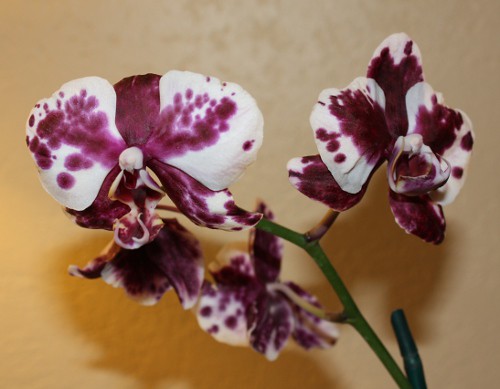
phal_harlequin
Harlequin Phalaenopsis
Phalaenopsis (harlequin) in bloom (from Redlands roadside stand)

Harlequin Phalaenopsis are the "in thing" right now.  The name refers to the spotting pattern on the flower petals.  I'm told this is a generic term applied to dog and horse breeds, as well.
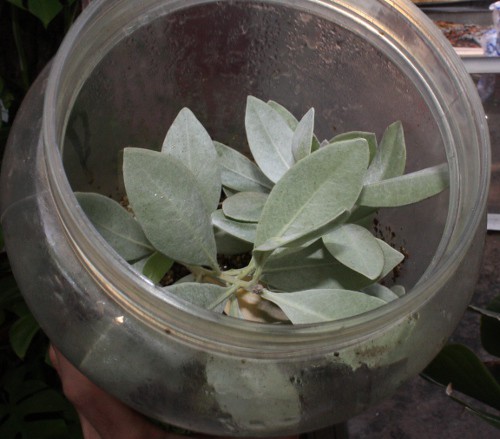
buttonwood_cuttings
Silver Buttonwood cuttings.  I really hope these are rooting, but I just don't know.
Silver Buttonwoods

There were Silver Buttonwoods (Conocarpus erectus var. sericeus) everywhere in Florida.  Most were trees, but quite a few were bushes or well-manicured hedges.  We stopped to admire this beautiful tree at our very first lunch stop in Miami - on our way to the Everglades.  On the last day of our trip, I took some cuttings from a couple trees in the Keys.  The cuttings are now in a jar of moist vermiculite, hopefully rooting.  I put some other cuttings directly in water and they quickly wilted.  Since the cuttings in vermiculite still look fresh and happy I have high hopes that good things are happening.  We'll see in a couple of months.
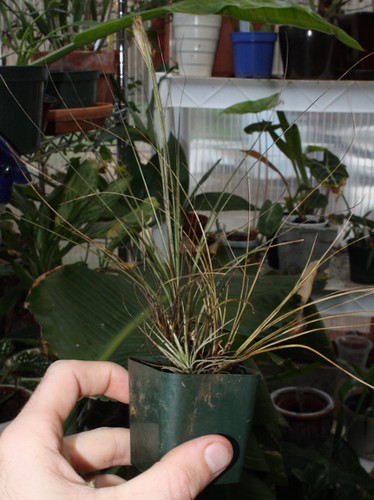
three_tillandsias
Three little Tillandsias
Tillandsias

Tillandias grow everywhere in southern Florida.  I have never grown any myself, but I am hoping I will have some luck with these.
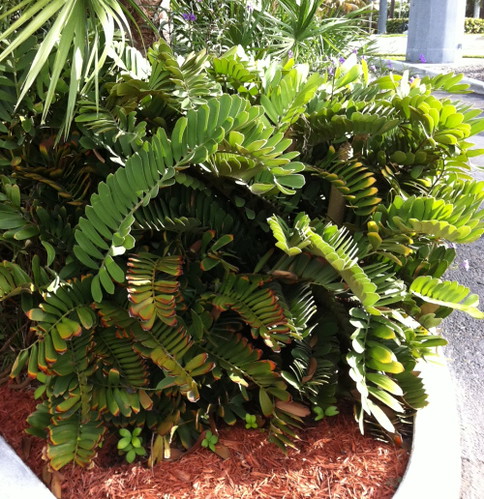
cycad_seedlings
Zamia furfuraceae "hedge" with seedlings at the base
Zamia furfuraceae seedlings (from Key West, Florida)

Cycads are very common in southern Florida.  In many places they are grown so thick that they can be cut into hedges.  The above picture is from our hotel in Key West, where they were being trimmed into rectangular hedges.  These plants were "coning" like crazy and the seedlings were thick at their base.

Yes, I really did pack all of this in suitcases to bring home!

Monday, October 3, 2011

Plant Find: roadside orchids

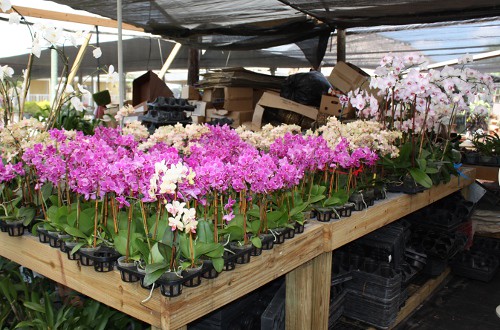
As I mentioned in my trip report on Ruben in Orchids, south Miami (specifically Redlands) is riddled with little roadside shacks and shade houses selling in-bloom orchids.

six_dollar_orchids
See anything there you'd like to buy for $6?
These places are not so much for the collectors who want species or even want to know the names of the plants they are blooming.  But these places have gorgeous, healthy plants that are all in bloom - and very reasonably priced.

cheap_orchid
The cheap orchid I chose.
The majority of the orchids were Phalaenopsis - the moth orchid. But there were lots of different colors, sizes and patterns in the blooms. Christie's favorite was the "harlequin" spotted blooms.

cp_with_harlequins
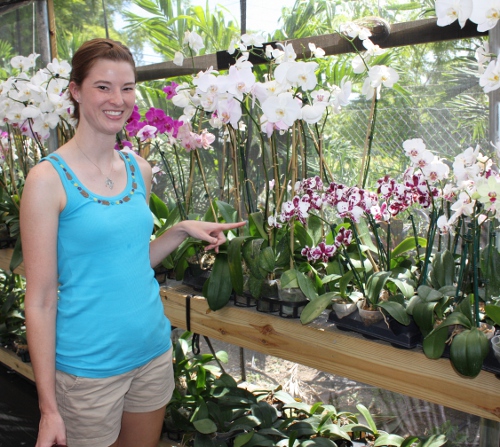
Christie points out her favorite harlequin Phalaenopsis
Christie and I stopped at several of these places while we were driving between two big orchid growers.  And we ended up adding a couple orchids to our backseat!

backseat_orchids
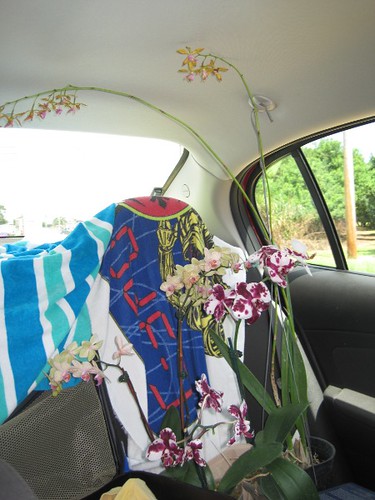
Backseat becoming crowded with orchids.  Check out how long the Encyclia plicata bloom spikes are!
Friday, August 5, 2011

Trip Report: Orchid Greenhouse Tour

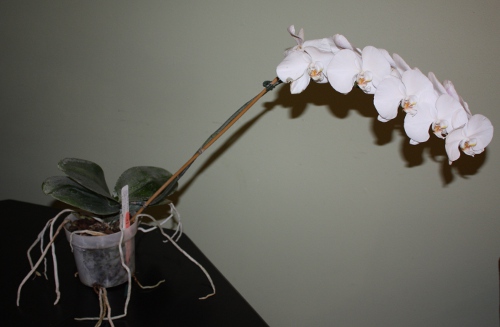
Last Sunday, our Oklahoma Orchid Society had its annual potluck, raffle, greenhouse tour and open house at the house of a couple of members.  This was the first meeting where Christie has come along and gotten to meet some of my new orchid friends.  We got to eat some good food, enjoy a greenhouse tour and we even came away with the door prize, a gigantic blooming Phalaenopsis!
phal_white
Phalaenopsis door prize
The greenhouse is a really nice size - probably 15 feet by 30 feet, as a guess.  About 2/3 of the space is occupied by orchids and the other 1/3 is empty for now.  As with any collector, I imagine that vacant space shrinks on a regular basis. The first plants you see when you come in are the Vandas, which Lowell, the owner, grows hanging without any substrate or pots.  They seem to be doing really well for him.

vanda_red
Coppery-red Vanda
vanda_yellowred
Another Vanda in bloom
Lowell has a lot of Dendrobiums in his collection.  Two really neat ones were in bloom, the species Dendrobium antennatum, and a hybrid which has Den. antennatum as one of it's parents.  It was surprising how close the hybrid looked like the parent species, in this case.  I couldn't see any differences in the flowers themselves.

den_antennatum
Dendrobium antennatum

den_hybrid
Dendrobium hybrid
Another Dendrobium that was in bloom is Den. bifalce, with a weird little flower coming out of the top of the characteristic Dendrobium canes.

den_bifalce
Dendrobium bifalce
The most unusual Dendrobium in the collection is a very large and old plant which has grown from the basket to form a sphere.  Apparently it just finished flowering, so we didn't get to see the flowers.  But the plant, Dendrobium anceps, is really cool.  Lowell is justifiably proud of this one.

den_mystery
Very nice Dendrobium anceps
There are probably 5 or 6 different pots of Vanilla planifolia growing in the greenhouse and the plant is climbing up the supports and running all over the place.  This is the plant that produces the vanilla flavoring used in cooking, which is an extract from the beans that form after a flower is pollinated.  Lowell was kind enough to give me a piece about a foot long, so I have it in some soil and am trying to root it now.  Lowell grows his in regular potting soil, not an orchid mix.  He said his Vanilla orchids flower regular, but he has yet to get one to pollinate.

v_planifolia
Vanilla planifolia
Lowell grows most of his Bulbophyllums in coconut fiber baskets now.  He said it contains them well and they seem to like it.  One exception was this little Bulbophyllum which was mounted and in bloom.

bulb_orange
Bulbophyllum species - probably tingabarinum
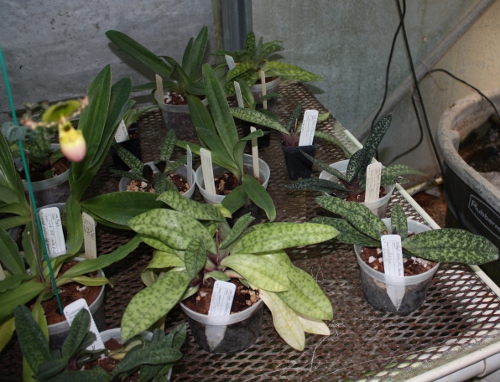
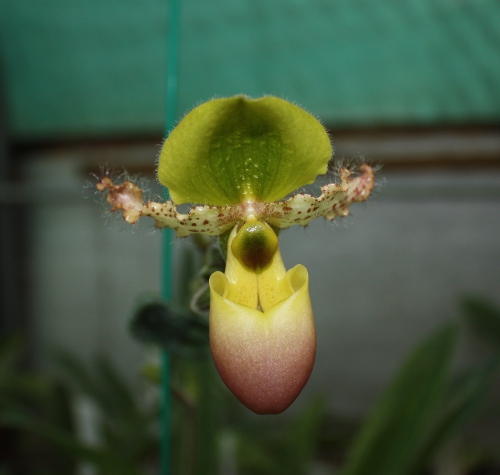
There are also quite a few slipper orchids, Paphiopedilums and some other genera I am not familiar with (not Phragmipediums).  I have to admit that the patterned leaves of these orchids are enticing to me - more so than the big, odd flowers.

paphs
Paphiopedilums and other slipper orchids

paph_hybrid
Hybrid slipper orchid
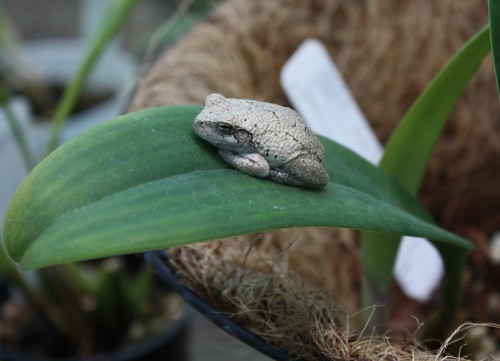
Some tree frogs (Hyla versicolor) have taken up residence in the greenhouse and one was perched out on an orchid leaf for easy photographing.

tree_frog
Tree frog (Hyla versicolor) living in the greenhouse
Next are the two largest plants in the collection (not counting the Vanilla orchid): Sobralia and Grammatophyllum.   The tall Sobralia decora was about 4 feet tall with beautiful stems.  I really liked this plant and would be happy to grow it without any blooms.  Apparently the blooms are very short lived, though, as expected, a mature plant does produce a plethora of them when it is in flower.

sobralia
Sobralia decora
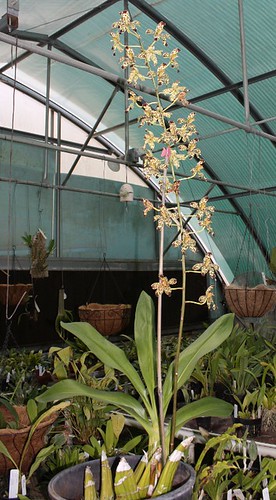
The genus Grammatophyllum is referred to as the "Giant Orchid."  It has a very tall,  long-lived bloom spike.  Lowell's Grammatophyllum plant is not all that big, but the bloom spike was a good 4 feet tall.  We saw a huge Grammatophyllum at the Foster Botanic Gardens in Hawaii a couple of years ago.

grammatophyllum
Grammatophyllum in bloom
I think the one plant I came away from the tour thinking I had to find is Maxillaria lankesteri.  This is a weird one that in many ways doesn't look like an orchid.  Maybe that's why I like it.  It's a fringe orchid.  The flowers, from what I've seen online, are unmistakably that of a Maxillaria, but the stems are wandering and woody looking - not like other Maxillarias I know.  Looking around online a bit I see that there is another species with similar woody-stems, Maxillaria microphyton.  I'll be looking for these plants.

maxillaria_lankesteri
Maxillaria lankesteri
Another oddity in the collection is a Habenaria which has really neat foliage and interesting looking buds.  Apparently the flowers are very colorful.  The buds look more like seed heads of a spent flower.

habenaria_rhodocheila
Habenaria rhodocheila
Lowell brought his beautiful, large Dendrochilum to the last OOS meeting when it was in bloom.  It had finished by the time of the greenhouse tour, so I just have a picture of the plant with spent blooms.  But it's still a beautiful plant.

dendrochilum
Dendrochilum just finished blooming
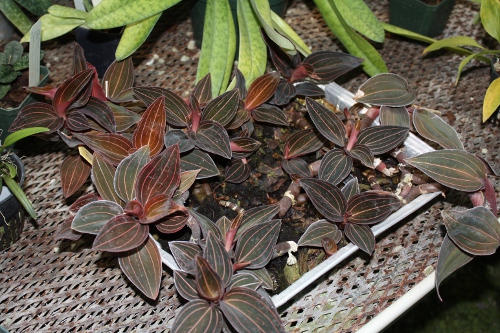
There are a number of different jewel orchids which look similar.  Lowell is growing the common Ludisia discolor, as well as something that looks nearly the same, but is from an entirely different genus.  (Sorry, I didn't write down the name.)

ludisia
Ludisia discolor
ludisia_lookalike
Jewel orchid that looks like Ludisia discolor, but is something different

Well, that's your virtual tour.  I hope you enjoyed it as much as I did the live tour.