Showing posts with label Singapore. Show all posts

Wednesday, October 25, 2017

Plant Find: Bauhinia galpinii

From the moment I first saw one, I have loved Orchid Trees (Bauhinia).  Bauhinia is a genus of more than 500 species of tropical flowering plants, many of them trees, but some are more shrubs and some are even vines.  They are found throughout the world in tropical regions and I have seen them growing in the wild, as well as cultivated in yards in the southern US.  In Galveston, there are several Bauhinia variegata growing in front yards and flowering with their beautiful pink or white blooms.

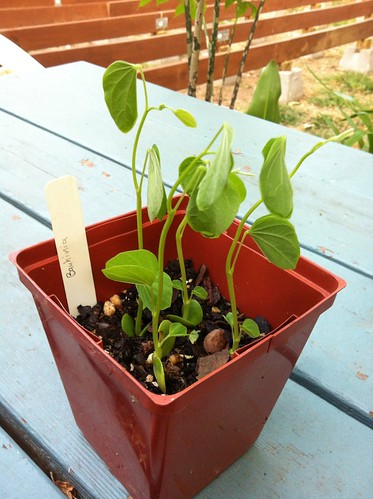
Bauhinia variegata seedlings
A few years ago I collected some seeds from a tree in Galveston and was able to germinate those seeds. I tried planting a few of the young seedlings to the Galveston yard, but they didn't make it. I don't know if their sunlight was choked out by their more aggressive neighbors, or something else happened. I have a few saplings now that have gotten to a decent size and I plan to plant in the Galveston yard when they get even a little bit larger.

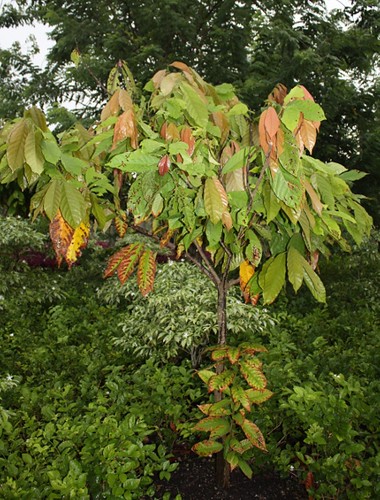
Bauhinia variegata (orchid tree)
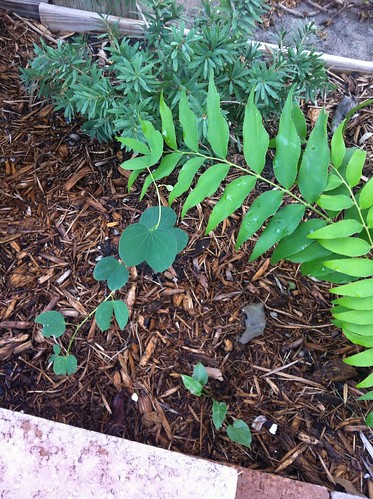
Young Bauhinia variegata seedlings that I transplanted to Galveston garden.
As beautiful as the blooms are, the leaves are every bit as stunning.  They unfold like a set of hands asking for a piece of bread.  I read that Linnaeus named this genus after a set of twin botanists, which is fitting due to the symmetric, two lobed leaf.

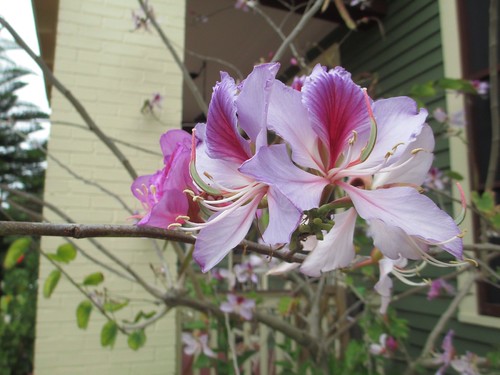
Bauhinia variegata
Bauhinia variegata flowers on a tree in Galveston

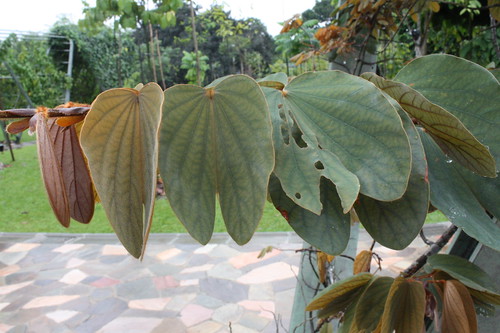
I mentioned that there are some species of Bauhinia that are vining.  I saw one of these species at the Singapore Botanic Gardens a few years ago (photo below).  The stems are woody and there is a fuzzy brown sheath that covers the new leaves as they emerge.  The emergent leaves are sort of red and bronze, turning to a medium green with dark veins. 

Bauhinia semibifida
Bauhinia semibifida at Singapore Botanic Gardens
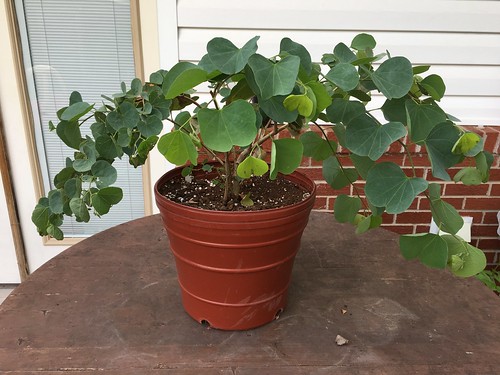
On my most recent trip to Galveston I visited a nursery and came across a beautiful miniature Bauhinia in a pot that I assume is meant to stay a miniature.  It is Bauhinia galpinii and it is so cute. 

Bauhinia galpinii
Bauhinia galpinii

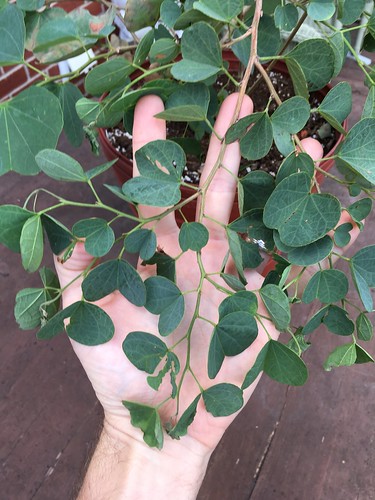
There are actually two small trees in the pot and one of them has much smaller leaves than the other.  Since I have grown Bauhinia variegata from seed and know that the leaves are large from a young age, I do believe this is actually going to retain the small leaves.

Bauhinia galpinii
Tiny leaves of Bauhinia galpinii

My plant is not yet blooming, but I found photos of the flowers online.  They are salmon red and petite compared to B. variegata, but of the same shape.  I hope I can keep this plant happy in the greenhouse over the winter and then I have the perfect place for it next spring when it is warm enough to move my plants outdoors.

Monday, August 20, 2012

Trip Report: Begonia of the Cloud Forest

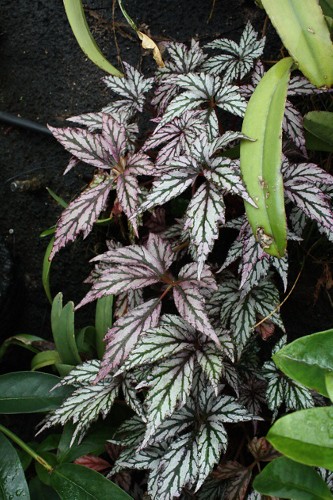
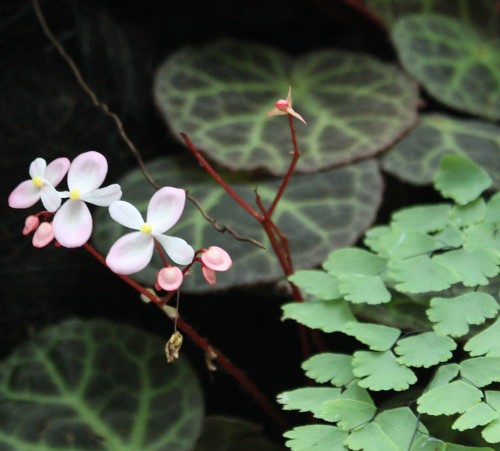
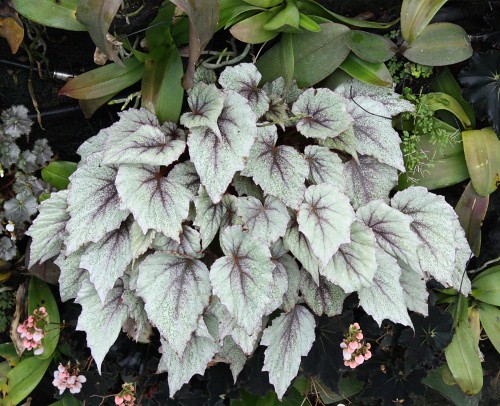
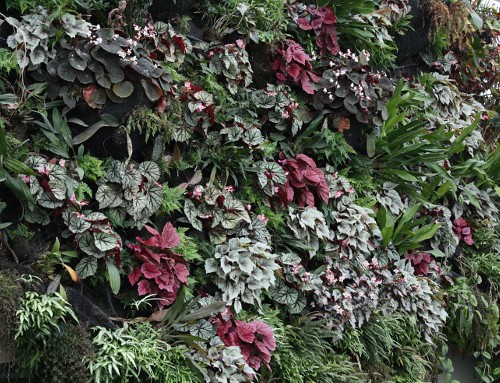
I am not an expert when it comes to Begonia.  There are so many species, even more cultivars and hybrids, and since I don't actively collect these plants, there is really no hope of me ever being able to identify more than a handful of them.

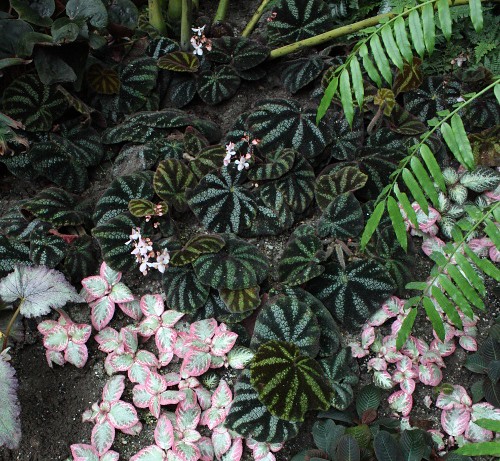
begonia_01

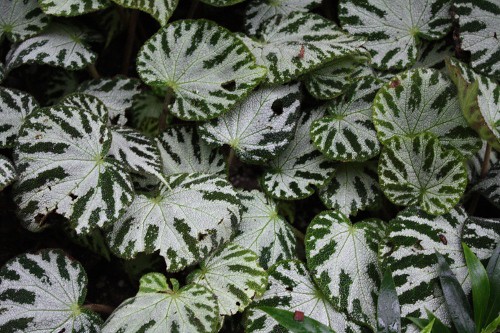
begonia_02

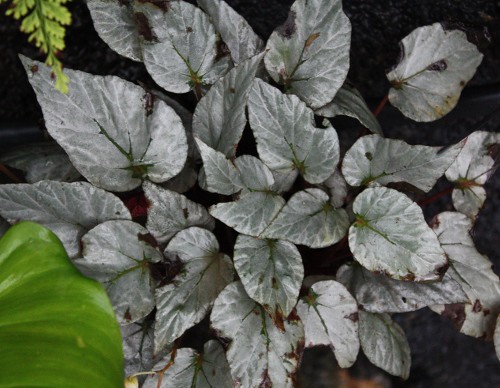
I have seen my share of unique, and bizarre Begonia.  The Cloud Forest didn't have anything really bizarre, but they had some really beautiful Begonia.  So, rather than flap my jowls, I'm going to just let you view these pictures in silence.

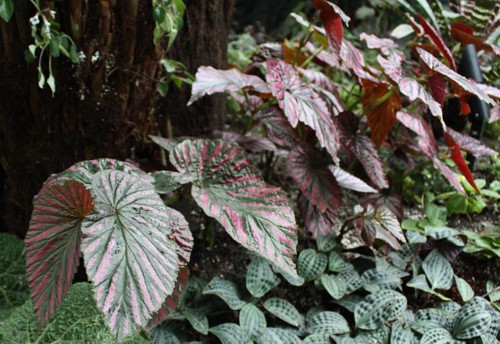
begonia_03

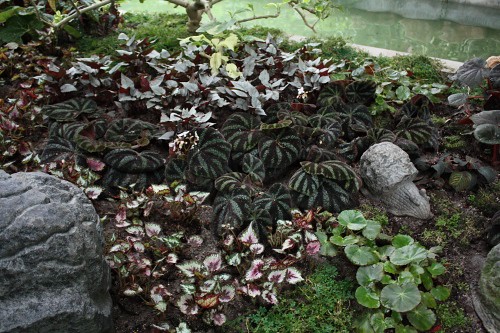
begonia_04

I promised not to babble too much with this post, but don't you think that many Begonia just have an amazing way of reflecting light?

begonia_05

begonia_06

begonia_07

Aren't these plants awesome?  Such variety of textures and colors.

begonia_08

begonia_09

begonia_10

begonia_11

I have still more photos from the Cloud Forest to come.

Wednesday, August 8, 2012

Trip Report: Carnivores of the Cloud Forest

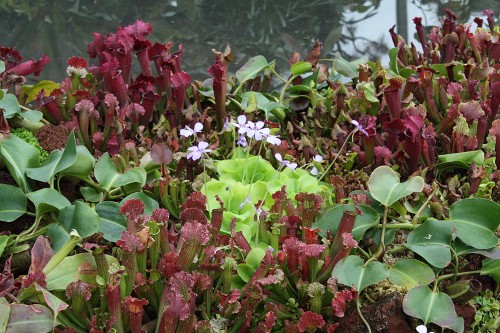
At the top of the mountain in the Cloud Forest dome at Gardens by the Bay is a pond surrounded by orchids and carnivorous plants.  I admire carnivores, but I can't identify many of them.  My tour companion, Shawn, grows a lot of Nepenthes and I'm pretty sure he could identify everything we saw.  I had to check with my carnivorous friends to get identifications on most of these plants.

carnivore_grouping
Dense grouping of carnivorous plants
Many people know the Venus Flytrap, but there are many other interesting carnivorous plants. Most terrestrial carnivorous plants grow in bog conditions in poor soil, which is the reason they supplement their "diet" by catching insects through various methods. There are deep pitchers with slippery edges, sticky leaves, and even triggered traps with teeth.

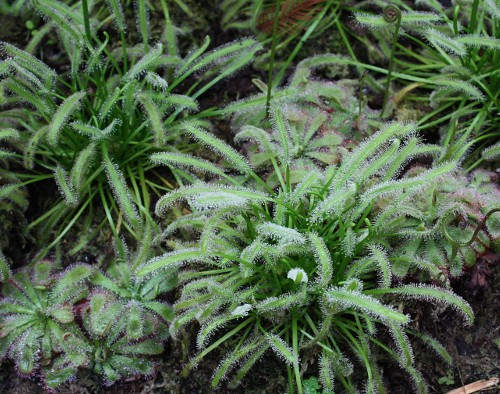
sundews
Sundews (Drosera)
Drosera (Sundews) is the largest genus of carnivorous plants with nearly 200 species. They catch their prey on the sticky glands on their leaves.  In the photo above you can see at least two different species.

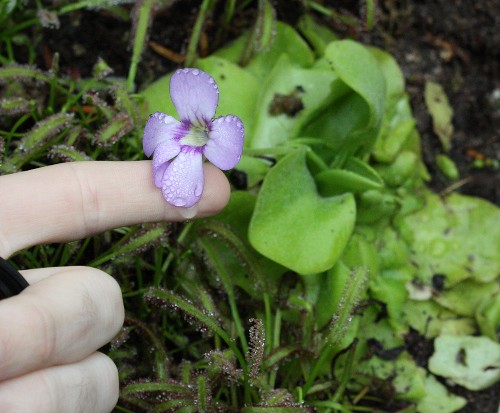
butterwort
Butterwort (Pinguicula) flower
You wouldn't necessarily know by looking, but Pinguicula (Butterwort) has sticky leaves that act like flypaper. Insects are eventually digested right there on the leaf surface.  The flowers resemble those of some Gesneriads.

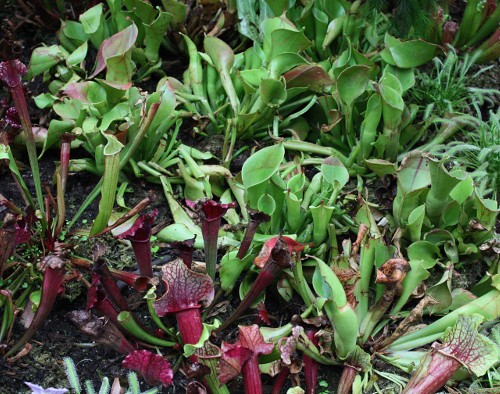
sarracenia_heliamphora
Sarracenia and Heliamphora
Sarracenia are the upright pitcher plants from North America, not to be confused with Nepenthes, the trailing pitcher plants from the Old World tropics (mostly southeast Asia). The primitive South American counterparts to Sarracenia are Heliamphora, the Marsh Pitcher Plants.

nepenthes_noid
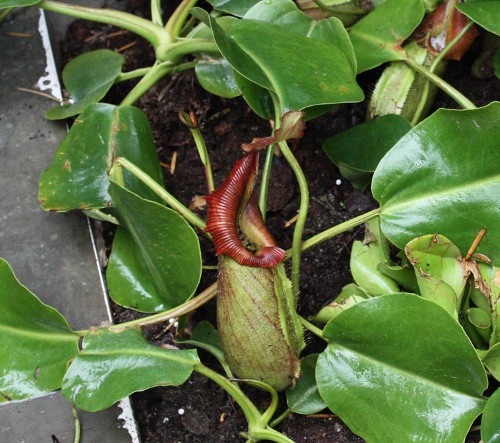
Nepenthes pitcher
While Nepenthes usually have symbiotic bacteria living in the pool within their pitchers, there is at one species of Heliamphora that produces its own enzymes to break down its food.

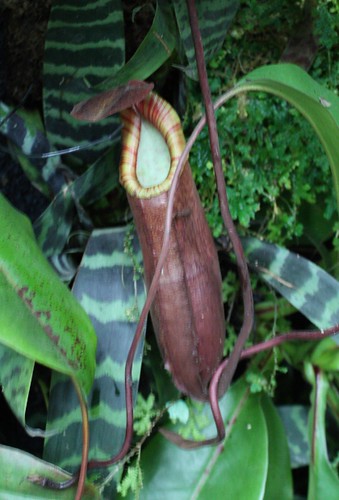
nepenthes_robcantleyi_01
Nepenthes robcantleyi
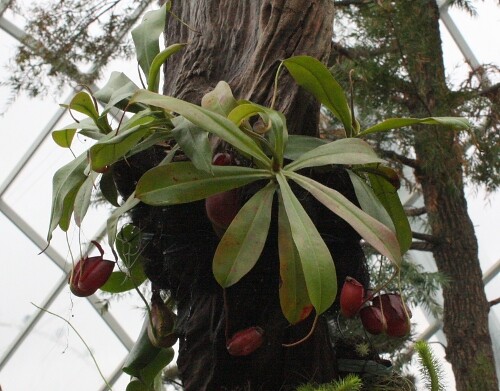
The top of the Cloud Forest mountain had a lot of different carnivorous plants, but Nepenthes plants were scattered throughout the dome, so I have a lot more photos of those to share.

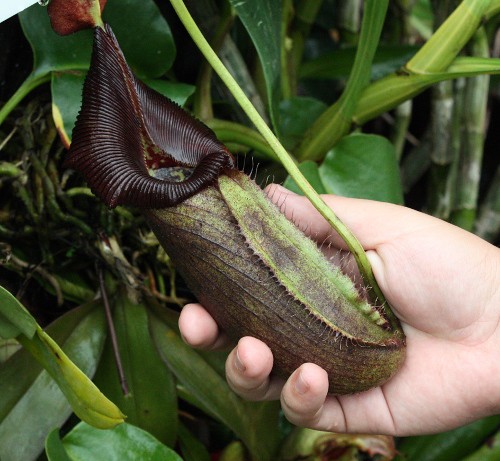
nepenthes_robcantleyi_02
Nepenthes robcantleyi
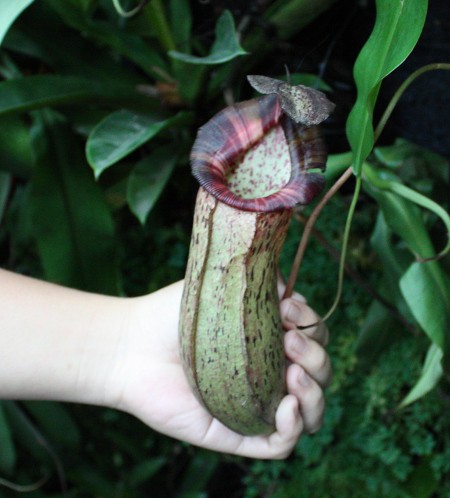
nepenthes_robcantleyi_03
Nepenthes robcantleyi
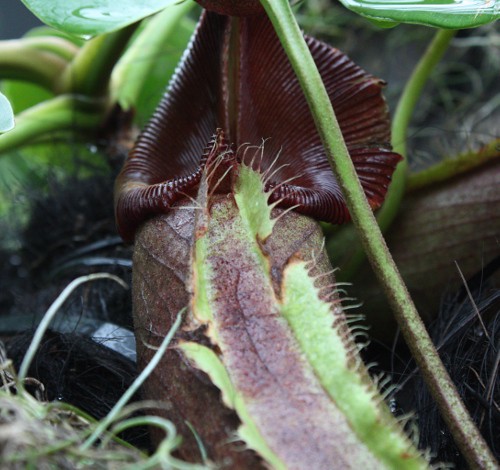
nepenthes_robcantleyi_04
Nepenthes robcantleyi
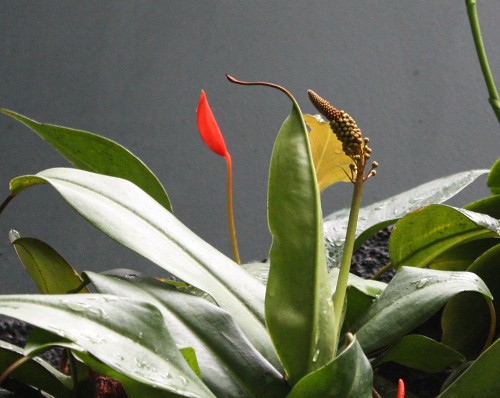
I did not see any open flowers of Nepenthes, but I did see a flower spike that would be opening soon.

nepenthes_flower_spike
Flower spike on a Nepenthes
nepenthes_ampullaria_x_sibuyanensis
Nepenthes ampullaria x sibuyanensis
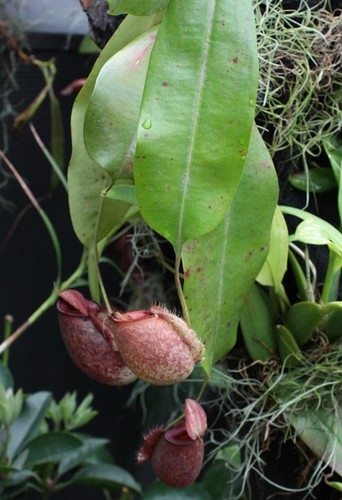
I love the little jugs of the Nepenthes pictured above and below here.  Aren't they cute?  The big, long pitchers are very impressive and have really neat markings, but the little jugs of these two hybrids were my favorites.

nepenthes_xhookeriana
Nepenthes xHookeriana
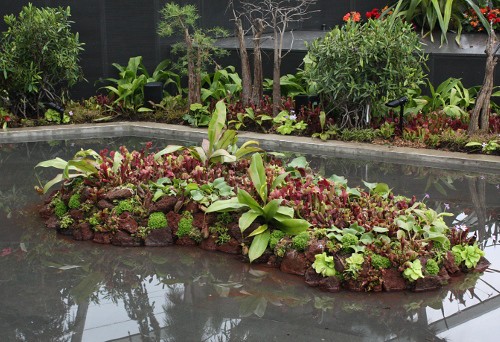
In the middle of the pond on top of the mountain there was a little island planted entirely with carnivorous plants.  I hope no bug crawls ashore there thinking of taking a vacation.

carnivore_isle
Carnivore island: Enter at your own risk.

Thursday, August 2, 2012

Trip Report: Interesting trees at Gardens by the Bay

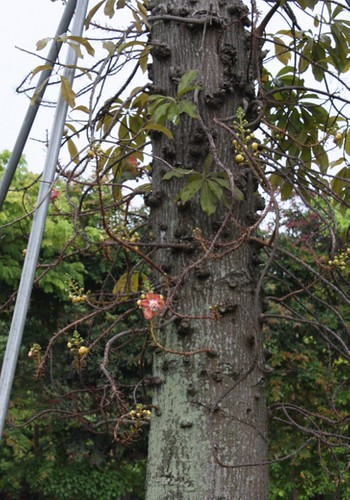
Even though much of Gardens by the Bay has just recently been planted, the garden planners went all out to purchase mature trees from all over the world.  For example, check out the size of this Cannonball tree!
cannonball_tree
Couroupita guianensis, the Cannonball tree
Yes, I have seen a larger one, but it must have been in place for a hundred years or more.  The tree at Gardens by the Bay was just planted!  So, you can see it is just starting to bloom.  Soon it will have cannonballs all over the trunk.
coccoloba_rugosa
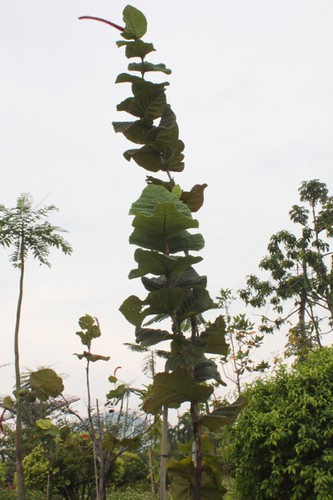
Coccoloba rugosa, the Red-Flowered Sea Grape
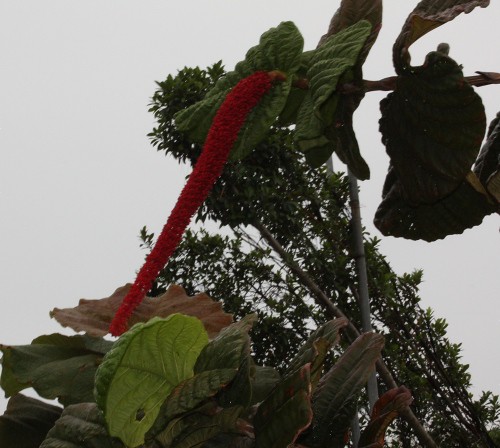
In one grove of trees there were a couple of really neat, large leaved trees.  Coccoloba rugosa, the Red-flowered Sea Grape, was a tall skinny tree, with large, round leaves and blooms emerging from the top.
coccoloba_flower
Coccoloba rugosa flowers
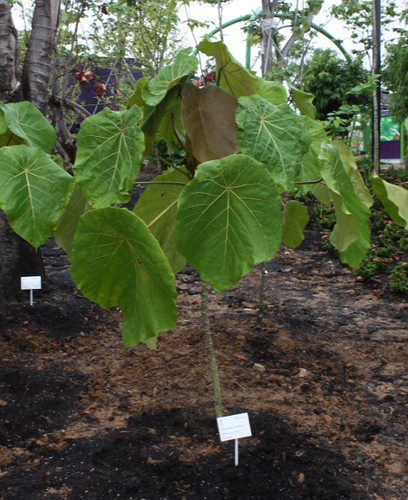
Another large-leaved tree is Macaranga grandiflora, the Parasol Leaf tree.
macaranga_grandiflora
Macaranga grandiflora, Parasol Leaf tree
The Silk Floss tree (Ceiba speciosa) is one that I am familiar with from the Myriad Gardens.  The most prominent feature of this tree (when not in bloom) is the large thorns covering the trunk of the tree.  One area of the gardens is planted with a bunch of Ceiba.  It is curious to me that some trunks are covered in thorns and others are almost entirely smooth.
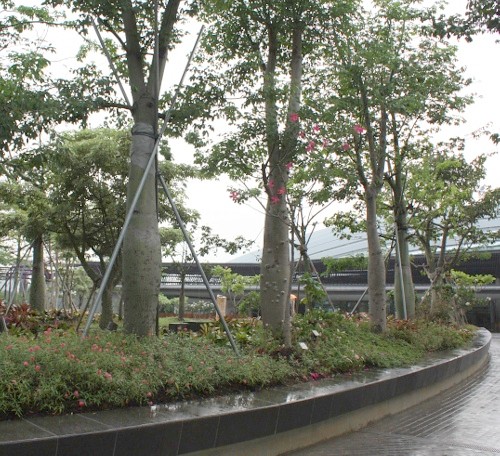
ceiba_grove
Grove of Ceiba speciosa (Silk floss) trees
In bloom, this tree has beautiful pink flowers.  After the blooms are pollinated, they produce seed pods that open to reveal some fluffy silk-like threads surrounding the seeds.  This is where it gets its common name.
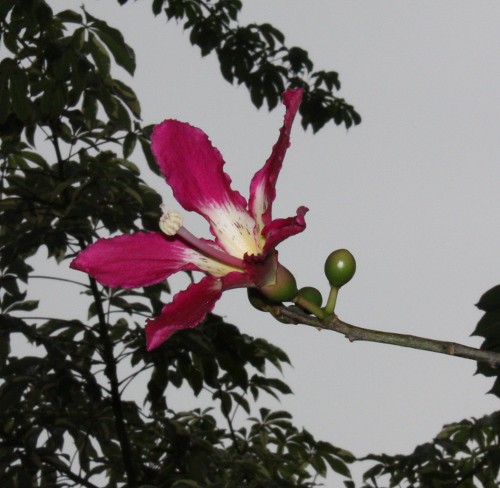
ceiba_flower
Ceiba speciosa flower
Another tree with nice flowers was a Jatropha.  Does anyone know what species this is?  It has really neat leaves to accompany the vibrant orange flowers. [Update 2012-09-04: Tom commented that this is probably Jatropha podagrica.  Thanks Tom!]
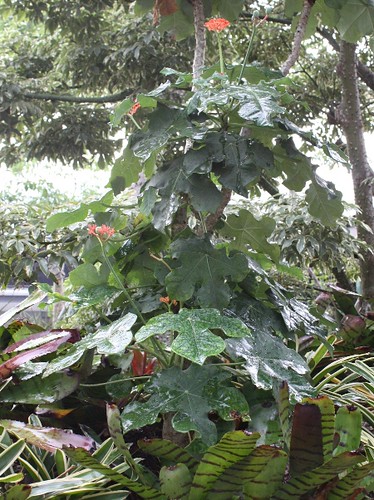
jatropha_orange
Jatropha podagrica with orange blooms
theobroma
Theobroma cacao
The cacao (chocolate) tree, Theobroma cacao, will start blooming and producing fruit at a small size.  That's good news, because this tree is only about 8 feet tall.
layered_tree
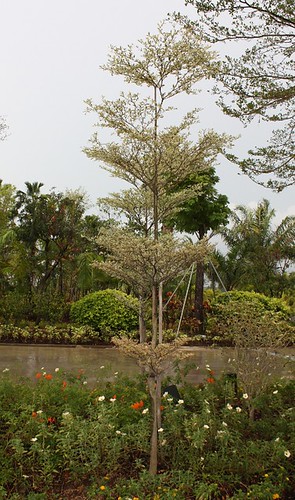
Beautiful layered tree, Terminalia mantaly 'Tricolour'
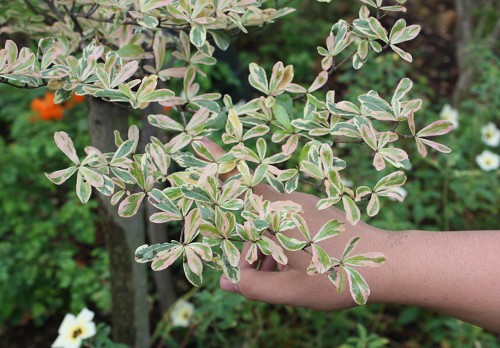
One of my favorite trees in the outdoor gardens was this beautiful tree (Terminalia mantaly 'Tricolour') that naturally grows in layers.  The leaves are patterned in white, green and a touch of pink.
layer
Colorful leaves of the layered tree, Terminalia mantaly 'Tricolour'
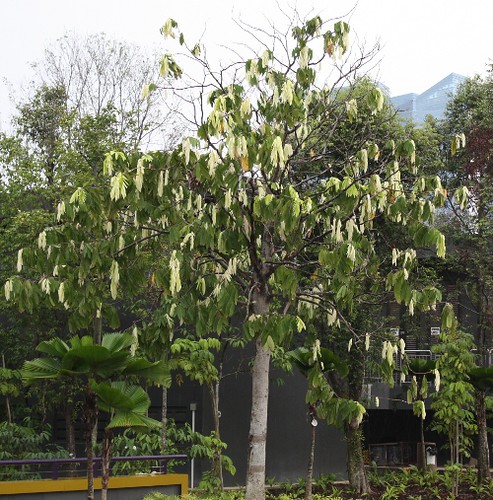
From a distance, I thought this next tree was blooming or had hanging fruit.  As I approached, I realized it was just the new emergent leaves that hang down and reflect light with their glossy texture.
emergent_leaves
Tree with conspicuous emergent leaves
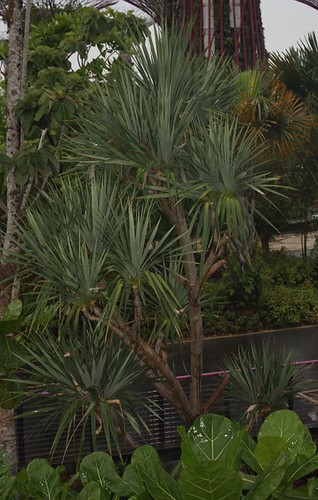
Until my trip to Singapore, I thought Pandanus was a genus only consisting of large, stilt-root trees.  While at the gardens, Shawn pointed out several small plants and shrubs that he said were Pandanus.  One tree that I knew was Pandanus was this large tree.
pandanus
Pandanus tree
The last "trees" I will show you are not living trees, exactly.  They are the gigantic metal "supertrees" which are visible from anywhere in the gardens.  They are covered with bromeliads and other epiphytes, which will fill in over time.
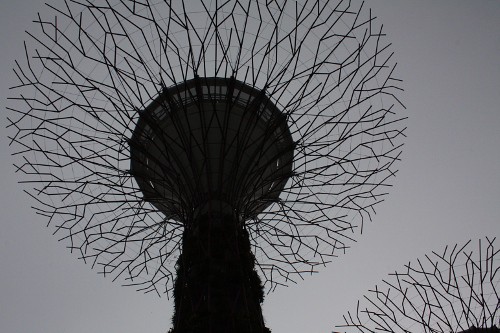
under_supertrees
Under the Supertrees
Due to the overcast sky, I really couldn't get a good photo of these trees, but here are some highly backlit photos anyway.
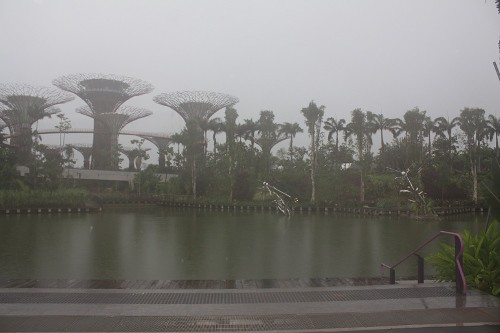
supertrees
The Supertrees under a rainy sky

Monday, July 23, 2012

Trip Report: Fruits in Singapore

While in Jakarta I got to sample a lot of unfamiliar fruits.  On my single day in Singapore, I got to sample even more!

My friend Shawn took me to Geylang, where there are numerous durian sellers along the streets.  This part of town is the place to go for the durian lovers.  Shawn said that you are not allowed to carry durian on the subway since it smells so... strongly.  So basically, everyone comes to this one area to eat durian.  And there are dumpsters and dumpsters and dumpsters full of the empty shells to prove it.

durian_cutting
Cutting my durian
Shawn picked out a nice, small durian for me to sample.  The seller cut into it and Shawn inspected the inside to be sure it was a nice quality fruit.  We took my small, $2 durian back to a table and Shawn showed me how to pull it open and dig in.

first_taste_of_durian
My first taste of durian
I won't say I liked the taste, but it was better than the smell.  I was able to eat the fruit off of 1 seed.  Pause, then try another.

durian_inside
Durian
Shawn finished off my little durian and then went back to buy a larger one for himself.  He got a $5 durian and tore into it.  He told me his fruit was a little sweeter and less bitter than mine had been.  So, I went ahead and tried one more, just to have the full experience.  After we (Shawn) had finished our (his) durian, we washed our hands using the method of running the water over the outside of the fruit to help remove the stickiness and smell from our hands.  I do think that it helped, though the people who were watching us do this told Shawn that it doesn't work.

dragonfruit
Dragonfruit (beet purple and white), and other cut and packaged fruits
Then we walked by some of the fruit stands and Shawn picked out a couple pieces of several different fruits for me to try.  First, was the mangosteen.

mangosteen
Mangosteen
The mangosteen fruit is a sweet white pulp inside a thick, plum-colored rind.  There is a pit, which should not be eaten.  I really liked the mangosteen and will look for those again, if I have the chance.

mangosteen_inside
Mangosteen inside
Then was the rambutan, a hairy little red fruit.

rambutan
Rambutan
This one was also sweet and worth eating again.

rambutan_inside
Rambutan inside
We also got some longans (dragon's eye), which I had had in Jakarta and somewhat enjoyed.  Then were the lychees.  I had tried lychee juice at my hotel one evening and it was pretty decent.

lychee
Lychee
The inside of the lychee was similar to the longan, with a little bit of fruit surrounding a big seed, which is not edible.

It's exciting to know that there are so many fruits out there in the world besides oranges, apples, bananas and pears.  So many different flavors to try and interesting packages to open.  For instance, when I was in Jakarta I just figured out my own ways into each fruit, since I was trying them on my own.  When I was tasting these fruits with Shawn he had a clever way of tearing in to each fruit.  These things take practice.