Showing posts with label wildflowers. Show all posts

Tuesday, June 13, 2017

Trip Report: Wichita wildflowers

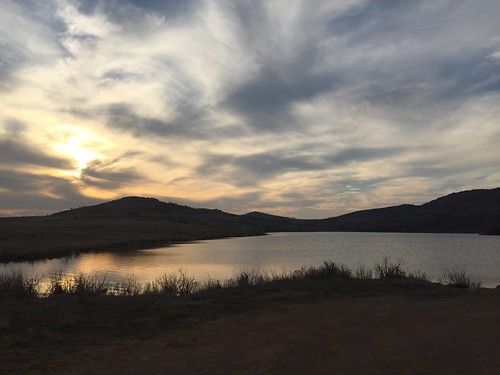
Back in April my family went camping in the Wichita Mountains of southwest Oklahoma.  We planned a camping trip down there more than a year ago, which was postponed due to rain.  The same thing happened on our rescheduled date.  I was really happy that this time around the weather was cooperative - in fact, it was more than cooperative, it was perfect!
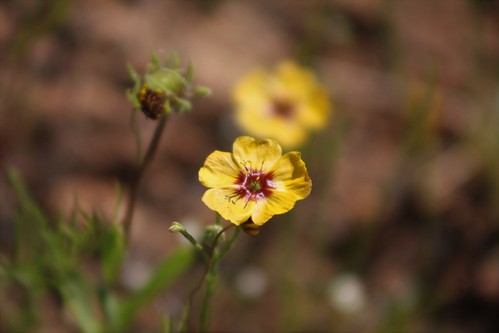
Plains Flax (Linum puberulum)

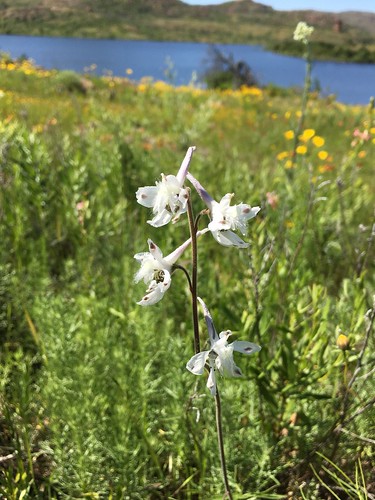
Prairie Larkspur (Delphinium carolinianum ssp. virescens)

A significant motivator for camping in this location is that the Black-capped Vireo, an endangered species, nests in this area and it is one of the few places in the United States where this species can be reliably found.  I was successful with the vireo and added a total of 7 new species of my life bird list (Black-capped Vireo, Cave Swallow, Black-headed Grosbeak, Rock Wren, Canyon Wren, Chuck-will's-widow, and Rufous-crowned Sparrow).
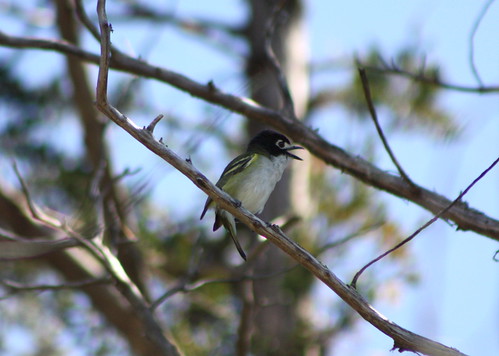
Black-capped Vireo
Black-capped Vireo

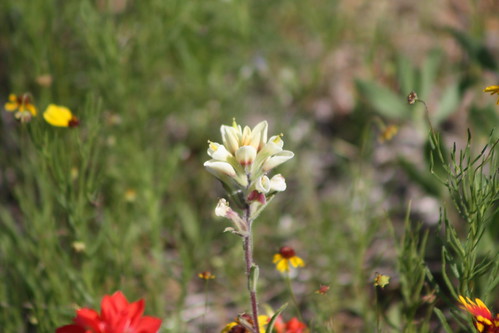
unusual color variant of Texas Paintbrush (Castilleja indivisa)
unusual white form of Indian Paintbrush (Castilleja indivisa)

We saw some other wild animals besides birds - rabbits, TONS of prairie dogs, bison, and lizards.  Ever since the Oklahoma Virtual Spring BioBlitz in April I have been logging as many wild living species as I can - plants, animals, insects, fungi, what-have-you.  I spent a lot of this trip taking pictures to upload to iNaturalist.org.  And once we were home I spent a lot of time trying to identify everything I had seen.  Each picture is a fun puzzle and process of discovery.
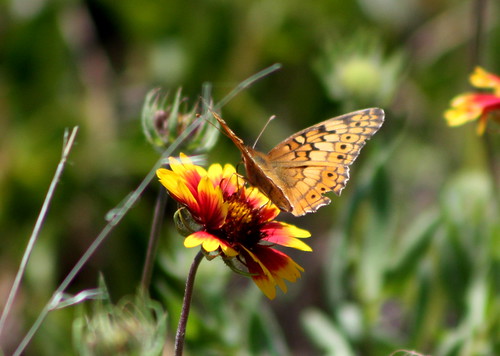
Variegated Fritillary

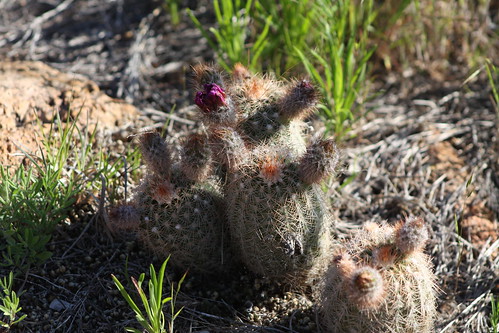
Lace hedgehog Cactus (Echinocereus reichenbachii)
Lace Hedgehog Cactus (Echinocereus reichenbachii)

There were many wildflowers in bloom in the Wichitas - Opuntia, Yucca, and Echinocereus cacti, Gallardia, Gaura, Linum, Castilleja, Delphinium, and more.

Opuntia sp.
Opuntia

Kern's Flower Scarab (Euphoria kernii) in Opuntia
Opuntia with pollinator, Kern's Flower Scarab

My full album can be seen here:
Wichita Mountains

Wednesday, May 17, 2017

Oklahoma Virtual Spring BioBlitz

At some point over the last year I signed up to receive emails from the Oklahoma Department of Wildlife Conservation.  Some of the emails deal with fishing and hunting records and I usually trash those without reading, but I really like the newsletters that tell about our native species of plants and animals.

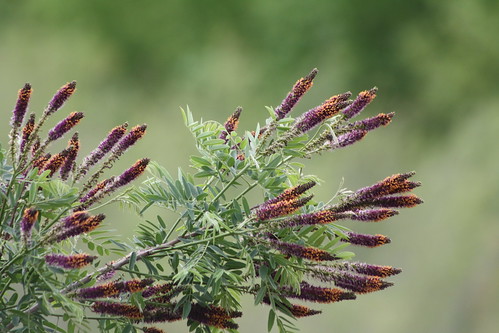
False Indigo (Amorpha fruticosa)

In late March I got an email telling about the upcoming Virtual Spring BioBlitz, which I hadn't heard of before.  The (non-virtual) BioBlitz is an event that is held each October at a different state park in Oklahoma.  Nature enthusiasts show up and spend the designated period (1 or 2 days) wandering around the state park and recording as many species as they can identify.  It serves to map out the biodiversity of the area, track invasive species and see how native species are doing.  The Spring Virtual BioBlitz is a month-long survey of the entire state.  All observations are logged to iNaturalist.org, a database of naturalist records used by professionals and amateurs alike.

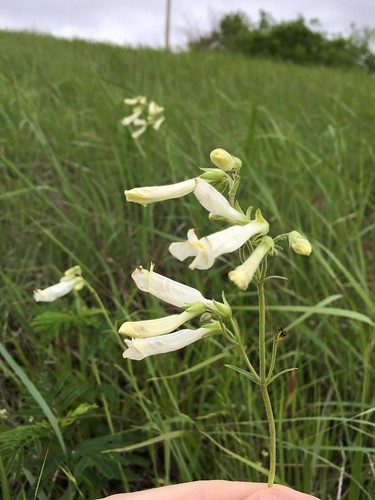
Oklahoma Beardtongue (Penstemon oklahomensis)

I took on the challenge and logged every wild species I could for the month of April.  It was a lot of fun.  I am already in the habit of doing this with bird species, so I got to extend this habit to some of my other interests: plants, insects, and fungi.

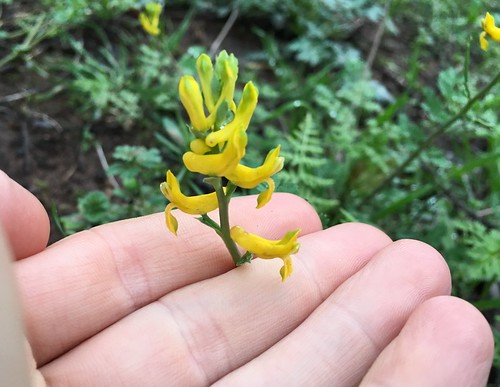
Corydalis aurea

Throughout the month there were several challenges and I met each goal: logging at least X observations in the first weekend, logging at least Y observations in a state park another weekend, logging at least Z observations in a county that hadn't yet received any records.

Untitled

I ended up logging 375 observations during the month of April.  Of those observations, 223 unique species have been identified by the iNaturalist community.  (Some of my 375 were duplicates and others have not yet been identified to species level yet.)

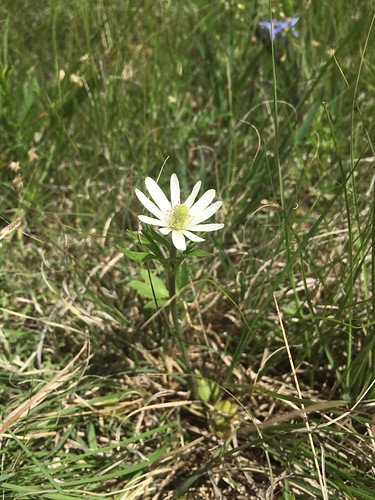
Tenpetal Anemone (Anemone berlandieri)

I haven't spent a lot of time learning about native (or invasive) species that live in Oklahoma, so this was a good opportunity for me to learn from others.  I mostly posted my plants without identifications and allowed others to provide guidance.  I can't say that I can positively identify all of these plants again without studying my photos and the names some more, but I have a much better grasp of what wild plants are growing in my area.

Tuesday, January 4, 2011

Some members of the Pea family

The botanical family Fabaceae is commonly called the Pea family, because it contains the edible peas, among many other plants.  Several of the plants of this family are grown for their flowers and several have common names that include "pea."  One example is the Sweet Pea (Lathyrus odoratus).  I have grown a couple of different plants from this family - Purple Hyacinth Vine (Lablab purpureus) and Blue False Indigo (Baptisia australis v. minor).

I have also seen some neat plants growing wild over the last year, including the following plants.

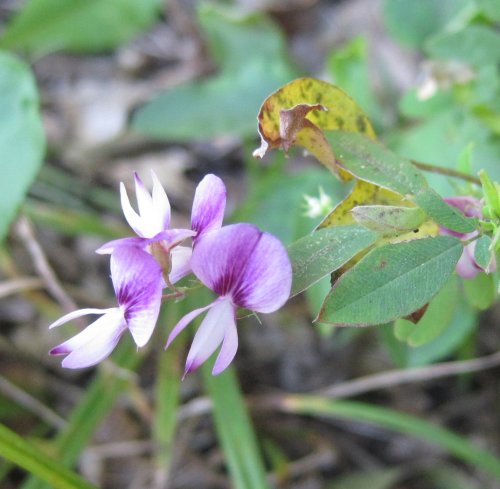
sulphur_pink_pea
Blooms of wild pea plant at Chickasaw Recreation Area near Sulphur, OK.

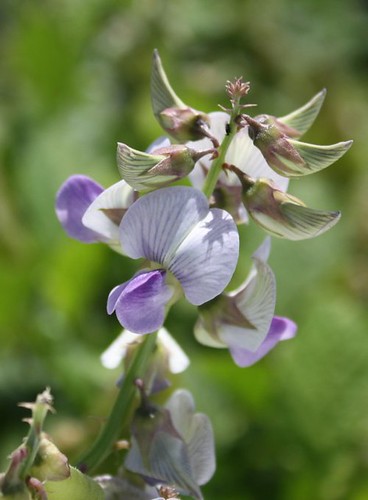
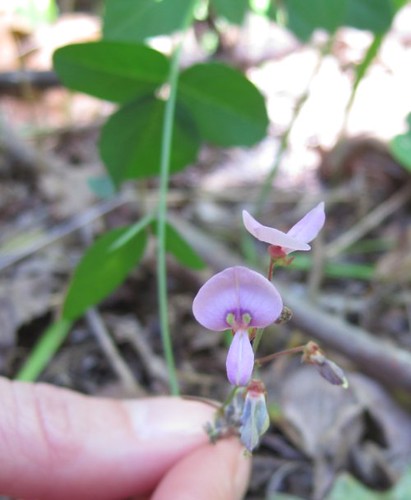
sulphur_purple_pea
Blooms of another wild pea plant near Sulphur, OK.

We came across the plants pictured above while walking through a national park in southern Oklahoma.  I don't know the identity of either plant, but I liked them both.  We were actually hoping to see some orchids, but these little flowers were about the only thing we found in bloom.  Ironically, the blooms of the purple pea looked similar to an Encyclia cochleata, with it's squid legs dangling.

cayman_pea_bloom
Pea blooming on Grand Cayman Island.

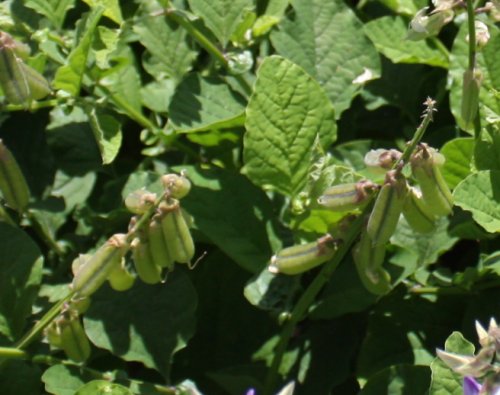
The plant pictured above was growing on a beach on Grand Cayman island, about 15 feet from the water.  The blooms of the Fabaceae family are distinctly shaped and the resulting seed pods are unmistakable, as well - the pea pod.

cayman_pea_pods
Pea pods on Grand Cayman Island.

If anyone knows the genus or species of any of these plants, please comment.

Wednesday, May 19, 2010

Clovers from seed

I couldn't have grown these intentionally...

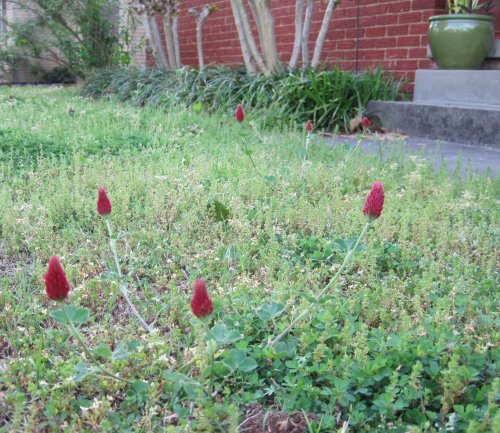
crimson_clover_volunteers_2010
Crimson clover (Trifolium incarnatum) blooming in our yard.
Remember the beautiful red clovers that I found growing on the side of the highways across Oklahoma last year?  Remember how I brought a small clump home and planted them in a pot on my front porch?  Well, they didn't last long very long in the pot.

However, the seeds must have blown from the porch into our yard and managed to germinate this spring.  Thanks to our vacation to St. Louis a couple of weeks ago and our busy schedule when we got home, we didn't have time to mow the grass weeds for almost 2 weeks.  This gave our little clover seedlings just long enough to produce some blooms before I plowed them over.  I'm glad we weren't going to get around to mowing to give them a chance to flower!

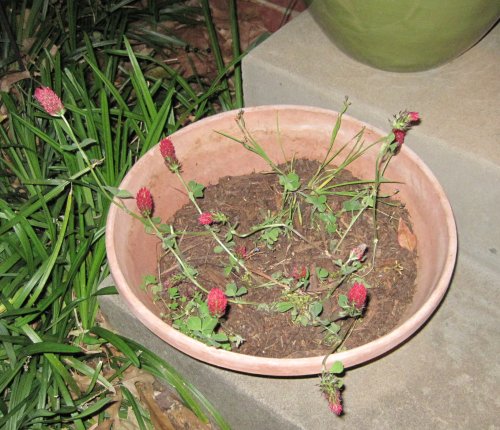
potted_clover
Crimson clover contained once more.
I have removed the little plants from our lawn and moved them to a pot.  This year maybe I will try to collect some of the seeds and scatter them in an area where I would like to see them next year.  Think I'll be as successful as Mother Nature was?