Showing posts with label cycads. Show all posts

Friday, October 28, 2011

Plant Find: My Florida plant acquisitions

While in Florida I got a LOT of plants.  Most of these were either aroids or orchids.  First, let me show you the aroids I got.
anth_ottonis
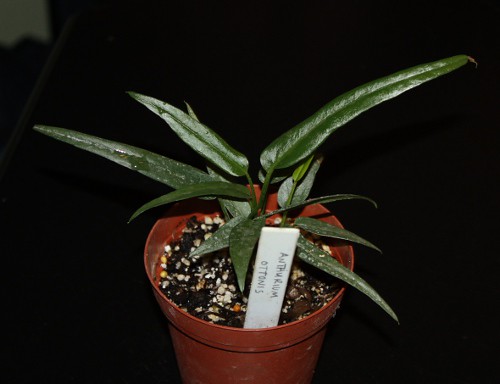
Anthurium ottonis
Anthurium ottonis

This little Anthurium attracted me with its lanceolate leaves.  It is a very healthy little plant and I look forward to seeing this grow into a mature specimen.
anth_crystallinum
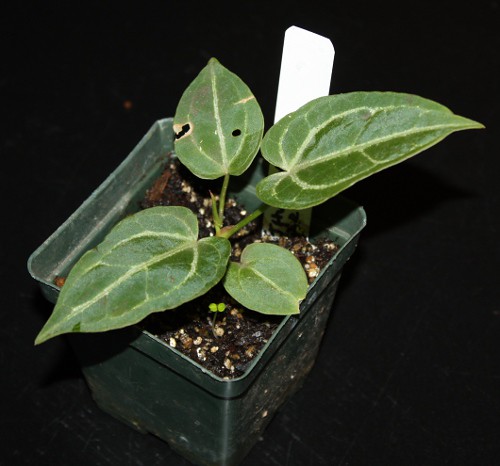
Anthurium crystallinum

This is one of the velvety Anthuriums with prominent iridescent veins.  Again, this is just a small plant, but if it likes my growing conditions then it will become a beautiful large plant within a year or two.
ag_modestum_variegated
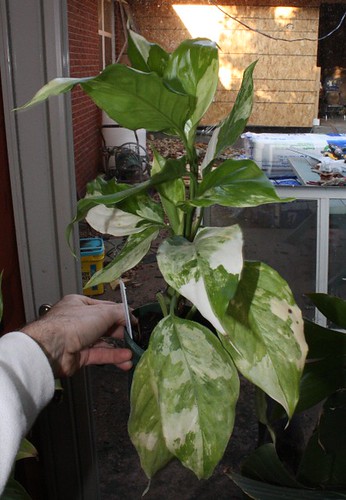
Aglaonema modestum variegated

This is actually the only Aglaonema I purchased at the show.  There were a couple others that I eyed, but ultimately I ran out of packing room (and money), so I stopped with this one.  It is one of the few variegated Aglaonemas in cultivation.  Most Aglaonemas have interesting leaf patterns, with various shades of green and some silvers, but few have white patches like this one.
alo_maharani
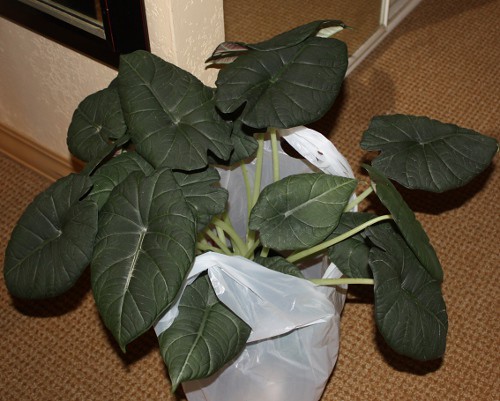
Alocasia 'Maharani'
Alocasia 'Maharani'

This is one I had never seen before.  It is a beautiful Alocasia with dark leaves that have a rough texture and a rigidity unlike any of my other plants.  I'm really hoping this isn't a high maintenance plant, but it might be.  For now it seems pretty happy, sitting in a very shady spot on the floor of my greenhouse.

Dieffenbachia oerstedii - no picture


I hadn't heard of this Dieffenbachia before, but it was a species and it was from Dr. Croat, so how could I pass it up!?!  Dieffenbachias are a really neat genus of aroids that I enjoy, though I don't have too many in my collection.  This particular species develops a strong white midrib at maturity, which is striking in contrast to the otherwise dark green leaves.
philo_gloriosum_enc_plicata
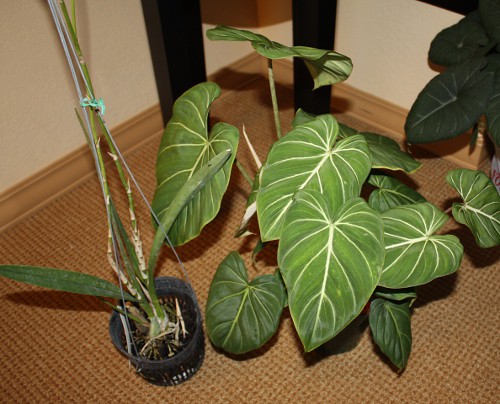
Encyclia plicata (in mesh basket) and Philodendron gloriosum

Philodendron gloriosum

Christie and I both fell in love with this Philodendron and decided to buy it out of our general budget, rather than my plant allowance.  Since then it has gone by the moniker of "family plant."

The IAS show and sale is set up with the show plants in the middle of the room.  Along one wall are vendors with plants for sale and along another wall are plants for sale that will benefit the IAS.  Dr. Croat brought a bunch of items from the Missouri Botanical Garden for sale at the IAS show.  These plants are either species that were wild collected or propagated from his wild collections.

Pinellia pinnatipartita (IAS show)

The one exception, I believe, was a big trash bag full of Pinellia pinnatipartitas, which I think Dr. Croat had yanked out of his yard to thin out his own crop.  There was a sign on the bag, boldly announcing "Guaranteed success!"  As if that weren't enticing enough, they were marked $1.  So, naturally, I got one.  Taylor picked through the bag for me and found a really nice, large tuber and it was one that had just fruited, so I have a bunch of seeds in addition to the healthy tuber.

tubers of Pinellia ternata (IAS show) - no picture

Pinellias are one of the aroid genera with several varieties hardy in my zone.  For now, I have potted these tubers of Pinellia ternata and put them in the greenhouse.  However, I plan to plant them outdoors next spring and then let them stay outside for good.  I want to develop a little garden of hardy aroids.
rhaph_hayi
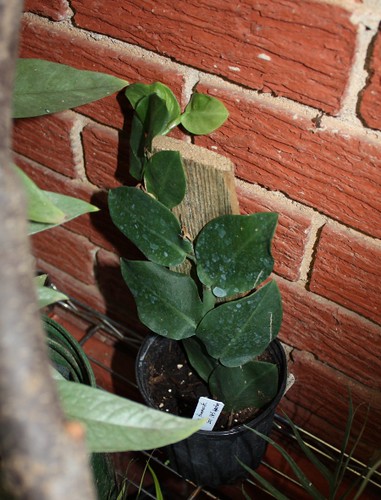
Rhaphidophora hayi
Rhaphidophora hayi (IAS auction)

This is really my first shingling aroid.  I made up a tentative list of plants I would like to purchase at the IAS show before I left.  Not really knowing what I would find, it was just a wishlist of things I was hoping to find.  One of the items was "a shingling aroid."  There were some for sale, but I was overlooking them for other plants.  Then there was one available at the auction and I ended up getting an excellent deal on this little plant, donated by Palm Hammock.  It is now propped against the back wall of the greenhouse, where I am hoping it will start to shingle up on the brick wall of the house.

Now, here are the plants I purchased, which are not aroids.

enc_plicata
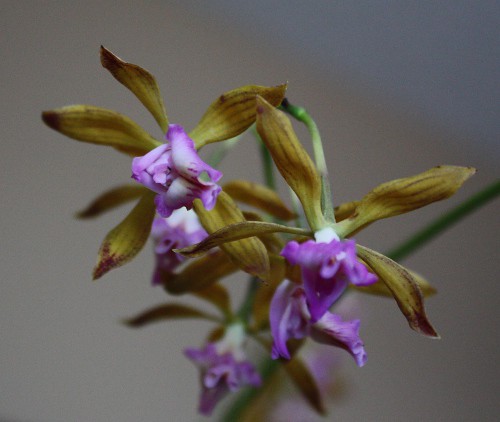
Encyclia plicata blooms
Encyclia plicata (above) and Encyclia tampensis (below) - both from Ruben in Orchids

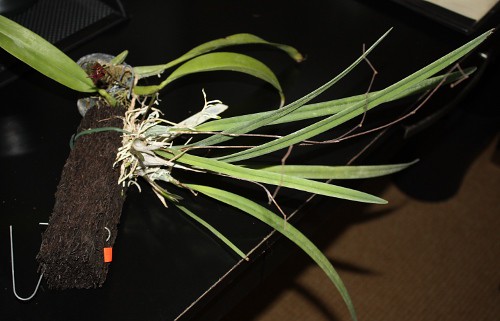
As mentioned in a previous post, I purchased two Encyclias at Ruben in Orchids.  One of them (Encyclia plicata) had a long bloom spike with these really neat flowers (above) and was growing in a mesh basket.  The other (below) was on my wishlist of plants to purchase in Florida.  It is the "Florida Butterfly Orchid" (Encyclia tampensis) and the plant that I kept seeing all over my everglades boardwalk.  It is a mature, mounted plant and had already finished blooming, with several dead bloom spikes on it when I purchased it.  Next year I hope to have as many spikes as it had this last summer.
enc_tampensis
Encyclia tampensis


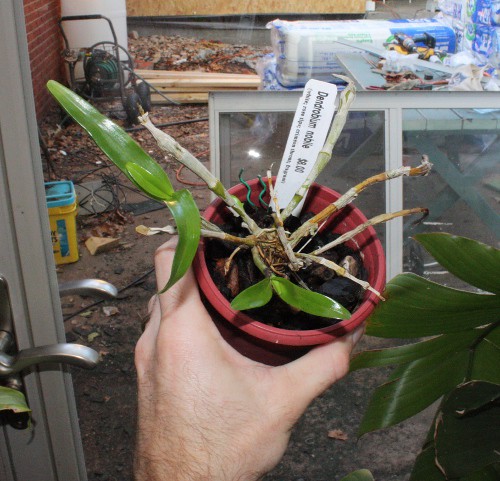
dend_nobile
Dendrobium nobile
Dendrobium nobile (from R.F. Orchids)

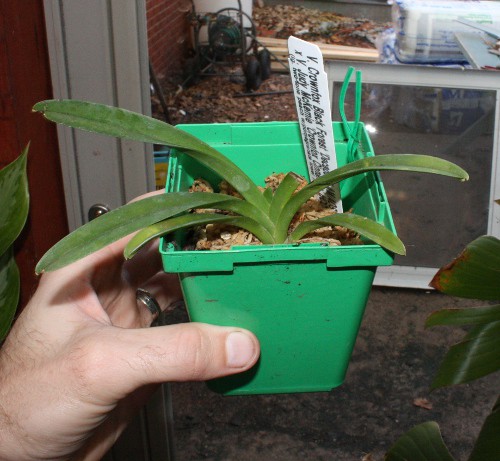
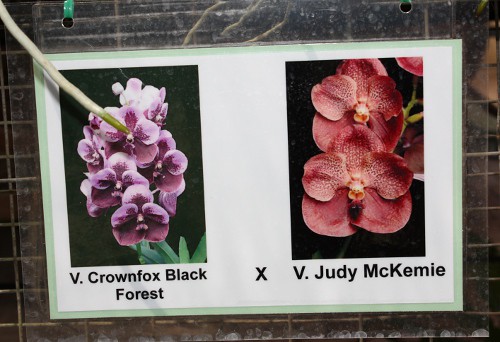
I purchased two cheap orchids at R.F. Orchids - one a species Dendrobium nobile (above) and the other a hybrid Vanda. The Dendrobium was a collection of keikis that had been cut off mature plants and bundled together for $8.   The Vanda is young now, but someday it should look like a mixture of the parents, which are pictured below.
vanda_hybrid
Vanda hybrid
Vanda hybrid (V. Crownfox Black Forest x V. Judie McKemie) (from R.F. Orchids)
my_vanda_hybrid
Vanda hybrid parents
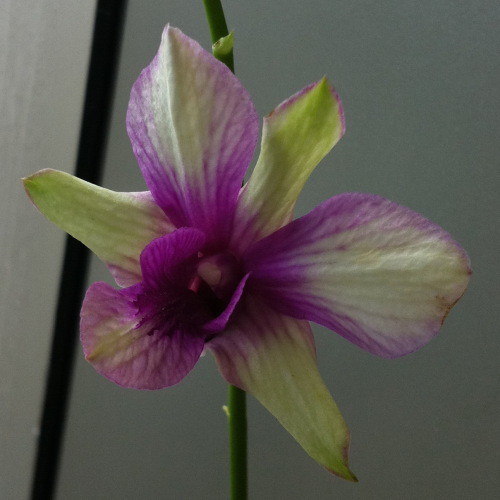
dendrobium_noid
A nice Dendrobium in bloom
Dendrobium in bloom (from The Banyan Garden in the Keys)

There are still a couple of "trip reports" I plan to write in the coming weeks about special planty places I visited while in Florida.  One of those places is called The Banyan Garden, which is located on the island of Islamorada in the Florida Keys.  I bought this cheap and beautiful blooming Dendrobium there.
cheap_orchid
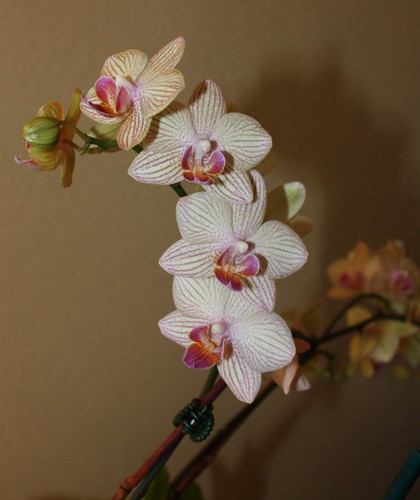
My favorite cheap Phalaenopsis
Phalaenopsis in bloom (from Redlands roadside stand)

I already told you about my steals in south Miami - orchid country.  Here are their pictures, again.
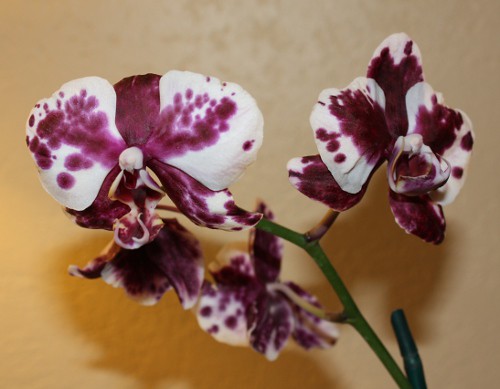
phal_harlequin
Harlequin Phalaenopsis
Phalaenopsis (harlequin) in bloom (from Redlands roadside stand)

Harlequin Phalaenopsis are the "in thing" right now.  The name refers to the spotting pattern on the flower petals.  I'm told this is a generic term applied to dog and horse breeds, as well.
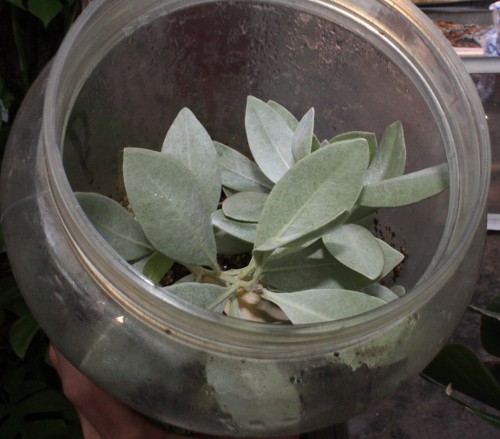
buttonwood_cuttings
Silver Buttonwood cuttings.  I really hope these are rooting, but I just don't know.
Silver Buttonwoods

There were Silver Buttonwoods (Conocarpus erectus var. sericeus) everywhere in Florida.  Most were trees, but quite a few were bushes or well-manicured hedges.  We stopped to admire this beautiful tree at our very first lunch stop in Miami - on our way to the Everglades.  On the last day of our trip, I took some cuttings from a couple trees in the Keys.  The cuttings are now in a jar of moist vermiculite, hopefully rooting.  I put some other cuttings directly in water and they quickly wilted.  Since the cuttings in vermiculite still look fresh and happy I have high hopes that good things are happening.  We'll see in a couple of months.
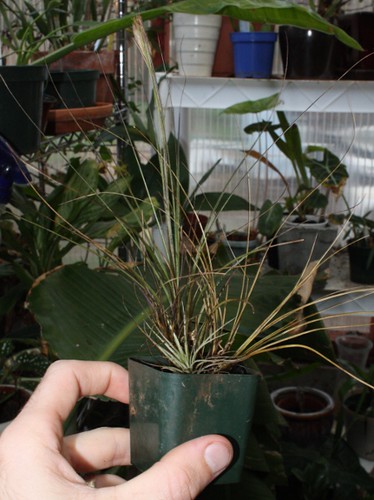
three_tillandsias
Three little Tillandsias
Tillandsias

Tillandias grow everywhere in southern Florida.  I have never grown any myself, but I am hoping I will have some luck with these.
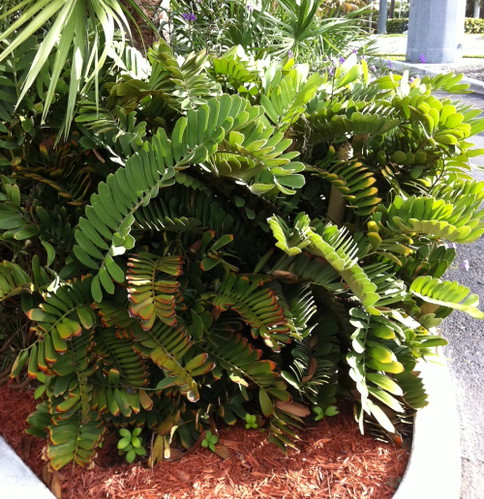
cycad_seedlings
Zamia furfuraceae "hedge" with seedlings at the base
Zamia furfuraceae seedlings (from Key West, Florida)

Cycads are very common in southern Florida.  In many places they are grown so thick that they can be cut into hedges.  The above picture is from our hotel in Key West, where they were being trimmed into rectangular hedges.  These plants were "coning" like crazy and the seedlings were thick at their base.

Yes, I really did pack all of this in suitcases to bring home!

Friday, October 14, 2011

Trip Report: The Audubon House

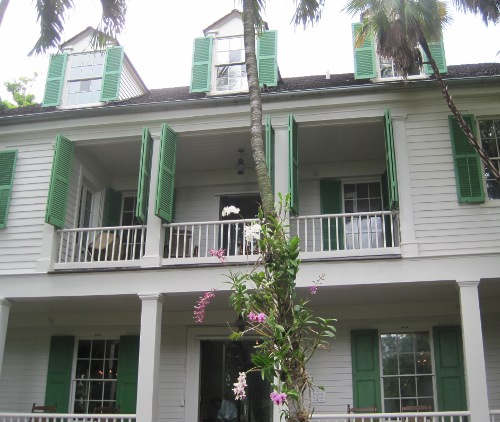
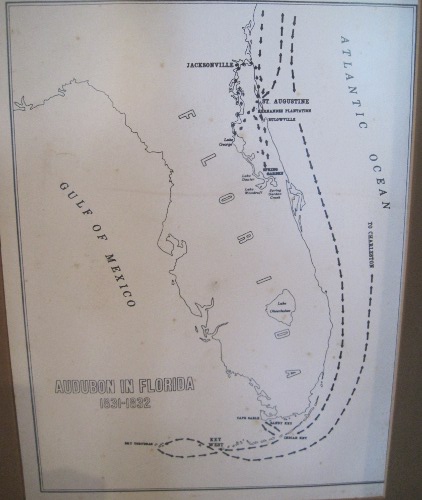
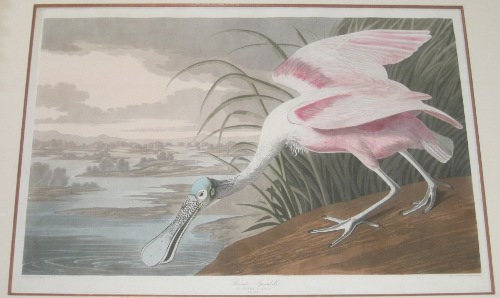
While in Key West last month, we visited "The Audubon House."  You would think with a name like this that the house would have once been under the ownership of someone with the name of Audubon.  It turns out the connection is a little less direct.  John James Audubon, the well known historical figure for his art depicting American birds, traveled to the Florida Keys in 1831 in order to paint the native birds of Florida.  While he was in the Keys, he stayed at the house next door to this house.

audubon_house
The Audubon House

audubon_travels
John James Audubon's trip to the Florida Keys
The house has been preserved and connected with Audubon because he admired the gardens while he was in the area and supposedly painted some of the trees and plants into his portraits of various Florida birds.  The gardens have been kept in great condition as a tribute.

roseate_spoonbill
Roseate Spoonbill portrait by John James Audubon - my favorite from the Florida collection.
audubon_orchid_tree
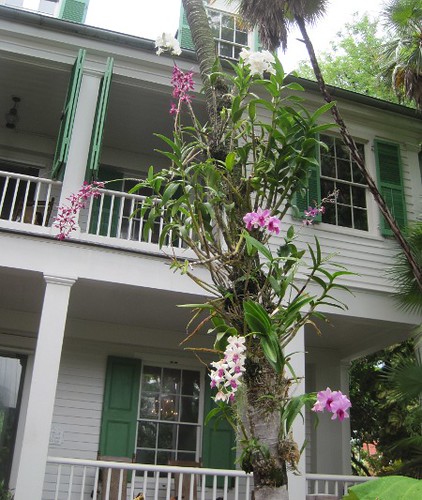
Tree loaded with blooming orchids in front of Audubon House
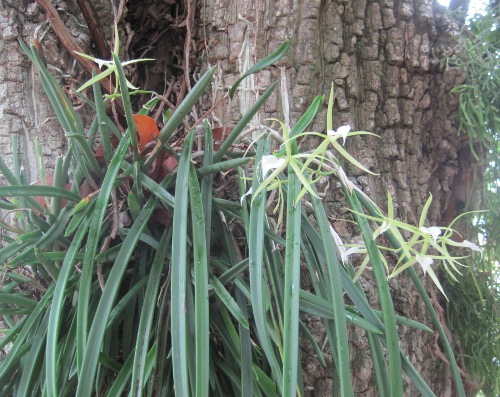
The house is now a shrine to his work and has a very nice garden outside.  We toured the house and gardens outside, enjoying the beautiful setting.  I think Christie and I could settle into this house just fine.  The trees outside are covered in orchids, and many of them were in bloom for our visit.

brassavola
Brassavola orchid
crinum_bloom
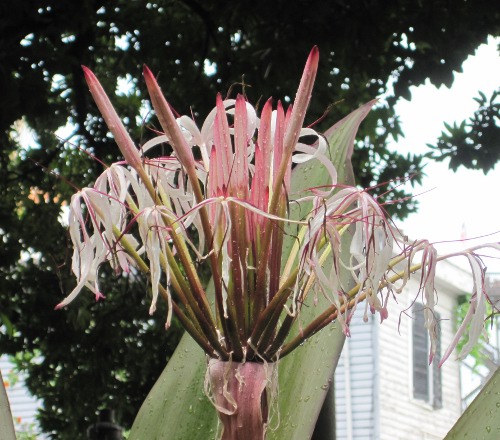
Crinum lily bloom
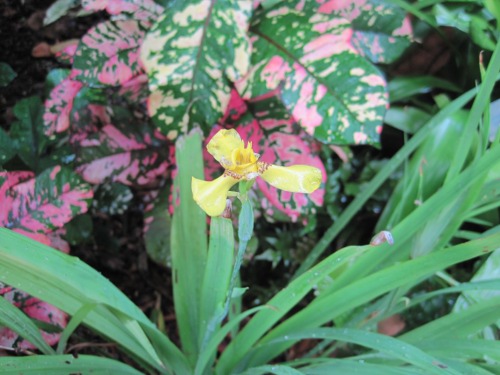
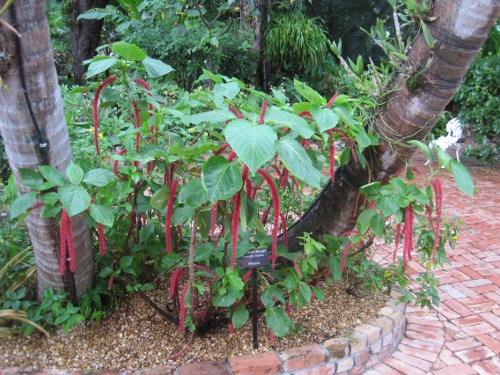
Other interesting plants filled the flowerbeds, including a couple of large Crinum lilies, some yellow Walking Iris (Neomarica longifolia), and a nice Chenille plant (Acalypha hispida).

neomarica_longifolia
The yellow walking iris - Neomarica longifolia
chenille_plant
Chenille plant - Acalypha hispida
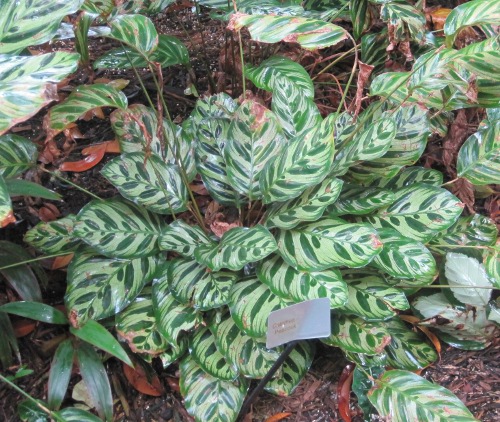
There were lots of Calatheas scattered throughout the gardens, and concentrated here and there.  I have seen these growing in many botanic gardens, but not very often in an outdoor setting.

calathea
Calathea Peacock (so the sign reads)

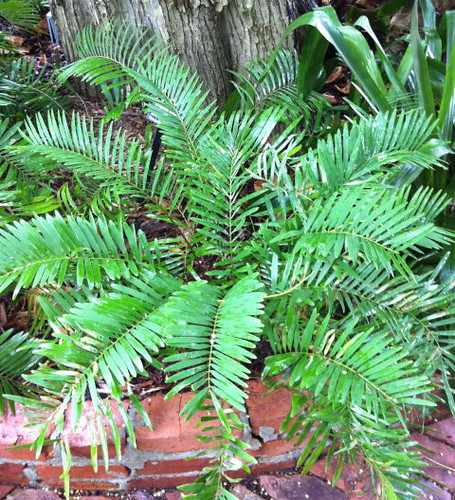
The gardens also contain some Florida native plants, which would have been important to Audubon, as he preferred to paint his birds sitting on authentic trees and plants to the area where he would find them in nature.  One of the natives I really liked was this cycad, Zamia floridana.

zamia_floridana
Florida native cycad "Coontie" - Zamia floridana
cp_staghorn
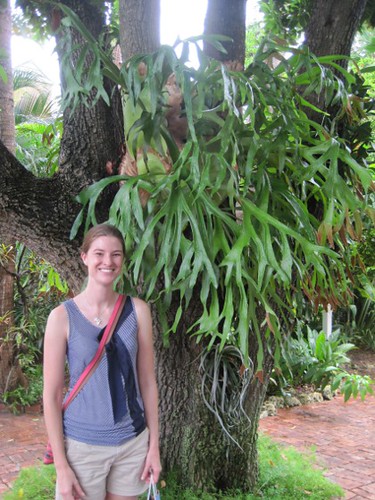
Christie under a nice Staghorn fern

p_stenolobum
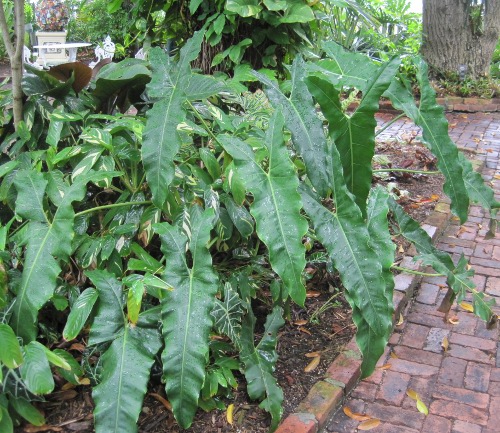
Philodendron stenolobum
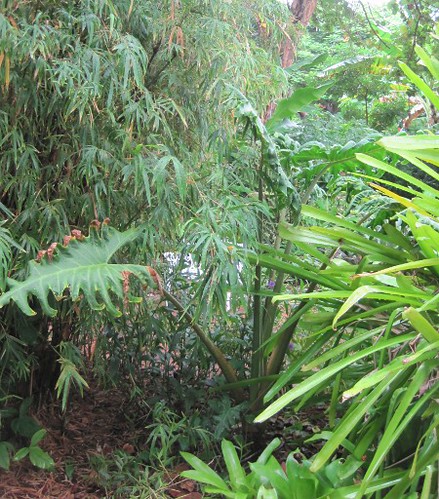
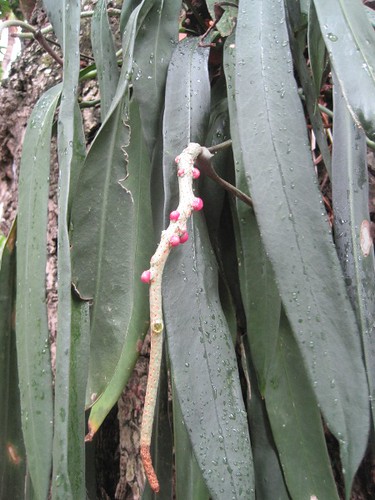
There were also some nice aroids, including this large Philodendron stenolobum (above) and Alocasia portei (below). I loved the pendant Anthurium vittariifolium, with its pink berries showing (two below) and now have a small seedling plant from a recent plant trade. I hope my plant is this attractive some day.

alocasia_portei
A large Alocasia portei (in the center of the image)
Anthurium vittariifolium with berries on spadix
cham_metallica
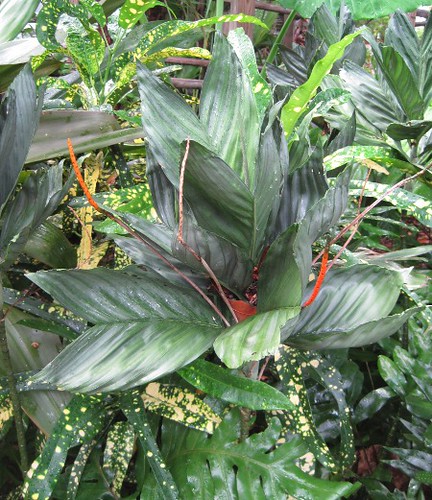
Chamaedorea metallica
My second favorite palm in the entire family is Chamaedorea metallica, which is called the Miniature Fishtail Palm, or Metallic Palm.  It has silver-blue leaves and striking orange flowers and berries.  It is small for a palm, with a maximum size of only 5 or 6 feet tall, and it is therefore usually growing as an understory tree.

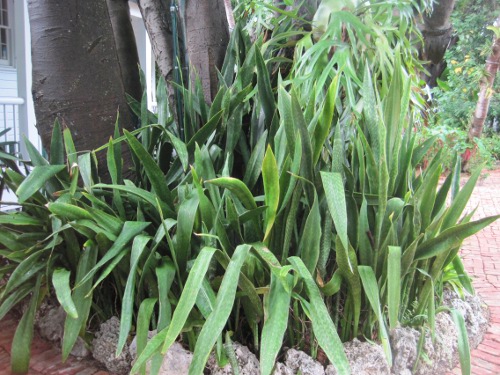
sansevieria_bed
Bed of Sansevierias - probably Sansevieria metallica.
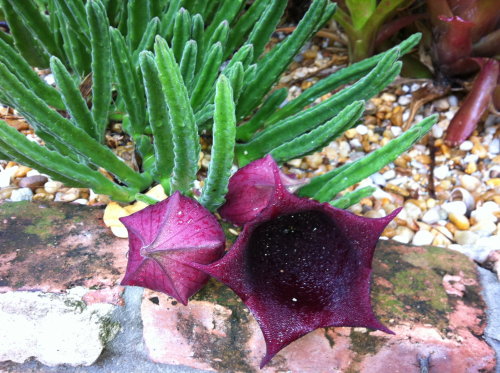
You probably already know that I like Stapelias. Am I crazy or do the buds of the Stapelia below look just as cool as the open bloom? Yes, I did bend down and stick my nose into the flower to smell the pungency. And yes, I did request Christie do the same. She grudgingly did so - after a third or fourth request.

stapelia_leendertziae
Stapelia leendertziae in bloom.
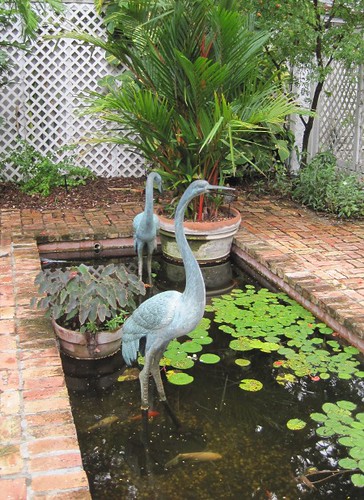
The Audubon House sits on a lot large enough to have several wandering paths through the gardens and 2 separate set-aside gardens: a water garden and an herb garden. The water garden was very tastefully designed, with some heron statues in the pond. I'm sure JJ Audubon would have liked to sit and stare at these nice statues.  The setting of this garden is similar to what I have talked about doing with a portion of our backyard, with the ground paved in either bricks or rock and a shallow pond or other small water feature.  Just a relaxing place to sit and enjoy the outdoors.

audubon_watergarden
The appropriately decorated Audubon water garden.

Saturday, April 30, 2011

Trip Report: Renovated Myriad Gardens

Last week the Myriad Botanical Gardens and Crystal Bridge Tropical Conservatory in Oklahoma City reopened after a year of renovations.  The purpose was primarily to replace the 20-year old panels that were past their prime.  While they were taking the place apart, they went ahead and repainted the structure, revamped the layout of the interior a bit, laying new walkways and completely redoing the behind-the-scenes staff and educational area.  For now, only the publicly seen area is finished and the rest still needs a lot of work.  During the year that the renovations were being done, most of the plants were covered with tarps, protecting the plants while also blocking out the light.  Some plants survived and others did not.
[Note: I apologize up front if my pictures are not up to snuff.  I just got a smart phone recently and all of these pictures were taken with my phone, since I didn't have my camera with me.  Although it takes pretty good pictures, I don't have as much control over focus, flash or exposure.  Some of the images are out of focus and I didn't realize it at the time.  Others are a bit grainy, due to the exposure.  Others (especially close-ups) look pretty decent.]


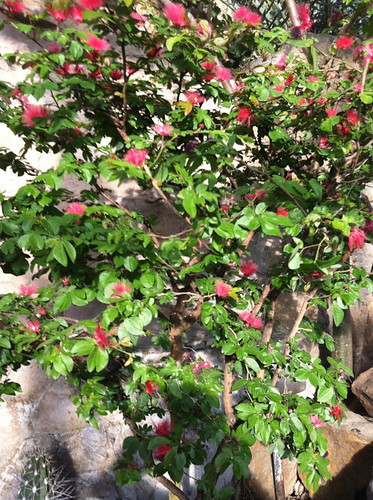
calliandra_emarginata
Miniature Powder Puff (Calliandra emarginata)
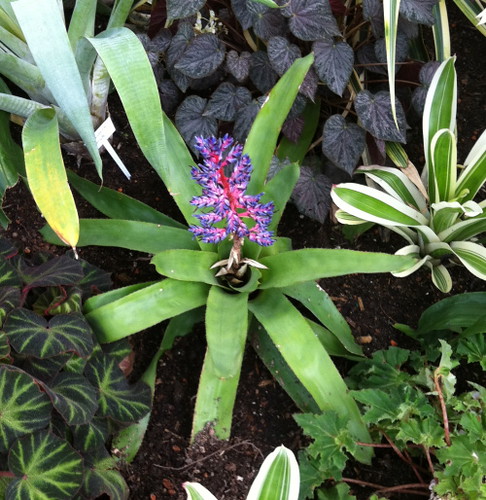
flashy_bromeliad_myriad
A couple of the many flashy Bromeliads planted all over the place.
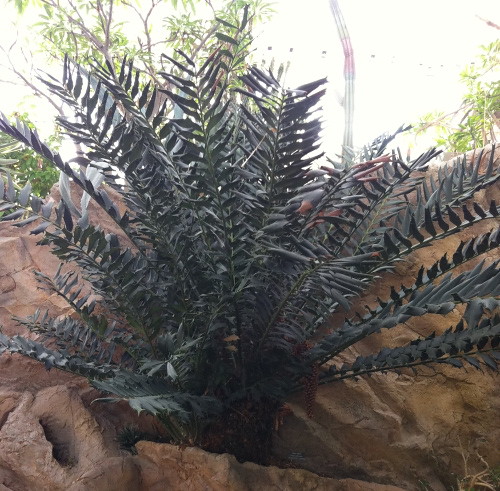
I had the opportunity to be in the Crystal Bridge (CB) on opening day this last week as a volunteer during the Arts Festival.  I was happy to see that many of the special plants in the CB were still there and in decent condition - the Jamaica Poinsettia Tree (Euphorbia punicea), many tall Palms, the spoon-leaf Bird of Paradise (Strelitzia parvifolia), the Golden Chalice vine (Solandra maxima), many Cycads, several prize Aroids, and many Euphorbias and other succulents on the dry side of the CB.  In fact, those Cycads are all doing really well - almost all of them are "in cone" right now, which is cool if you're a Cycad-person, and even pretty neat if you're not (like me).  Kenton, the education director at the Myriad, pointed out to me that one of the Cycads was producing smaller leaves than normal, but also making some offsets.  The last year probably stressed this plant into making offspring in ways that it usually does not.

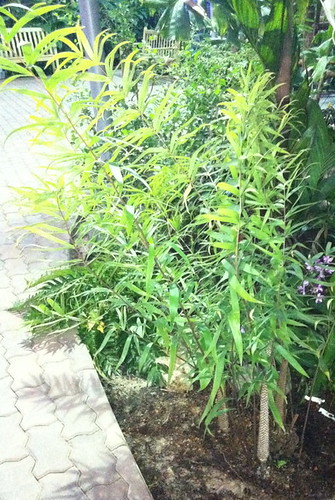
palm_cycad
Cycad that looks like bamboo.  Notice the prevalent cones at the base!
Since I don't know my Cycads and didn't bother to look at the identifying tags (when available), I'm just calling these like I see them.

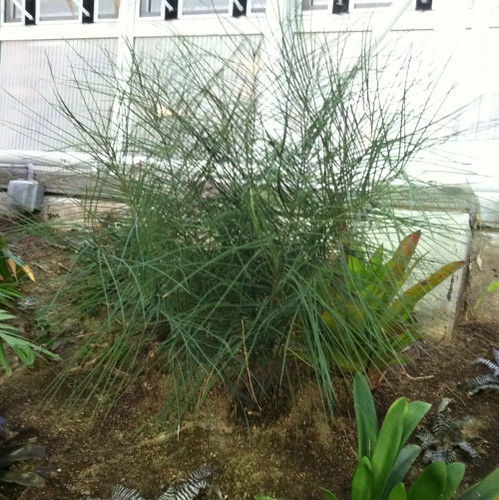
stringy_cycad
Very grassy-looking Cycad. There are cones at the base of this one too, but it's pretty impossible to see in this picture.
gigantic_cycad
One of the larger Cycads at the CB. This one is about 8-10' tall and has cones hanging down, as you can see on the right side of the picture.
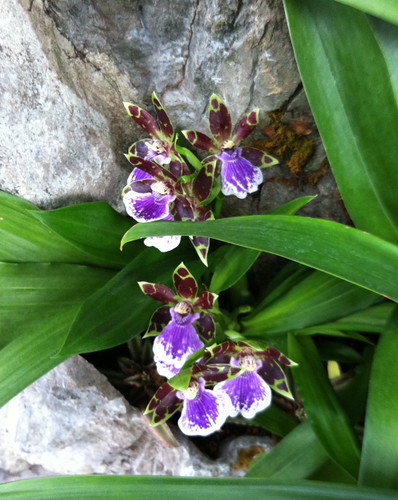
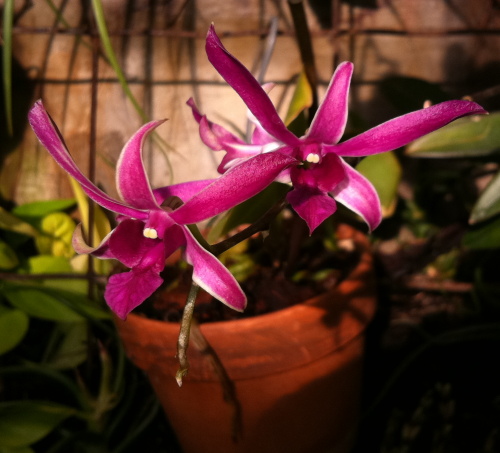
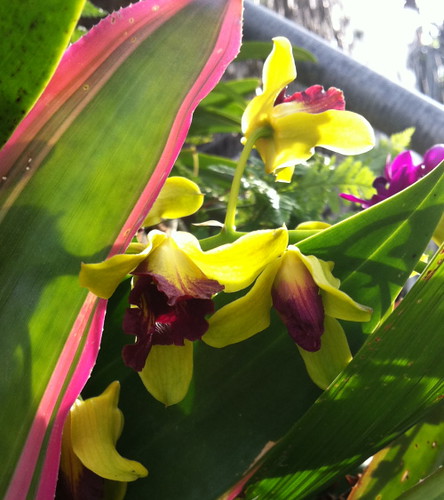
For now, the empty space where plants were lost has been filled in with TONS of Bromeliads and Orchids.  It's very pretty and colorful, but has a different feel from what it used to have.  It is kind of like 50 each of 8-10 different species, rather than 400-500 different species, like it used to be.  My guess - especially after talking with Kenton - is that this choice of plants was just to fill up the space to get it started with.  Some of the more unique and interesting plants that were previously here (and will be here again) take longer to track down and acquire.  I look forward to seeing the CB evolve over the next 10 years or so.  I imagine it will become a jungle once more!  But I was thoroughly enjoying looking at all of the different orchids tucked into every crook and cranny.  I know that even if these plants are ignored, in the wonderful growing environment of the CB, these plants will continue to grow and bloom every year.  Even though there were a lot of Oncidiums and a couple of Cattleya (both common), there were also some less common orchids, like Zygopetalums, Phaius, Bletilla and others whose names I can't think of right now.

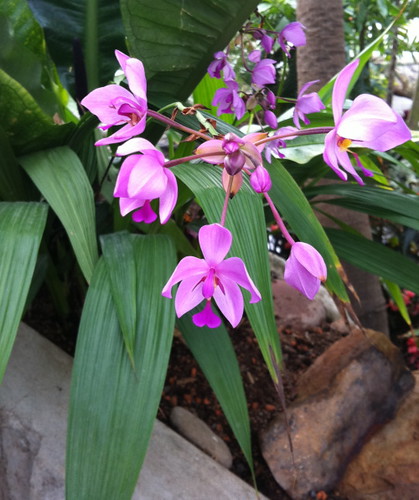
myriad_zygo
A really nice Zygopetallum orchid.  I just love the mixture of colors in these flowers.
dendro_noid
Unknown Dendrobium orchid
orchid_noid
Interesting orchid blooms resting on a bromeliad leaf
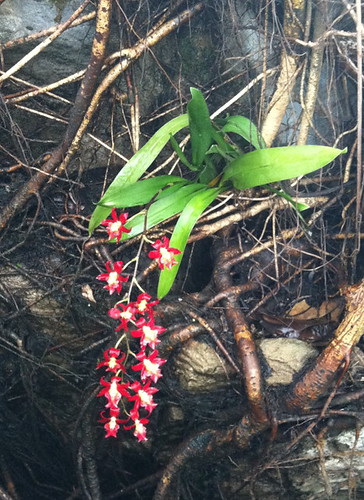
red_orchid_perfection
Unknown orchid - maybe a Dendrobium. I have to say this is my favorite picture from my two days in the CB. The scene is just perfection.
bletilla_noid
I only know Bletillas well enough to realize this was one. I don't have any ideas on the species or hybrid name. It's a pretty plant, though. Bletillas are terrestrial, along with the Phaius which are planted in the CB.
As always, there are many Gingers and Begonias planted in the CB.  There are a couple of mature Begonias that I can tell were salvaged from before the construction.  These are mostly tall cane-like Begonias that are probably true species.  Most of the new ones are clearly hybrids - very colorful and unusual looking things.

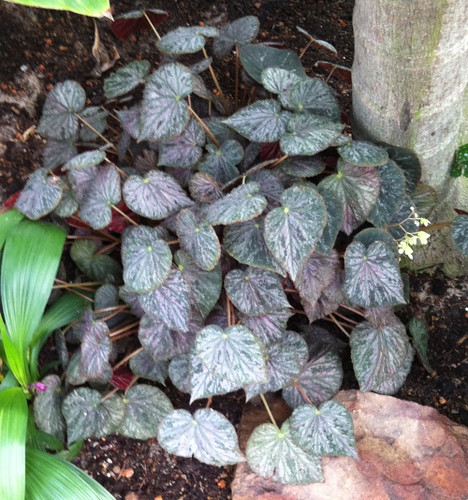
begonia_myriad_01
An unknown Begonia, probably a hybrid.  The silvery blue foliage is a winner in my book!
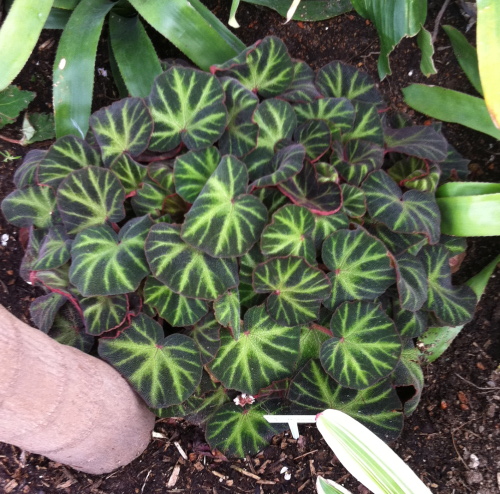
begonia_myriad_02
Another unknown Begonia with vibrant and rough leaves.
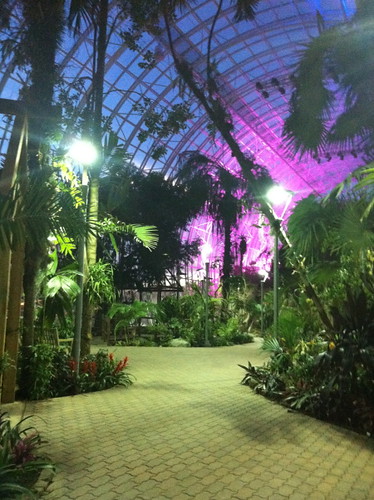
I leave you with one picture of the Myriad just before closing time.  They now have colored lights installed in the CB, which show off the cool structure from the outside at night.  You can see from this picture how wide the walking area is now, since they widened the path and the plants are not yet pushing their bounds.

myriad_lights
View from inside the Myriad Crystal Bridge at night.