Showing posts with label birds. Show all posts

Monday, August 20, 2018

Trip Report: Exploring Austin, part 1

I spent two weeks in Austin this summer, taking a training course to be a Red Hat System Administrator. In the evenings I traipsed around the metro area, birding in local parks and natural areas and doing my normal thing - observing and logging everything new species (to me) using the iNaturalist app.

I visited 10 different parks during my two weeks and covered a lot of ground. I observed a few new species of birds (Black-crested Titmice, Least Grebe, Pectoral Sandpiper), several new dragon/damselflies (Swift Setwing, Marl Pennant, Kiowa Dancer, Dusky Dancer, Checkered Setwing, American Rubyspot), several new plants, and even found a nice gastropod fossil. But this is a plant blog, so let me dive in to more detail about some of the plants.

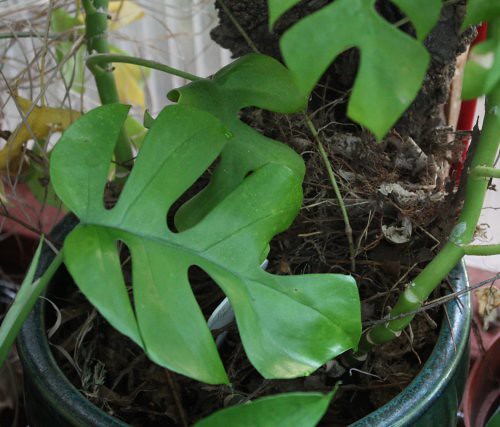
Small bilobed leaves of the Anacacho Orchid tree (Bauhinia lunarioides)

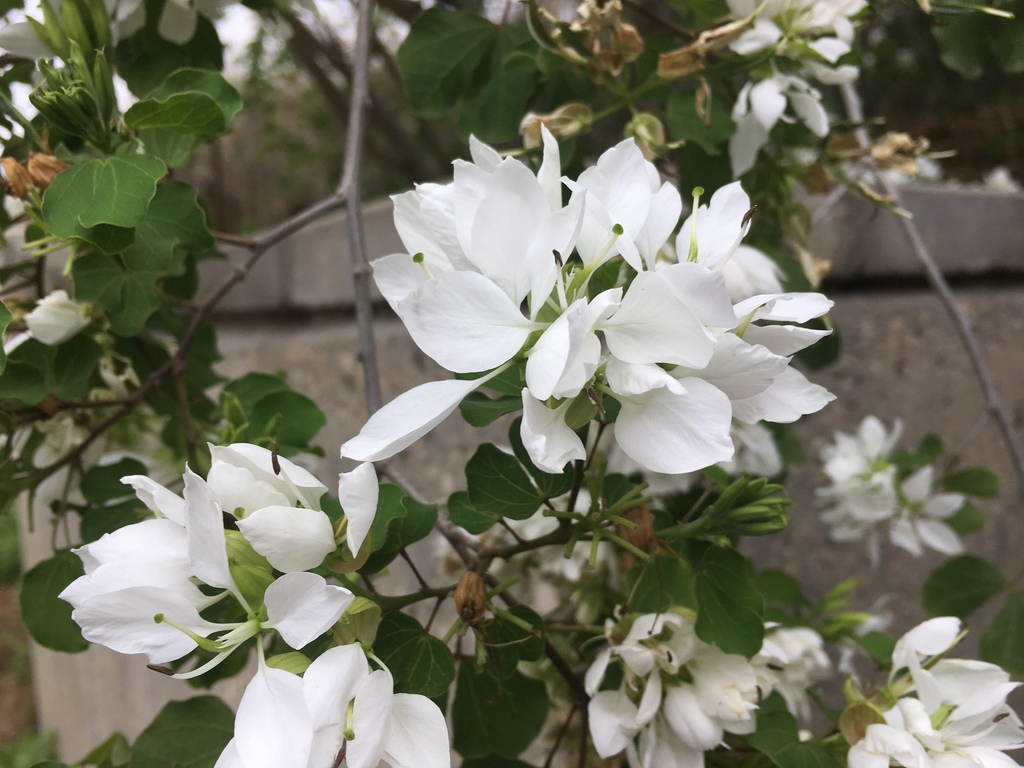
Along the Colorado River in Austin there is a nice walking trail that is well used by locals walking their dogs, cycling, and jogging, as well as to observe bats at the Congress Avenue Bridge. (I sort of stumbled along this myself and was treated to quite the spectacle around sunset.) Along this path I came across a couple of really neat plants. The first was a small shrubby tree (probably about 6' tall and about the same width that was covered in opened seed pods. There was nothing too remarkable about the tree except that the seed pods had all split open in a spiraling fashion and they were pretty conspicuous. Upon closer examination I realized the leaves were the distinct shape of a Bauhinia, which greatly excited me. I took some photos and uploaded the observation to iNaturalist, which suggested the name of Anacacho Orchid (Bauhinia lunarioides), a native of central and southern Texas into northern Mexico. This species has small and deeply split leaves, almost appearing as two leaves. The flowers (which appear in the spring) are white (or occasionally pink) and showy. I don't have any of my own photos of flowers to show, but the photos below are from iNaturalist observations (here and here).

Photo by iNaturalist user anschad.

Photo by iNaturalist user johnkarges.

Of course I collected a handful of seeds and brought them home for experimentation. I have started other species of Bauhinia from seed and they have germinated easily and been a fairly easy plant to grow, although they are tropical and cannot winter outdoors in my climate. This species appears to be a little more hardy, but not enough (zone 8) to overwinter in central Oklahoma (zone 7). It's not clear to me whether the tree was growing naturally along the path or had been planted there. I'm guessing the latter but who knows?

Part 2 coming later this week!

Monday, February 12, 2018

Trip Report: Desert Botanical Garden

I recently traveled to Phoenix for work and managed to get some free time for exploring the Desert Botanical Garden, which was conveniently close to my hotel and the airport. Before going to Phoenix I looked for some good birding hotspots and was really excited to see that one of the best places to go birding in Phoenix is a botanic garden. Two birds with one stone! (plants and birds)

Untitled
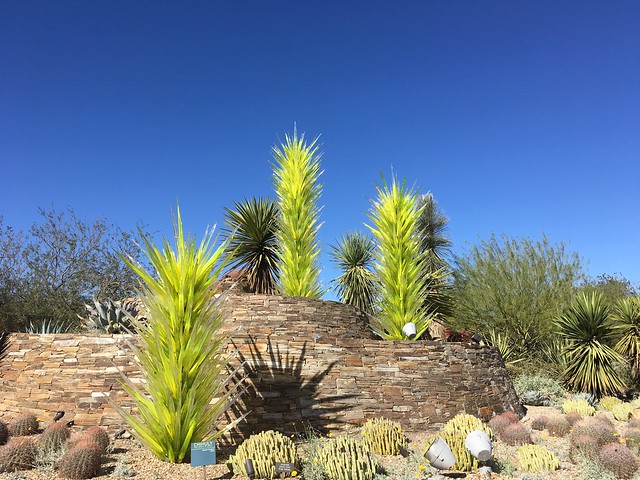
Chihuly glass at entrance

Untitled

While I'm at it - a bird in the hand is worth nothing compared to two birds in a bush! Who wants a bird in their hand? A bird in the bush is much easier to photograph, and you're photographing the bush at the same time! Plants and birds, that's what I'm talking about!

IMG_6921

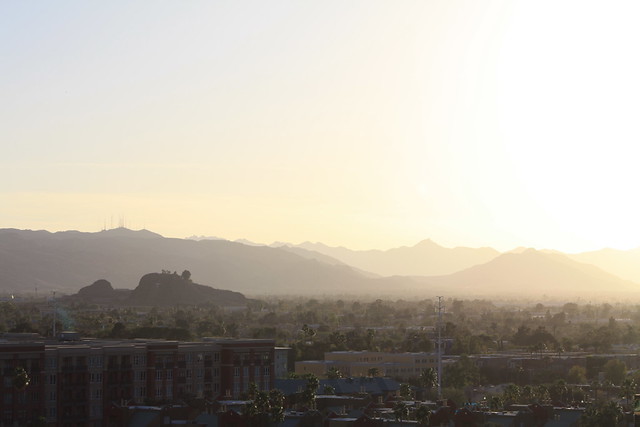
Phoenix is a beautiful city and I enjoyed it much more than I expected. I'm sure the 79 degree high temperature each day helped, almost 60 degrees warmer than back home.

Untitled

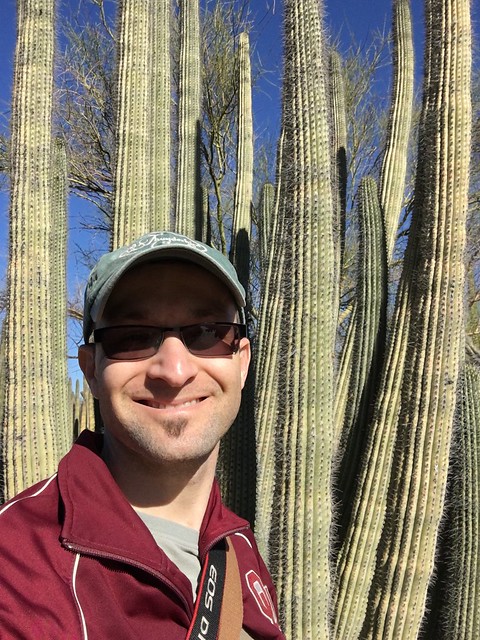
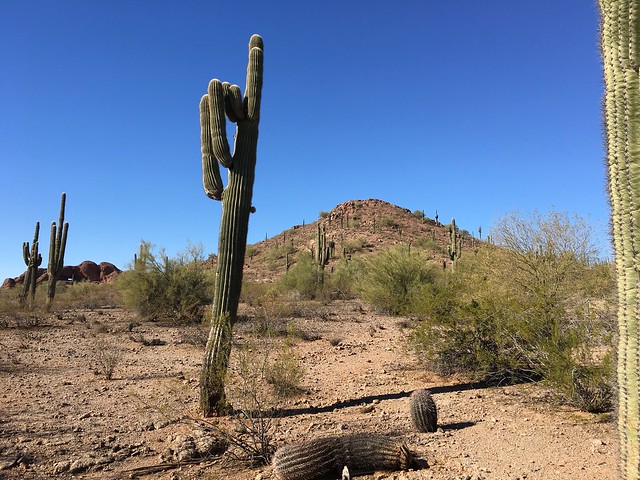
The Desert Botanical Garden is a beautiful, well maintained garden with lots of interesting plants. The entry garden is awesome and wandering just a bit further in there is a cacophony of sound - Gila Woodpeckers, Verdins, and Costa's Hummingbirds constantly trilling, chirping, and whistling. I really liked the Desert Wildflower Loop, which was particularly buzzing with hummingbirds. The Sonoran Desert Nature Loop is in more open scenery with many Saguaro cacti in sight.

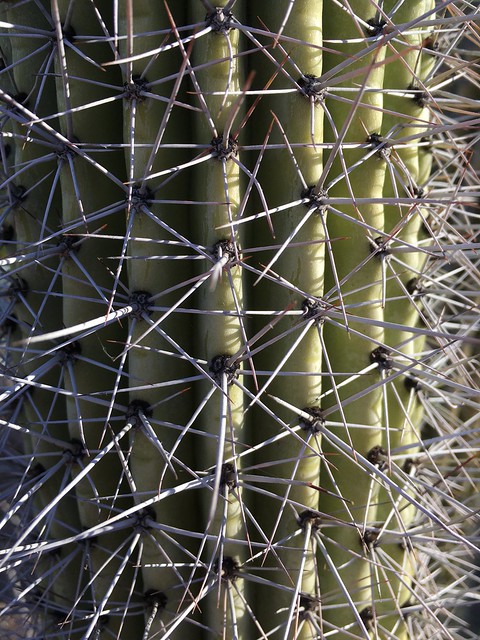
Saguaro

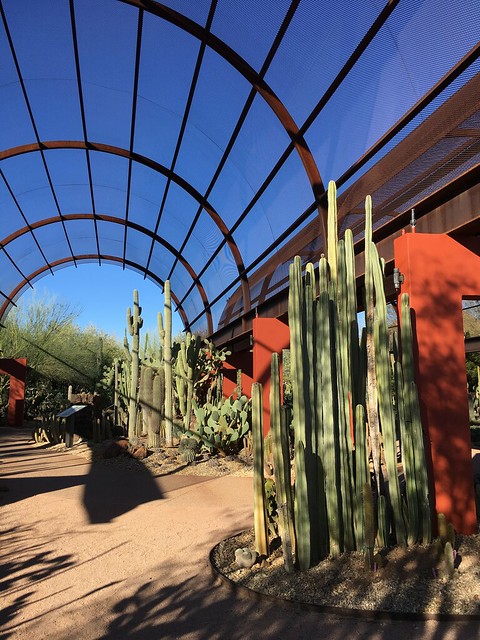
The Cacti and Succulent Galleries are made up of some large metal structures that provide shade and protection for some smaller and more tender plants, such as Lithops, Stapelia, Kalanchoe, and Aloe.

Untitled

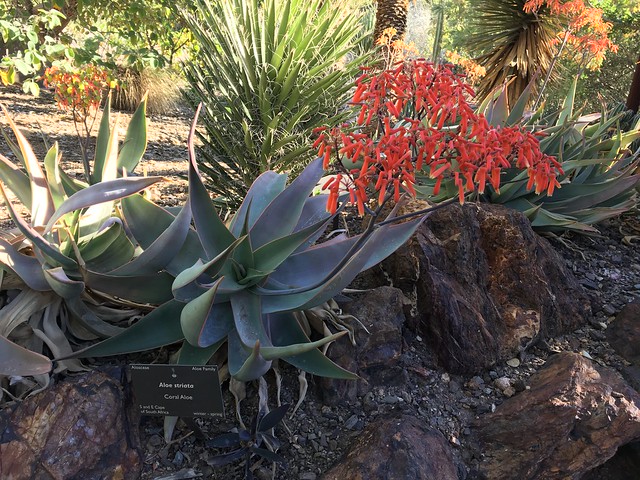
There were several Aloe in bloom while I was there. Their vibrant flowers contrasting with the wide solid green leaves are something to see.

Aloe striata - Coral Aloe

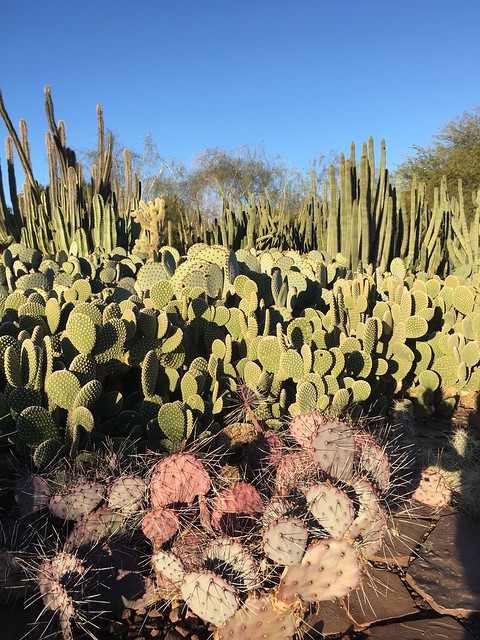
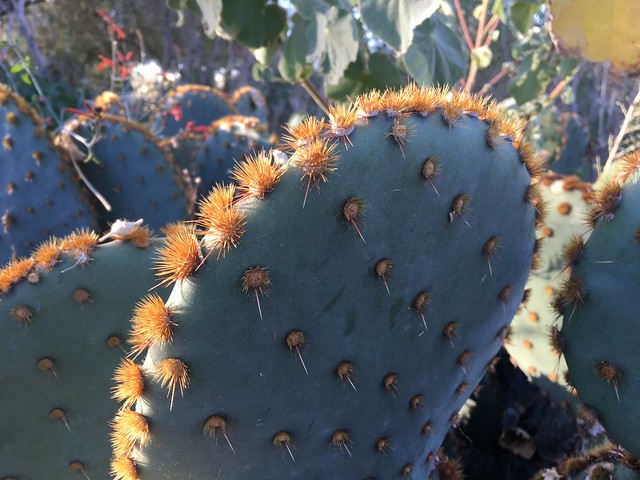
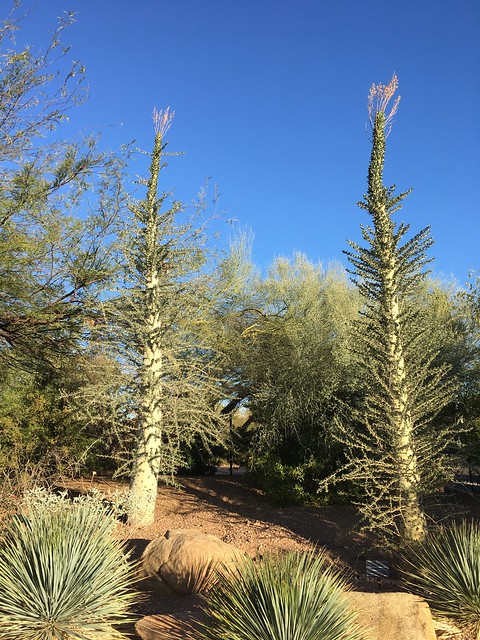
I am not a big collector of cacti and succulents, but seeing these plants growing in mass and in their natural habitat was really fun. There was plenty that caught my eye, from the purple-tinted Prickly Pears (Opuntia gosseliniana var. santa-rita), to the spiny mounds of Jumping Cholla (Cylindropuntia fulgida), the cone-shaped Boojum Trees (Fouquieria columnaris), and the towering native Saguaro (Carnegiea gigantea).

Opuntia aciculata - Chenille Prickly Pear

Fouquieria columnaris - Boojum Tree

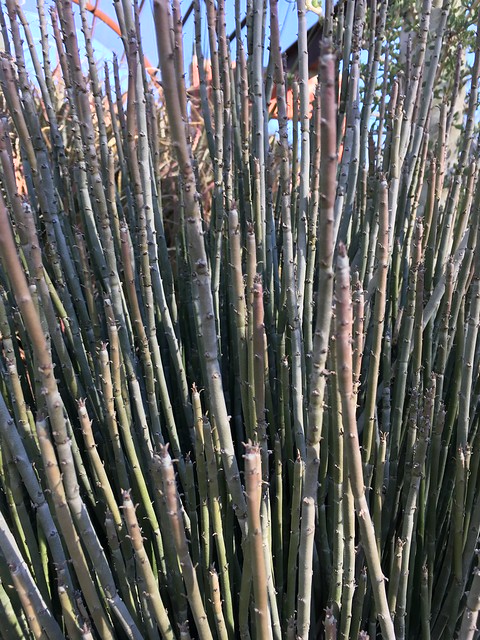
Euphorbia antisyphilitica - Candelilla

I managed to add 13 new bird species to my life list, which is more than I expected.

You can see more of my photos from the Desert Botanical Garden here.

Thursday, May 23, 2013

Trip Report: Miscellany in Delhi

I got to spend a week in New Delhi, India in April.  I didn't have a lot of free time outside of my work obligations, but I spotted some interesting plants here and there.  The part of town I was in was very green, with trees everywhere.  Even still, with India being highly vegetarian, I probably ate more plants than I saw.

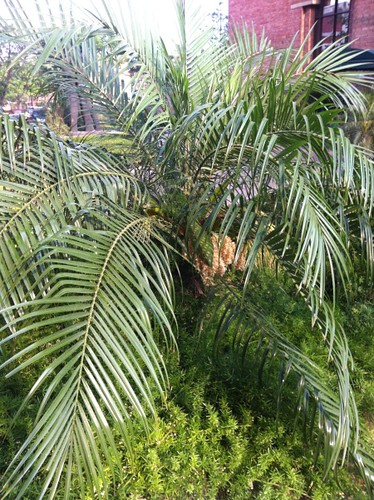
My hotel had some nice palm trees on the grounds.  When I think of India palm trees aren't the first plants that come to mind - especially far from the coast.  However, I know very little about Indian flora.
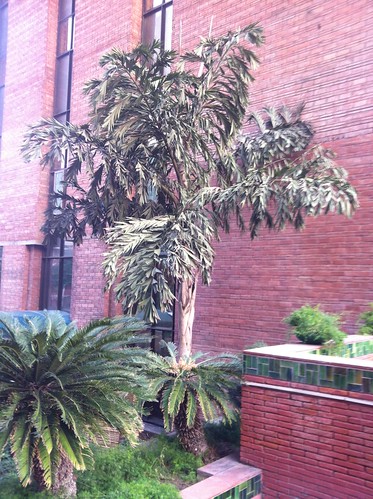
fishtail palm
Caryota urens, Fishtail Palm

palm
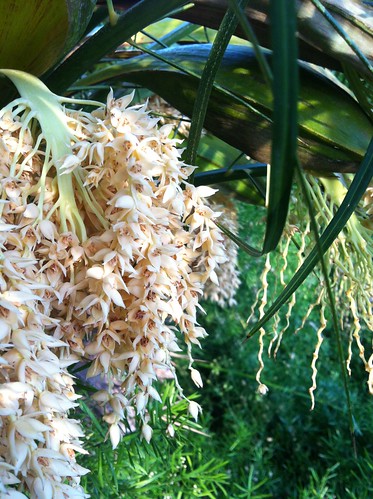
Phoenix roebellini growing in a container.  Notice the white flowers.

palm inflorescence
Close-up of Phoenix roebellini flowers.

There was a beautiful lotus pond at the hotel.  In the morning and early afternoon the flowers were open.  By the heat of the afternoon they would close.
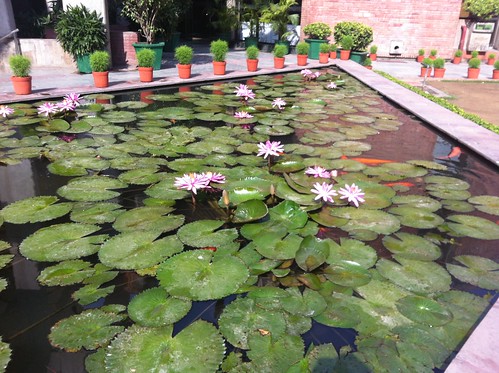
Lotus pond
Lotus pond at the hotel

My hotel also had  a collection of bonsai trees.
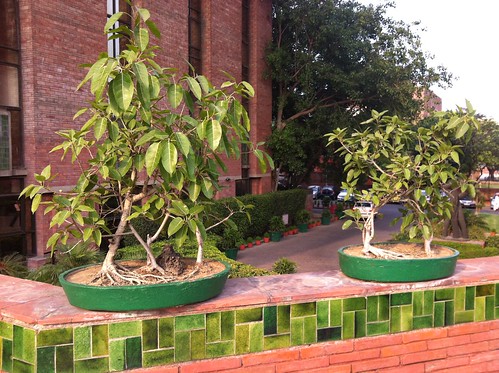
bonsai Ficus
Ficus bonsai at my hotel

I walked about a mile from the hotel to the Lodhi Gardens.  Along the way I passed the India Islamic Cultural Centre, where there was a nice aroid (maybe Epipremnum) growing on the trunk of a deceased tree.
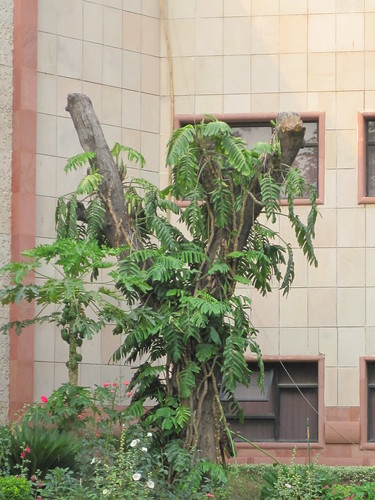
Epipremnum
Probably an Epipremnum

The Lodhi Gardens is a public park where a lot of families and friends congregate to just enjoy the outdoors.  Inside the gardens are several tombs and a mosque, beautiful old buildings dating back to the 1400s.
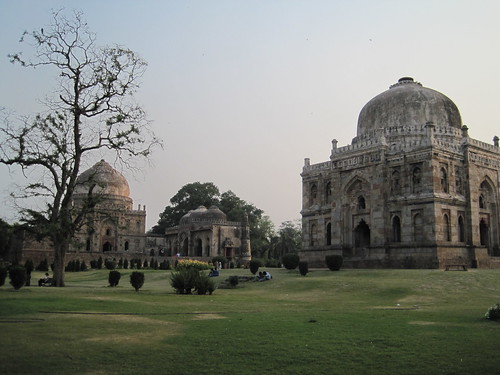
Lodhi Gardens
Tombs in the Lodhi Gardens

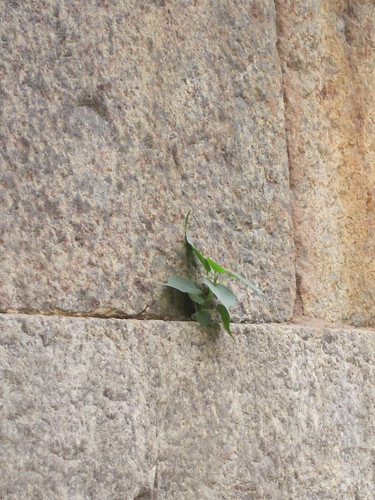
Ficus religiosa
A tenacious Ficus religiosa taking root in the cracks of an old tomb. Hopefully someone will yank it out before it turns this tomb into a pile of rocks.

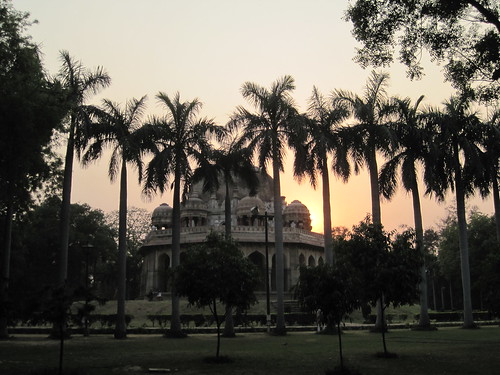
Lodhi Gardens
Sunset at the Lodhi Gardens

I wandered around the gardens until sunset, taking photos and enjoying the hot weather.
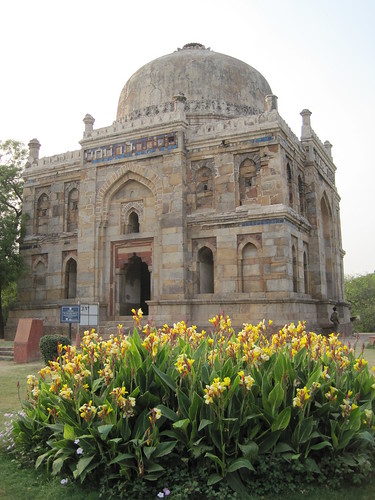
Lodhi Gardens
Beautiful Cannas in front of a beautiful tomb

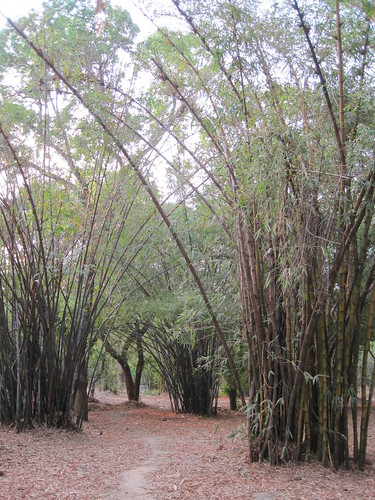
Bamboo stand
Stands of bamboo

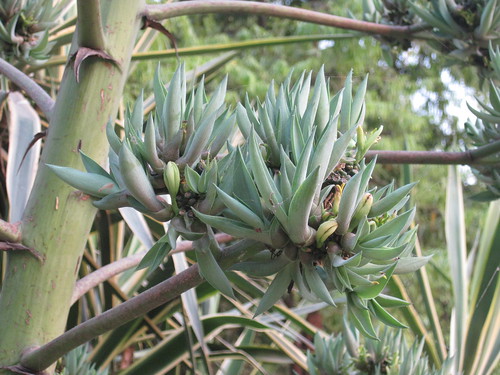
Agave babies
Agave plants forming on the bloom stalk of a parent plant

Many of the trees in the park were tagged with their species names, including this Cinnamomum camphora.
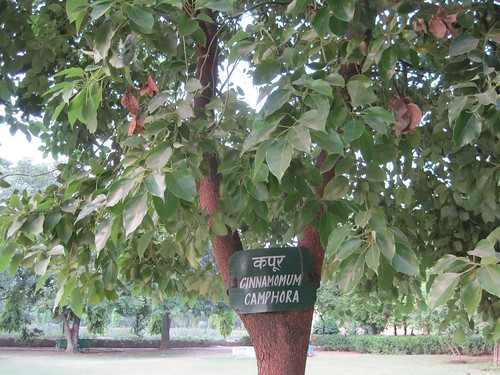
Cinnamomum tree
Cinnamomum camphora at Lodhi Gardens

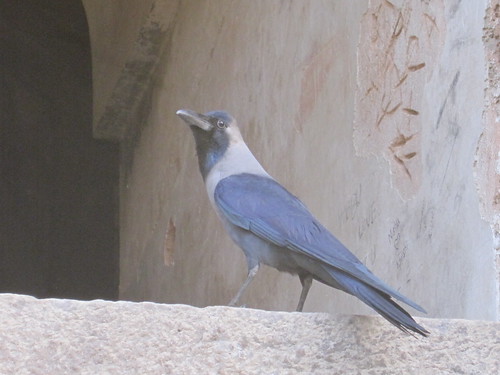
There were many interesting birds in the park and a large placard that identified some of them.  I identified Parakeets, Common Mynah, and House Crow.
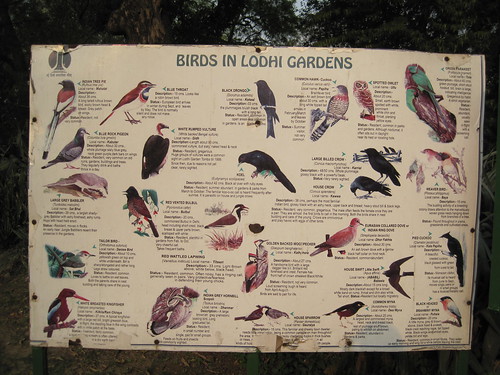
bird identification chart
Placard of birds that can be found in the gardens

House Crow - Corvus splendens
House crow (Corvus splendens)

Within the grounds of Lodhi Gardens is the "National Bonsai Park." Apparently it closes earlier in the day, so I wasn't able to go inside.
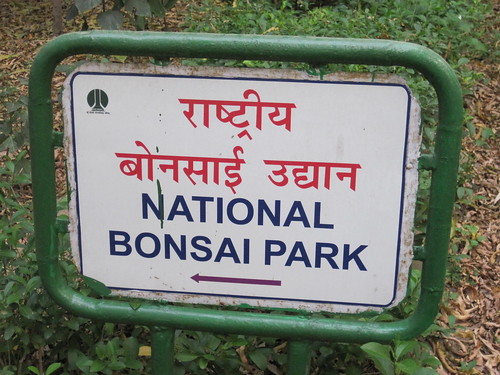
National Bonsai Park at Lodhi Gardens
Closed.

Down the street from Lodhi Gardens is the Safdarjung Tomb, which is a beautiful example of Mughal architecture.  It looks a bit like the Taj Mahal.  On the grounds was a beautiful fl0wering tree native to Madagascar.

Safdarjang tomb
Safdarjung Tomb in Delhi

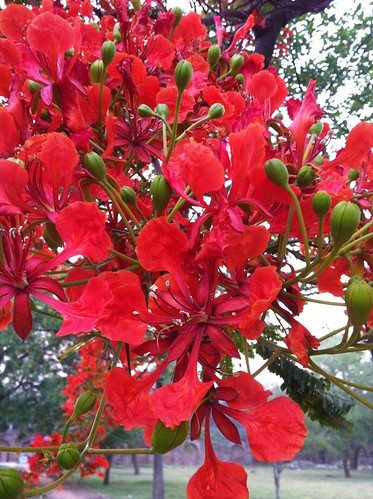
Delonix regia
Beautiful flowers of Delonix regia, a Madagascan native.

On the walk back to the hotel I passed a tree with interesting flowers hanging from inflorescences under the canopy at eye level.  It was dusk and my camera battery was dead, so I had to use my phone camera with flash, which resulted in a less than stellar picture.
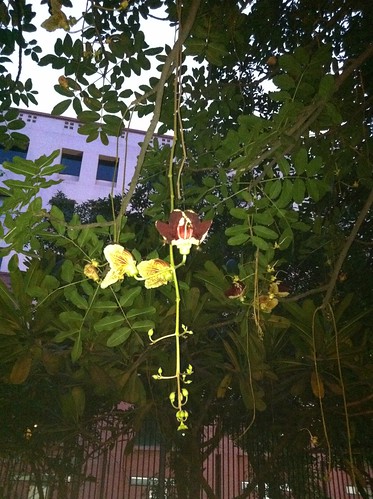
Kigelia africana
Flowers of Kigelia africana

Some friends helped me identify this tree as Kigelia africana, the Sausage Tree.  I have seen these trees at Fairchild Tropical Botanic Garden in Miami, with their large seed pods that look like sausages, but I had not seen them in bloom before.

I really enjoyed my limited leisure time in Delhi and I hope to get to visit India again some day.

Wednesday, April 27, 2011

Bird's nest Rhaphidophora

If you grow many aroids you may be familiar with the bird's nest Anthuriums, but have you ever heard of a bird's nest Rhaphidophora?

rhaph_bark_pole
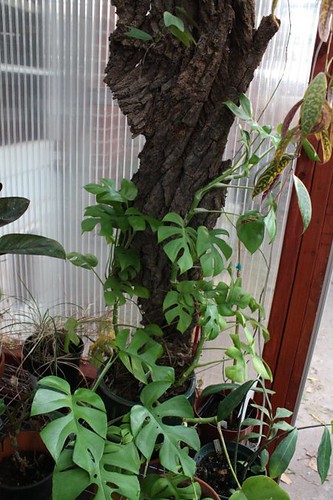
Rhaphidophora tetrasperma beginning to climb the bark pole
I set up this tall bark wall for my Rhaphidophora tetrasperma to climb last year. This spring, while my greenhouse door was open, a bird built a nest nestled at the base of the plant.

rhaph_nest
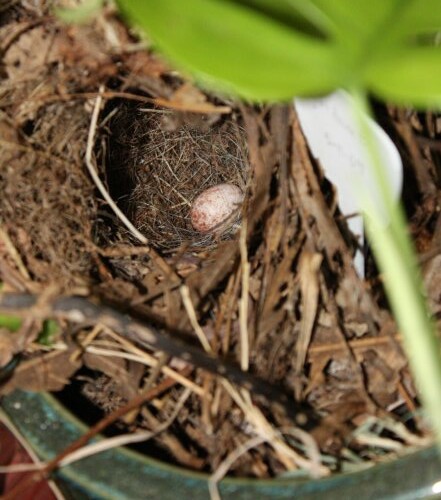
Bird nest in the pot
I'm not really up on my bird identifications, but I have seen two tiny birds in my greenhouse - presumably the parents.  I think they were both pretty plain brown except for their beaks, which were orange.  Can anyone identify the bird from the egg?

rhaph_nest_egg
Unknown bird egg - any ideas?

Monday, December 20, 2010

Trip Report: Mayan Ruins of Tulum

Over Thanksgiving my family did something a little out of the norm (for us) and went on a 7 day Caribbean cruise.  It was a wonderful trip and we got to spend time with lots of my family (10 of us in all).  When our ship docked at Cozumel, Mexico, Christie and I went on a shore excursion over to the mainland to visit the Mayan ruins at Tulum, just south of Playa del Carmen.

ruins_water
Tulum ruins on the Caribbean coast

The ruins were beautiful and interesting.  They are set right on the coast and it's just gorgeous.

Untitled
Ruins along the Caribbean coastline
black_iguana
Black iguana
The grounds are covered with iguanas.  We probably saw 50 or more in the hour and a half that we were there.  One in particular, really wanted to pose for us.

posed_iguana
Iguana posing on some warm rocks
large_sea_grape
Sea grape tree (Coccoloba uvifera)
In terms of plant life, there were a lot of Sea Grape trees (Coccoloba uvifera) all over the grounds.  Some were full-fledged trees, with regular trunks.  Others were growing more like shrubs or creeping along rock walls, having sprouted from a crack in the cliff face.

cliff_seagrape
Sea grape (Coccoloba uvifera) growing on cliff face near beach
Another common plant on the grounds was some species of terrestrial bird's nest Anthuriums. Many of these Anthurium had inflorescences.  I was taking a picture of one inflorescence that had a deformed branching spadix when I noticed that a praying mantis was perched on the spadix!  I wish I hadn't been in such a hurry and I could have gotten a little better picture.  But we were headed back to the bus and I didn't want to get left behind!

anth_mantis
Praying mantis on an Anthurium inflorescence
anthurium
Anthurium
There were a lot of these large leaved Anthuriums with undulate leaves and raised midribs.  The only other type of Anthurium I observed was the smaller specimen below.

anthurium2
Anthurium
Just outside of the entrance to the ruins park was a large bed of Sansevierias.

cp_sans
Christie with Sansevierias

I observed some other neat plants, but didn't know what they were.

pink_flower
Unknown flowering plant, possible Mandevilla

purple_border
Tradescantia spathacea (thanks to mr_subjunctive) - Dense border plant with neat foliage

The plant above had really neat foliage and was growing all over the place as a border to all of the sidewalks.  The underside of the leaves is purple.

Yellow-throated Warbler
Yellow-throated Warbler among the ruins
I also observed a couple of neat birds.  One was the tiny yellow-breasted bird hopping along a rock wall, pictured above.  The other almost looked like a peacock, with very colorful markings.  I had to take the picture (below) from a distance, so I didn't get as good of a shot as I would have liked.  [2011-01-30 Update:  Tony has informed me that this is likely the Ocellated Turkey (Meleagris ocellata).]

Ocellated Turkey
Colorful mystery bird - Ocellated Turkey (Meleagris ocellata)
It was a great place to visit and I'm really glad we took this excursion.

ruins_us
Me and Christie at the Tulum Ruins