While in Key West last month, we visited "The Audubon House." You would think with a name like this that the house would have once been under the ownership of someone with the name of Audubon. It turns out the connection is a little less direct. John James Audubon, the well known historical figure for his art depicting American birds, traveled to the Florida Keys in 1831 in order to paint the native birds of Florida. While he was in the Keys, he stayed at the house next door to this house.
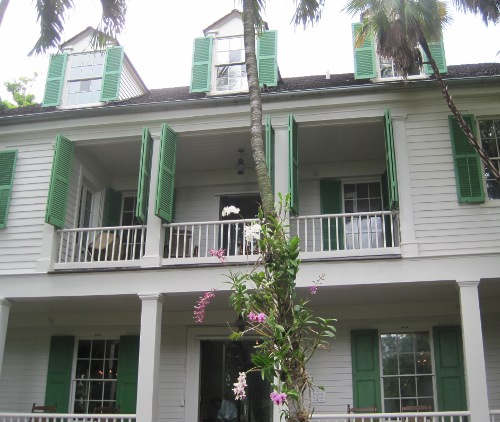 |
| The Audubon House |
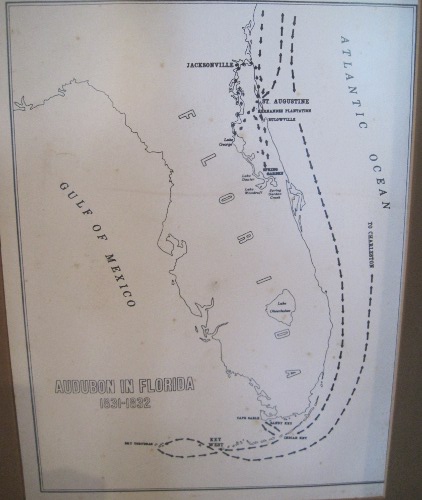 |
| John James Audubon's trip to the Florida Keys |
The house has been preserved and connected with Audubon because he admired the gardens while he was in the area and supposedly painted some of the trees and plants into his portraits of various Florida birds. The gardens have been kept in great condition as a tribute.
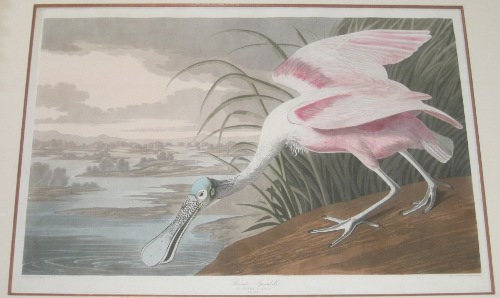 |
| Roseate Spoonbill portrait by John James Audubon - my favorite from the Florida collection. |
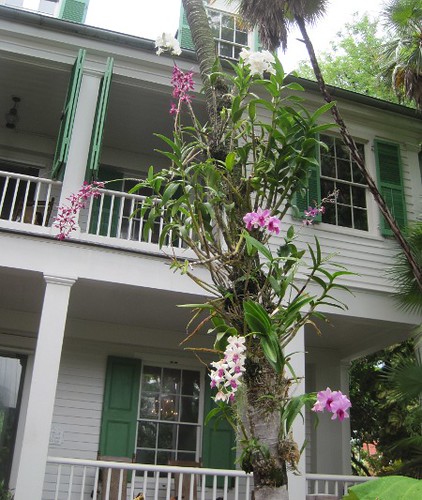 |
| Tree loaded with blooming orchids in front of Audubon House |
The house is now a shrine to his work and has a very nice garden outside. We toured the house and gardens outside, enjoying the beautiful setting. I think Christie and I could settle into this house just fine. The trees outside are covered in orchids, and many of them were in bloom for our visit.
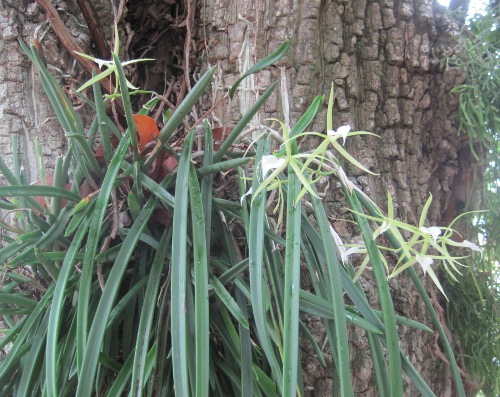 |
| Brassavola orchid |
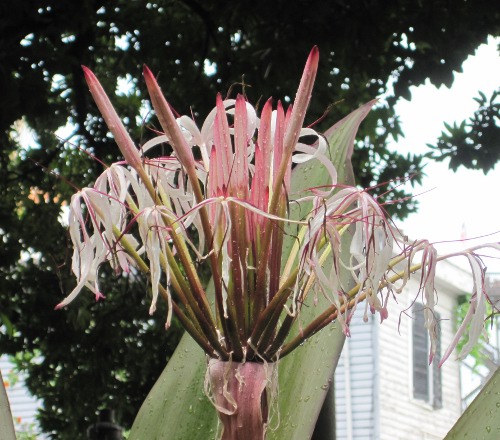 |
| Crinum lily bloom |
Other interesting plants filled the flowerbeds, including a couple of large
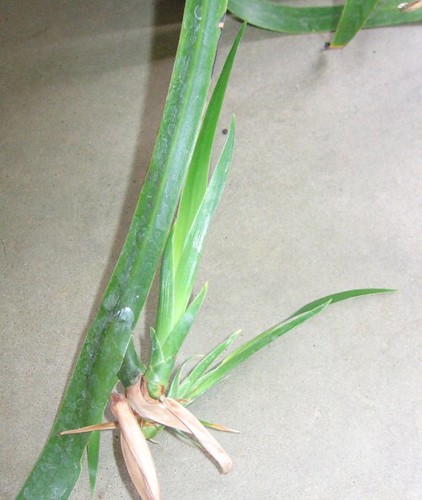
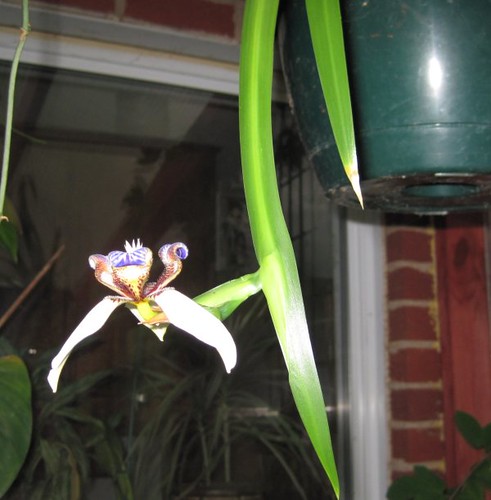
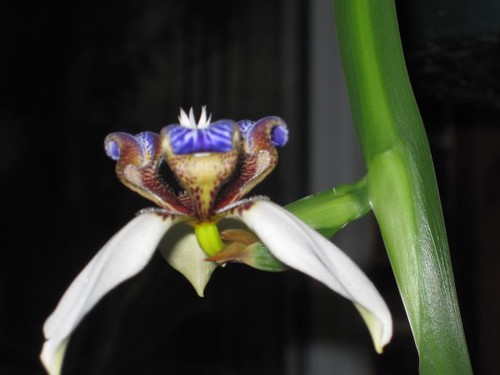
Crinum lilies, some yellow Walking Iris (
Neomarica longifolia), and a nice Chenille plant (
Acalypha hispida).
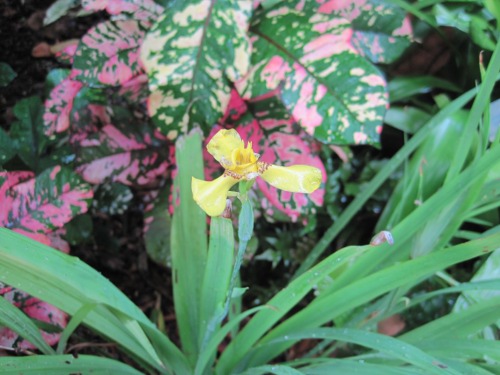 |
| The yellow walking iris - Neomarica longifolia |
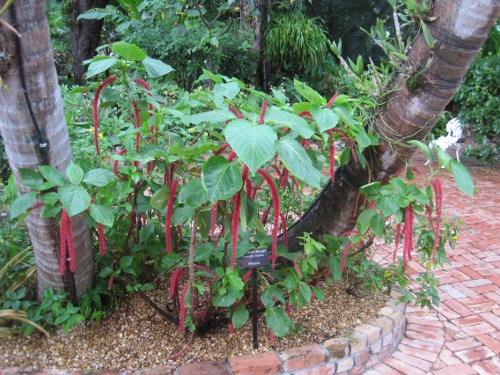 |
| Chenille plant - Acalypha hispida |
There were lots of
Calatheas scattered throughout the gardens, and concentrated here and there. I have seen these growing in many botanic gardens, but not very often in an outdoor setting.
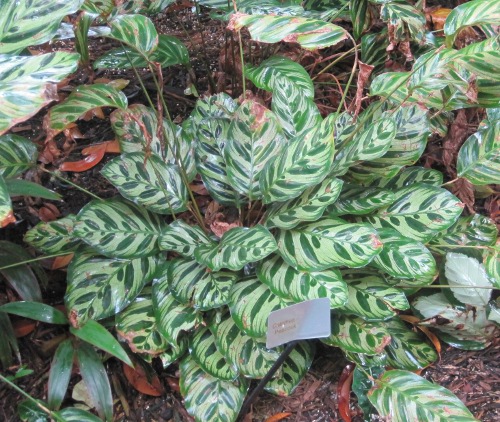 |
| Calathea Peacock (so the sign reads) |
The gardens also contain some Florida native plants, which would have been important to Audubon, as he preferred to paint his birds sitting on authentic trees and plants to the area where he would find them in nature. One of the natives I really liked was this cycad,
Zamia floridana.
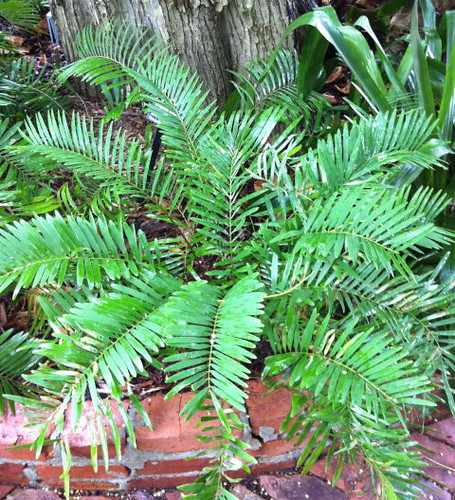 |
| Florida native cycad "Coontie" - Zamia floridana |
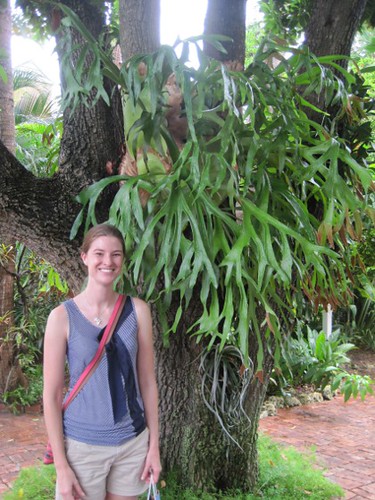 |
| Christie under a nice Staghorn fern |
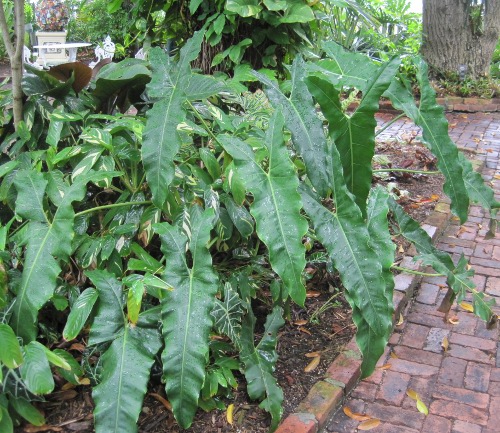 |
| Philodendron stenolobum |
There were also some nice aroids, including this large
Philodendron stenolobum (above) and
Alocasia portei (below). I loved the pendant Anthurium vittariifolium, with its pink berries showing (two below) and now have a small seedling plant from a recent plant trade. I hope my plant is this attractive some day.
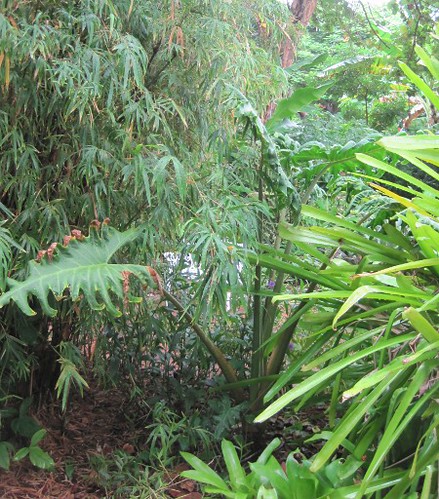 |
| A large Alocasia portei (in the center of the image) |
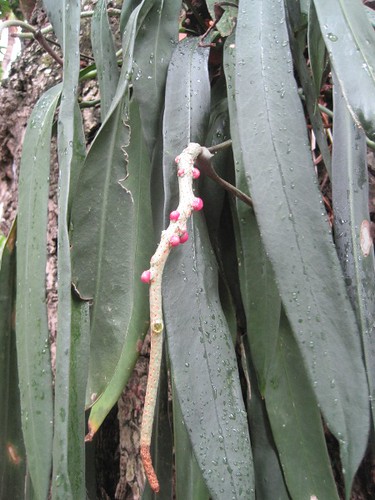 |
| Anthurium vittariifolium with berries on spadix |
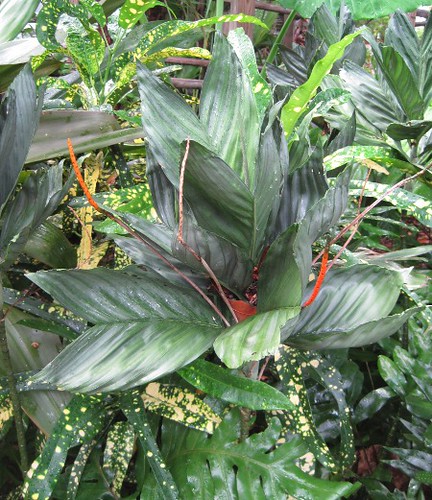 |
| Chamaedorea metallica |
My
second favorite palm in the entire family is
Chamaedorea metallica, which is called the Miniature Fishtail Palm, or Metallic Palm. It has silver-blue leaves and striking orange flowers and berries. It is small for a palm, with a maximum size of only 5 or 6 feet tall, and it is therefore usually growing as an understory tree.
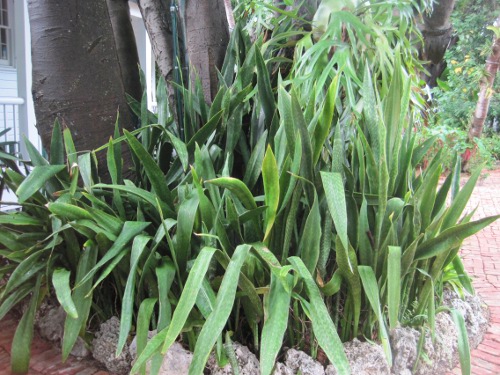 |
| Bed of Sansevierias - probably Sansevieria metallica. |
You probably already know that I like
Stapelias. Am I crazy or do the buds of the
Stapelia below look just as cool as the open bloom? Yes, I did bend down and stick my nose into the flower to smell the pungency. And yes, I did request Christie do the same. She grudgingly did so - after a third or fourth request.
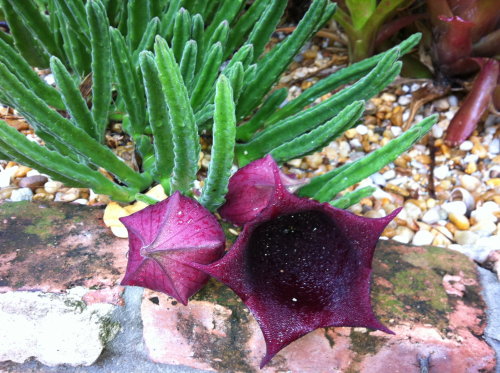 |
| Stapelia leendertziae in bloom. |
The Audubon House sits on a lot large enough to have several wandering paths through the gardens and 2 separate set-aside gardens: a water garden and an herb garden. The water garden was very tastefully designed, with some heron statues in the pond. I'm sure JJ Audubon would have liked to sit and stare at these nice statues. The setting of this garden is similar to what I have talked about doing with a portion of our backyard, with the ground paved in either bricks or rock and a shallow pond or other small water feature. Just a relaxing place to sit and enjoy the outdoors.
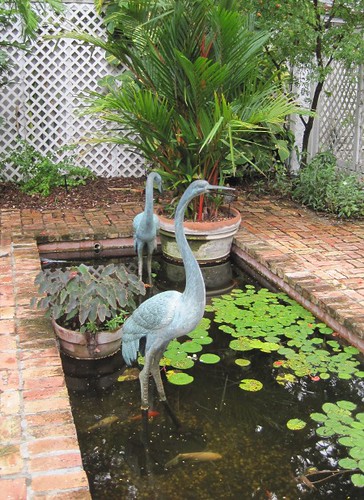 |
| The appropriately decorated Audubon water garden. |