While in Florida I got a LOT of plants. Most of these were either aroids or orchids. First, let me show you the aroids I got.
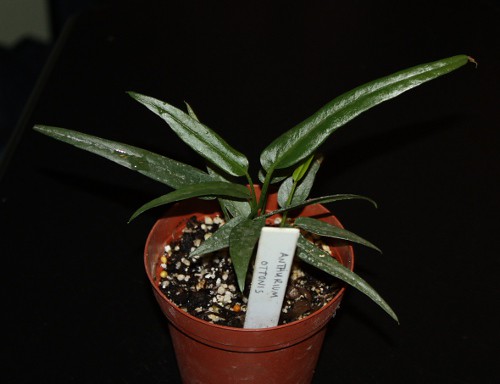 |
| Anthurium ottonis |
Anthurium ottonis
This little
Anthurium attracted me with its lanceolate leaves. It is a very healthy little plant and I look forward to seeing this grow into a mature specimen.
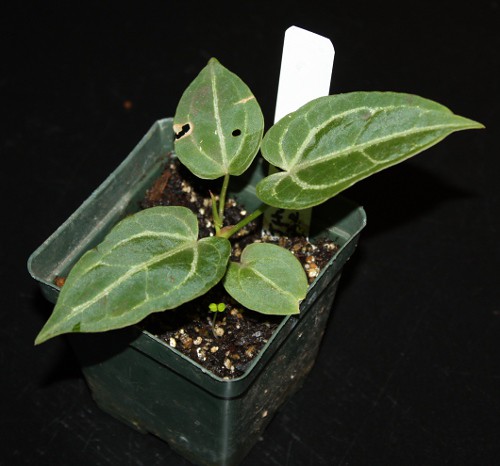 |
| Anthurium crystallinum |
Anthurium crystallinum
This is one of the velvety
Anthuriums with prominent iridescent veins. Again, this is just a small plant, but if it likes my growing conditions then it will become a beautiful large plant within a year or two.
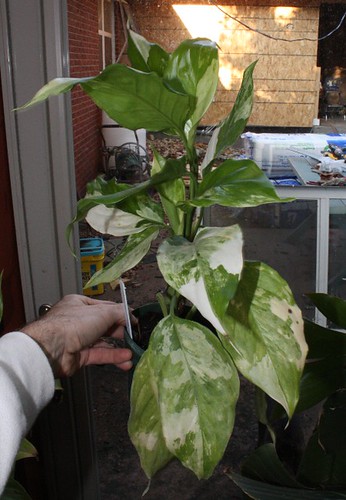 |
| Aglaonema modestum variegated |
Aglaonema modestum variegated
This is actually the only
Aglaonema I purchased at the show. There were a couple others that I eyed, but ultimately I ran out of packing room (and money), so I stopped with this one. It is one of the few variegated
Aglaonemas in cultivation. Most
Aglaonemas have interesting leaf patterns, with various shades of green and some silvers, but few have white patches like this one.
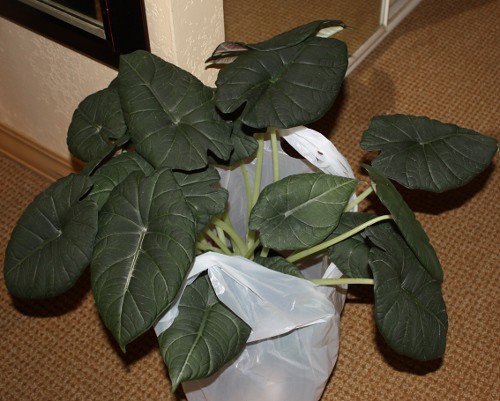 |
| Alocasia 'Maharani' |
Alocasia 'Maharani'
This is one I had never seen before. It is a beautiful
Alocasia with dark leaves that have a rough texture and a rigidity unlike any of my other plants. I'm really hoping this isn't a high maintenance plant, but it might be. For now it seems pretty happy, sitting in a very shady spot on the floor of my greenhouse.
Dieffenbachia oerstedii - no picture
I hadn't heard of this
Dieffenbachia before, but it was a species and it was from Dr. Croat, so how could I pass it up!?!
Dieffenbachias are a really neat genus of aroids that I enjoy, though I don't have too many in my collection. This particular species develops a strong white midrib at maturity, which is striking in contrast to the otherwise dark green leaves.
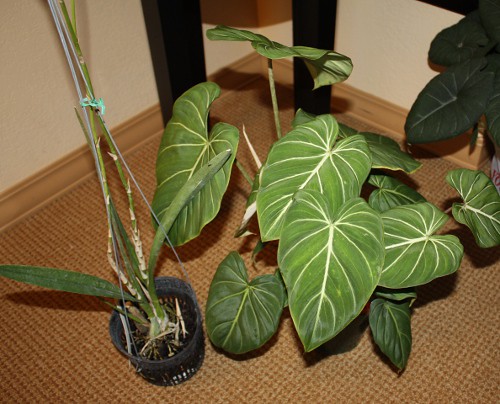 |
| Encyclia plicata (in mesh basket) and Philodendron gloriosum |
Philodendron gloriosum
Christie and I both fell in love with this
Philodendron and decided to buy it out of our general budget, rather than my plant allowance. Since then it has gone by the moniker of "family plant."
The IAS show and sale is set up with the show plants in the middle of the room. Along one wall are vendors with plants for sale and along another wall are plants for sale that will benefit the IAS. Dr. Croat brought a bunch of items from the Missouri Botanical Garden for sale at the IAS show. These plants are either species that were wild collected or propagated from his wild collections.
Pinellia pinnatipartita (IAS show)
The one exception, I believe, was a big trash bag full of Pinellia pinnatipartitas, which I think Dr. Croat had yanked out of his yard to thin out his own crop. There was a
sign on the bag, boldly announcing "Guaranteed success!" As if that weren't enticing enough, they were marked $1. So, naturally, I got one. Taylor picked through the bag for me and found a really nice, large tuber and it was one that had just fruited, so I have a bunch of seeds in addition to the healthy tuber.
tubers of
Pinellia ternata (IAS show) - no picture
Pinellias are one of the aroid genera with several varieties hardy in my zone. For now, I have potted these tubers of
Pinellia ternata and put them in the greenhouse. However, I plan to plant them outdoors next spring and then let them stay outside for good. I want to develop a little garden of hardy aroids.
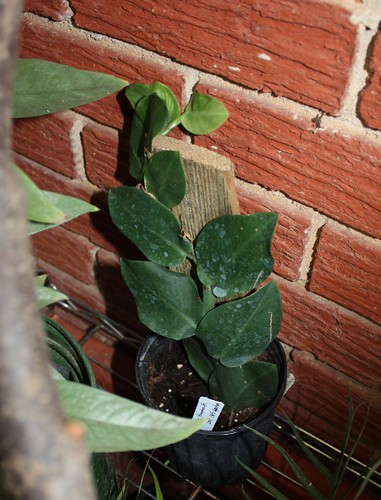 |
| Rhaphidophora hayi |
Rhaphidophora hayi (IAS auction)
This is really my first shingling aroid. I made up a tentative list of plants I would like to purchase at the IAS show before I left. Not really knowing what I would find, it was just a wishlist of things I was hoping to find. One of the items was "a shingling aroid." There were some for sale, but I was overlooking them for other plants. Then there was one available at the auction and I ended up getting an excellent deal on this little plant, donated by Palm Hammock. It is now propped against the back wall of the greenhouse, where I am hoping it will start to shingle up on the brick wall of the house.
Now, here are the plants I purchased, which are
not aroids.
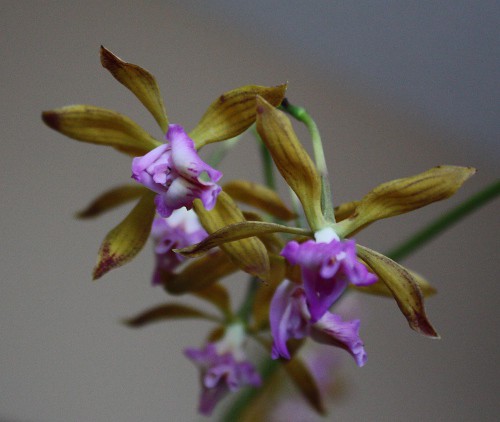 |
| Encyclia plicata blooms |
Encyclia plicata (above) and
Encyclia tampensis (below) - both from Ruben in Orchids
As mentioned in a
previous post, I purchased two
Encyclias at Ruben in Orchids. One of them (
Encyclia plicata) had a long bloom spike with these really neat flowers (above) and was growing in a mesh basket. The other (below) was on my wishlist of plants to purchase in Florida. It is the "Florida Butterfly Orchid" (
Encyclia tampensis) and the plant that I kept seeing all over my
everglades boardwalk. It is a mature, mounted plant and had already finished blooming, with several dead bloom spikes on it when I purchased it. Next year I hope to have as many spikes as it had this last summer.
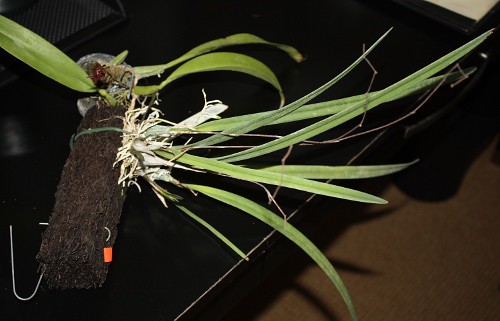 |
| Encyclia tampensis |
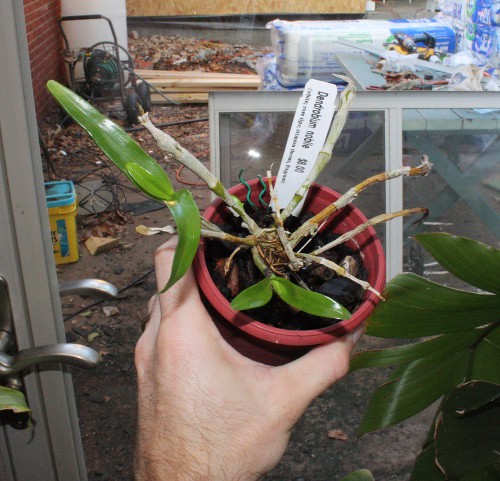 |
| Dendrobium nobile |
Dendrobium nobile (from R.F. Orchids)
I purchased two cheap orchids at R.F. Orchids - one a species
Dendrobium nobile (above) and the other a hybrid
Vanda. The
Dendrobium was a collection of keikis that had been cut off mature plants and bundled together for $8. The
Vanda is young now, but someday it should look like a mixture of the parents, which are pictured below.
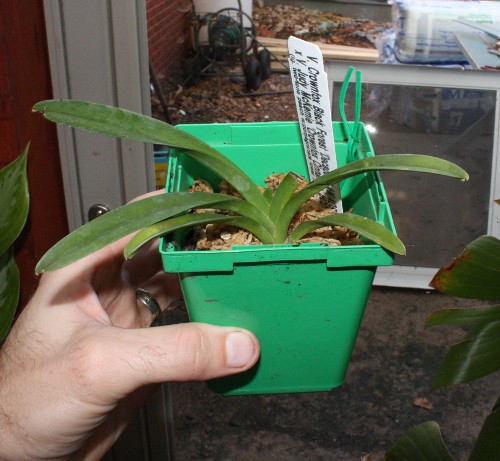 |
| Vanda hybrid |
Vanda hybrid (V. Crownfox Black Forest x V. Judie McKemie) (from R.F. Orchids)
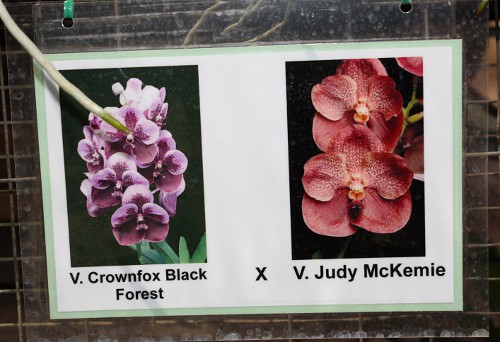 |
| Vanda hybrid parents |
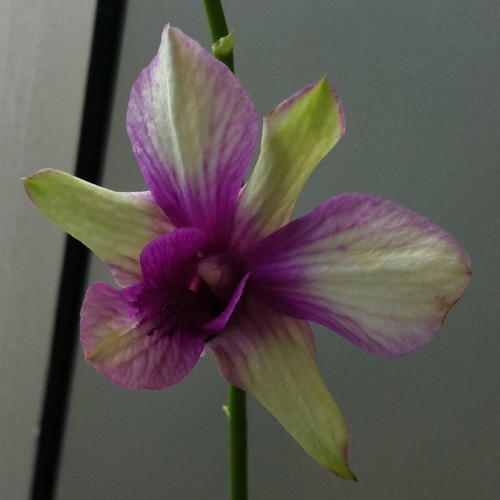 |
| A nice Dendrobium in bloom |
Dendrobium in bloom (from The Banyan Garden in the Keys)
There are still a couple of "trip reports" I plan to write in the coming weeks about special planty places I visited while in Florida. One of those places is called The Banyan Garden, which is located on the island of Islamorada in the Florida Keys. I bought this cheap and beautiful blooming
Dendrobium there.
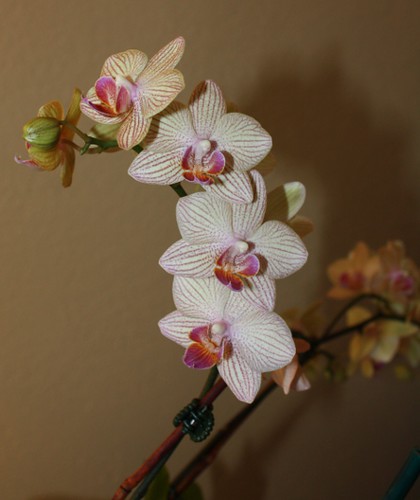 |
| My favorite cheap Phalaenopsis |
Phalaenopsis in bloom (from Redlands roadside stand)
I already told you about my steals in south Miami -
orchid country. Here are their pictures, again.
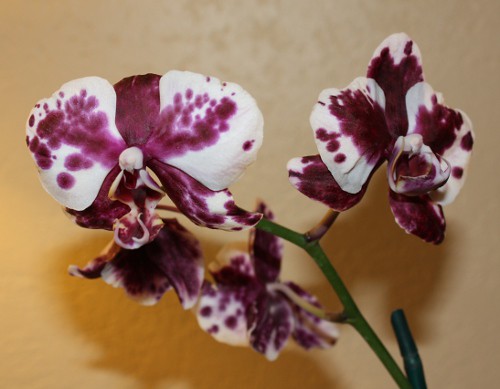 |
| Harlequin Phalaenopsis |
Phalaenopsis (harlequin) in bloom (from Redlands roadside stand)
Harlequin
Phalaenopsis are the "in thing" right now. The name refers to the spotting pattern on the flower petals. I'm told this is a generic term applied to dog and horse breeds, as well.
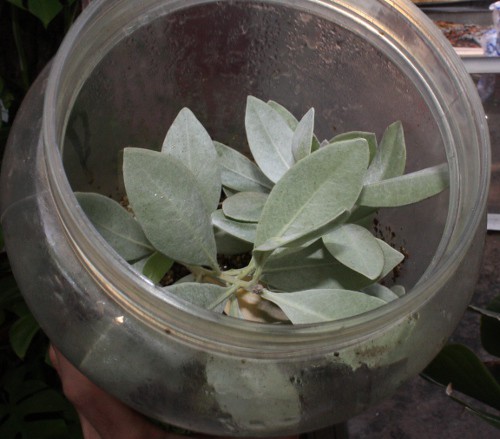 |
| Silver Buttonwood cuttings. I really hope these are rooting, but I just don't know. |
Silver Buttonwoods
There were Silver Buttonwoods (
Conocarpus erectus var. sericeus) everywhere in Florida. Most were trees, but quite a few were bushes or well-manicured hedges. We stopped to admire this beautiful tree at our very first lunch stop in Miami - on our way to the Everglades. On the last day of our trip, I took some cuttings from a couple trees in the Keys. The cuttings are now in a jar of moist vermiculite, hopefully rooting. I put some other cuttings directly in water and they quickly wilted. Since the cuttings in vermiculite still look fresh and happy I have high hopes that good things are happening. We'll see in a couple of months.
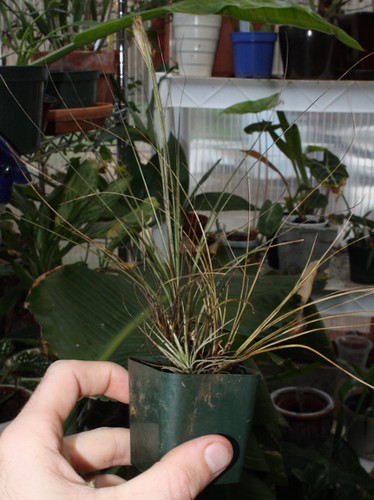 |
| Three little Tillandsias |
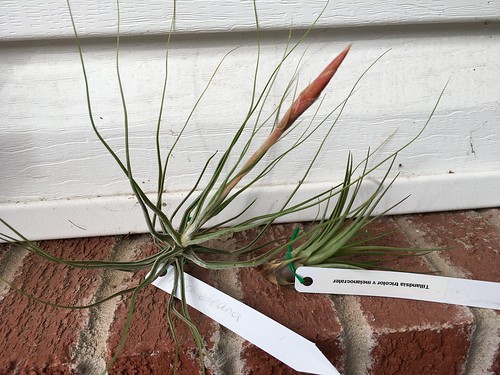
Tillandsias
Tillandias grow everywhere in southern Florida. I have never grown any myself, but I am hoping I will have some luck with these.
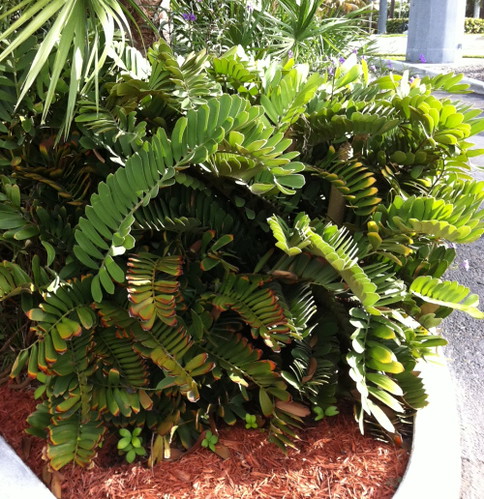 |
| Zamia furfuraceae "hedge" with seedlings at the base |
Zamia furfuraceae seedlings (from Key West, Florida)
Cycads are very common in southern Florida. In many places they are grown so thick that they can be cut into hedges. The above picture is from our hotel in Key West, where they were being trimmed into rectangular hedges. These plants were "coning" like crazy and the seedlings were thick at their base.
Yes, I really did pack all of this in suitcases to bring home!