Friday, October 21, 2011

Trip Report: West Martello Tower

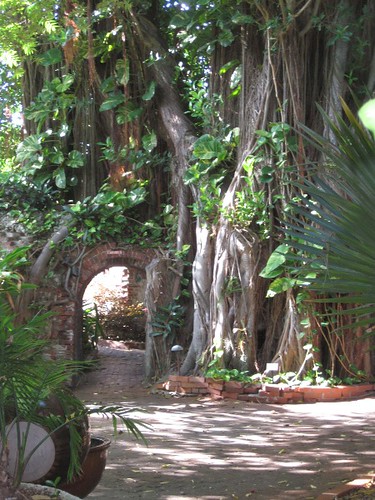
martello_archway
Strangler fig covering a section of wall at the Martello Tower
On the island of Key West, not far from the marker for the "southern most point in the continental US" is the West Martello Tower and gardens, which is maintained by the Key West Garden Club.  This beautiful garden is the site of a never-completed fort, which is really just a great setting, with brick walls of various heights and wandering paths through what is not a lush tropical garden.
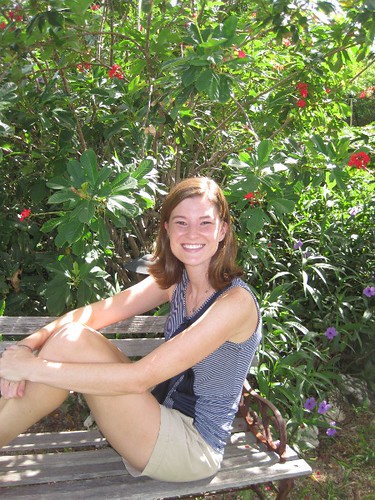
cp_martello
Christie enjoying the beautiful Martello Tower gardens
I have to admit, I enjoyed visiting here much more as it is today than I would have if it had been completed and now stood as a military historical site.
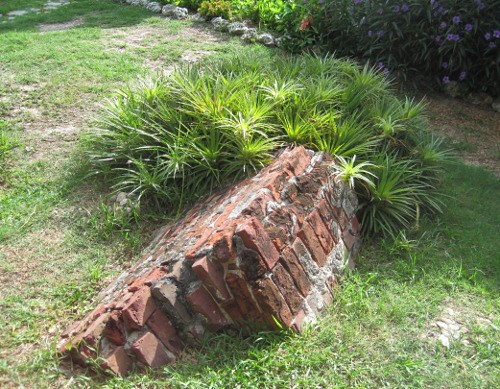
bromeliad_brick
Bromeliads planted around a collapsed portion of wall
The grounds are filled with nice compositions, including the nice spot above where some chunk of brick wall has collapsed and lays half buried, book-ended with a spreading bromeliad.
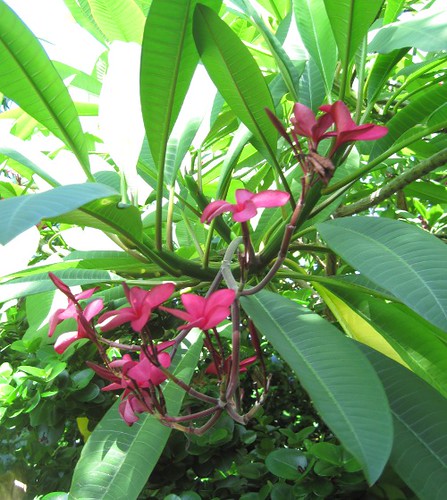
plumeria_rubra_blooms
Gorgeous Plumeria rubra blooms
plumeria_seed_pod
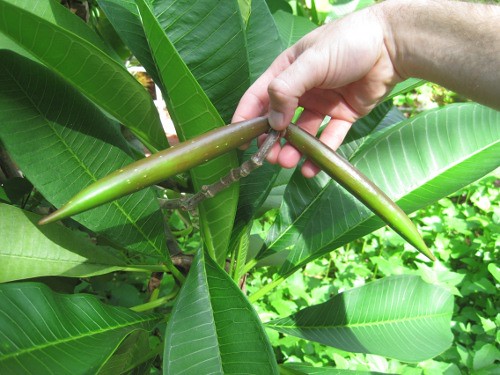
Interesting Plumeria seed pods
Many people are familiar with the Plumeria pictured above. This is sometimes called Frangipani. It has a beautiful flower, which has been bred for different colors. But the tree is more or less the same for each of these different bloom colors. The Martello Tower Gardens had another species of Plumeria (below), which I hadn't seen before this Florida trip. Plumeria pudica has a different shaped leaf and the flowers are pure white, with the slightest bit of yellow in the center. (It's hard to see the yellow in my image due to the bright sun.)
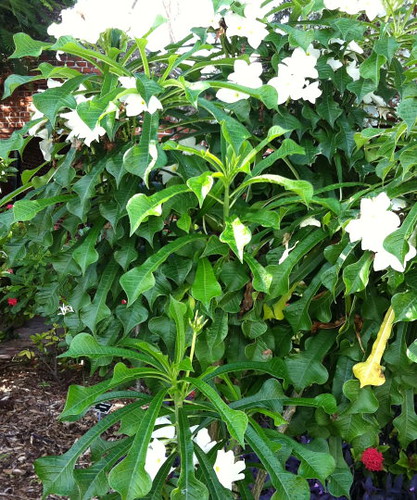
plumeria_pudica
Plumeria pudica
ruellias
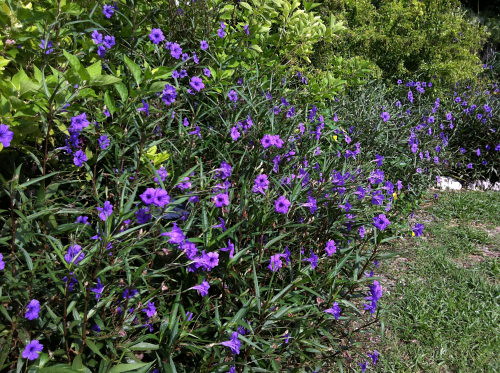
Lots and lots of Ruellias!
I have seen Screwpine trees (Pandanus) in just a couple of places.  They are known for their network of stilt roots, which are usually spiny.  The first time was in the tropical dome at the Missouri Botanical Gardens in St. Louis.  The second time would be in conservatory at the Fort Worth Botanic Garden, where there is a large Pandanus whose huge stilt roots reach into the water of the adjacent pond and fragment into a million tiny roots.  That was a site to see.  There are also quite a few Pandanus growing at the Fairchild Tropical Botanical Gardens in Miami.
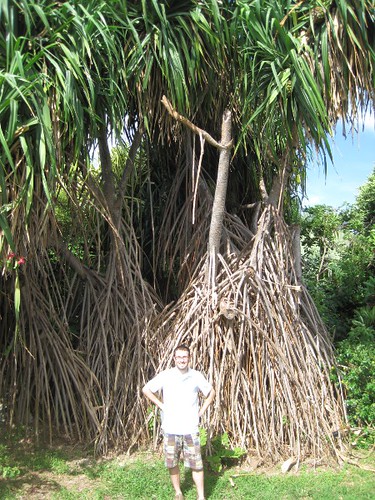
pandanus_sanderi
Pandanus sanderi tree with amazing prop roots
pink_canna
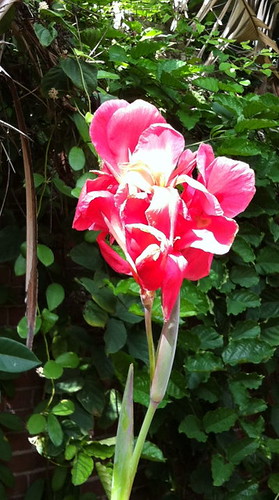
Dark pink canna
traveller_palm_bloom
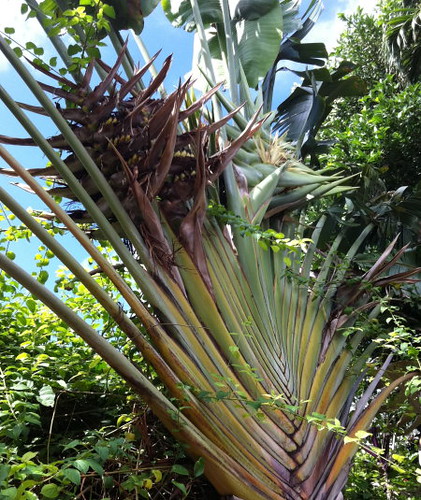
Traveller's palm (Ravenala madagascariensis) in bloom
The tree pictured above is called the Traveller's Palm, although it is not really a palm.  I have seen these trees in just about every tropical, beach front area I have visited and always just assumed they were in the palm family (Arecaceae) or possibly the banana family (Musaceae).  But when I saw this tree at the Martello garden I realized it had to be in the same family as the Bird of Paradise (Strelitziaceae).  The bloom bracts are unmistakeably similar.  Reading the wikipedia page confirmed my conviction and also mentioned that this tree was once upon a time placed in the banana family - just as I would have put it, without seeing a bloom.  It belongs to the monotypic genus, Ravenala, and is native to Madagascar.
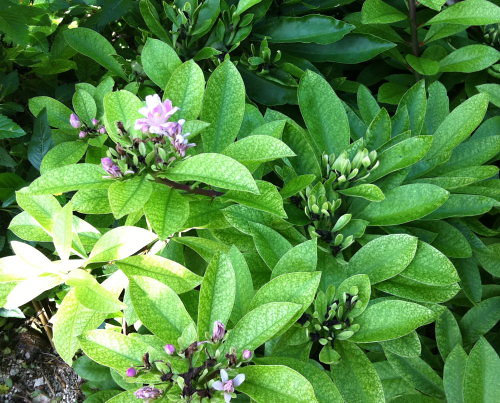
pereskia_grandifolia
Rose cactus - Pereskia grandifolia
The plant pictured above is called "rose cactus" because it has nice blooms and some killer thorns.  It is actually a cactus, which kind of surprised me, since it does not have the normal succulent look to it.  We saw Ixora all over southern Florida and I really liked their profusion of blooms - usually coral in color, like the plant pictured below.
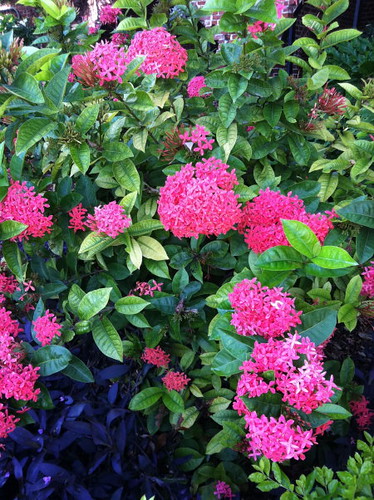
ixora
Coral colored Ixora
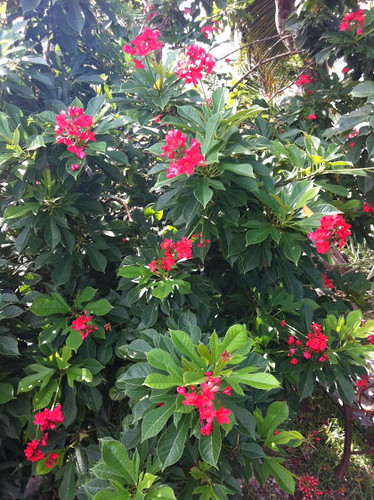
I think the Jatropha (below) was probably my favorite blooming plant at the Martello Tower, with dark leaves of interesting shapes and vibrant and contrasting blooms.
jatropha_integerrima
Jatropha integerrima
Well, the first half of this post was the colorful half.  The rest is shades of green only.  These happen to be some of my favorite plants.  I was really excited to see that the Key West Garden Club has a nice collection of Dieffenbachias and Aglaonemas inside their tower walls.  The plants are exposed to the elements and natural sunlight, but are inside a bricked area, so they are probably a little more sheltered.  Also, these plants were all growing in pots, whereas most of the rest of the plants in the gardens are growing in the ground.
pellionia
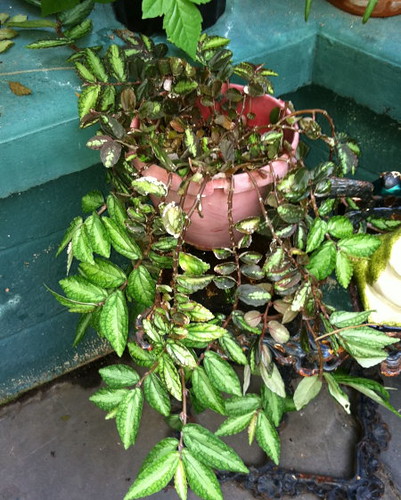
Pellionia repens
But before we get to all of the Dieffenbachias, check out this large Pellionia repens.  I thought it was interesting to see how the leaf colors vary on this plant.  I have this species myself, growing in a tall glass terrarium.  It is sometimes referred to as "Trailing Watermelon Begonia," but it is not actually from the Begonia genus.  Good thing, because I have more luck with this plant, than I do with Begonias, generally speaking.  This species is probably the second most common Pellionia, after Pellionia pulchra.
dief_1
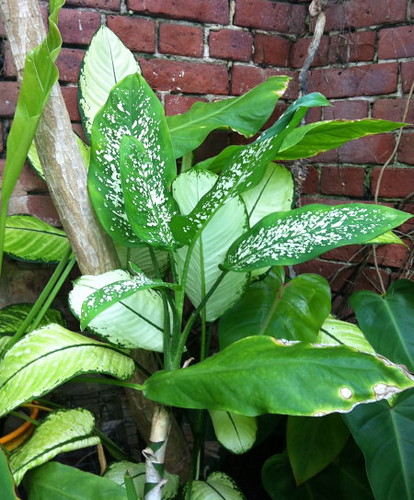
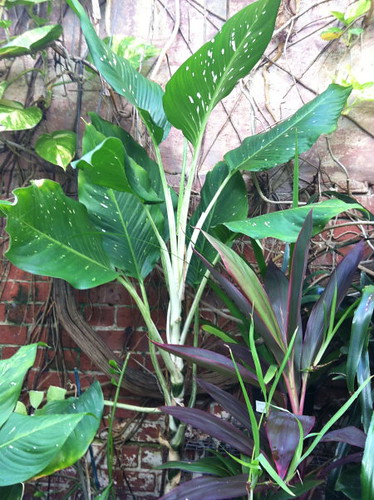
Dieffenbachia oerstedii
dief_2
Dieffenbachia maculata
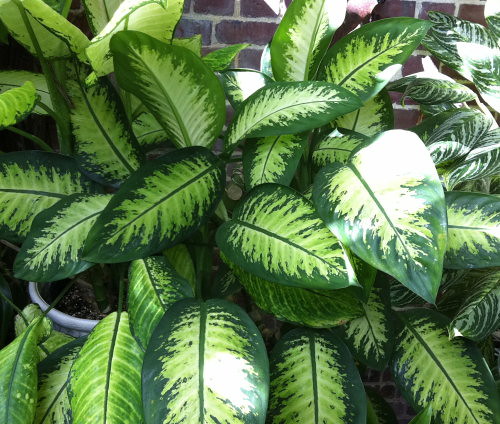
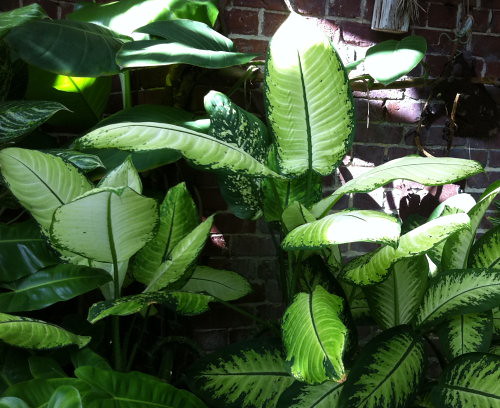
I didn't know the ID of any of these Dieffenbachias for sure, but I had a pretty good idea about the one that turned  out to be Dieffenbachia amoena 'Tropic Snow'  because my mom has that one.  I consulted with my Dieffenbachia enthusiast friends and got help on the other names.  It turns out that the speckled plant pictured above is the species Dieffenbachia maculata and the plant below is a cultivar, Dieffenbachia maculata 'Rudolph Roehrs'.  In some cases, the cultivar reverts to the original species, as shown in this picture by my friend, Russ Hammer.
dief_3
Dieffenbachia maculate 'Rudolph Roehrs'
dief_4
Dieffenbachia amoena 'Tropic Snow'
The Martello Gardens also had a small, but happy collection of orchids and a small collection of bonsai trees.  The bonsai trees were all mislabeled, which I found to be interesting, but not surprising.  I bet they were all repotted at some point and then the labels got put back in the wrong pots.  I did notice that one label was in the wrong pot, but some of the labels didn't match any of the plants I saw.  Regardless, I could appreciate their appearance and really enjoyed my time at this garden!

Friday, October 14, 2011

Trip Report: The Audubon House

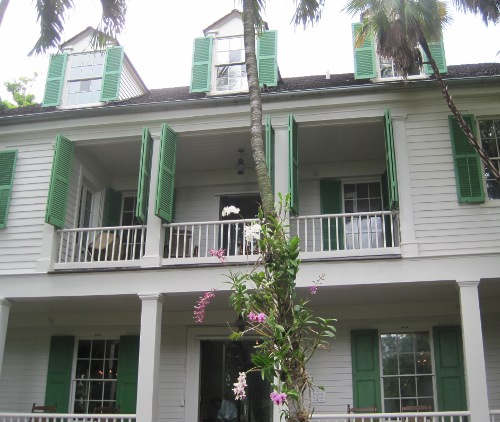
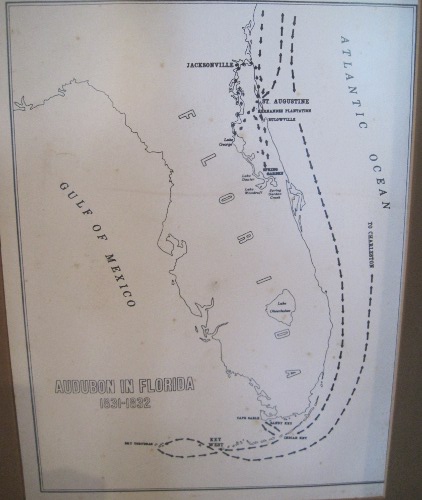
While in Key West last month, we visited "The Audubon House."  You would think with a name like this that the house would have once been under the ownership of someone with the name of Audubon.  It turns out the connection is a little less direct.  John James Audubon, the well known historical figure for his art depicting American birds, traveled to the Florida Keys in 1831 in order to paint the native birds of Florida.  While he was in the Keys, he stayed at the house next door to this house.

audubon_house
The Audubon House

audubon_travels
John James Audubon's trip to the Florida Keys
The house has been preserved and connected with Audubon because he admired the gardens while he was in the area and supposedly painted some of the trees and plants into his portraits of various Florida birds.  The gardens have been kept in great condition as a tribute.

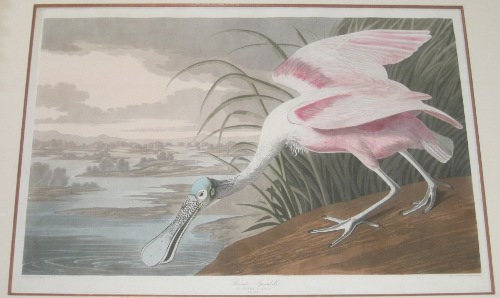
roseate_spoonbill
Roseate Spoonbill portrait by John James Audubon - my favorite from the Florida collection.
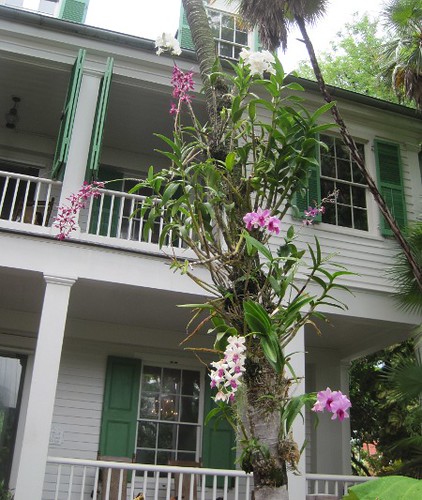
audubon_orchid_tree
Tree loaded with blooming orchids in front of Audubon House
The house is now a shrine to his work and has a very nice garden outside.  We toured the house and gardens outside, enjoying the beautiful setting.  I think Christie and I could settle into this house just fine.  The trees outside are covered in orchids, and many of them were in bloom for our visit.

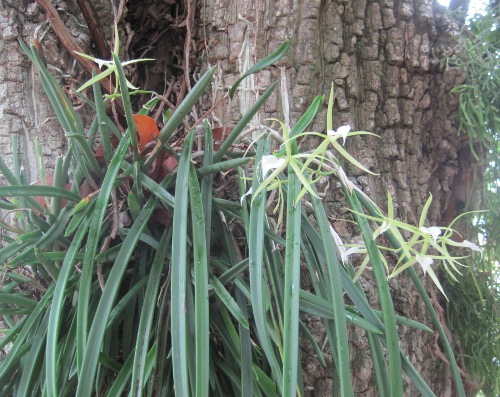
brassavola
Brassavola orchid
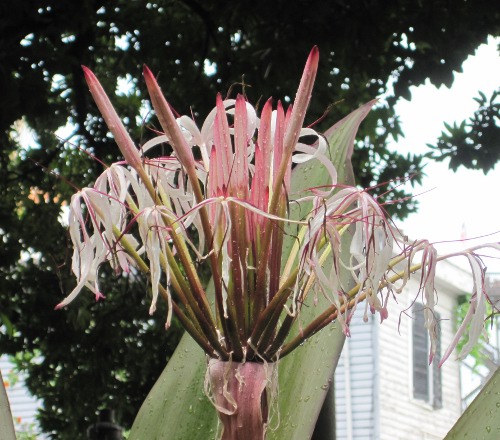
crinum_bloom
Crinum lily bloom
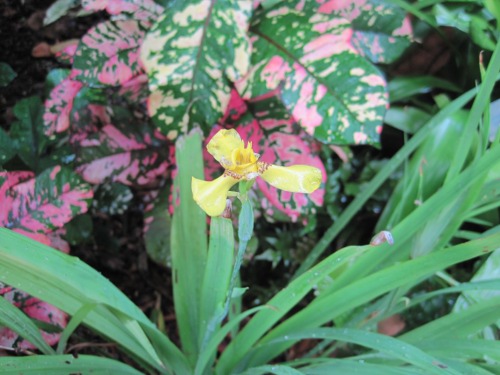
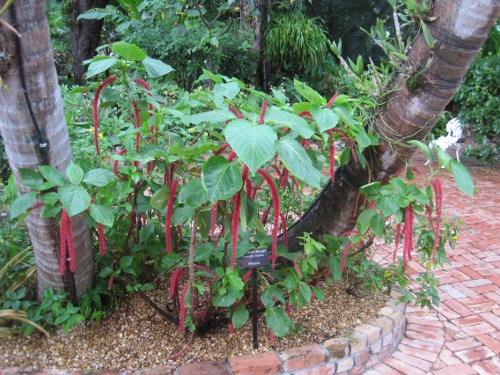
Other interesting plants filled the flowerbeds, including a couple of large Crinum lilies, some yellow Walking Iris (Neomarica longifolia), and a nice Chenille plant (Acalypha hispida).

neomarica_longifolia
The yellow walking iris - Neomarica longifolia
chenille_plant
Chenille plant - Acalypha hispida
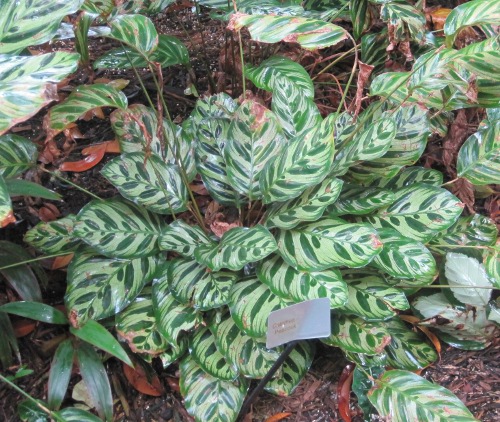
There were lots of Calatheas scattered throughout the gardens, and concentrated here and there.  I have seen these growing in many botanic gardens, but not very often in an outdoor setting.

calathea
Calathea Peacock (so the sign reads)

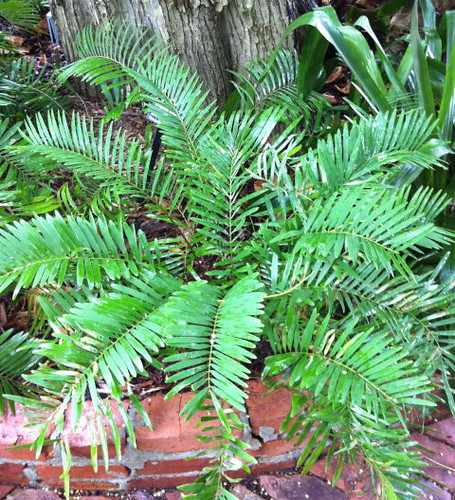
The gardens also contain some Florida native plants, which would have been important to Audubon, as he preferred to paint his birds sitting on authentic trees and plants to the area where he would find them in nature.  One of the natives I really liked was this cycad, Zamia floridana.

zamia_floridana
Florida native cycad "Coontie" - Zamia floridana
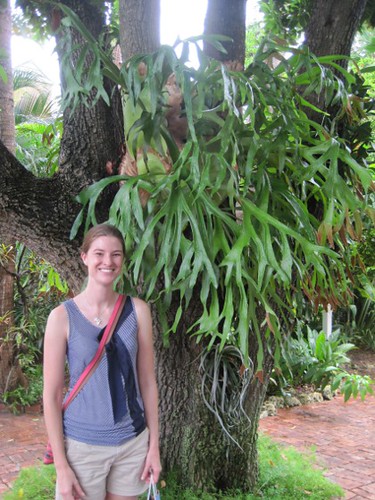
cp_staghorn
Christie under a nice Staghorn fern

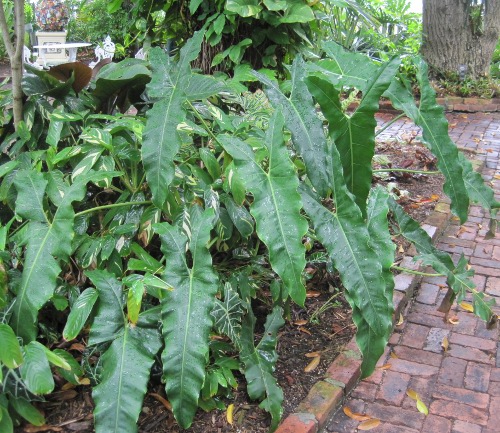
p_stenolobum
Philodendron stenolobum
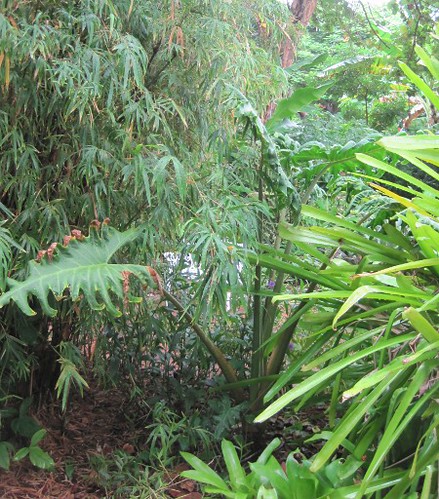
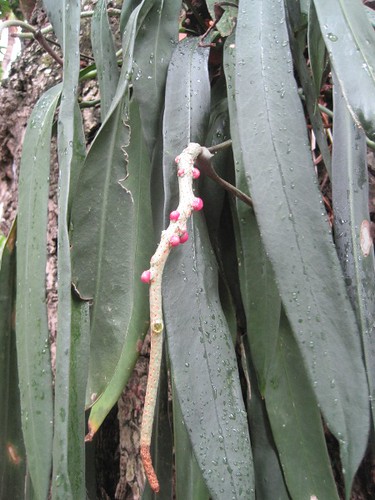
There were also some nice aroids, including this large Philodendron stenolobum (above) and Alocasia portei (below). I loved the pendant Anthurium vittariifolium, with its pink berries showing (two below) and now have a small seedling plant from a recent plant trade. I hope my plant is this attractive some day.

alocasia_portei
A large Alocasia portei (in the center of the image)
Anthurium vittariifolium with berries on spadix
cham_metallica
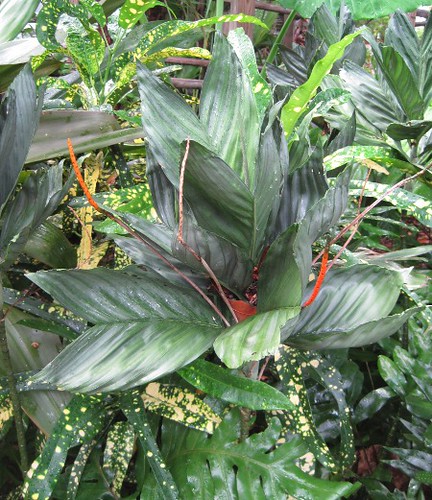
Chamaedorea metallica
My second favorite palm in the entire family is Chamaedorea metallica, which is called the Miniature Fishtail Palm, or Metallic Palm.  It has silver-blue leaves and striking orange flowers and berries.  It is small for a palm, with a maximum size of only 5 or 6 feet tall, and it is therefore usually growing as an understory tree.

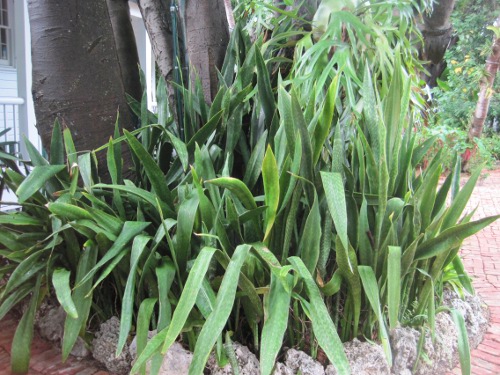
sansevieria_bed
Bed of Sansevierias - probably Sansevieria metallica.
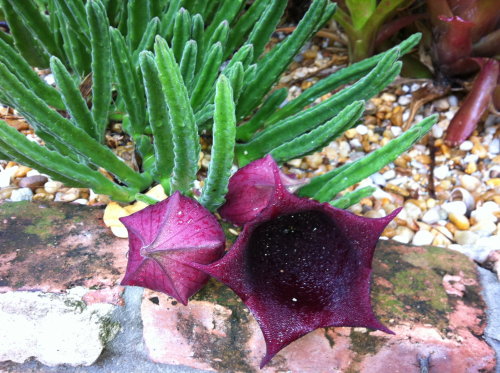
You probably already know that I like Stapelias. Am I crazy or do the buds of the Stapelia below look just as cool as the open bloom? Yes, I did bend down and stick my nose into the flower to smell the pungency. And yes, I did request Christie do the same. She grudgingly did so - after a third or fourth request.

stapelia_leendertziae
Stapelia leendertziae in bloom.
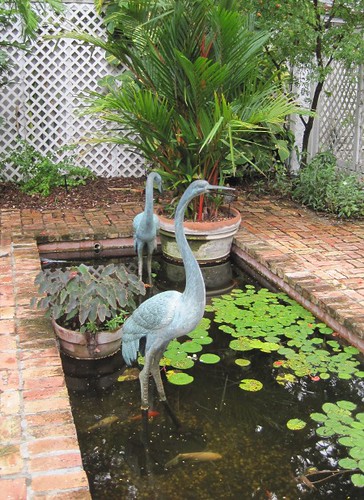
The Audubon House sits on a lot large enough to have several wandering paths through the gardens and 2 separate set-aside gardens: a water garden and an herb garden. The water garden was very tastefully designed, with some heron statues in the pond. I'm sure JJ Audubon would have liked to sit and stare at these nice statues.  The setting of this garden is similar to what I have talked about doing with a portion of our backyard, with the ground paved in either bricks or rock and a shallow pond or other small water feature.  Just a relaxing place to sit and enjoy the outdoors.

audubon_watergarden
The appropriately decorated Audubon water garden.

Tuesday, October 11, 2011

Florida plants revealed

On our trip to Florida I was introduced to a number of plants that I formerly had not seen before.  Some of these made an impression on me and I thought I would talk about those plants a bit.

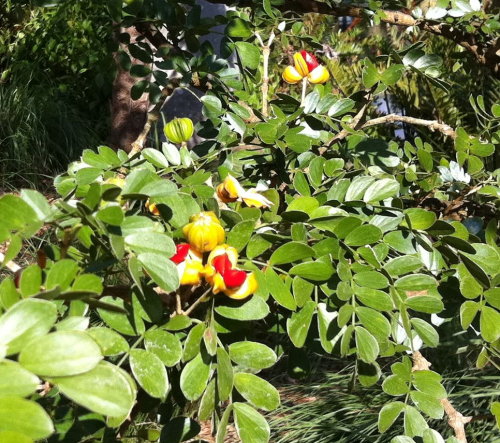
Lignum Vitae (Guaiacum sanctum)

The common name for this tree sounds more like a Latin genus and species.  Mainly that is because it is Latin.  The words translate to "wood of life."  The wood of this tree is very strong and has had many uses over the years, including structural and medicinal.  I found these trees growing in a couple of planted settings at specific gardens, including Fairchild Tropical Botanical Gardens and the West Martello tower gardens in Key West (post coming soon).

lignum_vitae
Lignum Vitae (Guaiacum sanctum) with red seeds showing.


Apparently the tree has very nice royal blue flowers, but we were there after the trees had bloomed and they all had little yellow fruits with red seed pods bursting out of them.  At first I thought the fruits were flowers - yellow with red centers - until I got a closer look.  It wasn't until I came home and looked up photos that I learned the flowers are actually a blue-purple.

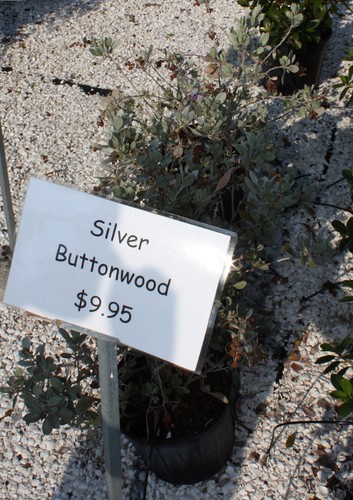
Silver Buttonwood (Conocarpus erectus var.sericeus)

Two of the plants on my short three plant list fall in the silver-blue foliage category.  What can I say?  I'm a sucker for this color foliage.  We hadn't been in Miami for an hour before we pulled over and admired this tree.  I did my normal hands-on inspection and found the leaves to be fuzzy and soft like the Lamb's Ear plant (Stachys).  Christie really liked the texture of these leaves.  Buttonwoods were growing everywhere in south Florida, in several different habits.  Sometimes they were small trees, ranging from 10 to 15 feet tall.  Other times, they were grown as little bushes, either natural or trimmed to shape.  Other times they were growing in a pruned hedge.

silver_buttonwood
My lone, lousy picture of a Silver Buttonwood was taken at a nursery which had small shrubs for sale. I can't imagine how I didn't get a better picture on the trip... They were EVERYWHERE!

On our last day of the vacation we were driving from Key West up to Miami.  We stopped on the side of the road and took cuttings of some Buttonwoods and I am really hoping they root for me.  If so, I will try to keep one or two happy in a pot, while transplanting the others in Galveston.  However, I am a little worried that it is not quite hardy enough to handle the Galveston winters.  Maybe I should keep them all in pots at home!

Since I didn't get a very good picture, you should look here and here to see what a mature tree looks like in all it's glory.

Bismarckia

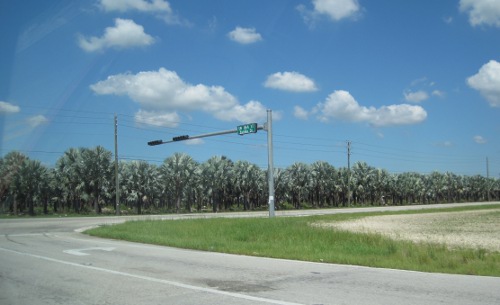
Bismarckia is a monotypic genus that is found all over south Florida, the sole species being Bismarckia nobilis.  Since I love silver-blue foliage, this is my favorite palm.  At one point we drove past a tree farm that was just Bismarckia nobilis planted at regular intervals as far as the eye could see.  It was pretty amazing.

bismarckia_field
Field of Bismarckia palms in south Miami

young_bismarckia
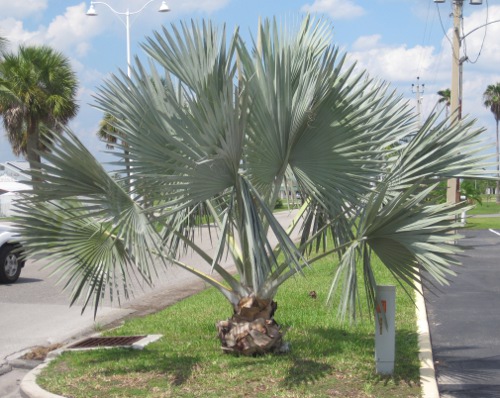
Young Bismarckia palm in a parking lot in Everglades City

I am going to try to find one of these palms to plant at the Galveston house.  I wonder what the best size is for starting a palm tree on a budget?  Maybe something like the one pictured above.

Saturday, October 8, 2011

Oeceoclades in bloom

I'm going to interrupt my spree of Florida trip posts (yes, there are more coming) with a quickie of one of my orchids in bloom.

Oeceoclades maculata
Oeceoclades maculata in bloom

This is Oeceoclades maculata, which was given to me by my friend Jude after he traveled to Florida for the IAS show last year.  He said that he found them growing all over the place.  They are not native to Florida, but grow very well in the south Florida climate.

Oeceoclades maculata
Oeceoclades leaf - looking an awful lot like a Sansevieria.

The plant itself looks much like a Sansevieria - dark green leaves with some lighter green mottling.  The leaves also have thick sturdiness of a Sansevieria.  I know the blooms are small, on top of a tall spike, but I think they are really quite cool looking and have some neat colors to them.

Oeceoclades maculata
Oeceoclades maculata bloom close-up

Wednesday, October 5, 2011

Trip Report: R.F. Orchids

R.F. Orchids is one of those places of plant legend.  If you're much of an orchid enthusiast, you have probably read "The Orchid Thief" by Susan Orleans.  In it, she mentions a well known orchid heist, in which a prize-winning orchid breeder, Robert Fuchs, had hundreds of thousands of dollars of prime orchids stolen from his property.  That crime was committed at R.F. Orchids, where Robert "Bob" Fuchs houses his breeding material, as well as his vast stock of orchids for sale to the public.

rf_sign
Sign at entrance to R.F. Orchids.  It reads "Where Quality is as Traditional as the Orchid Itself" and "Purveyors of Fine Orchids Since 1970"
I read "The Orchid Thief" a couple of years ago and had kind of forgotten about this part of the book and the name of this particular orchid grower, even though I have heard R.F. Orchids mentioned from time to time since then.  However, I talked Christie into reading the book just before our trip so she could better appreciate the area we were visiting, as well as the obsession of these orchid-crazed (and more generally, plant-crazed) people.  When we visited Ruben in Orchids, Claudia mentioned that we should visit R.F. Orchids while we were in the area.  I had no idea this place was close by and Christie quickly recognized the name from the book that she was in the process of reading.  So we took the short drive and I'm glad we did.

rf_entrance
Entering the gates into a beautifully shaded garden. That little red car is our rental car, which we named Fakahatchee Buttonwood.  Yes, our rental cars always have names.  This particular rental car name reminds me of a specific Saturday Night Live skit.
You can't imagine the exquisite entrance to this place.  You can look at my pictures and I'm sure it looks pretty, but being there in person is incredible.  I didn't get the rockstar treatment that Derek did, but we were given a friendly greeting by an employee when we arrived.  A couple of minutes later he came by with a tray of cups filled with passionfruit juice as a refreshment while we were browsing.  The juice was excellent, and much appreciated in the hot and humid greenhouses.

vanda_house
Vanda house at R.F. Orchids
v_kultana_fragrance
A particularly pretty Vanda - Vanda Kultana Fragrance
I think I was as much taken with the entire atmosphere as I was with any one plant or group of plants.  They greenhouses had lots of breathing room and were dedicated to groups of plants.  There was an entire house for Vandas and other houses for different alliances of orchids.  There were quite a few plants I saw that I would love to have taken home, and all of the plants were really healthy.  However, my wallet had already taken a licking at Ruben in Orchids, and I hadn't even gotten to the IAS show yet! So I settled for lots of pictures, and looking at the bargain orchid tables.

cat_bargain_orchids
I'm not sure whether this cat disapproved of the low prices of these budget orchids, or whether he just thought it looked like a comfortable place to lay.

my_vanda_hybrid
This is the sign picturing the parents of the Vanda hybrid I purchased.
The bargain orchid tables included young plants and keikis of larger orchids that had been sliced off and marked with incredibly low prices. I picked up a couple of Dendrobium nobile keikis for very little. I also dug around in the baskets guarded by the greenhouse cat and Christie and I picked out a little hybrid Vanda, my first Vanda ever. We took a picture of the sign which shows the parent flowers. Can you guess what mine might look like whenever it blooms?

dend_ck_ai
Dendrobium C.K. Ai

okr_scarlet_queen_chile_pepper
Okr. Scarlet Queen 'Chile Pepper'

Monday, October 3, 2011

Plant Find: roadside orchids

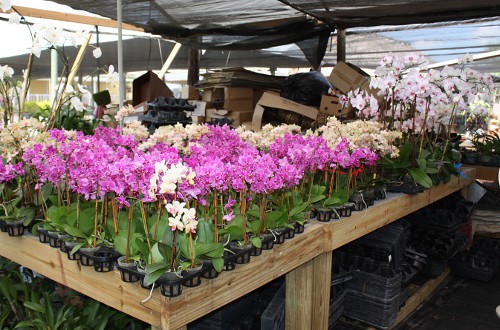
As I mentioned in my trip report on Ruben in Orchids, south Miami (specifically Redlands) is riddled with little roadside shacks and shade houses selling in-bloom orchids.

six_dollar_orchids
See anything there you'd like to buy for $6?
These places are not so much for the collectors who want species or even want to know the names of the plants they are blooming.  But these places have gorgeous, healthy plants that are all in bloom - and very reasonably priced.

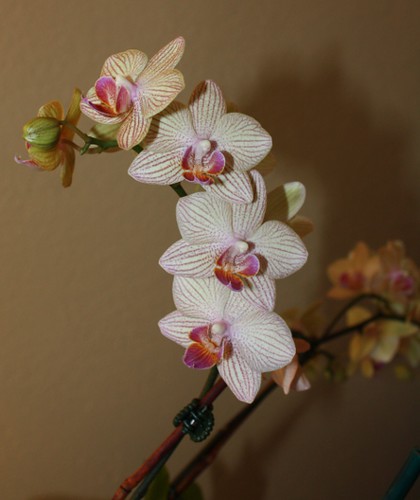
cheap_orchid
The cheap orchid I chose.
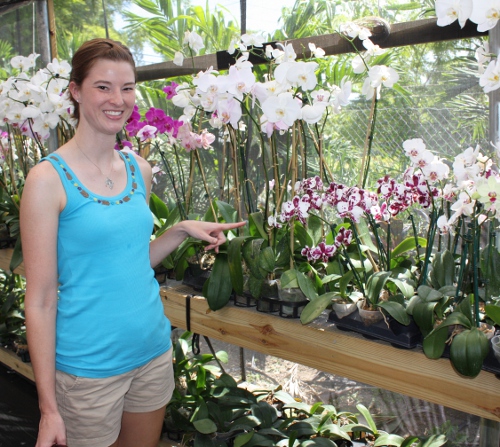
The majority of the orchids were Phalaenopsis - the moth orchid. But there were lots of different colors, sizes and patterns in the blooms. Christie's favorite was the "harlequin" spotted blooms.

cp_with_harlequins
Christie points out her favorite harlequin Phalaenopsis
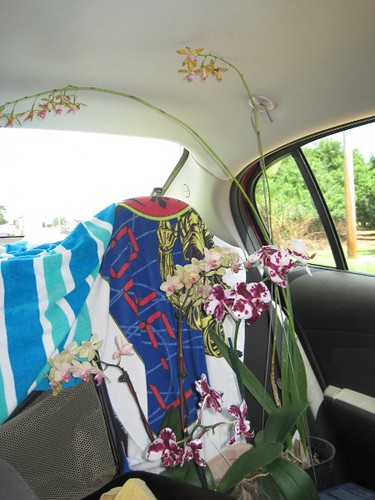
Christie and I stopped at several of these places while we were driving between two big orchid growers.  And we ended up adding a couple orchids to our backseat!

backseat_orchids
Backseat becoming crowded with orchids.  Check out how long the Encyclia plicata bloom spikes are!