Showing posts with label Amorphophallus. Show all posts

Friday, July 26, 2013

An update on my batch of lemonade

In my last post I talked about trying to make lemonade out of my broken Amorphophallus atroviridis leaf.  Last night I impatiently opened the container, checked the leaves, and then gently brushed aside the vermiculite to see if there was anything at the end of the leaf cutting.

Amorphophallus atroviridis
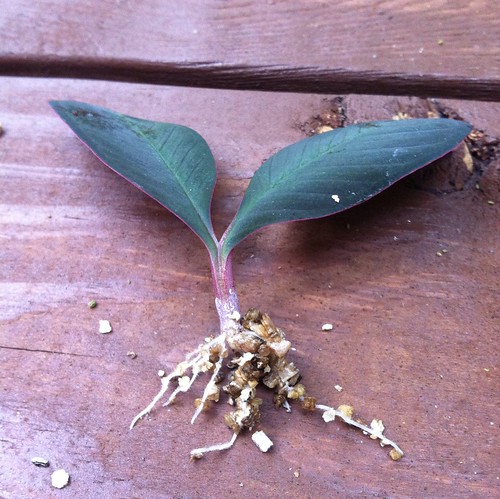
Rooted Amorphophallus atroviridis leaf cutting
I was ecstatic to find several roots growing there.  I snapped a quick picture and returned the cutting to the container, gently pushing the media back in place.  I didn't want to disturb the two other cuttings.  I have a feeling all three of them have rooted because none of the leaves have wilted.  At this pace I imagine I will have some tubers forming in the next month and then maybe a new leaf will emerge from each of those tubers in a couple of months after that.

Friday, June 28, 2013

Making Amorphophallus lemonade

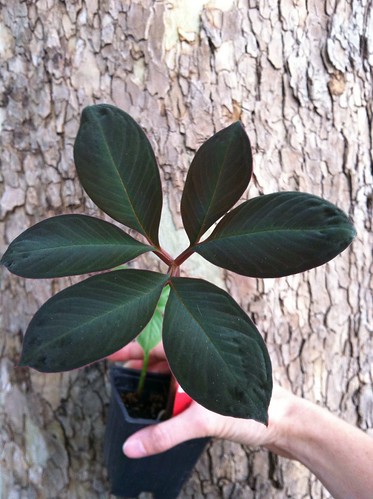
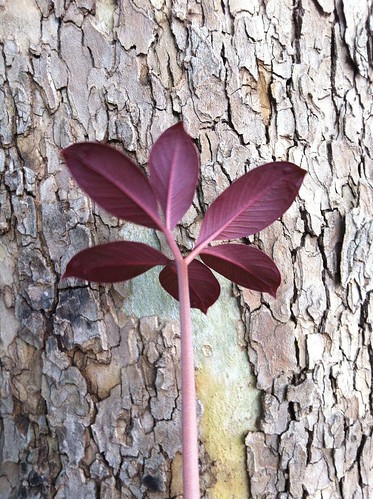
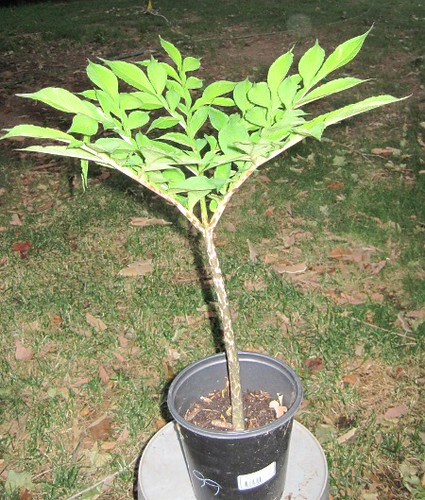
Last week my Amorphophallus atroviridis arose from its winter-long slumber and burst from the ground with the prettiest leaves you've ever seen in your life.  I was taking photos of both surfaces of the leaves when the unthinkable happened.  One moment the plant was fine; the next moment the petiole was broken off at the surface.  That second moment was not a good moment.

Amorphophallus atroviridis
Amorphophallus atroviridis - adaxial leaf surface
Amorphophallus atroviridis
Amorphophallus atroviridis - abaxial leaf surface

So what did I do?

I cried.  (I bet you thought I was going to say I made lemonade.)

What did I do next?

I cried some more.

But after that?

Are you kidding?  I was still crying.

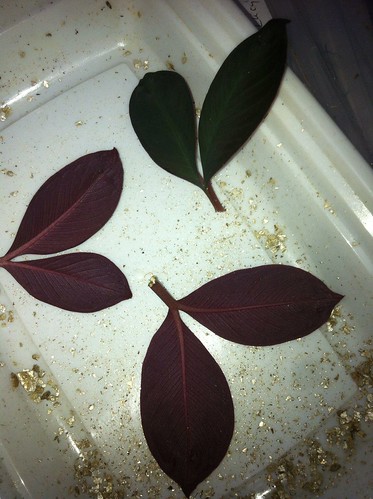
Eventually I got my life back together and decided to do something with the beautiful leaf that used to be a plant.  I stuck it in a vase of water and sent an email to my friends, asking if they had tried rooting Amorphophallus from leaf cuttings before.  I was pretty sure I had heard this was possible, and I had already successfully done this with Zamioculcuas, another tuberous aroid.  Yes, some of them had!  Their suggestions were along the lines of how I normally treat plant cuttings.  Prepare a container with a good rooting media, thoroughly moisten the media, use a little rooting hormone (or crushed Advil) on the cut end of your stem, make a divot in your media, insert the cutting, pack media around the stem so it is stationary, seal the environment to maintain high humidity.

Untitled
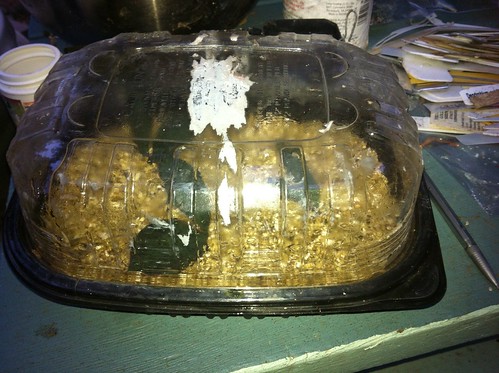
Amorphophallus atroviridis leaf cuttings

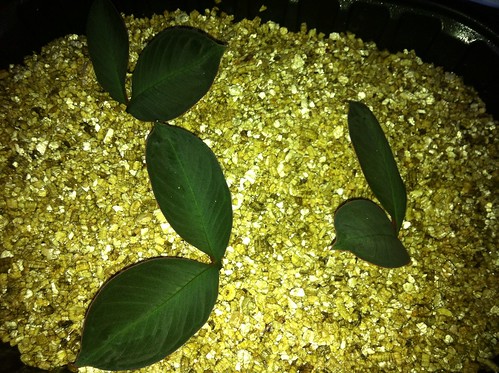
The media can be perlite, vermiculite, soil or other things.  I used vermiculite because that is what I had on hand and because it has worked well for me for other types of cuttings.

Untitled
Cuttings inserted in the media

Many people will put their cuttings in pots and then put the pot in a Ziplock bag.  I like to use take-out containers.

Untitled
Sealed in their rooting environment

With time and patience, the tip of the cutting will eventually form roots and a new tuber.  The leaf will probably die back and new growth will emerge.  That's if all goes well.  If all doesn't go well, the leaves will perish, leaving no tuber or roots behind.  Today I read an article on success rates of rooting different species of Amorphophallus from leaf cuttings.  The success rate is very low for this particular species.  I hope that I am lucky and get at least one tuber out of this experiment.  If so, I will have made lemonade.

Thursday, July 19, 2012

Trip Report: Botanical statues of Jakarta

Jakarta is the capital of the diverse islands (more than 17,000 of them) of Indonesia.  At one time, Indonesia was ruled by the Netherlands.  They won their freedom once more on August 17, 1945.  Their historical struggles and ultimate victory are remembered with the National Monument (Monas) in Jakarta.

monas_at_night
The night scene around the Monas
This monument includes a 433 foot spire, capped in gold foil, a wall of bas relief carvings telling the history of Indonesia, and a museum.  This is all surrounded by a large park that is well-utilized by the people of Jakarta. On my daytime visit there were hundreds of people around, marching, jogging, and exercising in groups.  On my evening visit there were even more people present.  Mostly they were families with small children riding scooters or flying light-up helicopters, but there were also teenagers hanging out, doing what teenagers do, and vendors selling interesting things like mini-bajaj toys.  Yes, I bought one.  Yes, it is my coolest souvenir.

bajaj
Bajaj on the streets of Jakarta
bajaj_toy
My toy bajaj that makes the authentic tut-tut sound when you pull it by a string
The gardens surrounding the bas relief wall at the center of the monument contain some rather curious tributes to the natural wonders of Indonesia.  In terms of Guinness World Records, Indonesia wins several prizes for botanical marvels.  The "largest flower" prize can be broken into at least three different categories, and Indonesia gets to claim two of them.

Amorphophallus titanum
Amorphophallus titanum - photo courtesy wikipedia
Amorphophallus titanum - also known as the Titan Arum, Carrion Flower or Corpse Flower - is the largest unbranched inflorescence in the known world.  It is not a single flower, but hundreds of flowers, all contained on that one large spadix.  "Inflorescence" means a collection of flowers.  "Unbranched" means that the flowers are all contained on the same structure.  These plants are native only to western Sumatra, the largest island of Indonesia.  [For the record, the largest branched inflorescence belongs to a palm tree, which occurs in India and Sri Lanka.]
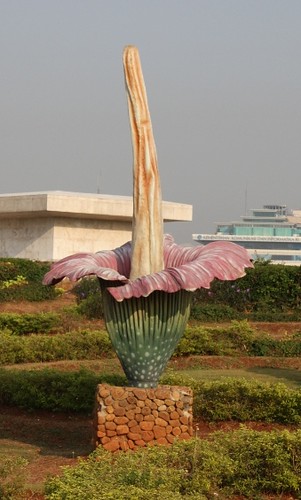
a_titanum_statue
Amorphophallus titanum statue
The gardens around the monument contain 28 statues of the Amorphophallus titanum and they are all to scale.

Rafflesia arnoldii
Rafflesia arnoldii - photo courtesy wikipedia. Author: ma_suska
Rafflesia arnoldii - also known as the Corpse Flower - is the largest single flower in the known world.  It occurs only in western Sumatra as well.  Just like the Titan Arum, it derives its common name by smelling like a decomposing body to attract corpse flies.
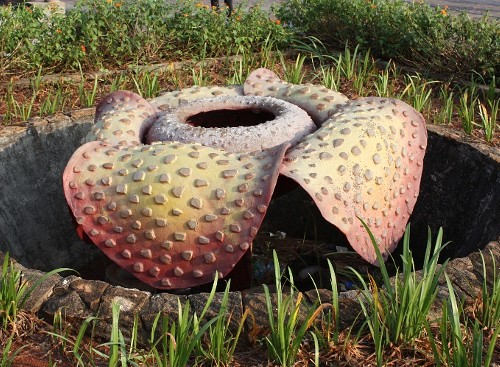
rafflesia
Rafflesia glass sculpture
The gardens contain 8 glass sculptures of the interesting Rafflesia flowers.
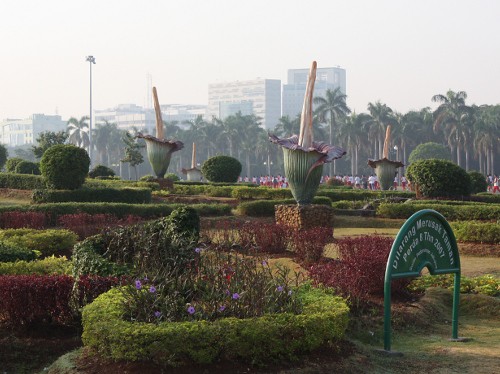
a_titanum_4_statues
Four Amorphophallus titanum statues in view
So here's to art and to honoring your botanical marvels!
Wednesday, June 29, 2011

Amorphophallus growth

My aroid friend Jason and I have been talking and trading plants a  lot this summer.  He is an Amorphophallus nut and he's been giving me some of his extra tubers, so now I have a little Amorphophallus jungle of my own.

a_konjac_tall
Amorphophallus konjac
a_konjac_stem
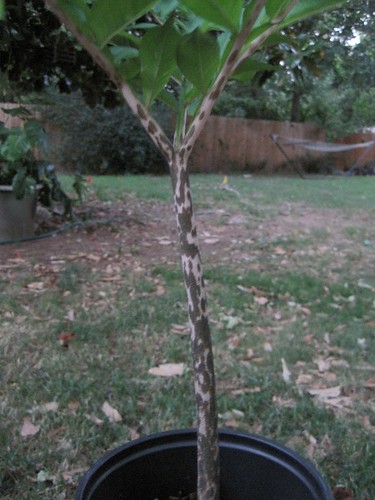
Amorphophallus konjac petiole
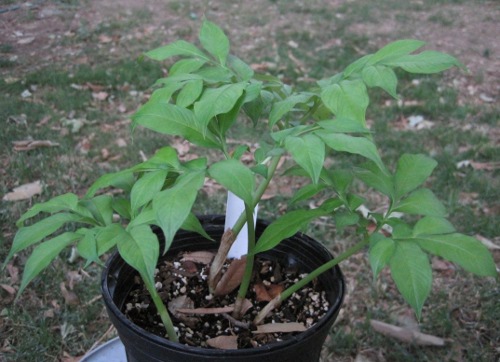
I have several Amorphophallus konjac, probably the most commonly kept species.  One of these I planted in the ground last fall and it came up recently.  I had thought that it must have died over the winter because my potted tubers had already come up.  Jason said the ones planted in the ground are slower to come up and to keep watching.  Finally it emerged.

a_albus
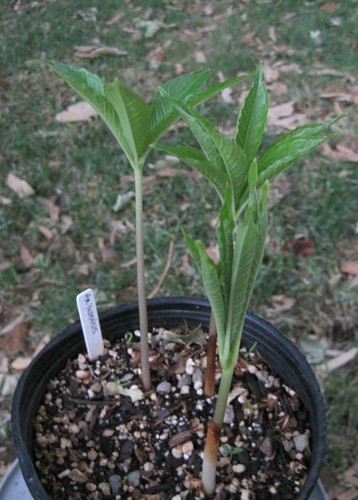
Amorphophallus albus
I also planted one Amorphophallus albus tuber last fall, and it was even slower to come up. In the meantime, Jason gave me another pot of this species.

a_yuloensis
Amorphophallus yuloensis
I have one pot of Amorphophallus yuloensis, which are a little slower than the albus to emerge.

a_symonianus
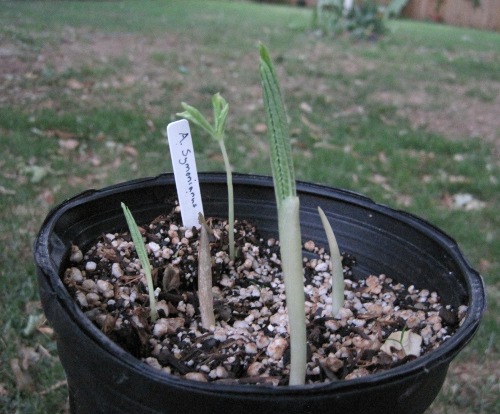
Amorphophallus symonianus
And the Amorphophallus symonianus are even a little slower than the yuloensis.

anchomanes
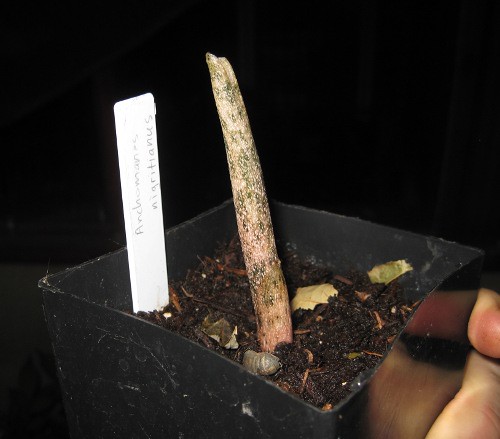
Anchomanes nigritianus
This last one isn't from Jason and it's not an Amorphophallus.  But it is a tuberous aroid, so I thought I'd go ahead and include it.  It is Anchomanes nigritianus, which I got from the Fort Worth Botanic Garden at our third MidAmerica chapter meeting.

I'm hoping next year a couple of my tuberous aroids might produce an inflorescence for me.  I haven't had one yet.