Showing posts with label Ctenanthe. Show all posts

Friday, October 22, 2010

Trip Report: Prayer plants in the Climatron

The Climatron is a 50-year old geodesic dome that serves as a tropical greenhouse at the Missouri Botanical Gardens (MoBot).  During our Aroid meeting at the MoBot (back in April) the Climatron was closed as they were setting up a dinosaur exhibit for the next weekend.  Thankfully we got "back stage passes" into the Climatron with our staff escorts!

outside_climatron
Outside of the Climatron
The Climatron is much like the Myriad Botanical Gardens in Oklahoma City, with which I have become very familiar.  The center is at a height of 70 feet and by my calculations, the ground space is about 24 thousand square feet.  The Climatron has many of their plant families grouped together that are more scattered in the Myriad Gardens.  For instance, there are two areas in the Climatron devoted only to Begonias and to prayer plants (Marantaceae family), respectively.  The only other venue where I have seen as many Marantaceae would be the Foster Botanical Gardens in Honolulu, Hawaii.
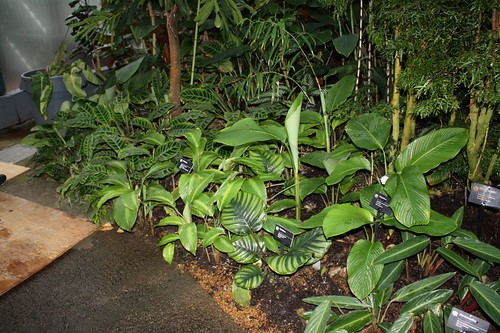
marantaceaes
Some of the Marantaceae in the Climatron.
I was really excited to see this dedicated area for prayer plants, since they are my second favorite family of plants.  The greatest thing was that almost all of them were in bloom and I have only seen blooms on these plants on a couple of rare occasions.
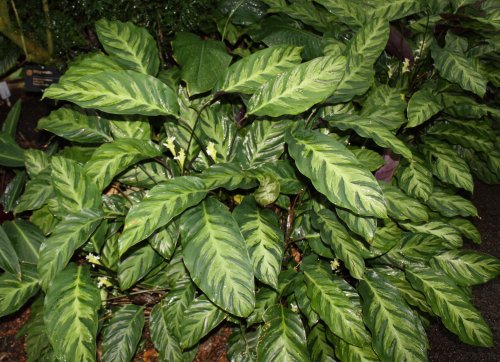
c_albertii_group
Healthy group of Calathea albertii
The impressive species display was the Calathea albertii grouping (above and below).  These plants are obviously very happy in this growing environment, having spread out quite a bit and blooming like crazy.  I was ever so tempted to ask for an offset.
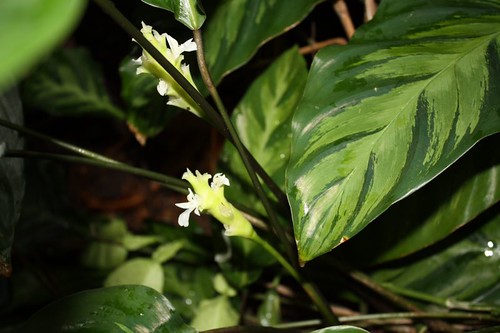
c_albertii_bloom
Calathea albertii in bloom
There are many colorful hybrid Calatheas sold as houseplants at Lowe's nowadays.  I think most of these are variations or hybrids based on the Calathea roseopicta species (below), which has pretty stunning color as a naturally-occurring species.
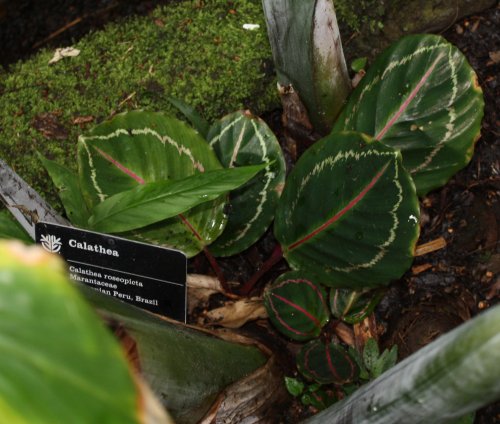
c_roseopicta
Calathea roseopicta
c_burle_marxii
Calathea burle-marxii in bloom
Calathea burle-marxii (above) is the species that I have had the best success growing in my greenhouse.  My plants haven't bloomed before, but it looks like I wasn't missing out on much.  Small white flower petals emerge from an otherwise boring green bract that kind of resembles some Bromeliad bloom bracts.
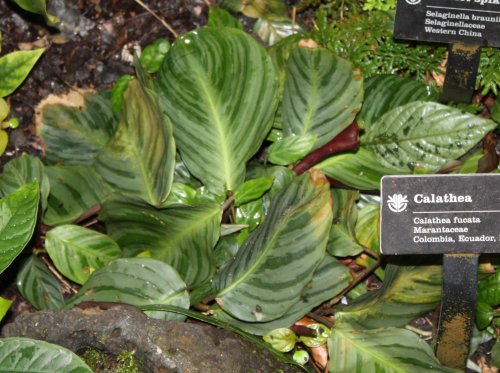
c_fucata
Calathea fucata
Calathea fucata (above) was one of the few species that was not in bloom.  It leaves me all the more curious about what it's blooms might look like.  I guess I'll just have to go back for another visit sometime...
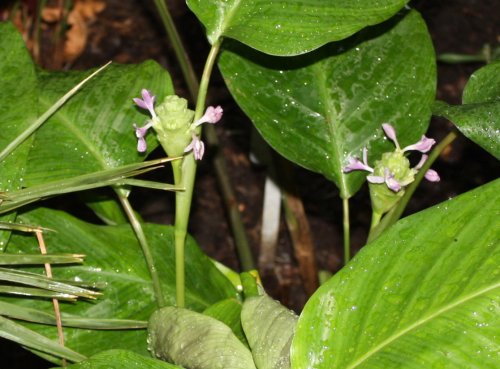
c_violacea
Calathea violacea in bloom
The plant below puzzles me a little bit.  I didn't get an ID on the plant, but comparing the leaves, it is very similar to the identified Calathea violacea (pictured above).  The blooms look different, but I am wondering if I just caught the blooms at different stages and it is the same species.  I'll try to recruit some expert Calathea help to get that question answered.
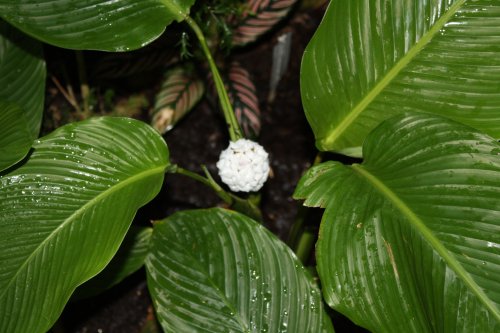
c_noid
Calathea violacea? in bloom
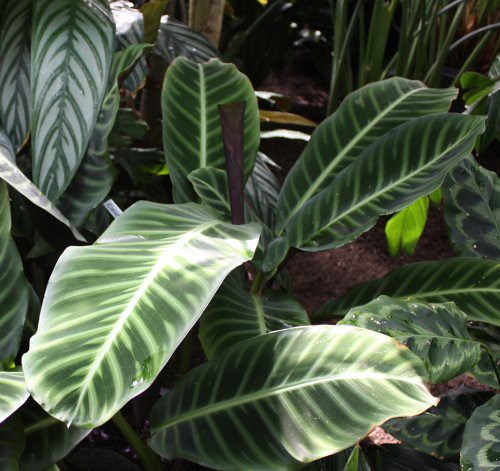
Now Calathea zebrina (below) is one of my favorite species.  I have seen this plant a couple of times in person.  There were some beautiful specimens at the Foster Botanic Gardens that were in bloom while we were there.  The plants in the Climatron seemed monstrous in comparison, though.  The zebrina species has very velvety textured leaves with solid purple undersides.  The thick stems of these plants almost reminded me of banana trees.
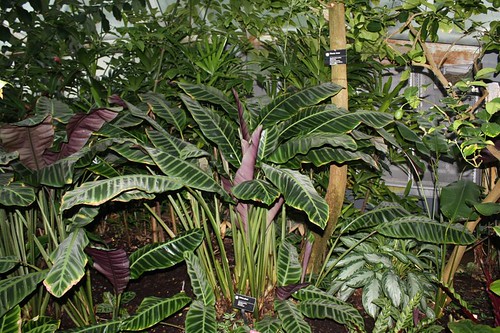
c_zebrina_forest
Forest of tall Calathea zebrina - the tallest being 6 feet or more.
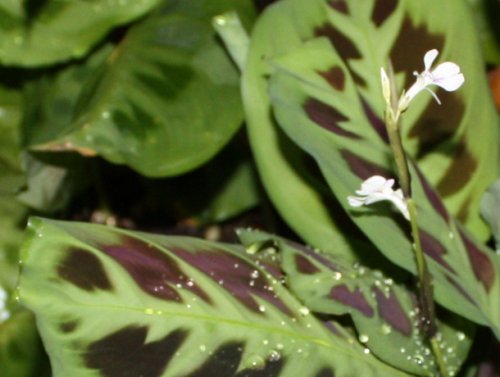
One of the most common "prayer plants" is Maranata leuconeura v. kerchoveana (below).  Okay, so it's not the easiest name, but it is one of the more common house plants from this family.  But you don't very often get to see these plants blooming in the house setting.  Obviously these plants are grown for their striking foliage, but I think the blooms are pretty neat, anyway.  Look at the closeup below.
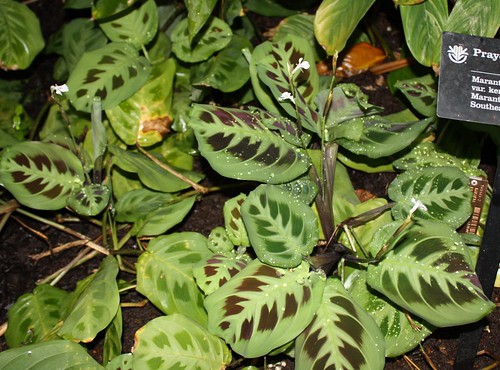
m_leuconeura
Maranta leuconeura v. kerchoveana in bloom
m_leuconeura_bloom
Maranta leuconeura v. kerchoveana bloom closeup

Tuesday, July 20, 2010

Trip Report: The Prayer Plants of Volunteer Park

When I say "Prayer Plants" I am referring to the Marantaceae family, which is one of my favorite families of plants.  Like, it's in my top 3 favorites.

I've written some posts about this family before, if you're interested in viewing those:

Actually, I have been meaning to write a much more thorough blog post about this plant family, using some pictures I took at three different botanic gardens: the Foster Botanic Gardens in Honolulu, Hawaii; The Climatron at the Missouri Botanical Garden in St. Louis, Missouri; and the Myriad Gardens in Oklahoma City.  But I haven't gotten around to that yet, so I guess I will just keep writing these short reports as I encounter new plants and see them in different phases of growth.

The Volunteer Park Conservatory in Seattle, Washington has a great collection of Marantaceaes in the center glasshouse.  One plant (Calathea warscewiczii) was in bloom and some others I had never seen before.  Here are the highlights:

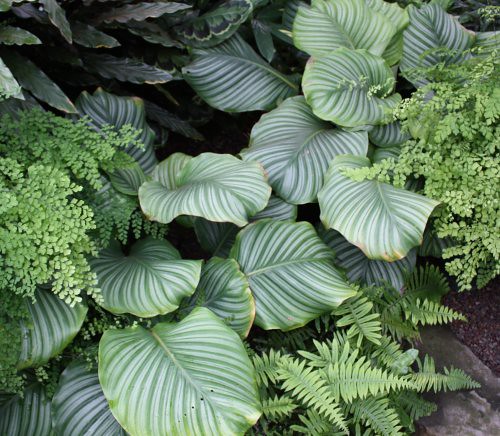
Calathea orbiculata

cal_orbiculata
Calathea orbiculata
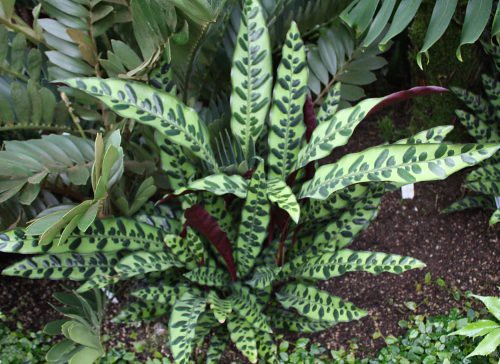
Calathea lancifolia

I was already familiar with this plant, having admired it for a while, bought one myself, admired my own for several months, and then mourned its untimely passing.  Calatheas, like most other plants from this family, like moist soil and somewhat shady conditions.  I'm afraid low humidity has been the cause for almost all of my losses.

cal_lancifolia
Calathea lancifolia
Calathea rufibarba 'Furry Feathers'

I have seen this plant online a good bit, but not from any easily accessible vendors.  One wholesale vendor had it for sale.  However, while it's a beautiful plant, I don't think I want 250 of them!  On second thought, I wouldn't at all mind 250 of them, but I couldn't afford that or have a place to put them all.

cal_rufibarba
Calathea rufibarba 'Furry Feathers'
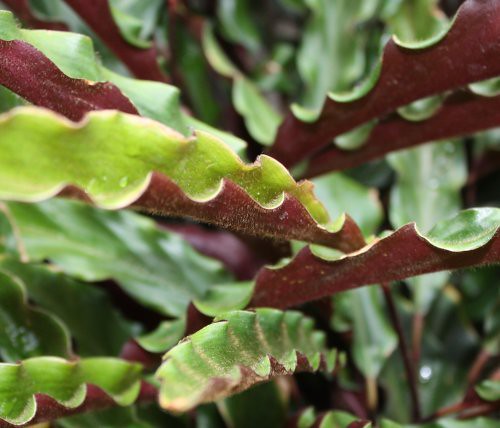
I don't know if the 'Furry Feathers' name is a true cultivar or not, but you can definitely see how the name was chosen when you look closely at the leaves.  Several other prayer plants have these furry leaves, including both of my Ctenanthes.

cal_rufi_close
Calathea rufibarba 'Furry Feathers' - here you can see why it has the name it does
Calathea NOID

This Calathea didn't have any ID on it.  That's what NOID means.  I have seen some other Calatheas similar to this one and several have names like "Peacock," but I can't put a sure tag on this one.

cal_noid
Calathea NOID
Ctenanthe NOID

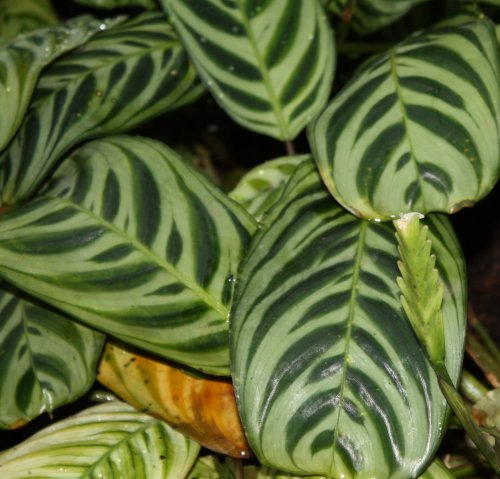
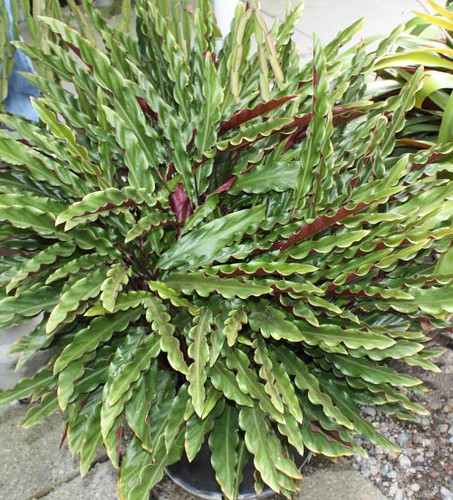
I think Ctenanthe is probably my favorite genus in the prayer plant family.  I have only seen 3 or 4 species, but every one of them has been very cool.  I mean, look at that awesome foliage!  This plant might be C. amabilis, which is pictured on Tropicos.

cte_noid
Ctenanthe NOID, likely C. amabilis
Calathea warscewiczii

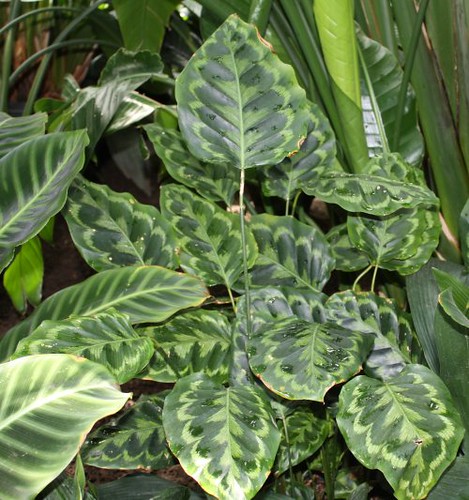
Many of the plants weren't labeled, or at least not very clearly.  I had to dig around a bit before finding tags around many of them.  This particular plant had a tag, but I'm second guessing the identification.  I think the plant might actually be Calathea zebrina.  I have seen C. zebrina other places before and my pictures match that plant much better on Tropicos than C. warscewiczii.

cal_warsc
Calathea warscewiczii or C. zebrine?
The blooms help in the identification process, but I don't have a great baseline to compare this plant to the two species in question.  Does anyone know for sure what species this plant is?

warsc_bloom
Calathea warscewiczii or C. zebrina in bloom

Wednesday, May 13, 2009

Ctenanthes showing off

I have two different species of Ctenanthes in my collection - both of which are showing off right now.  One of them (C. lubbersiana) is blooming and the other (C. setosa) just produced it's first leaf.

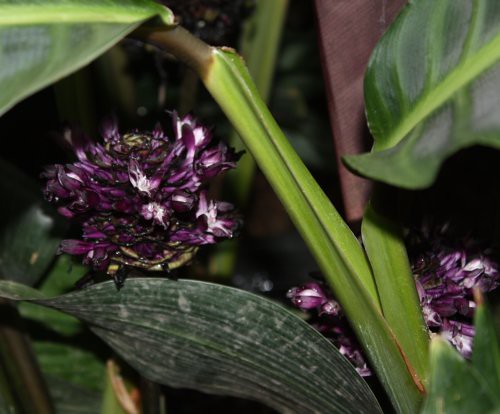
I hope you're not too excited about seeing a lavish bloom, because Ctenanthes don't do that kind of thing.  Nevertheless, I am really happy to see my C. lubbersiana plant blooming.  It has been sitting in less than ideal conditions for the past couple months and still put out new growth and a flowering bract before being taken outside into the warm sunshine.

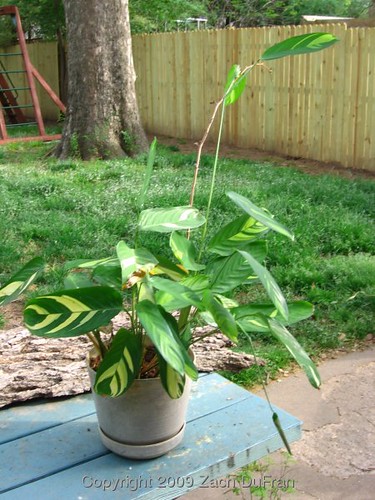
ctenanthe_tall
Ctenanthe lubbersiana with tall (blooming) stem.  The brown thing that looks like a stick is just that.  I stuck it down in the pot to hold up the top-heavy branch.
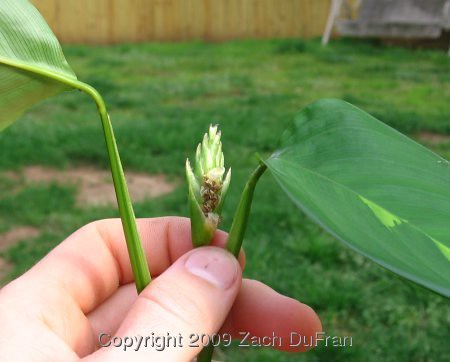
When I bought this plant in the Fall, it was root bound in the small pot in which it was planted and had pretty much pushed all of the soil out of the top of the pot.  When I finally removed the plant from the pot it was almost entirely roots.  I used a pair of scissors and cut the plant in two and put each half in a pot larger than the original pot that was containing the whole plant.  I also split off a single stem and roots and potted it up for my mom.  Both of the divisions that I kept continued to grow well throughout the Winter.  The one in the larger of the two pots is sending up more new stems and has the one really long stem (pictured above), which produced the inflorescence (pictured below).

ctenanthe_bloom
Ctenanthe lubbersiana inflorescence
This plant is a vigorous grower in the couple of months that I have had it and I will enjoy continuing to divide it.  It's always nice to have a plant that you can share freely, without worrying that you will lose your original plant.

You might remember me receiving a very special package from Australia just over a month ago.  That package contained 5 rooted stems of Ctenanthe setosa 'Grey Star,' which had been cut off just above ground level.  I planted the stems immediately and the first stem appeared last week, producing a leaf just a couple of days later. The stem below the leaf is only about 3 inches tall.  In the same pot, there are two other stems just breaking through the soil surface.

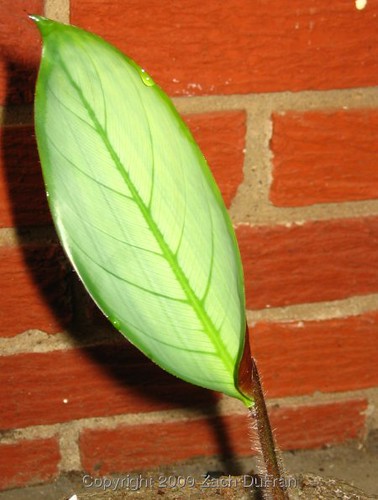
first_setosa_leaf
First leaf on the first stem of Ctenanthe setosa 'Grey Star'
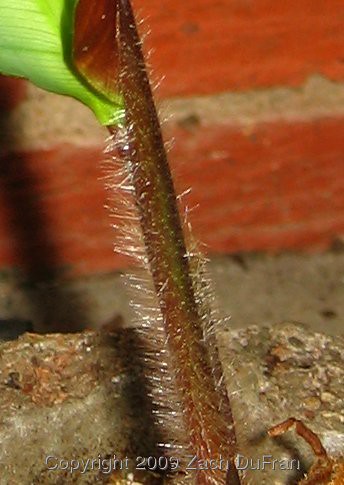
In my introductory post for this plant, I discussed the species name "setosa," which means "bristly or hairy."  Look at the picture below to see that name in action!

setosa_fur
Ctenanthe setosa 'Grey Star' pubescence (fur) along the stem.
The "fur" feature is called pubescence on a plant.  The pubescence on my Ctenanthe almost looks prickly, like a cactus, but it is actually soft to the touch.

Besides having some really cool foliage, Ctenanthes are a good fit for me - enjoying the increased humidity that my house seems to have over the winter and they do fairly well in low light conditions.

Thursday, March 26, 2009

Plant Find: Ctenanthe from Australia!

Earlier this week, I wrote about a plant I was expecting in the mail from Australia.  Well, it arrived yesterday!  Here's the story:

Back in December I bought a plant at TLC that appeared to be in the Marantaceae family, but I didn't know the genus.  After doing some research online, I found a match.  My plant was a Ctenanthe lubbersiana (Ctenanthe 'Brazilian Snow').  I really like the Maranta family, as I have mentioned recently in a couple of posts, so I did some image searching for other Ctenanthes.  I came across a couple of Ctenanthes with very light white or gray tone leaves with the usual streakings of green and solid red underneath the leaves.  One particular image caught my attention on Flickr.

Ctenanthe in Australia - photo courtesy of Flickr user imbala
Ctenanthe setosa 'Grey Star' in Australia - photo courtesy of Flickr user imbala

Going out on a limb, I sent a message to the image owner on Flickr and asked if they owned the plant and were willing to make a plant trade.  It turns out the owner lives in Australia and she was willing to trade with me.  Unfortunately, I didn't really have any plants that she was wanting, but I did have access to some plants that are a little harder to find in Australia, apparently.  I bought a package of 10 Caladium bulbs of varying colors and she dug up 5 of her Ctenanthe plants, trimmed away the leaves, wrapped the roots and stems in newspaper and boxed them up.  The trade was ready.

setosa_package
Package from Australia
We both carefully packaged our goods and sent them in the mail.  The Australian package arrived at my house yesterday!

The Ctenanthe plants were sent as roots only with a leaf and a bloom included so that I could see the plant in person before mine grows.

setosa_leaf
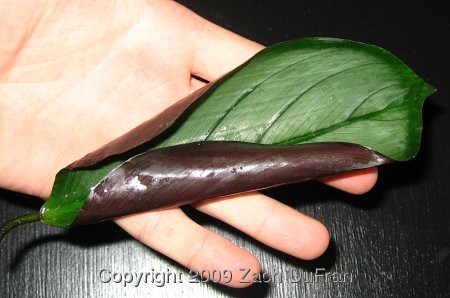
Ctenanthe setosa 'Grey Star' leaf.  The top of the leaf looks almost grey in person.
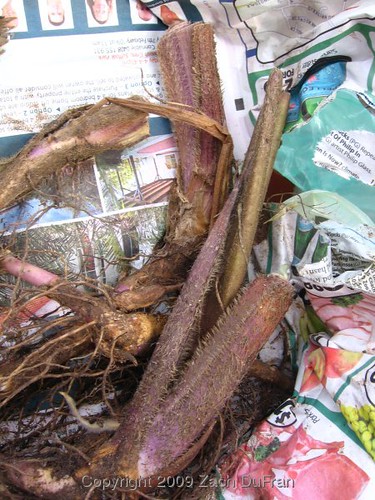
I looked up the species name "setosa" in my Gardener's Latin book and found that setosa means "bristly or hairy."  I first thought this must be a poor name choice for this plant.  Either that or the word "setosa" must have another meaning.  It turns out the stems of this plant are much furrier than they look in the Flickr picture I had seen.

setosa_roots
Ctenanthe setosa 'Grey Star' roots with furry stems
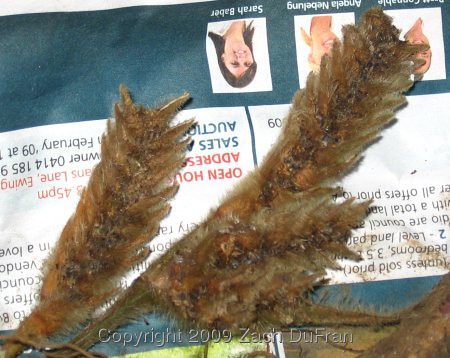
The form of the blooms looks similar to some bromeliad blooms I have seen.  I think other plants in the Marantaceae family have this type of bloom.

setosa_blooms
Ctenanthe setosa 'Grey Star' dried blooms
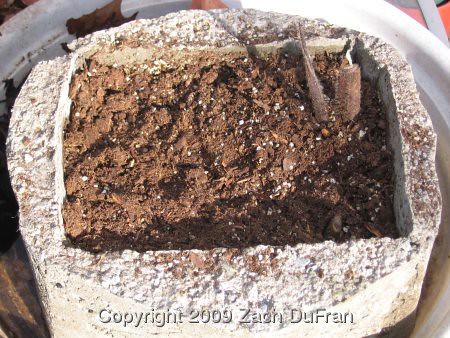
I potted three of the five rooted stems in a (unintentionally heavy) hypertufa pot that I made this winter in a mixture of peat moss, rich potting soil and vermiculite.

setosa_hypertufa
Three stems of Ctenanthe setosa 'Grey Star' potted in a hypertufa planter I made this winter
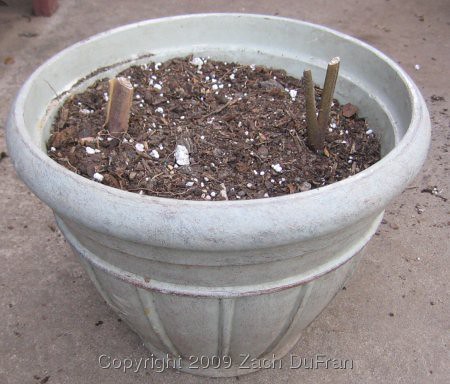
I potted the other two stems in a large round planter that was the former home of my Coconut palm tree.  I used a slightly sandier soil mixture in this pot with more potting soil than peat moss.

setosa_round
Two stems of Ctenenthe setosa 'Grey Star' potted separately
I can't wait to see my stems sprout and produce leaves like the ones in the Flickr picture.

Thanks a bunch Flickr friend! :)

Monday, March 2, 2009

Plant Find: Calathea, Marantas, and Stromanthe

I am fond of plants from the Marantaceae family.  This family includes several genera that are common houseplants, including Calathea (peacock plants) and Maranta (prayer plants), as well as the less common Ctenanthe and Stromanthe.  There are actually about 30 genera in this family, but those 4 are the only ones with which I am familiar.

Generally, plants from this family are grown for their striking colors.  One of the features I enjoy is watching how all of the new leaves unfurl.  Also, mature leaves will retract whenever they dry out.  Marantas tend to fold in half (like praying hands), while Calatheas roll into a scroll.

Last week I added 3 new plants from this family to my collection.  I found a Calathea at Lowe's for $5 and it was a color variety that I had never seen before.  I figured I should snatch it up in case I never saw it again.  You know how that goes.

calathea
Peacock plant - Calathea roseopicta 'Saturn'
When I found myself driving through north Oklahoma City last Tuesday, I decided I should probably stop by my favorite plant nursery, TLC Florist and Greenhouses.  As usual, they had a couple of great plants for a mere $2!  I bought 2 different Marantas.

maranta_green
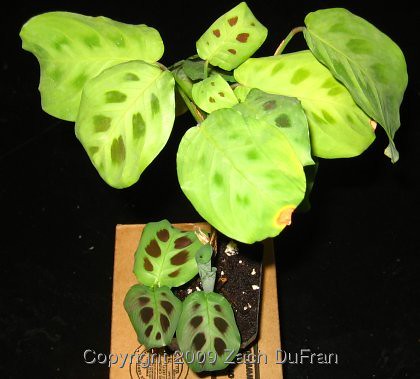
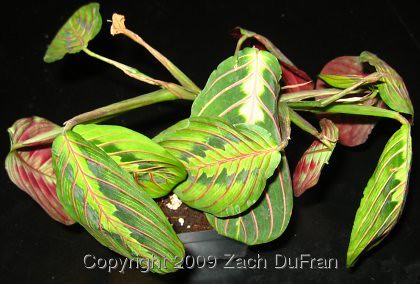
Prayer plant - Maranta leuconeura
Marantas have a wonderful, delicate feel.  They are fairly sensitive to soil moisture levels.  I try to not let the soil ever dry out.

maranta_red
Red-veined Prayer plant - Maranta leuconeura erythroneuro
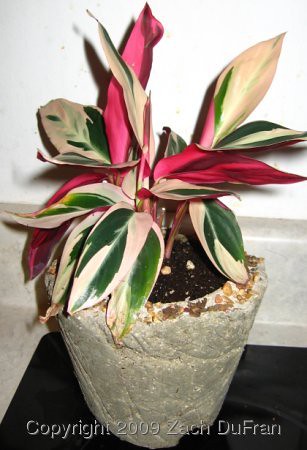
Back in January, I added 2 other plants to my Marantaceae collection.  One is Stromanthe sanguinea 'Triostar', which I found for a very reasonable price at Lowe's.  It is a beautiful tri-colored plant that I saw in bloom at the Myriad Gardens last week.

stromanthe_triostar
Stromanthe sanguinea 'Triostar'
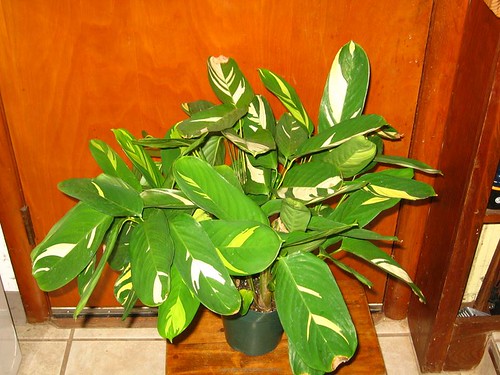
The other plant is a Ctenanthe, which I got at TLC Florist and Greenhouses.  In case you missed my post about TLC, you can see the post here and the photo album here.

35496614615_c016eb4af5_o
Ctenanthe lubbersiana
I will probably post a more thorough guide to plants from the Marantaceae family in the next couple of months.

Wednesday, January 28, 2009

Trip Report: TLC Florist and Greenhouses

There aren't a lot of great places to buy plants in my hometown of Norman, OK.  But I found a gem (actually 2 gems!) in northern Oklahoma City - just a 40 minute drive from home.  TLC Florist and Greenhouses has 2 locations in northern Oklahoma City and is everything I want in a plant store.

I first visited the north-central (Edmond) location in November and then visited the NW OKC location in early January.  The Edmond location is much larger, and has a wider selection of plants.  However, I found that the NW OKC location has plants in much more affordable sizes.  There were some really great Aglaonemas (specifically the species Lilliput) at the Edmond location that were in large pots and cost $35 a piece.  At the NW location they had some in 4" pots for $5!  I'm all about the experience of watching the plant grow.  Besides, I already don't have enough room in my house for all my plants.  So the 4" size suited me well on all levels.

According to their website, TLC has been ranked in the top 100 of US Garden Centers for the past 12 years straight!  In addition to having high quality plants, they do a local Saturday morning TV show on Gardening during the Spring.  I haven't seen it before, but I plan on tuning in some Saturday morning this Spring, now that I know it exists.  They also do free seminars on the weekends during the Spring and Summer.  They have posted the schedule to their website, for anyone in the central Oklahoma area who might be interested.

I took some pictures and posted the photo album here.  Enjoy!

Of course, I didn't walk away from TLC empty handed.  I bought 5 plants:

  • Aglaonema 'lilliput' - This is a very attractive Aglaonema with lance-shaped leaves that are curly like those of 'Royal Ripple' and splotched in a unique variegation.

  • Aglaonema NOID - I'm not sure what this one is and it could quite possibly be a species I already have in my collection.  But at the price of $5, I couldn't pass up the opportunity to add another Aglaonema.

  • Philodendron 'Rojo' - This is a beautiful self-heading Philodendron with deep purple, red and green leaves.  The leaves are thick and waxy like the burgundy rubber plant (Ficus elastica 'Burgundy').  TLC had some really large plants that were way beyond my budget.  But they also some medium sized plants that were very healthy and pretty affordable.

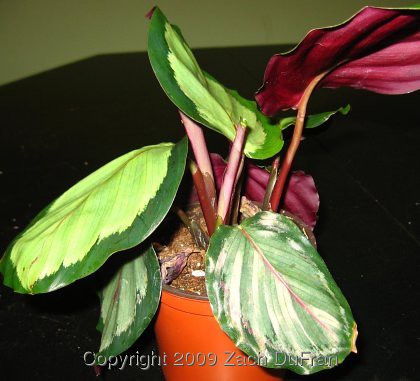
  • Ctenanthe lubbersiana - These plants were literally bursting out of their pots.  I recognized them as being in the same family as Stromanthe, Calathea and Maranta - the Prayer Plants.  The leaves of this plant are light green with broad streaks of yellowy-white.  The plants weren't marked but I was happy to see the price was minimal when I got to the checkout counter.  I have since divided and repotted this plants into two plants that look almost as large as the original.  How is that possible?

  • Platycerium bifurcatum (Staghorn Fern) - I have admired these plants for quite a while, but I have always seen HUGE specimens.  I was really excited when I saw this small specimen in a 4" pot.  I'm looking forward to mounting him on bark this summer and watching him take off.  Maybe I will even hang him from the Magnolia tree in my backyard.  I always see this hanging from trees, it seems.

To see my plants, look at the photo album.  The pictures below the break are the plants that I purchased.