Showing posts with label Euphorbia. Show all posts

Monday, February 12, 2018

Trip Report: Desert Botanical Garden

I recently traveled to Phoenix for work and managed to get some free time for exploring the Desert Botanical Garden, which was conveniently close to my hotel and the airport. Before going to Phoenix I looked for some good birding hotspots and was really excited to see that one of the best places to go birding in Phoenix is a botanic garden. Two birds with one stone! (plants and birds)
Untitled
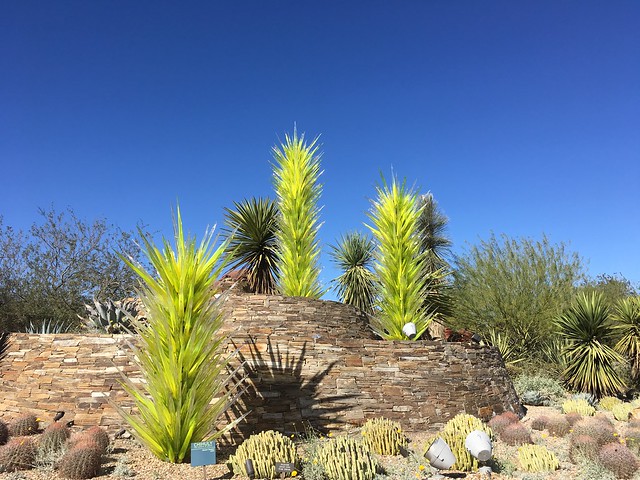
Chihuly glass at entrance

Untitled

While I'm at it - a bird in the hand is worth nothing compared to two birds in a bush! Who wants a bird in their hand? A bird in the bush is much easier to photograph, and you're photographing the bush at the same time! Plants and birds, that's what I'm talking about!
IMG_6921

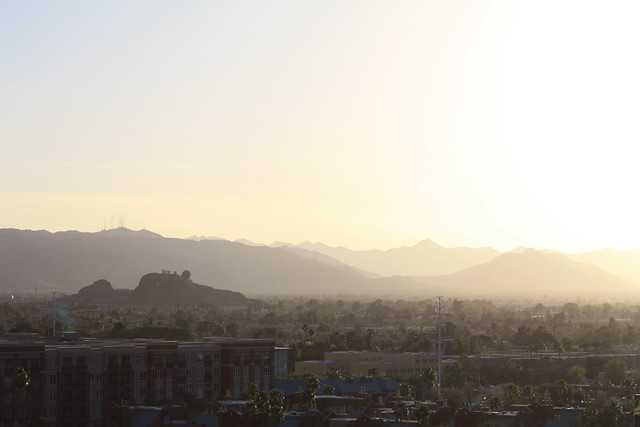
Phoenix is a beautiful city and I enjoyed it much more than I expected. I'm sure the 79 degree high temperature each day helped, almost 60 degrees warmer than back home.
Untitled

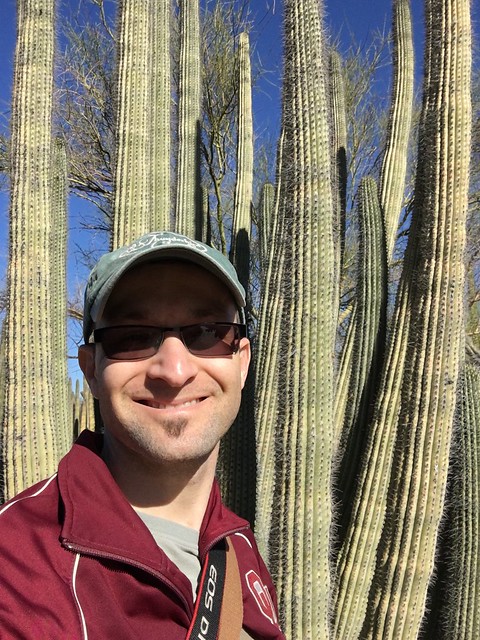
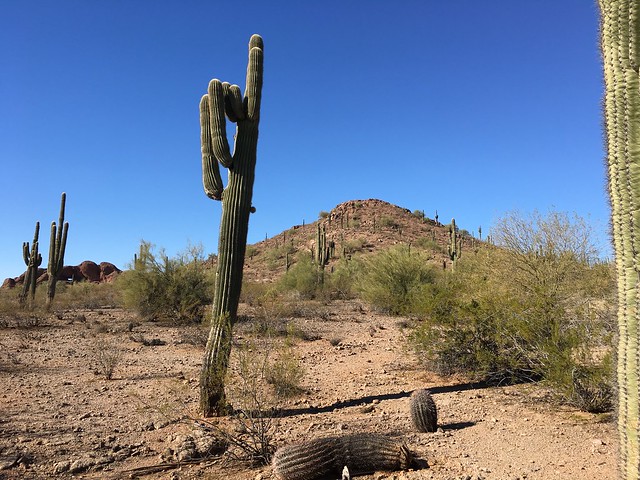
The Desert Botanical Garden is a beautiful, well maintained garden with lots of interesting plants. The entry garden is awesome and wandering just a bit further in there is a cacophony of sound - Gila Woodpeckers, Verdins, and Costa's Hummingbirds constantly trilling, chirping, and whistling. I really liked the Desert Wildflower Loop, which was particularly buzzing with hummingbirds. The Sonoran Desert Nature Loop is in more open scenery with many Saguaro cacti in sight.
Saguaro

The Cacti and Succulent Galleries are made up of some large metal structures that provide shade and protection for some smaller and more tender plants, such as Lithops, Stapelia, Kalanchoe, and Aloe.
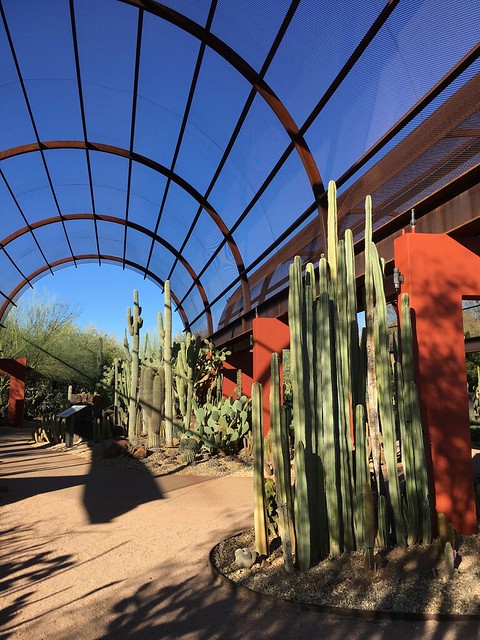
Untitled

There were several Aloe in bloom while I was there. Their vibrant flowers contrasting with the wide solid green leaves are something to see.
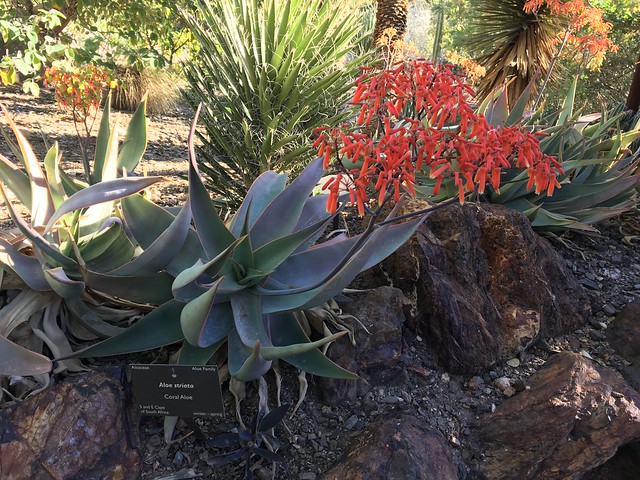
Aloe striata - Coral Aloe

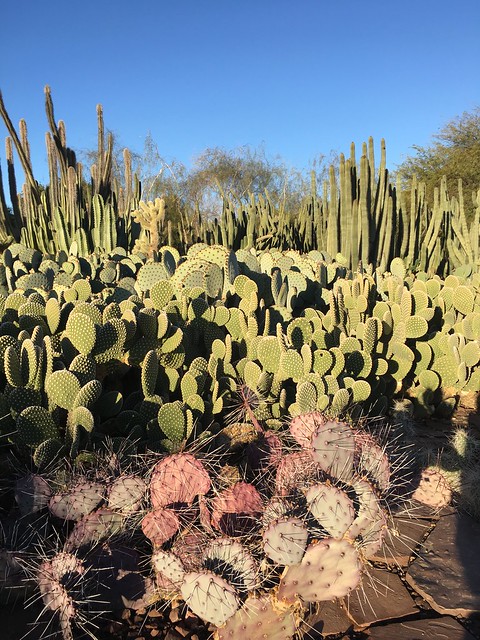
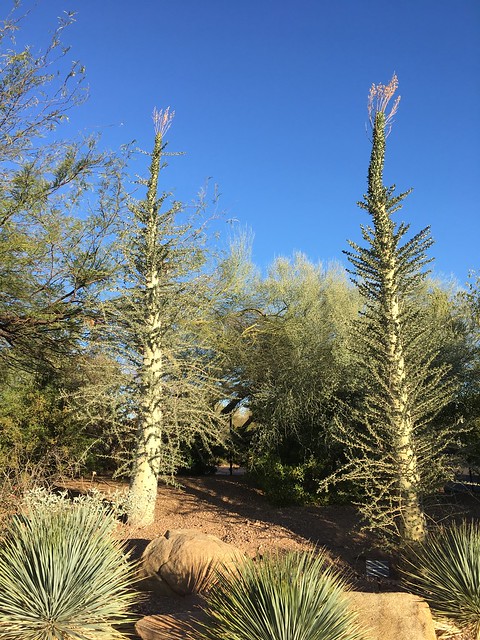
I am not a big collector of cacti and succulents, but seeing these plants growing in mass and in their natural habitat was really fun. There was plenty that caught my eye, from the purple-tinted Prickly Pears (Opuntia gosseliniana var. santa-rita), to the spiny mounds of Jumping Cholla (Cylindropuntia fulgida), the cone-shaped Boojum Trees (Fouquieria columnaris), and the towering native Saguaro (Carnegiea gigantea).
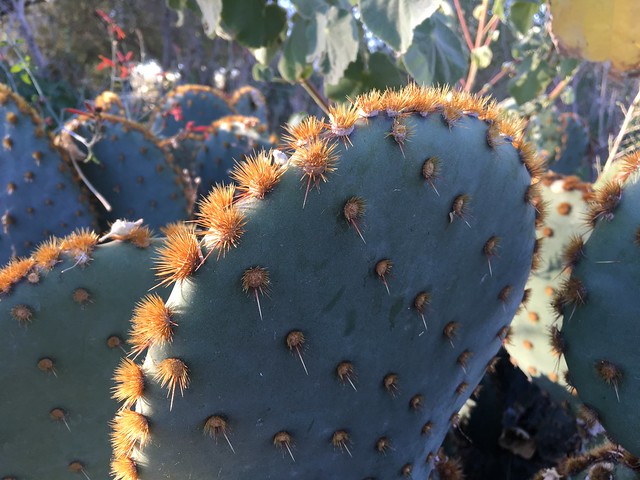
Opuntia aciculata - Chenille Prickly Pear

Fouquieria columnaris - Boojum Tree

Euphorbia antisyphilitica - Candelilla

I managed to add 13 new bird species to my life list, which is more than I expected.

You can see more of my photos from the Desert Botanical Garden here.

Friday, June 16, 2017

Cactus and Succulent Show 2017

I have attended the annual show of the Central Oklahoma Cactus and Succulent Society (COCSS) for the last several years.  Although I don't spend a lot of time thinking about these plants or actively collecting them throughout the year, I always enjoy the show and find some really good deals on interesting plants.

Central Oklahoma Cacti and Succulent Show
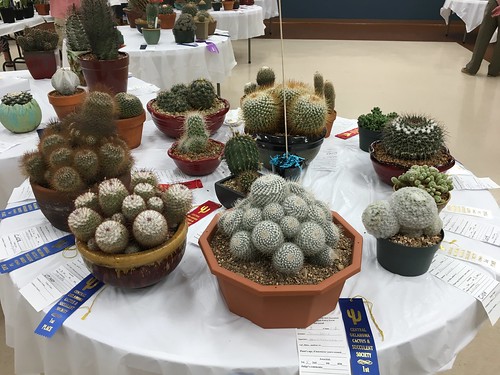
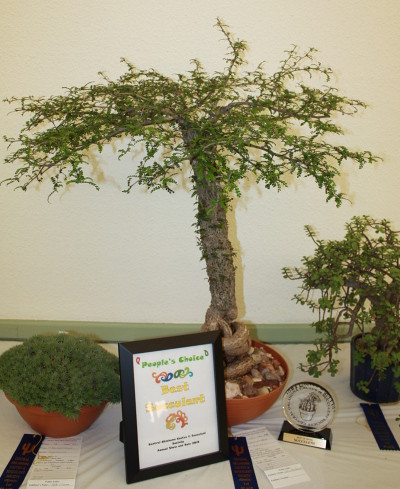
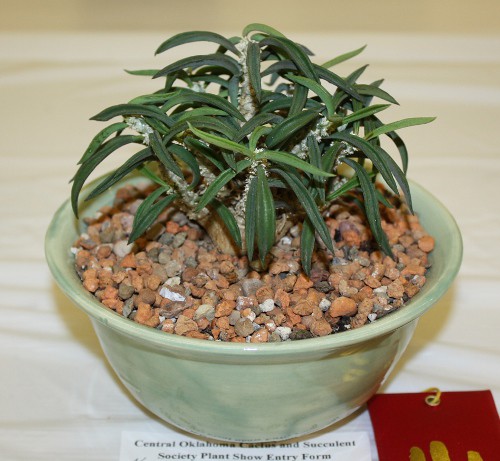
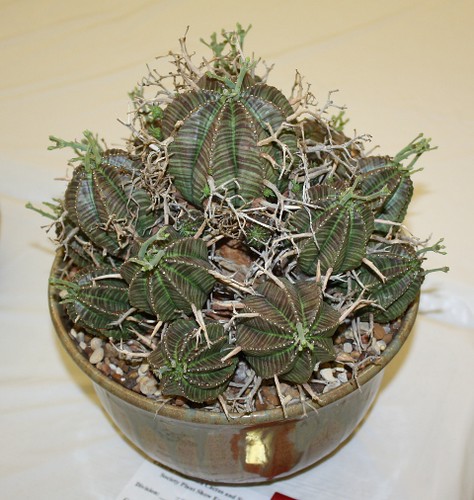
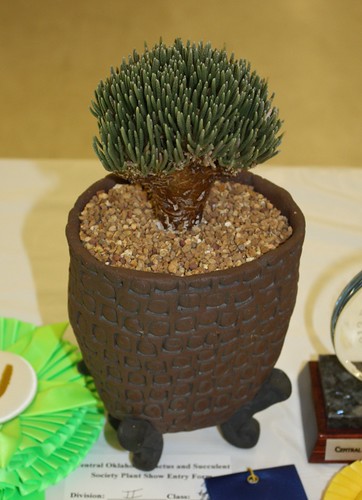
Some nice plants that received ribbons in the show area.

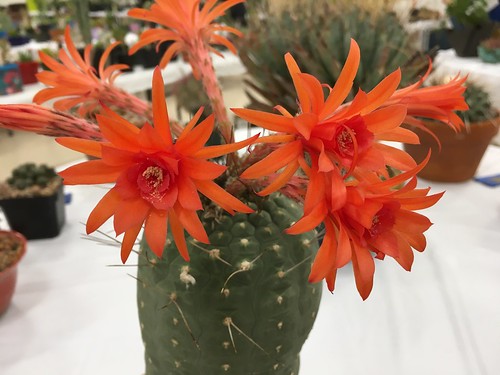
Matucana madisoniorum
Matucana madisoniorum - the most striking flowers at the show.
I only took a few photos of show and sale plants this year other than the ones I purchased.

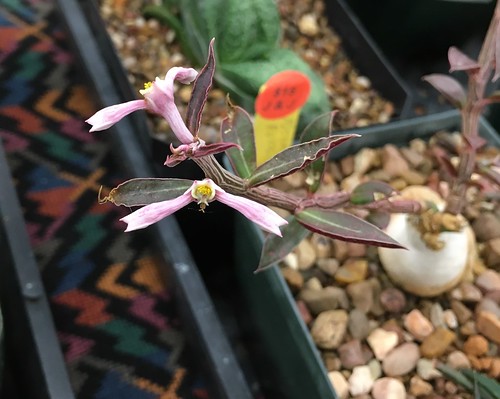
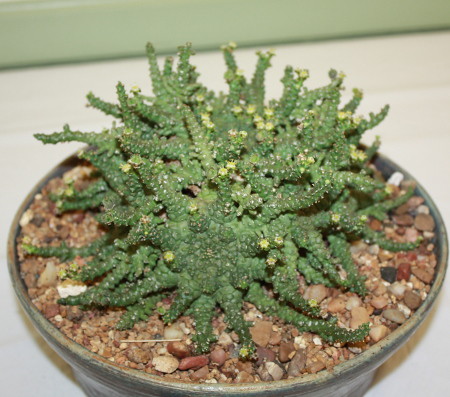
Euphorbia neorubella (labeled as Monadenium rubellum)
Euphorbia neorubella
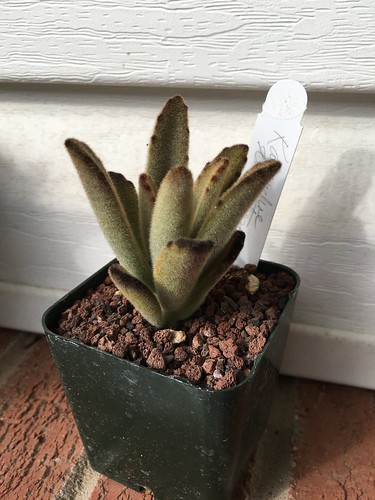
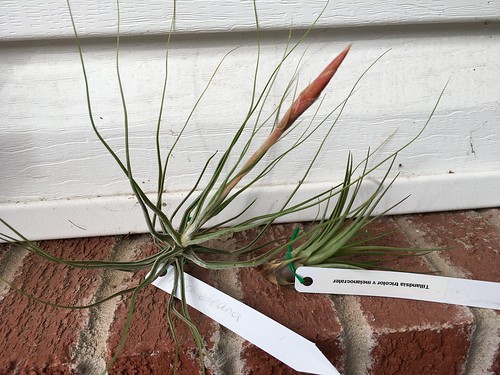
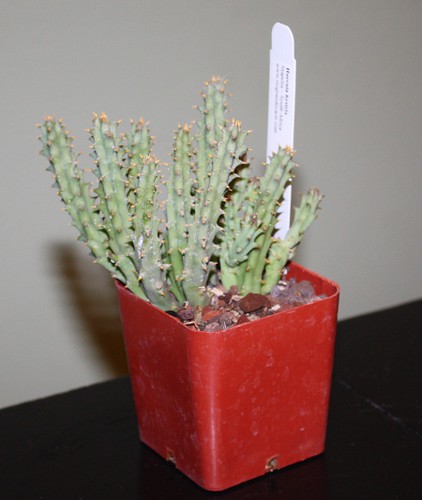
This year I purchased 7 plants: Kalanchoe tomentosa, an unlabeled Huernia species, Huernia keniensis, Caralluma europea, Opuntia violaceaTillandsia tricolor v. melanocrater, and Tillandsia schiedeana.

Kalanchoe tomentosa
Kalanchoe tomentosa

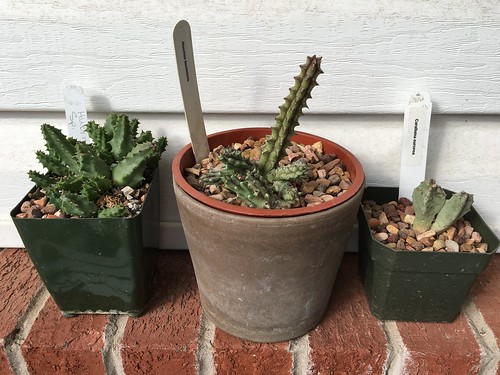
Huernia sp., Huernia keniensis, and Caralluma europea

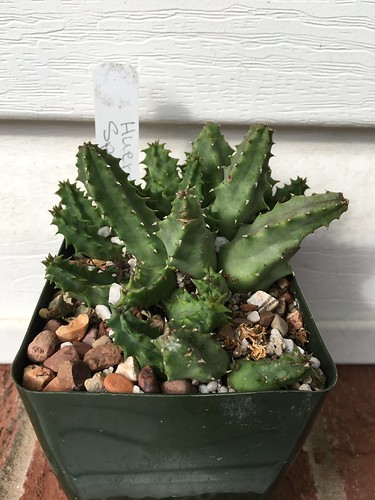
Huernia sp
The unidentified Huernia
Tillandsias aren't truly cacti or succulents, but the term "succulents" is already rather broad and is not taxonomically linked, like "cacti" is to the family Cactaceae.  I guess cacti and succulent people just like Tillandsias and brought some to sell.  I'm excited because one of them is on the verge of blooming.

Tillandsia schiedeana and Tillandsia tricolor v. melanocrater
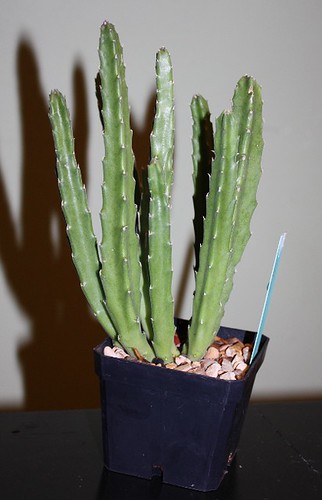
As I've mentioned before, my favorite succulents are the Stapeliads.  I have found that I can grow them pretty well, so I try to focus my money on those plants.  With my recent purchases my Stapeliad collection now includes 10 species:
  • Caralluma europea
  • Huernia sp (unknown species)
  • Huernia confusa
  • Huernia keniensis
  • Huernia penzigii
  • Huernia schneideriana
  • Stapelia ambigua
  • Stapelia flavopurpurea
  • Stapelia gigantea
  • Stapelia hirsuta
I've had some others in the past, but have lost some over the years.

Huernia penzigii
A recent bloom on my Huernia penzigii
A friend from northwest Arkansas came over for the show. I met him and his wife there and we exchanged a few plants and visited for a short time.  He brought me a neat Sinningia tubiflora, which was bred for hardiness in our region, as well as Kalanchoe beauverdii and Bryophyllum fedtschenkoi. Hopefully the Sinningia will flower for me soon and I'll share some photos.

Friday, January 27, 2017

Trip Report: Gulele Botanic Garden in Ethiopia

Christie and I spent the month of July last year in Ethiopia, while we were finalizing the adoption of our son, Merek.

Untitled
Yep, he's adorable!
A while back I heard about a botanic garden in Addis Ababa and I was excited about visiting during our time in Ethiopia.  There is very little information on the internet about this place and no one seems to know about it around town.  (There is a new website that has some good information here.)  At the time the best I could do was find a phone number and called and talked to someone, who seemed a little surprised that we wanted to come and visit.

IMG_9717
Cute little flower growing on the grounds of Gulele
We hired a taxi to drive us to the area near the garden and when we got close the driver started asking people along the street if they knew where we should go.  I brought the phone number with me and had the taxi driver call and talk to the people at the garden.  He brought me to an office building and Christie, Merek, and I went inside to meet some of the garden staff.

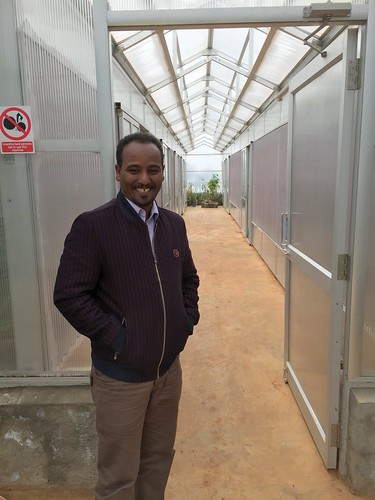
We visited for a short time in their office and then the Director of Education (I think his name was Solomon) got in a separate car and asked us to follow him to the garden in our taxi.  We drove up the mountain a little distance and pulled in the gate, where a staff of 5 or 6 people were tending to the garden.

Untitled
Director of Education standing in front of the greenhouses

Solomon was very happy to show me around the garden.  He told me about their vision for the place, which has been developing slowly over the last 5 years.  They envision this being a place where people come to go walking or jogging or just to enjoy nature.  (It was a good area for birding!  I recorded my 500th life bird while here: Rufous-breasted Sparrowhawk)  They aim to collect plant species from throughout the country and grow them on site, as well as to sponsor conservation efforts throughout Ethiopia.  They have rows of plants arranged almost like crops and two nice greenhouses.
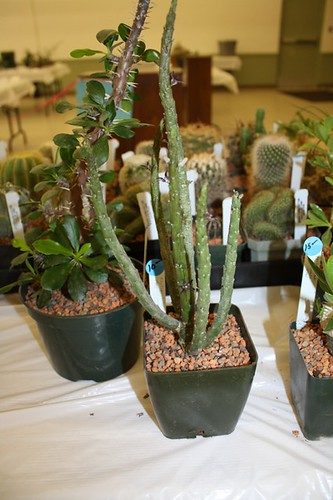
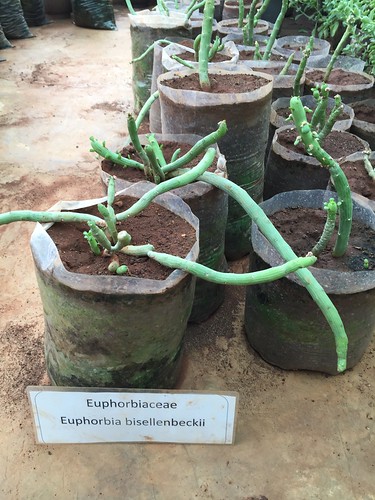
The greenhouses are sectioned into rooms coming off of a main corridor that runs down the middle.  We ventured inside and talked about the various plants they are growing.  Many of the plants are native to Ethiopia, but not all.  Solomon said it is challenging to meet the growing conditions of all of these plants from the many different climates across Ethiopia, so they are trying to simulate different climates in different rooms. Most of the plants are growing in plastic bags.  It wasn't clear to me if these are temporary or long-term.
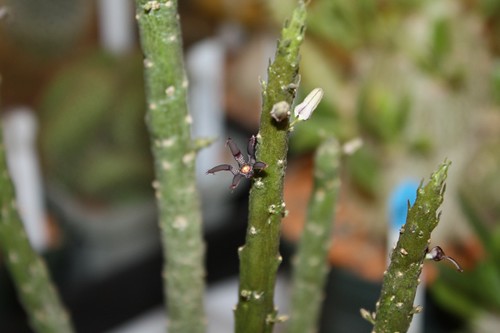
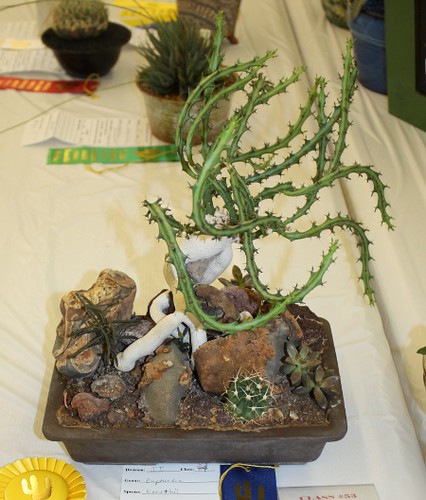
Euphorbia bisellenbeckii
I told Solomon that I grow a lot of tropical plants, primarily Aroids and Orchids.  He wasn't very familiar with the Aroid (Araceae) family, so I tried to give him some examples.  Finally we came across one aroid in his greenhouses, which looked like a Sauromatum.  He showed me a group of native orchids, but they were not in bloom and I would have never guessed they were orchids.  Their leaves looked similar to the leaves of a day lily.  The orchid family is quite diverse and I remembered that my Field Guide to Ethiopian Orchids had a lot of genera that I was not familiar with before reading that book.

Untitled
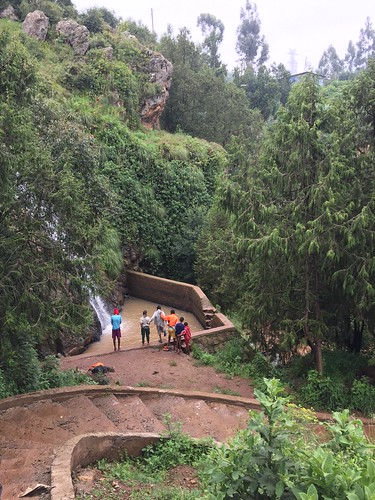
Boys swimming in an artificial pool formed around a natural waterfall flowing by the side of the path up the mountain.
After touring the greenhouses we went outside and found Christie, who had been walking around with Merek, taking pictures of birds for me.  We walked even farther up the steep hill and ventured to some other parts of the garden that I would not have guessed were the same property.  Along the way we passed several different habitats that the staff has been working to create, including a marshy area formed by damming up a natural creek that flows down the hillside.

Untitled
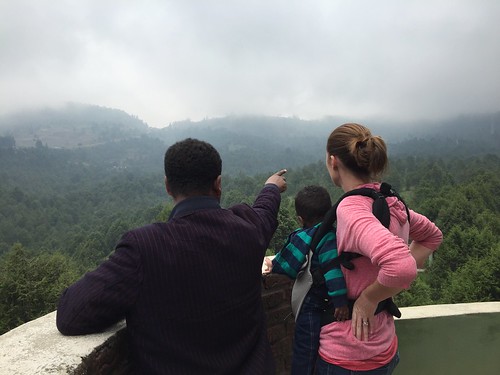
Solomon pointing out the rough property line of the botanic garden
Near the top of the hill there was a flatter area and a path that led to a lookout tower.  We stood on top and took in the view of the countryside and city below us.  Merek slept in his carrier for a little bit, but when he woke up he was kind of ready to get out and do something else.

I regret that I didn't get a good picture of the garden as a whole, showing the rows of plants and such.  I was focused on individual birds and plants.  We really enjoyed our outing and will visit again on one of our return trips to see how the garden matures.

Gulele Botanic Garden
Click above to see the complete album.

Wednesday, December 16, 2015

The misunderstood Poinsettia

It's been AGES since I last posted!  Sorry about that, loyal followers.   Life has been busy and I have added some new hobbies, which have diverted my attention and time away from the blog.  Now, let's talk about poinsettias!

Untitled

I'm not entirely sure why I typed that title for the post.  Now that I have, I have a lot to discuss.  My inspiration for the post was when I visited the good old Myriad Botanic Gardens in Oklahoma City a couple of weeks ago.  To be honest, I have been a little disheartened with the direction of the gardens since the garden ownership changed a few years ago.  There is a lot more marketing (good) but a lot of it seems to have nothing to do with plants (sad).

Untitled

Untitled

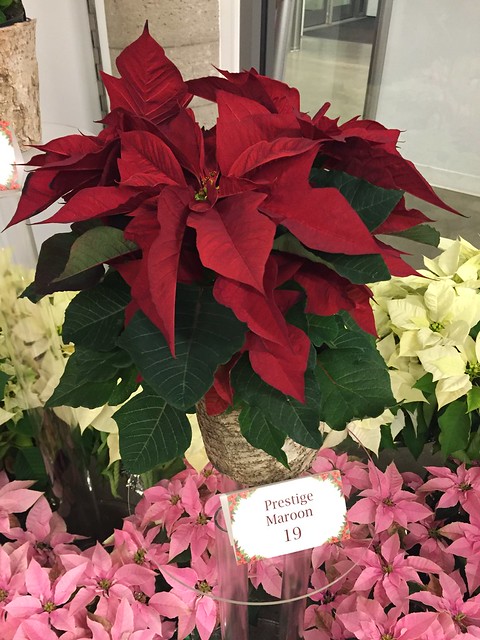
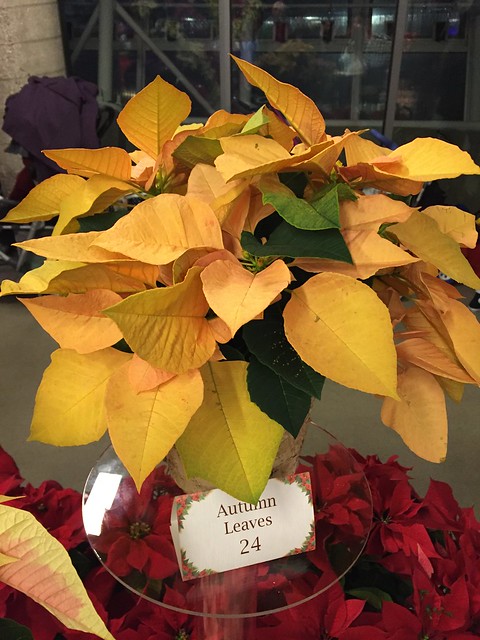
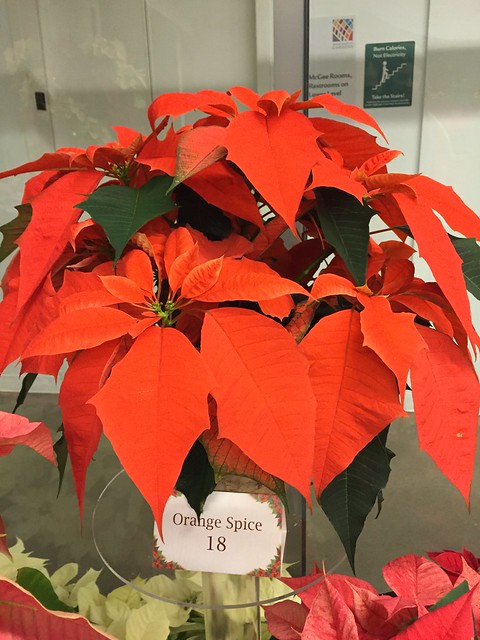
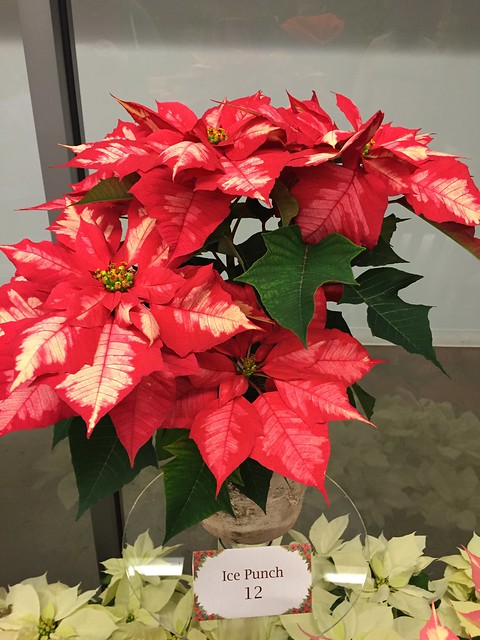
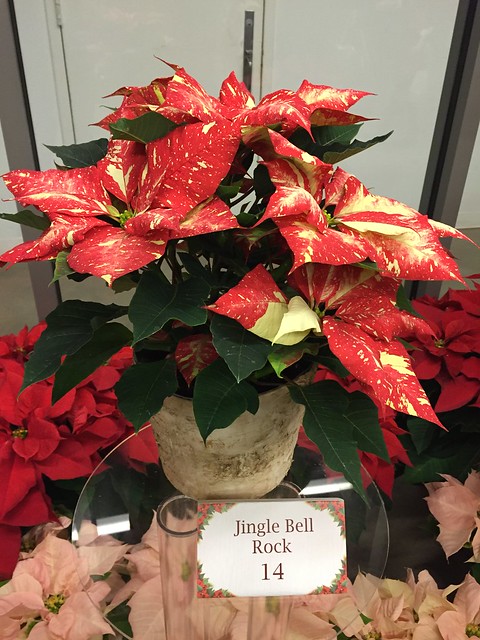
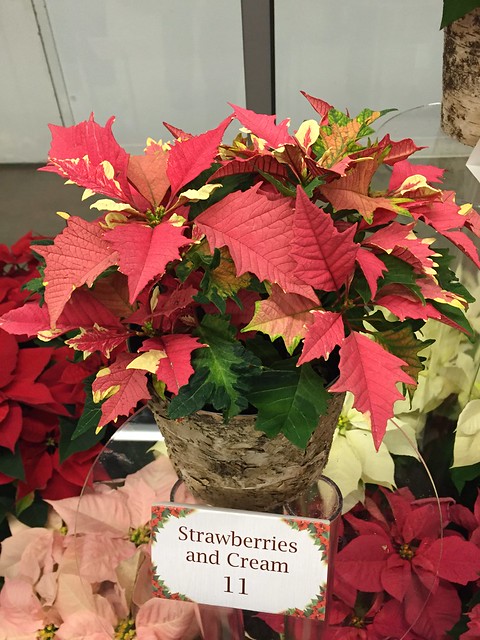
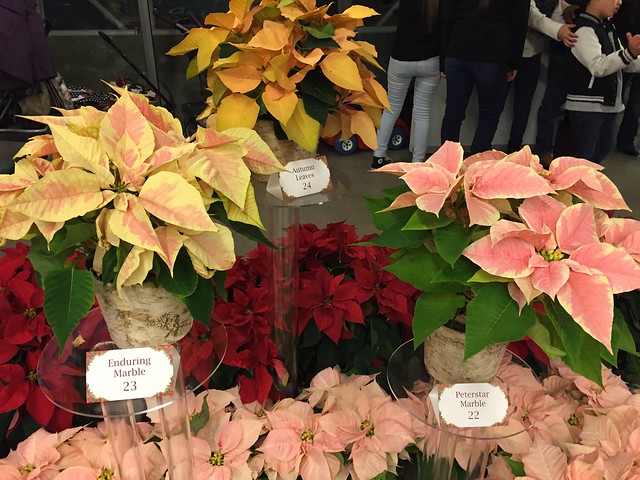
Anyway, that being said, when we were at the gardens a couple of weeks ago they had the whole placed decked out for the holidays and the conservatory was lit up with Christmas lights.  (All normal lighting was turned off, so you couldn't really see the plants.)  In the lobby area they had tons of Poinsettias.  At first I walked by them, not realizing there was something special about this temporary splash of holiday color.  There were SIGNS by each of these plants.  (I can't tell you how many times I have been in botanic gardens and seen a plant or tree that I didn't know and I couldn't find a label for it anywhere.)  The signs caught my attention and then I noticed these Poinsettias were not all the same.  And I don't mean they were just different colors.  There were striking differences.

Untitled

Untitled

I was really delighted to see that the Myriad had gone out of their way to track down some named varieties that were different from the norm. They were only lacking a bit more signage to call people's attention to the understated exhibit. It could be pretty educational, describing what a cultivar is, how they are selected and bred, and how the horticulture industry works. It's all in my head.

Untitled

Now back to my title, I think the Poinsettia is misunderstood. First, the Poinsettia is Euphorbia pulcherrima, belonging to the huge Eurphorbia genus, which mostly consists of succulent plants that the average person would call "cacti." You wouldn't know it with a quick look at the Poinsettia, but it's true. Now maybe the Poinsettia is saying "Hey, that's just my crazy family.  I'm nothing like those spiky beasts."  But they are closely related. Second, those colorful "flowers" that everyone loves at Christmas time... well, they're not really flowers. Those are colored leaves, called bracts. The flowers are the small yellow bits in the middle.  Third, they just don't look like that in the wild.  The compact potted plants sold all over the place between Thanksgiving and Christmas have been grafted and bred for those traits.  The natural species is much more lanky and with less prominent colorful bracts.  Fourth, the rumors of their toxicity are hyperbolic.  Most people will have little to no reaction from the sap.  Others could have some skin irritation.  If you were to each a leaf,  you might puke.  You would have to eat a lot of Poinsettias to have anything close to a fatal dose.

Untitled

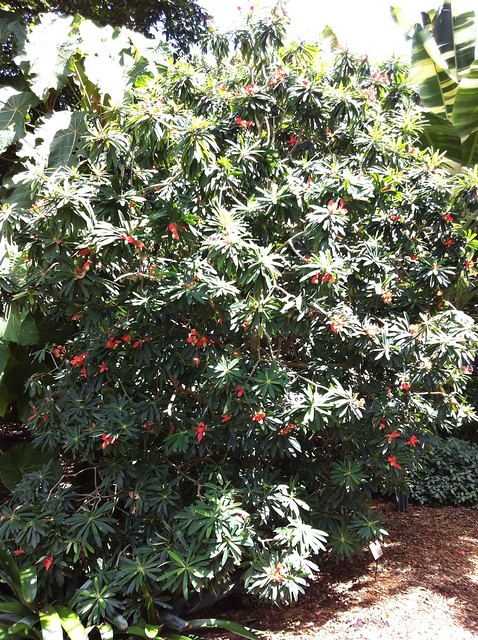
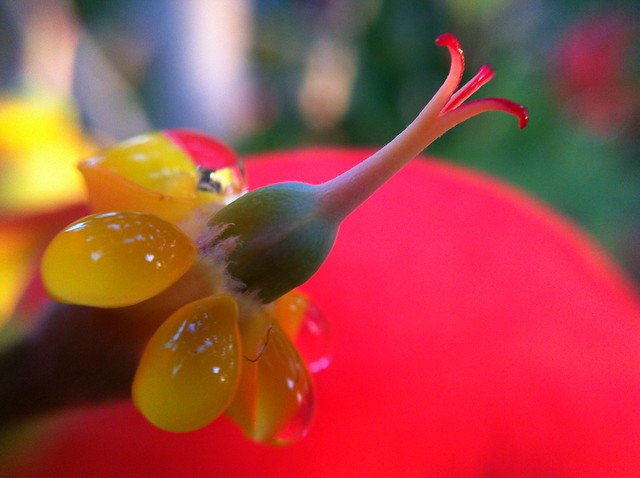
Finally, I will leave you with some photos of a favorite relative of mine.  It is the Jamaican Poinsettia Tree (Euphorbia punicea). There is a large specimen at the Myriad Botanic Gardens and I have also seen this tree growing outdoors at a botanic garden in Florida.

Euphorbia punicea (Jamaican Poinsettia tree) Euphorbia punicea (Jamaican Poinsettia tree) at Fairchild Tropical Botanic Gardens, Miami, Florida.

Jamaican Poinsettia Tree Jamaican Poinsettia Tree - macro view of flower. Myriad Botanic Gardens, Oklahoma City, Oklahoma.


Tuesday, June 11, 2013

2013 OKC Cacti and Succulent Show

Christie, Myla and I attended the Central Oklahoma Cacti and Succulent show and sale in Oklahoma City a couple of weeks ago.  This is a really good annual show with tons of plants for sale and a small show area for nice specimens.  Even though I am not mired in the cacti/succulent hobby, there are plenty of plants that are tempting and others that are neat to just view from outside looking in.

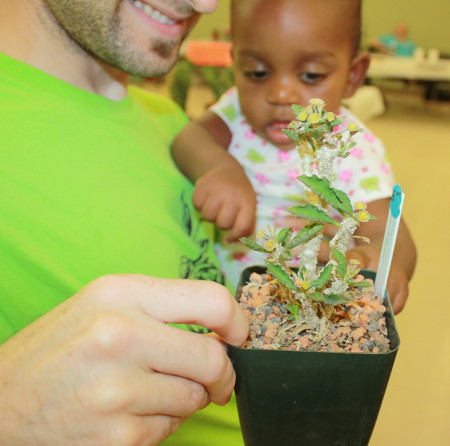
Investigating a Euphorbia
Checking out a neat Euphorbia

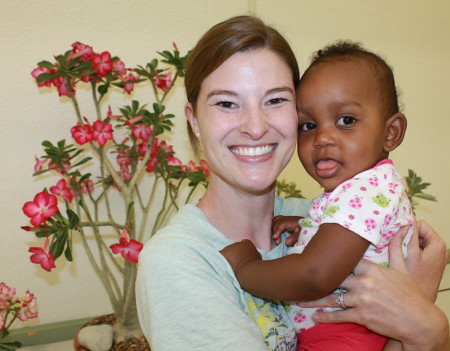
Adenium_and_pretty_girls
My pretty girls with a blooming Adenium

It was also a lot of fun to surround the little one with plants again.  She is going to be quite used to spending time in gardens and plant shows.

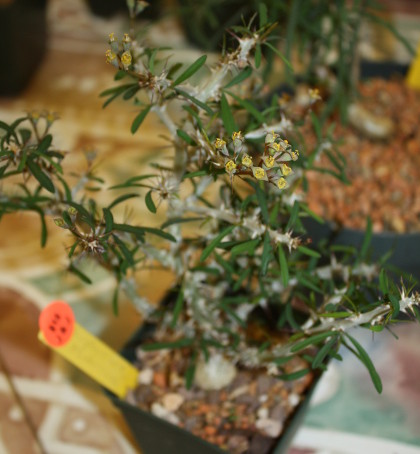
Euphorbia
A neat Euphorbia

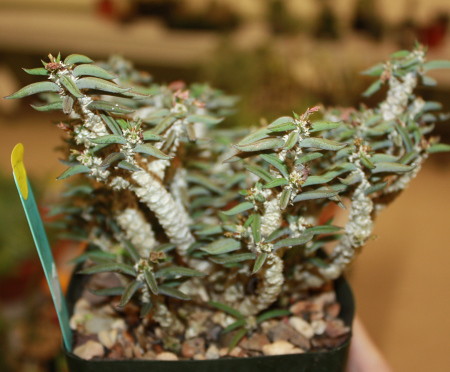
Euphorbia
Another neat Euphorbia

As always, there were hundreds of different Euphorbia.  I was tempted to buy a couple, but I restrained myself.  In the end, I only bought a single plant, Stapelia flavopurpurea, which fit my qualifications of being a good value, already rooted (I'm not good at rooting cacti/succulents from cuttings), and already fits in one of my collection niches.  The plant has a couple of small buds, so I hope to share some bloom pictures in the next month.

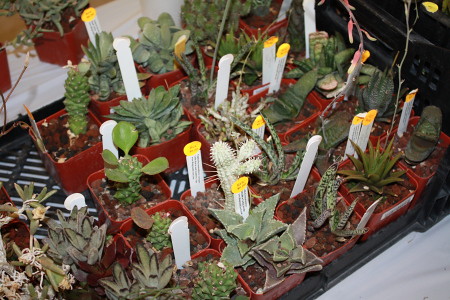
cacti_tray
Tray of starter plants.

There were many trays of very reasonably priced starter plants. You could start a collection on a limited budget and get a nice variety of plants.

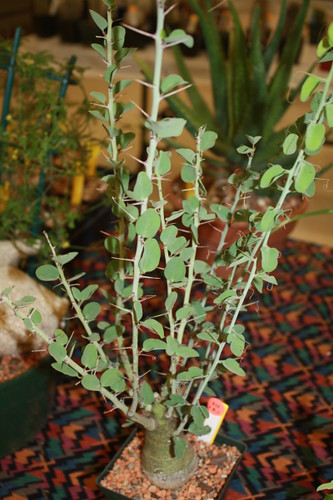
Adenia_spinosa
Adenia spinosa

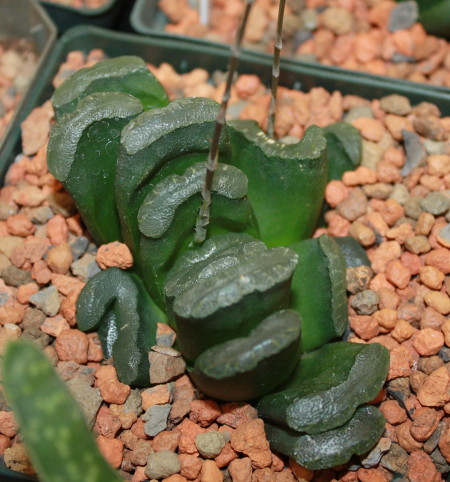
Haworthia_truncata
Haworthia truncata

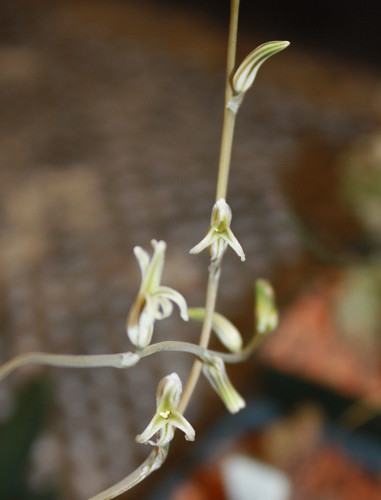
Haworthia_truncata_flowers
Haworthia truncata flowers

Sometimes it is confusing to me why certain plants are included in the cacti/succulent hobby.  For instance, how does the beautiful prize-winning Operculicarya (below) qualify as a cacti or succulent?  I think this hobby grouping is loosely defined, unlike many other plant societies (Orchids, Begonias, Aroids, for instance), which are specific taxonomic families.

Operculicarya_decaryi
Operculicarya decaryi

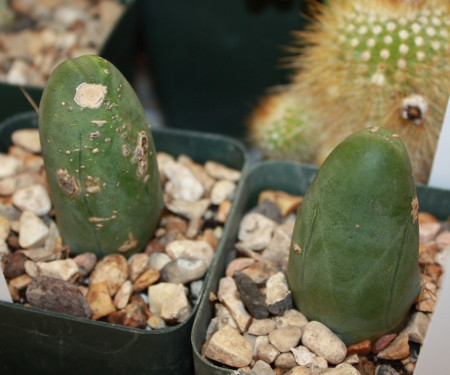
Trichocereus_bridgesii_monstrose
Trichocereus bridgesii monstrose

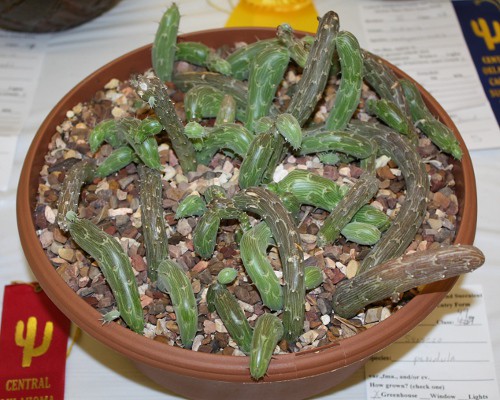
In the assorted monsters category I found the Trichocereus (above), reminiscent of the graboids from Tremors or the asteroid worm creature (exogorth) that tries to eat the Millennium Falcon. Also there was the strange show plant, the hybrid Euphorbia GH211 (below), which could have been in any number of Sci-Fi movies.  Just imagine a crowd of screaming people running away as it trudges down the street, maybe devouring a dog that couldn't get away fast enough.  Yes, it has definitely been in a movie or two.

Euphorbia_GH211_hybrid
Euphorbia GH211 hybrid

It seems this annual show is going to be a fixture for me.  I was told that next year's show is going to be even bigger and held at a larger venue.  My name is on the mailing list, so I should be notified as it approaches.  I look forward to it!

Thursday, June 21, 2012

OKC Cactus and Succulent show

Before diving in, I must confess that cacti and succulents are not my passion. There are a couple of groups that interest me, like Stapelia and related genera. I decided to stop by the show and sale of the Central Oklahoma Cactus and Succulent Society last weekend because I figured it would be interesting to see, take photos and learn more about these plants.

rhytidocaulon_macrolobum
Rhytidocaulon macrolobum
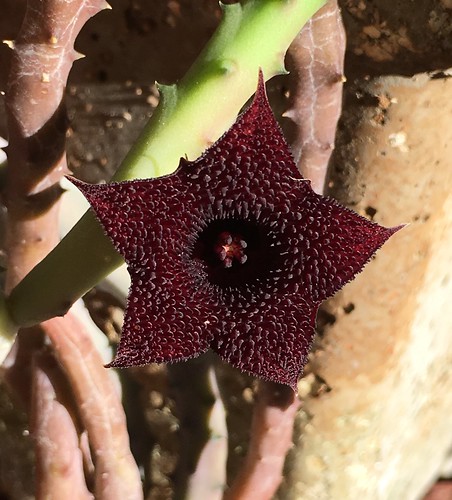
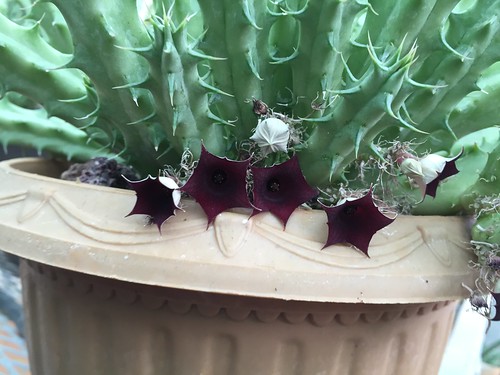
I was surprised to see more plants of interest to me than I had expected. The "show" plants were neat, but primarily plants that I enjoy looking at and that I don't have a great desire to grow myself. However, I found many plants on the vendor tables that were of interest to me. The first being the plant pictured above and below. Maybe you think it's ugly, but look at those awesome black flowers!

rhytidocaulon_macrolobum_flowers
Rhytidocaulon macrolobum
There were quite a few Pachypodium on display and for sale (sorry, no pictures). I had just been giving a tour at the Myriad Gardens on Saturday afternoon, where the Pachypodium are 10 feet tall!

euphorbia_knuthii
Euphorbia knuthii
There were so many Euphorbia I couldn't count them. As I was telling my tour group, Euphorbia has to be the most diverse genus I know. If you read my old post on Euphorbia you would have seen everything from the Poinsettia to the dangerously spiny plants, like the one I purchased this weekend.

euphorbia_cylindrifolia
Euphorbia cylindrifolia
The Euphorbia pictured below has a growth habit more like Mamillaria (those spherical cacti with spines all over them).

euphorbia_valida
Euphorbia valida
dyckia_marneir-lapostollei
Dyckia marneir-lapostellei
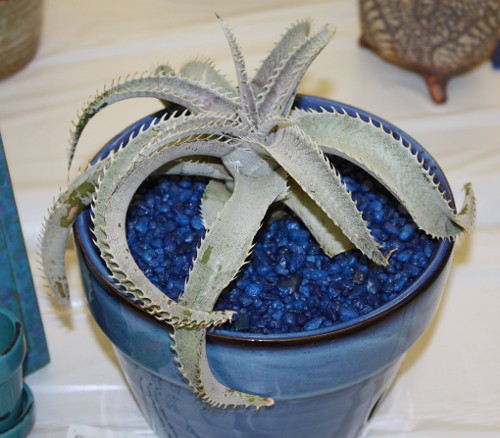
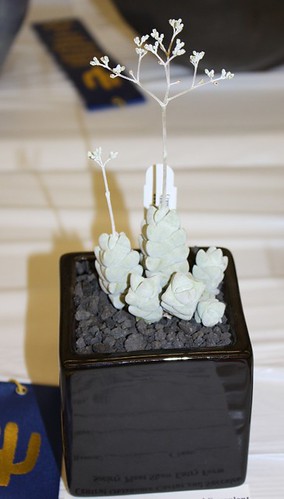
Check out the ghostly colors of the Dyckia and Crassula.

crassula_deceptor
Crassula deceptor
The little Avonia was quite adorable. It looks like a miniature and really doesn't look real.

avonia_quinaria_v_alstonii
Avonia quinaria v. alstonii
You have probably already seen my cucumber orchid. Now I see there is a cucumber succulent!

senecio_pendula
Senecio pendula


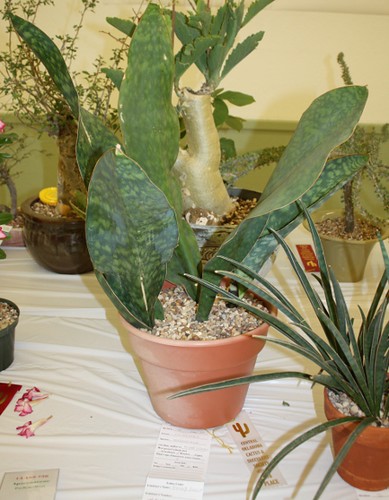
Sansevieria has quite a dedicated following. This show had two plants, one being the famous Sansevieria masoniana, with big floppy leaves. The other was more to my liking, Sansevieria scabrifolia.

sans_masoniana_and_scabrifolia
Sansevieria masoniana 'Mason's Congo' and Sansevieria scabrifolia
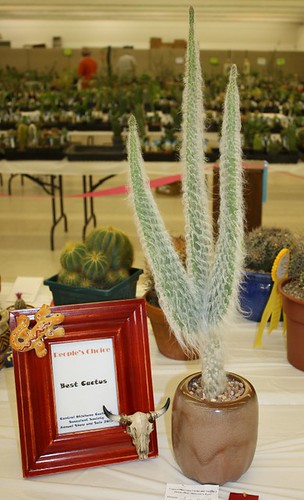
Most of the plants I am showing won an award, but the cactus below won "Best Cactus." Check out that long fur hanging off of the pads.

opuntia_tequiliana
Opuntia tequiliana - look at that fur!
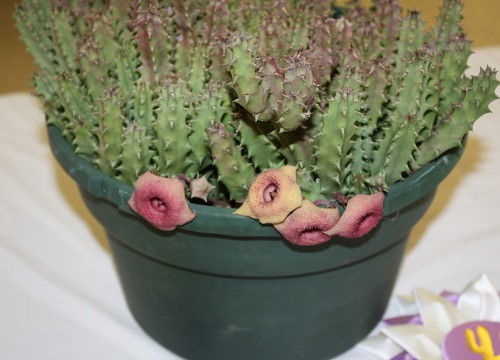
The only Stapelia-like plant in the show was this Huernia. It was a really big plant that is supposedly just 3 years old. It must be a vigorous grower.
huernia_thuratii
Huernia thuratii
I ended up purchasing 4 plants, 1 of which was an orchid. I had been told by some friends that Eulophia petersii is easier to find at succulent shows than at orchid shows, since it likes to grow so dry. I was talking with a vendor at this show and he was telling me about how he once heard someone describing this plant as having "orchid-like flowers"...

huernia_hystrix
Huernia hystrix
Two of the plants that I purchased are from my Stapeliae: Huernia hystrix and Stapelia hirsuta. The S. hirsuta is the one that gets really hairy flowers. It is also probably the species that is most similar to my Stapelia gigantea, which grows really well for me. So I feel confident I can get it to bloom eventually.

stapelia_hirsuta
Stapelia hirsuta
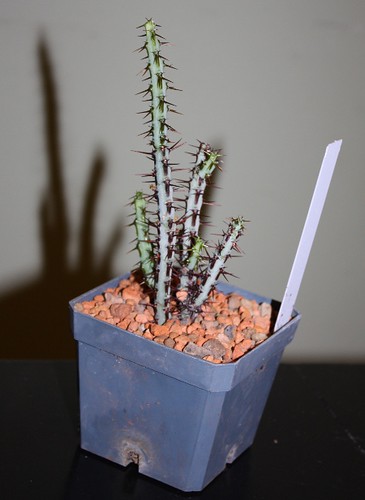
The last plant I purchased is the Euphorbia, which I mentioned earlier in this post. Dangerously spiney!

euphorbia_aeruginosa
Euphorbia aeruginosa
I don't plan to become a cacti and succulent addict, but I would like to go to this show again in the future. There were definitely some neat plants.