Showing posts with label Cattleya. Show all posts

Monday, June 26, 2017

Encyclia inventory

Over time my collection of plants changes quite a bit. I buy new plants and other plants perish. At times I have tried to keep a comprehensive inventory, but my commitment to keep that inventory updated doesn't last and it gets to a point where it is so far behind I almost feel I need to start over.

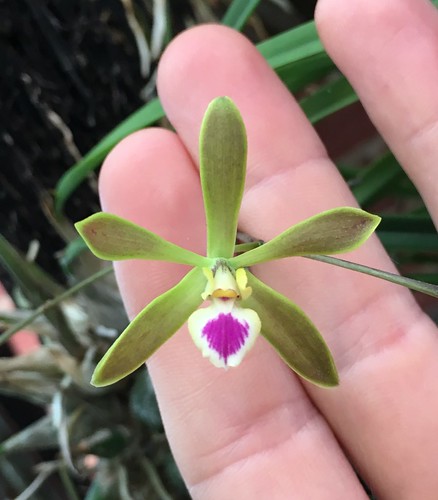
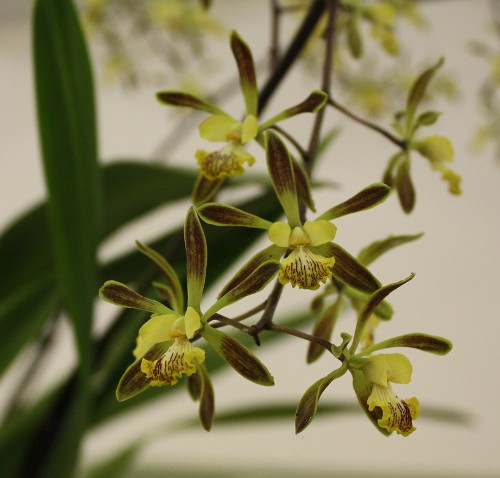
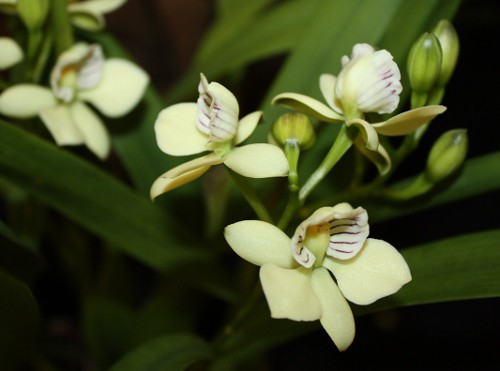
E. tampensis v. alba

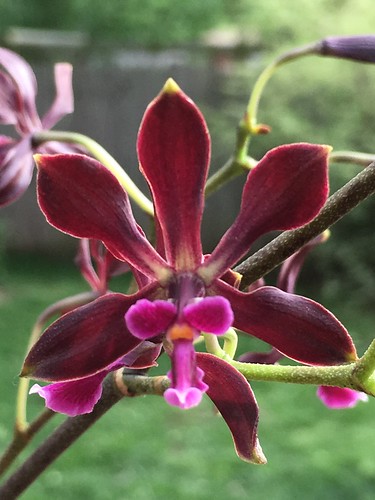
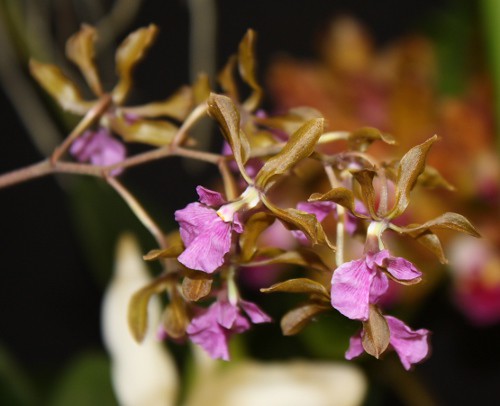
Encyclia atrorubens?
E. atrorubens?
This plant is labeled as E. guatemalensis, but that is not a recognized species.

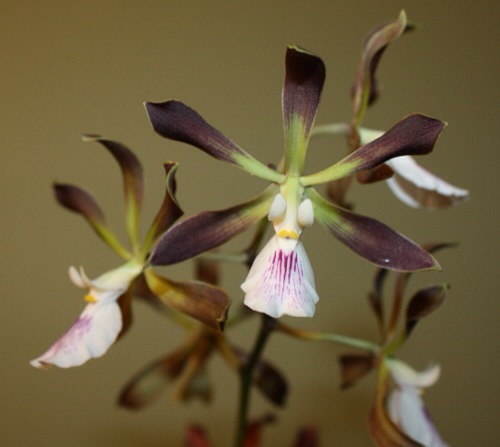
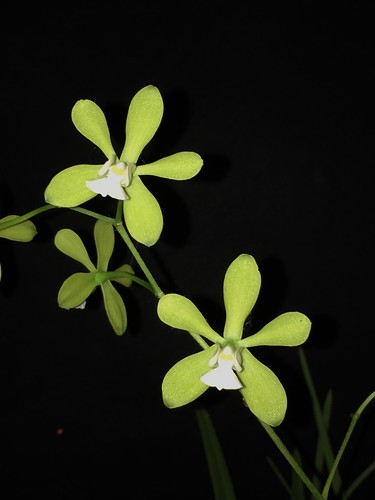
Encyclia tampensis
E. tampensis
This plant FINALLY bloomed this year after having been in my collection for almost 6 years.
You'll notice it looks very similar to the first plant pictured in this post, except the first plant is lacking the pink,
since it is the "alba" variety.
Recently I decided to inventory my plants in groups. I'm starting with my collection of Encyclia, which is probably the genus of which I have the most plants. It's fun to post this list now because a lot of them are blooming or bloomed recently.  It turns out I have more than 35 Encyclia plants, consisting of 22 species and10 known hybrids.  (I know, 22 and 10 do not add up to 35, but I have a couple of duplicates and a couple of unknowns.)

Complete inventory of Encyclia species:
  • E. angustiloba 
  • E. aspera
  • E. aspera
  • E. belizensis **
  • E. cordigera
  • E. fowliei x fowliei 'Duncan'
  • E. fucata
  • E. gracilis
  • E. guatemalensis * (may actually be E. atrorubens)
  • E. hanburyi 'Mem. Merlin Rigley'
  • E. kennedyi
  • E. moebusii
  • E. navanjapatensis
  • E. patens
  • E. phoenicea
  • E. plicata **
  • E. polybulbon
  • E. ramonense 'Dr Pepper' **
  • E. randii
  • E. seidelii *
  • E. tampensis *
  • E. tampensis v. alba **
  • E. unaensis
* indicates a species that has bloomed for me
** indicates a species that blooms regularly for me

I'm not a complete species purist, but I do concentrate on collecting species.  Most of my hybrids are ones that I acquired in eBay auctions of multiple plants, and they were bundled with species I was interested in purchasing.  In all I have 12 hybrid orchids that include Encyclia among the parents or grandparents.

Complete inventory of Encyclia hybrids:
  • E. Faerie Glen (diota x mooreana) *
  • E. John Brunton (mooreana x tampensis)
  • E. phoenicea x tampensis
  • E. tampensis v. alba 'Mendenhall' x plicata 'Cherokee'
  • E. Cindy x dickinsoniana
  • E. Orchid Jungle (alata x phoenicea)
  • E. Gay Rabbit ([alata x cordigera] cordigera) *
  • E. (unidentified hybrid potted with Gay Rabbit) *
  • E. (unidentified, possibly Grand Bahama)
  • Epy. Mabel Kanda (E. cordigera x Epi. paniculatum) *
  • Epc. Siam Jade (C. Penny Kuroda x Epc. Vienna Woods)
  • Eplc. Pixie Charm (Lc. Pixie x E. alata)
* indicates a species that has bloomed for me

Epicyclia Mabel Kanda
Epy. Mabel Kanda
An intergeneric hybrid between Epidendrum and Encyclia.
I had to look up the correct abbreviation for this one in the RHS register.

Encyclia Faerie Glen (diota x mooreana)
E. Faerie Glen
This is a new plant that I just purchased at Santa Barbara Orchid Estate when I was in California in March.
The hybrids are a mix bag of primary hybrids (a pure species crossed with another species), multi-generation hybrids, and even intergeneric (plants from different genus being crossed) hybrids.  A lot of Encyclia are used in orchid hybridization, especially crossing with Cattleya, Laelia, and Epidendrum.  You'll notice that Mabel Kanda hybrid is a cross of an Encyclia and an Epidendrum, while Siam Jade is a second generation intergeneric hybrid - a Cattleya crossed with a hybrid of an Encyclia and a Cattleya.

Encyclia Gay Rabbit (cordigera x Gail Nakagaki)
Unidentified Encyclia hybrid

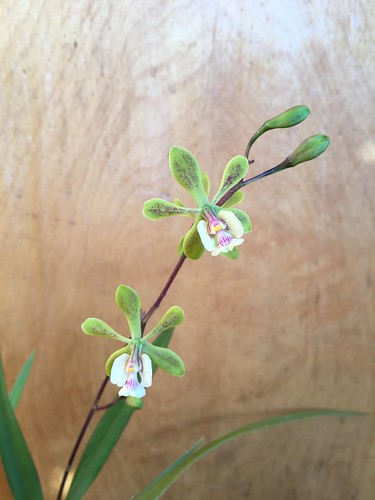
The Encyclia above is a mystery because it is in a pot labeled Enc. Gay Rabbit. There are a lot of pseudobulbs in the pot and I have actually had two concurrent spikes with different flowers.  One set of flowers has a white lip with some dark pink streaking (as shown in the photo), while the other flowers have a solid pink lip.  I believe one is correctly labeled Gay Rabbit and the other (pictured above) may be something different.  It is also possible that both are the same hybrid from the same parents and they are just displaying some of the variation expected for this hybrid.

I have one other plant that is missing a label.  I am pretty certain it is an Encyclia species or hybrid, because the pseudobulbs and growth habit match and it is sitting with all of my other Encyclia.  Based on my past records, I think it may be E. Grand Bahama (tampensis x plicata).  I'm going to put that tentative label on it for now.
Monday, May 13, 2013

Local orchid show

My local orchid club, Oklahoma Orchid Society, held our annual show and sale on Mother's Day weekend.  I took off work on Friday to help set up and then ventured back on Saturday with Christie and Myla to enjoy the show.  It was a small show, as usual, but nice.
my girls
Enjoying her first orchid show, laughing with mommy.


I carried Myla around while Christie took photos for me.  First, I'll show off the Dendrobium.

Dendrobium lawesii
Dendrobium lawesii being sold at one of the vendor tables.


Dendrobium lawesii
Dendrobium lawesii - different color variant - also being sold.


Dendrobium Aridang x Burana Sundae


Miniature, deciduous, upright Dendrobium


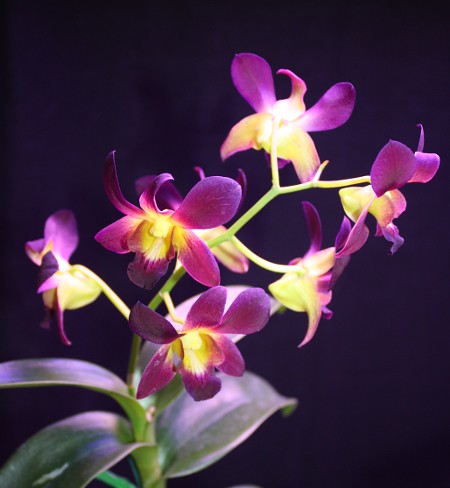
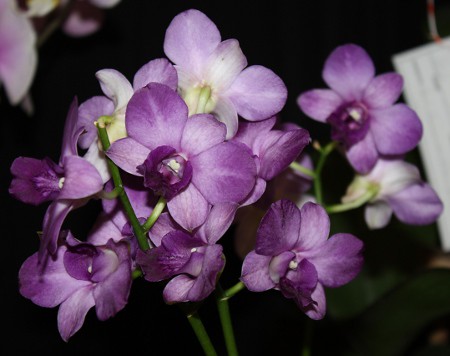
Dendrobium
Nice purple Dendrobium


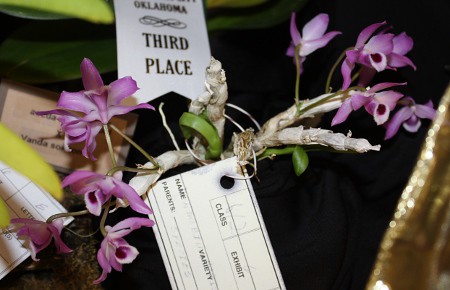
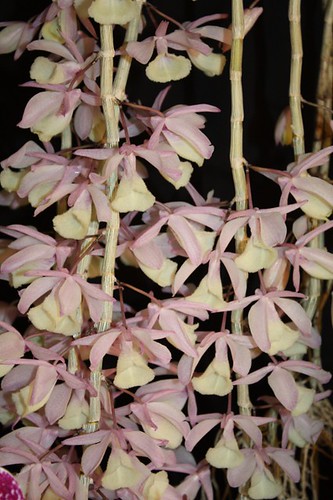
pendant, deciduous Dendrobium
Nice pendant, deciduous Dendrobium, profusely blooming


A couple of nice Cymbidium.

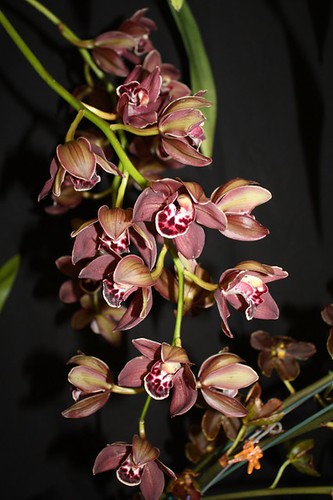
Cymbidium unregistered hybrid
An unregistered cascading hybrid Cymbidium


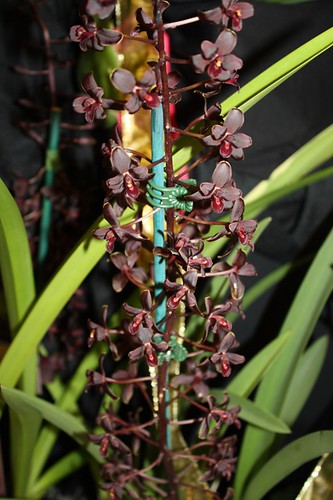
Cymbidium Little Black Sambo
Cymbidium Little Black Sambo, upright and very dark


Miscellaneous other plants.

Laelia
Laelia hybrid. I love this color and the faint pattern on the lip.


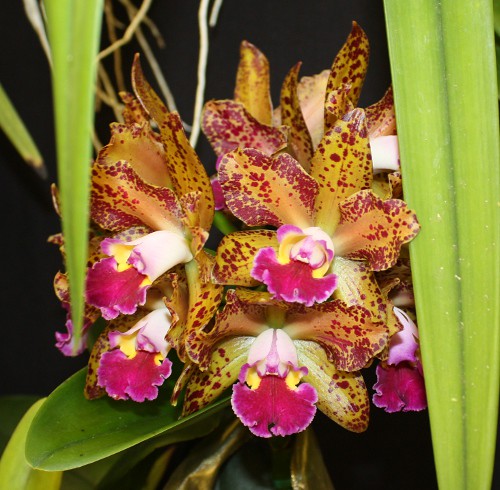
huge Cattleya
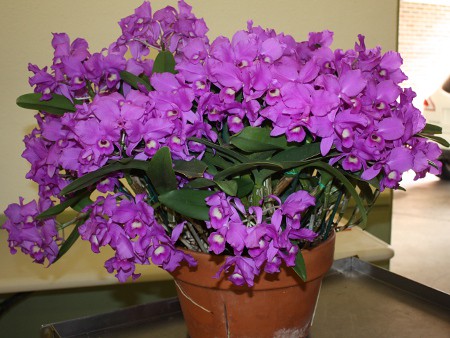
Very happy Cattleya


Anguloa hohenlohii x Ida locusta
Anguloa hohenlohii x Ida locusta. Very interesting primary intergeneric hybrid.


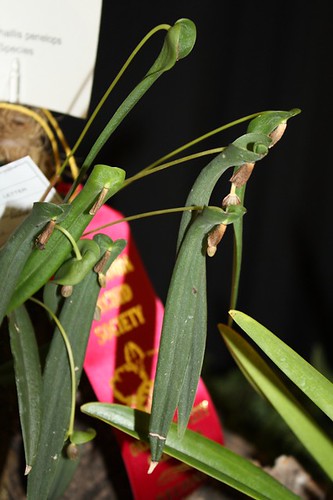
Pleurothallis penelops
Pleurothallis penelops. Awesome species that looks very similar to Pleurothallis dilemma.


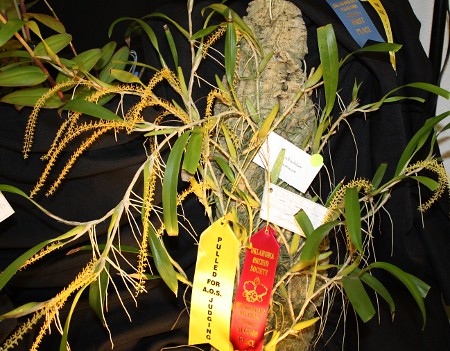
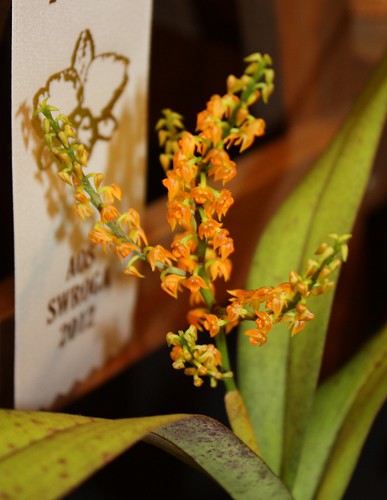
Dendrochilum aurantiacum
Large, mounted specimen of Dendrochilum aurantiacum


There were a total of eleven plants pulled out for AOS judging (including the one pictured above).  One of those eleven plants (a Paphiopedium) was awarded an HCC.

Thursday, May 24, 2012

Trip Report: OKC Orchid Show, part 2

I have already posted about a dozen photos from the OKC Orchid Show, so check those out, if you haven't already.

ryncholaeliacattleya_waianea_leopard_ching_hua
Blc. Waianea Leopard 'Ching Hua'
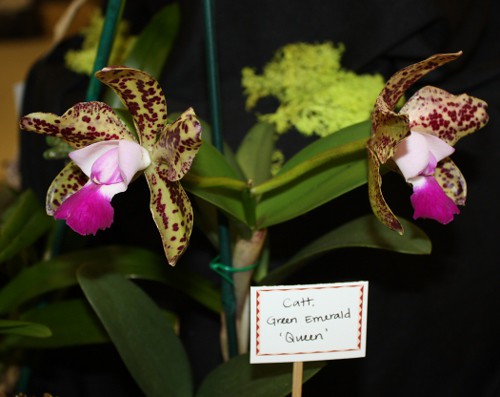
Just like there are "Vanda People" and "Slipper People," there are "Catt(leya) People." I have to say that I am not one of those people. Cattleyas tend to be large flowers that are kind of frilly like bearded Irises, and they just don't appeal to me that much. That being said, I do enjoy some Cattleyas, mainly the spotted ones, and I am posting photos of those.

catt_green_emerald_queen
Cattleya Green Emerald 'Queen'
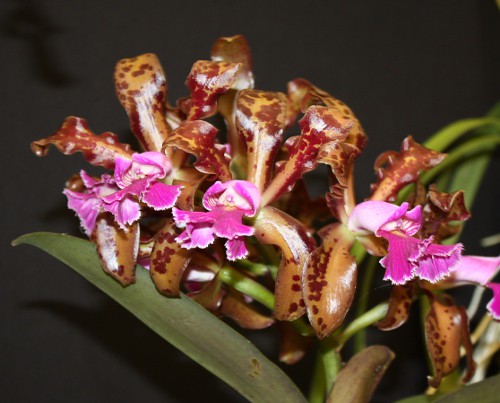
catt_schilleriana
Cattleya schilleriana
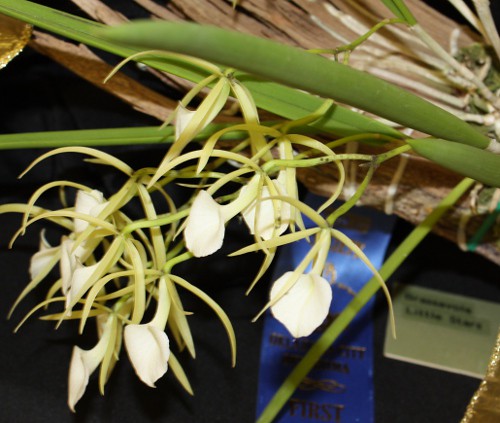
Brassavola nodosa is a popular orchid that is known for its fragrance, but only in the evening. There are several cultivars or hybrids made with this species, including Brassavola Little Stars (below).

brassavola_little_stars
Brassavola Little Stars
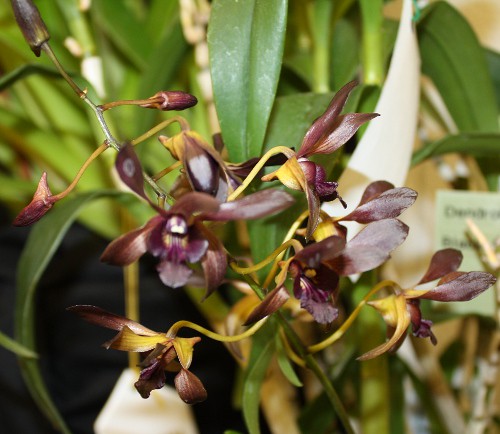
By far the coolest thing I saw at the show was the Dendrobium Black Spider. I haven't ever seen a black Dendrobium, or really anything close to this dark. When I was helping tear down the exhibits on Sunday I complimented the grower on her black Dendrobium and she kind of shrugged and didn't say anything. I guess some people are less interested in discussing their plants than others. Or maybe she was just tired from the weekend...

den_black_spider
Dendrobium Black Spider
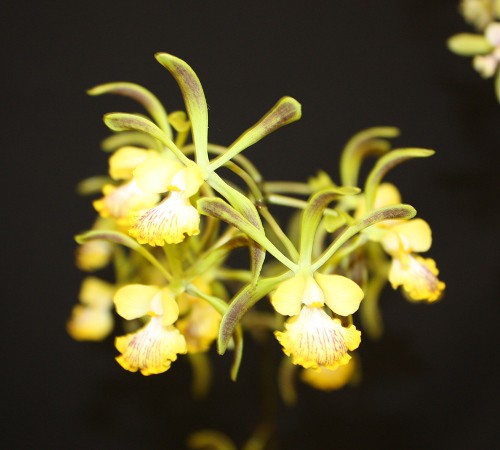
I don't know whether Encyclias are more popular around here than I had previously thought, or if I am just paying more attention to them this year, or if this is just a really good blooming year for them. Whatever the case, there were many Encyclias on display in Wichita and in Oklahoma City.

enc_alata
Encyclia alata
The plant above is the species Encyclia alata and the plant below is a primary hybrid of Encyclia alata and Encyclia mooreana. Both are awesome plants.

enc_alata_x_mooreana
Encyclia alata x mooreana
The large primary hybrid above and the species below were both featured as the centerpiece of their respective displays. In fact, that photo above was taken before any of the rest of the plants were in place. (I wouldn't have been able to get such a picture of just this plant once the exhibit was assembled, because many other plants were crowded around it.

enc_alatum_majus
Encyclia alatum majus
Don't you just love the colors of the Encyclia hanburii (below)?  Just awesome!

enc_hanburii
Encyclia hanburii
The odd ball Encyclia at the show is one of those that keeps getting shuffled around taxonomically.  It has been in several different genera, including Encyclia, Anacheilium, Prosthechea and, of course, the original catch-all genus Epidendrum.  According to orchidspecies.com, which is what I normally consider the authority, it is currently classified as Anacheilium radiata.

enc_radiata
Encylia radiata
I hope you enjoyed your virtual participation in the Oklahoma Orchid Society show.  If you're in the area, you should try to attend in person next year.  We always have our show on Mother's Day weekend at the Will Rogers Garden Center in Oklahoma City.
Wednesday, May 2, 2012

Trip Report: Orchid Show in Wichita, Exceptional Exhibits

Over the weekend, we traveled to Wichita, Kansas for the Kansas Orchid Society's annual show, which was in conjunction with the spring meeting of the American Orchid Society.  Whenever the AOS meeting coincides with a regional show, it is a big affair, with more plants on exhibit and more vendors present.  Some of my good plant friends from neighboring states converged on Wichita, so I got to spend time with plants and friends, which made for a really fun weekend.

leslie_zach_steve_cathy
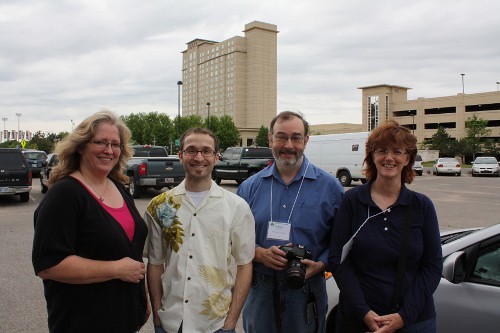
Some of my good plant friends.
We're all members of the International Aroid Society, as well as local orchid societies.
Since I have so many pictures and so much to talk about, I am going to split this post into a several different posts, the first concentrating on the exhibit highlights.

award_orchids
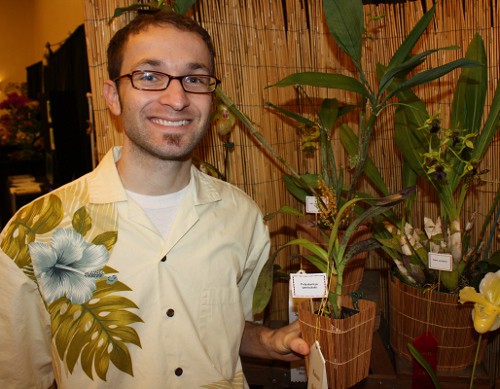
Me with my two award winners, Polystachya paniculata (in hand) and Dendrobium Little Green Apples (on upper right)
For the first time, I sent a couple of my blooming orchids for inclusion in the Oklahoma Orchid Society's exhibit.  Both of my orchids (Dendrobium Little Green Apples and Polystachya paniculata) were given 3rd place ribbons, so that was encouraging.

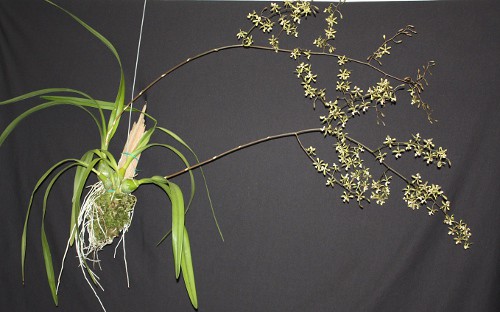
polystachya_paniculata
My Polystachya paniculata plant
I have heard about Andy's Orchids for a while.  It is probably one of the five most popular orchid vendors online.  They have a lot of species available and generally have pretty reasonable prices.  Most of their plants are mounted on sticks, which is nice, too.

andys_orchids_exhibit
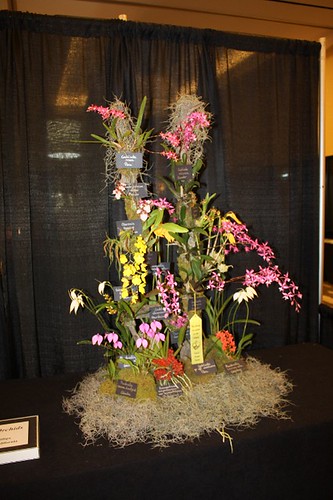
Exhibit by Andy's Orchids
Andy's Orchids had a really nice "exhibit by a commercial grower."  My friend Steve told me it was put together at their business and shipped in a box filled with packing peanuts.  When they got to the show, they just opened the box, pulled out the structure and let the peanuts fall away.

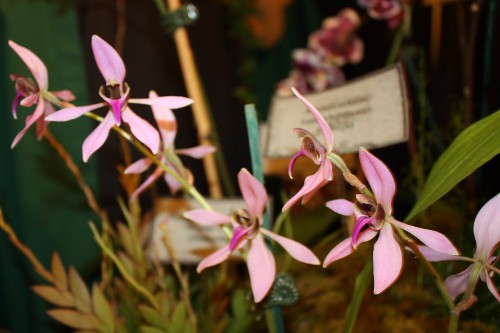
cochlioda_rosea
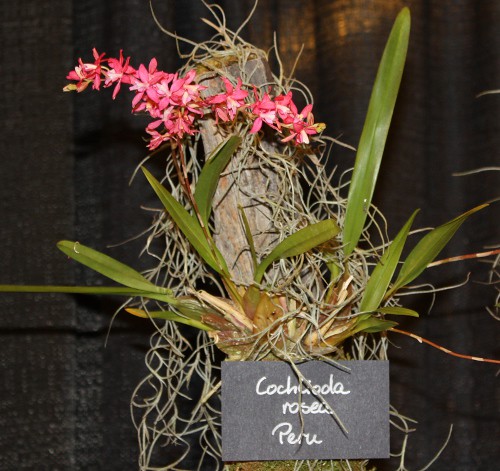
Cochlioda rosea
The exhibit consisted mostly of intermediate to cool growing orchids, including Masdevallias down near the bottom and at the top a couple of orchids from the genus Cochlioda, a new genus to me.

huge_exhibit
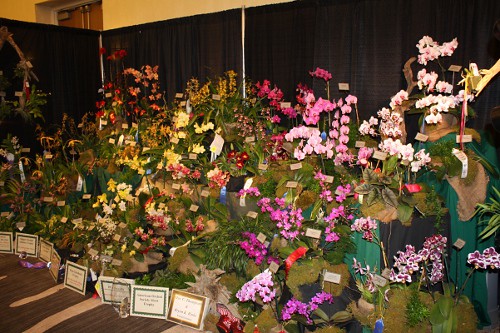
Spectacular exhibit by Max C. Thompson and Bryon K. Rinke
Two gentlemen that must have huge orchid collections put together this single amazing display that was gigantic.  Can you believe how many blooming orchids are in the photo above?  That is a lot of really nice orchids.  It took several visits by this exhibit to really take it all in.  Actually, scratch that, I doubt I took it all in, even after several visits.

ancistrochilus_rothschildianus
Ancistrochilus rothschildianus
epi_panama_ruby
Epidendrum Panama Ruby
These couple of photos are not really the highlights of their exhibit.  They are just plants that I was really interested in.  The above Epidendrum was just an oddball and that's why it was interesting to me.  Do you see the blooms?  They are kind of discrete.

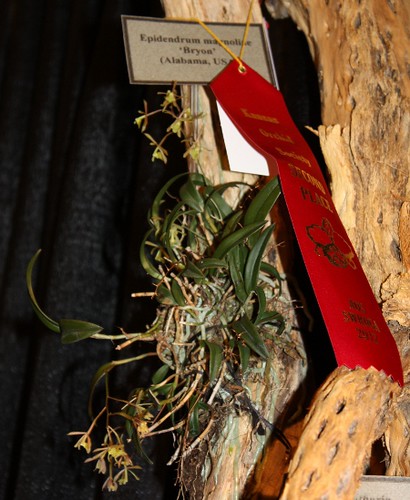
epi_magnoliae_bryon
Epidendrum magnoliae 'Bryon'
The Epidendrum above is native to the southeastern United States, found as far north as North Carolina.  It can withstand a light freeze and prefers to live in Magnolia trees, hence the name Epidendrum magnoliae.  I would like to try growing this orchid someday.

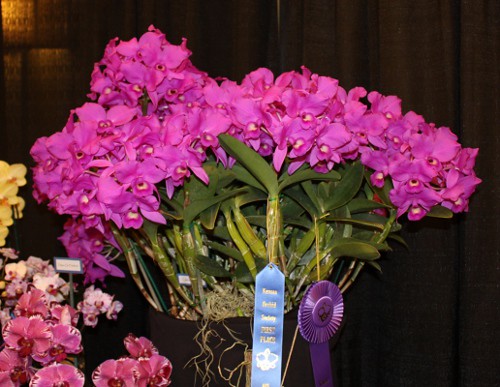
cattleya_first_place
Cattleya that won a first place ribbon
If you grow Cattleya orchids well, they will reward you with a lot of blooms.  If you grow them really well, they will build an army of flowers determined to march to the nearest orchid show and demand a first place ribbon.

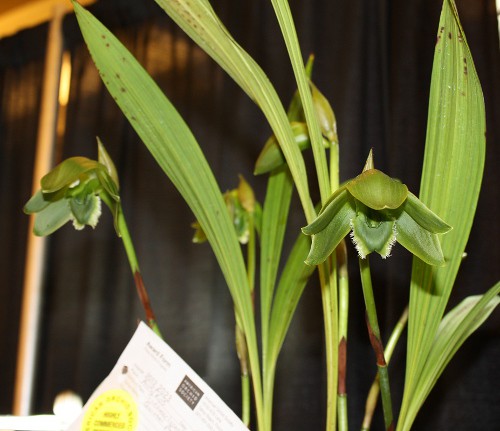
ida_locusta
Ida locusta
The most highly awarded plant had a totally green flower, with a little bit of yellow on the column.  The plant is Ida locusta and it was given the HCC award (Highly Commendable Certificate), which you can see in the lower part of the picture.

Wednesday, December 21, 2011

Mounted orchids

I have a number of mounted orchids in my collection now, so I thought I would post about those orchids specifically, even if some of them have been shared before.

dock_cucumerina
Dockrillia cucumerina - back when I first got it.

The first is my "cucumber" orchid, Dockrillia cucumeria, which I purchased in February.  It started to get crispy outside in our scorching 100+ days from June to August. I brought it inside, where it seemed to be happier, but it couldn't recover from the heat, and eventually died. I am finding that the mounted orchids (not surprisingly) dry out more quickly than the potted orchids.  This is good and bad.  It is more similar to the natural habitats of epiphytic orchids, but it also requires that I stay on top of watering.  With these mounted orchids inside, it is pretty easy to do.  I have been keeping a couple of these hanging in the bathroom window and the kitchen window, where sinks are readily available and where I am seeing them several times a day. I will try to obtain another of these little cucumbers, because it really was a favorite of mine.

den_lichenastrum
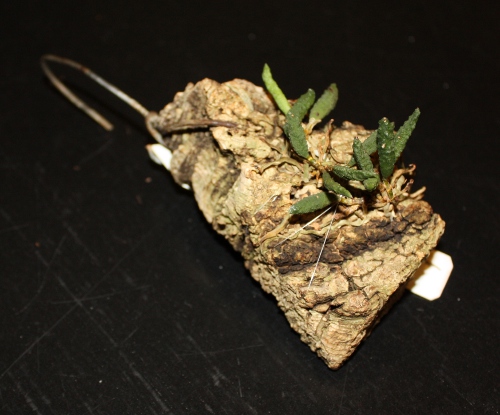
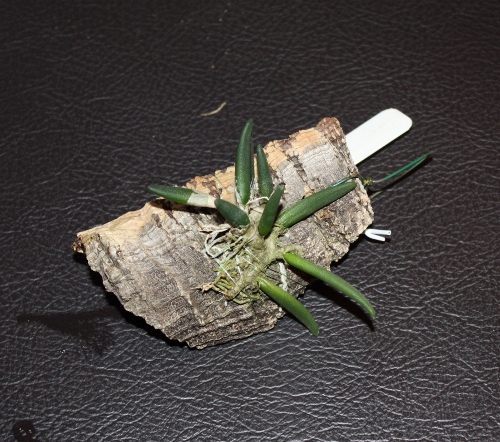
Dendrobium lichenastrum var. prenticei mounted on cork bark

I have one other of these small, succulent type orchids, Dendrobium lichenastrum v. prenticei. This one is also mounted on a piece of small cork bark. Where as the previous plant looked like little cucumbers, this one is smooth and has yellow flowers when it blooms. So far it has been doing well in our kitchen window, with about 5 other mounted orchids. I see this constantly and water them when I am washing dishes.

den_pachyphyllum
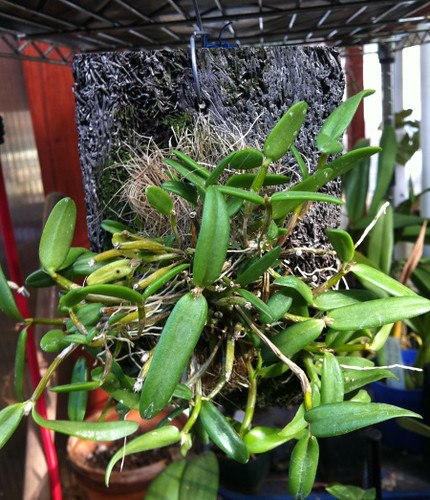
Dendrobium pachyphyllum

My Dendrobium pachyphyllum is a new addition that is mounted on a compressed fern slab.  This stringy glob of orchid won me over on three accounts: 1. It has that stringy, "don't try to tame me" look. 2. It is kind of woody, which has a permanence and toughness that I really like. 3.  It's a Dendrobium species.  While Dendrobiums are one of the more common orchids you can find (2nd to Phalaenopsis in terms of grocery store prominence), there is a HUGE variety of Dendrobiums and I am collecting some of the more obscure ones.  The flowers of this Dendrobium are discrete little short-lived light pink blooms that come along the stems all over the plant - a prolific bloomer.  They are supposed to smell sweet.

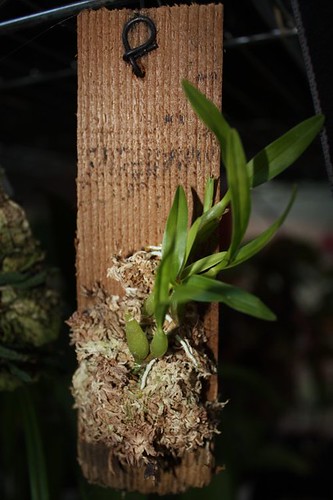
encyclia_polybulbon
Encyclia polybulbon - photographed in April, when I first got the plant

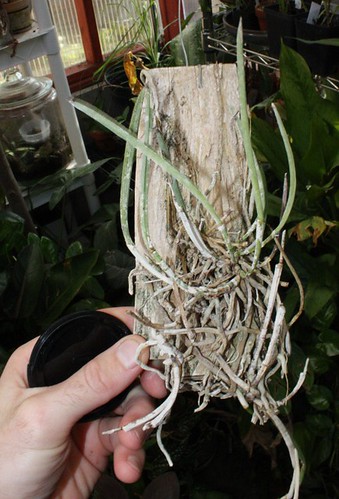
These next two plants (above and below) were the first mounted orchids I purchased.  Both are mounted on a simple slat of wood, with sphagnum moss wrapped around the roots.  The plant above is the first Encyclia in my collection.  It hasn't bloomed yet, but it has been growing steadily this summer and I understand that it blooms from fall to early spring.  So I am hoping to keep it happy in the coming months and be rewarded with the first blooms.

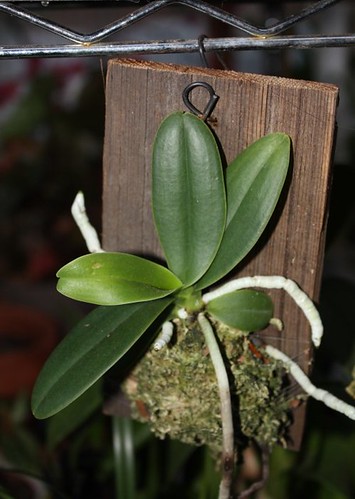
sedirea_japonica
Sedirea japonica - photographed in April, when I first got the plant

This is one of the few fragrant orchids in my collection.  Sedirea japonica is noted for it's really  unique small white blooms with purple bars.  These blooms tend to hang below the plant and are supposed to smell amazing.  My plant didn't bloom this summer when it should have, so I am hoping for a bloom next year.

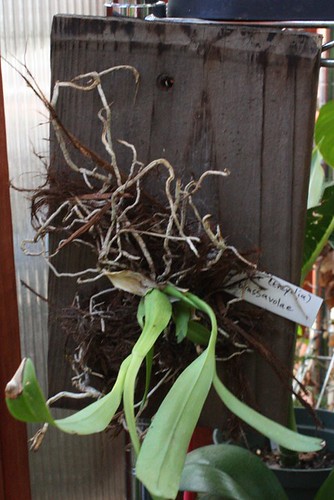
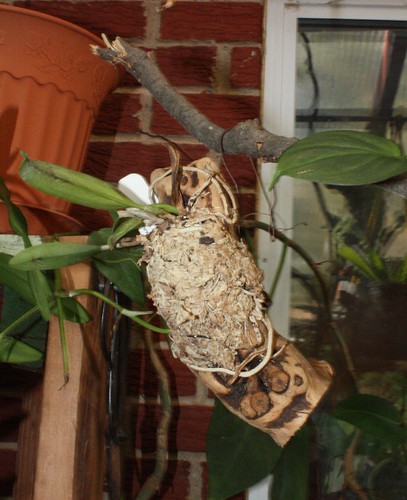
panarica_brassavolae
Panarica brassavolae

The genus Panarica is closely related to (often tagged as) Encyclia.  So I actually bought this plant with the name Encyclia brassavolae.  This one is mounted on a heavy and thick piece of wood that the seller called a "cedar plaque."  There is some media that might be coconut fiber/husk or something like that, so that some water can be absorbed and held near the roots whenever I water this one.  I might have to modify this and add some sphagnum moss since I suspect my humidity is too low to keep the plant happy with this mount.  The flowers of this species are really cool.  Picture an anorexic yellow starfish wearing a white hat with a pink feather in it.  Or just look at this picture and make up your own analogy.

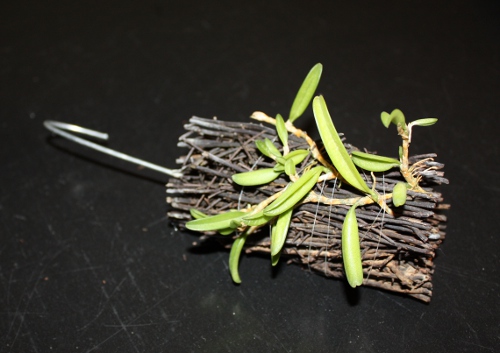
bulb_clandestinum
Bulbophyllum clandestinum 'Elizabeth'

The plant pictured above was on my want list for a while.  I kept seeing really nice specimen-sized (large) plants available on eBay and they would go for big bucks (>$40).  I held out until I got a smaller plant for about $10.  This is a neat plant because of how it wanders and the blooms are born all along the creeping rhizome, unlike most Bulbophyllums which have long blooms spikes with lots of blooms clustered together.  I also like the woody look of the stems.  My plant is a collection of 2 or 3 cuttings tied to a twig raft.

brassavola_nodosa
Brassavola nodosa.  That chalky appearance is fertilizer build-up from the previous owner.

The orchid pictured above was actually collected in the jungles of Belize years ago (when it was legal to do such things).  It is a common orchid among collectors, Brassavola nodosa and is mounted on a slab of cypress wood.

cattleya_mounted
Cattleya hybrid (Catt. John Hannington x Catt. Empress Bells 'White Sands') - self mount

This Cattleya pictured above is the one orchid I have which I mounted myself.  I received the orchid as a gift when I joined the Oklahoma Orchid Society.  It was a tiny little plant.  To be honest, I'm not a big Cattleya guy myself.  It was a little plant and I had a piece of drift wood that I wasn't using, so I thought, "What they heck!  Let me give it a try."  It has been doing pretty well on the driftwood.  It survived our scorching summer heat, so that's a good sign.

enc_tampensis
Encyclia tampensis

While we were in Florida, I was on a mission to purchase some Encyclias, especially the well-known Florida-native "Butterfly Orchid", Encyclia tampensis. I saw many of these growing wild in the Everglades and then I found a really nice one mounted on tree fern at Ruben in Orchids.  It looks as though it had bloomed on at least 3 different spikes recently and it was well rooted into the mount.

enc_randii_good
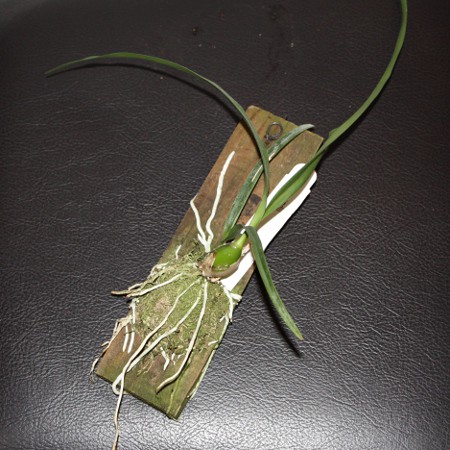
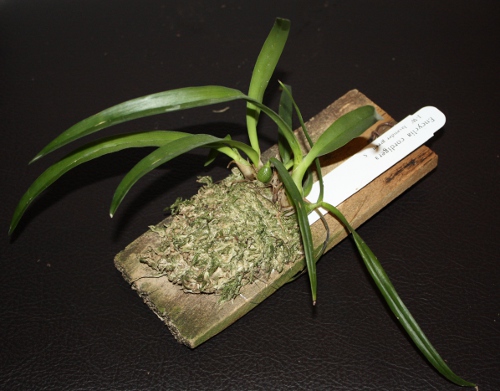
Encyclia randii

A good friend of mine attended the recent American Orchid Society show in San Antonio at the end of October. While he was there, he scoped out the available stock of orchids and aroids and sent me some information on plants I like to grow. He was generous enough to purchase two Encyclias for me and drop them by my house on his way home to Arkansas. Both of these little Encyclias are fragrant when in bloom and mounted on little wood planks by Oak Hill Gardens - one of my favorite orchid sellers.

enc_cordigera_good
Encyclia cordigera

About a month ago my parents-in-law returned from a trip with a couple of orchids for me and one that my mother-in-law was keeping for herself (or so I thought).  In actuality, she was keeping the last orchid for my birthday. But she showed it to me at the time - in bloom - and held on to it until my birthday to give it to me. I'm glad I took a nice picture of it in bloom at the time! This is a really neat TINY hybrid with the name Ornithocephalis iridifolius x Zygostatus alleniana.  That "iridifolius" part means that the foliage looks like an iris.  It has that characteristic fan appearance, but on a very tiny scale.


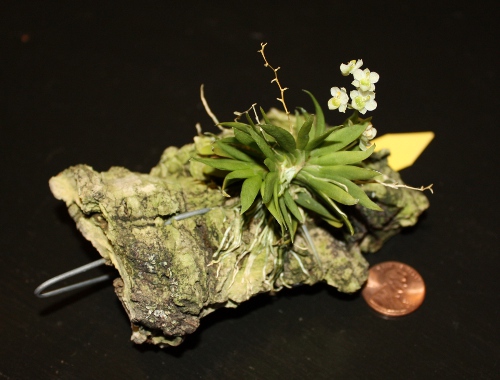
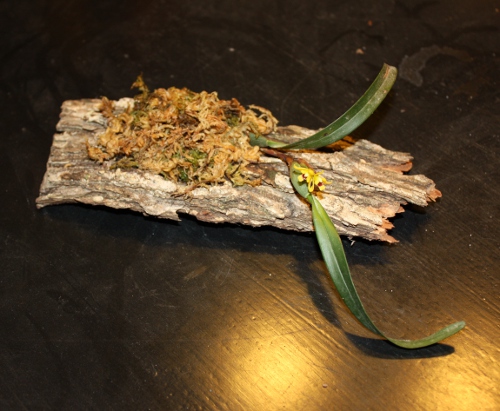
Ornithocephalis iridifolius x Zygostatus alleniana
Ornithocephalis iridifolius x Zygostatus alleniana mounted on cork bark - photo taken about a month ago.

max_variabilis_mounted
Maxillaria variabilis mounted on native bark

Jason gave me a division of his Maxillaria variabilis a couple months back. I decided to try mounting it on a section of bark I had from a local tree. I don't know of anyone doing this. My guess is that the people don't do it because you need a really durable bark that won't break down over time, so there are only a few options available. This mount will probably not last a long time, but it's worth a shot, in my opinion. For now, the orchid is just laying on top of the bark, with a wad of sphagnum moss on top of the roots. Hopefully in a couple of months the roots will have bitten into the bark.  My favorite thing about this little orchid?  It has been blooming non-stop, since I got it.

den_stenophyllum
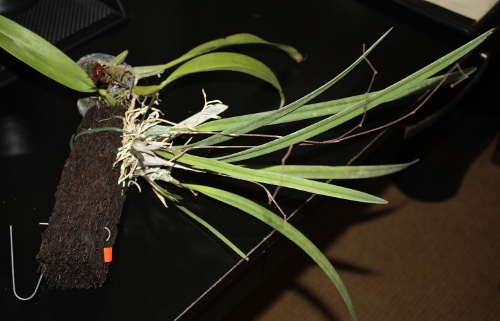
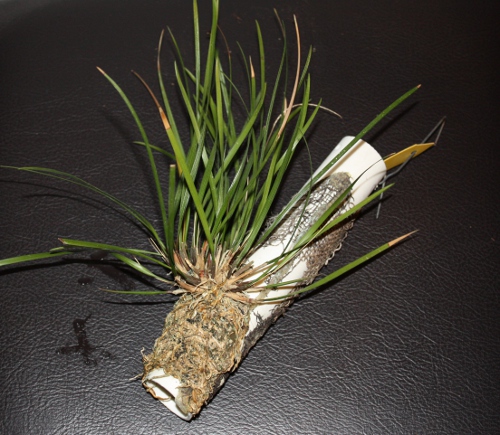
Dendrochilum stenophyllum mounted on PVC

Now we make it to the fifteenth and final mounted orchid in my collection.  Last, but certainly not least.  This is Dendrochilum stenophyllum, one of the "chain orchids."  According to the wikipedia page, "These orchids are popular among fans of non-traditional orchid curiosities."  I guess that sums up my interest, huh?  Anyway, this species is notable for it's very grass-like foliage and it's miniscule flowers which grow on a stem about the length of the leaves.  My plant is mounted on a piece of canvas wrapped around a section of PVC pipe.  I think it's a curious mounting system.  The really good part is that the PVC holds up over time and won't be slowly breaking down.  However, the canvas has long since broken down, leaving the PVC very exposed.  I don't mind the white showing, but I might try to cover it up at some point in the future.