Showing posts with label begonia. Show all posts

Tuesday, September 18, 2018

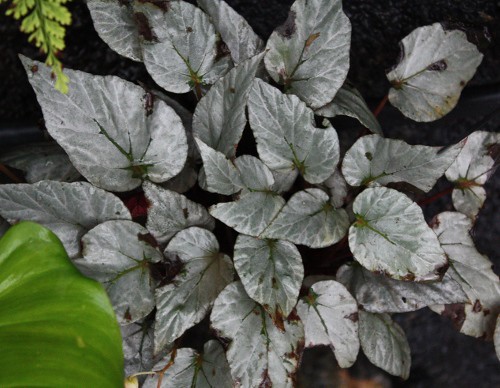
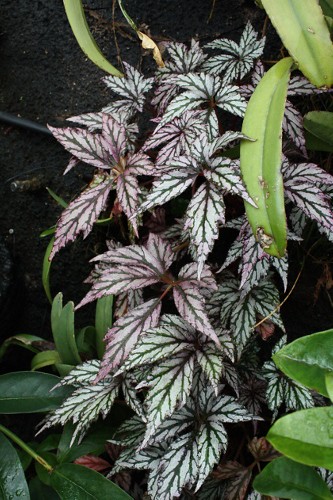
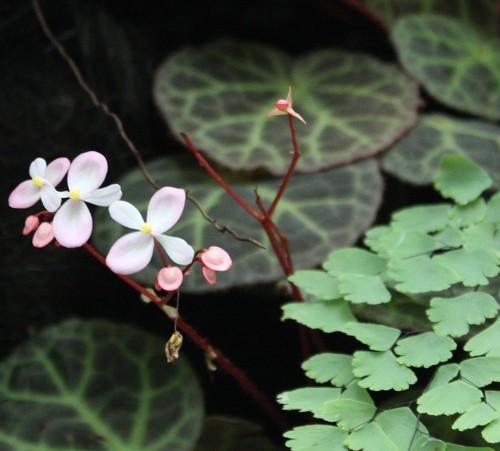
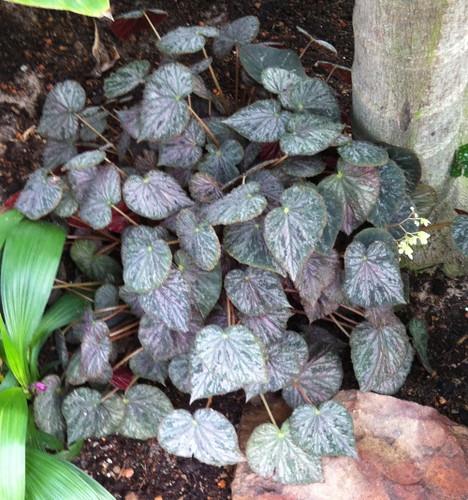
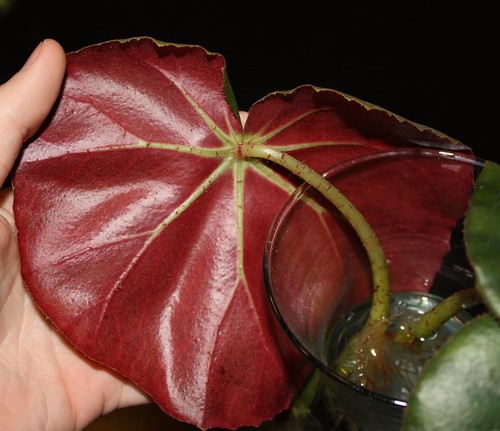
Plant Find: Begonia sizemoreae

The title of this post is a bit misleading. I didn't find this plant; it was given to me by my friend Steve. I use the "Plant Find" heading for new plants coming into my collection, regardless of how I obtained them. Steve tells me that it roots very easily from leaf cuttings and he has had to start tossing his cuttings now because he has so much of this plant.

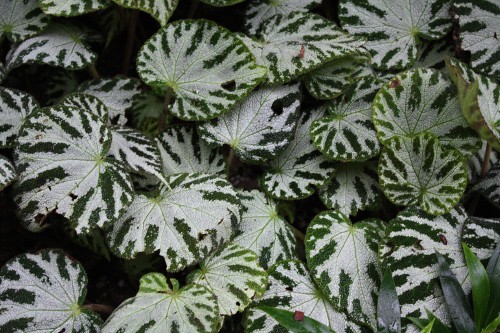
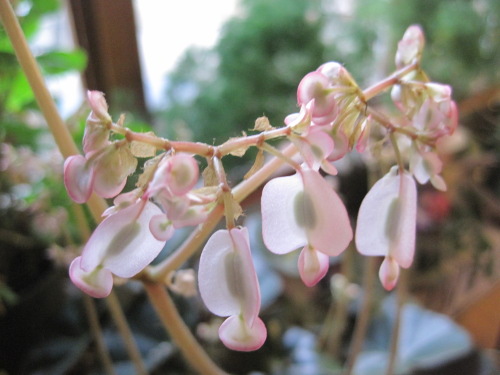
Begonia sizemoreae
Begonia sizemoreae is native to Vietnam and likes humidity. It has been enjoying our wet summer. The leaves and petioles are covered in long bristly hairs.

Begonia sizemoreae

This beautifully patterned Begonia is named after an avid collector named Mary Sizemore. She is well known among Begonia aficionados.

Monday, August 20, 2012

Trip Report: Begonia of the Cloud Forest

I am not an expert when it comes to Begonia.  There are so many species, even more cultivars and hybrids, and since I don't actively collect these plants, there is really no hope of me ever being able to identify more than a handful of them.

begonia_01

begonia_02

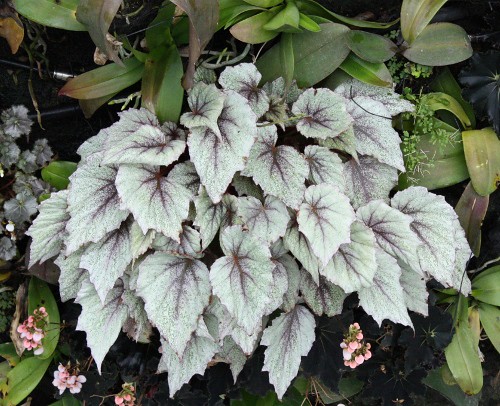
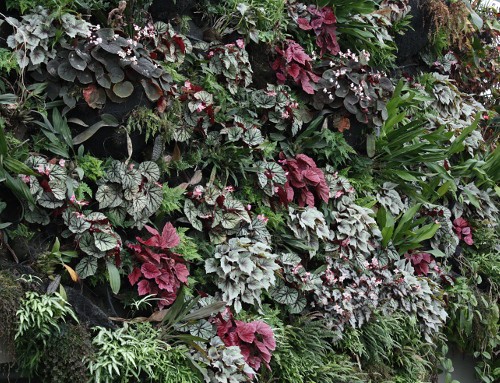
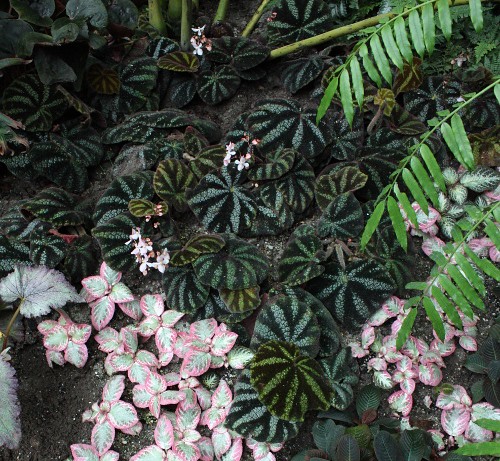
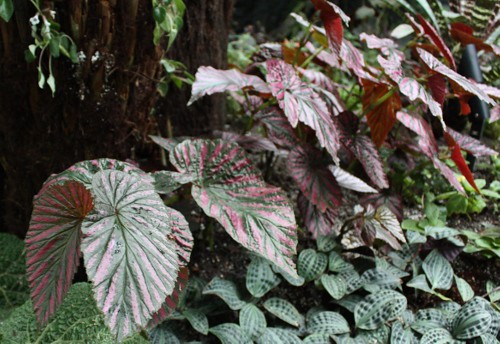
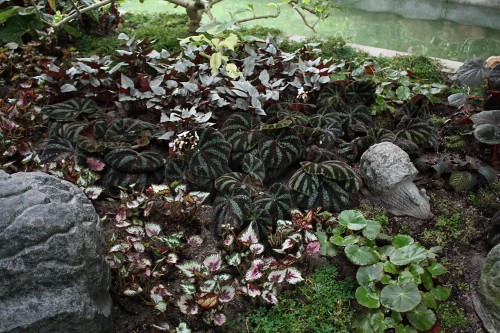
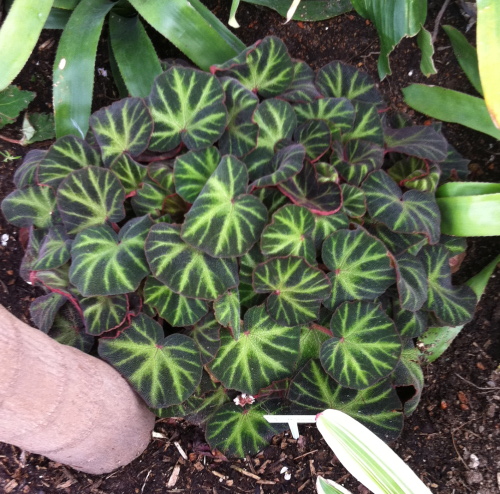
I have seen my share of unique, and bizarre Begonia.  The Cloud Forest didn't have anything really bizarre, but they had some really beautiful Begonia.  So, rather than flap my jowls, I'm going to just let you view these pictures in silence.

begonia_03

begonia_04

I promised not to babble too much with this post, but don't you think that many Begonia just have an amazing way of reflecting light?

begonia_05

begonia_06

begonia_07

Aren't these plants awesome?  Such variety of textures and colors.

begonia_08

begonia_09

begonia_10

begonia_11

I have still more photos from the Cloud Forest to come.

Friday, June 17, 2011

Trip Report: This and that in northern Arkansas

For our six year anniversary, Christie and I went to Eureka Springs for the weekend.  It was a relaxing weekend getaway.  Here are some snapshots of different plants we saw on our trip - ones I don't see often (or ever).

monarda
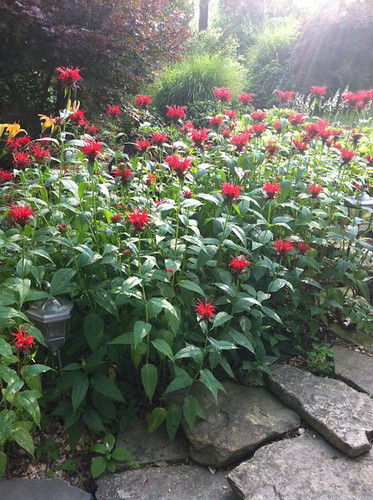
Large flowerbed of red Monarda
One plant that I have never seen before in person (that I can recall), but have seen in the plant catalogs is Monarda.  There were a lot of these in Eureka Springs.  They are really attractive when in bloom, but are tall and gangly.  They could be mistaken for a weed, if not obviously planted in a well-maintained flowerbed.


eureka_canna
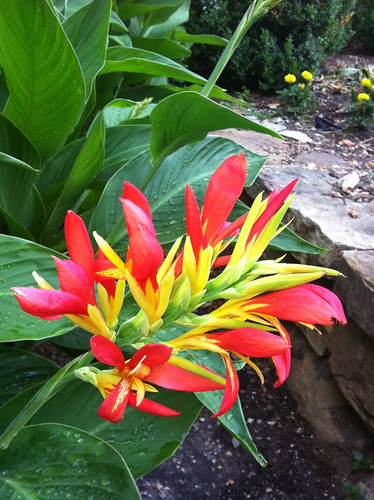
Canna at the Crescent Hotel
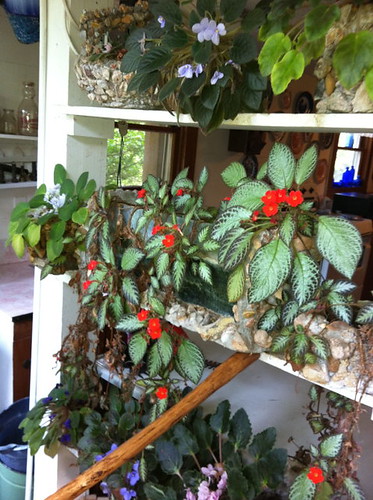
The canna above was growing in the gardens of the hilltop Crescent Hotel in Eureka Springs.  We toured the notoriously quirky Quigley's Castle, known as "the Ozark's strangest dwelling."  I debated writing a whole post about this place, but decided to just include it in this post with other plants from the area.  This house has flowerbeds inside the house around the entire perimeter, with plants growing up against the windows two storeys high - Bougainvillea, Hibiscus, Epiphyllum, Asparagus fern and others.  The most impressive plants (by virtue of their health and attractiveness) were the African violets and relatives.  The Flame Violets (Episcia) were particularly striking.

quigley_violets
Various blue, purple and pink African violets (Saintpaulia) and red Flame violets (Episcia) in bloom.
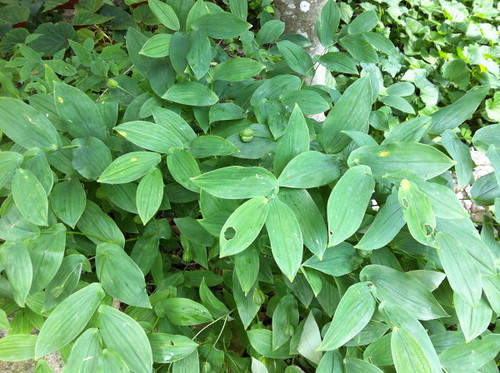
The house - excuse me, "castle" - is surrounded by really nice gardens with some neat plants.  One of them looked a lot like Solomon's Seal (Polygonatum) to me, but was obviously something different.  It had some seed heads developing on it, so I had missed the flowers, unfortunately.  I posted photos of this plant on a forum and also sent pictures to a friend who lives in NW Arkansas.  They told me this plant is Uvularia grandiflora.

quigley_noid1
Uvularia grandiflora (Bellwort)
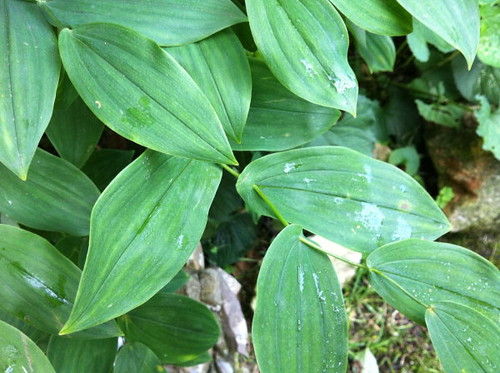
I looked at some photos online and it is really neat when in bloom.  I liked it even out of bloom for the interesting way the leaves attach to the stem.  They are called "perfoliate" leaves, which means that the leaf (or foliage) is seemingly pierced (or perforated) by the stem - perfoliate.  Perfoliate leaves are a subcategory of "sessile" leaves.  Sessile means that the leaf is attached directly to the main stem without a stalk or peduncle leading to the leaf base.

quigley_noid2
Uvularia grandiflora (Bellwort).  Check out the unusual (perfoliate) way the leaves attach to the stem.
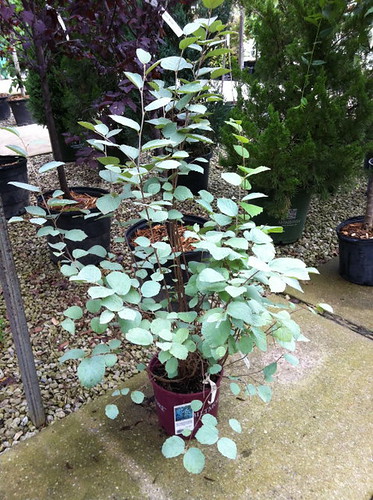
On our way home we passed through Bentonville (headquarters of Wal-Mart), following our outdated GPS directory to a once-existent location of the famous AQ Chicken House.  After finding this location was no longer opened, we headed to Springdale, the original location.  Thanks to this detour, we happened upon a nice nursery, which Christie let me enjoy, giving our bellies a little more time to get hungry for lunch since it was still early.  The blue-gray leaved plant below is now on my landscape plant wish list.  Isn't it awesome?  I just need to find a place to plant it.  Then I need to find one for sale closer than Arkansas!

fothergilla_blue_shadow
Fothergilla major Blue Shadow
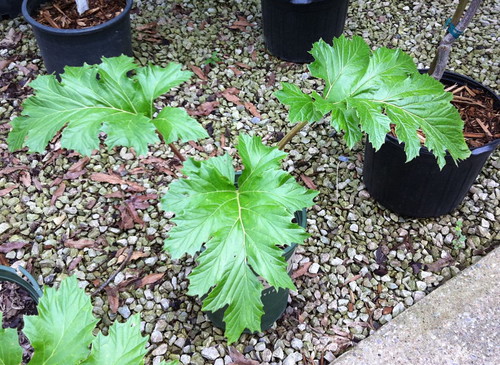
At our most recent MidAmerica chapter meeting of the IAS several members were discussing hardy plants (to Oklahoma, Arkansas and Texas) that have that tropical look, with large, glossy leaves.  There was a plant growing at this nursery (below) that, upon first glance, I thought was a Philodendron.  Pretty quickly I realized it was not a Philodendron, and not even a tropical.  It is Acanathus mollis 'Oak Leaf', commonly called Bear's Breeches (what a weird name for a plant...).

acanthus_mollis_oak_leaf
Acanthus mollis 'Oak Leaf' aka Bear's Breeches
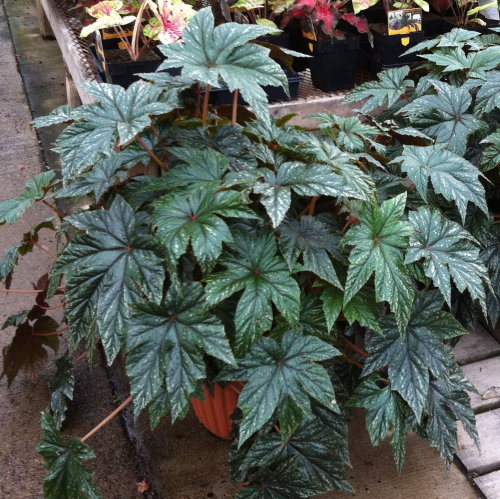
The nursery had these large Begonias going for $30 each.  That's more than I want to spend for a Begonia, but they were very mature and an attractive variety - in nice pots, no less.

arkansas_begonia
Begonia
And yes, I did buy a couple of small plants at the nursery - a yellow shrimp (Pachystachys lutea) and a red shrimp (Justicia brandegeana).  I've had both of these in the past, but lost mine.

Saturday, April 30, 2011

Trip Report: Renovated Myriad Gardens

Last week the Myriad Botanical Gardens and Crystal Bridge Tropical Conservatory in Oklahoma City reopened after a year of renovations.  The purpose was primarily to replace the 20-year old panels that were past their prime.  While they were taking the place apart, they went ahead and repainted the structure, revamped the layout of the interior a bit, laying new walkways and completely redoing the behind-the-scenes staff and educational area.  For now, only the publicly seen area is finished and the rest still needs a lot of work.  During the year that the renovations were being done, most of the plants were covered with tarps, protecting the plants while also blocking out the light.  Some plants survived and others did not.
[Note: I apologize up front if my pictures are not up to snuff.  I just got a smart phone recently and all of these pictures were taken with my phone, since I didn't have my camera with me.  Although it takes pretty good pictures, I don't have as much control over focus, flash or exposure.  Some of the images are out of focus and I didn't realize it at the time.  Others are a bit grainy, due to the exposure.  Others (especially close-ups) look pretty decent.]


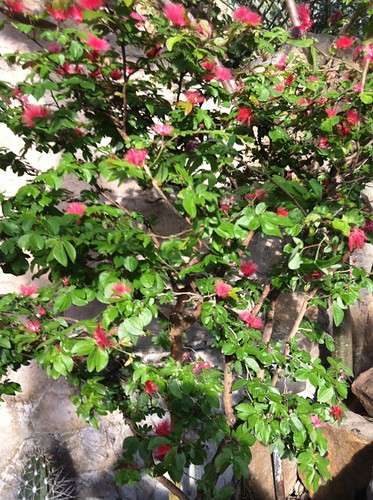
calliandra_emarginata
Miniature Powder Puff (Calliandra emarginata)
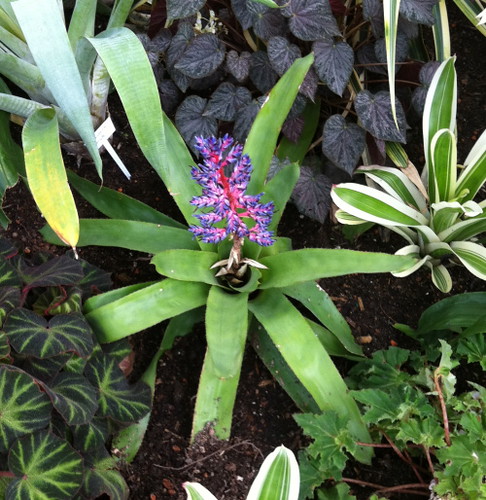
flashy_bromeliad_myriad
A couple of the many flashy Bromeliads planted all over the place.
I had the opportunity to be in the Crystal Bridge (CB) on opening day this last week as a volunteer during the Arts Festival.  I was happy to see that many of the special plants in the CB were still there and in decent condition - the Jamaica Poinsettia Tree (Euphorbia punicea), many tall Palms, the spoon-leaf Bird of Paradise (Strelitzia parvifolia), the Golden Chalice vine (Solandra maxima), many Cycads, several prize Aroids, and many Euphorbias and other succulents on the dry side of the CB.  In fact, those Cycads are all doing really well - almost all of them are "in cone" right now, which is cool if you're a Cycad-person, and even pretty neat if you're not (like me).  Kenton, the education director at the Myriad, pointed out to me that one of the Cycads was producing smaller leaves than normal, but also making some offsets.  The last year probably stressed this plant into making offspring in ways that it usually does not.

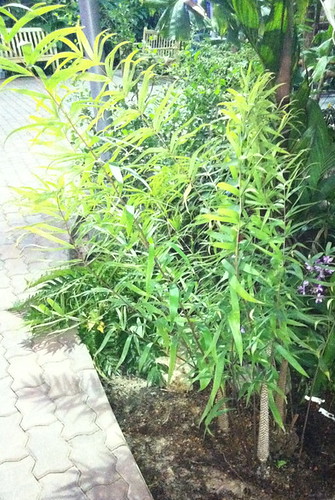
palm_cycad
Cycad that looks like bamboo.  Notice the prevalent cones at the base!
Since I don't know my Cycads and didn't bother to look at the identifying tags (when available), I'm just calling these like I see them.

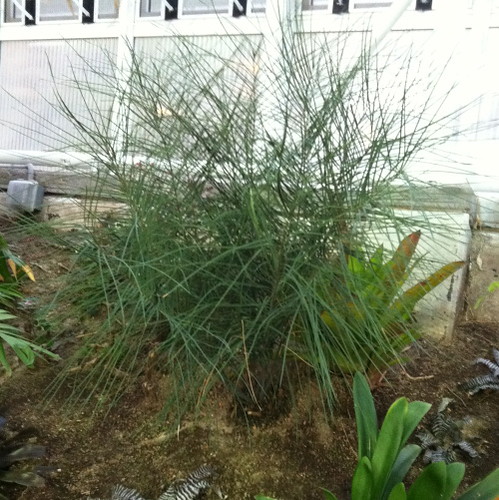
stringy_cycad
Very grassy-looking Cycad. There are cones at the base of this one too, but it's pretty impossible to see in this picture.
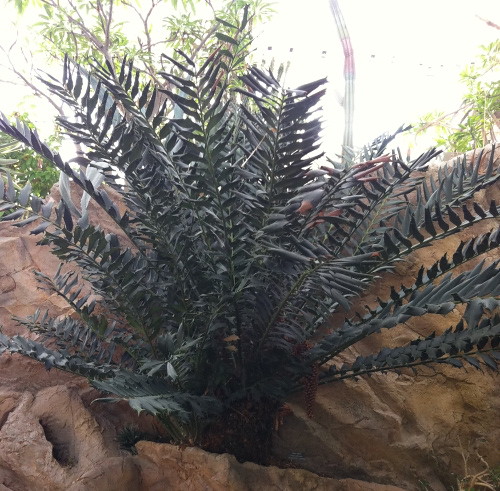
gigantic_cycad
One of the larger Cycads at the CB. This one is about 8-10' tall and has cones hanging down, as you can see on the right side of the picture.
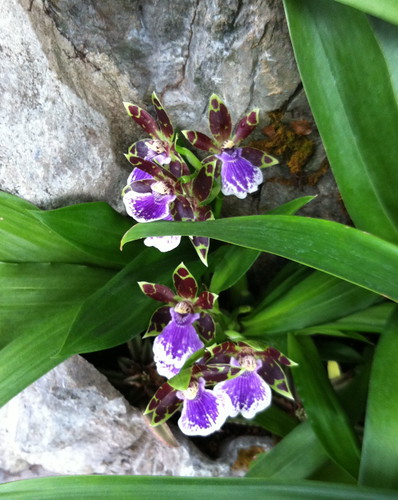
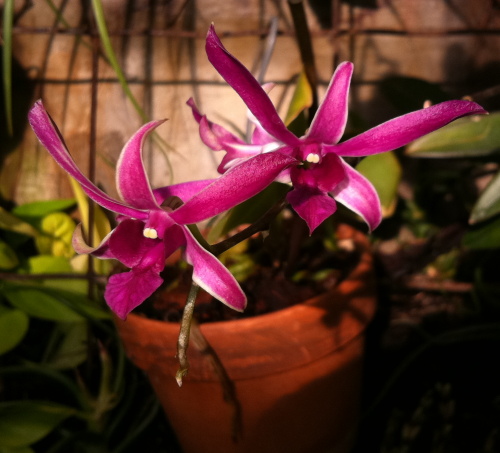
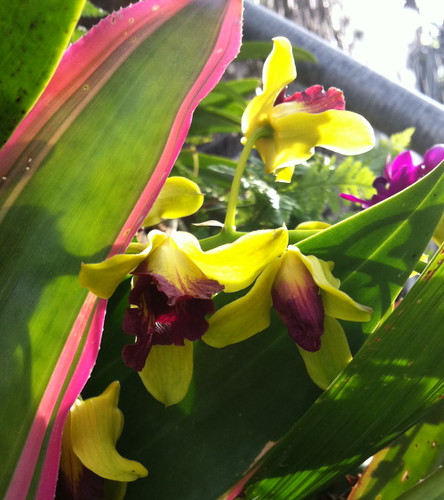
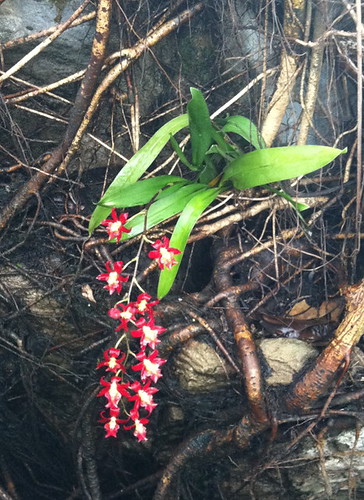
For now, the empty space where plants were lost has been filled in with TONS of Bromeliads and Orchids.  It's very pretty and colorful, but has a different feel from what it used to have.  It is kind of like 50 each of 8-10 different species, rather than 400-500 different species, like it used to be.  My guess - especially after talking with Kenton - is that this choice of plants was just to fill up the space to get it started with.  Some of the more unique and interesting plants that were previously here (and will be here again) take longer to track down and acquire.  I look forward to seeing the CB evolve over the next 10 years or so.  I imagine it will become a jungle once more!  But I was thoroughly enjoying looking at all of the different orchids tucked into every crook and cranny.  I know that even if these plants are ignored, in the wonderful growing environment of the CB, these plants will continue to grow and bloom every year.  Even though there were a lot of Oncidiums and a couple of Cattleya (both common), there were also some less common orchids, like Zygopetalums, Phaius, Bletilla and others whose names I can't think of right now.

myriad_zygo
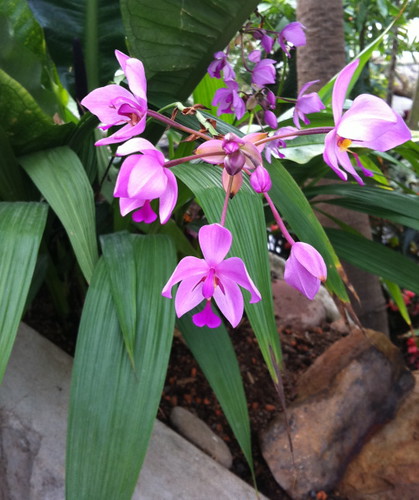
A really nice Zygopetallum orchid.  I just love the mixture of colors in these flowers.
dendro_noid
Unknown Dendrobium orchid
orchid_noid
Interesting orchid blooms resting on a bromeliad leaf
red_orchid_perfection
Unknown orchid - maybe a Dendrobium. I have to say this is my favorite picture from my two days in the CB. The scene is just perfection.
bletilla_noid
I only know Bletillas well enough to realize this was one. I don't have any ideas on the species or hybrid name. It's a pretty plant, though. Bletillas are terrestrial, along with the Phaius which are planted in the CB.
As always, there are many Gingers and Begonias planted in the CB.  There are a couple of mature Begonias that I can tell were salvaged from before the construction.  These are mostly tall cane-like Begonias that are probably true species.  Most of the new ones are clearly hybrids - very colorful and unusual looking things.

begonia_myriad_01
An unknown Begonia, probably a hybrid.  The silvery blue foliage is a winner in my book!
begonia_myriad_02
Another unknown Begonia with vibrant and rough leaves.
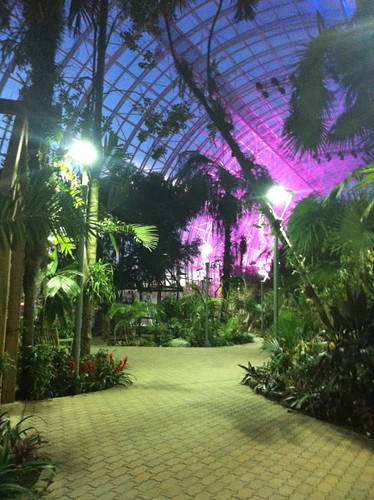
I leave you with one picture of the Myriad just before closing time.  They now have colored lights installed in the CB, which show off the cool structure from the outside at night.  You can see from this picture how wide the walking area is now, since they widened the path and the plants are not yet pushing their bounds.

myriad_lights
View from inside the Myriad Crystal Bridge at night.

Wednesday, March 2, 2011

Beefsteak Begonia in bloom

The Beefsteak Begonia (Begonia 'Erythrophylla') is grown for it's foliage - very large, round dark colored leaves.  But that doesn't prevent it from blooming.

beefsteak_blooms
Beefsteak Begonia blooms
A while back a neighbor gave me some cuttings of her Beefsteak Begonia - 4 large leaves with stems attached.  I rooted the leaves and then gave 2 of them to my mother-in-law, who grows some Begonias.  We both planted the leaves in potting soil about the same time.  My plant is now in a small 4" pot with about 8 leaves.  Hers is in a 12" or larger pot with about 8 million leaves!  In fact, I think Cheryl's plant is probably larger than the parent plant from which the cuttings were taken.

beefsteak_blooms_cheryl
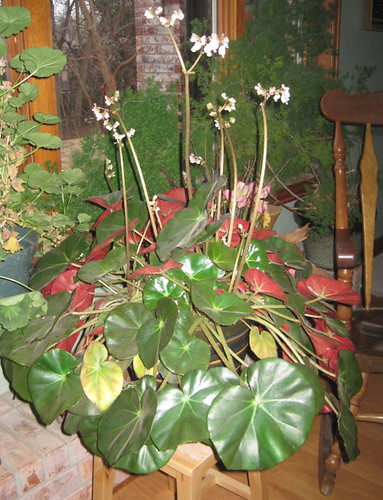
My mother-in-law's monstrous Beefsteak Begonia (Begonia 'Erythrophylla') in bloom
A week or two back she reported to me that it now has tall, thick bloom stalks with little pink flowers on the ends.  Not to be outdone, my own tiny plant decided to put up a little bloom stalk of its own.

beefsteak_mine
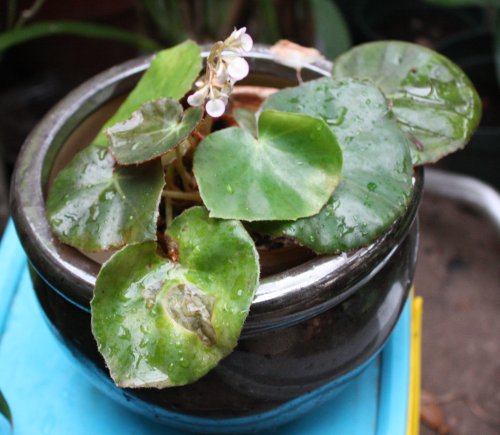
My tiny Beefsteak Begonia

Monday, January 25, 2010

Beefsteak Begonia starts

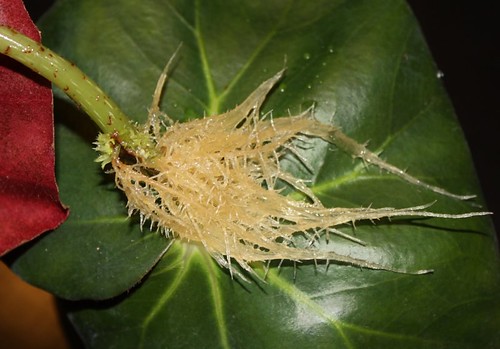
My neighbor across the street gave me four cuttings of her large Beefsteak Begonia (Begonia ‘Erythrophylla’) for me to root.  Begonias are generally pretty easy to root from leaf cuttings.  These cuttings took about a month to produce a nice set of roots.

begonia_roots
Roots began to form after just about a week in water
The beefsteak Begonia has very large, waxy and thick leaves.  They are dark green on top and purple underneath.

begonia_under
Underside of the Begonia leaves
The petioles are rough with small hairs.  It is a very attractive plant, that is usually pretty dense with leaves that droop down to the soil surface, or over the edge of the pot.  You couldn't even see the pot buried  underneath my neighbor's plant.  I'm hoping to have as much luck with my cuttings.

Monday, December 29, 2008

Trip Report: Myriad Gardens continued

Last week I posted a new photo album containing over 200 pictures of the Myriad Botanical Gardens in Oklahoma City.  I posted the album in pre-Christmas haste, without labeling any of them.  But now I have labeled the majority of the pictures.  So, if you haven't seen them yet, or you already looked and want to know an ID of one of the plants, you can check them out here.

Last week in my Myriad Gardens post I just wrote about a couple of the highlights.  I wanted to give a little more information about the Gardens today.

The Myriad Botanical Gardens is a 17 acre colorfully landscaped plot in downtown Oklahoma City.  In the center is the Crystal Bridge Tropical Conservatory, which is a big tropical rainforest inside a cylindrical greenhouse on it's side.  The big greenhouse hovers over a pond, giving it the name "The Crystal Bridge."

The outdoor gardens are nice, but the real action is inside.  About 2/3 of the inside space is dedicated to a tropical rainforest collection, while the remaining 1/3 is dedicated to a dry tropical zone.  There is no physical boundary between the two collections, so I am partly surprised they coexist so well, sharing the same humid air with one another.  The dry zone is watered less frequently the entire year and is watered sparsely if at all during a certain dormant period of the year.

While many of the plants at the Myriad Gardens are those you would expect to see in a rain forest recreation, the Myriad Gardens has focused on a couple of specific plant groups.

Aroids

This is not one of the collections noted on the official website, but being an Aroid collector, I couldn't help but notice how many plants were present from this family.  Maybe the website needs a little update.

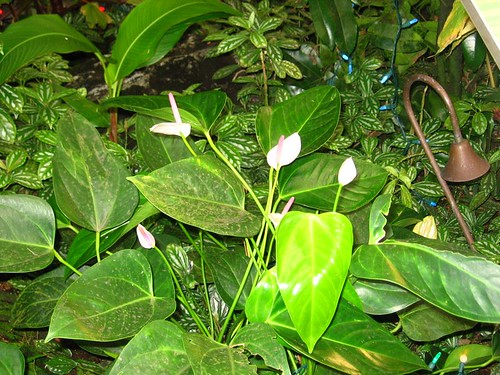
The collection of Aroids from the genus Anthurium was astounding.  There are two types of Anthurium (in my mind): those with the very colorful blooms and ordinary foliage, and those with the really cool foliage but discrete blooms.  The Myriad Gardens had several color varieties of the first category.  I had never seen a pale purple Anthurium before and unfortunately I didn't get a very good picture of it.
img_8794_35365880481_o
Pale purple Anthurium
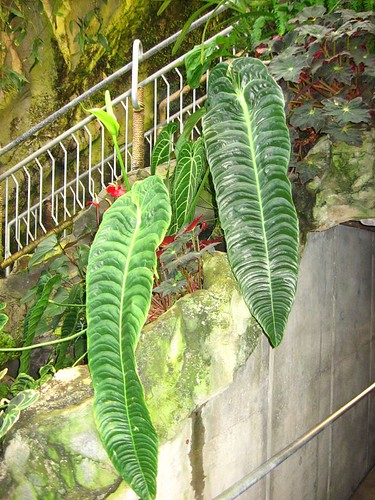
They also have a number of the unique foliage species of Anthuriums, including the King Anthurium (Anthurium veitchii).  Notice the size of the guard rail in comparison.
img_8760_35365941711_o
King Anthurium (Anthurium veitchii)
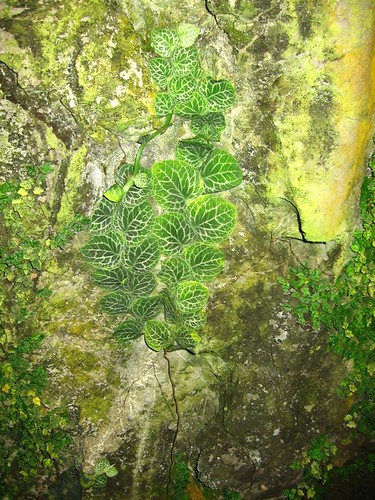
I also saw a cool shingler Aroid that I had never seen before.  This little climber was so appressed to the rock wall that the leaves were conforming to the contours of the rocks.
img_8782_35496653015_o
Rhaphidophora cryptantha - an Aroid shingler - at the Myriad Gardens
Really there were tons more Aroids that I noticed (and photographed) but I won't waste any more space here.  If you're interested, go to my photo album to see them.

Marantaceae (Prayer Plants)

This category was also not mentioned on the official website, but I noticed quite a few unique species from this family that I had never seen before, and several that I had.  Two particular varieties from the same species caught my attention.  I had seen the Stromanthe 'Triostar' before, but never this large.
img_8770_34655478864_o
Stromanthe sanguinea 'Triostar' at the Myriad Gardens
I have not quite identified the other variety, but I think it is also from Stromanthe sanguinea.
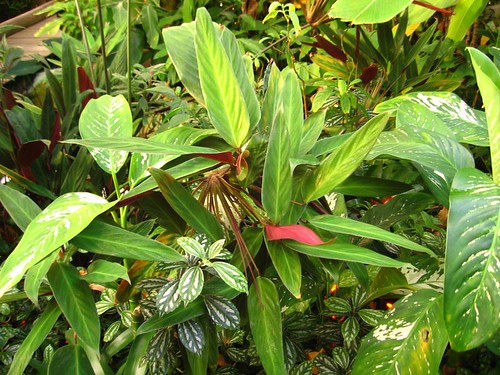
img_8805_35329502842_o
Stromanthe sanguinea(?) at the Myriad Gardens

Of course, there were also several very large Zebra Plants (Calathea zebrina), of which I have a small one of my own at home.  It was fun to see these plants waist high or higher.

Palms

According to their website, there are supposedly 100 species of palms in the Myriad Gardens.  If I had to count, I would probably tell you there were about 10.  The only palm I could correctly identify was the Coconut Palm (Cocos nucifera).  They also have the palm species which has some of the largest leaves in the world - the Bismarckia nobilis.
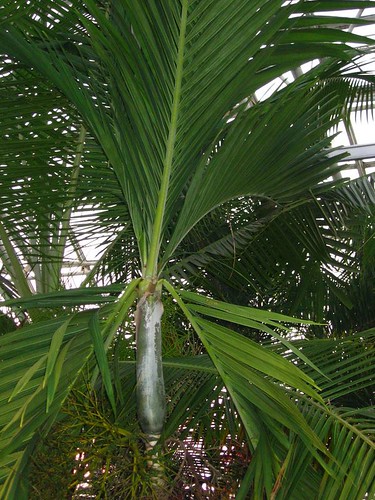
img_8895_35496587435_o
One of the palms in the Myriad Gardens
Cycads

The Myriad Gardens also has a nice collection of cycads scattered throughout their rainforest collection.  Cycads are pretty much the oldest plants on the planet, having shared time with dinosaurs.  They are often mistaken as palms and have similar characteristics, but are usually shorter.  I don't know that I got any good pictures of the Cycads.

Gingers

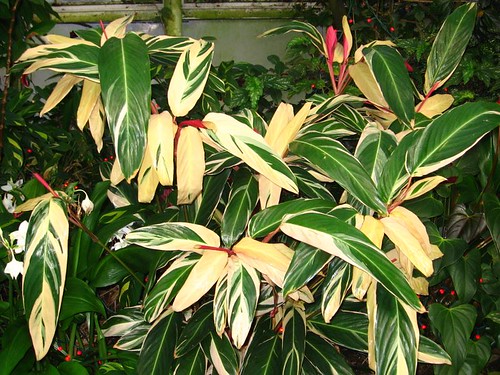
Ah, one of my favorites!  The collection of gingers may just seem large, but not very diverse, whenever the plants are out of bloom.  But when they are in bloom, it is easier to see that the Myriad Gardens has a number of different species of Gingers.  These are beautiful, tall plants with very colorful blooms.  I am still waiting for my own personal shell ginger to bloom.  Maybe next summer.
img_8753_35329569822_o
A variegated shell ginger - Alpinia zerumbet 'variegata' - at the Myriad Gardens
img_8806_35329501212_o
An unknown ginger at the Myriad Gardens
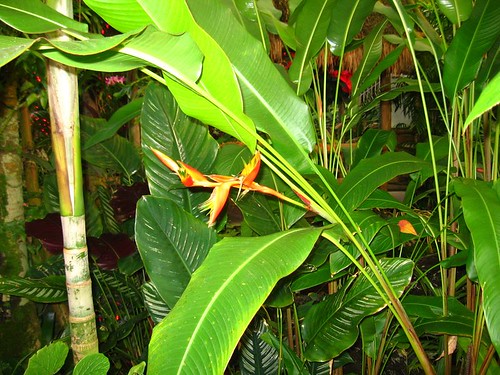
One closely related plant to the family of gingers is the genus Heliconia.  Heliconias are commonly called "False Bird of Paradise" because of their resemblance to the Bird of Paradise inflorescence.  The Myriad Gardens had a couple of different Heliconias in their collection.
img_8792_35365883791_o
False Bird of Paradise - Heliconia lankesteria
Bromeliads

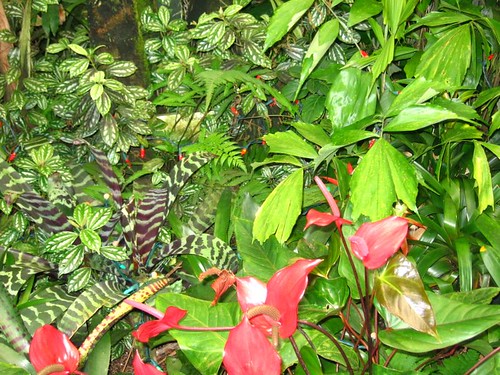
No one would call this collection of bromeliads small.  And it seems they are always in bloom.  The botanical family Bromeliaceae contains the genera Aechmea (the most common Bromeliad), Ananas (which includes the Pineapple plant), Billbergia, Bromelia, Cryptanthus, Tillandsia (commonly called "Air plant") and more than 50 others.  Many of the Bromeliads (Aechmeas, Ananas) are planted in the ground, while others (Tillandsia) are growing attached to trees or rock.  I didn't take too many pictures of the bromeliads, but there are several in my photo album.
img_8796_35329516332_o
One of my favorite Bromeliads on the left (striped purple and green).
35365894431_3e670c412b_o
One of the many bromeliads in bloom

Orchids

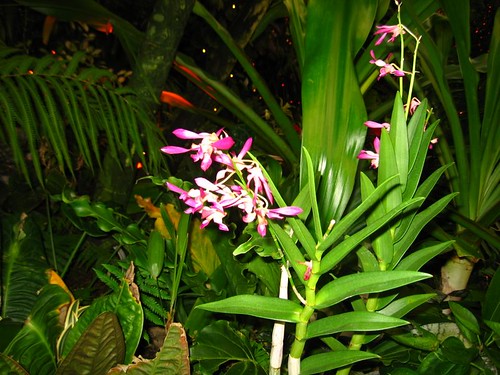
The Myriad Gardens actually has a fantastic display of orchids.  At one location there is a concentrated wall of orchids.  But elsewhere in the rain forest collection you can see them attached to trees and rocks and walls.  It is simply amazing how many orchids are in bloom at any one time.  More than 1200 of the orchids in the collection were bequeathed to the Gardens in 2002 by a local collector named Fred Strothmann.  My photo album has quite a few pictures of the orchid collection.  Even though I have had some experience raising orchids, I didn't try to tackle identifying any of them.  I could tell a couple of the genera, but nothing beyond that.
img_8830_35457073096_o
Unknown Dendrobium orchid
Begonias

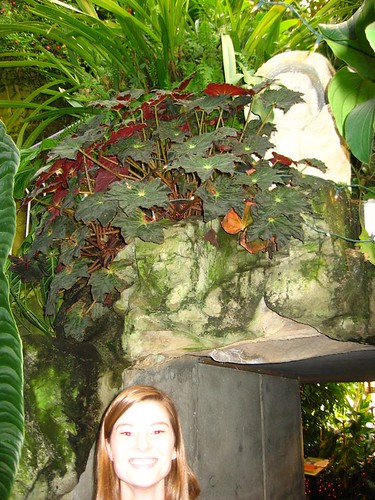
To be honest, I only noticed 3 or 4 begonias in the Gardens, but the website states that there are over 100 species present.  I'm not denying that they were there, because I was kind of being overstimulated by the place.  If I worked there everyday it would probably take a good month before my head stopped spinning each time I walked in the Gardens.  One particular (large) begonia did catch my eye, the Begonia 'Black Taffeta.'
img_8759_35365944861_o
Begonia 'Black Taffeta' and my beautiful wife

Euphorbias

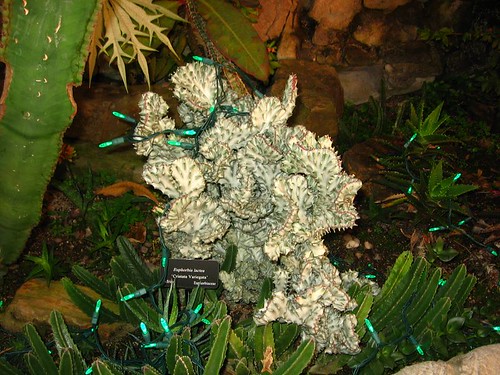
Euphorbias are a bit of mystery to me.  Why?  Well, because the most common Euphorbia I know is Euphorbia pulcherrima - The Poinsettia.  Most of the other Euphorbias with which I am familiar all have spines and are what I would call in a very general sense - cacti.  Now I know that technically Euphorbias are not cacti, and I'm okay with that.  But what I don't understand is what is the Poinsettia doing in the same genus as Euphorbia lactea?
img_8862_35365834341_o
Euphorbia lactea 'Cristata'
The Myriad Gardens collection of Euphorbias resides in the dry tropical zone.  Do you know the difference between a cactus and a Euphorbia?  Euphorbias grow in the Eastern Hemisphere while cacti grown in the Western Hemisphere.  Both plant groupings are filled with succulent plants with thick stems that store a milky sap and require very little moisture in their natural environments.  The Myriad Gardens collection of Euphorbias contains 40 species and if I had to guess, I would have told you it contained more than that.  There are quite a few pictures of Euphorbias in my photo album.

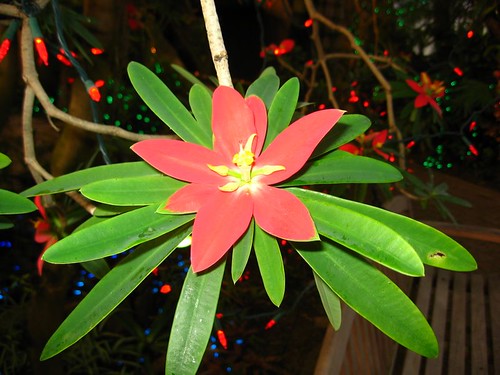
My favorite Euphorbia in the building was probably Euphorbia punicea - The Jamaican Poinsettia tree.  Here is one picture and there are a couple more pictures in my photo album.
img_8834_35457068386_o
Euphorbia punicea - The Jamaican Poinsettia Tree
The Myriad Gardens are a really great place to visit, with a small admission for the time that you can spend inside (if you're a plant lover).  If you haven't yet clicked on any of the dozens of links I provided to my photo album, I suggest you do so now.  You can get a better feel for the wonderful collection on hand.