Showing posts with label Rhaphidophora. Show all posts

Friday, October 28, 2011

Plant Find: My Florida plant acquisitions

While in Florida I got a LOT of plants.  Most of these were either aroids or orchids.  First, let me show you the aroids I got.
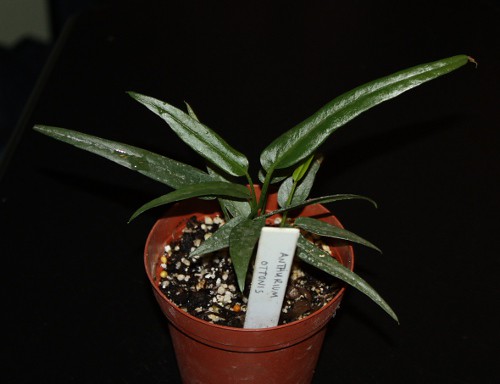
anth_ottonis
Anthurium ottonis
Anthurium ottonis

This little Anthurium attracted me with its lanceolate leaves.  It is a very healthy little plant and I look forward to seeing this grow into a mature specimen.
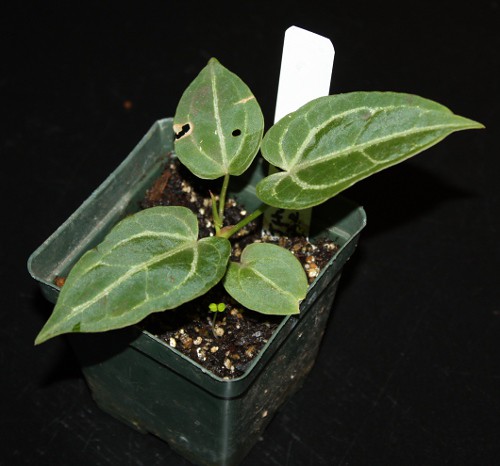
anth_crystallinum
Anthurium crystallinum

This is one of the velvety Anthuriums with prominent iridescent veins.  Again, this is just a small plant, but if it likes my growing conditions then it will become a beautiful large plant within a year or two.
ag_modestum_variegated
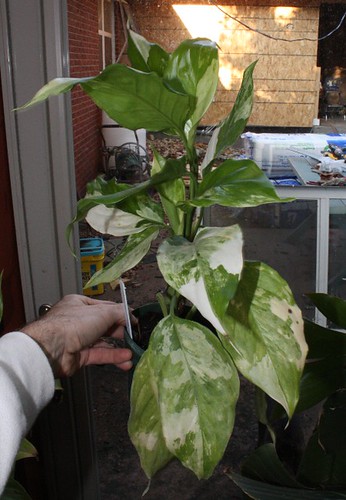
Aglaonema modestum variegated

This is actually the only Aglaonema I purchased at the show.  There were a couple others that I eyed, but ultimately I ran out of packing room (and money), so I stopped with this one.  It is one of the few variegated Aglaonemas in cultivation.  Most Aglaonemas have interesting leaf patterns, with various shades of green and some silvers, but few have white patches like this one.
alo_maharani
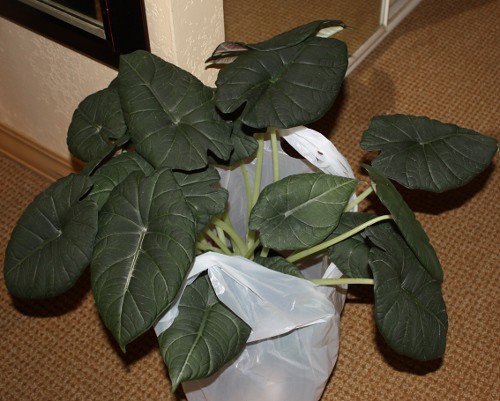
Alocasia 'Maharani'
Alocasia 'Maharani'

This is one I had never seen before.  It is a beautiful Alocasia with dark leaves that have a rough texture and a rigidity unlike any of my other plants.  I'm really hoping this isn't a high maintenance plant, but it might be.  For now it seems pretty happy, sitting in a very shady spot on the floor of my greenhouse.

Dieffenbachia oerstedii - no picture


I hadn't heard of this Dieffenbachia before, but it was a species and it was from Dr. Croat, so how could I pass it up!?!  Dieffenbachias are a really neat genus of aroids that I enjoy, though I don't have too many in my collection.  This particular species develops a strong white midrib at maturity, which is striking in contrast to the otherwise dark green leaves.
philo_gloriosum_enc_plicata
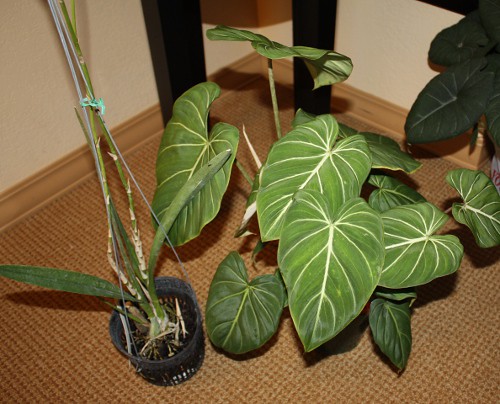
Encyclia plicata (in mesh basket) and Philodendron gloriosum

Philodendron gloriosum

Christie and I both fell in love with this Philodendron and decided to buy it out of our general budget, rather than my plant allowance.  Since then it has gone by the moniker of "family plant."

The IAS show and sale is set up with the show plants in the middle of the room.  Along one wall are vendors with plants for sale and along another wall are plants for sale that will benefit the IAS.  Dr. Croat brought a bunch of items from the Missouri Botanical Garden for sale at the IAS show.  These plants are either species that were wild collected or propagated from his wild collections.

Pinellia pinnatipartita (IAS show)

The one exception, I believe, was a big trash bag full of Pinellia pinnatipartitas, which I think Dr. Croat had yanked out of his yard to thin out his own crop.  There was a sign on the bag, boldly announcing "Guaranteed success!"  As if that weren't enticing enough, they were marked $1.  So, naturally, I got one.  Taylor picked through the bag for me and found a really nice, large tuber and it was one that had just fruited, so I have a bunch of seeds in addition to the healthy tuber.

tubers of Pinellia ternata (IAS show) - no picture

Pinellias are one of the aroid genera with several varieties hardy in my zone.  For now, I have potted these tubers of Pinellia ternata and put them in the greenhouse.  However, I plan to plant them outdoors next spring and then let them stay outside for good.  I want to develop a little garden of hardy aroids.
rhaph_hayi
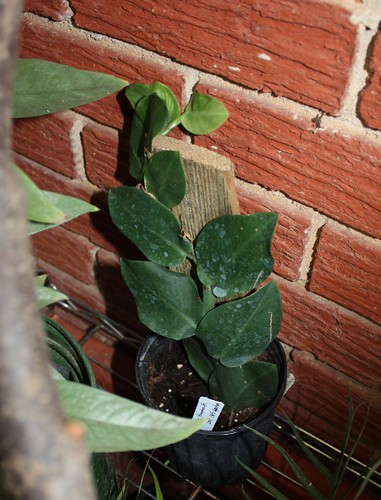
Rhaphidophora hayi
Rhaphidophora hayi (IAS auction)

This is really my first shingling aroid.  I made up a tentative list of plants I would like to purchase at the IAS show before I left.  Not really knowing what I would find, it was just a wishlist of things I was hoping to find.  One of the items was "a shingling aroid."  There were some for sale, but I was overlooking them for other plants.  Then there was one available at the auction and I ended up getting an excellent deal on this little plant, donated by Palm Hammock.  It is now propped against the back wall of the greenhouse, where I am hoping it will start to shingle up on the brick wall of the house.

Now, here are the plants I purchased, which are not aroids.
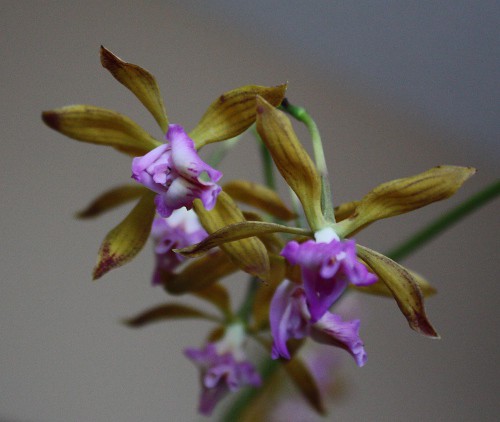

enc_plicata
Encyclia plicata blooms
Encyclia plicata (above) and Encyclia tampensis (below) - both from Ruben in Orchids

As mentioned in a previous post, I purchased two Encyclias at Ruben in Orchids.  One of them (Encyclia plicata) had a long bloom spike with these really neat flowers (above) and was growing in a mesh basket.  The other (below) was on my wishlist of plants to purchase in Florida.  It is the "Florida Butterfly Orchid" (Encyclia tampensis) and the plant that I kept seeing all over my everglades boardwalk.  It is a mature, mounted plant and had already finished blooming, with several dead bloom spikes on it when I purchased it.  Next year I hope to have as many spikes as it had this last summer.
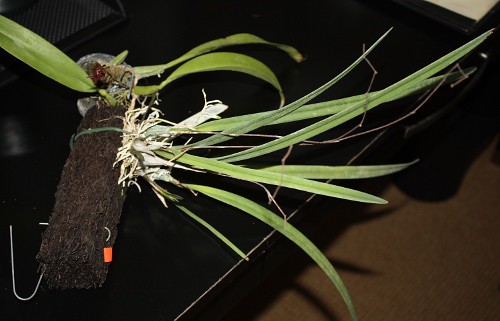
enc_tampensis
Encyclia tampensis


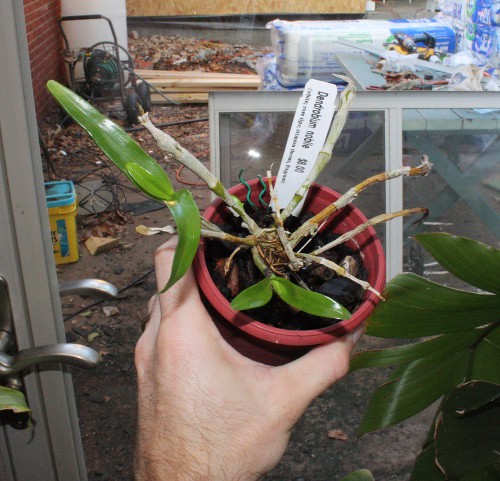
dend_nobile
Dendrobium nobile
Dendrobium nobile (from R.F. Orchids)

I purchased two cheap orchids at R.F. Orchids - one a species Dendrobium nobile (above) and the other a hybrid Vanda. The Dendrobium was a collection of keikis that had been cut off mature plants and bundled together for $8.   The Vanda is young now, but someday it should look like a mixture of the parents, which are pictured below.
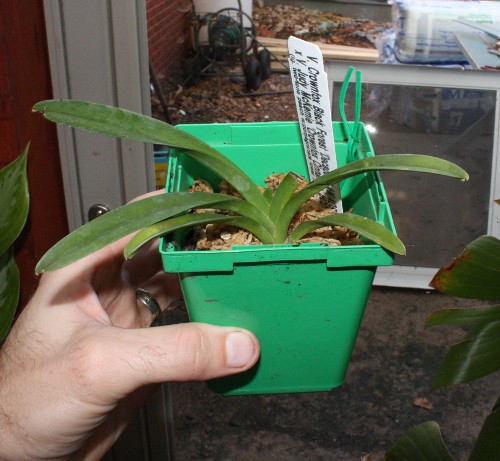
vanda_hybrid
Vanda hybrid
Vanda hybrid (V. Crownfox Black Forest x V. Judie McKemie) (from R.F. Orchids)
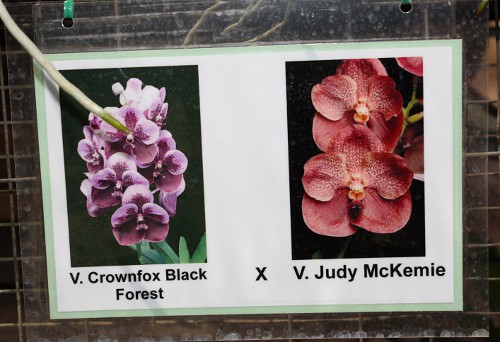
my_vanda_hybrid
Vanda hybrid parents
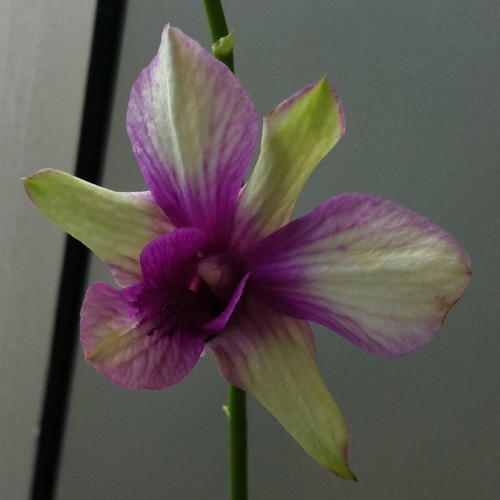
dendrobium_noid
A nice Dendrobium in bloom
Dendrobium in bloom (from The Banyan Garden in the Keys)

There are still a couple of "trip reports" I plan to write in the coming weeks about special planty places I visited while in Florida.  One of those places is called The Banyan Garden, which is located on the island of Islamorada in the Florida Keys.  I bought this cheap and beautiful blooming Dendrobium there.
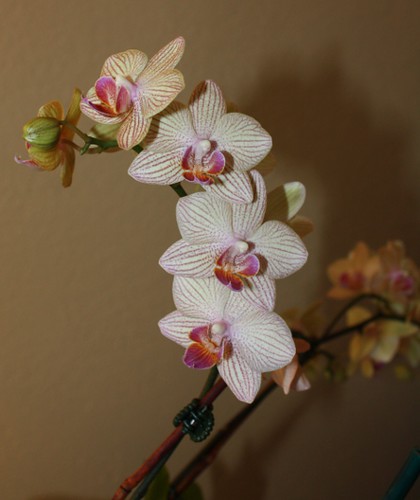
cheap_orchid
My favorite cheap Phalaenopsis
Phalaenopsis in bloom (from Redlands roadside stand)

I already told you about my steals in south Miami - orchid country.  Here are their pictures, again.
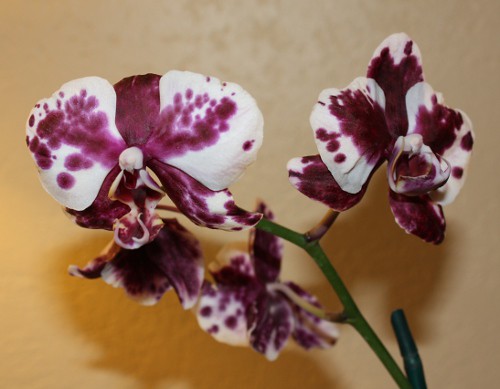
phal_harlequin
Harlequin Phalaenopsis
Phalaenopsis (harlequin) in bloom (from Redlands roadside stand)

Harlequin Phalaenopsis are the "in thing" right now.  The name refers to the spotting pattern on the flower petals.  I'm told this is a generic term applied to dog and horse breeds, as well.
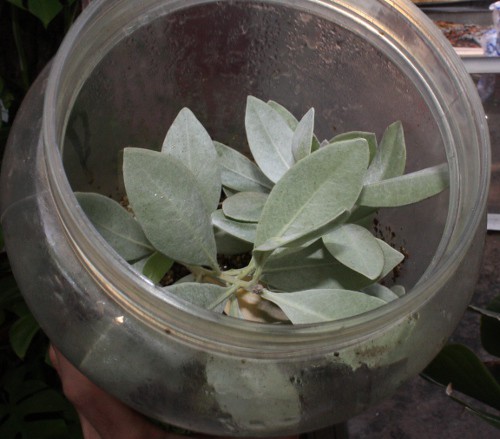
buttonwood_cuttings
Silver Buttonwood cuttings.  I really hope these are rooting, but I just don't know.
Silver Buttonwoods

There were Silver Buttonwoods (Conocarpus erectus var. sericeus) everywhere in Florida.  Most were trees, but quite a few were bushes or well-manicured hedges.  We stopped to admire this beautiful tree at our very first lunch stop in Miami - on our way to the Everglades.  On the last day of our trip, I took some cuttings from a couple trees in the Keys.  The cuttings are now in a jar of moist vermiculite, hopefully rooting.  I put some other cuttings directly in water and they quickly wilted.  Since the cuttings in vermiculite still look fresh and happy I have high hopes that good things are happening.  We'll see in a couple of months.
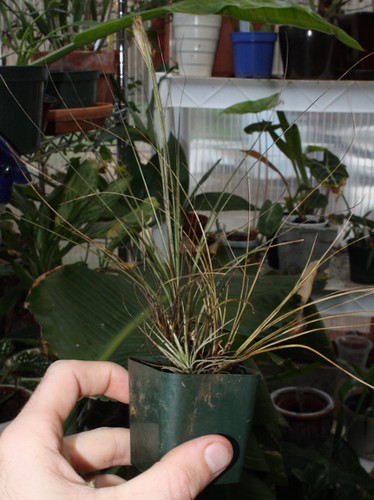
three_tillandsias
Three little Tillandsias
Tillandsias

Tillandias grow everywhere in southern Florida.  I have never grown any myself, but I am hoping I will have some luck with these.
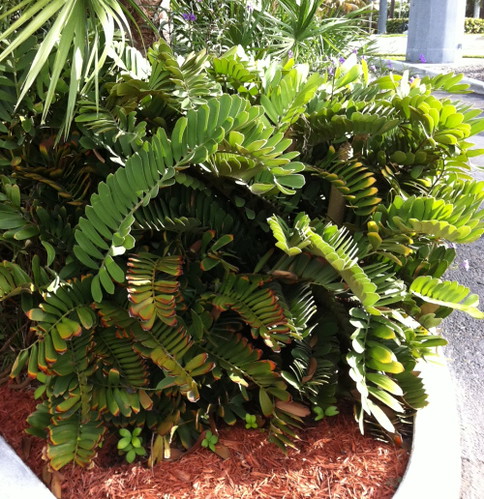
cycad_seedlings
Zamia furfuraceae "hedge" with seedlings at the base
Zamia furfuraceae seedlings (from Key West, Florida)

Cycads are very common in southern Florida.  In many places they are grown so thick that they can be cut into hedges.  The above picture is from our hotel in Key West, where they were being trimmed into rectangular hedges.  These plants were "coning" like crazy and the seedlings were thick at their base.

Yes, I really did pack all of this in suitcases to bring home!

Wednesday, April 27, 2011

Bird's nest Rhaphidophora

If you grow many aroids you may be familiar with the bird's nest Anthuriums, but have you ever heard of a bird's nest Rhaphidophora?

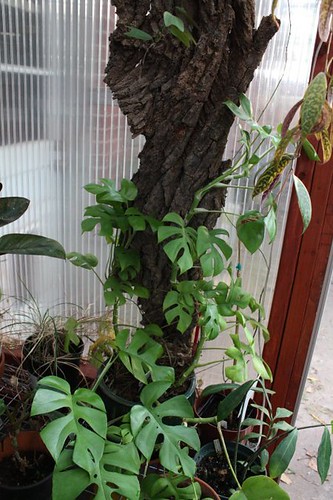
rhaph_bark_pole
Rhaphidophora tetrasperma beginning to climb the bark pole
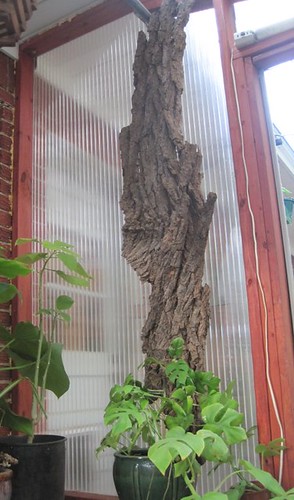
I set up this tall bark wall for my Rhaphidophora tetrasperma to climb last year. This spring, while my greenhouse door was open, a bird built a nest nestled at the base of the plant.

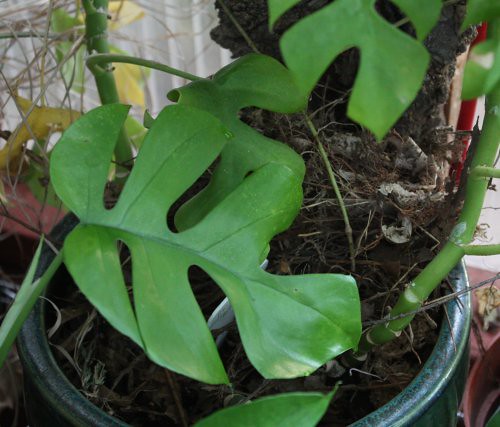
rhaph_nest
Bird nest in the pot
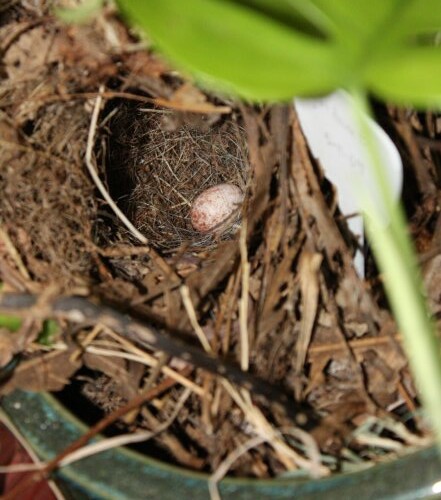
I'm not really up on my bird identifications, but I have seen two tiny birds in my greenhouse - presumably the parents.  I think they were both pretty plain brown except for their beaks, which were orange.  Can anyone identify the bird from the egg?

rhaph_nest_egg
Unknown bird egg - any ideas?

Monday, September 27, 2010

Bark Totem

A while back I posted pictures of a large piece of bark that I had come upon and mentioned that I wanted to do something creative with it.  I finally got around to doing something with it.

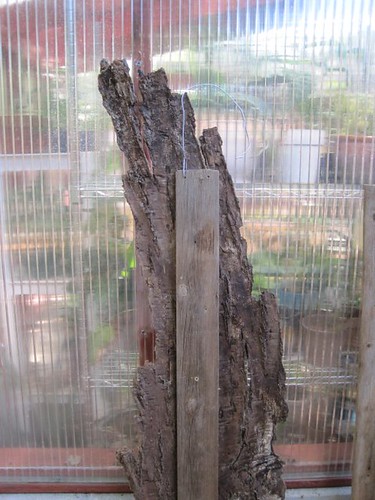
The bark has been outside, weathering the storms and all, so parts had broken away, but there was still a pretty good size piece holding together.  I found a piece of wood about the same length and fastened the bark to the plank in several locations along the length.

bark_backside
Rear view of my bark totem, showing the support board and hanging wire.
Then I used some heavy gauge wire to hang the bark from my rod in the greenhouse.

hanging_bark
My bark totem hanging in the greenhouse
I'm working on building a bench that will sit just below my bark wall where I can place more of my pots.  My plan is to allow my Rhaphidophora tetrasperma to climb up the bark wall.  I have leaned the growing stems up against the lower portion and will let the adventitious roots attach.

What do you think of my bark wall?

Monday, December 29, 2008

Trip Report: Myriad Gardens continued

Last week I posted a new photo album containing over 200 pictures of the Myriad Botanical Gardens in Oklahoma City.  I posted the album in pre-Christmas haste, without labeling any of them.  But now I have labeled the majority of the pictures.  So, if you haven't seen them yet, or you already looked and want to know an ID of one of the plants, you can check them out here.

Last week in my Myriad Gardens post I just wrote about a couple of the highlights.  I wanted to give a little more information about the Gardens today.

The Myriad Botanical Gardens is a 17 acre colorfully landscaped plot in downtown Oklahoma City.  In the center is the Crystal Bridge Tropical Conservatory, which is a big tropical rainforest inside a cylindrical greenhouse on it's side.  The big greenhouse hovers over a pond, giving it the name "The Crystal Bridge."

The outdoor gardens are nice, but the real action is inside.  About 2/3 of the inside space is dedicated to a tropical rainforest collection, while the remaining 1/3 is dedicated to a dry tropical zone.  There is no physical boundary between the two collections, so I am partly surprised they coexist so well, sharing the same humid air with one another.  The dry zone is watered less frequently the entire year and is watered sparsely if at all during a certain dormant period of the year.

While many of the plants at the Myriad Gardens are those you would expect to see in a rain forest recreation, the Myriad Gardens has focused on a couple of specific plant groups.

Aroids

This is not one of the collections noted on the official website, but being an Aroid collector, I couldn't help but notice how many plants were present from this family.  Maybe the website needs a little update.

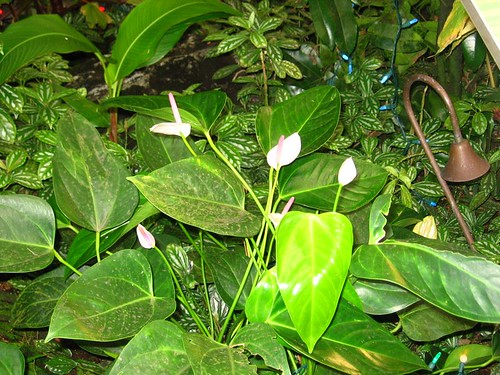
The collection of Aroids from the genus Anthurium was astounding.  There are two types of Anthurium (in my mind): those with the very colorful blooms and ordinary foliage, and those with the really cool foliage but discrete blooms.  The Myriad Gardens had several color varieties of the first category.  I had never seen a pale purple Anthurium before and unfortunately I didn't get a very good picture of it.

img_8794_35365880481_o
Pale purple Anthurium
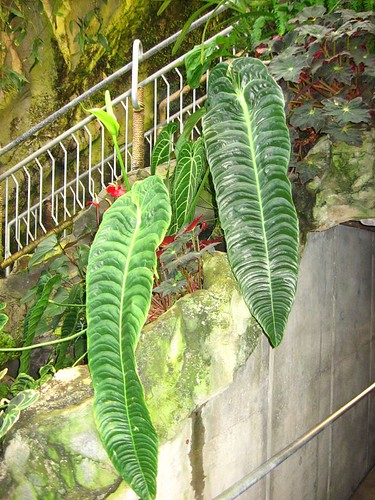
They also have a number of the unique foliage species of Anthuriums, including the King Anthurium (Anthurium veitchii).  Notice the size of the guard rail in comparison.

img_8760_35365941711_o
King Anthurium (Anthurium veitchii)
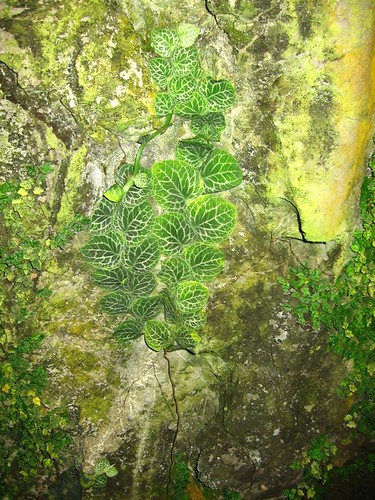
I also saw a cool shingler Aroid that I had never seen before.  This little climber was so appressed to the rock wall that the leaves were conforming to the contours of the rocks.

img_8782_35496653015_o
Rhaphidophora cryptantha - an Aroid shingler - at the Myriad Gardens
Really there were tons more Aroids that I noticed (and photographed) but I won't waste any more space here.  If you're interested, go to my photo album to see them.

Marantaceae (Prayer Plants)

This category was also not mentioned on the official website, but I noticed quite a few unique species from this family that I had never seen before, and several that I had.  Two particular varieties from the same species caught my attention.  I had seen the Stromanthe 'Triostar' before, but never this large.

img_8770_34655478864_o
Stromanthe sanguinea 'Triostar' at the Myriad Gardens
I have not quite identified the other variety, but I think it is also from Stromanthe sanguinea.

img_8805_35329502842_o
Stromanthe sanguinea(?) at the Myriad Gardens

Of course, there were also several very large Zebra Plants (Calathea zebrina), of which I have a small one of my own at home.  It was fun to see these plants waist high or higher.

Palms

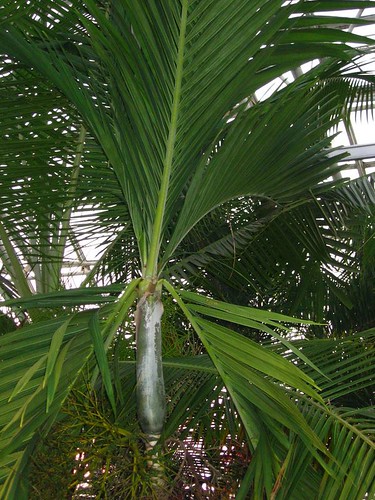
According to their website, there are supposedly 100 species of palms in the Myriad Gardens.  If I had to count, I would probably tell you there were about 10.  The only palm I could correctly identify was the Coconut Palm (Cocos nucifera).  They also have the palm species which has some of the largest leaves in the world - the Bismarckia nobilis.

img_8895_35496587435_o
One of the palms in the Myriad Gardens
Cycads

The Myriad Gardens also has a nice collection of cycads scattered throughout their rainforest collection.  Cycads are pretty much the oldest plants on the planet, having shared time with dinosaurs.  They are often mistaken as palms and have similar characteristics, but are usually shorter.  I don't know that I got any good pictures of the Cycads.

Gingers

Ah, one of my favorites!  The collection of gingers may just seem large, but not very diverse, whenever the plants are out of bloom.  But when they are in bloom, it is easier to see that the Myriad Gardens has a number of different species of Gingers.  These are beautiful, tall plants with very colorful blooms.  I am still waiting for my own personal shell ginger to bloom.  Maybe next summer.

img_8753_35329569822_o
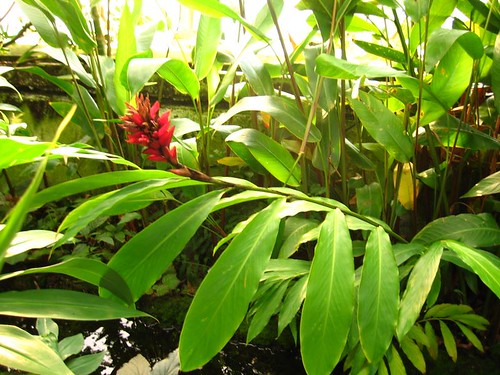
A variegated shell ginger - Alpinia zerumbet 'variegata' - at the Myriad Gardens
img_8806_35329501212_o
An unknown ginger at the Myriad Gardens
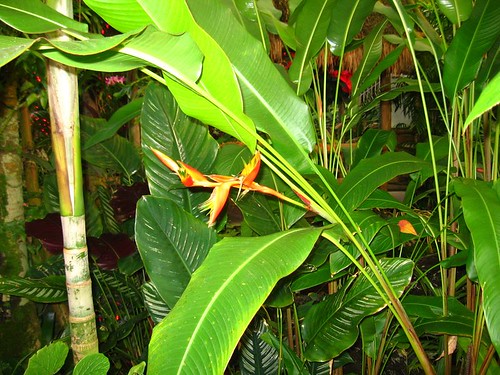
One closely related plant to the family of gingers is the genus Heliconia.  Heliconias are commonly called "False Bird of Paradise" because of their resemblance to the Bird of Paradise inflorescence.  The Myriad Gardens had a couple of different Heliconias in their collection.

img_8792_35365883791_o
False Bird of Paradise - Heliconia lankesteria
Bromeliads

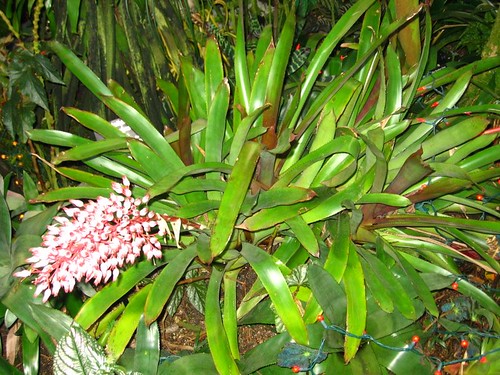
No one would call this collection of bromeliads small.  And it seems they are always in bloom.  The botanical family Bromeliaceae contains the genera Aechmea (the most common Bromeliad), Ananas (which includes the Pineapple plant), Billbergia, Bromelia, Cryptanthus, Tillandsia (commonly called "Air plant") and more than 50 others.  Many of the Bromeliads (Aechmeas, Ananas) are planted in the ground, while others (Tillandsia) are growing attached to trees or rock.  I didn't take too many pictures of the bromeliads, but there are several in my photo album.

img_8796_35329516332_o
One of my favorite Bromeliads on the left (striped purple and green).
35365894431_3e670c412b_o
One of the many bromeliads in bloom

Orchids

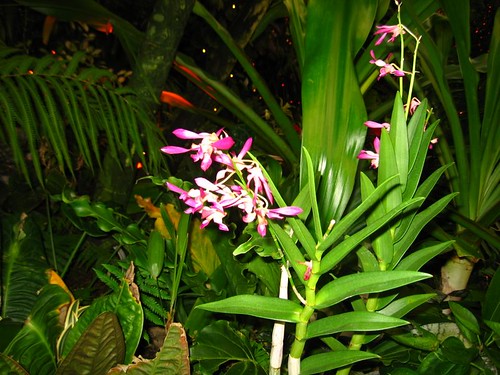
The Myriad Gardens actually has a fantastic display of orchids.  At one location there is a concentrated wall of orchids.  But elsewhere in the rain forest collection you can see them attached to trees and rocks and walls.  It is simply amazing how many orchids are in bloom at any one time.  More than 1200 of the orchids in the collection were bequeathed to the Gardens in 2002 by a local collector named Fred Strothmann.  My photo album has quite a few pictures of the orchid collection.  Even though I have had some experience raising orchids, I didn't try to tackle identifying any of them.  I could tell a couple of the genera, but nothing beyond that.

img_8830_35457073096_o
Unknown Dendrobium orchid
Begonias

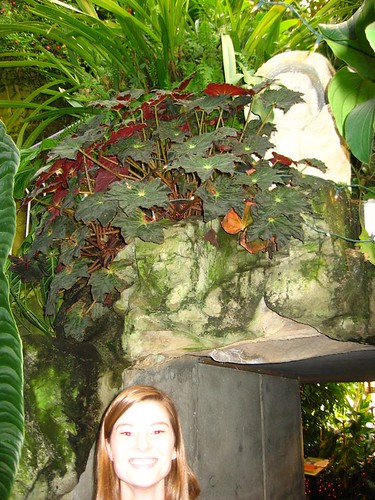
To be honest, I only noticed 3 or 4 begonias in the Gardens, but the website states that there are over 100 species present.  I'm not denying that they were there, because I was kind of being overstimulated by the place.  If I worked there everyday it would probably take a good month before my head stopped spinning each time I walked in the Gardens.  One particular (large) begonia did catch my eye, the Begonia 'Black Taffeta.'

img_8759_35365944861_o
Begonia 'Black Taffeta' and my beautiful wife

Euphorbias

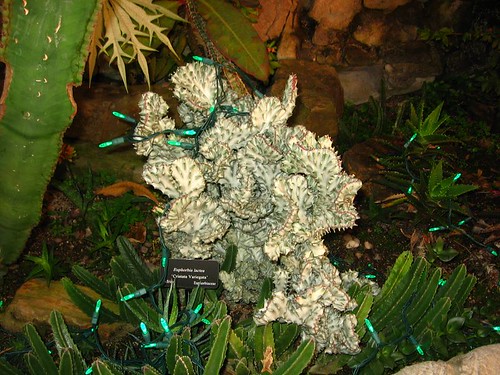
Euphorbias are a bit of mystery to me.  Why?  Well, because the most common Euphorbia I know is Euphorbia pulcherrima - The Poinsettia.  Most of the other Euphorbias with which I am familiar all have spines and are what I would call in a very general sense - cacti.  Now I know that technically Euphorbias are not cacti, and I'm okay with that.  But what I don't understand is what is the Poinsettia doing in the same genus as Euphorbia lactea?

img_8862_35365834341_o
Euphorbia lactea 'Cristata'
The Myriad Gardens collection of Euphorbias resides in the dry tropical zone.  Do you know the difference between a cactus and a Euphorbia?  Euphorbias grow in the Eastern Hemisphere while cacti grown in the Western Hemisphere.  Both plant groupings are filled with succulent plants with thick stems that store a milky sap and require very little moisture in their natural environments.  The Myriad Gardens collection of Euphorbias contains 40 species and if I had to guess, I would have told you it contained more than that.  There are quite a few pictures of Euphorbias in my photo album.

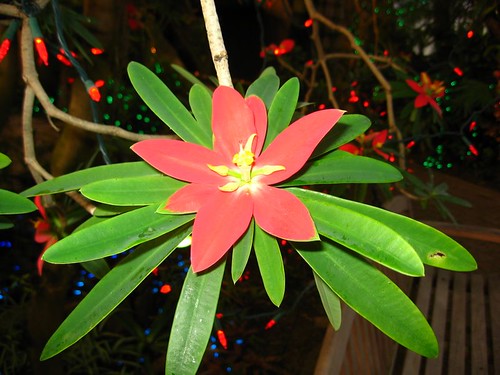
My favorite Euphorbia in the building was probably Euphorbia punicea - The Jamaican Poinsettia tree.  Here is one picture and there are a couple more pictures in my photo album.

img_8834_35457068386_o
Euphorbia punicea - The Jamaican Poinsettia Tree
The Myriad Gardens are a really great place to visit, with a small admission for the time that you can spend inside (if you're a plant lover).  If you haven't yet clicked on any of the dozens of links I provided to my photo album, I suggest you do so now.  You can get a better feel for the wonderful collection on hand.