Showing posts with label seeds. Show all posts

Monday, February 25, 2019

Gomphocarpus from seed

One of several plants I started from seed last year was a milkweed nicknamed Hairy Balls or Balloon Plant (Gomphocarpus physocarpus). The nicknames are from the appearance of the large pods that form when the flowers set seed. This plant is native to southeast Africa, but is a good food source for Monarchs here in the United States. I ended up with two very tall and lanky plants. They did not branch and just continued to grow taller throughout the summer. At one point there were a few small flower buds but they aborted before opening. I don't know if this plant wanted more sunshine or something different. It seemed healthy and grew steadily, but I didn't get any flowers. I read that if you are growing these from seed it is best to start them indoors early because the growing season may not be long enough for flowers and new seed pods. Maybe that's what happened in my case.

My tall and lanky Hairy Ball plants (Gomphocarpus physocarpus) in August of last year.

Thankfully, the plant has stayed happy in my greenhouse this winter so maybe next summer I will get some flowers. Ideally those flowers will set seed pods so that I can start new plants from seed and maybe prune my two existing stalks to get a fuller plant.

Open seed pod of Gomphocarpus physocarpus.
Like many other milkweeds, the seed are attached to a fluffy piece of cotton-like material
that helps them disperse in the wind.

Thursday, February 21, 2019

Milk Jug Germination

Spring will be here before we know it. Already I am seeing a few blooms on my quince bush, buds on our Daffodils, and leaves from our tulips are breaking through the surface of the soil.

I have seeds of several milkweeds that I would like to grow this year, including three native Asclepias and one Calotropis native to Africa and Asia. The American natives all require cold stratification. I have most of the seeds in the refrigerator, but I am starting a few others using a different method. 

I cut open two milk jugs and added soil to the bottom of the jug. I scattered some of my seeds on the top of the soil, watered them in, and then taped the jugs closed. I’ve sat the milk jugs outside on the ledge of my greenhouse. Hopefully they won’t blow over or become dog chew toys there. With any luck, they will experience the requisite cold period and then will germinate in about a month when the temperature begins to climb and the days get longer and they’ll have a head start in their little biodomes. If it doesn’t work, no big deal. I only used part of my seed stash on this experiment.

I did a little more reading on this technique and apparently it's important for the top cap to be removed. I was assuming more of a close greenhouse/terrarium setup was desired, but I will stick to the recommended method and remove my top caps.

Tuesday, November 13, 2018

Trip Report: Treaty Oak

For my birthday weekend my wife and I went down to Austin for a few days sans kiddos. Our itinerary was mostly made up of places to eat and a few activities sprinkled in between. On Sunday morning we visited a famous tree, Treaty Oak, which my wife remembered having visited when she was young. This oak tree is thought to be about 500 years old and is the only member of a group of 14 trees that once stood in this location in what is today downtown Austin. In 1989 someone poisoned the tree and severely damaged it. That is when my wife traveled with her family to see it. Thankfully the tree pulled through and still stands.

My wife at Treaty Oak in downtown Austin
The plaque reads:
The Caldwell Treat-Oak Park
Estimated to have been a majestic tree of about 100 years when Columbus first landed on North American shores, this live oak tree has been pronounced the most perfect specimen of a tree in North America, and its picture hangs in the Hall of Fame of Forestry at Washington.
Formerly standing as the center of a group of trees called "The Council Oaks," this tree takes its name from its role in the history of the Lone Star State. Stephen F. Austin is reputed to have signed the first boundary line agreement between Indians and whites under the canopy of its branches; battles and important conferences have been planned, pacts signed, and feasts and religious ceremonies celebrated in its shade.
The Treaty Oak was purchased by the City of Austin in 1937 to stand as a living and fitting symbol of the mighty state it has watched develop.
We were both surprised to see how much of the tree lies on the ground. I don't know if this is characteristic of the species (Texas Live Oak, Quercus fusiformis), or if it has more to do with the vandalism, or the age of this particular tree.

Treaty Oak acorns

While we were visiting the tree I noticed some acorn caps on the branches at eye level and realized there must be some dropped acorns nearby. We searched around and found 5 that were brown and "ripe." I brought these home and soaked them in a bowl of water to see if any floated, which means the acorn is not viable. They all sunk and I decided I would plant them the next day. But I forgot.

Treaty Oak acorn beginning to germinate
More than a week passed before I noticed the bowl of acorns! I was worried at first when I saw they looked different, but on closer inspection I realized they were sprouting. I went ahead and potted the five acorns and watered them well (since they were used to being saturated and seemed happy with the situation). If I am successful I will have some offspring from a famous tree, which is kind of fun. Updates to come!

Friday, August 31, 2018

Butterfly Vine from seed

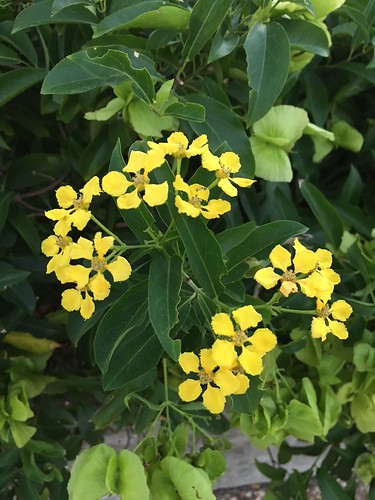
I have long-since admired a particular plant growing in the Butterfly Garden on the bay side of Moody Gardens in Galveston. I'm actually amazed that I've never blogged about it before. This plant is a creeping and mounding vine, and I suppose it would climb if it had something to climb. In the summer it produces many small yellow flowers in clusters.

Mascagnia macroptera


Mascagnia macroptera

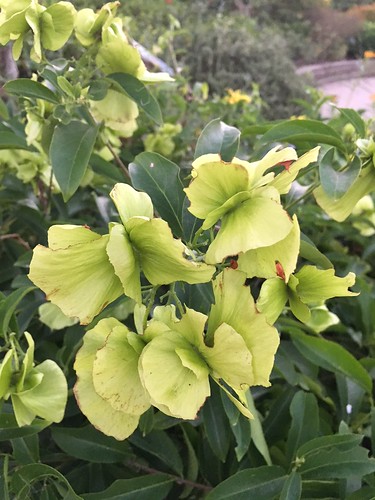
After those flowers are pollinated the seed pods form and things start getting interesting. The seed pods begin green and sort of blend in with the foliage, but they have a very interesting shape. Like many other seeds they have wings that help them disperse in the wind. It just so happens that these wings make them look a lot like butterflies. As the season progresses the seed pods dry out and become a more conspicuous brown. I collected some of these seed pods a few years ago and my mother-in-law was using them as decorations.

Mascagnia macroptera (butterfly vine)

This summer I decided to dissect a few of these to get to the seeds. The seeds are smaller than I was expecting. I planted them in some moist soil and let time do its thing. Just a few of these germinated for me, not surprising considering the amount of time since they had been harvested. I planted one of these along the fence line at the house in Galveston and I'm hoping it will do well there without any special care. I have kept the other one at home, in a community pot with other seedlings I started this summer. It is slow growing so far. Perhaps I need to provide more sunlight.


Butterfly Vine (Mascagnia macroptera) seedling,
growing in a community pot with Cockspur Coral Tree (Erythrina crista-galli) seedlings.

I found a story from Birds & Blooms magazine about a woman who painted the seed pods as real butterflies. Pretty neat.

Wednesday, August 29, 2018

Cockspur Coral Tree from seed

This past summer my family ventured to Galveston in early June and again at the end of July. On our first trip we had a picnic at Moody Gardens and walked around the grounds. I was very sad to see that the butterfly garden was barren, normally fully planted and bursting in color. One of the few living plants in this area was a Cockspur Coral Tree (Erythrina crista-galli), which was about 10' tall and in bloom. I'm guessing this tree blooms through much of the year, because it also had seed pods on it.

Cockspur Coral Tree (Erythrina crista-galli) in bloom at Moody Gardens, Galveston, Texas.

Cockspur Coral Tree (Erythrina crista-galli) in bloom at Moody Gardens, Galveston, Texas.

You know me, I swiped a seed pod, thinking maybe I would be able to germinate them. I planted the seeds a while later and most (maybe all) of the seeds germinated. I don't know this species very well and was a little surprised to find how prickly they are, even as little seedlings. See the photo below.

Cockspur Coral Tree (Erythrina crista-galli) seedlings.
I don't recommend growing trees in a hanging basket. This is just what I started the seeds in.

Prickles on Cockspur Coral Tree (Erythrina crista-galli) seedling.

On our return trip to Galveston in July I took one little 5" tall seedling with me. I planted this seedling in one of the spots vacated by the Natal Plums (Carissa macrocarpa). The Natal Plums died back to the ground over the winter, but were sprouting back from the roots. My mother-in-law suggested that we take this opportunity and just remove them since they were way oversized for the location where they had been planted and were covered in fierce thorns. I obliged her, digging up all of the plants and roots, and transferred one of these to a pot, where I plan to keep it trimmed (sort of a bonsai) and small.

potted Natal Plum (Carissa macrocarpa)

The Cockspur Coral Tree looks pretty pathetic in this location right now, but I put some barriers around it so that it won't be mowed down and I'm hoping that the Galveston climate will have this little tree growing towards the heavens in no time. The little Natal Plum does not look pathetic in it's pot on my front porch. It looks awesome! Let's just hope I can keep it small - the thorns on this plant are vicious!

Monday, August 27, 2018

Trip Report: Exploring Austin, part 4

I've written about finding interesting Bauhinia, Catalpa, and Persimmon trees in the Austin area in previous posts.

Mexican Buckeye (Ungnadia speciosa)
On my first morning in Austin I went to a small natural area known as Stillhouse Hollow Nature Preserve, nestled into a neighborhood. The sign at the entrance told about an endangered species, the Karst Invertebrate, which lives in limestone caves. This area is also home to the endangered bird species Golden-cheeked Warblers and Black-capped Vireos. There is a nice path through this park and then an overlook. Near the overlook are signs asking that people stay on the path and respect the native flora and fauna, one of which is this endangered species living underground. I would have loved to explore off the path and find this little cave dweller, but I stuck to the rules and observed from the path only.

Mexican Buckeye (Ungnadia speciosa) seed pod
One item of interest off the path and out of reach was a shrub that had distinct seed pods. After using iNaturalist to identify this as a buckeye I assumed this was a species that I had seen in bloom once or twice before, one of the Aesculus genus. However, I learned that this was a Mexican Buckeye (Ungnadia speciosa). Thankfully even though this plant was well off the path, I came across this plant at nearly every other park I visited in the Austin area and was able to collect seeds from other plants.

Photo by iNaturalist observer caliche_kid.
I researched germination methods for each of the species I brought home. Most require some form of cold stratification and spring planting. This species was the exception, suggesting germination of fresh seeds. I went ahead and planted some of the seeds, setting aside some others to try in the spring if this first batch wasn't successful. In the week after planting the seeds we had consistent rains every few days - unusual for August. After just 10 days I noticed that the seeds had sprouted and were growing vigorously.

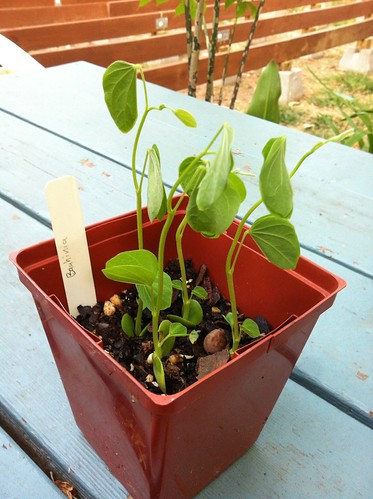
Mexican Buckeye (Ungnadia speciosa) seedlings - off to the races!
10 days after planting
Mexican Buckeye (Ungnadia speciosa) seedlings.
15 days after planting.
I'm not exactly sure where I will plant these bushes. From what I can find online they are probably only hardy in zones 8 and greater, but I think my parents' land near Lake Texoma (zone 7b) might work. I'll probably wait to see how many plants I have. If I have plenty then I'll test some in that climate and keep others potted in my greenhouse as insurance.

Friday, August 24, 2018

Trip Report: Exploring Austin, part 3

In my last two posts I talked about plants that I found along the Colorado River in downtown Austin.

On a different day I went to St. Edward's Park to do some birding and I noticed one tree had small green fruits on it - about the size of a pecan with it's outer green shell still attached. iNaturalist to the rescue again, I learned that this was a Texas Persimmon Tree (Diospyros texana). My admiration for native Persimmon trees is well known to readers of this blog, and I was very excited to learn that there is more than one species that grows natively in the United States. I saw a larger specimen of this tree when I visited Mayfield Park and Nature Preserve, this one marked with a placard.

Texas Persimmon at Mayfield Park and Nature Preserve


I also found this tree growing at Commons Ford Ranch Metropolitan Park. I collected a couple of fruits and harvested the seeds. Since I had good luck germinating some native persimmons last year, I am trying the same method: removing all fruit from the seeds, placing them in a pot of soil outdoors, and leaving them alone through the fall and winter. I may move this pot into a slightly warmer spot over the coldest part of the winter, just in case they aren't quite as hardy as I'm hoping, but I do want them to experience the cold they would naturally in the Austin area. Here are some photos of the fruits and flowers by other iNaturalist observers.

Photo by iNaturalist observer butterflies4fun.
Photo by iNaturalist observer manesalinas.

I've done some research on this species (good info here and here) and found that it is likely hardy where I live in central Oklahoma, so I plan to try growing in here. It is also a recommended species for greater landscaping use, being small, nicely formed, attractive bark, naturally feeding wildlife, and drought tolerant. As the placard mentions above, the fruit is small but edible. Hopefully I'll have a chance to try one some day.

Wednesday, August 22, 2018

Trip Report: Exploring Austin, part 2

In my last post I talked about finding a native species of Bauhinia along the Colorado River in downtown Austin.

Catalpa leaves and seed pods

Also along this path I came across a large Catalpa tree. I am familiar with these trees growing in Oklahoma. They are easily distinguished by their large leaves, showy flowers in the spring, and long green seed pods through the summer into the fall. The tree along the path was in seed pod stage and the pods were longer and more slender (pencil size or skinnier) than those I am used to seeing (finger size or thicker). Comparing images on iNaturalist and reading some articles online, I believe this is the Northern Catalpa (Catalpa speciosa), whereas the species I see at home is the Southern Catalpa (Catalpa bignonioides). This is a bit ironic since I am finding the northern species to the south of where I am used to seeing the southern species. Anyway, I believe this is correct.

Catalpa seed pods
True to form, I collected the seeds from these long seed pods shown in the photo and will plant them next spring.

I have a few more posts related to my time in Austin, so stay tuned!

Monday, August 20, 2018

Trip Report: Exploring Austin, part 1

I spent two weeks in Austin this summer, taking a training course to be a Red Hat System Administrator. In the evenings I traipsed around the metro area, birding in local parks and natural areas and doing my normal thing - observing and logging everything new species (to me) using the iNaturalist app.

I visited 10 different parks during my two weeks and covered a lot of ground. I observed a few new species of birds (Black-crested Titmice, Least Grebe, Pectoral Sandpiper), several new dragon/damselflies (Swift Setwing, Marl Pennant, Kiowa Dancer, Dusky Dancer, Checkered Setwing, American Rubyspot), several new plants, and even found a nice gastropod fossil. But this is a plant blog, so let me dive in to more detail about some of the plants.

Small bilobed leaves of the Anacacho Orchid tree (Bauhinia lunarioides)

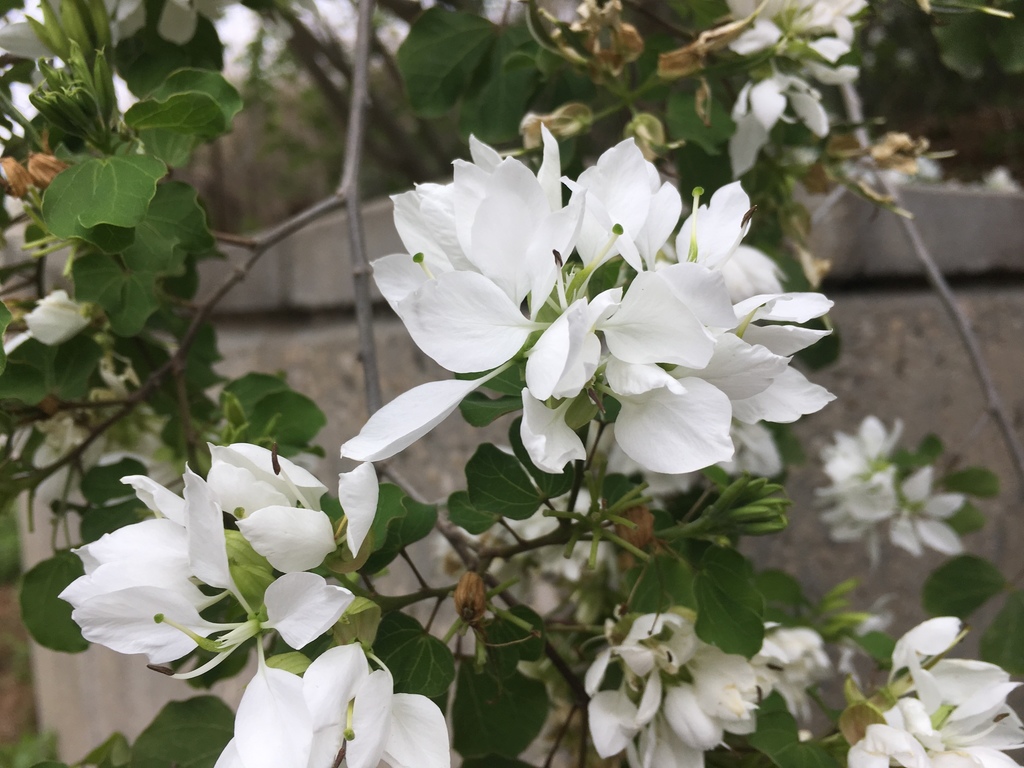
Along the Colorado River in Austin there is a nice walking trail that is well used by locals walking their dogs, cycling, and jogging, as well as to observe bats at the Congress Avenue Bridge. (I sort of stumbled along this myself and was treated to quite the spectacle around sunset.) Along this path I came across a couple of really neat plants. The first was a small shrubby tree (probably about 6' tall and about the same width that was covered in opened seed pods. There was nothing too remarkable about the tree except that the seed pods had all split open in a spiraling fashion and they were pretty conspicuous. Upon closer examination I realized the leaves were the distinct shape of a Bauhinia, which greatly excited me. I took some photos and uploaded the observation to iNaturalist, which suggested the name of Anacacho Orchid (Bauhinia lunarioides), a native of central and southern Texas into northern Mexico. This species has small and deeply split leaves, almost appearing as two leaves. The flowers (which appear in the spring) are white (or occasionally pink) and showy. I don't have any of my own photos of flowers to show, but the photos below are from iNaturalist observations (here and here).

Photo by iNaturalist user anschad.

Photo by iNaturalist user johnkarges.

Of course I collected a handful of seeds and brought them home for experimentation. I have started other species of Bauhinia from seed and they have germinated easily and been a fairly easy plant to grow, although they are tropical and cannot winter outdoors in my climate. This species appears to be a little more hardy, but not enough (zone 8) to overwinter in central Oklahoma (zone 7). It's not clear to me whether the tree was growing naturally along the path or had been planted there. I'm guessing the latter but who knows?

Part 2 coming later this week!

Tuesday, May 22, 2018

Update: Native persimmons

You may recall that last year I collected a wild persimmon and planted the seeds. I put these in a pot outdoors and just let them be - no water, no attention whatsoever. I figured the less I messed with them, the more likely they would be to germinate.

Persimmon tree (Diospyros virginiana)
Persimmon tree (Diospyros virginiana) beginning to sprout from the soil.
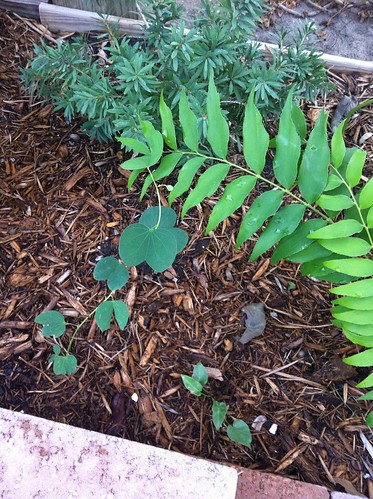
It appears my gambit worked! I have one little tree that sprouted from the soil in late March or early April and another one is breaking through the soil now. (And I'm pretty sure it's not a pecan or oak tree planted by a neighborhood squirrel, which is what usually comes up in my pots that sit outdoors...)

Persimmon tree (Diospyros virginiana)
Persimmon tree (Diospyros virginiana) growing quickly.
The funny thing is that just a week before the first tree sprouted I placed an order from a plant catalog and included two small persimmon trees, so it looks like I may soon have persimmon trees coming out my ears and I don't really have a plan for where to plant them!

I know my mom would love to be able to pick persimmons from her own yard, but I also know that these native persimmons are not the ideal candidates for cooking. And I also realize it will be years before the trees are large enough to bear fruit...

I do have access to land where I can plant these, so maybe I'll start a little grove there.

Thursday, April 26, 2018

Update: Plant all the seeds!

A little more than a month ago I planted a bunch of seeds and it looks like I've had good results with most, if not all, of them.

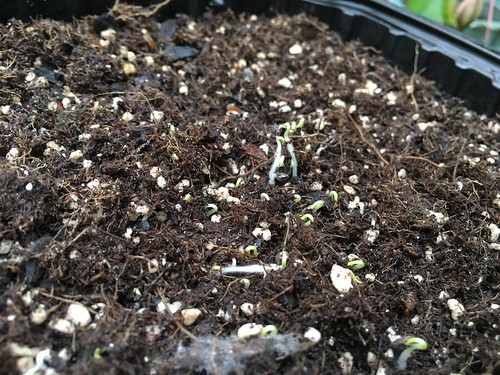
From the pots of mixed cacti seeds, I can see some funny little forms rising from the soil. The germination percentage is low at this point - just three little seedlings. It's quite possible that these three seedlings are just the species with the quickest germination period and others will come up over time. Hard to say for sure at this point. I wonder how long it will be before these little seedlings are recognizable.

Unknown cactus seedling
First signs of life in the mixed cacti pots.
My native butterfly-attracting Common Buttonbush (Cephalanthus occidentalis) seeds are beginning to sprout!

Common Buttonbush (Cephalanthus occidentalis) seedlings

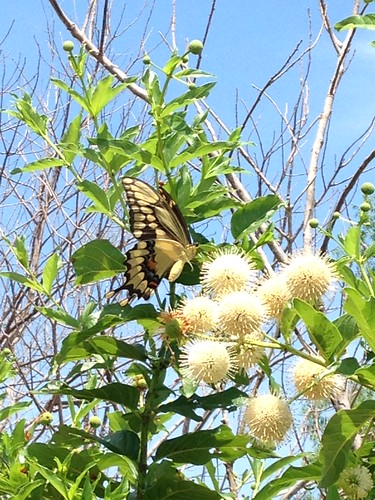
Eastern Giant Swallowtail (Papilio cresphontes) on Common Buttonbush (Cephalanthus occidentalis)
Eastern Giant Swallowtail (Papilio cresphontes)
on Common Buttonbush (Cephalanthus occidentalis)
at Lake Texoma (July 2016)
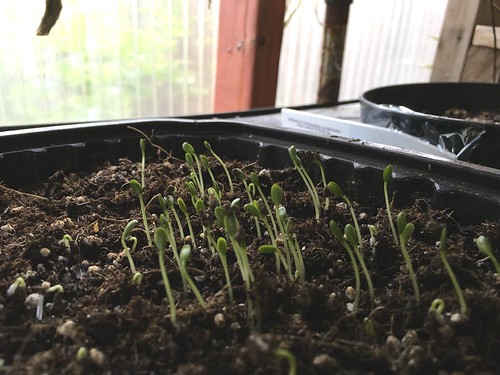
My non-native (south African) butterfly-attracting Hairy Balls (Gomphocarpus physocarpus) have sprouted and are off to the races! Check out the fast growth over just 30 hours!

Gomphocarpus physocarpus seedlings
Gomphocarpus physocarpus 6 days after planting

Gomphocarpus physocarpus seedlings
Gomphocarpus physocarpus 7 days after planting

The other seeds I planted were some Bauhinia (Orchid Tree) and Dietes (Fortnight Lily/Iris) that I collected in Los Angeles in March. I have had luck germinating each of these before, so I am hopeful in both cases, but haven't seen any action yet with this batch. The Bauhinia trees that I grew from seed previously are now about 5' tall and ready to be planted outdoors in an appropriate climate (not central Oklahoma). Unfortunately my previous encounter with Dietes didn't end well. After the two seeds germinated and sprouted tiny plants, they didn't survive long. I'm hoping to do better this time and, with luck, I'll have more seedlings and can experiment a little more with lighting, humidity, and soil moisture.

Friday, March 23, 2018

Plant all the seeds!

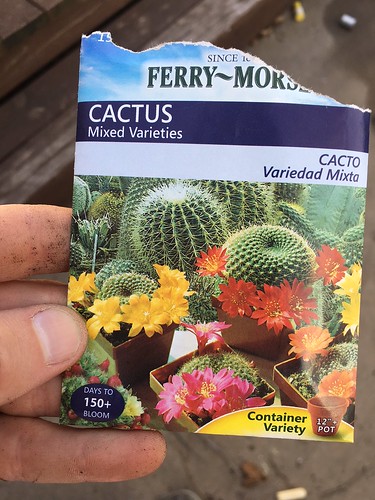
In my life of botanical interest, I have waffled back and forth on whether it was worth my effort to try to grow plants from seed. I'll try and have limited success, followed by a few failures, and then give up for a while. A few weeks ago I had to go to Lowe's to get something or other and the kids and I picked out some summer squash seeds to try growing. I germinated a couple of squash seeds last year and then planted them outdoors only to see them wither. While I was looking at the available seeds I saw some Asclepias seeds and also a curious package labeled "Cactus Mixed Varieties." I purchased one of each of those just to give them a shot.

IMG_8255

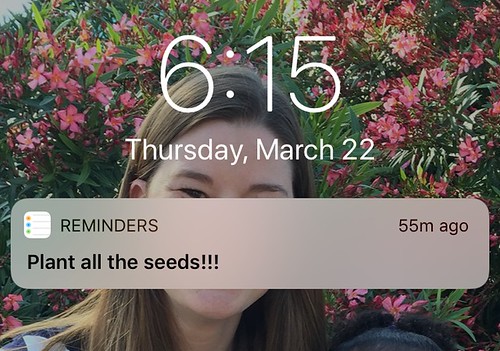
While on vacation last week I remembered that it was getting to be warm enough to plant my seeds so I put a reminder on my phone to plant the seeds when I got back from my trip.

IMG_8260

I think I have a pretty good setup for the squash plants. I hope they do well for me this year, as the kids will really enjoy watching us grow our own food and we love to cook squash when it's in season.

IMG_8256

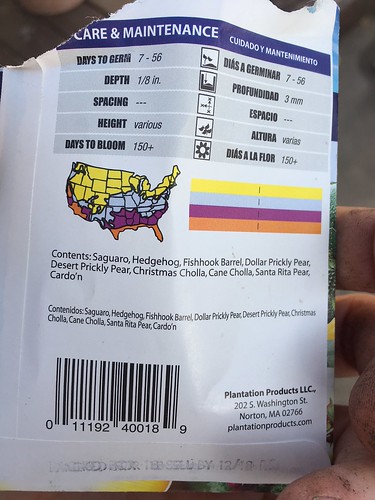
I'm really curious about the cactus seeds. The back of the package mentions several different species(Saguaro, Hedgehog, Fishhook Barrel, Dollar Prickly Pear, Desert Prickly Pear, Christmas Cholla, Cane Cholla, Santa Rita Pear, and Cardo’n) but I suspect the package is dominated by one or two species that are the cheapest/most easily obtained. The contents of the package reveals some variety in seed size so I think I got at least 2 or 3 species. If I am lucky enough to get some of these seeds to germinate it could be quite a while before I am able to identify what they are.

Thursday, March 22, 2018

Mandarin update

We just got back from vacation in Los Angeles, where it was actually cooler and cloudier than in Oklahoma. Here at home spring has sprung and our yard is filled with color where there has just been brown for months. We spent some time in the backyard after dinner this evening and I checked on the greenhouse. Much to my surprise, there was finally some action in the mandarin seed pot!

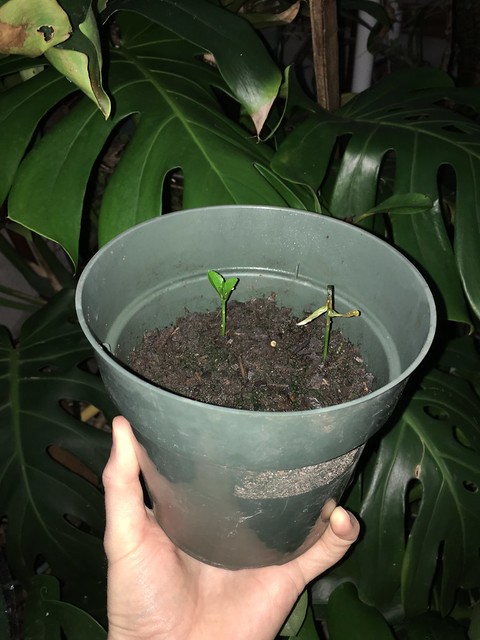
Mandarin seedlings

It looks like two seeds germinated and one of them reached the clear plastic lid and the starter leaves have died. That could mean doom for that seedling. I don’t know for sure. The other seedling looks vigorous and in good spirits. Given that we planted the seeds at the very end of January, I think the germination period was probably about 6 weeks. My daughter was really excited when I showed the pot to her. She may be a bit overly optimistic about our prospects of a bushel of mandarins, but we’ll give it our best shot. 

Wednesday, January 31, 2018

Mandarin seeds

We have been eating a lot of small citrus fruits this winter. Mostly we have been getting those small seedless mandarin clementines branded as Cuties or Halos. They are really sweet and delicious, although we’ve found the shelf life is limited to about a week. After that they start to dry out inside the fruit.

This week my wife wasn’t able to find any of those tiny clementines at the grocery store, so she bought some larger mandarins, which regrettably aren’t as sweet. The bonus? They have seeds. As I was eating the second fruit I started spitting out the seeds in my hand and was considering whether to try germinating them. My grandfather, a very good gardener, could grow citrus trees from seed and did so regularly. As I was considering this my daughter saw the seeds in my hand and got really excited and asked if we could plant them, and grow a orange tree and pick the oranges and eat them and never have to spend money on oranges again!?! Yes, these were her words. And you can guess that made up my mind.


Remembering what my granddad had told me, I nicked each seed with a knife (not sure how deep, so I could have screwed it up right off the bat). Then I soaked the seeds in water for 24 hours. My daughter, with the great memory, asked me at dinner if we get to plant them now. Yes, thanks for remembering when I forgot!


We planted the 4 seeds 1/2” deep, moistened the soil, and covered the pot in plastic wrap. Here goes nothin!

Wednesday, October 25, 2017

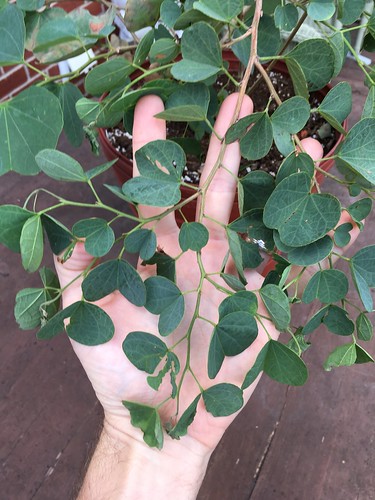
Plant Find: Bauhinia galpinii

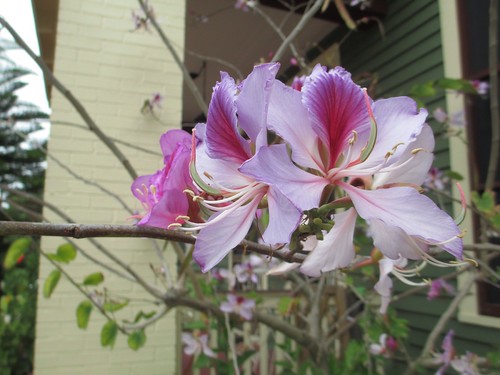
From the moment I first saw one, I have loved Orchid Trees (Bauhinia).  Bauhinia is a genus of more than 500 species of tropical flowering plants, many of them trees, but some are more shrubs and some are even vines.  They are found throughout the world in tropical regions and I have seen them growing in the wild, as well as cultivated in yards in the southern US.  In Galveston, there are several Bauhinia variegata growing in front yards and flowering with their beautiful pink or white blooms.

Bauhinia variegata seedlings
A few years ago I collected some seeds from a tree in Galveston and was able to germinate those seeds. I tried planting a few of the young seedlings to the Galveston yard, but they didn't make it. I don't know if their sunlight was choked out by their more aggressive neighbors, or something else happened. I have a few saplings now that have gotten to a decent size and I plan to plant in the Galveston yard when they get even a little bit larger.

Bauhinia variegata (orchid tree)
Young Bauhinia variegata seedlings that I transplanted to Galveston garden.
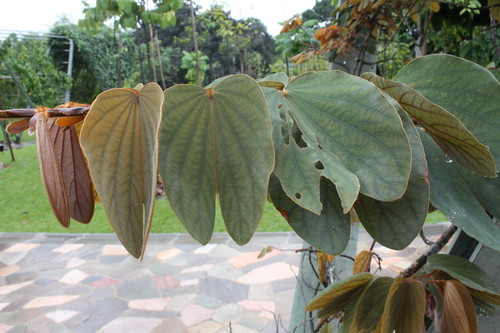
As beautiful as the blooms are, the leaves are every bit as stunning.  They unfold like a set of hands asking for a piece of bread.  I read that Linnaeus named this genus after a set of twin botanists, which is fitting due to the symmetric, two lobed leaf.

Bauhinia variegata
Bauhinia variegata flowers on a tree in Galveston

I mentioned that there are some species of Bauhinia that are vining.  I saw one of these species at the Singapore Botanic Gardens a few years ago (photo below).  The stems are woody and there is a fuzzy brown sheath that covers the new leaves as they emerge.  The emergent leaves are sort of red and bronze, turning to a medium green with dark veins. 

Bauhinia semibifida
Bauhinia semibifida at Singapore Botanic Gardens
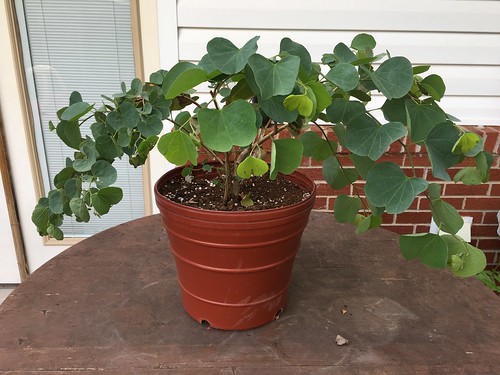
On my most recent trip to Galveston I visited a nursery and came across a beautiful miniature Bauhinia in a pot that I assume is meant to stay a miniature.  It is Bauhinia galpinii and it is so cute. 

Bauhinia galpinii
Bauhinia galpinii

There are actually two small trees in the pot and one of them has much smaller leaves than the other.  Since I have grown Bauhinia variegata from seed and know that the leaves are large from a young age, I do believe this is actually going to retain the small leaves.

Bauhinia galpinii
Tiny leaves of Bauhinia galpinii

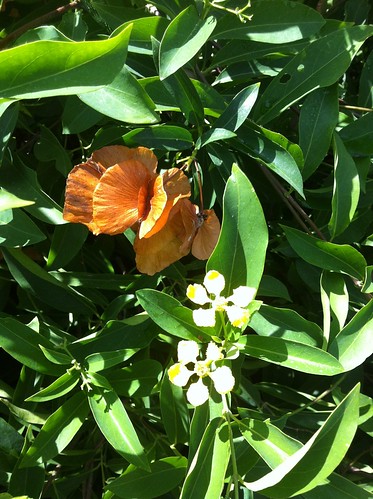
My plant is not yet blooming, but I found photos of the flowers online.  They are salmon red and petite compared to B. variegata, but of the same shape.  I hope I can keep this plant happy in the greenhouse over the winter and then I have the perfect place for it next spring when it is warm enough to move my plants outdoors.

Friday, September 29, 2017

New seeds

I don't have a lot of experience growing native plants from seed*, but I have a lot of stock to practice with over the next year.  I purchased some Asclepias humistrata (Sandhill Milkweed) seeds from eBay and the seller sent me two other packets of seeds to try - Cosmos and Ipomoea purpurea (Candy Cane Morning Glories).

Eleven packets of seeds for me to plant
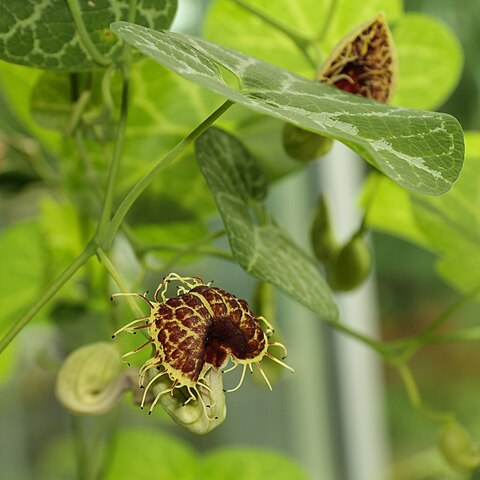
I have also been looking into growing some more native plants that host or attract birds and butterflies.  I came across a group on Facebook where one member was offering seeds to anyone who would pay for the postage.  She kindly sent me two envelopes full of seeds of butterfly host plants, including Maurandella antirrhiniflora (Snapdragon Vine), Asclepias asperula (Antelopehorn Milkweed), Phyla nodiflora (Frogfruit), Verbena bonariensis (Brazilian Verbena), Polanisia dodecandra (Clammyweed), Echinacea Cheyenne Spirit (Coneflower), Aristolochia fimbriata (White-veined Dutchman's Pipe), and Zinnia Zowie. 

Sandhill Milkweed (Asclepias humistrata) - courtesy of discoverlife.org

As I've mentioned before, I really like Asclepias, so I'm very excited about the prospect of growing these two species (A. asperula and A. humistrata) from seed.  The humistrata species (above) is not native to Oklahoma, but I think it will do well in my climate.  The Dutchman's pipe has some really funky flowers (below).  It would be cool to get this growing on my back fence.

White-veined Dutchman's Pipe (Aristolochia fimbriata) - courtesy of Wikimedia

Now I just need to find good places to plant them all!

* This is sort of funny because I have one and only peer-reviewed journal publication to my name and it is titled "Experiences growing aroids from seed."  I have had success growing aroids, but haven't tried many plants from other families from seed.