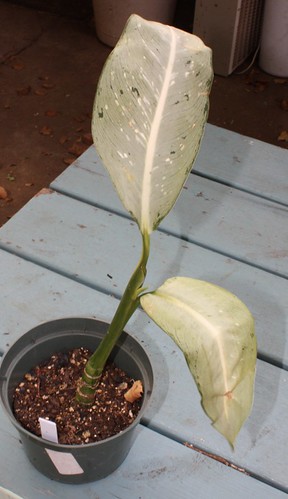
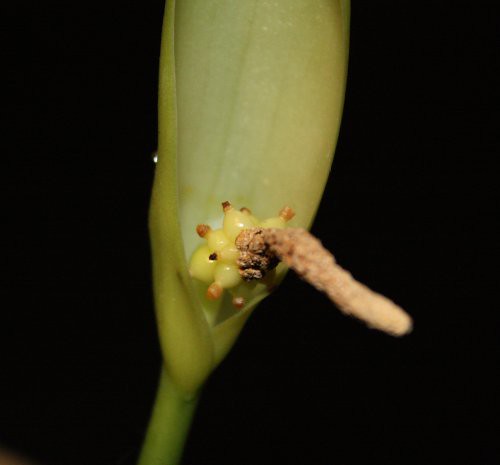
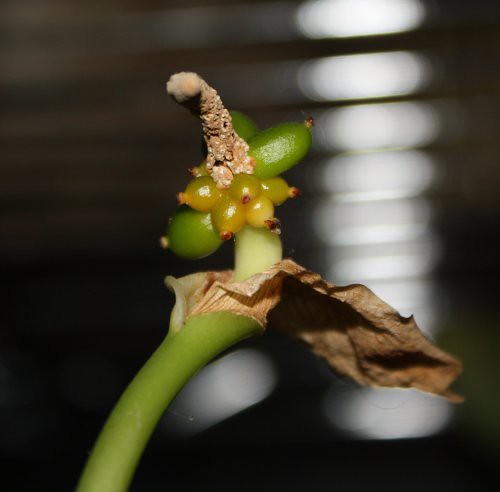
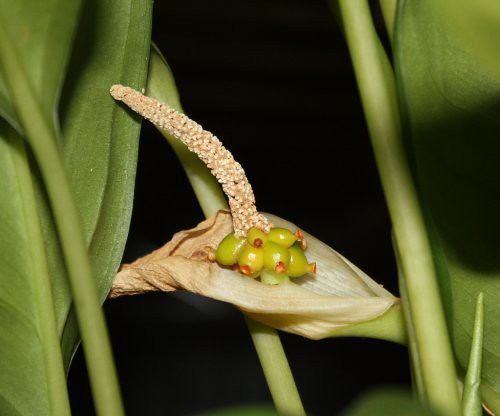
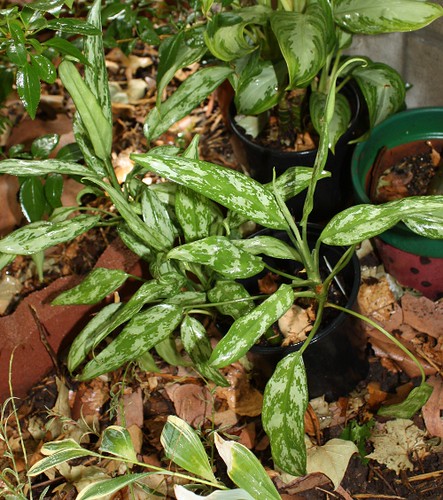
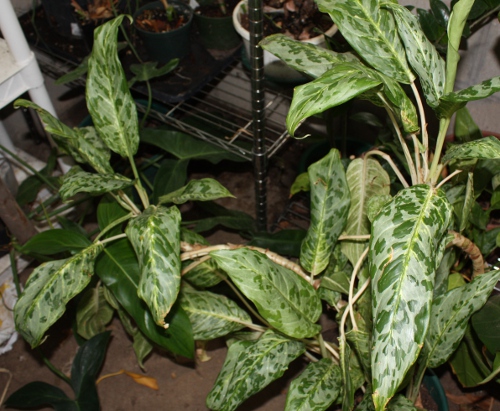
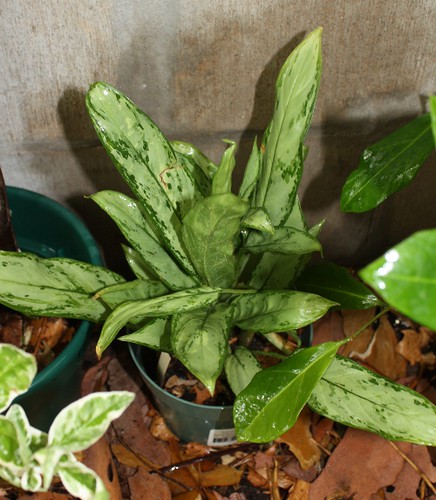
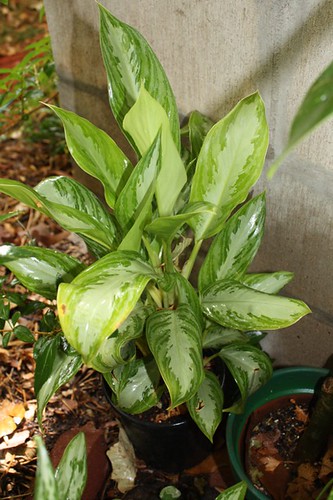
Showing posts with label Aglaonema. Show all posts

Wednesday, July 11, 2012

Trip Report: Plants along the streets of Jakarta

Yesterday I went for a walk.  Along the way I took a lot of pictures of plants growing along the sidewalk.  Jakarta is not a particularly pretty place, but there are some neat tropical plants growing wherever they can take hold.  For purposes of this blog, I'll be showing you those pictures.

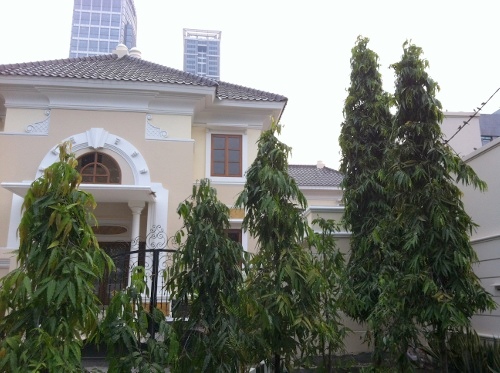
polyathia
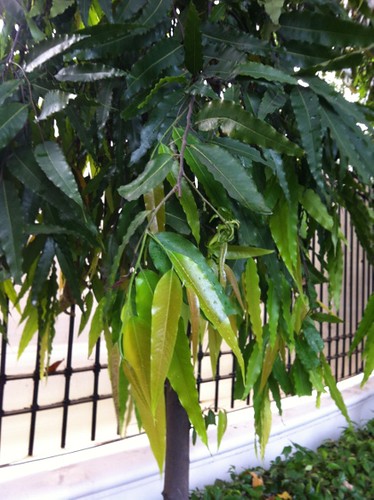
Polyathia longifolia in front of a nice house in Jakarta
One of the more common trees here in Jakarta is the Polyathia longifolia, which is usually growing tall and skinny like an Italian cypress tree. It has long shiny leaves with undulate margins (wavy edges).

polyathia_leaves
Leaves of Polyathia longifolia
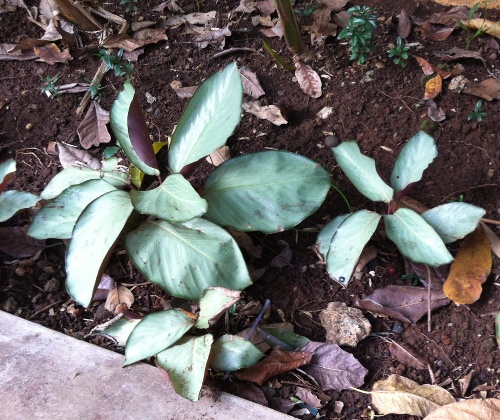
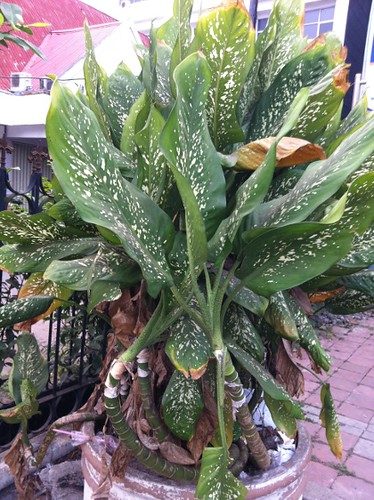
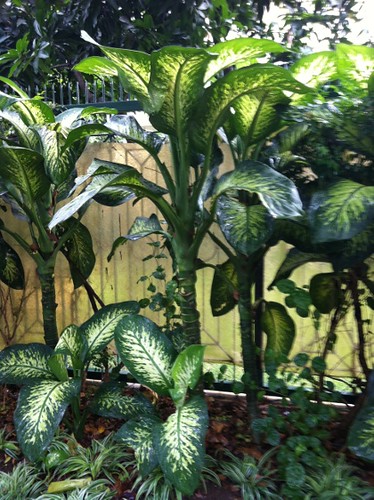
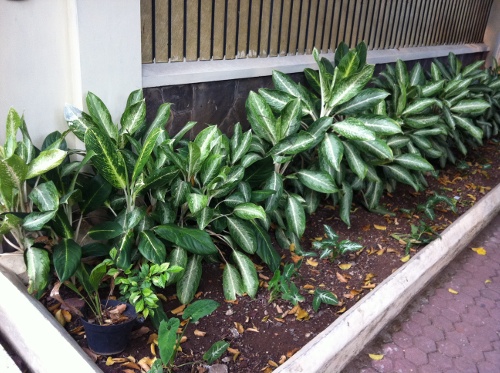
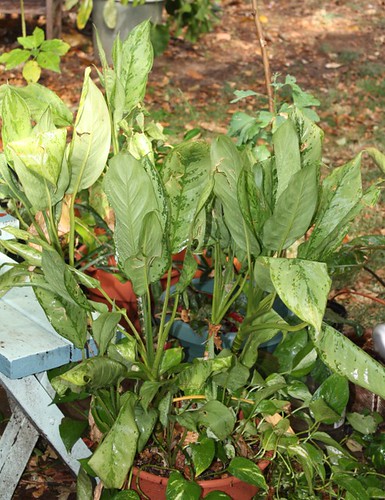
Some of my favorite plants (Aglaonema, Dieffenbachia, and Calathea) are growing everywhere here.

dark_calathea
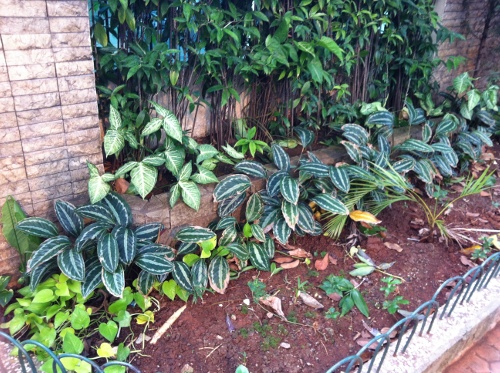
Calathea

silver_calathea
Calathea

crowded_dieffenbachia
A pot full of Dieffenbachia
giant_dieffenbachia
Really large Dieffenbachia
aglaonema
Aglaonema, maybe

There are also lots of colorful flowering plants around: Bougainvillea, Plumeria, Heliconia, Canna and things I have never seen before.

acanthaceae
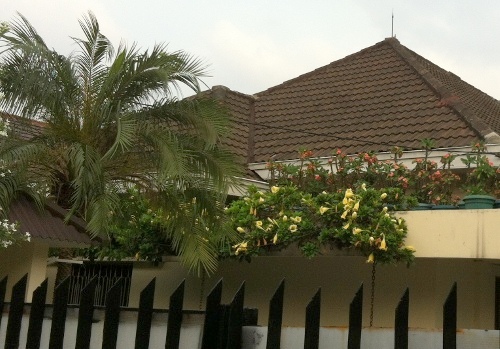
Some sort of Acanthaceae, possibly Crossandra

solanum
Solandra

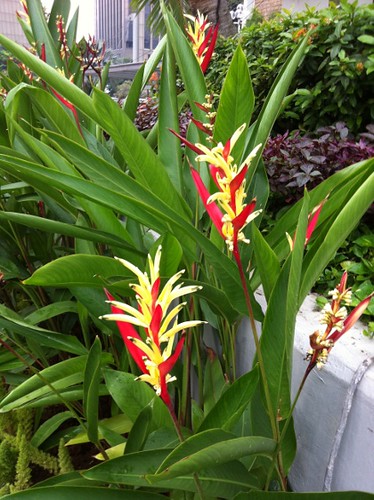
heliconia
Heliconia

neat_flowers
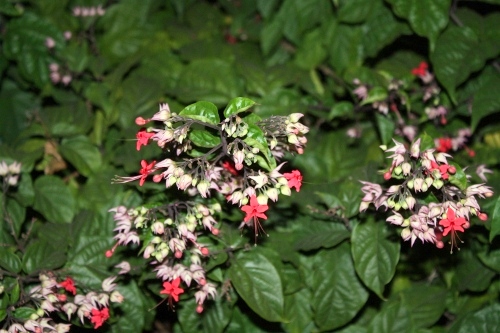
Do you know what this is?
(Update: mr_subjunctive and peaches identified this as Clerodendron thomsoniae)

There were some other nice Aroids (besides the Dieffenbachia and Aglaonema) growing here and there...

climbing_aroid
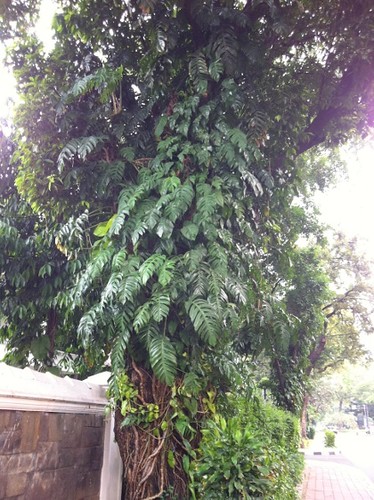
An aroid climbing a tree. Perhaps Epipremnum or Rhaphidophora.

homalomena
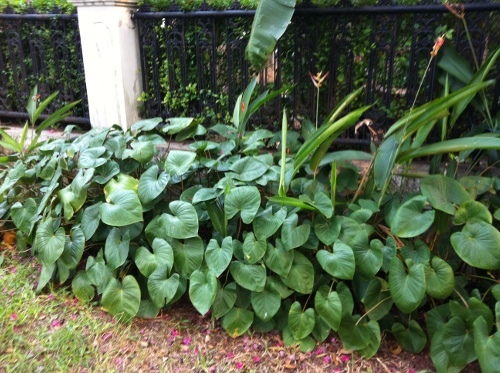
Homalomena

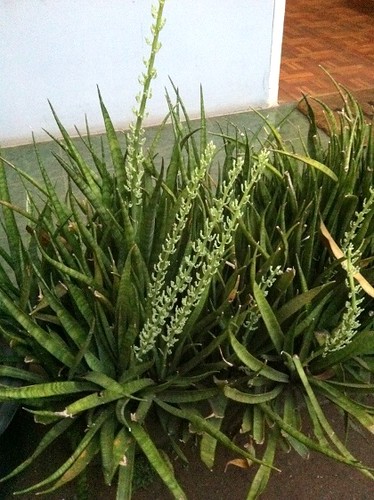
There are Sansevieria growing everywhere. I noticed one in particular that was in bloom.

sansevieria
Sansevieria in bloom

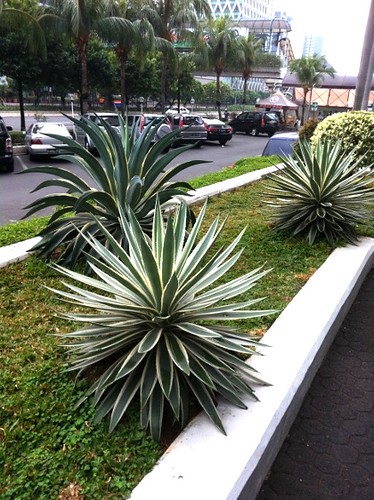
When I finished my leisurely walk, I came back to the hotel, where is some more formal landscaping out front.

hotel_cacti
Agave in front of the hotel

hotel_garden
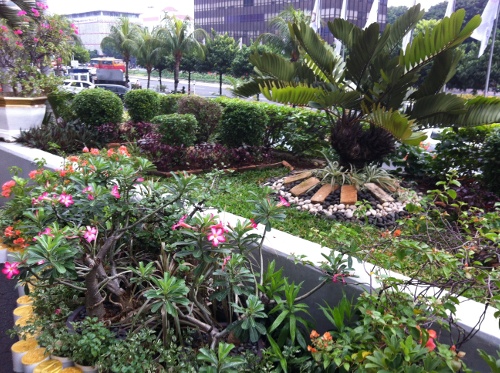
Adenium (foreground) and Cycad (back right) in garden at hotel entrance
My walk took me to a park about a mile away from the hotel.  I'll post pictures from there in a separate post.  Stay tuned!

Monday, December 26, 2011

Plant Find: Latest Aglaonema Additions

Aglaonemas are known for their patterned foliage with several shades of green, white and silver.  In Thailand, breeders are constantly creating new Aglaonemas with pink and red in the leaves.  Personally, I'm not a fan of these hybrids and I don't collect any of those.  These hybrids get their red coloration from a natural species, Aglaonema rotundum.

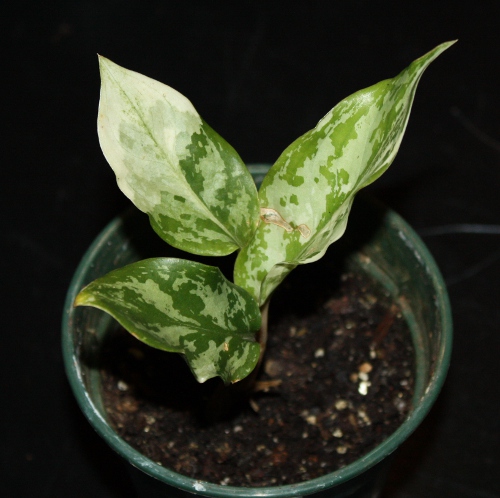
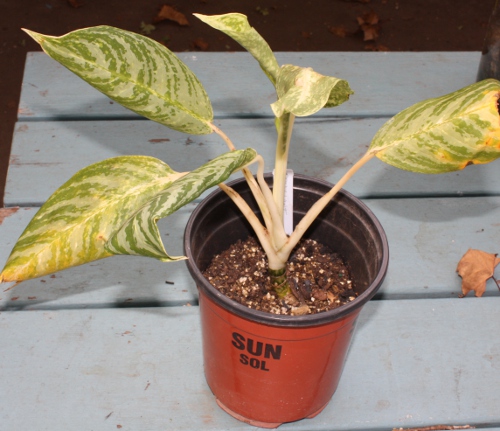
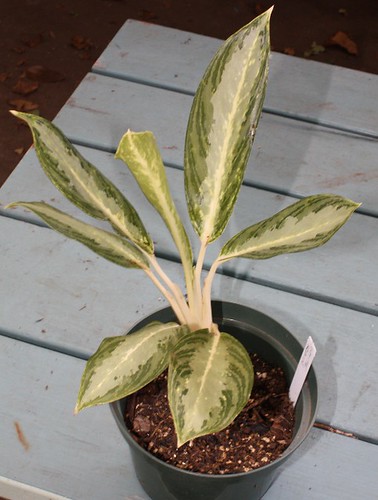
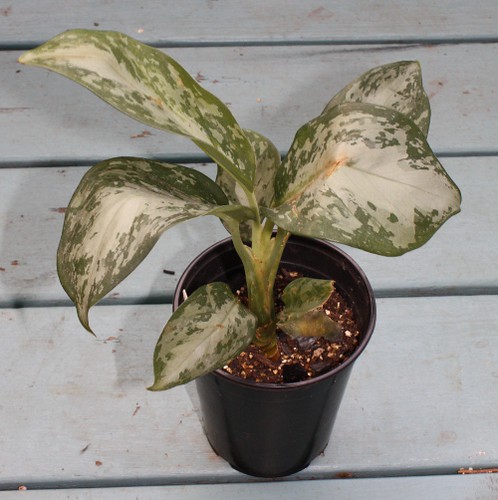
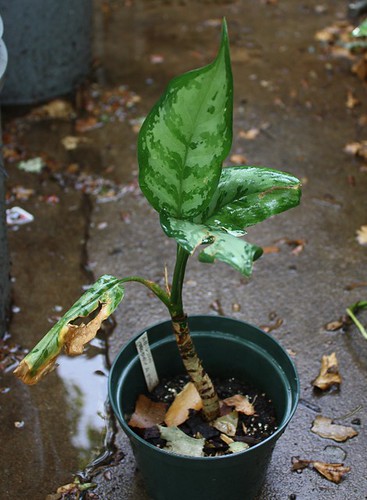
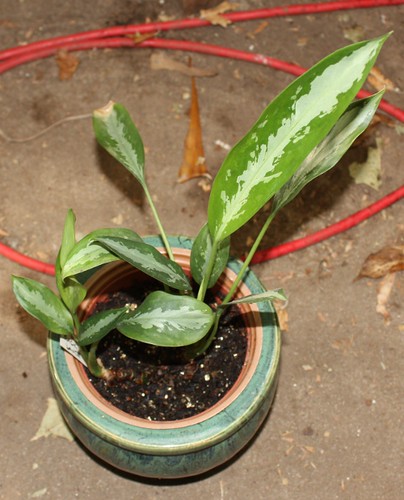
My collection is made up of the more natural-looking Aglaonemas, even though many of them are hybrids.  One of my most recent finds is a variegated form where there are white patches overlaying the green pattern.  The plant was sold to me as variegated Aglaonema 'Silver Queen.'  However, the leaf pattern does not match the common 'Silver Queen', which has lanceolate leaves with a primarily silver coloration and thin streaks of dark green mixed in.

variegated Aglaonema, possibly Aglaonema 'Manila'


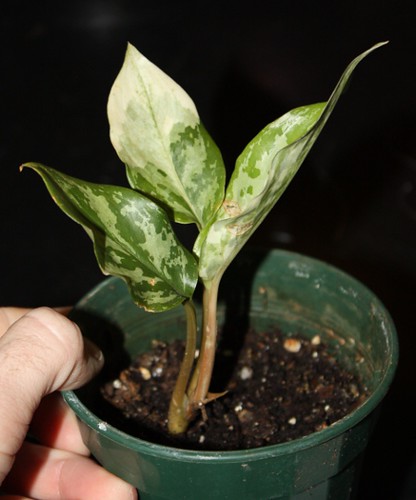
Most Aglaonemas have green petioles (stems).  Some have white and then there are a few that have either pink or russet.  I believe that russet is a mix of pink and green - kind of a brown potato color.  I think these petioles are really neat looking and this is the first Aglaonema I have had with the russet petioles.  (See the image below.)  This is yet another clue that this plant does not come from the common 'Silver Queen', but from something else entirely.  Most likely this mystery will never be solved for me.

Aglaonema Queen - variegated petioles
Russet petioles of variegated Aglaonema


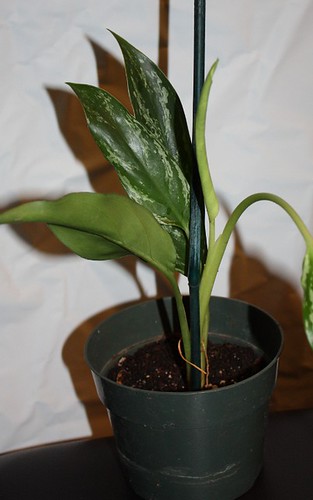
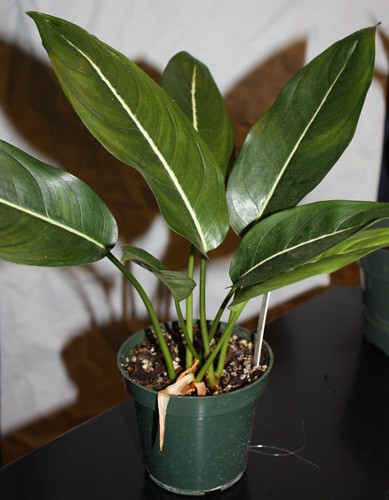
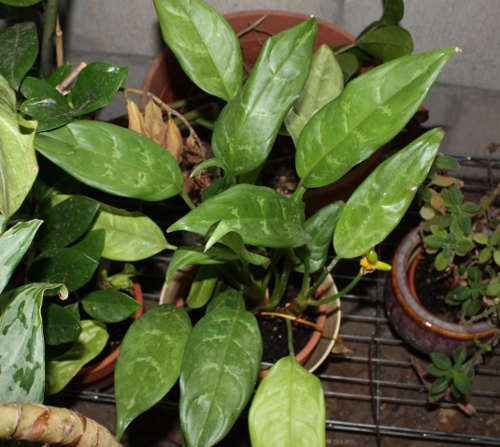
There are many Aglaonemas in my office building, maintained by a company that checks on them regularly and switches the plants out when they start to look ratty.  There is one Aglaonema that I have admired for a while and I recently got a stem of it to grow myself.  I have no idea what the name is.  The distinguishing features are the dark coloration of the leaves, which are somewhat lanceolate.  It looks similar to a plant I saw at the IAS show called 'Shades.'  The lighter shades of green are also in an unusual pattern.

Aglaonema - dark from work
unidentified Aglaonema from my office, possibly Aglaonema 'Shades'


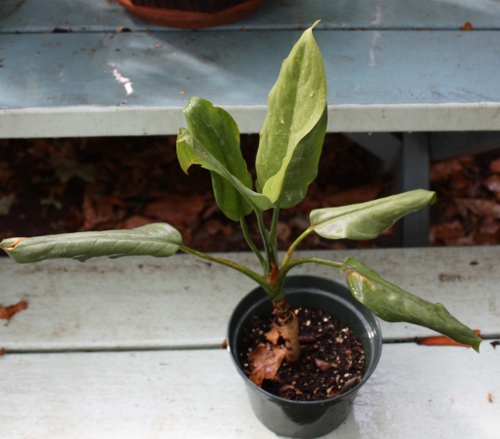
The last recent addition to my Aglaonema collection is one which grows as a creeping rhizome, which is different from my other Aglaonemas, which grown on an upright stem.  This plant was sold to me as Aglaonema costatum f. immaculatum.  I sent a photo to my friend, Peter Boyce, who is a career taxonomist in Malaysia.  He told me the plant is actually Aglaonema brevispathum, a member of the Chamaecaulon section, which has this characteristic growth habit.  He studied these plants in the field from Myanmar through Thailand to Cambodia, Laos, and Vietnam, in lowland dry dipterocarp forest, often along on river banks.   How lucky am I to have Peter to answer my questions!?!  That's one of the great things about the IAS.  There are people who have very extensive knowledge and a great willingness to share that knowledge.

Aglaonema brevispathum


I was a little worried that I would have trouble growing this particular plant, since it differs from the ones that I know grow well in my care.  But it seems to be doing well, enjoying the environment of my greenhouse and putting out some new leaves.

Friday, October 28, 2011

Plant Find: My Florida plant acquisitions

While in Florida I got a LOT of plants.  Most of these were either aroids or orchids.  First, let me show you the aroids I got.
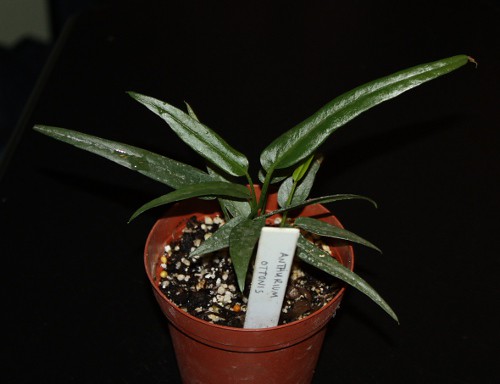
anth_ottonis
Anthurium ottonis
Anthurium ottonis

This little Anthurium attracted me with its lanceolate leaves.  It is a very healthy little plant and I look forward to seeing this grow into a mature specimen.
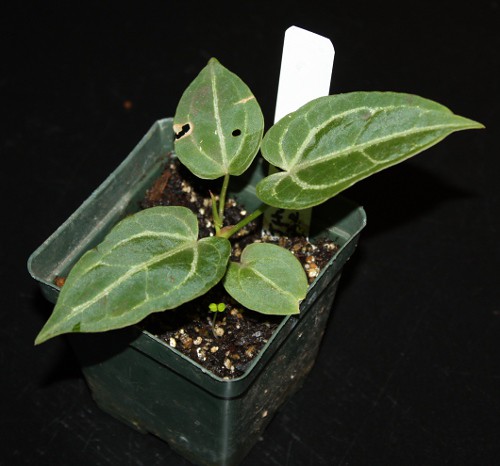
anth_crystallinum
Anthurium crystallinum

This is one of the velvety Anthuriums with prominent iridescent veins.  Again, this is just a small plant, but if it likes my growing conditions then it will become a beautiful large plant within a year or two.
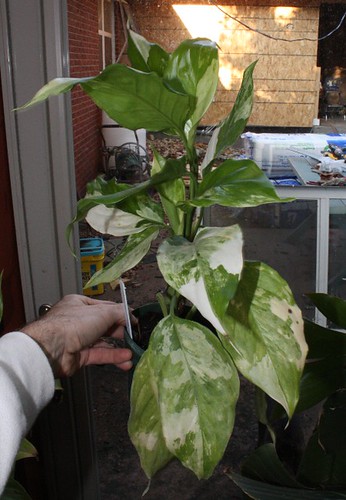
ag_modestum_variegated
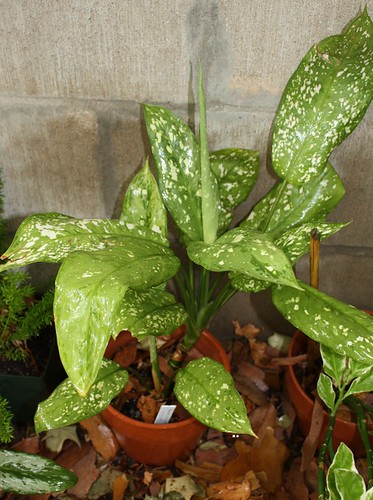
Aglaonema modestum variegated

This is actually the only Aglaonema I purchased at the show.  There were a couple others that I eyed, but ultimately I ran out of packing room (and money), so I stopped with this one.  It is one of the few variegated Aglaonemas in cultivation.  Most Aglaonemas have interesting leaf patterns, with various shades of green and some silvers, but few have white patches like this one.
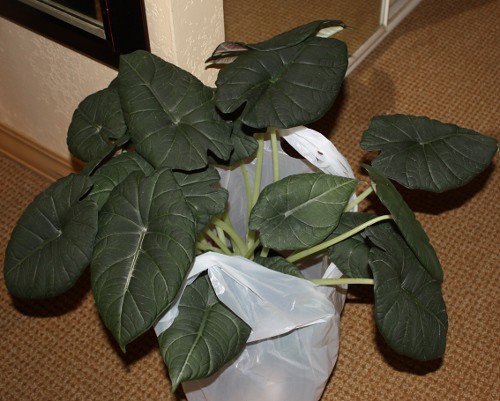
alo_maharani
Alocasia 'Maharani'
Alocasia 'Maharani'

This is one I had never seen before.  It is a beautiful Alocasia with dark leaves that have a rough texture and a rigidity unlike any of my other plants.  I'm really hoping this isn't a high maintenance plant, but it might be.  For now it seems pretty happy, sitting in a very shady spot on the floor of my greenhouse.

Dieffenbachia oerstedii - no picture


I hadn't heard of this Dieffenbachia before, but it was a species and it was from Dr. Croat, so how could I pass it up!?!  Dieffenbachias are a really neat genus of aroids that I enjoy, though I don't have too many in my collection.  This particular species develops a strong white midrib at maturity, which is striking in contrast to the otherwise dark green leaves.
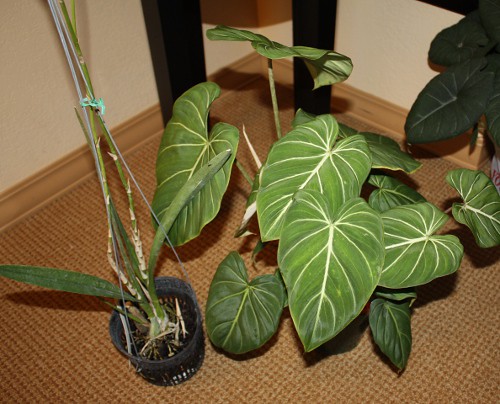
philo_gloriosum_enc_plicata
Encyclia plicata (in mesh basket) and Philodendron gloriosum

Philodendron gloriosum

Christie and I both fell in love with this Philodendron and decided to buy it out of our general budget, rather than my plant allowance.  Since then it has gone by the moniker of "family plant."

The IAS show and sale is set up with the show plants in the middle of the room.  Along one wall are vendors with plants for sale and along another wall are plants for sale that will benefit the IAS.  Dr. Croat brought a bunch of items from the Missouri Botanical Garden for sale at the IAS show.  These plants are either species that were wild collected or propagated from his wild collections.

Pinellia pinnatipartita (IAS show)

The one exception, I believe, was a big trash bag full of Pinellia pinnatipartitas, which I think Dr. Croat had yanked out of his yard to thin out his own crop.  There was a sign on the bag, boldly announcing "Guaranteed success!"  As if that weren't enticing enough, they were marked $1.  So, naturally, I got one.  Taylor picked through the bag for me and found a really nice, large tuber and it was one that had just fruited, so I have a bunch of seeds in addition to the healthy tuber.

tubers of Pinellia ternata (IAS show) - no picture

Pinellias are one of the aroid genera with several varieties hardy in my zone.  For now, I have potted these tubers of Pinellia ternata and put them in the greenhouse.  However, I plan to plant them outdoors next spring and then let them stay outside for good.  I want to develop a little garden of hardy aroids.
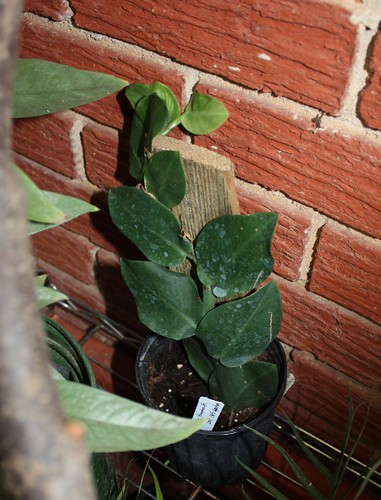
rhaph_hayi
Rhaphidophora hayi
Rhaphidophora hayi (IAS auction)

This is really my first shingling aroid.  I made up a tentative list of plants I would like to purchase at the IAS show before I left.  Not really knowing what I would find, it was just a wishlist of things I was hoping to find.  One of the items was "a shingling aroid."  There were some for sale, but I was overlooking them for other plants.  Then there was one available at the auction and I ended up getting an excellent deal on this little plant, donated by Palm Hammock.  It is now propped against the back wall of the greenhouse, where I am hoping it will start to shingle up on the brick wall of the house.

Now, here are the plants I purchased, which are not aroids.
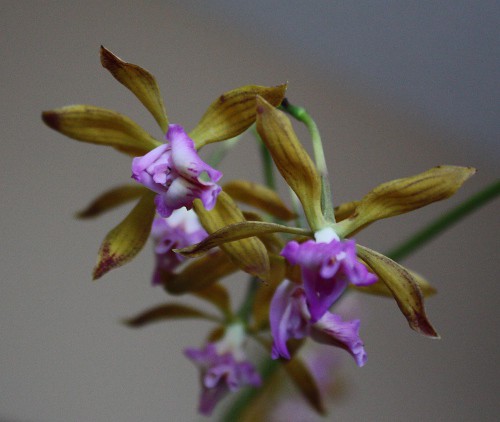

enc_plicata
Encyclia plicata blooms
Encyclia plicata (above) and Encyclia tampensis (below) - both from Ruben in Orchids

As mentioned in a previous post, I purchased two Encyclias at Ruben in Orchids.  One of them (Encyclia plicata) had a long bloom spike with these really neat flowers (above) and was growing in a mesh basket.  The other (below) was on my wishlist of plants to purchase in Florida.  It is the "Florida Butterfly Orchid" (Encyclia tampensis) and the plant that I kept seeing all over my everglades boardwalk.  It is a mature, mounted plant and had already finished blooming, with several dead bloom spikes on it when I purchased it.  Next year I hope to have as many spikes as it had this last summer.
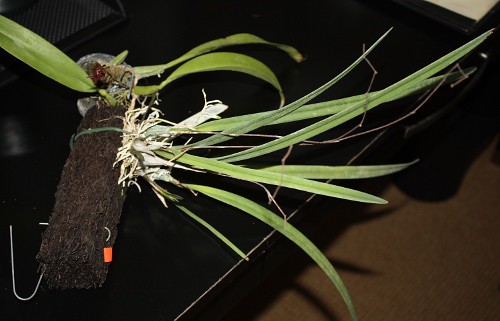
enc_tampensis
Encyclia tampensis


dend_nobile
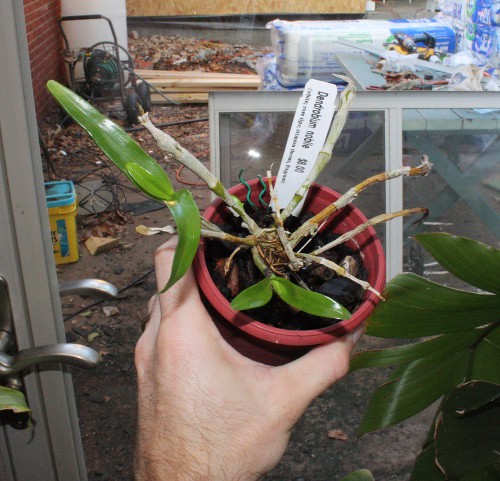
Dendrobium nobile
Dendrobium nobile (from R.F. Orchids)

I purchased two cheap orchids at R.F. Orchids - one a species Dendrobium nobile (above) and the other a hybrid Vanda. The Dendrobium was a collection of keikis that had been cut off mature plants and bundled together for $8.   The Vanda is young now, but someday it should look like a mixture of the parents, which are pictured below.
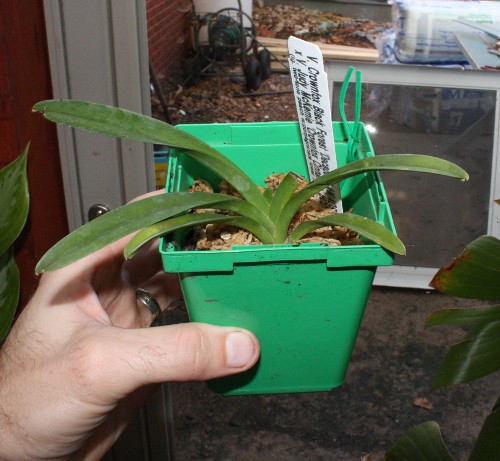
vanda_hybrid
Vanda hybrid
Vanda hybrid (V. Crownfox Black Forest x V. Judie McKemie) (from R.F. Orchids)
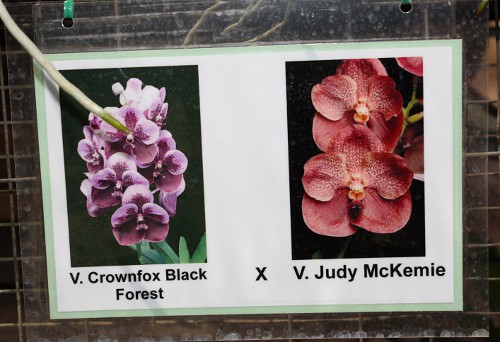
my_vanda_hybrid
Vanda hybrid parents
dendrobium_noid
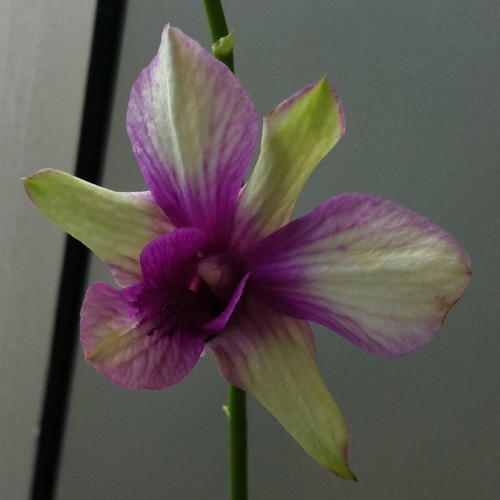
A nice Dendrobium in bloom
Dendrobium in bloom (from The Banyan Garden in the Keys)

There are still a couple of "trip reports" I plan to write in the coming weeks about special planty places I visited while in Florida.  One of those places is called The Banyan Garden, which is located on the island of Islamorada in the Florida Keys.  I bought this cheap and beautiful blooming Dendrobium there.
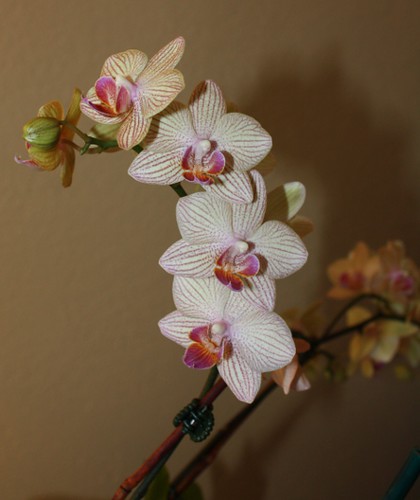
cheap_orchid
My favorite cheap Phalaenopsis
Phalaenopsis in bloom (from Redlands roadside stand)

I already told you about my steals in south Miami - orchid country.  Here are their pictures, again.
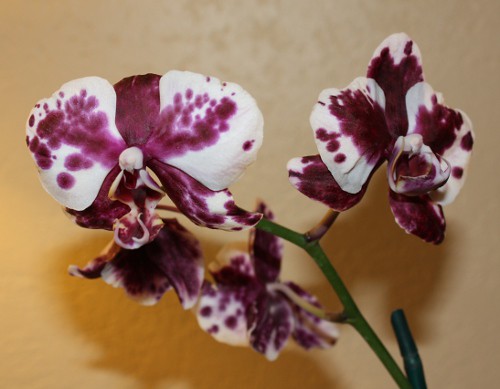
phal_harlequin
Harlequin Phalaenopsis
Phalaenopsis (harlequin) in bloom (from Redlands roadside stand)

Harlequin Phalaenopsis are the "in thing" right now.  The name refers to the spotting pattern on the flower petals.  I'm told this is a generic term applied to dog and horse breeds, as well.
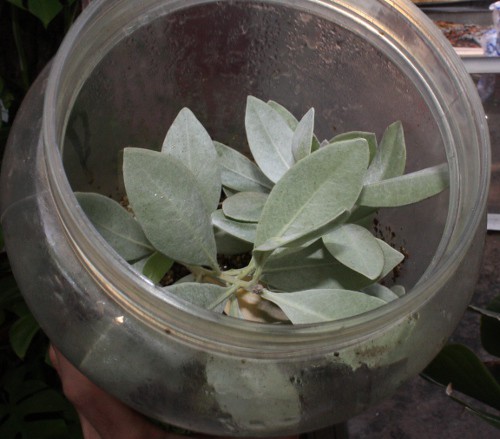
buttonwood_cuttings
Silver Buttonwood cuttings.  I really hope these are rooting, but I just don't know.
Silver Buttonwoods

There were Silver Buttonwoods (Conocarpus erectus var. sericeus) everywhere in Florida.  Most were trees, but quite a few were bushes or well-manicured hedges.  We stopped to admire this beautiful tree at our very first lunch stop in Miami - on our way to the Everglades.  On the last day of our trip, I took some cuttings from a couple trees in the Keys.  The cuttings are now in a jar of moist vermiculite, hopefully rooting.  I put some other cuttings directly in water and they quickly wilted.  Since the cuttings in vermiculite still look fresh and happy I have high hopes that good things are happening.  We'll see in a couple of months.
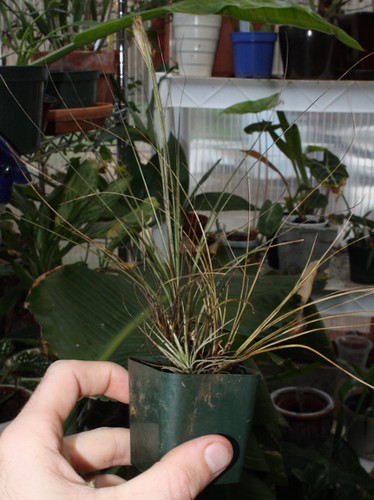
three_tillandsias
Three little Tillandsias
Tillandsias

Tillandias grow everywhere in southern Florida.  I have never grown any myself, but I am hoping I will have some luck with these.
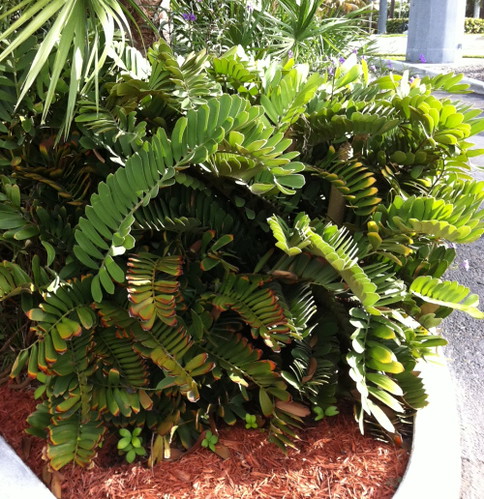
cycad_seedlings
Zamia furfuraceae "hedge" with seedlings at the base
Zamia furfuraceae seedlings (from Key West, Florida)

Cycads are very common in southern Florida.  In many places they are grown so thick that they can be cut into hedges.  The above picture is from our hotel in Key West, where they were being trimmed into rectangular hedges.  These plants were "coning" like crazy and the seedlings were thick at their base.

Yes, I really did pack all of this in suitcases to bring home!
Tuesday, August 30, 2011

New Algaonemas and Dieffenbachias

Just a month before the IAS show, where I expect to be purchasing some aroids, I was sent a box from my fellow Aglaonema addict and friend, Russ.  He sent me 8 wonderful plants: 5 Aglaonemas and 3 Dieffenbachias.

a_brilliant_201108
Aglaonema 'Brilliant'
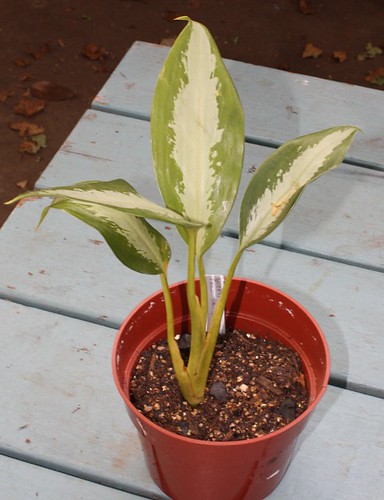
Several of these new Aglaonemas have the distinctive white petioles (leaf stems) and center ribs.  This includes Aglaonema 'Brilliant' (above) and Aglaonema 'White Rain' (below).

a_white_rain_201108
Aglaonema 'White Rain'

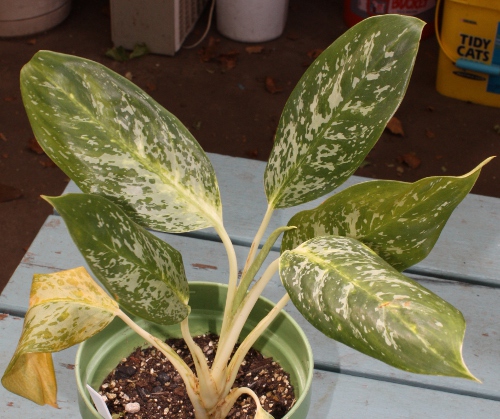
Christie's favorite plant out of this batch is Aglaonema 'Key Largo', which has relatively wide leaves that are deep green, with a lot of silver in the middle of the leaves and some small patches of silver/green mixed in there.  I wonder if Christie has a subconscious favoritism here because of her excitement about our trip to the Florida Keys next month!
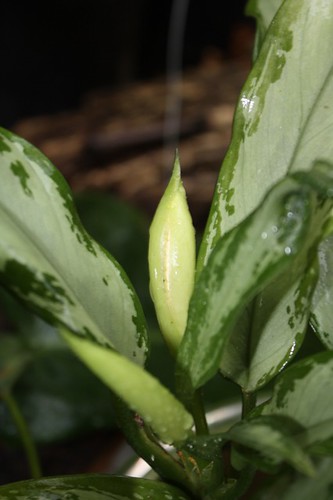
a_key_largo_201108
Aglaonema 'Key Largo'
One of these plants comes from a seedling that Russ acquired from Aglaonema breeder and author Frank Brown.  The seedling is from 'Queen of Siam', but it has green petioles, whereas the registered hybrid 'Queen of Siam' has white petioles.

a_queen_of_siam_201108
Aglaonema 'Queen of Siam'
a_cassandra_201108
Aglaonema 'Cassandra'
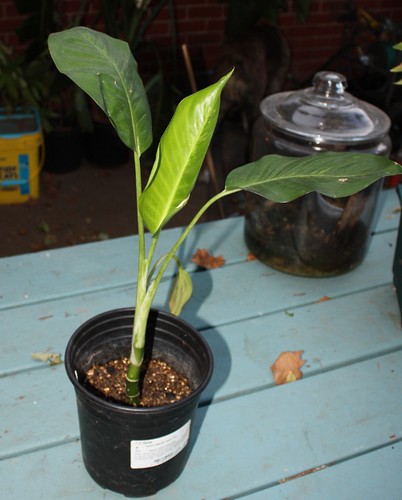
The first Dieffenbachia is actually a species, the only species Russ sent this time.  It is Dieffenbachia tarabitensis, which is native to Ecuador.  It is primarily a dark green, but there is a very small amount of variegation near the center rib.  The most distinctive feature is the mottled petioles.  Can you see how the stem leading to the leaves is not solid in color?

d_tarabitensis_201108
Dieffenbachia tarabitensis
d_paradise_201108
Dieffenbachia hybrid.  Probably D. 'Paradise'
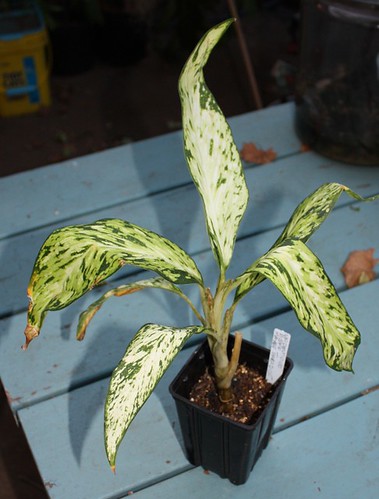
These last two are somewhat unknowns.  Russ thinks the one above is probably the hybrid Dieffenbachia 'Paradise' but he doesn't know whether the other is even a species or hybrid.  Maybe I can get some help figuring out that one.  It's actually my favorite plant in the batch since it is so unique.  The leaves are almost entirely silver, with a white midrib and a couple blotches of white and green on the leaves.  You can also see the parallel veins in green, arching away from the midrib.

d_unknown_201108
Unidentified Dieffenbachia.  Could be a hybrid or a species.
It's so great to have friends interested in growing these plants.  While an Aglaonema is not impossible to find, it is really hard to find one with the correct name attached and to find a location with much of a selection.  The species and older hybrids are found only in collections.  And with generous friends you can grow your collection without spending a lot of money.

Monday, August 22, 2011

Aglaonema infructescence

Sometime in late December or early January I had an Aglaonema bloom.  I was planning on collecting some of the pollen and using it to pollinate future blooms on my other Aglaonemas, but I didn't get any after all.  I have left the inflorescence alone and was surprised to see a couple weeks after the spadix was "finished" that berries were beginning to form on the lower half of the spadix.

Aglaonema commutatum berries
Aglaonema commutatum infructescence - Feb 3, 2011
Time ticks by and the berries begin to get larger and darker green.

Aglaonema commutatum berries
Aglaonema berries - April 28, 2011.  Notice that a couple berries are getting large.
At the same time, the 2nd inflorescence on the plant began to set fruit as well.  But these berries were a little behind the other set and eventually this infructescence shriveled up and fell off the plant.

Aglaonema commutatum berries
Aglaonema berries on 2nd infructescence - April 28, 2011
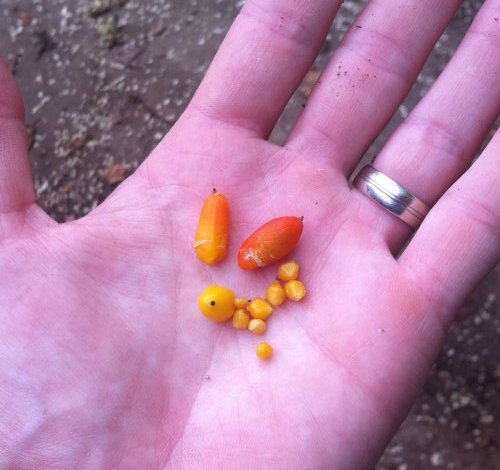
The berries on the original infructescence stayed large and firm with very little change in color or size over the summer.  Then, all of the sudden, I noticed the berries were orange.  I reached down to feel of them and the first big berry had become soft and fell right off the spathe.  This is the sign I was looking for.  I plucked the berries off and here they are.

Aglaonema commutatum berries
Aglaonema berries - August 18, 2011
The berries vary greatly in size.  There are a total of 11, 3 of them of decent size and the others pretty tiny.  I'll get these cleaned and planted this week, knowing they need to be fresh.

Now I have another Aglaonema setting berries, Aglaonema Decora.  Wish me luck with all of my aroid seedlings.  I'm going to need it with these extreme temperatures!

Monday, July 25, 2011

Aglaonema update

I guess you could say this whole schebang got started with Aglaonemas.  My mom had a plant with silver markings on the leaves when I was growing up that I liked.  It was Aglaonema 'Silver King' I believe.  Then about 4 years ago as I started to grow more houseplants on my own I came across two large Aglaonemas that got me started on the collecting bug.  My first real post to this blog was just to post pictures of those first Aglaonemas.  Shortly thereafter I got a comment from a guy named Russ, a stranger in Florida, who sent me a bunch of plants (for free!) just because he was a cool guy that also liked plants and wanted to encourage me to grow more aroids, which, at the time, I didn't know much about.  All I had to do was reimburse Russ for his postage costs.  I quickly learned that plant people are very generous and pass along the generosity of those that encouraged them.

Here I am four years later - to the day - posting an update concerning my Aglaonema collection.  Since then, I have added quite a few Aglaonemas to my collection, while only losing a few along the way.  They are really pretty easy plants to grow, while also having some of the most attractive leaves I know.

Here's a rundown of what I have, along with a short description of how each plant is doing, and a picture for most.

a_abidjan_20110712
Aglaonema 'Abidjan'

Aglaonema 'Abidjan': This is an attractive older cultivar.  You might wonder why it is named after an African city, when Aglaonemas are native to southeast Asia.  Well, I'm not sure how it got there, but A. 'Abidjan' was found by an American man growing at a nursery near Abidjan, Ivory Coast in 1974 and brought back to Florida.  It is thought that the plant traveled to Africa with a nurseryman from South America.  How it got to South America is yet another mystery.

a_alumina_armandi_20110712
Aglaonema alumina armandii

Aglaonema alumina armandii: One of my favorites.  Silver-blue leaves.  Variegation is subtle, if at all.  Single stem growing very slowly, with about 4 leaves right now.  This plant has an interesting collection history, having been discovered by Armando Cruz (the plant's namesake) near Manila in 1976.  It was found on a mountain just covered in this plant, which was given species status 9 years later.

a_bj_freeman_20110712
Aglaonema 'BJ Freeman'

Algaonema 'BJ Freeman': Very healthy large plant with large leaves.  This is the biggest plant I have.  I have hacked up a couple of the longer, lankier stems to start new plants.  My pot has probably 8-10 stems currently, ranging from small and young plants to plants that are 5-10 years old and about 3 feet tall.

a_black_lance_20110712
Aglaonema black lance

Aglaonema 'black lance': Another one of my favorites.  My plant was ailing for a while, but I put it in my ICU pot (which I'll describe another time) and now it is doing very well.

a_commutatum_maculatum_20110712
Aglaonema commutatum v. maculatum f. maculatum

Aglaonema commutatum v. maculatum: This plant is doing pretty well.  There are 3 or 4 stems and it bloomed for me for the first time last fall.

a_decora_20110712
Aglaonema 'Decora'

Aglaonema 'Decora': This is a very attractive hybrid I picked up at a local nursery.  It is a vigorous grower that is currently in bloom.

a_gold_dust_20110712
Aglaonema 'Gold Dust'

Aglaonema 'Gold Dust': I got this plant from a fellow blogger a while back and I would have to say the original stem hasn't grown much since then.  However, it has produced a couple of offsets, which is even better than having the original stem growing.  This cultivar is based on the species A. brevispathum.

a_green_lady_20110712
Aglaonema 'Green Lady'

Aglaonema 'Green Lady': This plant is my most vigorous offsetter.  That's probably not a word, but it is producing offsets at a rapid pace.  The variegation is really nice on this plant when you stop and look at it.  See how many different shades of green you can count.  I think there are 4.

a_lilliput_20110712
Aglaonema 'Lilliput'

Aglaonema 'Lilliput': This is a really cool hybrid which has lanceolate (slender, lance-like), undulate (wavy) leaves.  The variegation is really nice, too.  I shared this plant with some friends, so it is about half the size it would be otherwise.

Aglaonema 'Maria' (not pictured): I have two separate pots of this plant.  It is the most common Ag to find for sale.  It grows reliably and is very easy to keep happy.  For some reason, I have some stems rot on occasion, but usually whatever piece of the stem has not gone mushy will produce it's own plant.

a_peacock_20110712
Aglaonema 'Peacock'

Aglaonema 'Peacock': This is one of my two large Ags.  This one was so tall and lanky that I divided it into two pots shortly after buying it.  I also took the more lanky stems and cut them into pieces, which produced new plants.  Now I have one pot at home and the other resides permanently at the wedding chapel, with a couple of my other plants that are too large to go in my greenhouse.

a_royal_ripple_20110712
Aglaonema 'Royal Ripple'

Aglaonema 'Royal Ripple': It's hard to tell in this picture that the leaves are rippled, but they truly are - just like 'Lilliput.'  This is one of my more compact, profuse growers.  It's a very pretty plant, with lanceolate leaves.

a_silver_bay_20110712
Aglaonema 'Silver Bay'

Aglaonema 'Silver Bay':  This plant is my second most steady grower, producing offsets quite often.  It probably has 4 or 5 stems right now.

a_stripes_20110712
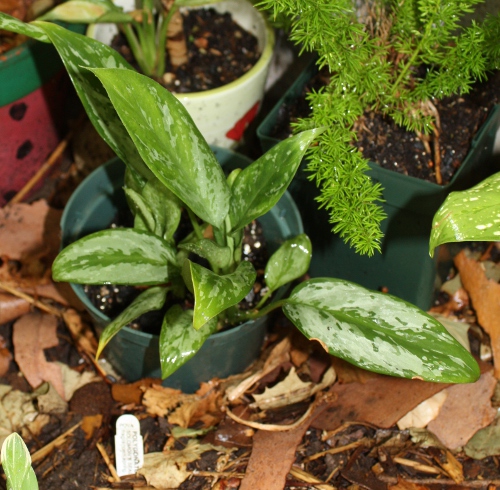
Aglaonema NOID (possibly 'Stripes', 'Cory' or nitidum
Aglaonema NOID (possibly'Stripes', 'Cory' or nitidum):  There are a number of cultivars and hybrids with stripes like this plant.  I haven't nailed down which one mine is, but it definitely has parentage with A. nitidum, which is the striped species.

a_noid_20110712
Unidentified Aglaonema

Aglaonema NOID:  I don't really have any idea what this variety is.  Maybe 'Maria Christina'?  Do you have any ideas which one this is?

My stories come from two hard-to-find books: The Amazing Aglaonema by B. Frank Brown and The Aglaonema Grower's Notebook by Roy Jervis.