Showing posts with label Ficus. Show all posts

Wednesday, September 12, 2018

Update: Sacred Bodhi Tree

Seven years ago I was gifted some seedling Sacred Bodhi trees (Ficus religiosa) from a friend. Read more about the tree here. I gave one of those seedlings to my mother-in-law for insurance. I'm glad I did because my tree died a couple of years ago when it got too dry in my greenhouse. My mother-in-law's tree goes through a series of phases: rapid growth, scale infestation, dropping all the leaves - repeat. We're not sure why the scale keeps coming back, as it seems completely free of them when it is in it's rapid growth phase. Anyway, it seems to be an established pattern now.

Ficus religiosa
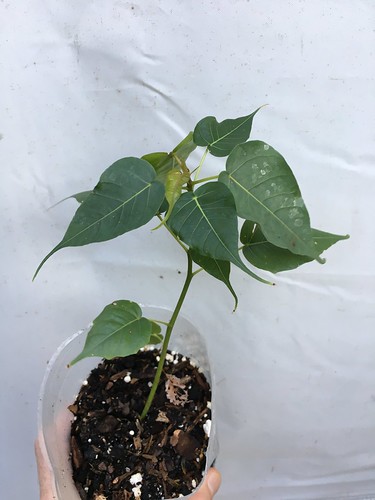
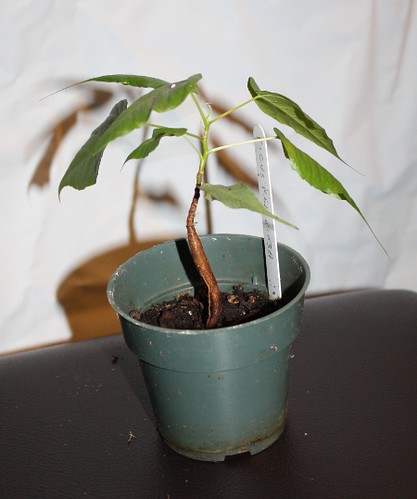
Sacred Bodhi Tree sapling (Ficus religiosa)

I recently took two cuttings of her tree when it was in a rapid growth phase and one of those cuttings has rooted. I started the cutting in pure vermiculite. After I was sure that roots were established I transferred it to potting soil. It's now producing new leaves and seems to be pretty happy. In a humid tropical climate this tree would easily be meters tall by now, but in our temperate Oklahoma climate (and my mother-in-law's plant being grown indoors) it is staying fairly small, almost a bonsai. I'm so thankful to have this little tree back in my collection and will monitor it closely.

Thursday, May 23, 2013

Trip Report: Miscellany in Delhi

I got to spend a week in New Delhi, India in April.  I didn't have a lot of free time outside of my work obligations, but I spotted some interesting plants here and there.  The part of town I was in was very green, with trees everywhere.  Even still, with India being highly vegetarian, I probably ate more plants than I saw.

My hotel had some nice palm trees on the grounds.  When I think of India palm trees aren't the first plants that come to mind - especially far from the coast.  However, I know very little about Indian flora.

fishtail palm
Caryota urens, Fishtail Palm

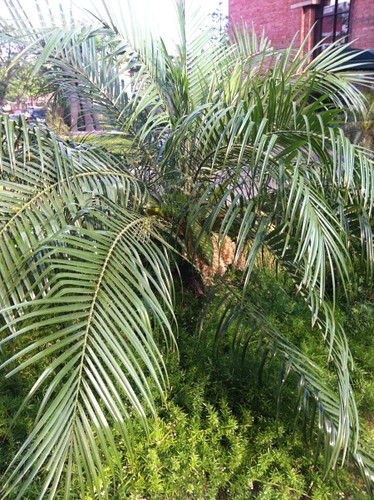
palm
Phoenix roebellini growing in a container.  Notice the white flowers.

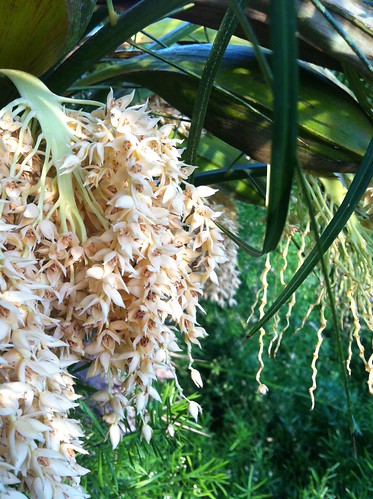
palm inflorescence
Close-up of Phoenix roebellini flowers.

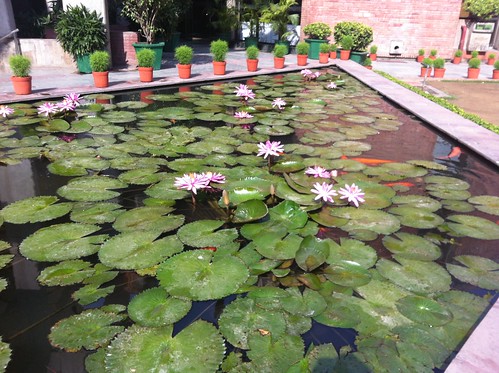
There was a beautiful lotus pond at the hotel.  In the morning and early afternoon the flowers were open.  By the heat of the afternoon they would close.

Lotus pond
Lotus pond at the hotel

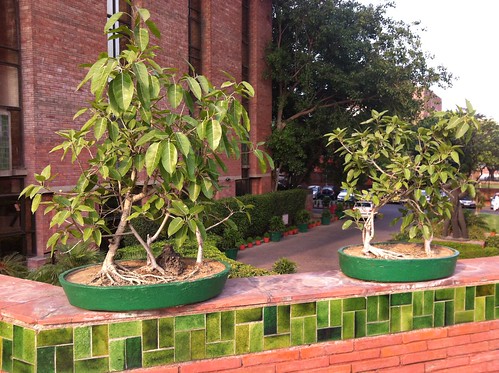
My hotel also had  a collection of bonsai trees.

bonsai Ficus
Ficus bonsai at my hotel

I walked about a mile from the hotel to the Lodhi Gardens.  Along the way I passed the India Islamic Cultural Centre, where there was a nice aroid (maybe Epipremnum) growing on the trunk of a deceased tree.

Epipremnum
Probably an Epipremnum

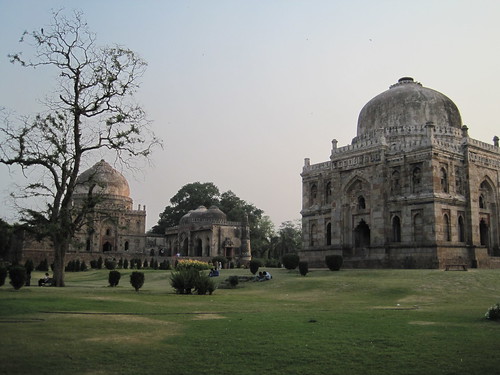
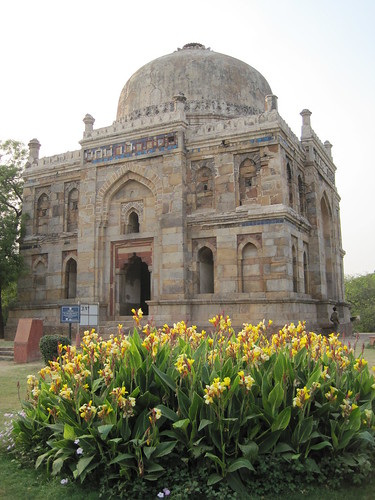
The Lodhi Gardens is a public park where a lot of families and friends congregate to just enjoy the outdoors.  Inside the gardens are several tombs and a mosque, beautiful old buildings dating back to the 1400s.

Lodhi Gardens
Tombs in the Lodhi Gardens

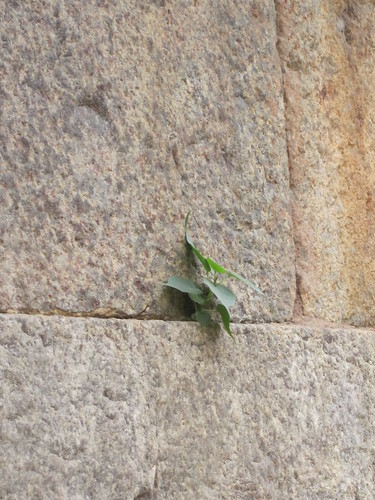
Ficus religiosa
A tenacious Ficus religiosa taking root in the cracks of an old tomb. Hopefully someone will yank it out before it turns this tomb into a pile of rocks.

Lodhi Gardens
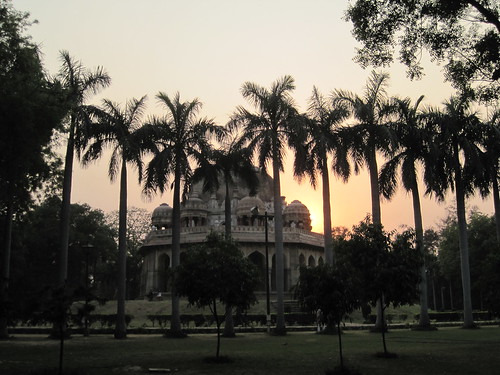
Sunset at the Lodhi Gardens

I wandered around the gardens until sunset, taking photos and enjoying the hot weather.

Lodhi Gardens
Beautiful Cannas in front of a beautiful tomb

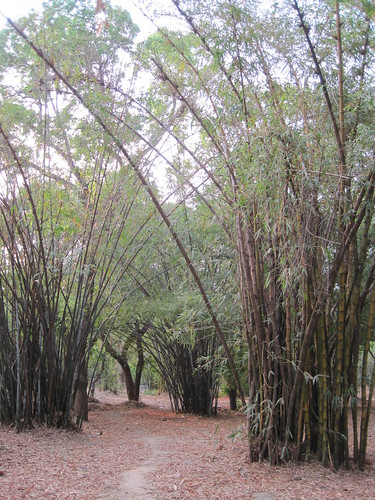
Bamboo stand
Stands of bamboo

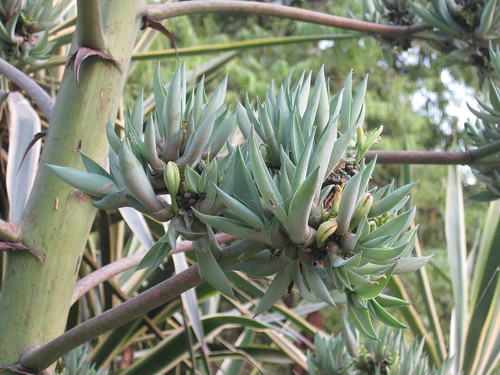
Agave babies
Agave plants forming on the bloom stalk of a parent plant

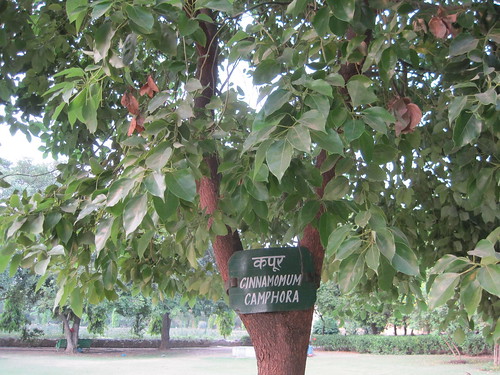
Many of the trees in the park were tagged with their species names, including this Cinnamomum camphora.

Cinnamomum tree
Cinnamomum camphora at Lodhi Gardens

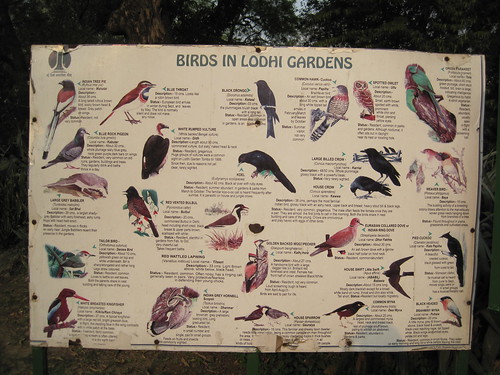
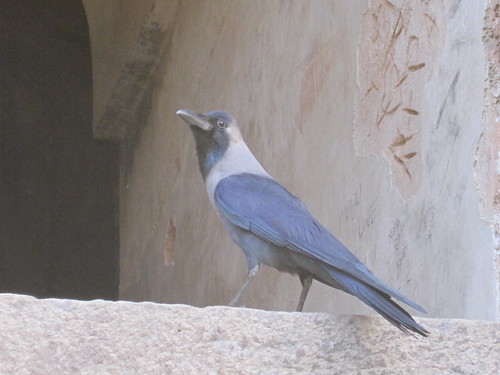
There were many interesting birds in the park and a large placard that identified some of them.  I identified Parakeets, Common Mynah, and House Crow.

bird identification chart
Placard of birds that can be found in the gardens

House Crow - Corvus splendens
House crow (Corvus splendens)

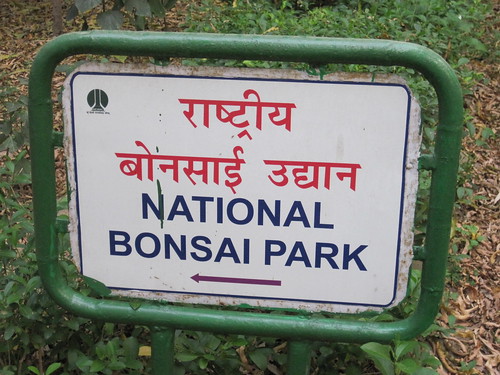
Within the grounds of Lodhi Gardens is the "National Bonsai Park." Apparently it closes earlier in the day, so I wasn't able to go inside.

National Bonsai Park at Lodhi Gardens
Closed.

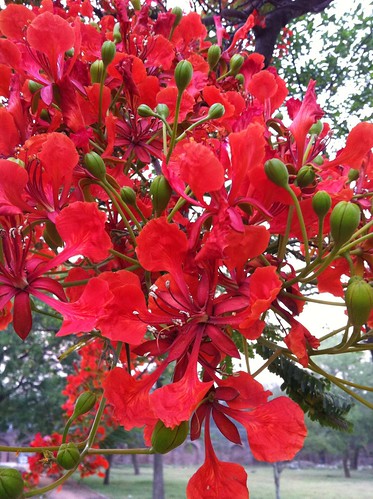
Down the street from Lodhi Gardens is the Safdarjung Tomb, which is a beautiful example of Mughal architecture.  It looks a bit like the Taj Mahal.  On the grounds was a beautiful fl0wering tree native to Madagascar.

Safdarjang tomb
Safdarjung Tomb in Delhi

Delonix regia
Beautiful flowers of Delonix regia, a Madagascan native.

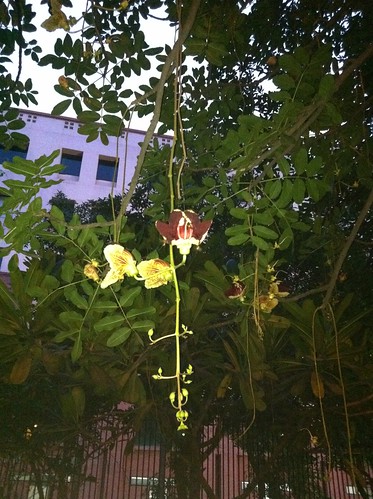
On the walk back to the hotel I passed a tree with interesting flowers hanging from inflorescences under the canopy at eye level.  It was dusk and my camera battery was dead, so I had to use my phone camera with flash, which resulted in a less than stellar picture.

Kigelia africana
Flowers of Kigelia africana

Some friends helped me identify this tree as Kigelia africana, the Sausage Tree.  I have seen these trees at Fairchild Tropical Botanic Garden in Miami, with their large seed pods that look like sausages, but I had not seen them in bloom before.

I really enjoyed my limited leisure time in Delhi and I hope to get to visit India again some day.

Tuesday, July 17, 2012

Trip Report: Ficus, Plumeria and Palms at Gardens by the Bay

For my one free day in Singapore, I set out to visit the recently-opened Gardens by the Bay, a garden that cost over 1 billion Singapore dollars to build.  I literally took 1,114 pictures during my 1 day in Singapore!  Needless to say, I won't be posting all of those pictures here.  I am trying to come up with a reasonable number of blog posts on a reasonable number of subjects and a small collection of photos.  First off are some trees from the outdoor gardens, specifically those of the Ficus, Plumeria and various Palm genera.

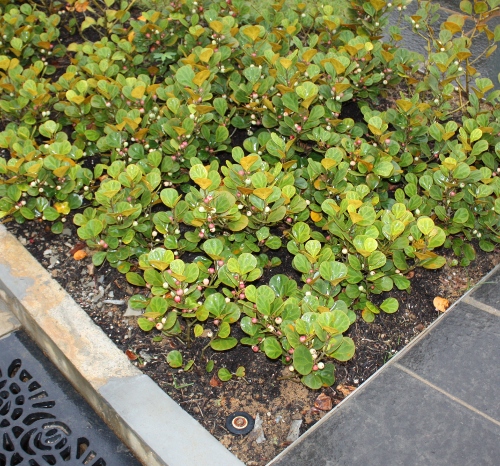
GBB has a great collection of trees, including several species of Ficus I had never seen before.  One of the first Ficus that I saw (and really admired) was Ficus deltoidea.  My friend, Shawn, that toured the gardens with me, said that Ficus deltoidea is quite common in Singapore and is even used as a hedge or ground cover.  Sure enough, later we saw it densely planted, as if intended to become a ground cover.

ficus_deltoidea
Ficus deltoidea


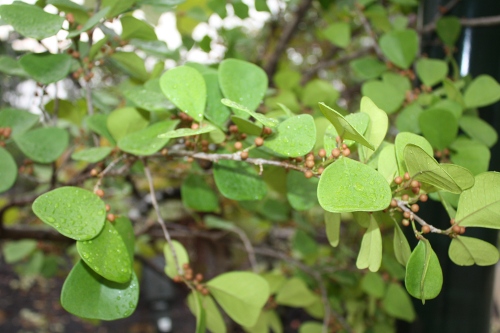
Ficus deltoidea gets its name from the appearance of the veins on the leaf, which look like a river delta.  There are a couple of other Ficus with triangular leaves.  The species Ficus natalensis ssp. leprieurii has very smooth, triangular green leaves and small brown figs.

ficus_natalensis_ssp_leprieurii
Ficus natalensis ssp. leprieurii, Triangle Fig


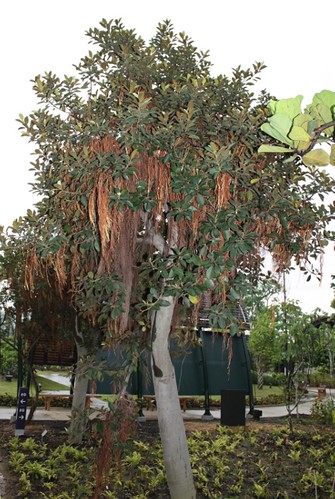
The Rusty Fig has a very prominent trunk, even when the total tree height is not tall.  The bark is smooth and gray.  The tree gets its name from the color of the undersides of the leaves.  This particular tree had a ton of aerial roots handing down from the branches.  My guess is that the gardens staff is going to have their work cut out for them keeping this tree in check.  It could easily take over and become a behemoth.

ficus_rubiginosa
Ficus rubiginosa, Rusty Fig


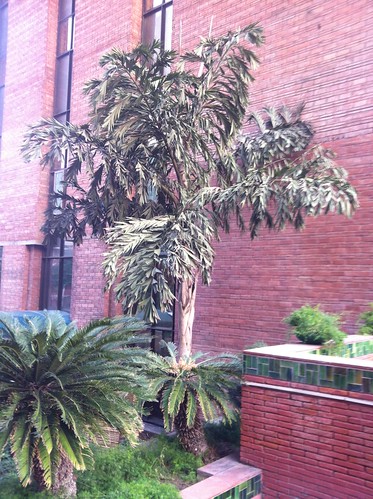
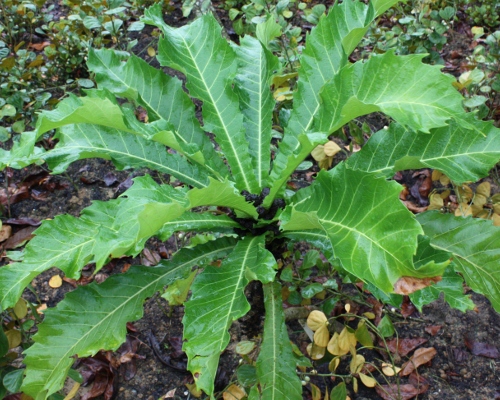
The most unusual Ficus award goes to the Philippine Fig, Ficus pseudopalma.  This tree was small, but really didn't look like a Ficus to me.  Like a palm, the leaves were all emerging from the crown of the tree, with the large black figs packed in at the base of the leaves.

ficus_pseudopalma
Ficus pseudopalma, Philippine Fig


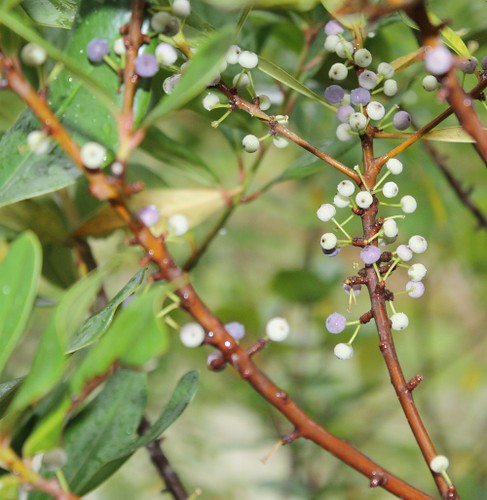
Most of the large trees were clearly identified with markers, but one Ficus that I really liked was missing a placard.  It had very small figs that were bluish in color.

ficus_blueberries
Unknown Ficus


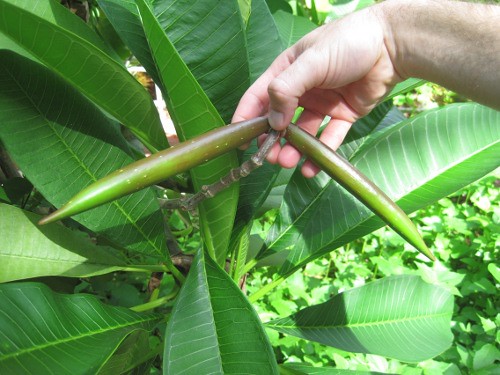
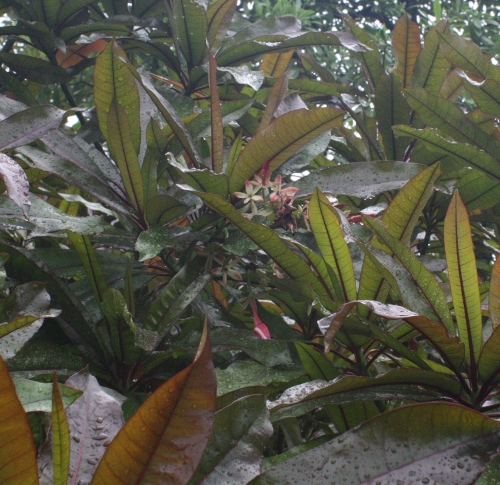
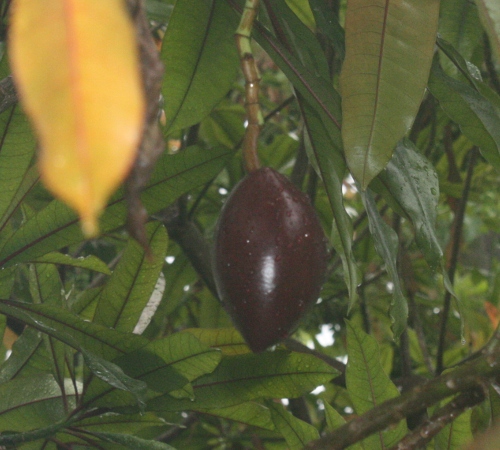
I am used to seeing Plumeria rubra trees in various flower colors in most tropical places.  The only other Plumeria species I have seen in Plumeria pudica, which has leaves of a distinctively different shape.  GBB had three other Plumeria (or at least what I thought were Plumeria) that I had not seen before.  One appeared to be the regular Plumeria rubra, but in miniature.  Another looked similar to Plumeria rubra, but had a purplish tint to the leaves.  The flowers were small and understated.  The fruit that formed after pollination was totally different from the fruit of Plumeria rubra; this one was fleshy, football shaped and dark purple.

plumeria_red
Mystery tree with colorful leaves and small flowers


I have enlisted the help of my friends in tracking down the identity of this mystery tree.  They are thinking that it is not a Plumeria afterall.  One possible genus is Cerbera.  I am still looking for the correct ID.

plumeria_red_fruit
Fruit or seed pod from the mystery tree.


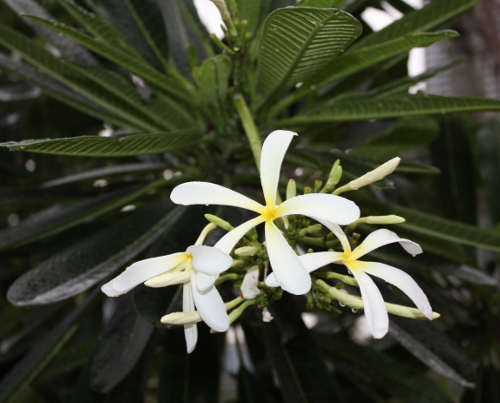
The other interesting Plumeria was labeled as Plumeria obtusa 'Hanging Windmill.'  The flowers of this tree are spidery and white and the foliage is much darker than the typical Plumeria.

plumeria_obtusa_hanging_windmill
Plumeria obtusa 'Hanging Windmill'


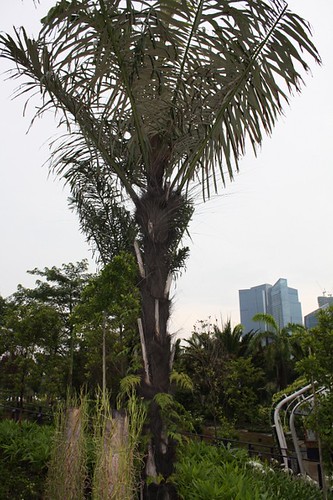
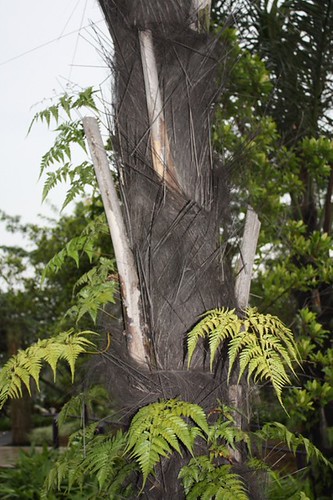
Of course, there were lots of palm trees at GBB, but I am still only casually taking notice of palms when they strike me as very different from other palms I have seen.  One that fit this bill was Arenga pinnata, which had very dark fiber up the entire trunk.  This is known as the sugar palm, because the unopened inflorescence can be tapped to yield a sugar water.  This palm is important to the diet of the endangered Cloud Rat.  Yes, that is a real animal.

arenga_pinnata
Arenga pinnata, Sugar Palm


arenga_pinnata_detail
Arenga pinnata trunk


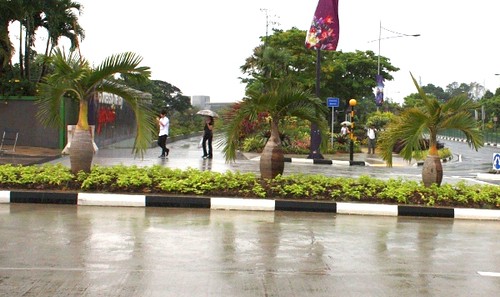
The other palm that caught my notice was a bottle palm, Hyophorbe lagenicaulis.  There was a row of these along a median at one of the entrances to the park.  They just have a really neat shape to them, don't they?


hyophorbe_lagenicaulis
Hyophorbe lagenicaulis, Bottle Palm


Well, this is something like episode 1 of 10, chronicling my trip to Singapore's Gardens by the Bay.  So stay tuned for many more photos and posts soon!

Monday, December 19, 2011

The Sacred Bodhi Tree

As legend has it, the founder of the Buddhist faith, Siddhartha Gautama, gained his enlightenment after meditating for 49 days underneath a tree.  That tree, for obvious reasons, has been sacred to the Buddhist faith ever since.  In many ways it is equivalent to the cross on which Christ was crucified.  Some old Christian churches claim to have pieces of the original cross and those pieces are considered holy relics.

The Bodhi tree is unique in that it is a living relic, so it continues to spread throughout the world over time.  The Bodhi tree has been given many names including "Bo tree" and "pipal tree."  These names are used in reference to the original tree, as well as all trees of that species.  The Latin for this species is Ficus religiosa.  It is a large Banyan, fig tree.  The original tree was located in northeastern India, near the border with Nepal.  Since then, the tree has been propagated to several different locations, resulting in a chain of highly-revered trees which have a tie to world history.  One of the famous propagated trees is in the Foster Botanical Gardens in Honolulu, Hawaii.  Christie and I visited that garden in May 2009 and saw the gigantic Buddha tree.

Recently the tree growing in the Foster Botanical Garden began to set seed.  In Hawaii, this is worthy of concern, as the tree could become invasive, if the seedlings are not removed while they are small.  My good friend, Leland, who has ties to the Foster Botanical Garden, obtained some of these seedlings and sent them to me.

Ficus religiosa
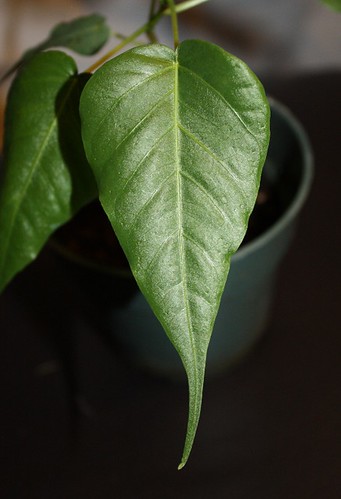
Ficus religiosa leaf


The leaves of this tree are beautiful: cordate with an extended tip, giving them an unmistakable appearance.

Ficus religiosa
Ficus religiosa sapling

Friday, October 21, 2011

Trip Report: West Martello Tower

martello_archway
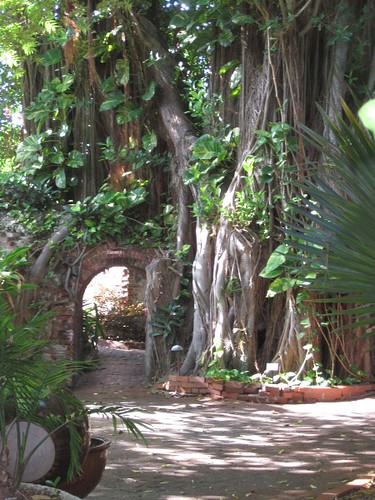
Strangler fig covering a section of wall at the Martello Tower
On the island of Key West, not far from the marker for the "southern most point in the continental US" is the West Martello Tower and gardens, which is maintained by the Key West Garden Club.  This beautiful garden is the site of a never-completed fort, which is really just a great setting, with brick walls of various heights and wandering paths through what is not a lush tropical garden.

cp_martello
Christie enjoying the beautiful Martello Tower gardens
I have to admit, I enjoyed visiting here much more as it is today than I would have if it had been completed and now stood as a military historical site.
bromeliad_brick
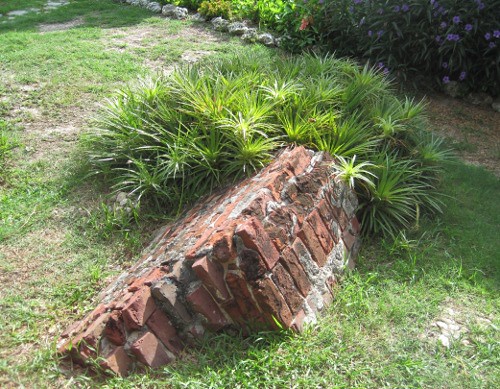
Bromeliads planted around a collapsed portion of wall
The grounds are filled with nice compositions, including the nice spot above where some chunk of brick wall has collapsed and lays half buried, book-ended with a spreading bromeliad.
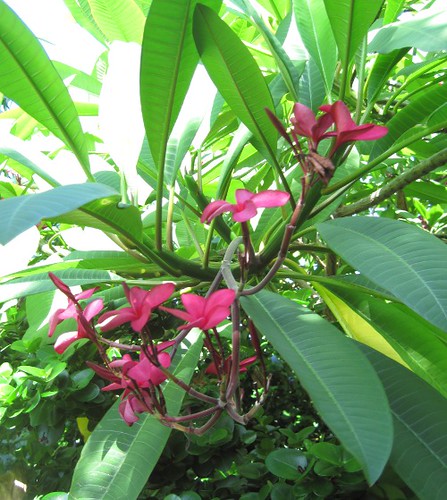
plumeria_rubra_blooms
Gorgeous Plumeria rubra blooms
plumeria_seed_pod
Interesting Plumeria seed pods
Many people are familiar with the Plumeria pictured above. This is sometimes called Frangipani. It has a beautiful flower, which has been bred for different colors. But the tree is more or less the same for each of these different bloom colors. The Martello Tower Gardens had another species of Plumeria (below), which I hadn't seen before this Florida trip. Plumeria pudica has a different shaped leaf and the flowers are pure white, with the slightest bit of yellow in the center. (It's hard to see the yellow in my image due to the bright sun.)
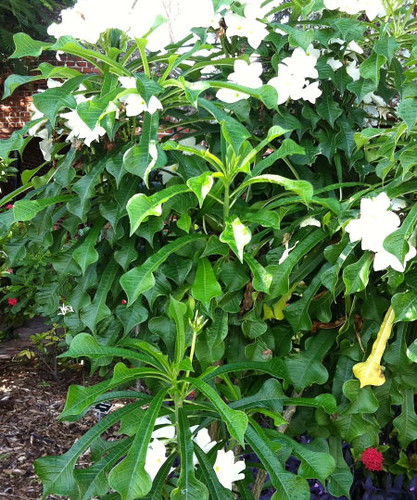
plumeria_pudica
Plumeria pudica
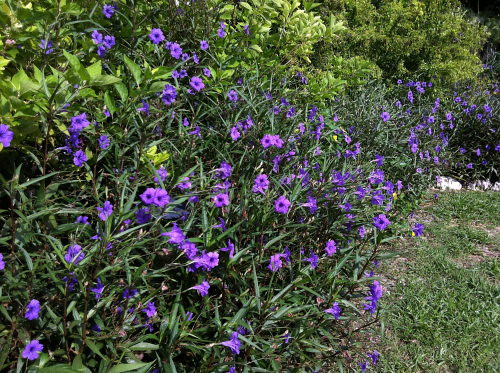
ruellias
Lots and lots of Ruellias!
I have seen Screwpine trees (Pandanus) in just a couple of places.  They are known for their network of stilt roots, which are usually spiny.  The first time was in the tropical dome at the Missouri Botanical Gardens in St. Louis.  The second time would be in conservatory at the Fort Worth Botanic Garden, where there is a large Pandanus whose huge stilt roots reach into the water of the adjacent pond and fragment into a million tiny roots.  That was a site to see.  There are also quite a few Pandanus growing at the Fairchild Tropical Botanical Gardens in Miami.
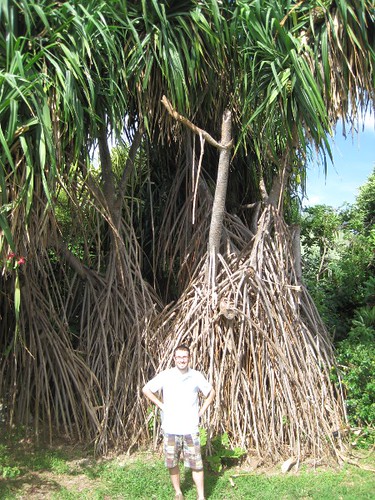
pandanus_sanderi
Pandanus sanderi tree with amazing prop roots
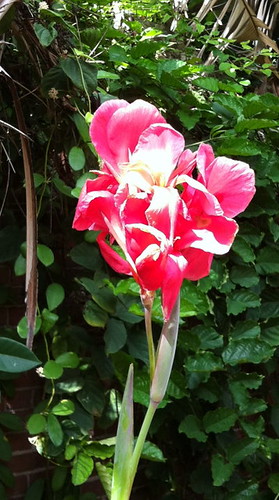
pink_canna
Dark pink canna
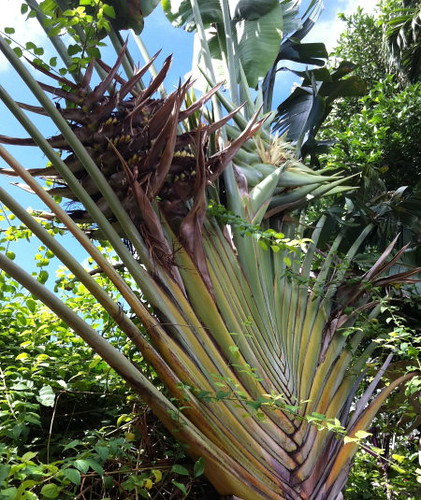
traveller_palm_bloom
Traveller's palm (Ravenala madagascariensis) in bloom
The tree pictured above is called the Traveller's Palm, although it is not really a palm.  I have seen these trees in just about every tropical, beach front area I have visited and always just assumed they were in the palm family (Arecaceae) or possibly the banana family (Musaceae).  But when I saw this tree at the Martello garden I realized it had to be in the same family as the Bird of Paradise (Strelitziaceae).  The bloom bracts are unmistakeably similar.  Reading the wikipedia page confirmed my conviction and also mentioned that this tree was once upon a time placed in the banana family - just as I would have put it, without seeing a bloom.  It belongs to the monotypic genus, Ravenala, and is native to Madagascar.
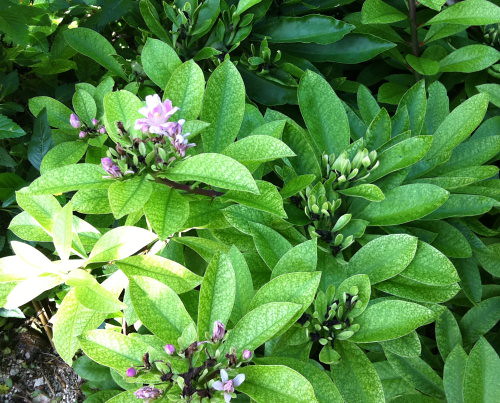
pereskia_grandifolia
Rose cactus - Pereskia grandifolia
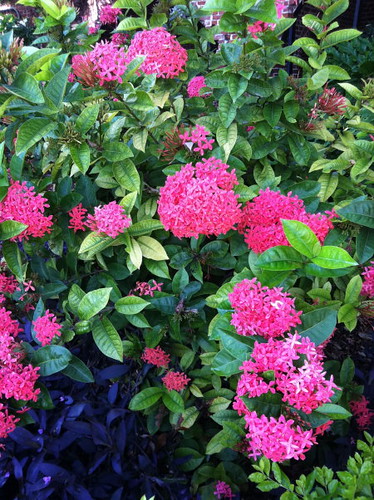
The plant pictured above is called "rose cactus" because it has nice blooms and some killer thorns.  It is actually a cactus, which kind of surprised me, since it does not have the normal succulent look to it.  We saw Ixora all over southern Florida and I really liked their profusion of blooms - usually coral in color, like the plant pictured below.
ixora
Coral colored Ixora
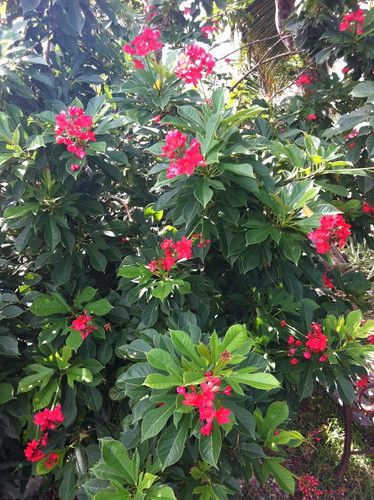
I think the Jatropha (below) was probably my favorite blooming plant at the Martello Tower, with dark leaves of interesting shapes and vibrant and contrasting blooms.
jatropha_integerrima
Jatropha integerrima
Well, the first half of this post was the colorful half.  The rest is shades of green only.  These happen to be some of my favorite plants.  I was really excited to see that the Key West Garden Club has a nice collection of Dieffenbachias and Aglaonemas inside their tower walls.  The plants are exposed to the elements and natural sunlight, but are inside a bricked area, so they are probably a little more sheltered.  Also, these plants were all growing in pots, whereas most of the rest of the plants in the gardens are growing in the ground.
pellionia
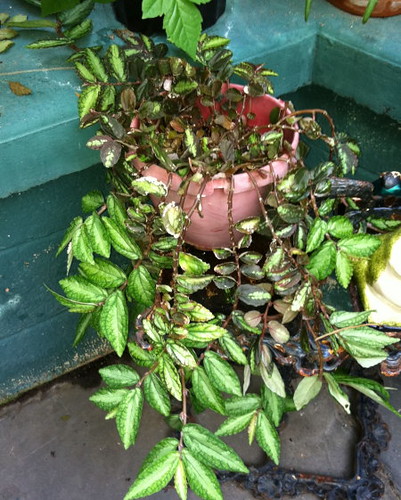
Pellionia repens
But before we get to all of the Dieffenbachias, check out this large Pellionia repens.  I thought it was interesting to see how the leaf colors vary on this plant.  I have this species myself, growing in a tall glass terrarium.  It is sometimes referred to as "Trailing Watermelon Begonia," but it is not actually from the Begonia genus.  Good thing, because I have more luck with this plant, than I do with Begonias, generally speaking.  This species is probably the second most common Pellionia, after Pellionia pulchra.
dief_1
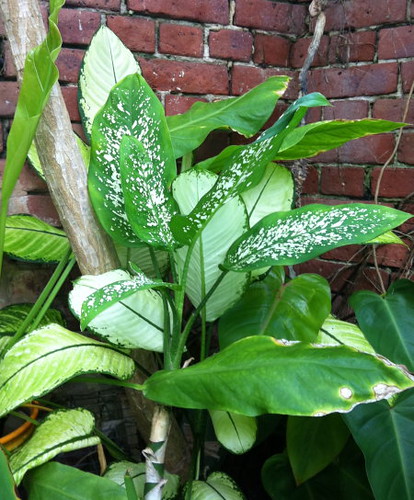
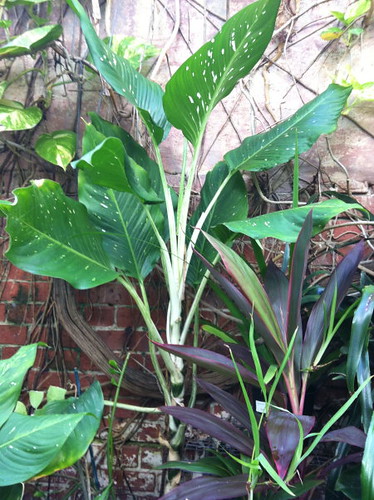
Dieffenbachia oerstedii
dief_2
Dieffenbachia maculata
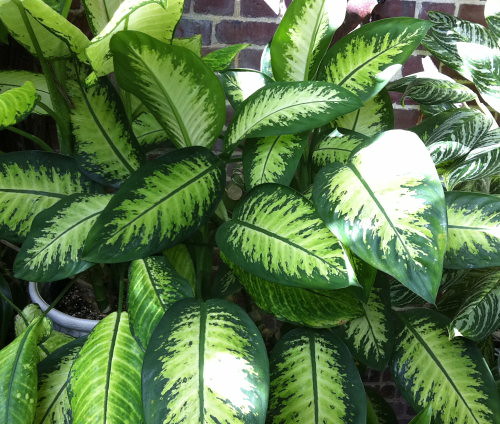
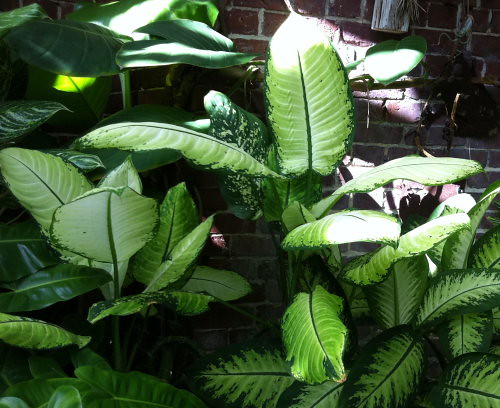
I didn't know the ID of any of these Dieffenbachias for sure, but I had a pretty good idea about the one that turned  out to be Dieffenbachia amoena 'Tropic Snow'  because my mom has that one.  I consulted with my Dieffenbachia enthusiast friends and got help on the other names.  It turns out that the speckled plant pictured above is the species Dieffenbachia maculata and the plant below is a cultivar, Dieffenbachia maculata 'Rudolph Roehrs'.  In some cases, the cultivar reverts to the original species, as shown in this picture by my friend, Russ Hammer.
dief_3
Dieffenbachia maculate 'Rudolph Roehrs'
dief_4
Dieffenbachia amoena 'Tropic Snow'
The Martello Gardens also had a small, but happy collection of orchids and a small collection of bonsai trees.  The bonsai trees were all mislabeled, which I found to be interesting, but not surprising.  I bet they were all repotted at some point and then the labels got put back in the wrong pots.  I did notice that one label was in the wrong pot, but some of the labels didn't match any of the plants I saw.  Regardless, I could appreciate their appearance and really enjoyed my time at this garden!