Showing posts with label Kalanchoe. Show all posts

Thursday, April 5, 2018

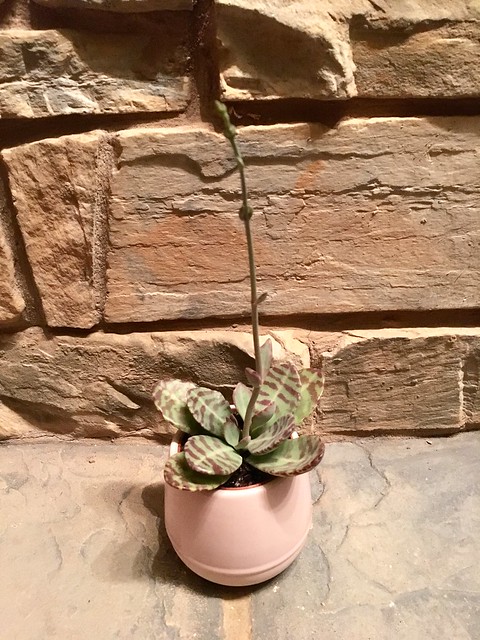
Plant Find: Kalanchoe humilis

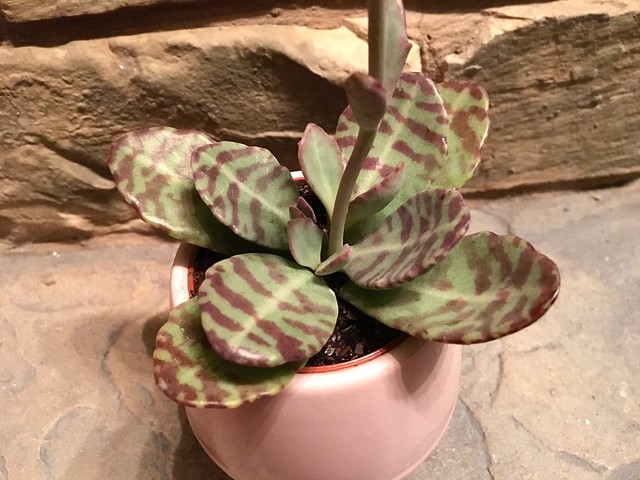
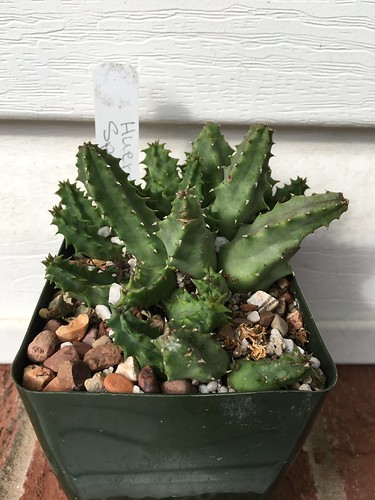
Not a lot to say about this little cutie. I found him at IKEA a couple of weeks ago and he will be blooming shortly.

Kalanchoe humilis

The plant was actually labeled "Echeveria." After some back and forth with some friends, we found the correct name for this strongly-patterned succulent.

Kalanchoe humilis

Monday, February 12, 2018

Trip Report: Desert Botanical Garden

I recently traveled to Phoenix for work and managed to get some free time for exploring the Desert Botanical Garden, which was conveniently close to my hotel and the airport. Before going to Phoenix I looked for some good birding hotspots and was really excited to see that one of the best places to go birding in Phoenix is a botanic garden. Two birds with one stone! (plants and birds)

Untitled
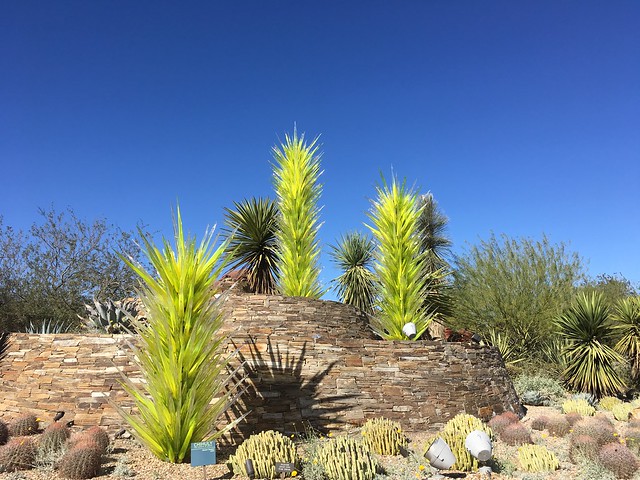
Chihuly glass at entrance

Untitled

While I'm at it - a bird in the hand is worth nothing compared to two birds in a bush! Who wants a bird in their hand? A bird in the bush is much easier to photograph, and you're photographing the bush at the same time! Plants and birds, that's what I'm talking about!

IMG_6921

Phoenix is a beautiful city and I enjoyed it much more than I expected. I'm sure the 79 degree high temperature each day helped, almost 60 degrees warmer than back home.

Untitled

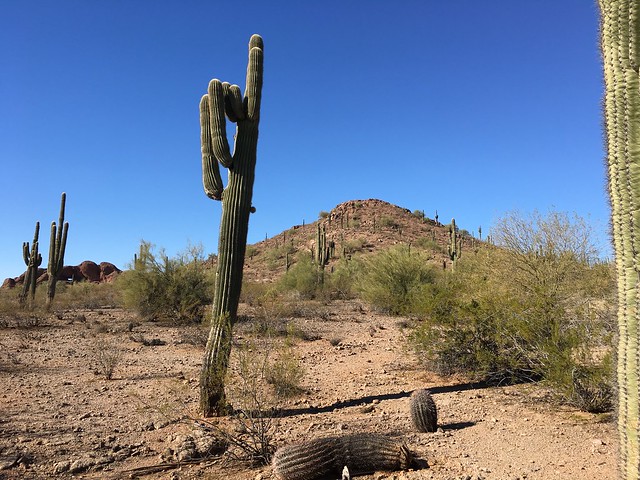
The Desert Botanical Garden is a beautiful, well maintained garden with lots of interesting plants. The entry garden is awesome and wandering just a bit further in there is a cacophony of sound - Gila Woodpeckers, Verdins, and Costa's Hummingbirds constantly trilling, chirping, and whistling. I really liked the Desert Wildflower Loop, which was particularly buzzing with hummingbirds. The Sonoran Desert Nature Loop is in more open scenery with many Saguaro cacti in sight.

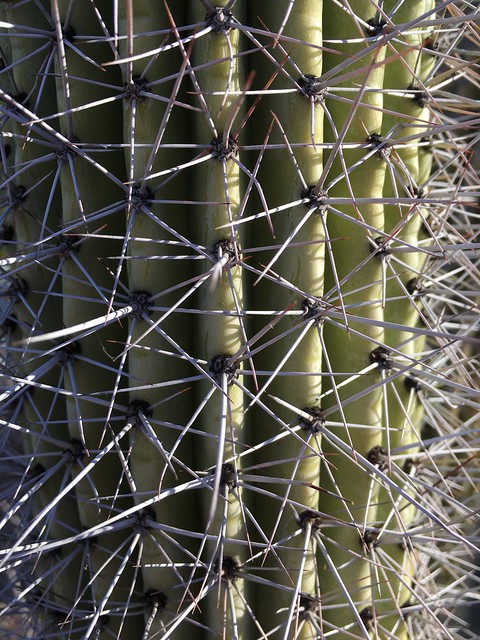
Saguaro

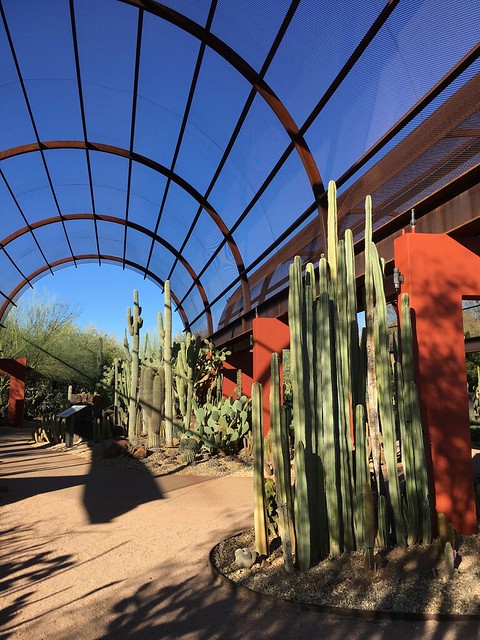
The Cacti and Succulent Galleries are made up of some large metal structures that provide shade and protection for some smaller and more tender plants, such as Lithops, Stapelia, Kalanchoe, and Aloe.

Untitled

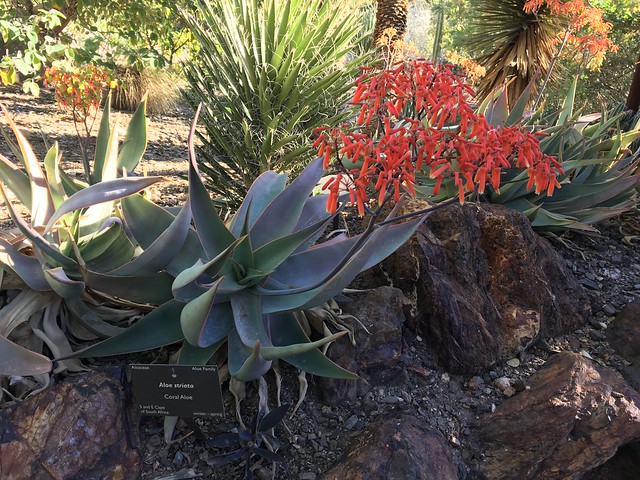
There were several Aloe in bloom while I was there. Their vibrant flowers contrasting with the wide solid green leaves are something to see.

Aloe striata - Coral Aloe

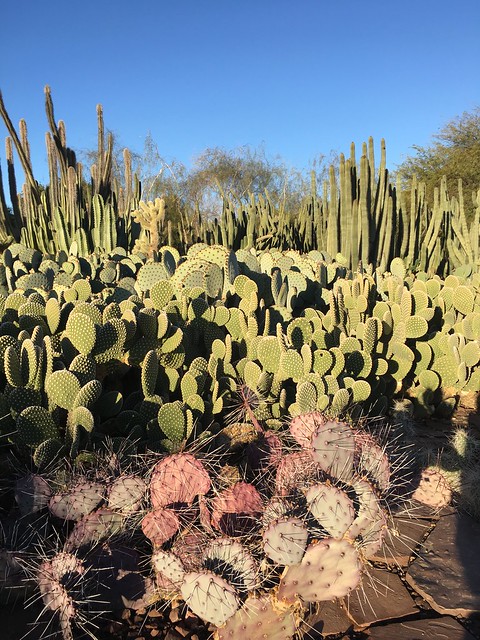
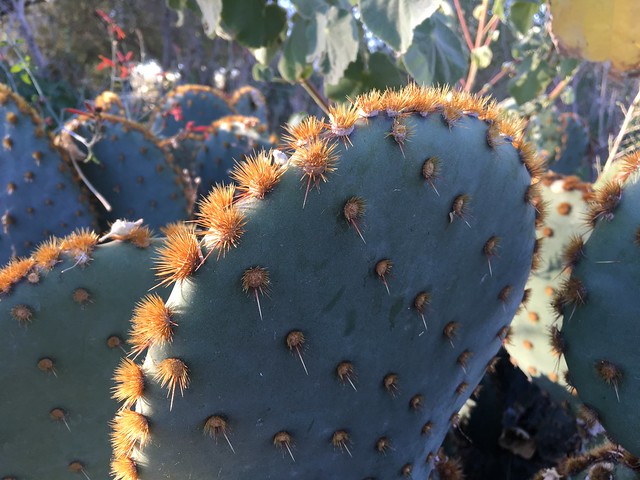
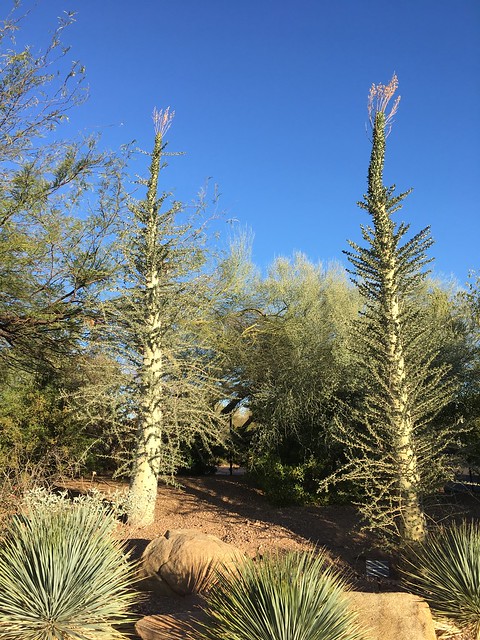
I am not a big collector of cacti and succulents, but seeing these plants growing in mass and in their natural habitat was really fun. There was plenty that caught my eye, from the purple-tinted Prickly Pears (Opuntia gosseliniana var. santa-rita), to the spiny mounds of Jumping Cholla (Cylindropuntia fulgida), the cone-shaped Boojum Trees (Fouquieria columnaris), and the towering native Saguaro (Carnegiea gigantea).

Opuntia aciculata - Chenille Prickly Pear

Fouquieria columnaris - Boojum Tree

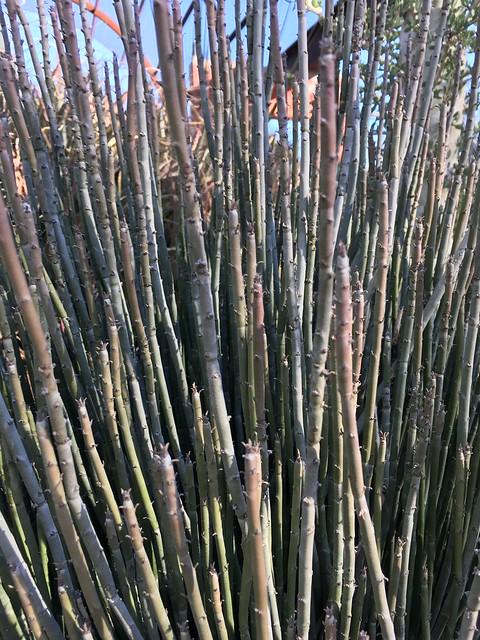
Euphorbia antisyphilitica - Candelilla

I managed to add 13 new bird species to my life list, which is more than I expected.

You can see more of my photos from the Desert Botanical Garden here.
Friday, June 16, 2017

Cactus and Succulent Show 2017

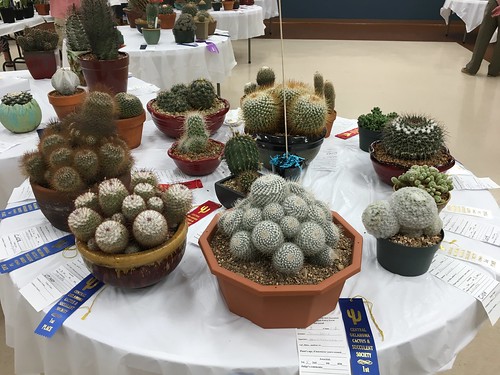
I have attended the annual show of the Central Oklahoma Cactus and Succulent Society (COCSS) for the last several years.  Although I don't spend a lot of time thinking about these plants or actively collecting them throughout the year, I always enjoy the show and find some really good deals on interesting plants.

Central Oklahoma Cacti and Succulent Show
Some nice plants that received ribbons in the show area.

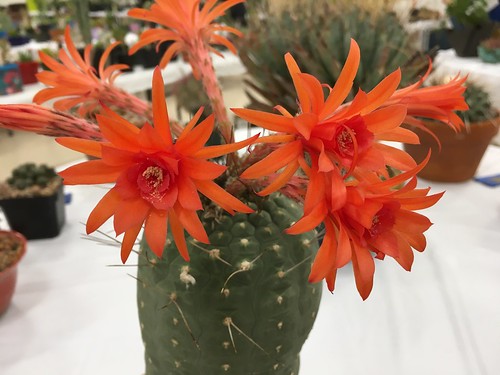
Matucana madisoniorum
Matucana madisoniorum - the most striking flowers at the show.
I only took a few photos of show and sale plants this year other than the ones I purchased.

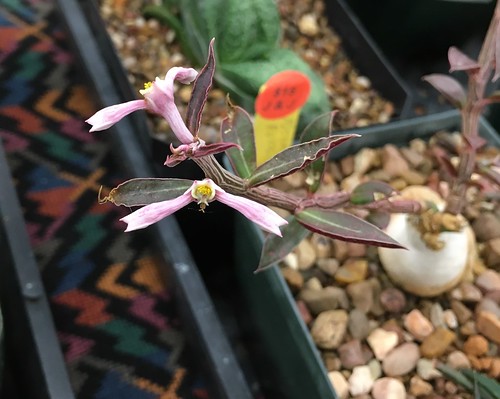
Euphorbia neorubella (labeled as Monadenium rubellum)
Euphorbia neorubella
This year I purchased 7 plants: Kalanchoe tomentosa, an unlabeled Huernia species, Huernia keniensis, Caralluma europea, Opuntia violaceaTillandsia tricolor v. melanocrater, and Tillandsia schiedeana.

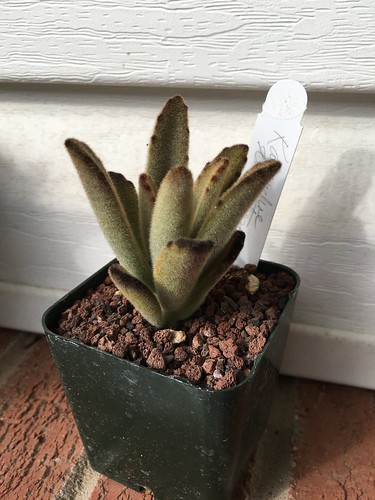
Kalanchoe tomentosa
Kalanchoe tomentosa

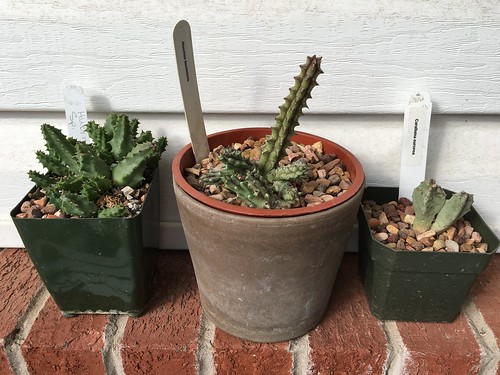
Huernia sp., Huernia keniensis, and Caralluma europea

Huernia sp
The unidentified Huernia
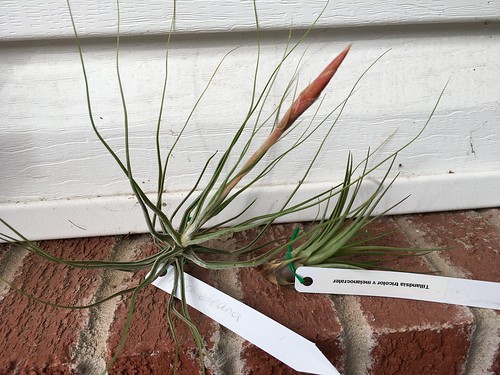
Tillandsias aren't truly cacti or succulents, but the term "succulents" is already rather broad and is not taxonomically linked, like "cacti" is to the family Cactaceae.  I guess cacti and succulent people just like Tillandsias and brought some to sell.  I'm excited because one of them is on the verge of blooming.

Tillandsia schiedeana and Tillandsia tricolor v. melanocrater
As I've mentioned before, my favorite succulents are the Stapeliads.  I have found that I can grow them pretty well, so I try to focus my money on those plants.  With my recent purchases my Stapeliad collection now includes 10 species:
  • Caralluma europea
  • Huernia sp (unknown species)
  • Huernia confusa
  • Huernia keniensis
  • Huernia penzigii
  • Huernia schneideriana
  • Stapelia ambigua
  • Stapelia flavopurpurea
  • Stapelia gigantea
  • Stapelia hirsuta
I've had some others in the past, but have lost some over the years.

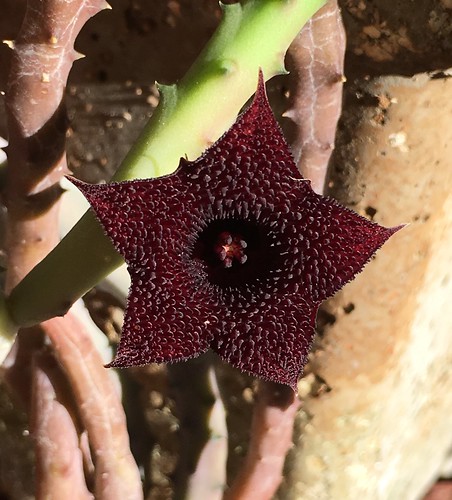
Huernia penzigii
A recent bloom on my Huernia penzigii
A friend from northwest Arkansas came over for the show. I met him and his wife there and we exchanged a few plants and visited for a short time.  He brought me a neat Sinningia tubiflora, which was bred for hardiness in our region, as well as Kalanchoe beauverdii and Bryophyllum fedtschenkoi. Hopefully the Sinningia will flower for me soon and I'll share some photos.

Thursday, March 31, 2011

Mammals of the Plant Kingdom

Some plants have a unique way of "giving birth" to their offspring that is called vivipary.  The difference between these viviparous plants and those that scatter seeds is that the new plant begins to grow while still attached to the parent plant.  Here are some examples:

iris_vivipary
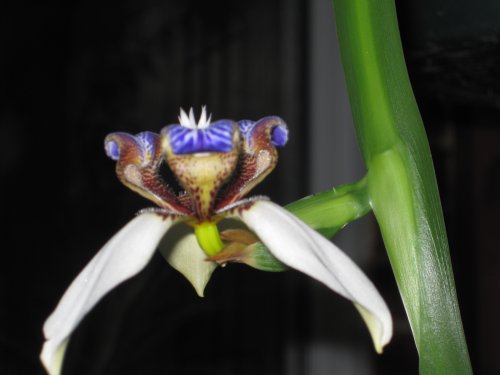
Walking Iris (Neomarica gracilis) bloom with plantlet forming

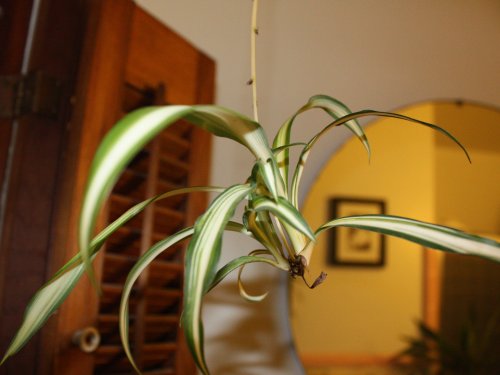
The Walking Iris Neomarica gracilis (pictured above) is so named because of it's propagation habit.  Most Iris bloom on stems that only include flowers.  The Walking Iris blooms from the ends of it's normal leaves.  Usually several blooms follow in succession over a period of a couple of weeks.  All the while, a new plant is forming at this junction.  The weight of the new plant at the end of this leaf blade will make contact with the ground, where the new plant will establish itself.  This is similar to the common houseplant called Airplane or Spider plant Chlorophytum comosum (pictured below).

chlorophytum_offset
Spider plant (Chlorophytum) plantlet
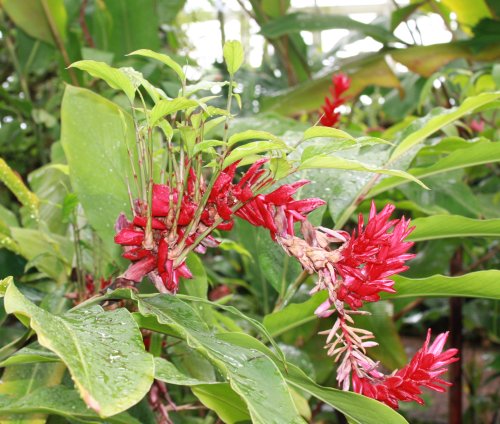
Some gingers (like the one pictured below) produce flowers that are pollinated and produce seed, which immediately germinates and begins to grow on the plant, weighing down the stem until it is upon the ground, where the new plants become established.  I have seen this same type of ginger demonstrating this behavior in the Oklahoma City Myriad Gardens and in Jamaica - a more natural habitat.

ginger_vivipary
Ginger at the OKC Myriad Gardens with new plantlets forming in the blooming bracts
Now true botanical (plant) vivipary (live-birth-ness), results from seeds germinating while still on the host plant.  In some of these cases, the plantlet that forms on the parent is not a result of seed germination, so it is not really true vivipary.  Plants can produce new offspring in just about every imaginable way - from the roots, from the leaves, from the junction of petioles and stems - pretty much every piece of plant anatomy is used for propagation by some plant species.  Surely not all of this is viviparous behavior, right?

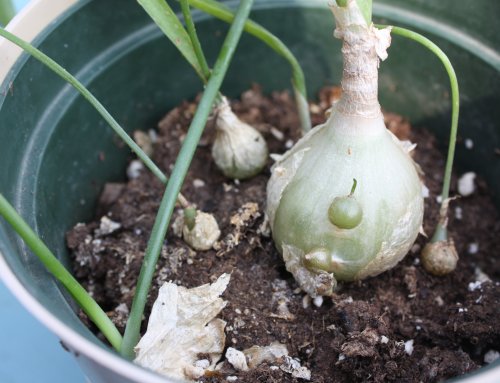
I'm not a botanist, but I try to understand some of the terminology.  There is a condition which is called pseudovivipary which is defined as "a condition in which vegetative propagules replace some or all of the normal sexual flowers in the inflorescence."  To me, this means that a plant is able to produce new plants without necessarily producing flowers, seed, etc.  A good example of this might be the Pregnant Onion, which produces new plants within the "skin" of it's bulb.  As the new plants mature, they will fall away from the parent plant become independent.  At which point the parent bulb cries "They grow up so fast!"

pregnant_onion_closeup
Pregnant Onion (Ornithogalum longibracteatum) with many baby plants

I had actually planned to write about this since I read this term in a book I read a couple of months ago.  Then I saw that Derek had posted about this same topic on Plantgasm.  He beat me to it, but it also gives me a good reason to link to his blog, which I really enjoy.  Derek has some great time lapse presentations of different plants producing new leaves (including aroids) or flowers opening.  I highly recommend you check them out!

Do you know of any other plants that demonstrate viviparious behavior?

Monday, February 2, 2009

Kalanchoe in bloom

My Granddad gave me a Kalanchoe last fall.  He had been growing it for quite a while and it was pretty large and very healthy.  My Granddad has always had a greenthumb and is one of my family members (including my mother and grandmother) who inspired my interest in plants.

I have seen some small Kalanchoe in bloom before and I am vaguely familiar with them, although I have never had one before myself.  Initially, when I received the plant I mistook it as a member of the Crassula genus - some sort of Jade plant, I thought.  I did some searching and couldn't find a species that looked like my plant.  It was a couple of months later before it dawned on me that the plant was actually a Kalanchoe, which is, admittedly, at least in the same family as the Jade plant (Crassula genus).

At least a month ago my Kalanchoe started producing buds - a lot of them.  At this time, I still didn't know the identity of my plant.

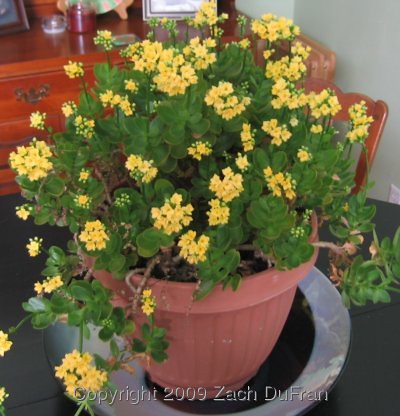
Now, the identity is certain and the buds have opened.  It might be a little hard to tell by the picture, but this is a pretty large plant.  The pot is 12 or 14 inches in diameter.

kalanchoe
My Kalanchoe in bloom
My Kalanchoe has been extremely easy to care for.  It is one of those plants that thrives in neglect.  I haven't neglected it in a negligent manner, though.  :) I have simply left it alone, knowing that it didn't need a lot of care.  I look forward to seeing this plant bloom on a yearly basis now.