Showing posts with label Stapelia. Show all posts

Wednesday, September 5, 2018

A couple Huernia blooms

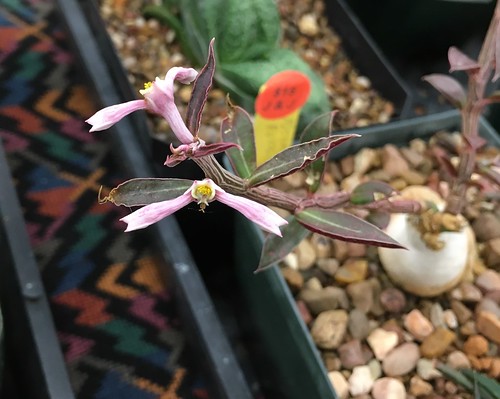
Without a doubt, Huernia is my favorite succulent genus. This genus is in the Stapeliaceae family, closely related to the common carrion flower/starfish plant, Stapelia gigantea. I have amassed a pretty good collection of these plants and always seek them out at the Central Oklahoma Cacti and Succulent Show. This year I purchased a new one that was labeled Huernia sp. The petals of the flower reflex after a day or two, resulting in a different appearance (shown in second photo).

It bloomed not long after the show and I was able to get some help identifying it as either Huernia procumbens or a hybrid of that species.

Huernia procumbens

Huernia procumbens

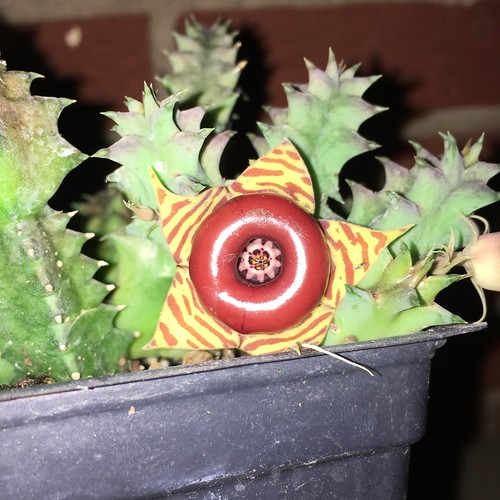
Another Huernia that I picked up recently is Huernia zebrina, which has very distinct yellow and red flowers. This plant is sometimes called the Lifesaver Plant, due to the red ring that forms in the center of the flower, similar to the plant above, but more pronounced and much more colorful. I was delighted when the first flower opened on my plant and have been pleasantly surprised to see this plant flower constantly all summer for me. There have been as many as 5 flowers open on the plant at one time.

Huernia zebrina

Thursday, August 3, 2017

unidentified Huernia in bloom

[UPDATE 2017-09-15:  I have been informed that this plant is Huernia bayeri. ]

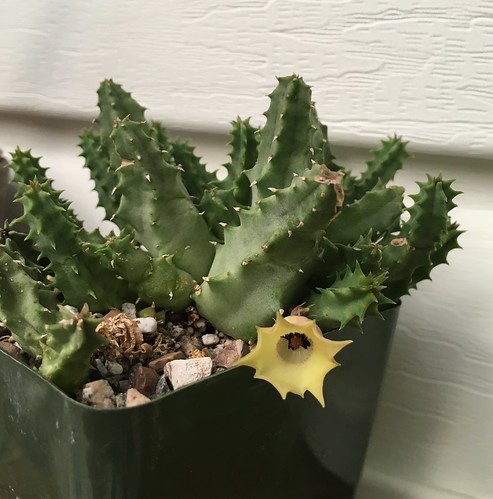
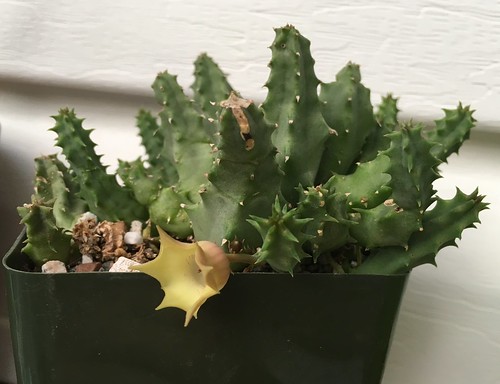
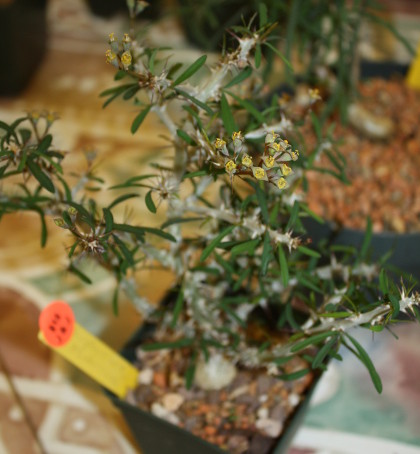
The unknown Huernia that I purchased at the cacti and succulent show and sale this year is now blooming.

Huernia sp.
Huernia sp.
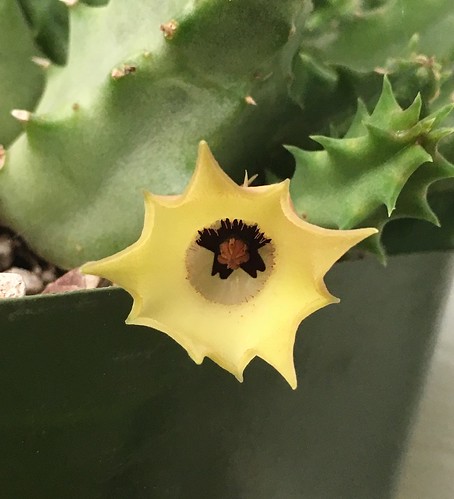
Maybe this will help me identify the plant to species level.  The flowers are small bell-shaped pale yellow stars. 

Huernia sp.
Huernia sp.
I almost overlooked it when watering.  There is just one flower open so far, but there are a few more buds on the plant. 

Huernia sp.
Huernia sp.
I'm glad to see it is happy in my care.

Wednesday, June 28, 2017

Stapelia hirsuta

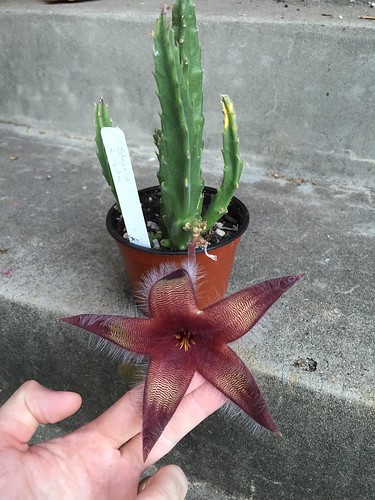
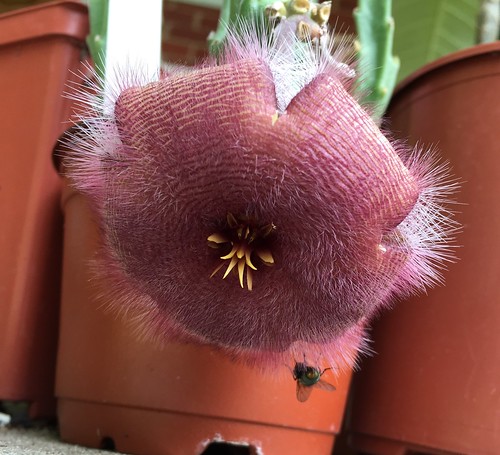
My recent post about the cacti and succulent show had me looking back at my photos of my Stapeliads and I realized that I had never uploaded photos from when my Stapelia hirsuta bloomed last September.  It was a busy time of year, shortly after our son joined our family, and we were getting used to being responsible for two kiddos!

Stapelia hirsuta
Full plant in flower

Stapelia hirsuta
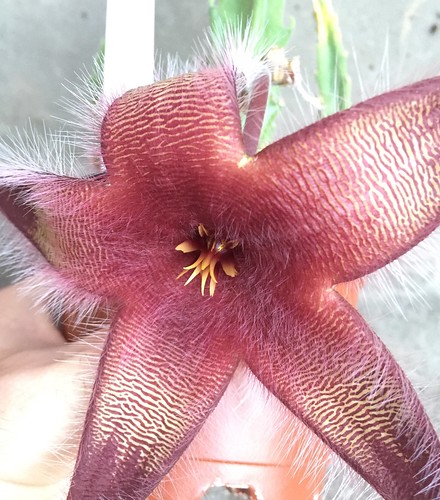
Check out all that hair

This species is very similar to Stapelia gigantean, which blooms for me regularly.  The plant itself is nearly identical when not in bloom.  The flowers of S. hirsuta are more red with yellow rather than yellow with red and they are also much hairier, hence the specific epithet "hirsuta" (hirsute = hairy).

Stapelia hirsuta
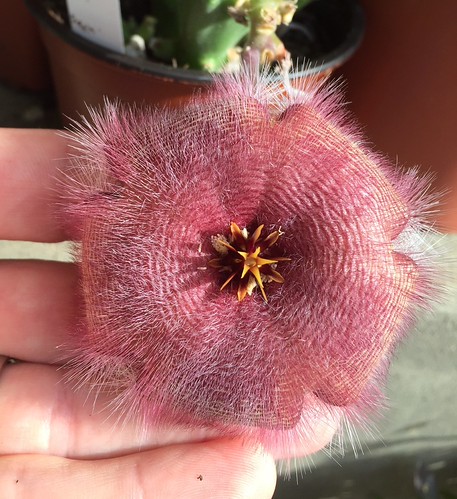
Petals have reflexed backwards

Stapelia hirsuta
This house fly thinks he has found some dead meat

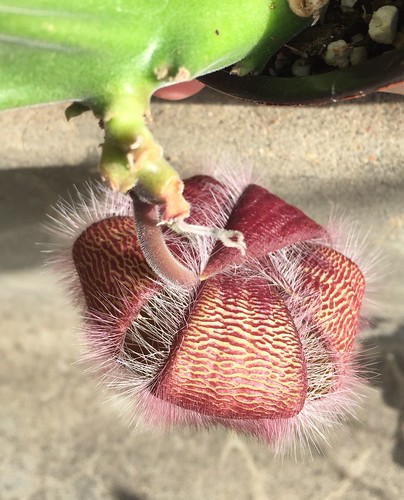
What struck me most about the flowers was how strongly the petals reflexed backwards when the flower opened.  I haven't noticed this with any other Stapelia species.

Stapelia hirsuta
A look at the reflexed petals from the backside of the flower

Friday, June 16, 2017

Cactus and Succulent Show 2017

I have attended the annual show of the Central Oklahoma Cactus and Succulent Society (COCSS) for the last several years.  Although I don't spend a lot of time thinking about these plants or actively collecting them throughout the year, I always enjoy the show and find some really good deals on interesting plants.

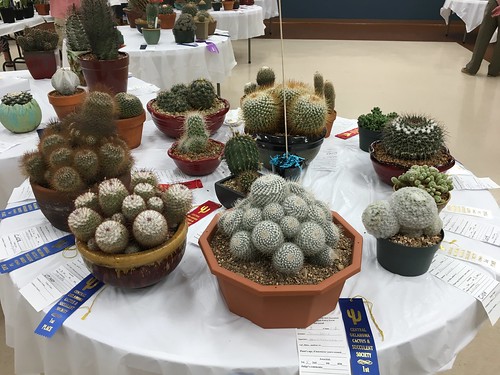
Central Oklahoma Cacti and Succulent Show
Some nice plants that received ribbons in the show area.

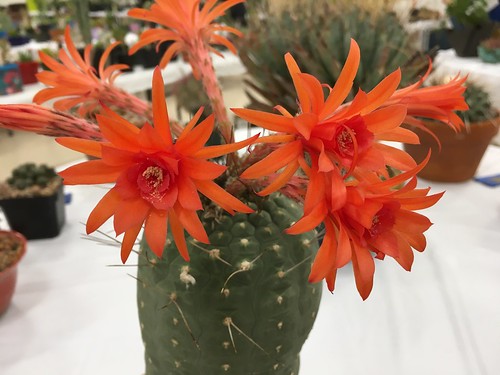
Matucana madisoniorum
Matucana madisoniorum - the most striking flowers at the show.
I only took a few photos of show and sale plants this year other than the ones I purchased.

Euphorbia neorubella (labeled as Monadenium rubellum)
Euphorbia neorubella
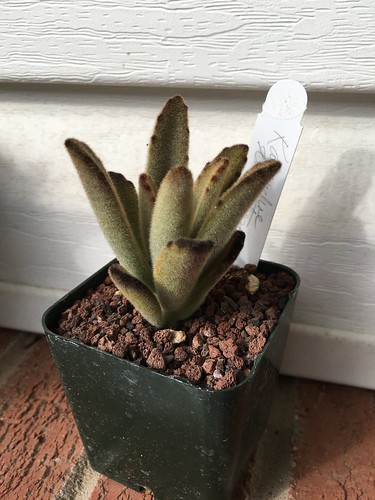
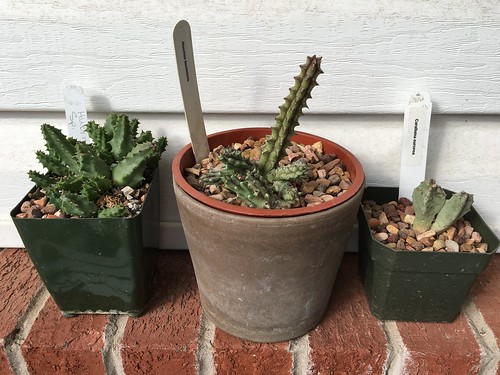
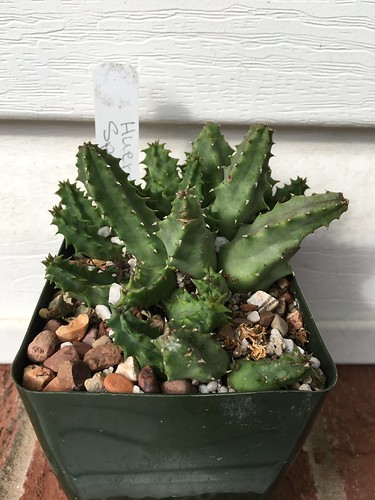
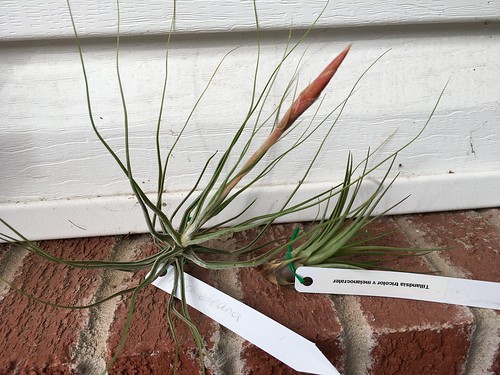
This year I purchased 7 plants: Kalanchoe tomentosa, an unlabeled Huernia species, Huernia keniensis, Caralluma europea, Opuntia violaceaTillandsia tricolor v. melanocrater, and Tillandsia schiedeana.

Kalanchoe tomentosa
Kalanchoe tomentosa

Huernia sp., Huernia keniensis, and Caralluma europea

Huernia sp
The unidentified Huernia
Tillandsias aren't truly cacti or succulents, but the term "succulents" is already rather broad and is not taxonomically linked, like "cacti" is to the family Cactaceae.  I guess cacti and succulent people just like Tillandsias and brought some to sell.  I'm excited because one of them is on the verge of blooming.

Tillandsia schiedeana and Tillandsia tricolor v. melanocrater
As I've mentioned before, my favorite succulents are the Stapeliads.  I have found that I can grow them pretty well, so I try to focus my money on those plants.  With my recent purchases my Stapeliad collection now includes 10 species:
  • Caralluma europea
  • Huernia sp (unknown species)
  • Huernia confusa
  • Huernia keniensis
  • Huernia penzigii
  • Huernia schneideriana
  • Stapelia ambigua
  • Stapelia flavopurpurea
  • Stapelia gigantea
  • Stapelia hirsuta
I've had some others in the past, but have lost some over the years.

Huernia penzigii
A recent bloom on my Huernia penzigii
A friend from northwest Arkansas came over for the show. I met him and his wife there and we exchanged a few plants and visited for a short time.  He brought me a neat Sinningia tubiflora, which was bred for hardiness in our region, as well as Kalanchoe beauverdii and Bryophyllum fedtschenkoi. Hopefully the Sinningia will flower for me soon and I'll share some photos.

Tuesday, June 11, 2013

2013 OKC Cacti and Succulent Show

Christie, Myla and I attended the Central Oklahoma Cacti and Succulent show and sale in Oklahoma City a couple of weeks ago.  This is a really good annual show with tons of plants for sale and a small show area for nice specimens.  Even though I am not mired in the cacti/succulent hobby, there are plenty of plants that are tempting and others that are neat to just view from outside looking in.

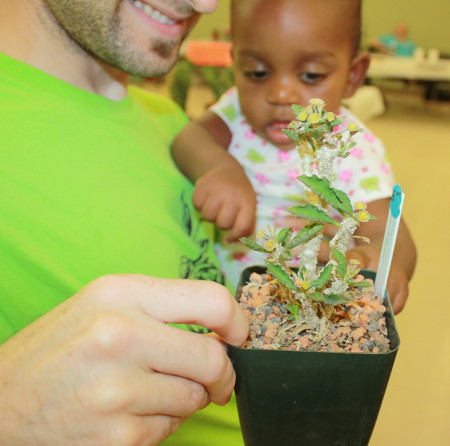
Investigating a Euphorbia
Checking out a neat Euphorbia

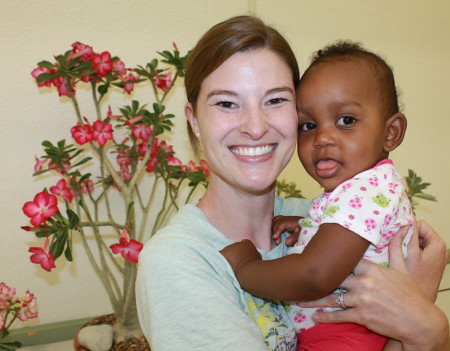
Adenium_and_pretty_girls
My pretty girls with a blooming Adenium

It was also a lot of fun to surround the little one with plants again.  She is going to be quite used to spending time in gardens and plant shows.

Euphorbia
A neat Euphorbia

Euphorbia
Another neat Euphorbia

As always, there were hundreds of different Euphorbia.  I was tempted to buy a couple, but I restrained myself.  In the end, I only bought a single plant, Stapelia flavopurpurea, which fit my qualifications of being a good value, already rooted (I'm not good at rooting cacti/succulents from cuttings), and already fits in one of my collection niches.  The plant has a couple of small buds, so I hope to share some bloom pictures in the next month.

cacti_tray
Tray of starter plants.

There were many trays of very reasonably priced starter plants. You could start a collection on a limited budget and get a nice variety of plants.

Adenia_spinosa
Adenia spinosa

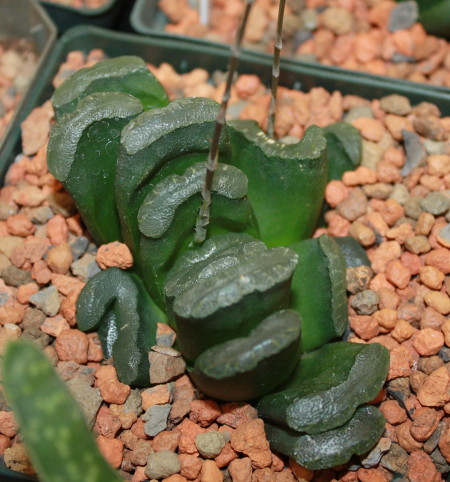
Haworthia_truncata
Haworthia truncata

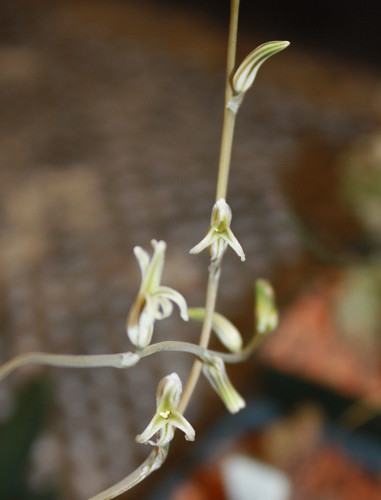
Haworthia_truncata_flowers
Haworthia truncata flowers

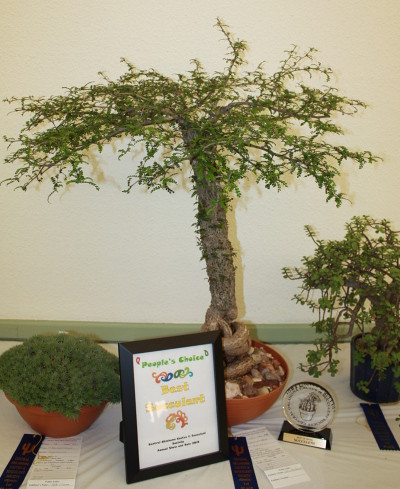
Sometimes it is confusing to me why certain plants are included in the cacti/succulent hobby.  For instance, how does the beautiful prize-winning Operculicarya (below) qualify as a cacti or succulent?  I think this hobby grouping is loosely defined, unlike many other plant societies (Orchids, Begonias, Aroids, for instance), which are specific taxonomic families.

Operculicarya_decaryi
Operculicarya decaryi

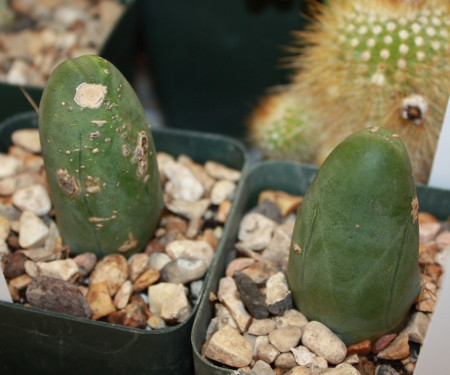
Trichocereus_bridgesii_monstrose
Trichocereus bridgesii monstrose

In the assorted monsters category I found the Trichocereus (above), reminiscent of the graboids from Tremors or the asteroid worm creature (exogorth) that tries to eat the Millennium Falcon. Also there was the strange show plant, the hybrid Euphorbia GH211 (below), which could have been in any number of Sci-Fi movies.  Just imagine a crowd of screaming people running away as it trudges down the street, maybe devouring a dog that couldn't get away fast enough.  Yes, it has definitely been in a movie or two.

Euphorbia_GH211_hybrid
Euphorbia GH211 hybrid

It seems this annual show is going to be a fixture for me.  I was told that next year's show is going to be even bigger and held at a larger venue.  My name is on the mailing list, so I should be notified as it approaches.  I look forward to it!

Thursday, June 21, 2012

OKC Cactus and Succulent show

Before diving in, I must confess that cacti and succulents are not my passion. There are a couple of groups that interest me, like Stapelia and related genera. I decided to stop by the show and sale of the Central Oklahoma Cactus and Succulent Society last weekend because I figured it would be interesting to see, take photos and learn more about these plants.
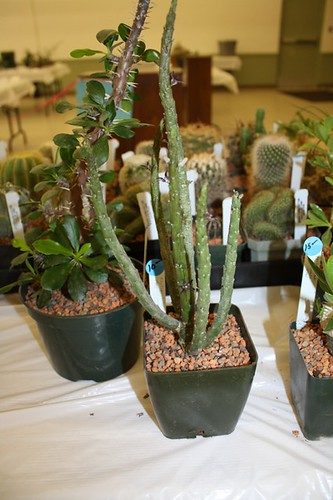
rhytidocaulon_macrolobum
Rhytidocaulon macrolobum
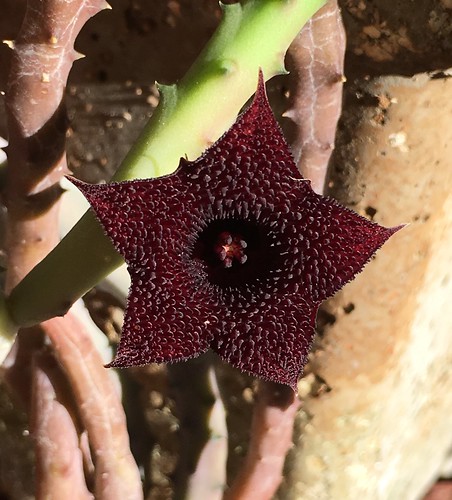
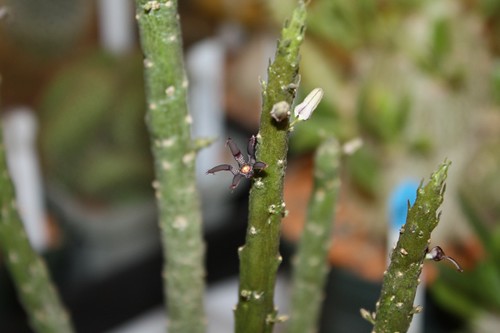
I was surprised to see more plants of interest to me than I had expected. The "show" plants were neat, but primarily plants that I enjoy looking at and that I don't have a great desire to grow myself. However, I found many plants on the vendor tables that were of interest to me. The first being the plant pictured above and below. Maybe you think it's ugly, but look at those awesome black flowers!
rhytidocaulon_macrolobum_flowers
Rhytidocaulon macrolobum
There were quite a few Pachypodium on display and for sale (sorry, no pictures). I had just been giving a tour at the Myriad Gardens on Saturday afternoon, where the Pachypodium are 10 feet tall!
euphorbia_knuthii
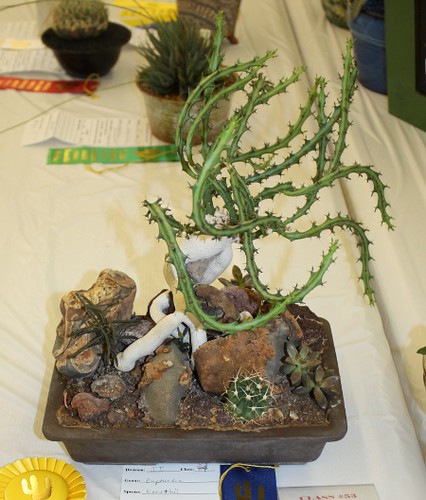
Euphorbia knuthii
There were so many Euphorbia I couldn't count them. As I was telling my tour group, Euphorbia has to be the most diverse genus I know. If you read my old post on Euphorbia you would have seen everything from the Poinsettia to the dangerously spiny plants, like the one I purchased this weekend.
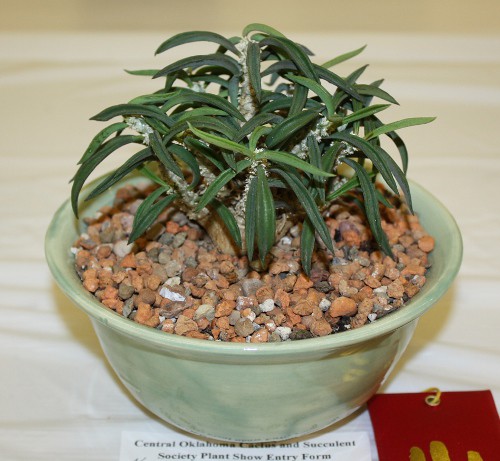
euphorbia_cylindrifolia
Euphorbia cylindrifolia
The Euphorbia pictured below has a growth habit more like Mamillaria (those spherical cacti with spines all over them).
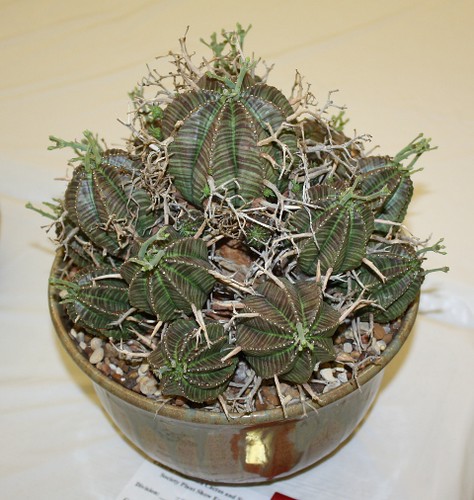
euphorbia_valida
Euphorbia valida
dyckia_marneir-lapostollei
Dyckia marneir-lapostellei
Check out the ghostly colors of the Dyckia and Crassula.
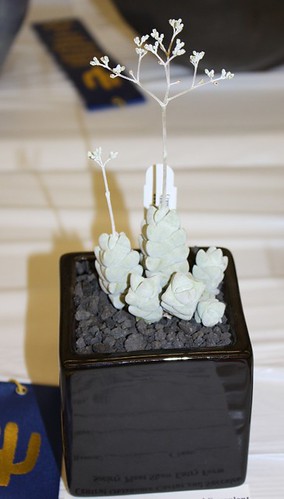
crassula_deceptor
Crassula deceptor
The little Avonia was quite adorable. It looks like a miniature and really doesn't look real.
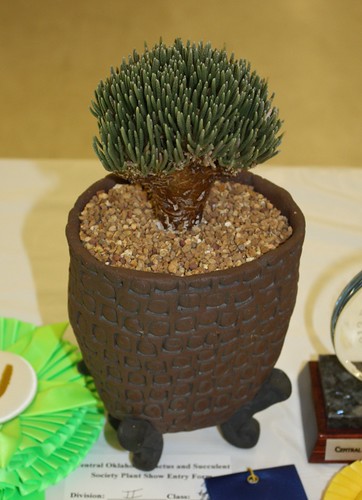
avonia_quinaria_v_alstonii
Avonia quinaria v. alstonii
You have probably already seen my cucumber orchid. Now I see there is a cucumber succulent!
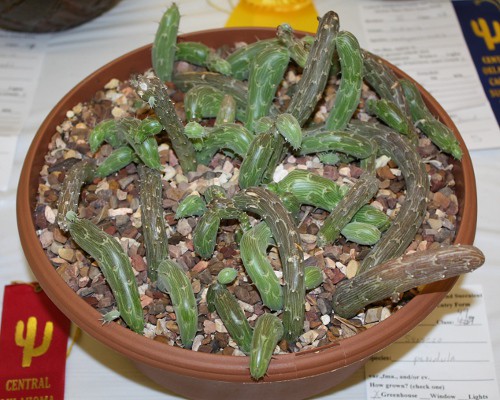
senecio_pendula
Senecio pendula


Sansevieria has quite a dedicated following. This show had two plants, one being the famous Sansevieria masoniana, with big floppy leaves. The other was more to my liking, Sansevieria scabrifolia.
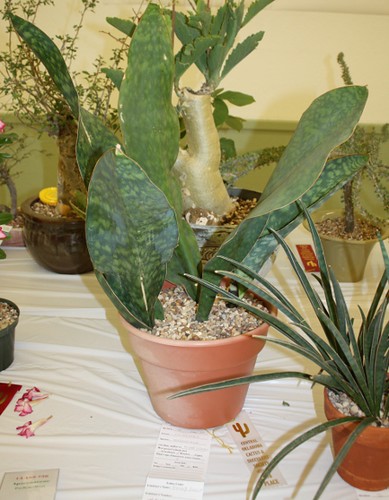
sans_masoniana_and_scabrifolia
Sansevieria masoniana 'Mason's Congo' and Sansevieria scabrifolia
Most of the plants I am showing won an award, but the cactus below won "Best Cactus." Check out that long fur hanging off of the pads.
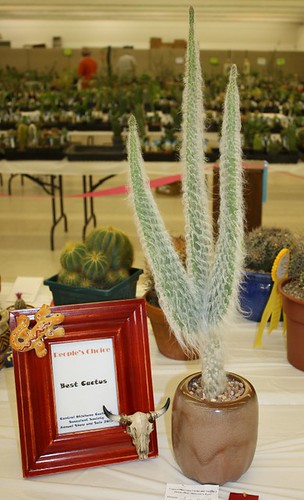
opuntia_tequiliana
Opuntia tequiliana - look at that fur!
The only Stapelia-like plant in the show was this Huernia. It was a really big plant that is supposedly just 3 years old. It must be a vigorous grower.
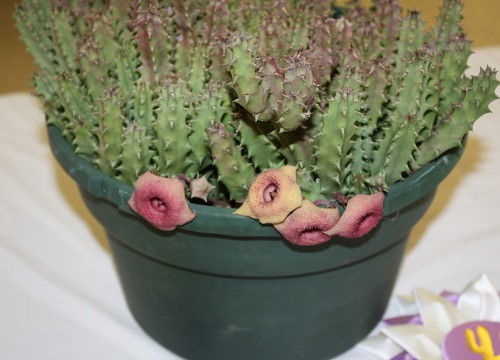
huernia_thuratii
Huernia thuratii
I ended up purchasing 4 plants, 1 of which was an orchid. I had been told by some friends that Eulophia petersii is easier to find at succulent shows than at orchid shows, since it likes to grow so dry. I was talking with a vendor at this show and he was telling me about how he once heard someone describing this plant as having "orchid-like flowers"...
huernia_hystrix
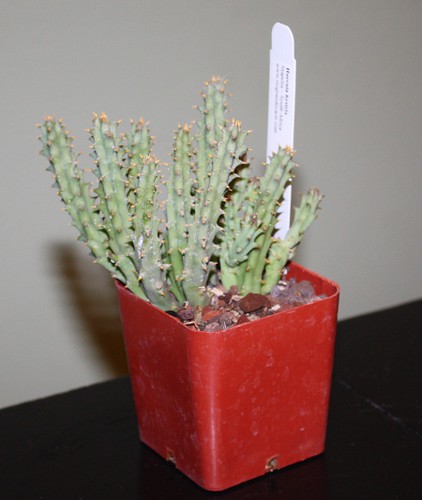
Huernia hystrix
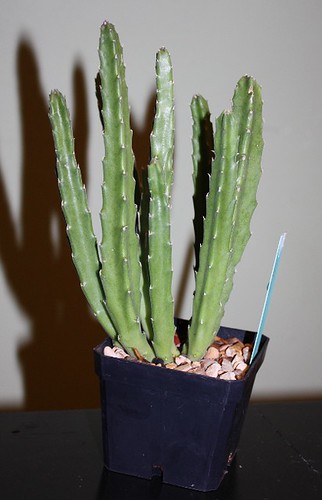
Two of the plants that I purchased are from my Stapeliae: Huernia hystrix and Stapelia hirsuta. The S. hirsuta is the one that gets really hairy flowers. It is also probably the species that is most similar to my Stapelia gigantea, which grows really well for me. So I feel confident I can get it to bloom eventually.
stapelia_hirsuta
Stapelia hirsuta
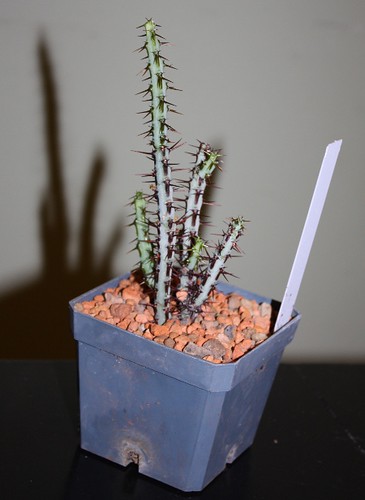
The last plant I purchased is the Euphorbia, which I mentioned earlier in this post. Dangerously spiney!
euphorbia_aeruginosa
Euphorbia aeruginosa
I don't plan to become a cacti and succulent addict, but I would like to go to this show again in the future. There were definitely some neat plants.
Friday, October 14, 2011

Trip Report: The Audubon House

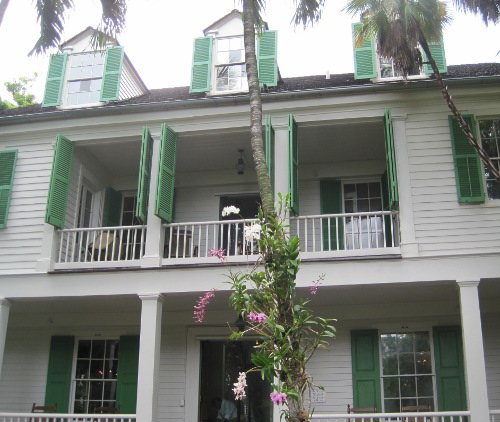
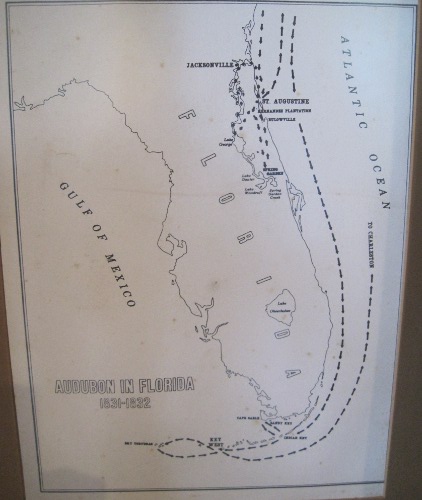
While in Key West last month, we visited "The Audubon House."  You would think with a name like this that the house would have once been under the ownership of someone with the name of Audubon.  It turns out the connection is a little less direct.  John James Audubon, the well known historical figure for his art depicting American birds, traveled to the Florida Keys in 1831 in order to paint the native birds of Florida.  While he was in the Keys, he stayed at the house next door to this house.

audubon_house
The Audubon House

audubon_travels
John James Audubon's trip to the Florida Keys
The house has been preserved and connected with Audubon because he admired the gardens while he was in the area and supposedly painted some of the trees and plants into his portraits of various Florida birds.  The gardens have been kept in great condition as a tribute.
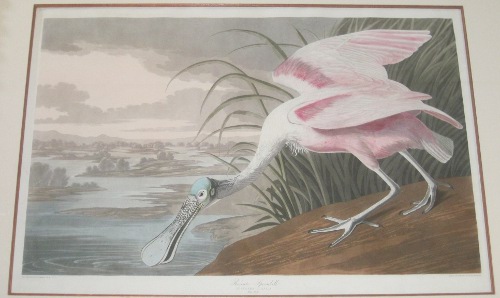
roseate_spoonbill
Roseate Spoonbill portrait by John James Audubon - my favorite from the Florida collection.
audubon_orchid_tree
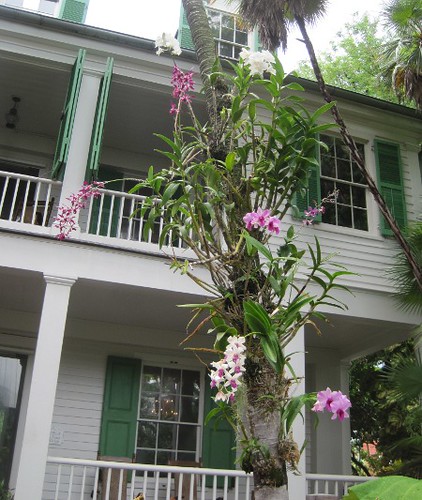
Tree loaded with blooming orchids in front of Audubon House
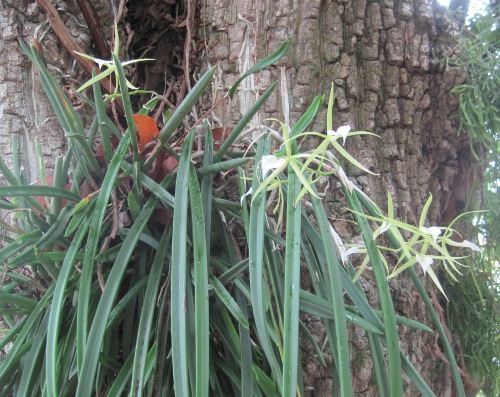
The house is now a shrine to his work and has a very nice garden outside.  We toured the house and gardens outside, enjoying the beautiful setting.  I think Christie and I could settle into this house just fine.  The trees outside are covered in orchids, and many of them were in bloom for our visit.

brassavola
Brassavola orchid
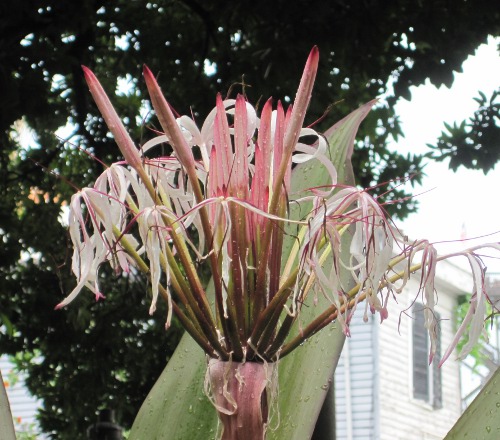
crinum_bloom
Crinum lily bloom
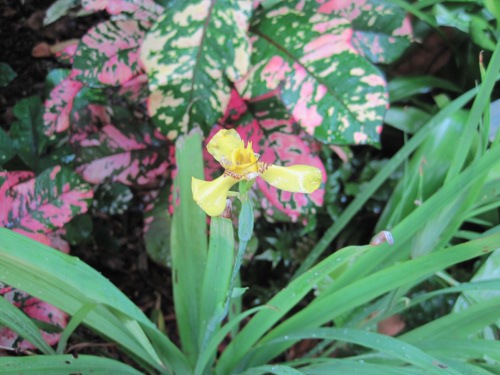
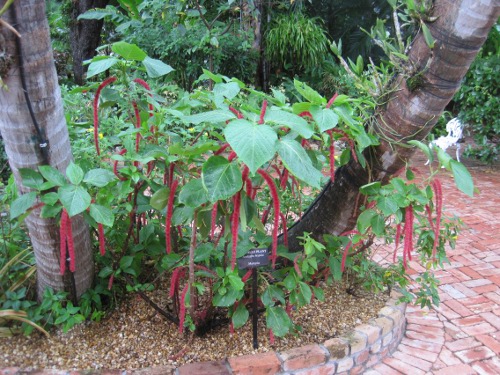
Other interesting plants filled the flowerbeds, including a couple of large Crinum lilies, some yellow Walking Iris (Neomarica longifolia), and a nice Chenille plant (Acalypha hispida).

neomarica_longifolia
The yellow walking iris - Neomarica longifolia
chenille_plant
Chenille plant - Acalypha hispida
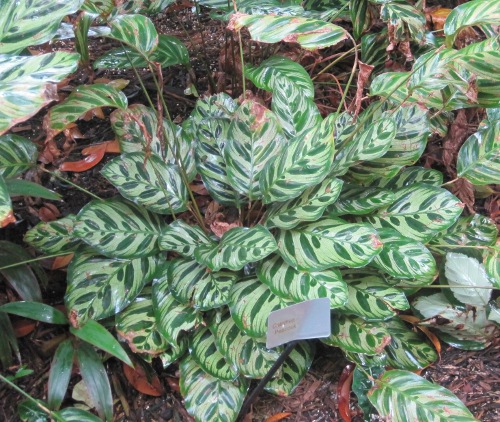
There were lots of Calatheas scattered throughout the gardens, and concentrated here and there.  I have seen these growing in many botanic gardens, but not very often in an outdoor setting.

calathea
Calathea Peacock (so the sign reads)

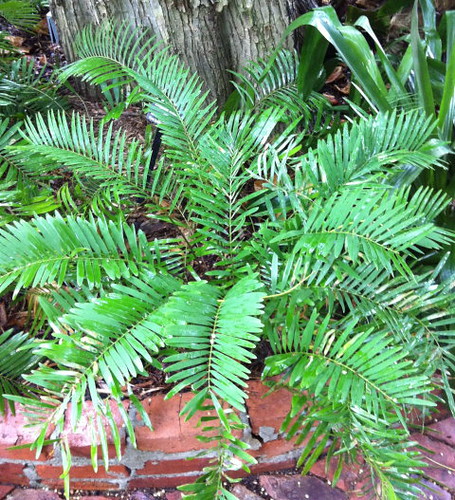
The gardens also contain some Florida native plants, which would have been important to Audubon, as he preferred to paint his birds sitting on authentic trees and plants to the area where he would find them in nature.  One of the natives I really liked was this cycad, Zamia floridana.

zamia_floridana
Florida native cycad "Coontie" - Zamia floridana
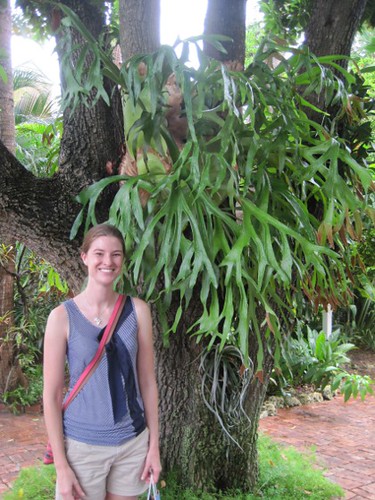
cp_staghorn
Christie under a nice Staghorn fern

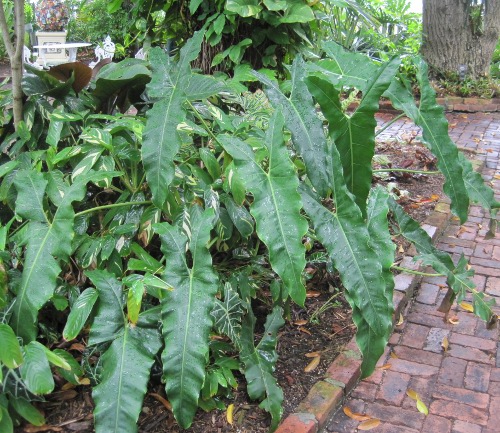
p_stenolobum
Philodendron stenolobum
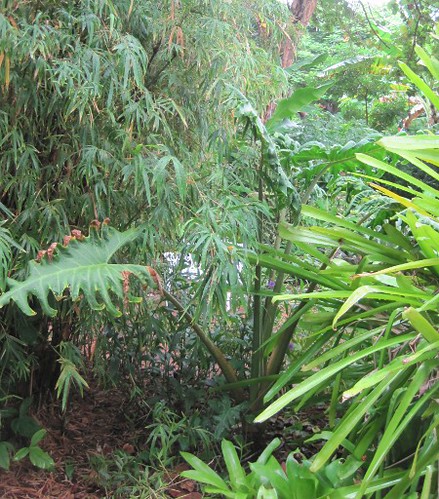
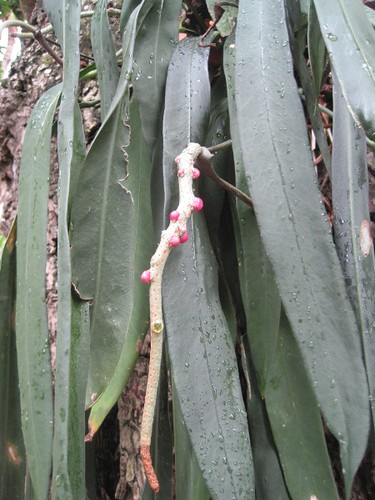
There were also some nice aroids, including this large Philodendron stenolobum (above) and Alocasia portei (below). I loved the pendant Anthurium vittariifolium, with its pink berries showing (two below) and now have a small seedling plant from a recent plant trade. I hope my plant is this attractive some day.

alocasia_portei
A large Alocasia portei (in the center of the image)
Anthurium vittariifolium with berries on spadix
cham_metallica
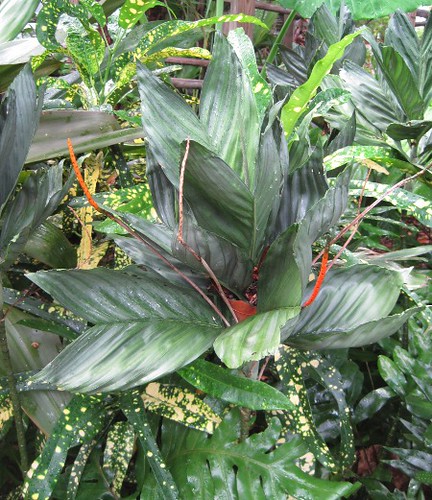
Chamaedorea metallica
My second favorite palm in the entire family is Chamaedorea metallica, which is called the Miniature Fishtail Palm, or Metallic Palm.  It has silver-blue leaves and striking orange flowers and berries.  It is small for a palm, with a maximum size of only 5 or 6 feet tall, and it is therefore usually growing as an understory tree.

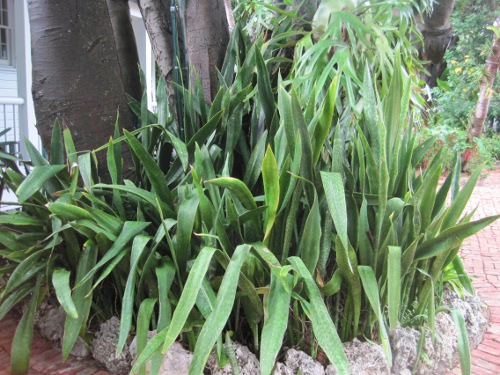
sansevieria_bed
Bed of Sansevierias - probably Sansevieria metallica.
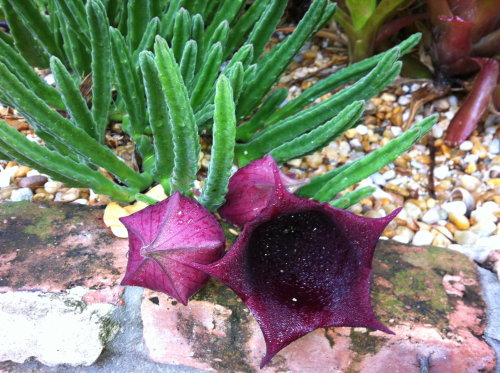
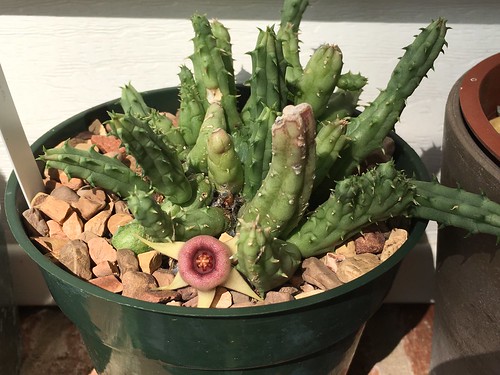
You probably already know that I like Stapelias. Am I crazy or do the buds of the Stapelia below look just as cool as the open bloom? Yes, I did bend down and stick my nose into the flower to smell the pungency. And yes, I did request Christie do the same. She grudgingly did so - after a third or fourth request.

stapelia_leendertziae
Stapelia leendertziae in bloom.
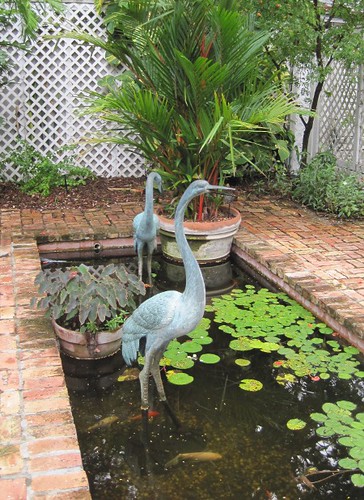
The Audubon House sits on a lot large enough to have several wandering paths through the gardens and 2 separate set-aside gardens: a water garden and an herb garden. The water garden was very tastefully designed, with some heron statues in the pond. I'm sure JJ Audubon would have liked to sit and stare at these nice statues.  The setting of this garden is similar to what I have talked about doing with a portion of our backyard, with the ground paved in either bricks or rock and a shallow pond or other small water feature.  Just a relaxing place to sit and enjoy the outdoors.

audubon_watergarden
The appropriately decorated Audubon water garden.