Sunday, July 8, 2012

Trip Report: Singaporean priorities

This week we will be hearing from Variegated Thumb's foreign correspondent: me.  I will be spending some time in Singapore and Jakarta and telling you about any interesting, planty moments of note.

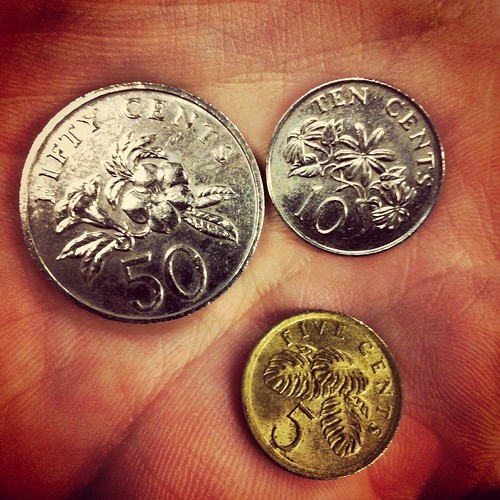
After being in Singapore a short time I determined this is a place that has their priorities in order.  In America, we have pictures of old dead guys wearing wigs on our coins.  In Singapore - plants.

Singapore coins
Singapore coins


In America there are newspapers hanging on the walls above the urinals.  In Singapore - plants.

Singapore airport urinals
Who needs the sports section?


Stay tuned for more reports from afar.

Thursday, June 21, 2012

OKC Cactus and Succulent show

Before diving in, I must confess that cacti and succulents are not my passion. There are a couple of groups that interest me, like Stapelia and related genera. I decided to stop by the show and sale of the Central Oklahoma Cactus and Succulent Society last weekend because I figured it would be interesting to see, take photos and learn more about these plants.
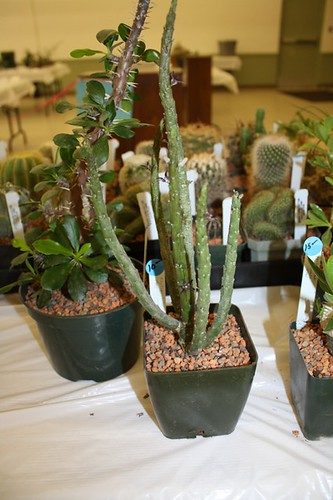
rhytidocaulon_macrolobum
Rhytidocaulon macrolobum
I was surprised to see more plants of interest to me than I had expected. The "show" plants were neat, but primarily plants that I enjoy looking at and that I don't have a great desire to grow myself. However, I found many plants on the vendor tables that were of interest to me. The first being the plant pictured above and below. Maybe you think it's ugly, but look at those awesome black flowers!
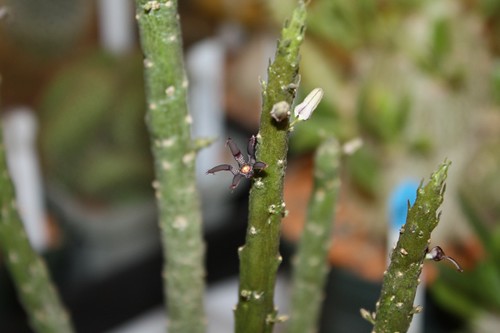
rhytidocaulon_macrolobum_flowers
Rhytidocaulon macrolobum
There were quite a few Pachypodium on display and for sale (sorry, no pictures). I had just been giving a tour at the Myriad Gardens on Saturday afternoon, where the Pachypodium are 10 feet tall!
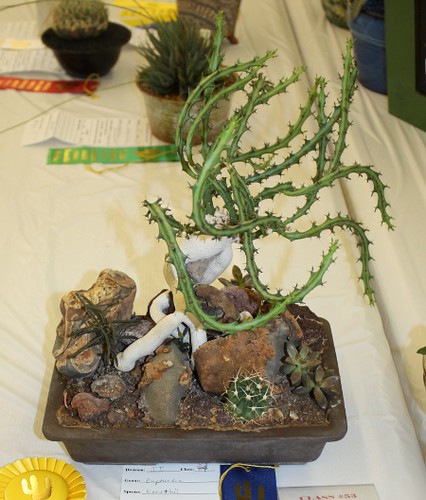
euphorbia_knuthii
Euphorbia knuthii
There were so many Euphorbia I couldn't count them. As I was telling my tour group, Euphorbia has to be the most diverse genus I know. If you read my old post on Euphorbia you would have seen everything from the Poinsettia to the dangerously spiny plants, like the one I purchased this weekend.
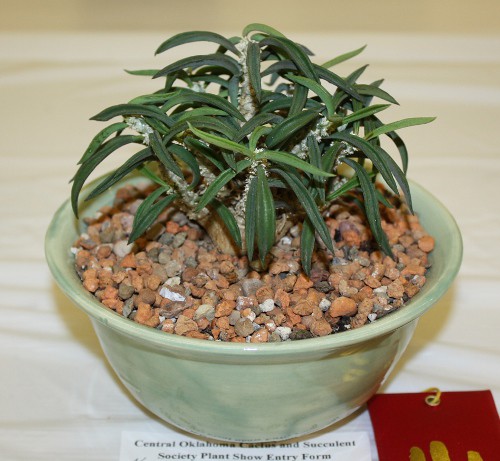
euphorbia_cylindrifolia
Euphorbia cylindrifolia
The Euphorbia pictured below has a growth habit more like Mamillaria (those spherical cacti with spines all over them).
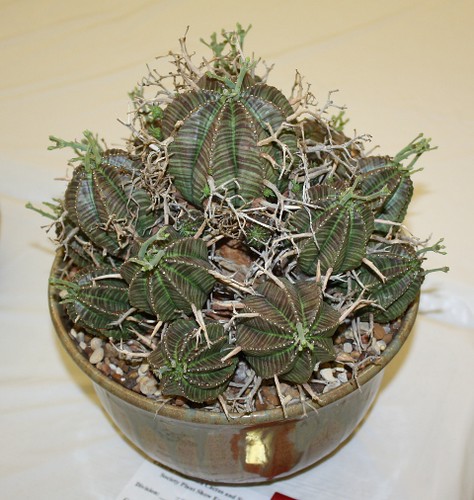
euphorbia_valida
Euphorbia valida
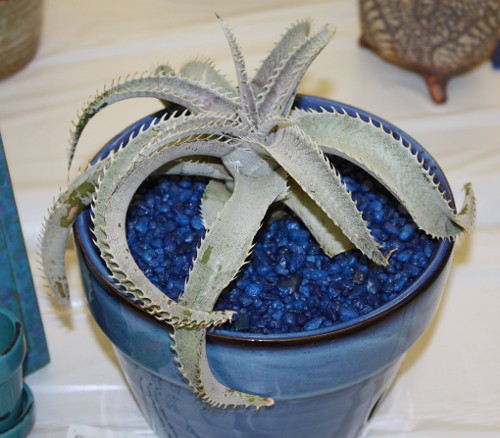
dyckia_marneir-lapostollei
Dyckia marneir-lapostellei
Check out the ghostly colors of the Dyckia and Crassula.
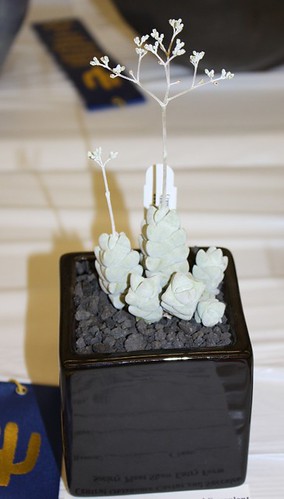
crassula_deceptor
Crassula deceptor
The little Avonia was quite adorable. It looks like a miniature and really doesn't look real.
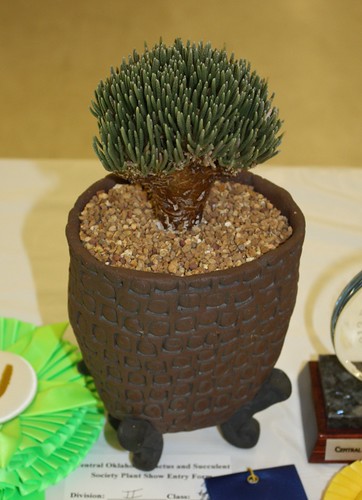
avonia_quinaria_v_alstonii
Avonia quinaria v. alstonii
You have probably already seen my cucumber orchid. Now I see there is a cucumber succulent!
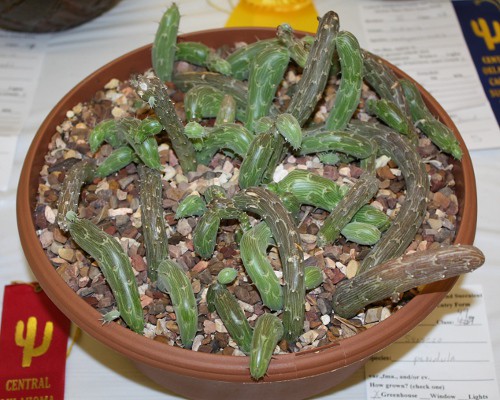
senecio_pendula
Senecio pendula


Sansevieria has quite a dedicated following. This show had two plants, one being the famous Sansevieria masoniana, with big floppy leaves. The other was more to my liking, Sansevieria scabrifolia.
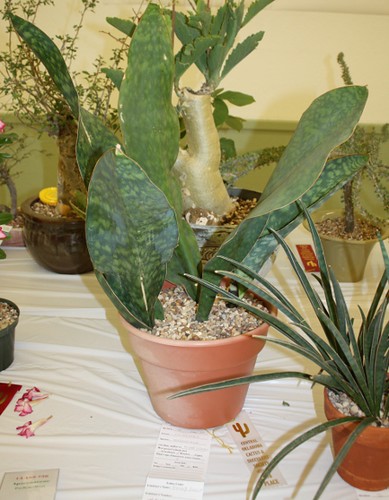
sans_masoniana_and_scabrifolia
Sansevieria masoniana 'Mason's Congo' and Sansevieria scabrifolia
Most of the plants I am showing won an award, but the cactus below won "Best Cactus." Check out that long fur hanging off of the pads.
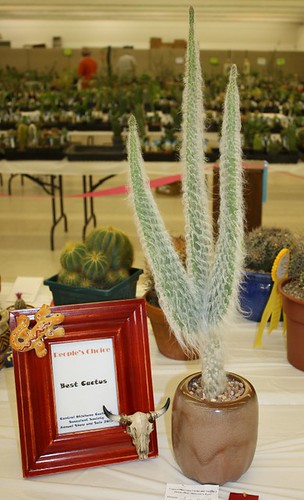
opuntia_tequiliana
Opuntia tequiliana - look at that fur!
The only Stapelia-like plant in the show was this Huernia. It was a really big plant that is supposedly just 3 years old. It must be a vigorous grower.
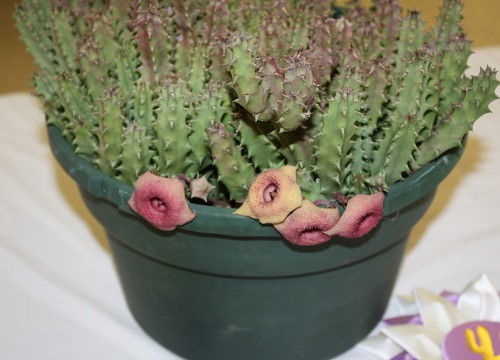
huernia_thuratii
Huernia thuratii
I ended up purchasing 4 plants, 1 of which was an orchid. I had been told by some friends that Eulophia petersii is easier to find at succulent shows than at orchid shows, since it likes to grow so dry. I was talking with a vendor at this show and he was telling me about how he once heard someone describing this plant as having "orchid-like flowers"...
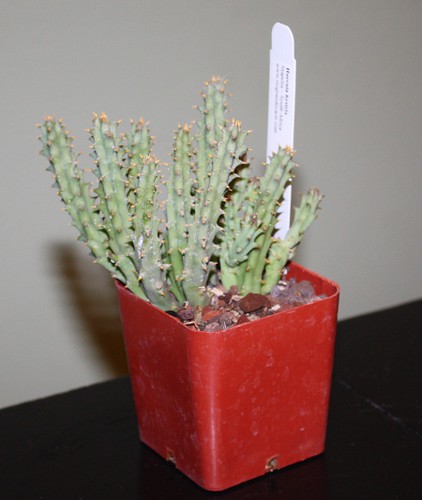
huernia_hystrix
Huernia hystrix
Two of the plants that I purchased are from my Stapeliae: Huernia hystrix and Stapelia hirsuta. The S. hirsuta is the one that gets really hairy flowers. It is also probably the species that is most similar to my Stapelia gigantea, which grows really well for me. So I feel confident I can get it to bloom eventually.
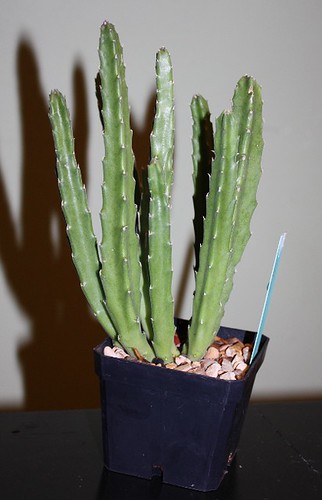
stapelia_hirsuta
Stapelia hirsuta
The last plant I purchased is the Euphorbia, which I mentioned earlier in this post. Dangerously spiney!
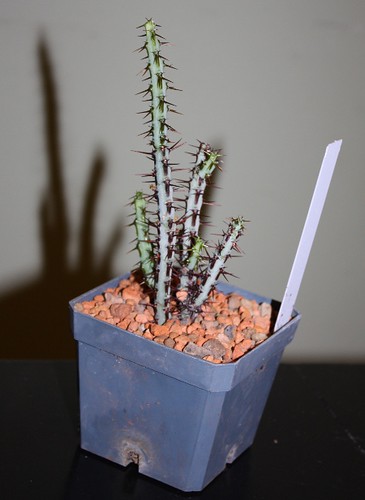
euphorbia_aeruginosa
Euphorbia aeruginosa
I don't plan to become a cacti and succulent addict, but I would like to go to this show again in the future. There were definitely some neat plants.

Thursday, June 14, 2012

Plumerias from seed

If you ever visit Hawaii, you will see Plumeria, also known as Frangipani, all over the place.  They are a succulent-like tree that can get to be 20 feet tall or more in a tropical setting.  They will be covered in lightly colored blooms that are used to make the Hawaiian leis.  For the last five years or so, I have been growing a couple of Plumeria from cane cuttings that were purchased in Hawaii as souvenirs.  My largest plant is a single trunk that is about 40 inches tall now.

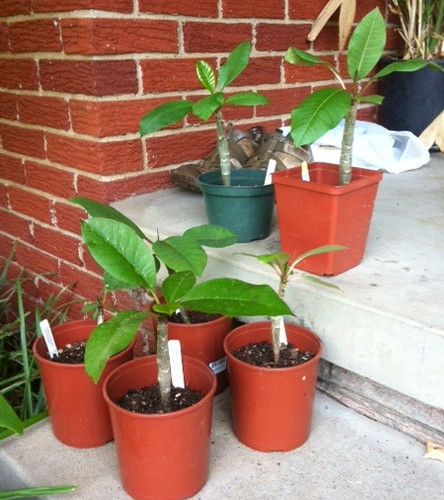
plumeria_seedlings_large
These Plumeria "yearlings" were started from seed more than a year ago.
Last year Leslie sent me some Plumeria seedlings that she had grown from seed which she ordered from Thailand.  Those plants have been growing steadily (see photo above) and I am anxious to see them bloom.  I have them sitting in full sun and I am keeping them watered on a daily basis.

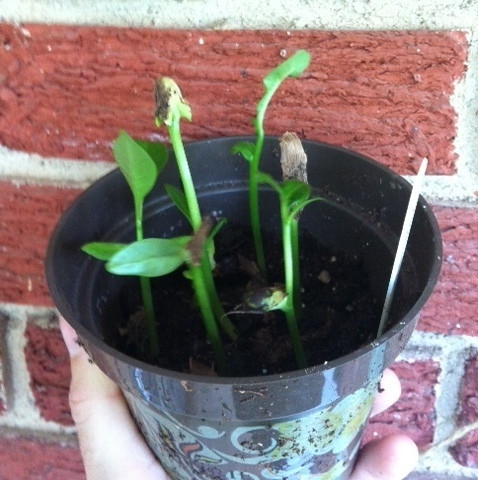
plumeria_seedlings_small
These Plumeria "weeklings" have just been growing a couple of weeks.
When I met up with Leslie in April, she gave me some more Plumeria seeds that she had ordered from Thailand.  The seeds are similar to the little winged seeds of maple trees.  I stuck the fattest part of the seeds into the soil, with the wings sticking out.  In just a week or two the plants had begun to sprout.  Now I have about 30 little Plumeria to add to the six I got from Leslie last year.  And I still have lots of seeds I need to plant!

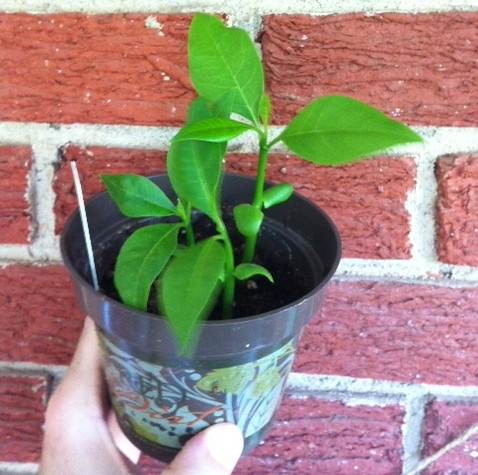
plumeria_seedlings_medium
These Plumeria "monthlings" have been growing a little more than a month now.
I am amazed at how easy it is to germinate these seeds and turn them into little plants in such a short period of time.  I will soon have Plumeria growing out my ears.  (On second thought, maybe I shouldn't have stuck those seeds in my ears.)

Thursday, June 7, 2012

Daisy Orchid in bloom

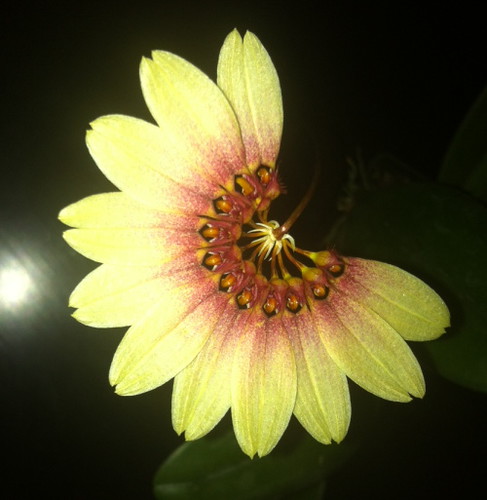
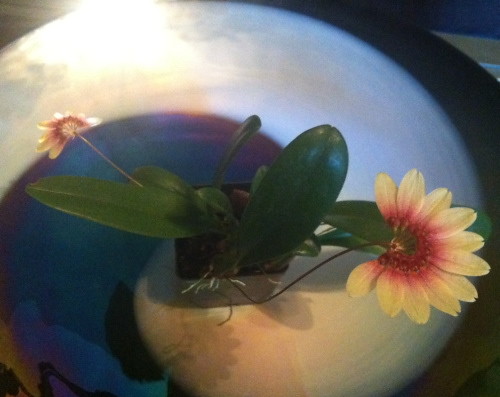
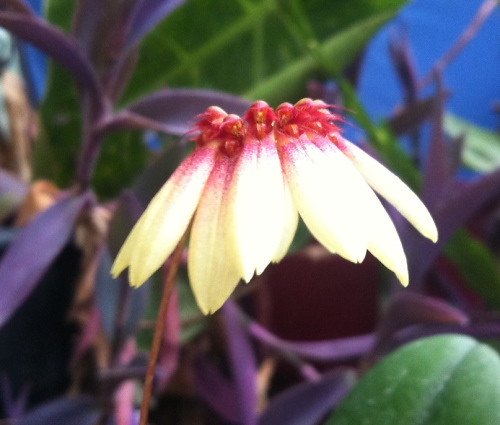
The Daisy Orchid (Cirrhopetalum makoyanum, synonymous with Bulbophyllum makoyanum) is given its common name due to the way its flowers are arranged to look like the petals of a Daisy, or really any other flower from the Asteraceae family (like Sunflowers, Chrysanthemums, etc).  In truth, when you look at this orchid it is not a set of petals you see, but a grouping of several tubular flowers arranged so that they splay out from a center point.  Of course, the "flower" of a daisy is also not singular.  The entire Asteraceae family is made up of plants that have composite flowers, which is to say that where you think you see one, you actually see many.  This is so common among flowering plants, I think the exception might be the rule.  Truly! Anyway, that's not why you clicked on this post.  You came here for pictures, gosh darnit!  Okay, calm down, angry masses.  Here come the pictures.


cirrho_makoyanum_flower_20120607
Cirrhopetalum makoyanum
Here you can see the flowers in all of their glory, from above, looking like a daisy.

cirrho_makoyanum_full_20120607
Cirrhopetalum makoyanum
In the final photo you can see the individual flowers a little better, as they were unfurling and beginning to fan out into the daisy shape.

cirrho_makoyanum_flowers_20120606
Cirrhopetalum makoyanum
 

Monday, May 28, 2012

Dendrobium pachyphyllum in bloom

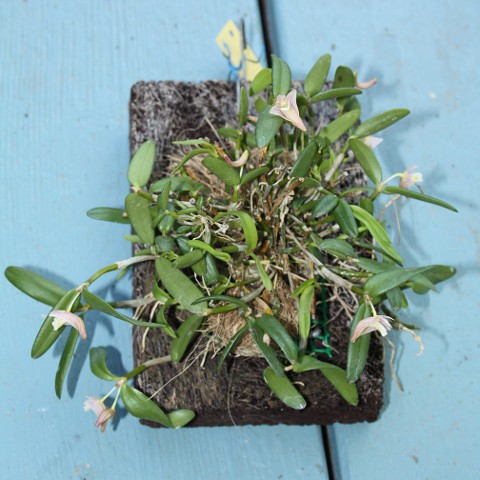
I have had this little mounted miniature Dendrobium for 10 months, so this is the first time that it has bloomed for me.  There are about 20 flowers that are smaller than a penny.

den_pachyphyllum_full
Dendrobium pachyphyllum
When you look at them up close you can see how neat they are, even though they are tiny.  They are also really pleasantly fragrant.  Christie said they smelled a little like honeysuckle.  I was thinking I smelled some mint.

den_pachyphyllum_bloom
Dendrobium pachyphyllum bloom detail

Thursday, May 24, 2012

Trip Report: OKC Orchid Show, part 2

I have already posted about a dozen photos from the OKC Orchid Show, so check those out, if you haven't already.

ryncholaeliacattleya_waianea_leopard_ching_hua
Blc. Waianea Leopard 'Ching Hua'
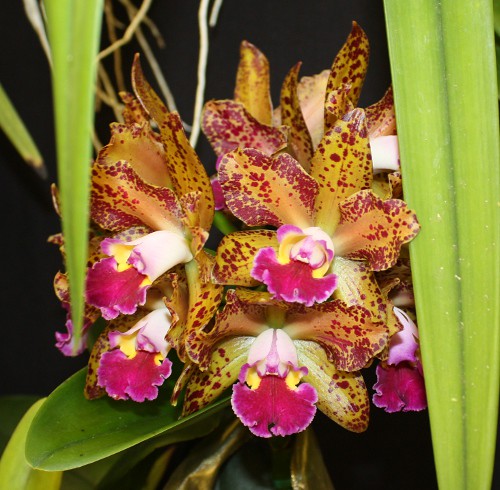
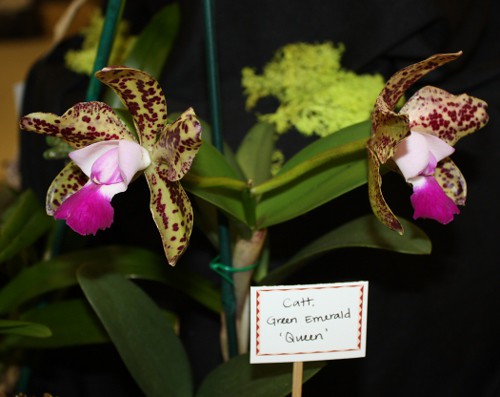
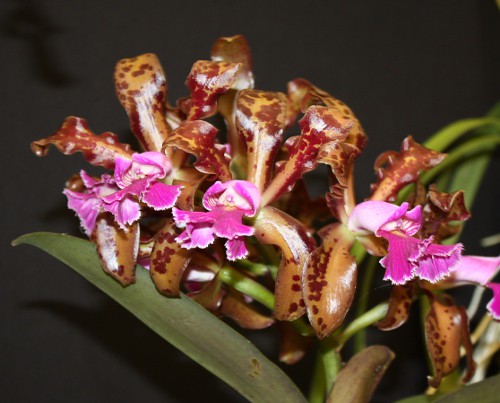
Just like there are "Vanda People" and "Slipper People," there are "Catt(leya) People." I have to say that I am not one of those people. Cattleyas tend to be large flowers that are kind of frilly like bearded Irises, and they just don't appeal to me that much. That being said, I do enjoy some Cattleyas, mainly the spotted ones, and I am posting photos of those.

catt_green_emerald_queen
Cattleya Green Emerald 'Queen'
catt_schilleriana
Cattleya schilleriana
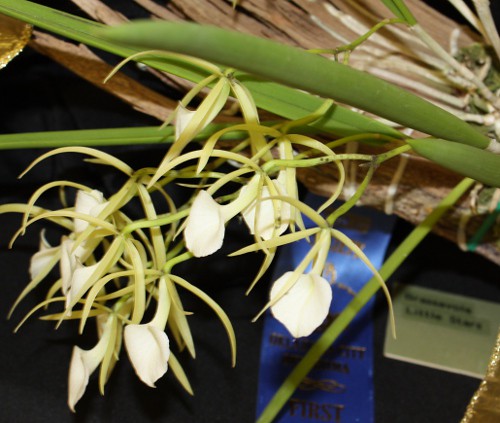
Brassavola nodosa is a popular orchid that is known for its fragrance, but only in the evening. There are several cultivars or hybrids made with this species, including Brassavola Little Stars (below).

brassavola_little_stars
Brassavola Little Stars
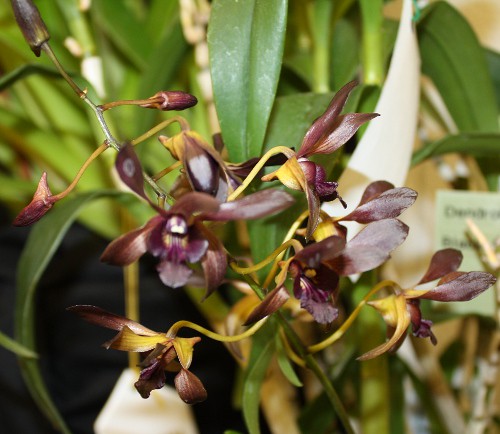
By far the coolest thing I saw at the show was the Dendrobium Black Spider. I haven't ever seen a black Dendrobium, or really anything close to this dark. When I was helping tear down the exhibits on Sunday I complimented the grower on her black Dendrobium and she kind of shrugged and didn't say anything. I guess some people are less interested in discussing their plants than others. Or maybe she was just tired from the weekend...

den_black_spider
Dendrobium Black Spider
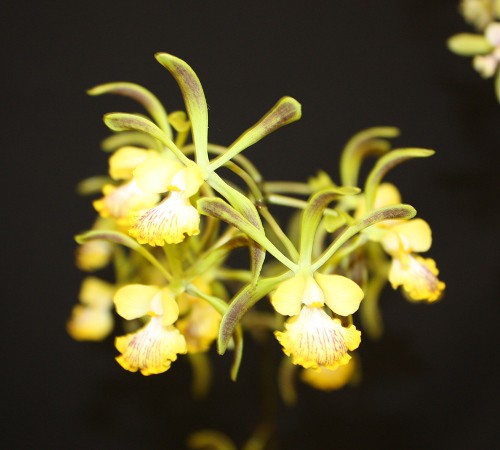
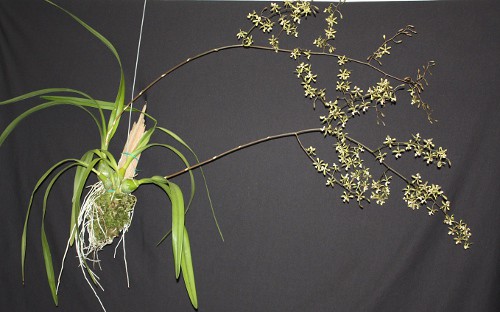
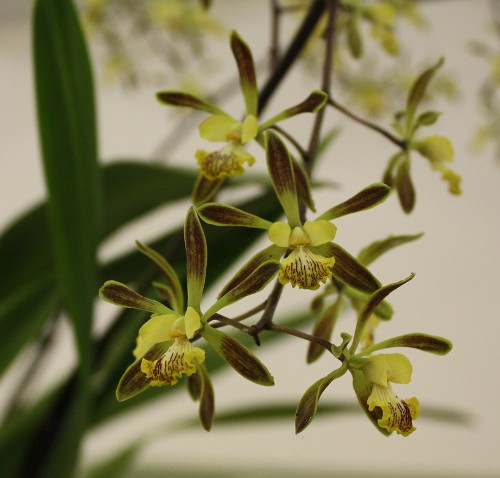
I don't know whether Encyclias are more popular around here than I had previously thought, or if I am just paying more attention to them this year, or if this is just a really good blooming year for them. Whatever the case, there were many Encyclias on display in Wichita and in Oklahoma City.

enc_alata
Encyclia alata
The plant above is the species Encyclia alata and the plant below is a primary hybrid of Encyclia alata and Encyclia mooreana. Both are awesome plants.
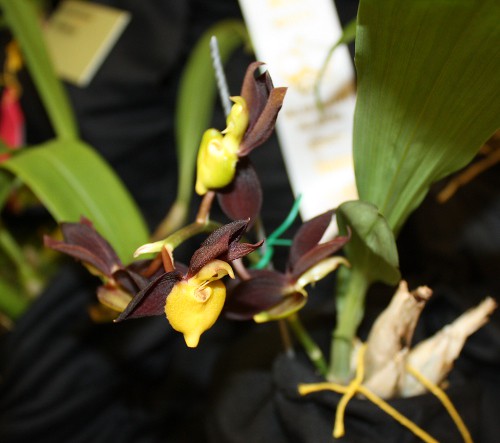
enc_alata_x_mooreana
Encyclia alata x mooreana
The large primary hybrid above and the species below were both featured as the centerpiece of their respective displays. In fact, that photo above was taken before any of the rest of the plants were in place. (I wouldn't have been able to get such a picture of just this plant once the exhibit was assembled, because many other plants were crowded around it.

enc_alatum_majus
Encyclia alatum majus
Don't you just love the colors of the Encyclia hanburii (below)?  Just awesome!

enc_hanburii
Encyclia hanburii
The odd ball Encyclia at the show is one of those that keeps getting shuffled around taxonomically.  It has been in several different genera, including Encyclia, Anacheilium, Prosthechea and, of course, the original catch-all genus Epidendrum.  According to orchidspecies.com, which is what I normally consider the authority, it is currently classified as Anacheilium radiata.

enc_radiata
Encylia radiata
I hope you enjoyed your virtual participation in the Oklahoma Orchid Society show.  If you're in the area, you should try to attend in person next year.  We always have our show on Mother's Day weekend at the Will Rogers Garden Center in Oklahoma City.

Monday, May 21, 2012

Trip Report: OKC Orchid Show, part 1

For the last four or five years I have attended the Oklahoma Orchid Society (OOS) show on Mother's Day weekend in Oklahoma City. Last year when I attended I decided to go ahead and join the OOS. So this year, when it was time to put on the show, I found myself on the other side, showing up on Friday to help set up the show before it was open to the public.

brian_truong_exhibit
Brian Truong's (a.k.a. Okie Orchids) exhibit
It was a very busy weekend, including three graduation ceremonies and two Mother's Day meals. I took off work on Friday to help setup the OOS exhibit and to help the vendors bring in their plants. It was a fun experience and I understand the whole process much better now. Christie joined me with the setup and was the official label maker for the plants displayed in the OOS exhibit.
jewel_orchid
Unknown jewel orchid
This time around I entered three of my own orchids, including the jewel orchid pictured below, which got a 2nd place ribbon. Plants are classified in different categories and my jewel orchid would have been competing against the plant pictured above, which received a first place ribbon. My other two orchids both received first place ribbons, so I am now 5 for 5 with the plants I have shown in orchid shows!

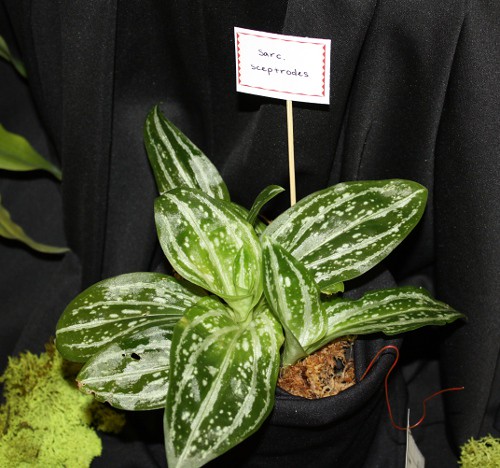
sarc_sceptrodes
Sarcoglottis sceptrodes
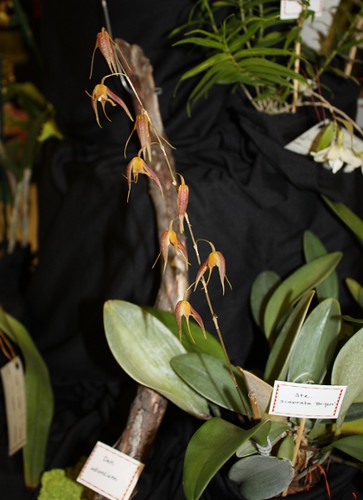
The Stelis pictured below was on display in our OOS exhibit. It is a neat little plant, named after one of the guys who had that gigantic exhibit in Wichita a couple of weeks ago.

stelis_scabrata_bryon
Stelis scabrata 'Bryon'
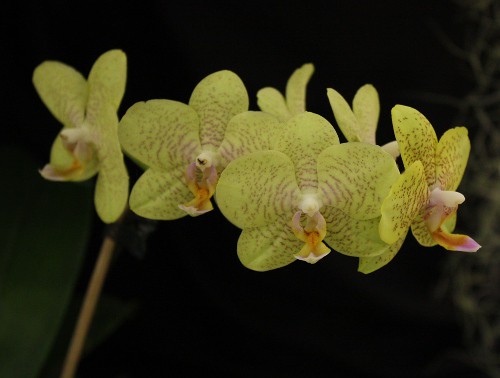
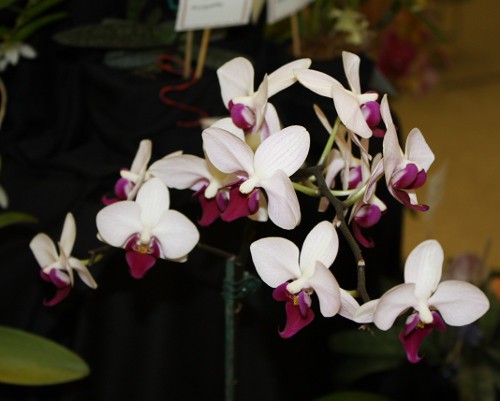
There were two little Phalaenopsis-type orchids in our exhibit that had really nice little flowers (both pictured below).

phal_yellow
Nice yellow Phalaenopsis
dtps_little_gem_stripe
Dtps. Little Gem Stripe
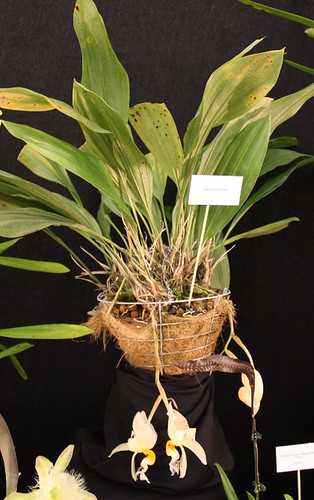
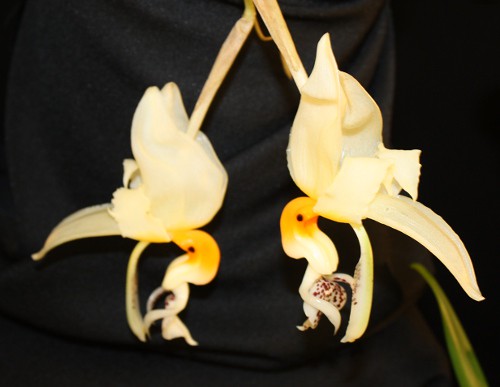
Sarah Pratt of Timbucktoo Orchids came down from the Wichita area and set up both a nice exhibit and had a vendor table. Her exhibit included a big Stanhopea embreei (below) which was still in bud when we helped her unload, but had opened on Sunday when I was helping tear down. I hope that it opened on Saturday when the judges made their rounds and the bulk of the crowd was there.

stan_embreei_full
Stanhopea embreei
stan_embreei
Stanhopea embreei, closeup of flowers
I know I have shown Grammatophyllum pictures several times, but it is such a cool plant, that I just have to show them off again (below). This plant gets gigantic, but that won't stop me from growing one some day.

gramm_scriptum
Grammatophyllum scriptum
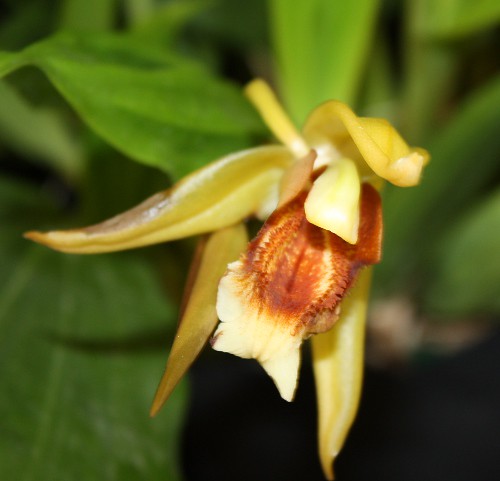
In Wichita I was discussing orchids with my friends and learned that the correct pronunciation of the genus Coelogyne is "suh-LODGE-uh-nee." I won't try and figure out how I was saying it in my head up until then, but it was significantly different enough that I didn't even know what plant Steve was talking about when he was saying this name. Later when we were by the labeled plant it suddenly dawned on me that that was the name Steve had been saying earlier.

coelogyne_speciosa
Coelogyne speciosa
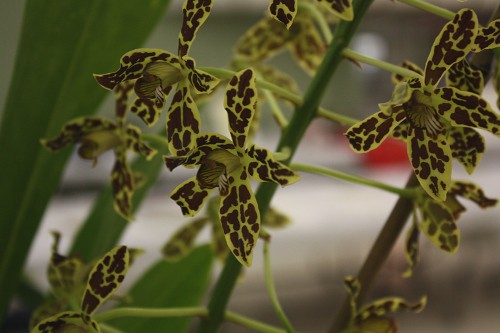
Both Catasetums and Coelogyne tend to grow from large pseudobulbs with pendulous or semi-upright spikes of flowers. I haven't grown either of these genera before. There were a couple of nice specimens at the show.

catasetum_tenebrosum
Catasetum tenebrosum
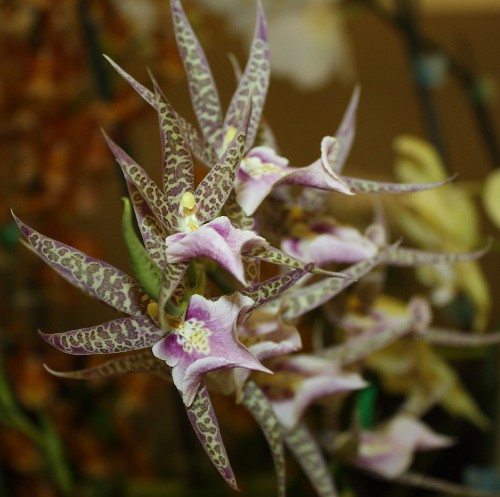
There was a really interesting intergeneric hybrid (I think) orchid for sale from Orchid Konnection. I couldn't find a tag on either of the two plants for sale, but Christie and I both stopped and noticed this one. It was just very unusual colors and markings for this type of orchid (below). It remains a mystery for now... [Update: The plant has been tentatively identified by commenter Peaches!]

unknown_star
Really neat plant for sale from Orchid Konnection, probably Bllra. Patricia McCully 'Pacific Matriarch'
I have some more photos to share, so stay tuned for the second part.