Friday, January 27, 2017

Trip Report: Gulele Botanic Garden in Ethiopia

Christie and I spent the month of July last year in Ethiopia, while we were finalizing the adoption of our son, Merek.

Untitled
Yep, he's adorable!
A while back I heard about a botanic garden in Addis Ababa and I was excited about visiting during our time in Ethiopia.  There is very little information on the internet about this place and no one seems to know about it around town.  (There is a new website that has some good information here.)  At the time the best I could do was find a phone number and called and talked to someone, who seemed a little surprised that we wanted to come and visit.

IMG_9717
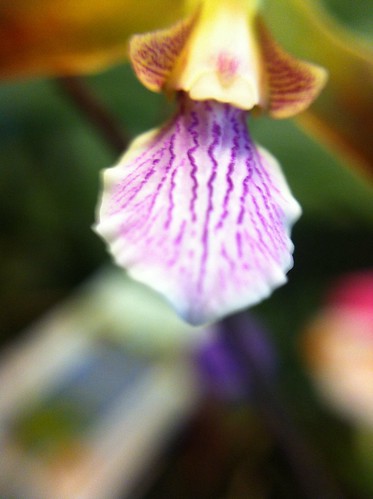
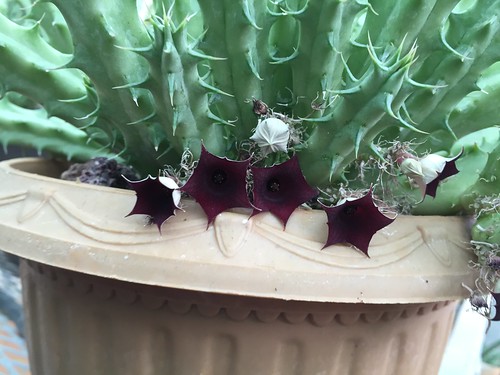
Cute little flower growing on the grounds of Gulele
We hired a taxi to drive us to the area near the garden and when we got close the driver started asking people along the street if they knew where we should go.  I brought the phone number with me and had the taxi driver call and talk to the people at the garden.  He brought me to an office building and Christie, Merek, and I went inside to meet some of the garden staff.

We visited for a short time in their office and then the Director of Education (I think his name was Solomon) got in a separate car and asked us to follow him to the garden in our taxi.  We drove up the mountain a little distance and pulled in the gate, where a staff of 5 or 6 people were tending to the garden.

Untitled
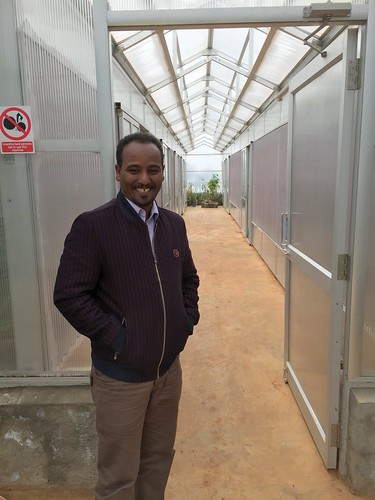
Director of Education standing in front of the greenhouses

Solomon was very happy to show me around the garden.  He told me about their vision for the place, which has been developing slowly over the last 5 years.  They envision this being a place where people come to go walking or jogging or just to enjoy nature.  (It was a good area for birding!  I recorded my 500th life bird while here: Rufous-breasted Sparrowhawk)  They aim to collect plant species from throughout the country and grow them on site, as well as to sponsor conservation efforts throughout Ethiopia.  They have rows of plants arranged almost like crops and two nice greenhouses.
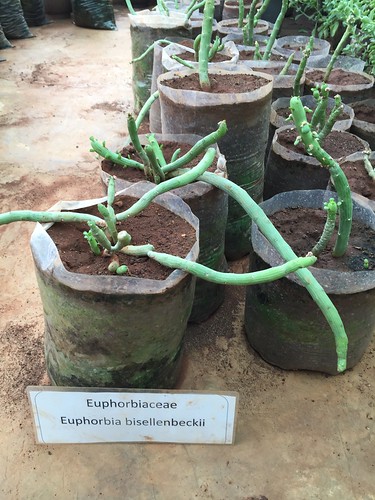
The greenhouses are sectioned into rooms coming off of a main corridor that runs down the middle.  We ventured inside and talked about the various plants they are growing.  Many of the plants are native to Ethiopia, but not all.  Solomon said it is challenging to meet the growing conditions of all of these plants from the many different climates across Ethiopia, so they are trying to simulate different climates in different rooms. Most of the plants are growing in plastic bags.  It wasn't clear to me if these are temporary or long-term.

Euphorbia bisellenbeckii
I told Solomon that I grow a lot of tropical plants, primarily Aroids and Orchids.  He wasn't very familiar with the Aroid (Araceae) family, so I tried to give him some examples.  Finally we came across one aroid in his greenhouses, which looked like a Sauromatum.  He showed me a group of native orchids, but they were not in bloom and I would have never guessed they were orchids.  Their leaves looked similar to the leaves of a day lily.  The orchid family is quite diverse and I remembered that my Field Guide to Ethiopian Orchids had a lot of genera that I was not familiar with before reading that book.

Untitled
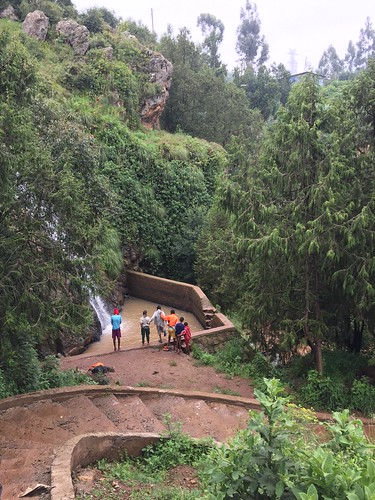
Boys swimming in an artificial pool formed around a natural waterfall flowing by the side of the path up the mountain.
After touring the greenhouses we went outside and found Christie, who had been walking around with Merek, taking pictures of birds for me.  We walked even farther up the steep hill and ventured to some other parts of the garden that I would not have guessed were the same property.  Along the way we passed several different habitats that the staff has been working to create, including a marshy area formed by damming up a natural creek that flows down the hillside.

Untitled
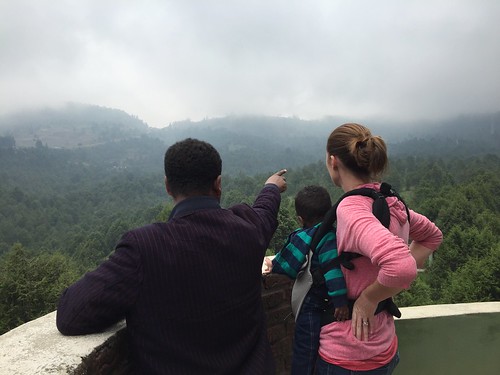
Solomon pointing out the rough property line of the botanic garden
Near the top of the hill there was a flatter area and a path that led to a lookout tower.  We stood on top and took in the view of the countryside and city below us.  Merek slept in his carrier for a little bit, but when he woke up he was kind of ready to get out and do something else.

I regret that I didn't get a good picture of the garden as a whole, showing the rows of plants and such.  I was focused on individual birds and plants.  We really enjoyed our outing and will visit again on one of our return trips to see how the garden matures.

Gulele Botanic Garden
Click above to see the complete album.

Thursday, January 26, 2017

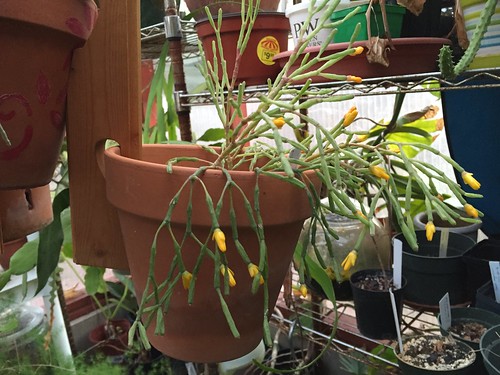
Drunkard's Dream in bloom

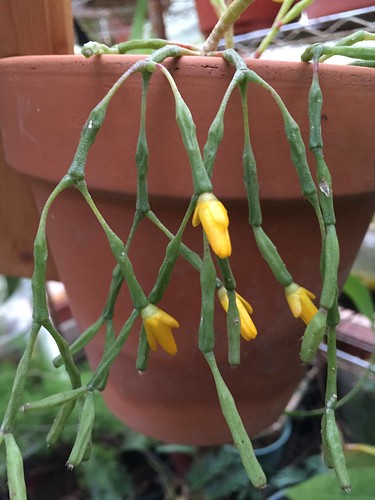
Sometimes common names can be comical names.  (Sansevieria = Mother-in-law's Tongue?)  There is a little cactus whose stem segments look like tiny bottles connected end-to-end.  If you picture them as beer bottles then you can imagine where the name "Drunkard's Dream" came from.

Hatiora salicornioides

I got my plant via a little stem cutting from a roadside rock store we stopped at somewhere in SW Missouri or NE Oklahoma several years ago.  I had seen pictures of the plant online but not seen one in person before.  When I saw it in the store I was exclaiming over it and the shop owner was kind enough to offer me a cutting.  It rooted easily and has grown slowly but steadily in the years since.

Hatiora salicornioides

I noticed it blooming for the first time last year in the month of February, and it is doing the same again this year.  The blooms are small and bright yellow.

Wednesday, December 16, 2015

The misunderstood Poinsettia

It's been AGES since I last posted!  Sorry about that, loyal followers.   Life has been busy and I have added some new hobbies, which have diverted my attention and time away from the blog.  Now, let's talk about poinsettias!

Untitled

I'm not entirely sure why I typed that title for the post.  Now that I have, I have a lot to discuss.  My inspiration for the post was when I visited the good old Myriad Botanic Gardens in Oklahoma City a couple of weeks ago.  To be honest, I have been a little disheartened with the direction of the gardens since the garden ownership changed a few years ago.  There is a lot more marketing (good) but a lot of it seems to have nothing to do with plants (sad).

Untitled

Untitled

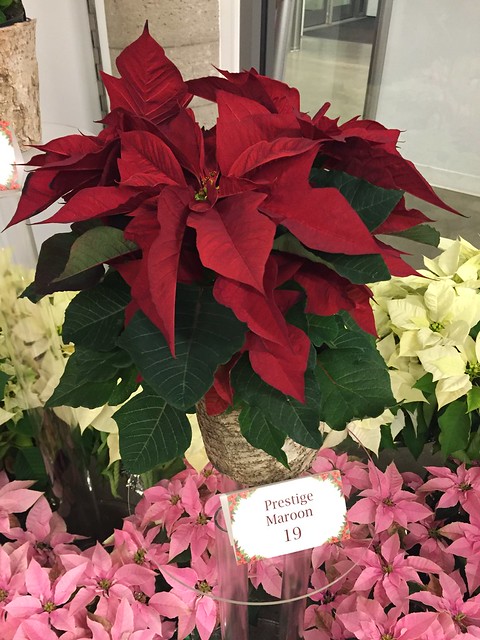
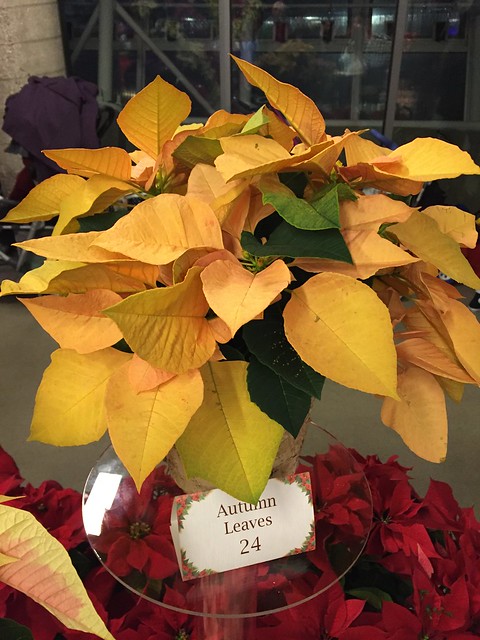
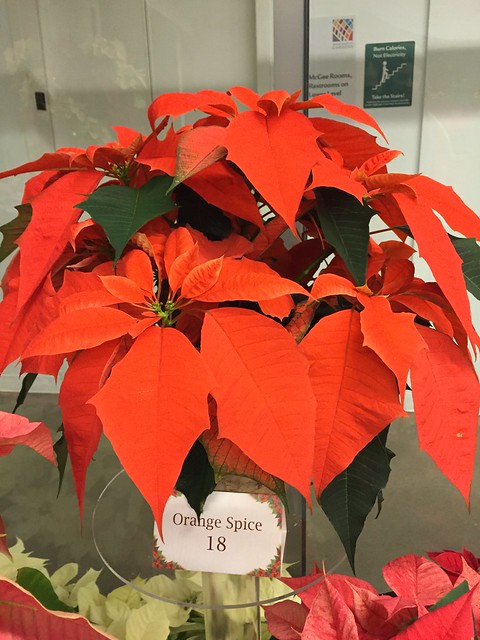
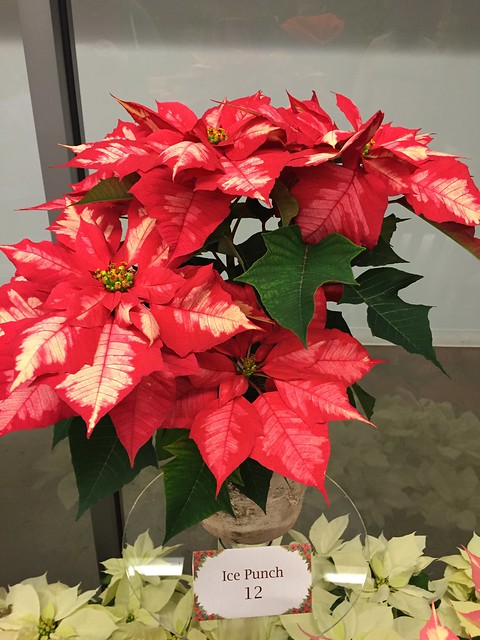
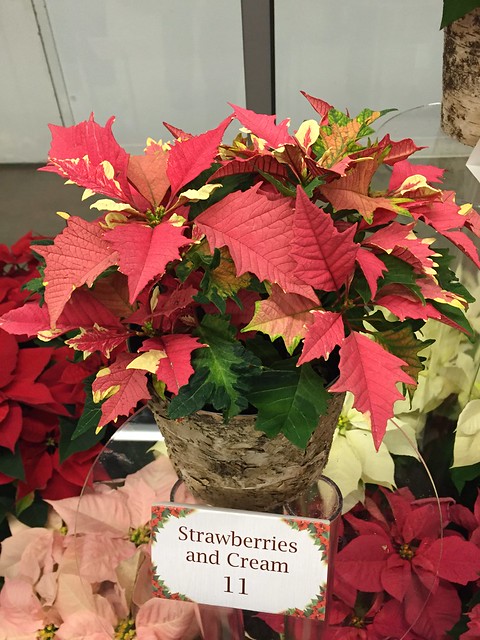
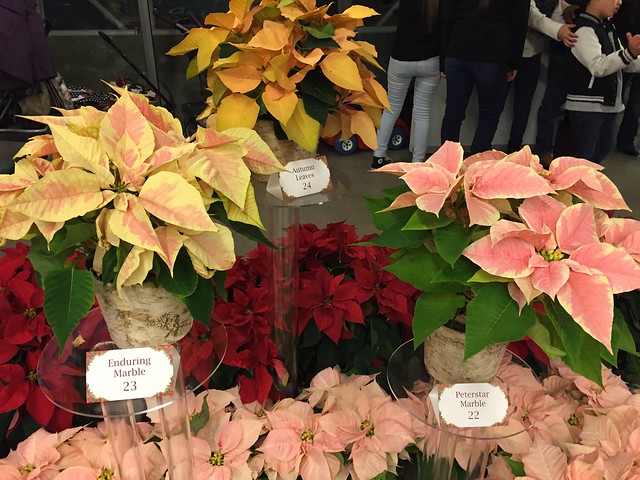
Anyway, that being said, when we were at the gardens a couple of weeks ago they had the whole placed decked out for the holidays and the conservatory was lit up with Christmas lights.  (All normal lighting was turned off, so you couldn't really see the plants.)  In the lobby area they had tons of Poinsettias.  At first I walked by them, not realizing there was something special about this temporary splash of holiday color.  There were SIGNS by each of these plants.  (I can't tell you how many times I have been in botanic gardens and seen a plant or tree that I didn't know and I couldn't find a label for it anywhere.)  The signs caught my attention and then I noticed these Poinsettias were not all the same.  And I don't mean they were just different colors.  There were striking differences.

Untitled

Untitled

I was really delighted to see that the Myriad had gone out of their way to track down some named varieties that were different from the norm. They were only lacking a bit more signage to call people's attention to the understated exhibit. It could be pretty educational, describing what a cultivar is, how they are selected and bred, and how the horticulture industry works. It's all in my head.

Untitled

Now back to my title, I think the Poinsettia is misunderstood. First, the Poinsettia is Euphorbia pulcherrima, belonging to the huge Eurphorbia genus, which mostly consists of succulent plants that the average person would call "cacti." You wouldn't know it with a quick look at the Poinsettia, but it's true. Now maybe the Poinsettia is saying "Hey, that's just my crazy family.  I'm nothing like those spiky beasts."  But they are closely related. Second, those colorful "flowers" that everyone loves at Christmas time... well, they're not really flowers. Those are colored leaves, called bracts. The flowers are the small yellow bits in the middle.  Third, they just don't look like that in the wild.  The compact potted plants sold all over the place between Thanksgiving and Christmas have been grafted and bred for those traits.  The natural species is much more lanky and with less prominent colorful bracts.  Fourth, the rumors of their toxicity are hyperbolic.  Most people will have little to no reaction from the sap.  Others could have some skin irritation.  If you were to each a leaf,  you might puke.  You would have to eat a lot of Poinsettias to have anything close to a fatal dose.

Untitled

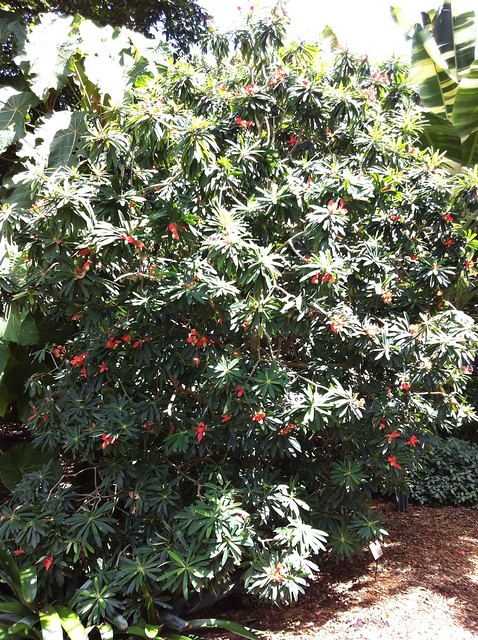
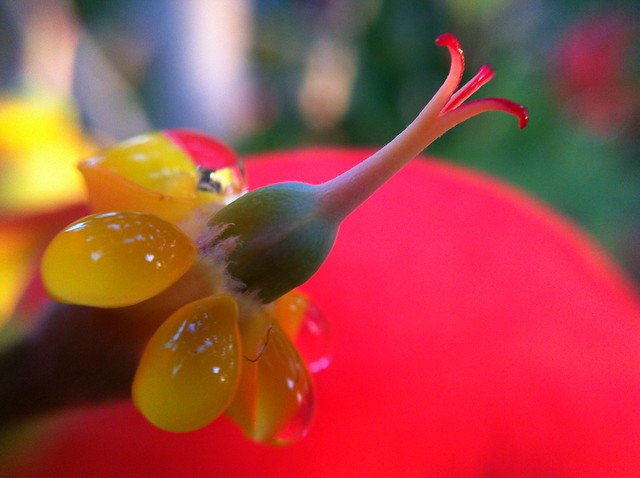
Finally, I will leave you with some photos of a favorite relative of mine.  It is the Jamaican Poinsettia Tree (Euphorbia punicea). There is a large specimen at the Myriad Botanic Gardens and I have also seen this tree growing outdoors at a botanic garden in Florida.

Euphorbia punicea (Jamaican Poinsettia tree) Euphorbia punicea (Jamaican Poinsettia tree) at Fairchild Tropical Botanic Gardens, Miami, Florida.

Jamaican Poinsettia Tree Jamaican Poinsettia Tree - macro view of flower. Myriad Botanic Gardens, Oklahoma City, Oklahoma.


Friday, July 11, 2014

Encyclia season

I really like Encyclias.  They have become my favorite orchid genus for a number of reasons.  They have interesting, colorful, but not overly showy flowers.  There is a wide variety of species and colors produced by these species.  They grow well in my climate and with my care.  They are decently attractive when not in bloom.
I have collected quite a few species and hybrids over the last few years, but I have only brought a small group into bloom.  I have had multiple flowerings of Enc plicata since I purchased it three years ago.  Otherwise, my plants have been growing, but not blooming.  This year has been an exception.
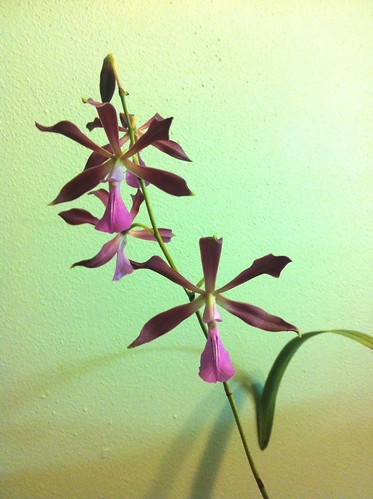

Encyclia 'Gay Rabbit'
These flowers look very different from the ones that were on the plant when I purchased it two years ago.  The pot is large, with many bulbs, so I am thinking that it is possible I have two separate plants and the one that bloomed this year is not Gay Rabbit.  Hopefully next year I will have multiple spikes and we can see if there are different plants in this pot.
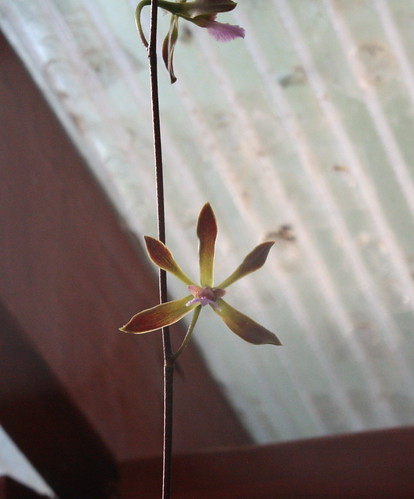
Encyclia seidelii
Encyclia seidelii

Encyclia seidelii
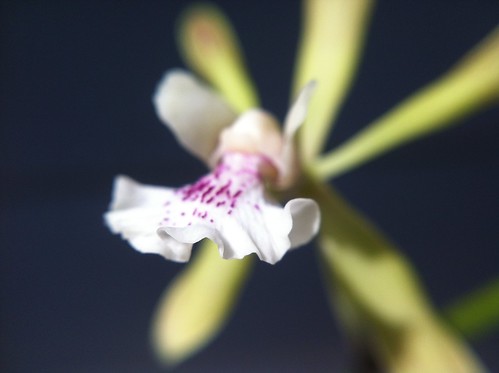
Encyclia seidelii in macro


These were my first blooms from  Enc seidelii.  I wasn't expecting any since this is a small plant.  The flowers themselves are small very striking.  The pictures don't really do them justice.
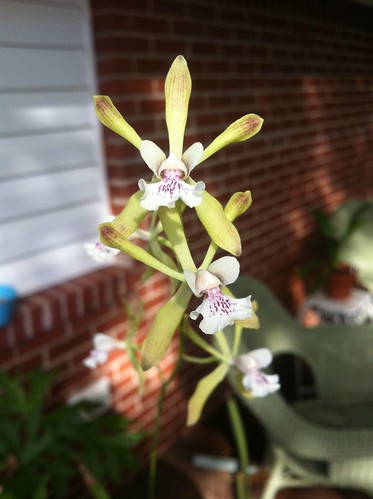
Encyclia belizensis

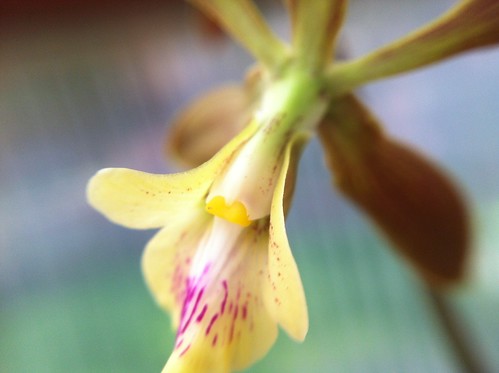
Encyclia belizensis in macro
These are also my first flowers for Enc belizensis.  They are primarily a creamy yellow with a white lip and touches of pink here and there.  These are the largest flowers of the species I have currently in flower.

Since I had several species in bloom at the same time I decided to try my hand at hybridizing.  I did it a little haphazardly right before leaving town.  I just used my finger to remove pollinia from one species and move it to the next.  It looks like some of the crosses are taking and seed pods are forming.  If all goes well, I will send my pods off to an experienced hybridizer to germinate them and grow them out.
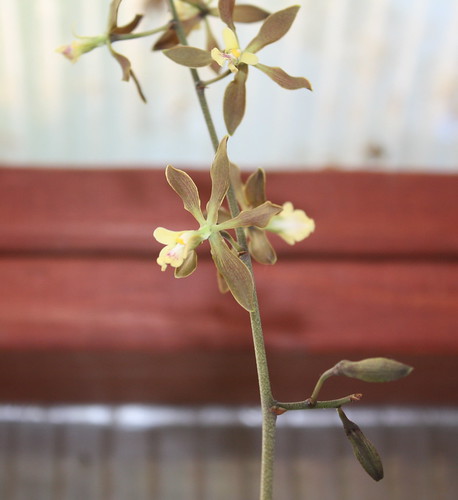
Encyclia ramoense 'Dr Pepper'


Encyclia ramoense 'Dr Pepper'
Encyclia ramoense 'Dr Pepper' in macro
This is a really neat flower, due to the unique shape and colors, as well as the fragrance.  I am told the regular species, Enc ramoense, has blooms that smell like Dr. Pepper.  This particular cultivar was labeled 'Dr Pepper' so I guess it has a marked fragrance like that favorite beverage of mine.  Anyway, we discovered something interesting about this plant.  I couldn't smell any fragrance from the flowers in my greenhouse.  I brought the plant out to the picnic table on our back deck and smelled it a little later and - voila! It smelled like Dr. Pepper!  I took the plant inside for Christie to smell: nothing.  I took it back outside with her and the scent returned!  It seems to be triggered by sunlight.  I don't know if this is a known phenomenon or not, but it sort of makes sense that plants could regulate a chemical reaction by sunlight.
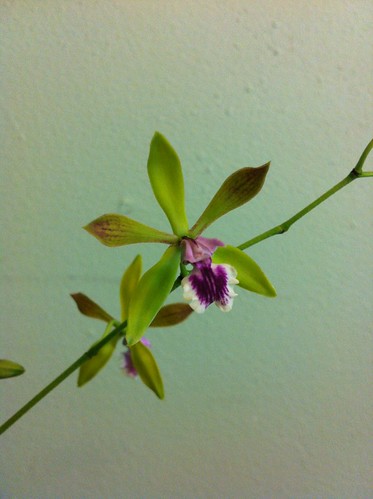
Encyclia Grand Bahama (tampensis x plicata)

My other Encyclia in bloom right now is a primary hybrid between Enc tampensis and Enc plicata.  It has dainty blooms that are lightly fragrant with a chocolate smell.

Encyclia Grand Bahama (tampensis x plicata) in macro
Last, but not least, I want to show off some beautiful leaves.  Encyclia guatemalensis hasn't flowered for me yet, but these leaves are just amazing.
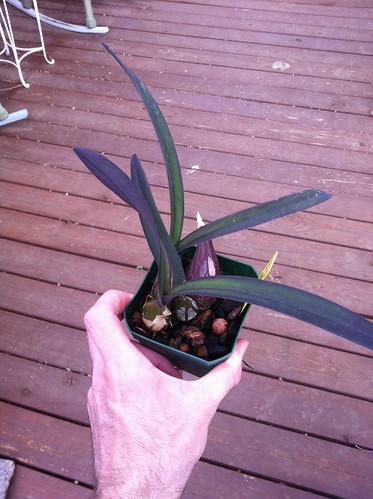
Encyclia guatemalensis
I imagine the colors would vary based on light conditions.  I hope my leaves stay this color and I get some blooms next year.

As usual, my Enc plicata is now producing a bloom spike, so I should have flowers in August and September.

Friday, November 22, 2013

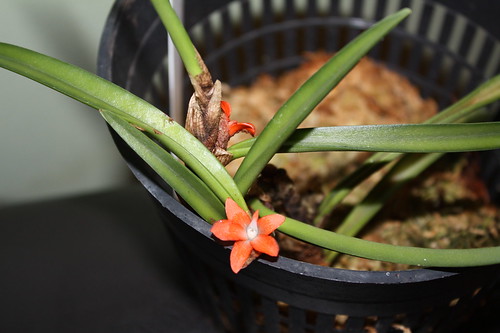
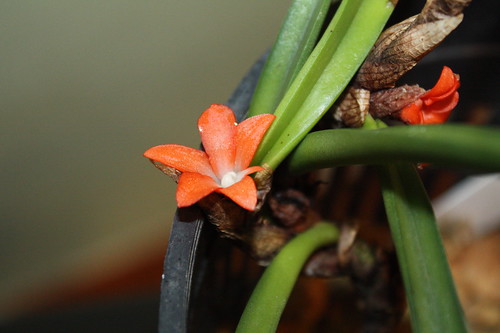
Ceratostylis rubra in bloom

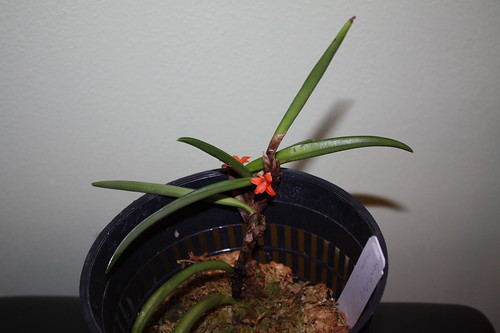
I have admired Ceratostylis rubra for several years.  It is not a flashy orchid with big, colorful flowers or even fragrant flowers.  It's just simple and interesting.  One of the features I really like is the woody look, caused by the papery, brown cataphylls that surround the base of each leaf.

Ceratostylis rubra

The flowers are also beautiful, if you take the time to look at them.  They are small and orange, but have the opalescent shimmer commonly found in orchids.  The center is pure white.  When I look at these flowers I think of creamsicle.

Ceratostylis rubra

I bought my plant in April and this is the first time it has bloomed for me.  Because the flowers are held so close to the plant, it is easy to miss when in bloom.  I was lucky to notice it and will have to watch closely for it each year.  I assume it will probably flower around the same time again next year.

Ceratostylis rubra

Friday, October 11, 2013

Greenhouse repair, stage 2

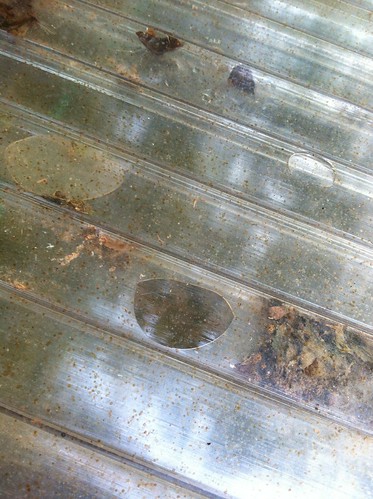
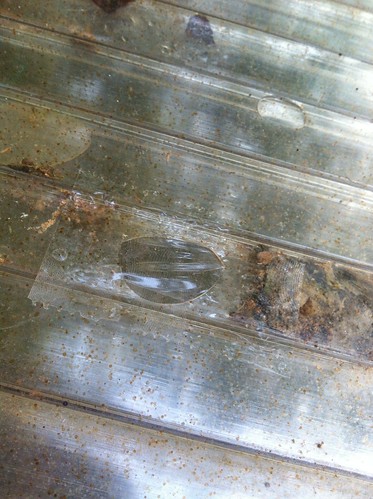
Before leaving for my annual trip to Florida, I was able to get the greenhouse put together again.  I spent about 10 hours (total) cleaning out the broken panel and patching it with clear tape.  If I told you there were 576 holes I would probably be lying.

Untitled
patched panel

Because there were actually more.

Untitled
patched panel
Once it was finally patched I sealed the ends with tape again and put the end caps on.  I put the panel back on top, flipping it over so the patched side is now down and the suspected stronger side is now facing up.  Some caulk and screws were all that was needed to make it official.

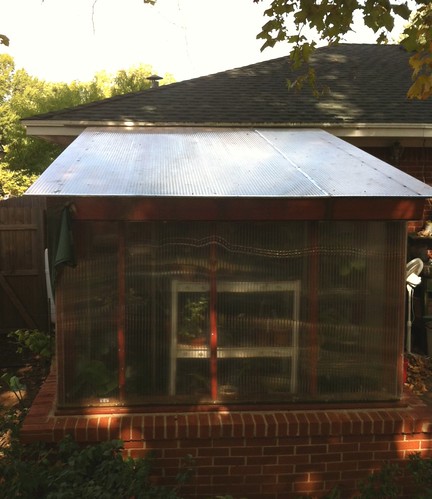
Greenhouse roof re-installed
It doesn't look great on the inside, but from the outside it looks okay and at least it is closed in once again.  I am hoping it will last a while before I have to actually replace any of the panels.

Friday, August 9, 2013

Greenhouse repair, stage 1

It has been four years since I built my greenhouse.  All in all, I am very happy with it.  This Spring we had some severe thunderstorms roll through (quite typical for central Oklahoma).  One of them dumped a lot of hail about the diameter of a quarter.  Many people in town got new roofs after the hail storm, but our new roof withstood the hail without any damage.  The greenhouse didn't fair so well.

Greenhouse hail damage and repair
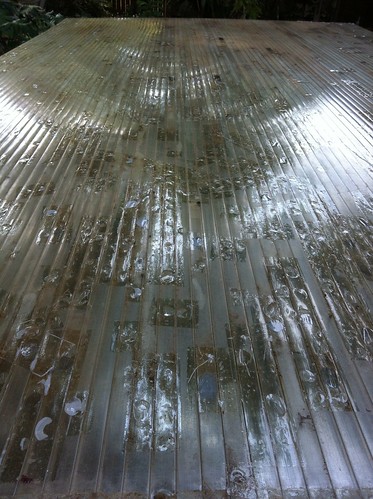
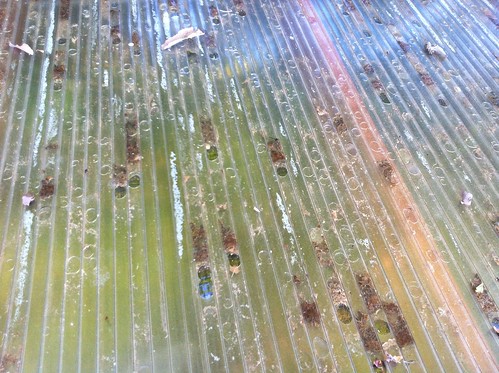
Roof of greenhouse riddled with holes from hail damage
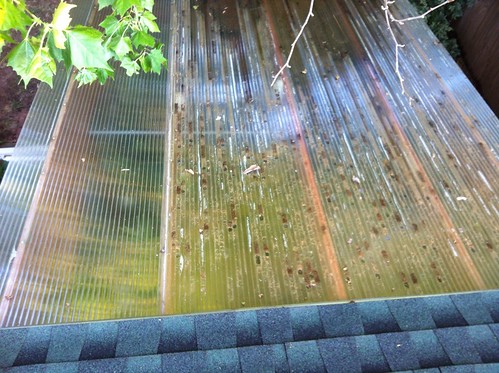
The roof and walls of the greenhouse are made of triple wall polycarbonate.  There is one seam in the roof.  Based on my damage assessment I'm guessing that one of the sides of the polycarbonate must be tougher and more resistant to damage than the other side.  I had no idea when I installed the sheets.  Nor did I realize I was putting different sides up on the two pieces.  The repeated pounding of the hailstones punctured through the upper surface on one of the polycarbonate sheets and left the other sheet unharmed.  I wish I had known this when I was building the greenhouse.

Greenhouse hail damage and repair
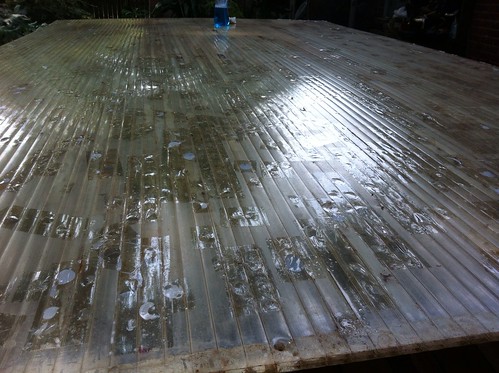
The panel on the left is completely without blemish while the panel on the right has hundreds of holes.
You can also see where the panel has filled with water (top of the image).

At the time of damage I couldn't just remove the sheet and replace it.  For one, replacement material is expensive and difficult to procure.  I had to buy a huge sheet (8' x 36') and cut it down to manageable sheets to get it home the first time around.  It was also still getting down near freezing some nights at the time, so I couldn't leave the greenhouse unprotected.  Because I used triple wall polycarbonate the holes weren't actually exposing the interior of the greenhouse to cold air from outside.  There was still a layer of protection.

Greenhouse hail damage and repair
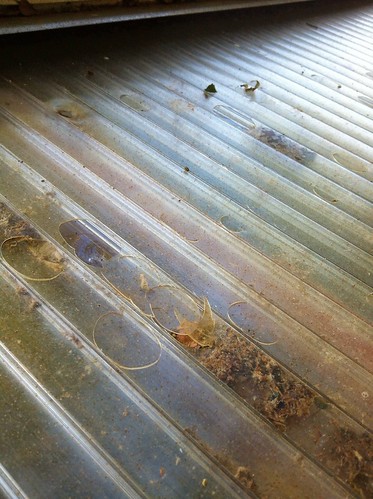
Seeds from our Sycamore tree and other junk has washed off the roof,
right into the channels of the polycarbonate panel.

I stalled and life was busy and in the meantime, the holes of the roof allowed all sorts of water and junk to get inside.  Because the ends of the panel were sealed shut, the roof actually filled up with water, to the level of the lowest hole in each channel.

Greenhouse hail damage and repair
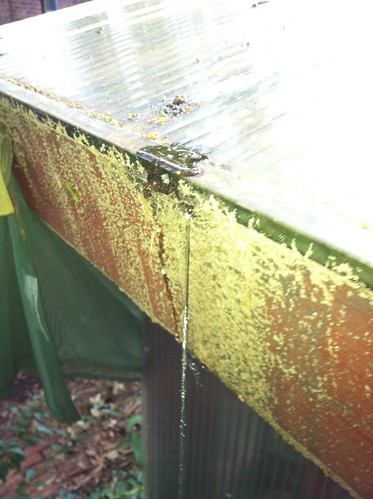
Water draining from one of the channels after I removed a screw attaching the panel to the frame.

What to do now?  Well, I have removed the damaged sheet, which was very heavy with the added weight of the water.  I drained the water and I am in the process of cleaning it out.  This is a time consuming process and I'm afraid the final outcome will not be a clear panel.  The walls and other roof panel of my greenhouse still look about as clear and clean as the day I installed them, but this roof panel will likely not be as pristine.

Greenhouse hail damage and repair
Typical hole punched by hail

Once the cleaning process is complete I will be patching the (hundreds of) holes with clear packing tape.  I have patched some areas and then tried to shoot water through those channels to flush out the junk.  That didn't work as well as I had hoped, so I am going to try to use the holes to wash out the junk, and maybe also use a shop vac.

Greenhouse hail damage and repair
My patch job.  Not the prettiest thing around, but hopefully it will do the job.

After the junk is out, I will do all of the patching, re-seal the ends of the panel, flip the panel so the repaired side is down, and then reattach it to the roof.  With the repaired side facing down any "leaks" would just be allowing the warm air from the greenhouse into the cell, rather than cold outside air into the cell.  Also, if it is true that the sides of the polycarbonate differ in strength then this puts the stronger side facing up to weather the next inevitable hail storm.

Stay tuned to see how the repair progresses.