Showing posts with label Asclepias. Show all posts

Thursday, February 21, 2019

Milk Jug Germination

Spring will be here before we know it. Already I am seeing a few blooms on my quince bush, buds on our Daffodils, and leaves from our tulips are breaking through the surface of the soil.

I have seeds of several milkweeds that I would like to grow this year, including three native Asclepias and one Calotropis native to Africa and Asia. The American natives all require cold stratification. I have most of the seeds in the refrigerator, but I am starting a few others using a different method. 

I cut open two milk jugs and added soil to the bottom of the jug. I scattered some of my seeds on the top of the soil, watered them in, and then taped the jugs closed. I’ve sat the milk jugs outside on the ledge of my greenhouse. Hopefully they won’t blow over or become dog chew toys there. With any luck, they will experience the requisite cold period and then will germinate in about a month when the temperature begins to climb and the days get longer and they’ll have a head start in their little biodomes. If it doesn’t work, no big deal. I only used part of my seed stash on this experiment.

I did a little more reading on this technique and apparently it's important for the top cap to be removed. I was assuming more of a close greenhouse/terrarium setup was desired, but I will stick to the recommended method and remove my top caps.

Tuesday, April 24, 2018

Update: Native Asclepias

Last year I transplanted some native Asclepias from some family property where they were growing wild into my own flowerbed. A couple of them stayed green for the remainder of the summer, so I was hopeful that they were establishing. At least one other appeared to have dropped dead.

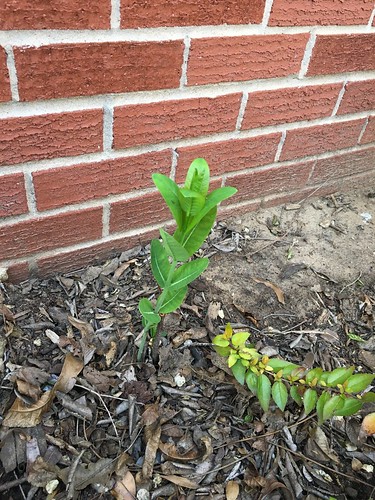
Asclepias amplexicaulis (transplant)
Asclepias amplexicaulis emerging about 9 months after the transplant
I was really surprised to see the one that looked the least likely to have survived sprung up first this Spring! It is also one of the less common species in this area, so I am really happy it survived the transplant. I have confidence I can keep it alive (even with little to no care) now, considering it is an ideal plant for our hot Oklahoma summers and cold winters.

I don't know about all of the transplants yet, but I can see that at least one other plant, Asclepias tuberosa, is beginning to emerge. I'm very excited about having these native, butterfly-attracting plants established in our flowerbed.

Friday, September 29, 2017

New seeds

I don't have a lot of experience growing native plants from seed*, but I have a lot of stock to practice with over the next year.  I purchased some Asclepias humistrata (Sandhill Milkweed) seeds from eBay and the seller sent me two other packets of seeds to try - Cosmos and Ipomoea purpurea (Candy Cane Morning Glories).

Eleven packets of seeds for me to plant
I have also been looking into growing some more native plants that host or attract birds and butterflies.  I came across a group on Facebook where one member was offering seeds to anyone who would pay for the postage.  She kindly sent me two envelopes full of seeds of butterfly host plants, including Maurandella antirrhiniflora (Snapdragon Vine), Asclepias asperula (Antelopehorn Milkweed), Phyla nodiflora (Frogfruit), Verbena bonariensis (Brazilian Verbena), Polanisia dodecandra (Clammyweed), Echinacea Cheyenne Spirit (Coneflower), Aristolochia fimbriata (White-veined Dutchman's Pipe), and Zinnia Zowie. 

Sandhill Milkweed (Asclepias humistrata) - courtesy of discoverlife.org

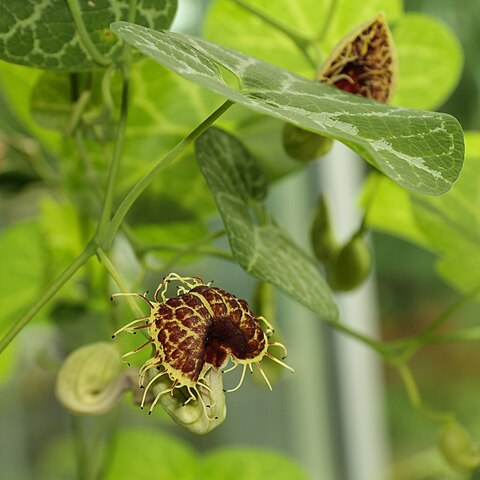
As I've mentioned before, I really like Asclepias, so I'm very excited about the prospect of growing these two species (A. asperula and A. humistrata) from seed.  The humistrata species (above) is not native to Oklahoma, but I think it will do well in my climate.  The Dutchman's pipe has some really funky flowers (below).  It would be cool to get this growing on my back fence.

White-veined Dutchman's Pipe (Aristolochia fimbriata) - courtesy of Wikimedia

Now I just need to find good places to plant them all!

* This is sort of funny because I have one and only peer-reviewed journal publication to my name and it is titled "Experiences growing aroids from seed."  I have had success growing aroids, but haven't tried many plants from other families from seed.

Thursday, August 31, 2017

Native Asclepias

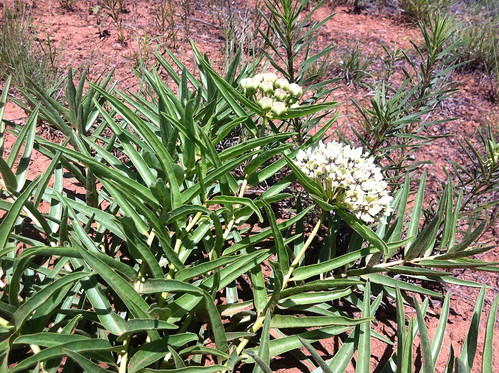
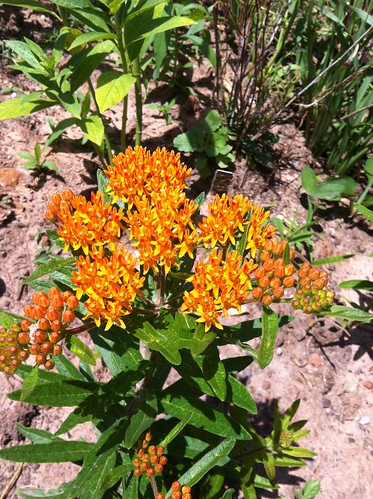
For several years I have been fascinated by Asclepias, one of the many plants given the common name of "milkweed."  This is a genus consisting of more than 140 species of flowering perennials native to North America.  Here in central and southern Oklahoma there is one species, Asclepias viridis (Green antelopehorn), that is prolific. There are three other species (A. tuberosa, A. amplexicaulis, and A. asperula) that I have seen in this area in smaller numbers. The USDA website lists 25 species of Asclepias that naturally occur in Oklahoma, which is surprising to me!  Some of those occur just in the western-most county of the Oklahoma panhandle.  Others occur just in the far eastern-most counties.  Oklahoma does have a lot of habitat diversity.
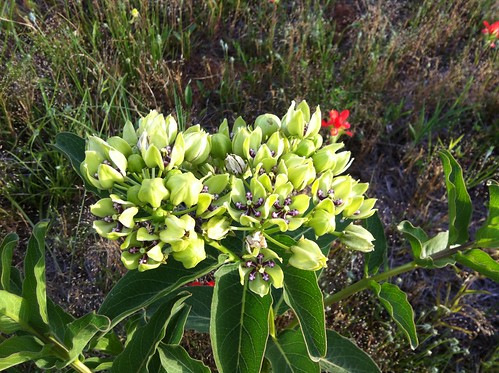
Asclepias viridis
Asclepias viridis

Asclepias asperula
Asclepias asperula
Asclepias tuberosa
Asclepias tuberosa
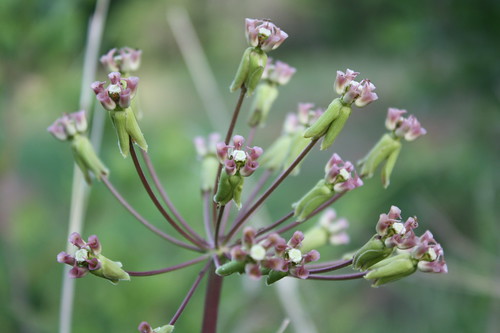
Asclepias are interesting plants for several reasons. They are a host plant for the endangered monarch butterflies/caterpillars, as well as many other species of moths and butterflies (Lepidoptera). Gardeners interested in planting native plants that attract butterflies and other local wildlife are fond of several species of Asclepias. Some species have really beautiful flowers and others have really strange flowers. When you look at Asclepias viridis up close it reminds me of the metallic looking passionflower from the THX sound test video.
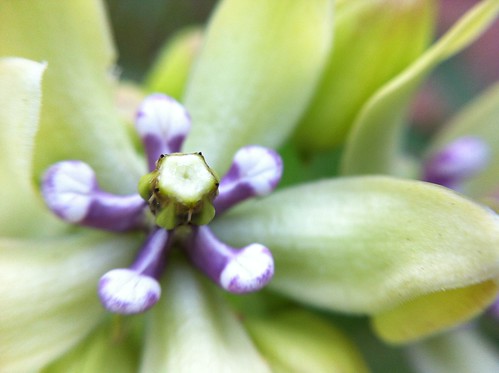
Asclepias viridis
Asclepias viridis macro photo

Asclepias amplexicaulis
I have tried to transplant some Asclepias viridis from the wild into my yard on a few occasions. It is difficult because the root system of the Asclepias consists of a really large single tap root (like a paper towel roll that goes deep into the ground. Unfortunately the native red soil that these plants are growing in is hard and the root is brittle, so it easily snaps as you try to loosen the soil around it. Recently I dug up several species of Asclepias after we had had some rain, so the soil was a little more cooperative. I retrieved 3 viridis, 1 amplexicaulis, and 1 tuberosa.
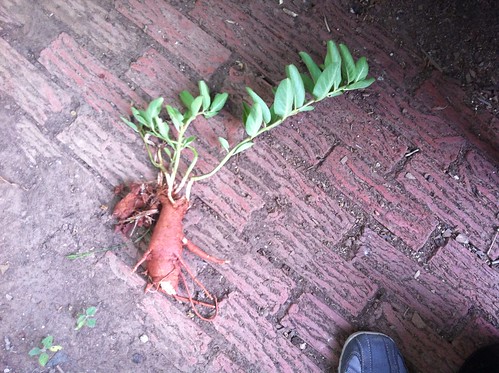
Asclepias
An unsuccessful Asclepias viridis transplant from a few years ago.
Check out that root!

Chinese Bushclover (Lespedeza cuneata)
Successful transplant of Chinese Bushclover (Lespedeza cuneata) - an introduced species.
While I was digging up these plants my eye was drawn to some small-leaved flowering plants that were growing in good numbers nearby. I dug up a couple of these to try as well. I used my new favorite app, iNaturalist, to help me identify the unfamiliar plants and found that both are Lespedeza (Bushclovers). One is a native (L. virginica) and the other is a semi-invasive introduction from Asia (L. cuneata). Although I shouldn't be, I'm always a little surprised when I come across an introduced species in a place that I think of as undisturbed by humans. The truth is that humans aren't the only ones to introduce new species to a property. Birds, furred animals, and even the wind are perfectly capable of transporting seeds that were introduced anywhere on the continent.

transplanted Asclepias tuberosa
Asclepias tuberosa successful transplant

transplanted Asclepias viridis
Asclepias viridis successful transplant
I am hoping that my transplants survive this time around.  They all wilted within the first day, but some had the appearance of "I'm just thirsty and don't appreciate the change in scenery" wilted, whereas some had the "you killed me!" wilted.  Now that they have been in the ground for a couple of weeks I can tell that three have survived, two viridis and one tuberosa.  The others are most likely deceased, but could surprise me by putting up new growth from the roots.  You just never know.

transplanted Asclepias amplexicaulis
Not so successful Asclepias amplexicaulis transplant