Showing posts with label butterfly host plant. Show all posts

Monday, February 25, 2019

Gomphocarpus from seed

One of several plants I started from seed last year was a milkweed nicknamed Hairy Balls or Balloon Plant (Gomphocarpus physocarpus). The nicknames are from the appearance of the large pods that form when the flowers set seed. This plant is native to southeast Africa, but is a good food source for Monarchs here in the United States. I ended up with two very tall and lanky plants. They did not branch and just continued to grow taller throughout the summer. At one point there were a few small flower buds but they aborted before opening. I don't know if this plant wanted more sunshine or something different. It seemed healthy and grew steadily, but I didn't get any flowers. I read that if you are growing these from seed it is best to start them indoors early because the growing season may not be long enough for flowers and new seed pods. Maybe that's what happened in my case.

My tall and lanky Hairy Ball plants (Gomphocarpus physocarpus) in August of last year.

Thankfully, the plant has stayed happy in my greenhouse this winter so maybe next summer I will get some flowers. Ideally those flowers will set seed pods so that I can start new plants from seed and maybe prune my two existing stalks to get a fuller plant.

Open seed pod of Gomphocarpus physocarpus.
Like many other milkweeds, the seed are attached to a fluffy piece of cotton-like material
that helps them disperse in the wind.

Friday, November 16, 2018

Trip Report: Zilker Botanical Garden

While we were in Austin we visited Zilker Botanical Garden. There was a special event going on while we were there with local vendors with art, plants, and other things for sale. One of the vendors was a local nursery that had some rare plants for sale, including a small Frankincense tree about 6 inches tall, selling for $250! I talked to the owner and he said that it was a cutting from their parent plant, which isn't very large and that the cuttings are difficult to root. I bought a small Curry Tree for $6 for my friend who had been looking for one of these for years.

The sun shines brightly through the canopy,
nearly preventing us from seeing the dino statue across the lotus pond.

Ammonite fossils are used as paving stones by the lotus pond.

Posing in front of a waterfall in the Prehistoric Garden


Alligator Plant (Acanthus montanus)

We really enjoyed the Hartman Prehistoric Garden, which consists of plants from families that have been on earth for millions of years: cycads, ferns, palms. This garden was inspired by dinosaur tracks and an ancient turtle fossil that were found inside the gardens in 1992. At one spot there are paving stones that are actual ammonite fossils, which is really cool. They also have a bronze dinosaur statue in view across a pond.

Southern Dogface (Zerene cesonia) enjoying a Coreopsis

American Snout (Libytheana carinenta) enjoying a Coreopsis

The butterfly garden was rather unkempt looking, but the bushy flowering plants were absolutely covered in butterflies enjoying the nectar. I think most of the plants were Blue Mistflower (Conoclinium coelestinum). We saw at least 10 species, likely a few more: Queens, American Snouts, Sachems, Gulf Fritillaries, Red Admirals, Monarchs, Pipevine Swallowtail, White-striped Longtail, Southern Dogface, and a couple of Skippers I didn't identify.

Queen (Danaus gilippus) butterfly enjoying some nectar
from the Blue Mistflower (Conoclinium coelestinum)

Queen (Danaus gilippus) butterflies enjoying... each other.

A few other quick things to note:

Coral Fungi, probably from the genus Ramaria

This is not a plant, but I have admired photos of Coral Fungi before but not seen one in person. Along the path in one part of the gardens I noticed a bunch of these on the ground. So beautiful!

A real rock turned into an outdoor light along the pathway

The gardens have these really cool lights along the path. They were not illuminated while we were there visiting in the daytime, but I noticed one when I was bent down inspecting the fungi. They are actual rocks - not those fake plastic ones - that have been cut in half and had lights installed in them. What a cool idea!

Thaumatophyllum bipinnatifidum mislabeled as both a Philodendron (almost right) 
and a Monstera (definitely not right).
It's not unusual to find plants mislabeled in a botanic garden, but it still surprises me every time I see it... In all fairness, this plant used to belong to the genus Philodendron and only recently moved to the new genus of Thaumatophyllum. But still, Monstera deliciosa is a very different plant and in a separate genus.

Thursday, April 26, 2018

Update: Plant all the seeds!

A little more than a month ago I planted a bunch of seeds and it looks like I've had good results with most, if not all, of them.

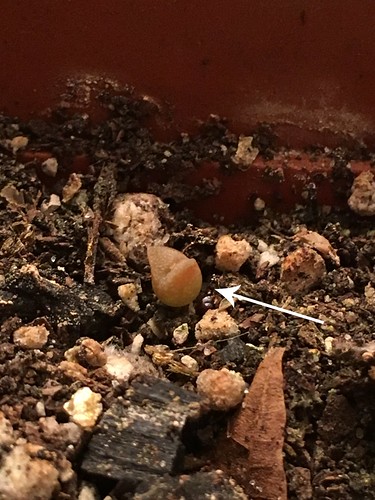
From the pots of mixed cacti seeds, I can see some funny little forms rising from the soil. The germination percentage is low at this point - just three little seedlings. It's quite possible that these three seedlings are just the species with the quickest germination period and others will come up over time. Hard to say for sure at this point. I wonder how long it will be before these little seedlings are recognizable.

Unknown cactus seedling
First signs of life in the mixed cacti pots.
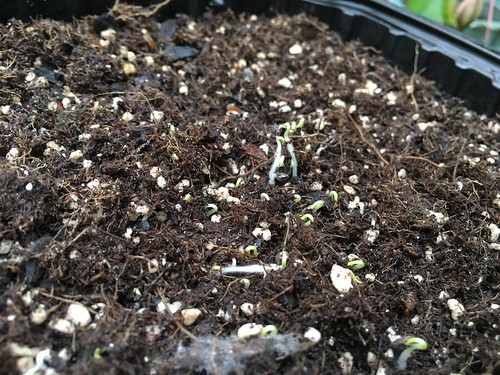
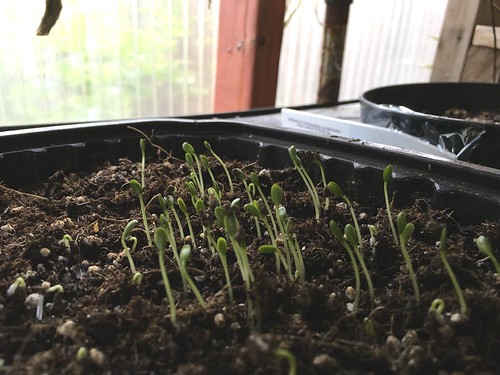
My native butterfly-attracting Common Buttonbush (Cephalanthus occidentalis) seeds are beginning to sprout!

Common Buttonbush (Cephalanthus occidentalis) seedlings

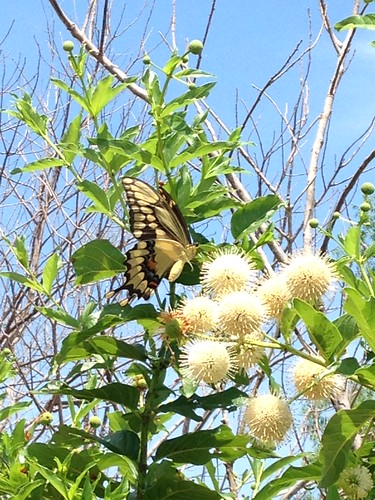
Eastern Giant Swallowtail (Papilio cresphontes) on Common Buttonbush (Cephalanthus occidentalis)
Eastern Giant Swallowtail (Papilio cresphontes)
on Common Buttonbush (Cephalanthus occidentalis)
at Lake Texoma (July 2016)
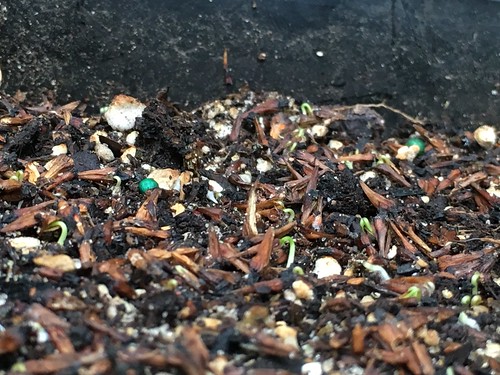
My non-native (south African) butterfly-attracting Hairy Balls (Gomphocarpus physocarpus) have sprouted and are off to the races! Check out the fast growth over just 30 hours!

Gomphocarpus physocarpus seedlings
Gomphocarpus physocarpus 6 days after planting

Gomphocarpus physocarpus seedlings
Gomphocarpus physocarpus 7 days after planting

The other seeds I planted were some Bauhinia (Orchid Tree) and Dietes (Fortnight Lily/Iris) that I collected in Los Angeles in March. I have had luck germinating each of these before, so I am hopeful in both cases, but haven't seen any action yet with this batch. The Bauhinia trees that I grew from seed previously are now about 5' tall and ready to be planted outdoors in an appropriate climate (not central Oklahoma). Unfortunately my previous encounter with Dietes didn't end well. After the two seeds germinated and sprouted tiny plants, they didn't survive long. I'm hoping to do better this time and, with luck, I'll have more seedlings and can experiment a little more with lighting, humidity, and soil moisture.

Tuesday, April 24, 2018

Update: Native Asclepias

Last year I transplanted some native Asclepias from some family property where they were growing wild into my own flowerbed. A couple of them stayed green for the remainder of the summer, so I was hopeful that they were establishing. At least one other appeared to have dropped dead.

Asclepias amplexicaulis (transplant)
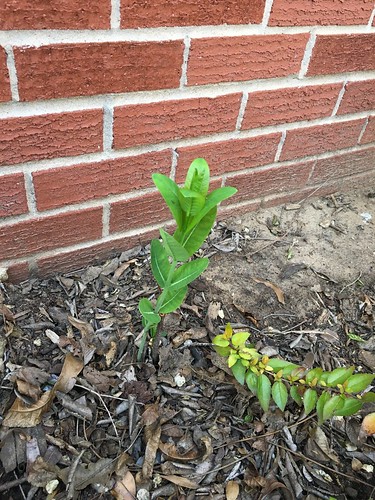
Asclepias amplexicaulis emerging about 9 months after the transplant
I was really surprised to see the one that looked the least likely to have survived sprung up first this Spring! It is also one of the less common species in this area, so I am really happy it survived the transplant. I have confidence I can keep it alive (even with little to no care) now, considering it is an ideal plant for our hot Oklahoma summers and cold winters.

I don't know about all of the transplants yet, but I can see that at least one other plant, Asclepias tuberosa, is beginning to emerge. I'm very excited about having these native, butterfly-attracting plants established in our flowerbed.

Friday, September 29, 2017

New seeds

I don't have a lot of experience growing native plants from seed*, but I have a lot of stock to practice with over the next year.  I purchased some Asclepias humistrata (Sandhill Milkweed) seeds from eBay and the seller sent me two other packets of seeds to try - Cosmos and Ipomoea purpurea (Candy Cane Morning Glories).

Eleven packets of seeds for me to plant
I have also been looking into growing some more native plants that host or attract birds and butterflies.  I came across a group on Facebook where one member was offering seeds to anyone who would pay for the postage.  She kindly sent me two envelopes full of seeds of butterfly host plants, including Maurandella antirrhiniflora (Snapdragon Vine), Asclepias asperula (Antelopehorn Milkweed), Phyla nodiflora (Frogfruit), Verbena bonariensis (Brazilian Verbena), Polanisia dodecandra (Clammyweed), Echinacea Cheyenne Spirit (Coneflower), Aristolochia fimbriata (White-veined Dutchman's Pipe), and Zinnia Zowie. 

Sandhill Milkweed (Asclepias humistrata) - courtesy of discoverlife.org

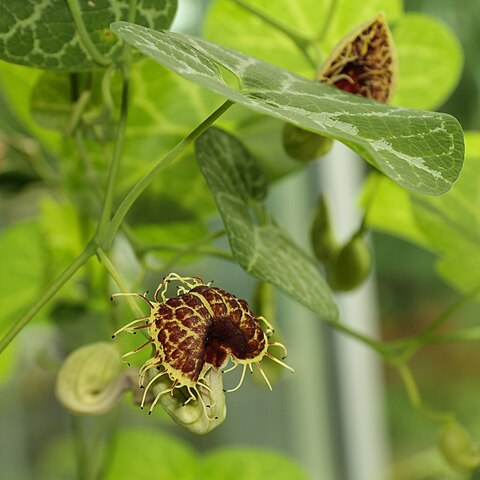
As I've mentioned before, I really like Asclepias, so I'm very excited about the prospect of growing these two species (A. asperula and A. humistrata) from seed.  The humistrata species (above) is not native to Oklahoma, but I think it will do well in my climate.  The Dutchman's pipe has some really funky flowers (below).  It would be cool to get this growing on my back fence.

White-veined Dutchman's Pipe (Aristolochia fimbriata) - courtesy of Wikimedia

Now I just need to find good places to plant them all!

* This is sort of funny because I have one and only peer-reviewed journal publication to my name and it is titled "Experiences growing aroids from seed."  I have had success growing aroids, but haven't tried many plants from other families from seed.