Our dream is to have a backyard that is functional, beautiful and relaxing. We want to have lots of areas where you can sit down and enjoy the outdoors while reading a book or just enjoy the weather. We have worked to create this feel in several parts of our yard. After building on to our house, our backyard had changed and we had a new area to perfect.
We decided to add a flowerbed against the back our addition that would soften the big red brick wall and bring some more color into our yard. Once we decided to put in another flowerbed, we started thinking about how we could be a little smarter with our plant purchases this time around. In the past we have poured money into our corner garden year after year, with only a couple of our perennials sticking around to see another year. We didn’t want to do that with this garden.
Christie read several magazine articles about planting new flowerbeds and they all suggested starting with foundation evergreen plants before doing anything else. This makes sense for a number of reasons: You want your garden to have year-round interest, so putting these in first is like planning for even the most boring part of your annual cycle to be appealing. It also makes sense because these plants are generally the largest ones in the garden and you really want to place those before you put in the more superfluous splashes of color. So we came up with a list of several evergreens that we wanted to find for our new garden and we vowed to not change our mindset on the evergreens, even if we saw a bunch of super spectacularly awesome plants with more pizzazz.
It turns out that when we were walking through the garden center looking for evergreens, we noticed some really nice features in them and really fell in love with several evergreens. We don’t have trouble “stopping to smell the roses,” but until now we had not “stopped to gaze at evergreens.” Granted these don’t have the most showy flowers or amazing colors or anything, but there are some really nice evergreens available for our zone and we took advantage of their variety.
One other change to our garden philosophy this time around was to buy plants that were more expensive but also more mature. We decided that a more mature plant is more likely to make it through our difficult growing season than a petite plant. Nearly every summer we have about a week of days above 100 F and periods of no rain. And about 1 out of every 5 winters will dip down to about 5 F. We figure the initial investment is definitely more, but the plants are more likely to make it through the critical first couple of years if they are mature plants when they go in the ground.
Once again*, we were incredibly fortunate in that we wanted to build a raised flowerbed and a neighbor down the street had a huge pile of dirt in their front yard that they needed hauled away. They put in an underground storm shelter; we put in a flowerbed. Win-win. (Of course, somewhere in there Christie and I had to shovel and haul about 20 wheelbarrow loads full of dirt about 1/4 mile down the street.) I mixed equal parts of sand, leftover from our addition, to offset the tough clay nature of the dirt. Then we got a bunch of free compost from the city and mixed that in as well. It was a lot of shovel work, but I think it resulted in an excellent soil for our plants.
Another first for us came when we purchased our first rosebush. We have always appreciated cut roses and have seen some very nice rose gardens, but we have never grown roses before. We both really like the light lavender roses, so we were looking particularly for one of those varieties. We found a nice bush of Neptune and we’re really excited to see how many roses we will get from our little bush. Right now there are two big buds on it that are about to open and they look very much like they will be red or at least a dark pink/magenta color. We’ll have to see if they change before they completely open or if the plant was mislabeled.
So, what did we end up planting?
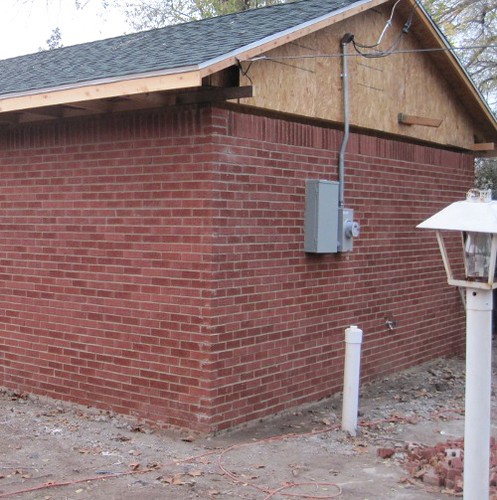 |
| Before: Our blank (and messy) canvas |
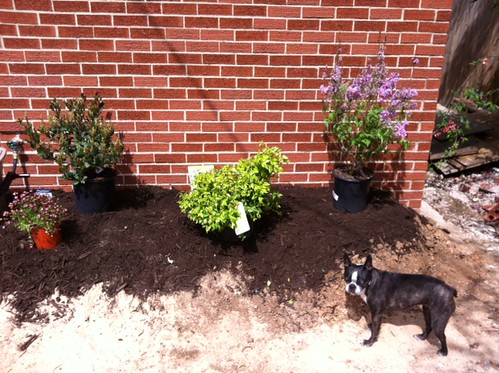 |
| All decisions go through the tiny creature. Pee-Wee supervised each step of the landscaping process. At this point in the process we had laid out our plants, but not yet mixed the soil components, so you can see the rich black compost on top, clay and dirt on the right and sand on the left. |
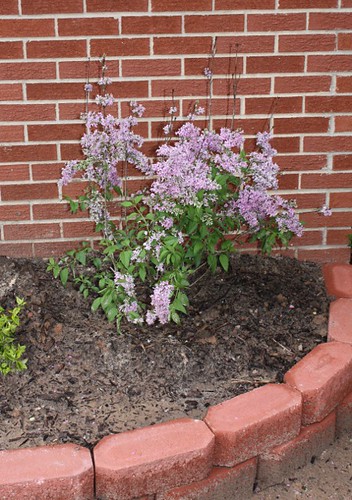 |
| Lilac bush |
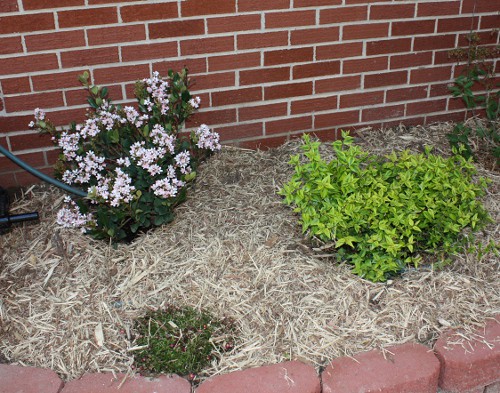 |
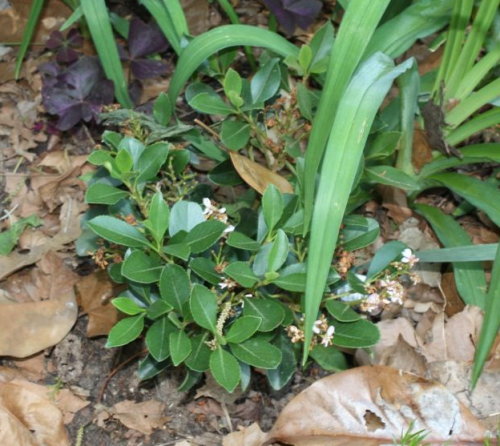
| Grouping of Indian Hawthorn, Saxifraga and Abelia |
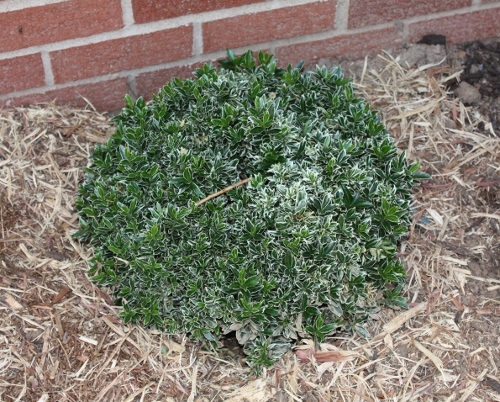 |
| Variegated Euonymus Boxleaf |
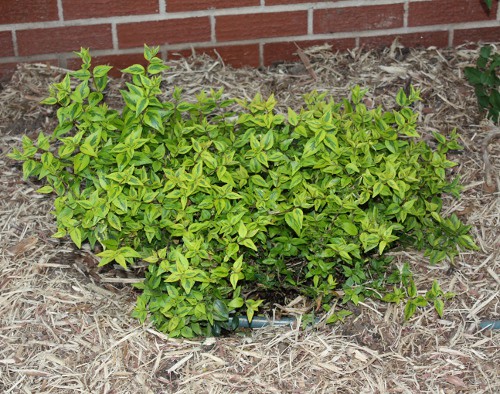 |
| Kaleidoscope Abelia |
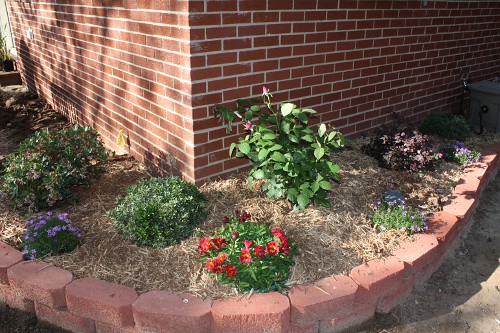 |
| Back garden along the curve. Bright red flowers are Alstromeria. Rose bush behind and to the right. |
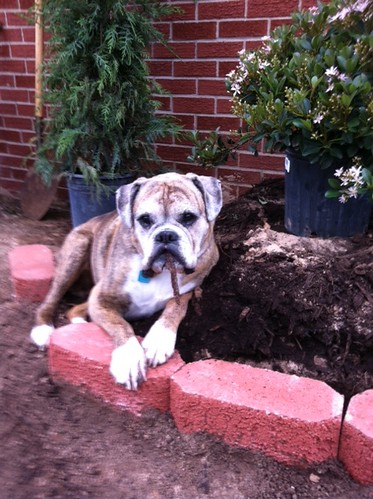 |
| Pippa finds landscaping very relaxing. She kept track of where the last block was to be placed and also helped us sift out the large sticks from the compost mix. (Notice the stick in her mouth.) |
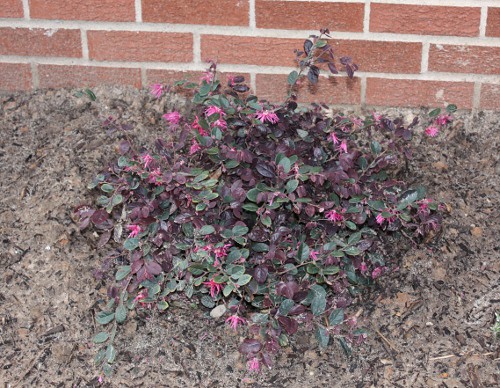 |
| Loropetalum |
So, what did we end up planting?
- Rose ‘Neptune’
- Snow Pink and Pink Lady Indian Hawthorns: Rhaphiolepsis indica ‘Snow Pink’ and ‘Pink Lady’ (evergreen with light pink flowers in the spring, followed by blue berries)
- Burgundy Blast Loropetalum Loropetalum chinesis rubrum ‘Burgundy Blast’ (evergreen, or “ever purple,” with interesting pink fringe blooms in the spring)
- Oxana Princess Lily Alstroemeria x hybrida ‘Staprioxa’ (early riser with red blooms in spring)
- 2 Dwarf Variegated Boxleaf Euonymus Euonymus japonica ‘Microphylla Variegata’
- Kaleidoscope Abelia Abelia x grandiflora ‘Kaleidoscope’ (evergreen, changes color throughout the year, small white blooms in summer)
- Persian Lilac Syringa x persica (deciduous, fragrant light purple blooms)
- Touran Scarlet Saxifraga Saxifraga x ardensii ‘Touran Scarlet’
- Phlox, phlox, phlox (Christie’s favorite creeping spring bloomer, an evergreen groundcover)
- Peony Sarah Bernhardt Paeonia ‘Sarah Bernhardt’
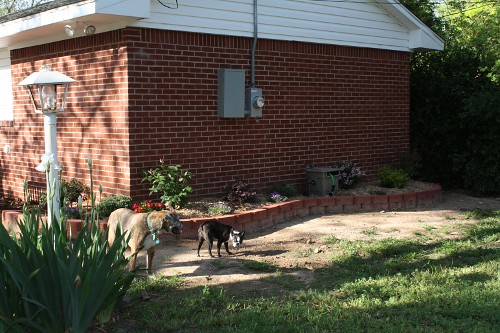 |
| Full view of the new garden |
* There is this strange phenomenon that occurs every time we need dirt. This is the third occurrence. The first occurrence was shortly after we were married and wanted to install our corner garden. We had some neighbors do landscaping and they regraded their front yard, resulting in a pile of dirt that ended up being just the right amount of dirt to build up our 3 tiers. Then, a couple of years later, we wanted to put in our waterfall in the front garden and a neighbor in the opposite direction took out a raised flowerbed in their yard. We hauled that dirt down the street in a matter of one afternoon and voila!