Thursday, February 26, 2009

Trip Report: Myriad Gardens in bloom

In December I visited the OKC Myriad Gardens and wrote 2 different posts about my trip, along with a photo album.  Last weekend I went back to the garden and was surprised to see that there were lots of different plants in bloom from 2 months ago.

I have added another photo album of my pictures from this trip.  This time I took more pictures of blooms than the previous trip.  I tried not to take a lot of duplicate pictures from my last trip.

Here are some of the blooming highlights:

img_9389_35365749181_o
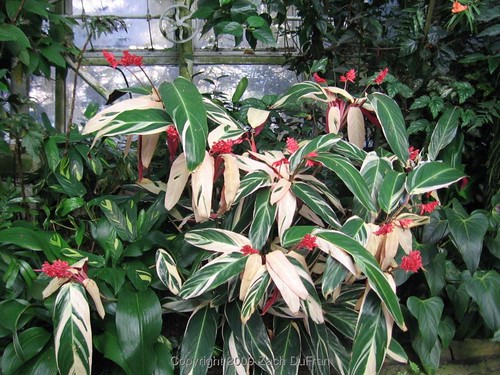
Stromanthe sanguinea 'Triostar' in bloom
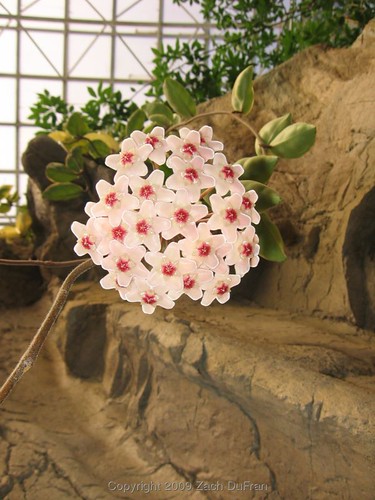
img_9428_35365760131_o
Hoya inflorescence
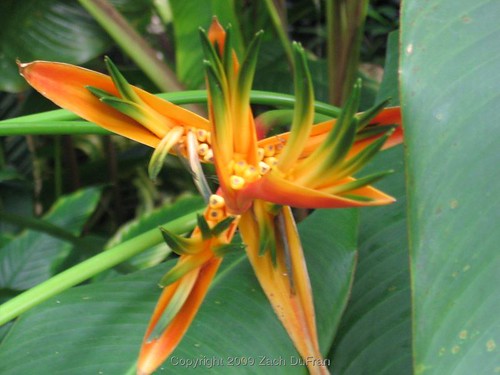
img_9412_35456979686_o
Heliconia inflorescence
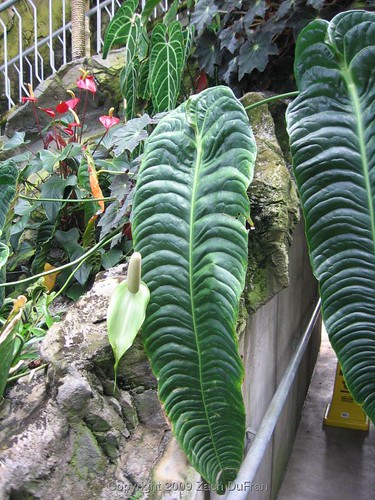
img_9380_35110022400_o
Anthurium veitchii (King Anthurium) with inflorescence
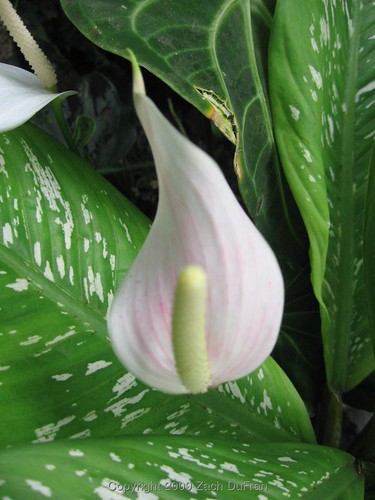
img_9458_35365749581_o
Anthurium warocqueanum (Queen Anthurium) inflorescence.
The dark leaf with prominent veins (upper center) belongs to Anthurium,
the spotted leaves in the foreground are from a Dieffenbachia.
img_9430_35456972976_o
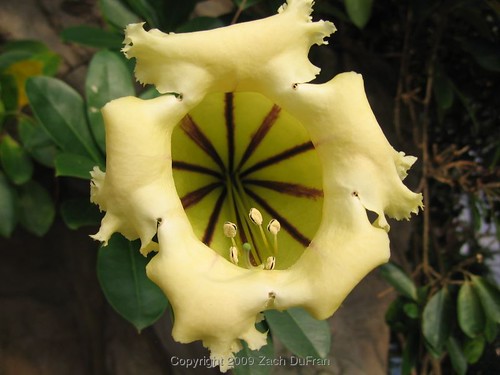
Solandra maxima in bloom
img_9446_35365754221_o
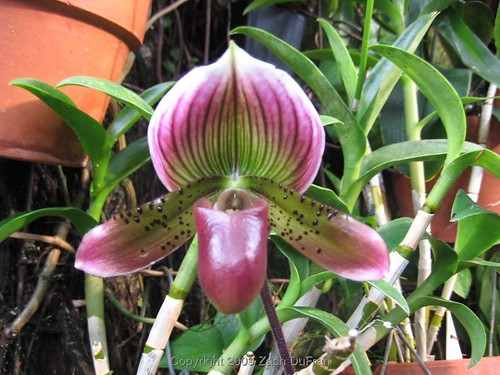
Paphilopedilum orchid in bloom
There are a lot more great plants to see, and quite a few more orchids in blooms, so I suggest you look at my photo album.

Wednesday, February 25, 2009

Plant Find: Philodendron 'pincushion'

About a month ago I was surfing the internet and decided I should look around on eBay to see if there were any interesting plants for sale.  That was a bad idea, because of course, there were.

I came across a very attractive Philodendron hybrid that I had never seen before.  It was labeled Philodendron 'pincushion.'  Its primary catchiness comes from its small, tight-nit growth habit.  The leaves measure about an inch in length at their largest and the plant will form a small clump of leaves that look like a pincushion as it matures.  Many Philodendrons have leaves that change shape as the plant grows into a more mature specimen, but this particular hybrid stays petite for its entire life.  The foliage is a really nice glossy dark green with prominent red stems.  When I purchased the plant it was being marketed as a holiday plant since it was red and green.

I wasn't sure if the name Philodendron 'pincushion' was a valid botanical name for my plant, so I sent a couple of pictures to the Aroid-L mailing list and had several members confirm that the name was valid.  I also found the name listed on the International Aroid Society's list of registered hybrid names (Aroid Cultivar Registry).  You can see that list here.

The plant arrived in less than advertised condition.  I really should have expected as much since I ordered the plant in December, but the seller had convinced me they knew how to keep their plants free from the elements.  I have to give them credit for packaging the plant well - in damp peat moss inside a well insulated Styrofoam container.  The heat pack was even warm when I received the plant, but somehow it had still gotten nipped.  Either that, or it had gotten burnt by the heat pack.  It's hard to say.  About half of the leaves had turned yellow and orange.

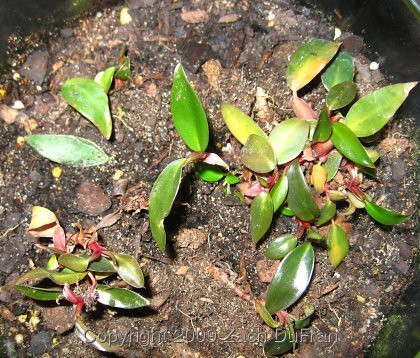
pincushion_new
My Philodendron 'pincushion' upon arrival and transplanting
I divided the plant into a couple of clumps, putting one clump in a small spherical terrarium that had been emptied of its previous occupants and put the other clump in a small pot.  I'm really glad I divided the plant, because after just a couple weeks it was obvious that the terrarium was a preferable growing environment.  I went ahead and transplanted all of the plant to the terrarium, where it is doing much better than I expected.

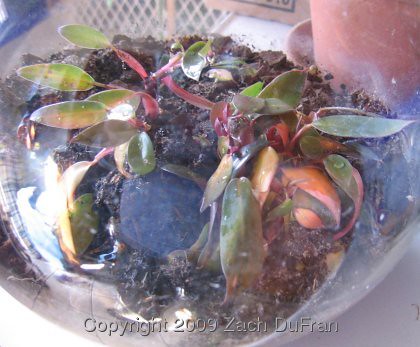
philo_pincushion
My Philodendron 'Pincushion' as it looks now
New, glossy green leaves have emerged and I have removed the old leaves that died.  I'm hoping that this little Philodendron will fill the terrarium and I can occasionally take some cuttings to transplant to other locations.  This would make a really interesting "groundcover" in some of my larger container plants.  Maybe I could get some cuttings to take root in the soil surface of my Philodendron bipinnatifidum...

philo_selloum
My Philodendron bipinnatifidum (tree philodendron)
Now that my plant has recovered I have some hope that it could one day serve as a ground cover in some of my larger pots.  It is a rather slow grower though, so I will have to be patient for it to fill out the area.

Monday, February 23, 2009

Second Chances

I like to grow all kinds of different plants.  Some plants I pick for their foliage, others for their blooms, and still others for their unusual appearance.  Some plants thrive in my care and some others don't.  Occasionally some even die.  Whether it was my fault or simply a plant destined to death because of an unseen illness when I purchased it.

Every plant deserves a second chance, right?  [With the exception of Coconut palms.  I don't think I can ever grow one of those things.]

I have given quite a few plant species second chances in my care.  Last week I posted about my Philodendron 'Xanadu', which is just one species of plant I gave a second chance.  The first 'Xanadu' I purchased died about a month after I purchased it.  My second seems on it's way to a long and happy life in my care.

This post is about three particular plants that survived when given a second chance.

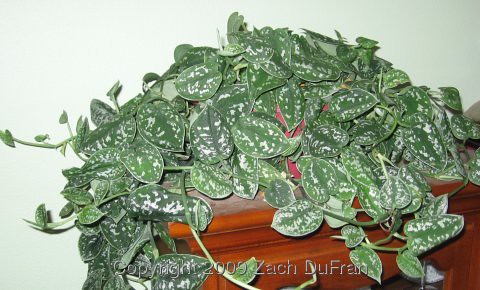
Scindapsus pictus - Silver pothos, Satin pothos
This is one of my very favorite plants is it's on my 2nd chance list!  How about that?  Actually, this plant would be one of my very favorites even if I had to give it a thousand chances and never succeeded in growing it.  It's just one of the most beautiful plants I've ever seen and no amount of struggle in growing it would ever dampen my admiration.  Thankfully, I haven't struggled too much to grow this one.  I just had a bad first experience with the plant.
scindapsus_hutch
Scindapsus pictus
Many small houseplants are put in stores mere days after being potted.  That's right, most houseplants are grown in big factories where they place cuttings in hydroponic chambers and force roots to develop.  When I bought my first Scindapsus pictus, I promptly repotted it when I got home.  I think it is possible that I tried to repot the plant when it still had rather immature roots.  The roots that grow in water have to adjust to actual soil conditions once they are transplanted.  The trauma of two transplants within a couple of days might have been enough to do this plant in.  The other problem was that I probably didn't have the plant in enough light.  I'm sure it was being grown in a greenhouse in Florida.  Believe it or not, a greenhouse in Florida receives more light than a shady windowsill in Oklahoma.  That's just how it goes.

Now that I have given the plant a second chance, I have a really nice specimen that has been growing at my desk at work for about a year and a half now.  I have taken some clippings from my office plant and potted them in a pot with a stake, hoping to train the plant to climb the stake.  About a month ago, I bought a large hanging Scindapsus for home.  It's the plant pictured above.

Ficus elastica 'Burgundy' - Burgundy Rubber Plant
I bought a small burgundy rubber plant a couple of years ago.  I think there were 3 or 4 stems in a small 4" pot.  I knew that they were fairly common houseplants and therefore probably not very hard to grow.  I expected mine to get large and so I repotted my little plant in a much larger pot shortly after I got it.  I didn't know at the time, but this is not a good idea.  Ideally a plant should be in a pot that is about 1-2 inches wider than the plant's root span.  Most people understand that when you water your plant, the roots absorb the water from the soil.  But what I didn't realize is that when you repot a plant in pot that is much wider than the root span, the roots will not absorb the water in much of the soil and the soil will stay wet much longer.  I'm almost certain that this is what happened to my first rubber plant, which showed signs of root rot before dying.

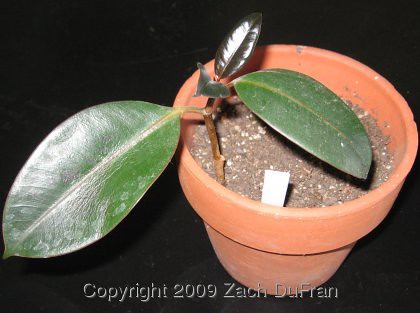
The second time around, I purchased one single little stem in a tiny pot.  How can you not take a chance on an attractive $2 plant?
rubber_tree
Ficus elastica 'Burgundy' - Rubber Tree
This time around, I have kept my single stem in a small pot.  I have had to resist the temptation to pot several plants in larger pots, having learned from my experience with the rubber plant (and a couple of others that had the same problem).  After a month or two of stagnancy, my rubber plant has finally starting producing some new leaves.  This is exciting because the new leaves are very glossy and dark red.  Over time the leaves thicken and deepen into that unique color of purple green.

There are some large specimens of this plant in the hallways of my office building that I enjoy looking at each time I have to go upstairs.

The Ficus genus is an interesting group of trees, ranging from the small, very common Ficus benjamina houseplant tree and all of the fig trees to the unique rubber tree and the gigantic Banyan tree (Ficus benghalensis).  There are some Banyan trees that cover acres.  One such famous tree is located in Lahaina, Maui, Hawaii.  Another one is located at the Indian Botanic Garden.  I will be visiting the Hawaiian Banyan tree this Spring and will hopefully have some pictures to post here.

Alocasia amazonica - African Mask
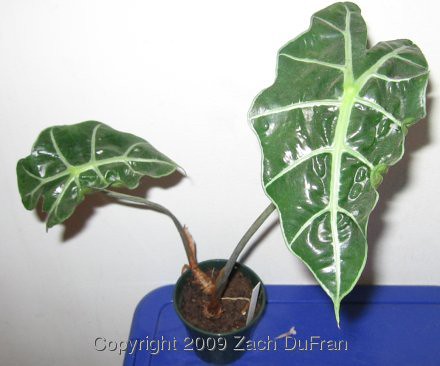
I had one of these plants probably about 8 years ago.  I can't even remember how long I kept it alive or how it died.  I remember seeing it for the first time in a little houseplant store that opened on Main Street here in town.  My first reaction was that it reminded me of a Pterodactyl.  For some reason, the store had decided to start a plant business and buy about 100 of each of 3 different plants.  I'm not kidding - they had about 100 pots of 3 different plants (4 at most).  At least, that's how I remember it.  One of the plants they had decided to sell was Alocasia amazonica.  I'm not sure what their business plan was.  I guess it was to turn everyone in town into a fan of those three species.  Needless to say, the store didn't last very long.  Unfortunately, neither did my plant.  The two events were unrelated.  At the time I wasn't all that interested in plants and I think mine just got neglected.

Since then my plant habits have changed quite a bit.  I'm more likely to overcare for a plant now than to ignore one.  I bought a small pot with two Alocasia amazonica bulbs/stems just a couple of months ago.  My plant hasn't changed much - just grown taller - but I don't seem to be having any trouble keeping this one alive.  I imagine this summer my plant might produce a couple more bulbs and leaves whenever it is in happier growing conditions.  One of the two stems sort of collapsed recently, but it has been growing okay with a thin dowel rod as support.
a_amazonica
Alocasia amazonica, or as I like to say, the "pterodactyl" plant
Alocasias are from the Aroid family, of which I am a collector.  They are pretty closely related to Colocasias (another Aroid genus), which are the plants commonly called "Elephant Ears."  There are approximately 70 species of Alocasias and quite a few cultivars.  They are grown for their stunning, and often very glossy, foliage.
Friday, February 20, 2009

Crocuses Emerge

Before I say anything else, I should note that this is my 50th post! :)

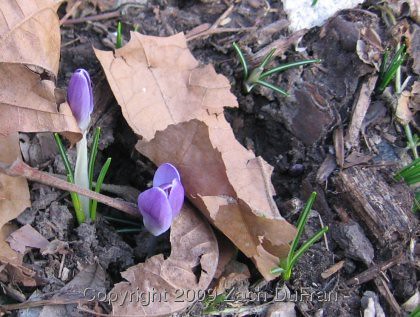
Our corner garden is sprouting.  A week or two ago I raked some leaves over the flowerbed to give it a little insulation.  This week I gently raked some of the leaves aside with my hands and noticed there were blooms underneath!

crocus2
A couple of Crocus blooms in the corner garden
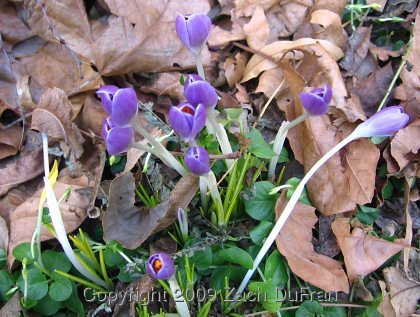
I planted these crocus bulbs about 3 years ago after creating this flower bed.  I really like the purple blooms with their orange centers.

crocus1
Group of Crocus blooms
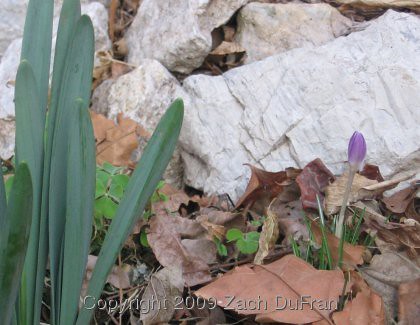
The daffodils will be blooming next - probably in a week or two.

crocus_and_daffodils
Daffodil stems and Crocus bloom

Wednesday, February 18, 2009

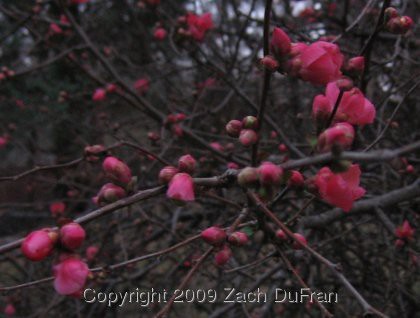
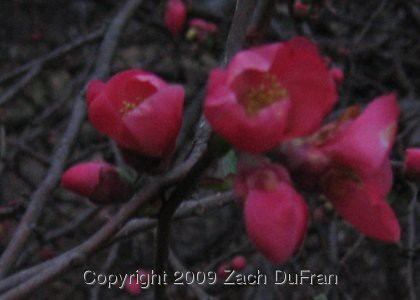
Flowering Quince - my earliest bloomer

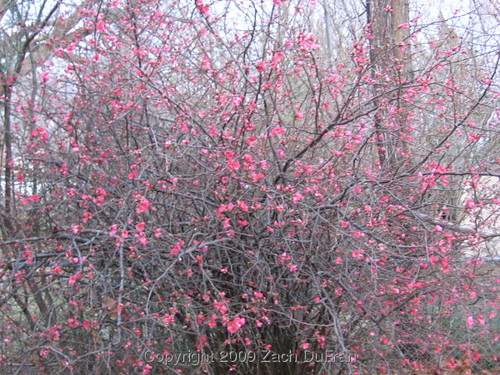
I have a flowering quince bush in my backyard that has been there - probably - since shortly after the house was built in 1956.  During most of the year it is a nice, full green bush.  But for one month of the year, it is absolutely beautiful, covered in pink blossoms.

quince1
Quince blooms
quince2
Quince blooms
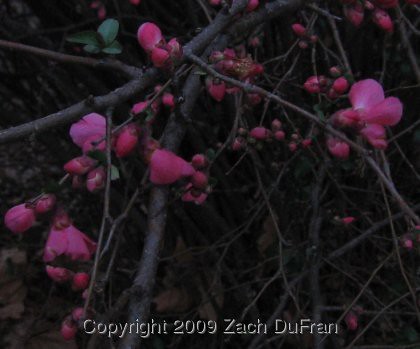
By the last week of January, the bush is covered in little round beads of pink.  The bush is attractive enough at this point.  The buds are nearly as attractive as the actual blooms.  Then, a couple of weeks later all of the buds begin to open and will continue for about a month.

full_quince
Full quince bush in bloom
The bare limbs and pink blooms have a wonderful artistic look.  The branches remind me of Asian art that incorporates so many blooming trees.  You can already see the first of the green leaves coming out.  The pink blooms will stay on the bush for a week or two after the leaves have come out before falling away.

quince3
Quince blooms
I love that this bush blooms before anything else in my yard.  Other than this bush, my backyard looks like it is the dead of winter, but this bush declares that Spring is not far away.

Already I have some Daffodil buds visible and tulips are starting to break through the surface of the soil.  It won't be long.

Monday, February 16, 2009

Philodendron 'Xanadu' gone wild!

In December I posted about my new Philodendron 'Xanadu' plant.  This plant has been growing very successfully for me (this time around) for nearly 3 months, which is longer than I kept the other one alive.  Now I know the trick: don't water it - ever.  Well, that's a little harsh.  Don't water it unless you're certain you haven't watered it for a month.

I imagine that trick will get modified slightly when I take the plant outdoors this summer, but for now, that works pretty well.

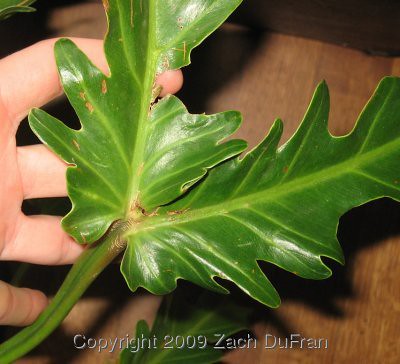
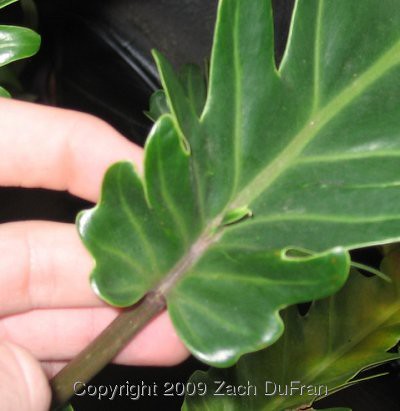
Recently I discovered that not only can I grow this plant, I can grow this plant like no one else can!  What I mean by that is that my plant has some weird mutations.

Mutation #1:

Two stems of my Xanadu are fused together all the way from the base of the stem to the first lobe of the leaves.  [Xanadu leaves have 6-8 lobes on each side.]

xanadu_double
Fused Xanadu leaves and stems
I just checked the photo I took of my Xanadu when I bought it and I can see the 2 fused leaves.  So they were there from the beginning and just slipped my notice until now.

Mutation #2:

The other odd mutation is a small "leaflet" that is rising from the midrib near the base of one of the leaves.  I don't think this leaflet was there from the beginning.

xanadu_leaflet
tiny Xanadu leaflet
Neither of these mutations appears anywhere else on the plant.  What are the odds that both of these two mutations would occur on the same plant?  [Don't try to calculate that.]

Mystery solved

I sent pictures and explanations of my two "mutations" to the International Aroid Society mailing list and received a response from none other than Julius Boos.  Julius first described Philodendron 'Xanadu' as a new species back in the Aroideana #25 in 2002.  He said the odd features are common deformations seen in this species and he suspects they are caused by the method by which the plant is propagated and produced.  Millions of these plants are grown by tissue culture and treated with different chemicals.  In volume 31 of Aroideana Julius describes the various chemical treatments that are used on 'Xanadu', their purpose and their suspected side effects.  It turns out that it is not all that rare for either of these deformations to be seen on Xanadus.

Julius said that in time (maybe years) my plant might grow out of the deformations.  I guess he is assuming that I don't care for them.  However, I find them fascinating and the oddity just adds to the appeal of the plant.  I don't really mind if my plant never grows out of them. :)

Saturday, February 14, 2009

Valentine's Bouquet

For Valentine's I got my wife a traditional gift - a bouquet of flowers - but not a traditional selection.  I'm sure my wife likes red roses, but I think she appreciates creativity and originality a little more.  [At least, I sure hope she does, because she ended up with me.]

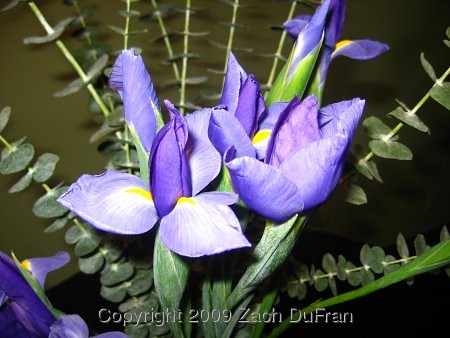
dutch_iris
Dutch Iris
The first bouquet of flowers I got my wife might be considered a hodge podge.  It was a combination that I put together at the grocery store: purple Dutch Iris with silver Eucalyptus branches.   Call it a hodge podge, call it an arrangement; I just know that I liked the combination.  Speaking of combinations, my wife sometimes compliments me on my "outfit."  I always say, "My what?"  Then she says, "Oh yeah, I meant to say that I like your random smattering of clothes."  That's more like it.  Guys don't have outfits.  But I think guys can make flower arrangements for their wives. :)

I've liked Dutch Iris flowers for a long time and they were a favorite of my grandmother.  I was unfamiliar with the Eucalyptus branches, but I liked the contrast when I held them up to my Dutch Iris blooms.  So I wrapped them in tissue and took them to my future wife.  That was nearly 9 years ago.  (We've been married for almost 4 years.)

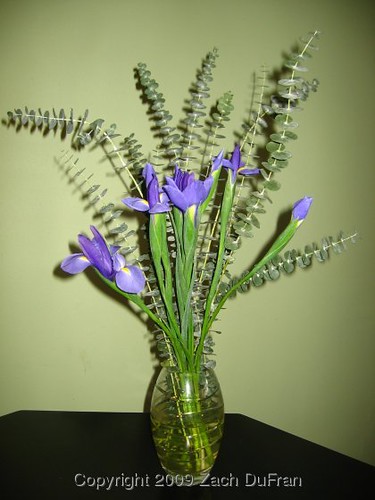
This year, I was trying to figure out what to get my wife for Valentine's Day and whether I should resort to the oh-so-common gift of flowers or not.  I remembered the first flowers I gave my wife and decided I should try to find them again.  I called a local grocery-store florist (actually the same one I originally used) and asked about the availability of these two items.  They told me to try a different branch and the florist was very helpful.  She specially ordered 8 stems of Dutch Iris and a half-bunch (5 stems) Eucalyptus branches for me.

full_bouquet
Valentine's bouquet for my wife - Dutch Iris and Eucalyptus branches
She loved them!