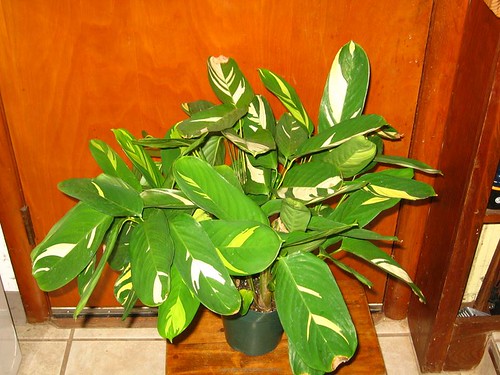
The Climatron is a 50-year old geodesic dome that serves as a tropical greenhouse at the Missouri Botanical Gardens (MoBot). During our Aroid meeting at the MoBot (back in April) the Climatron was closed as they were setting up a dinosaur exhibit for the next weekend. Thankfully we got "back stage passes" into the Climatron with our staff escorts!
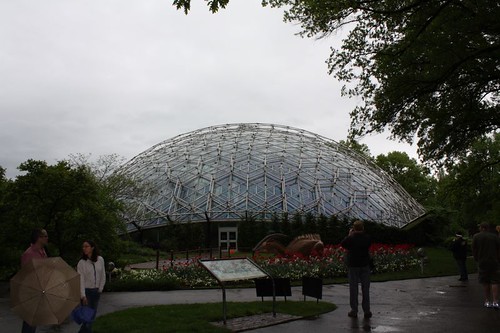 |
| Outside of the Climatron |
The Climatron is much like the Myriad Botanical Gardens in Oklahoma City, with which I have become very familiar. The center is at a height of 70 feet and by my calculations, the ground space is about 24 thousand square feet. The Climatron has many of their plant families grouped together that are more scattered in the Myriad Gardens. For instance, there are two areas in the Climatron devoted only to Begonias and to prayer plants (Marantaceae family), respectively. The only other venue where I have seen as many Marantaceae would be the Foster Botanical Gardens in Honolulu, Hawaii.
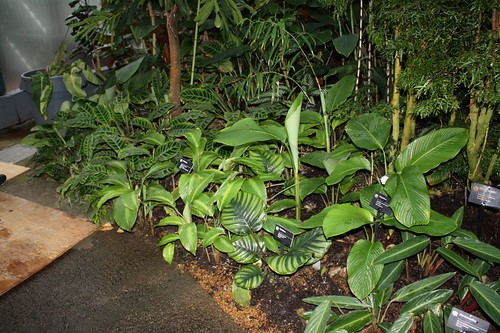 |
| Some of the Marantaceae in the Climatron. |
I was really excited to see this dedicated area for prayer plants, since they are my second favorite family of plants. The greatest thing was that almost all of them were in bloom and I have only seen blooms on these plants on a couple of rare occasions.
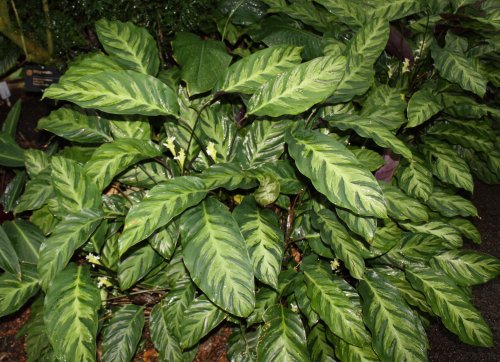 |
| Healthy group of Calathea albertii |
The impressive species display was the
Calathea albertii grouping (above and below). These plants are obviously very happy in this growing environment, having spread out quite a bit and blooming like crazy. I was ever so tempted to ask for an offset.
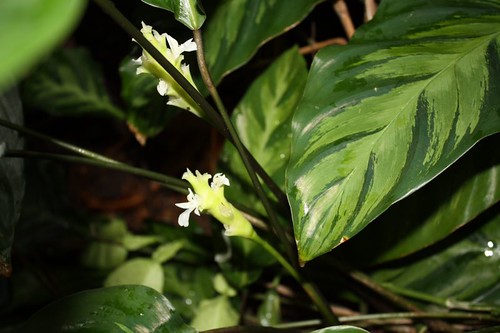 |
| Calathea albertii in bloom |
There are many colorful hybrid
Calatheas sold as houseplants at Lowe's nowadays. I think most of these are variations or hybrids based on the
Calathea roseopicta species (below), which has pretty stunning color as a naturally-occurring species.
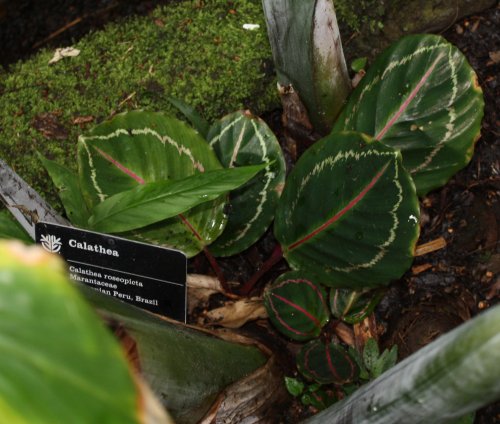 |
| Calathea roseopicta |
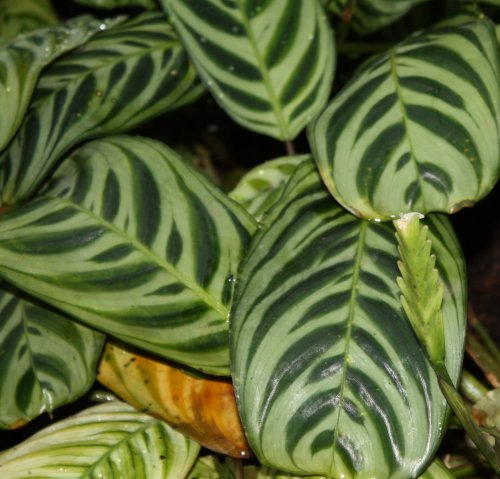 |
| Calathea burle-marxii in bloom |
Calathea burle-marxii (above) is the species that I have had the best success growing in my greenhouse. My plants haven't bloomed before, but it looks like I wasn't missing out on much. Small white flower petals emerge from an otherwise boring green bract that kind of resembles some Bromeliad bloom bracts.
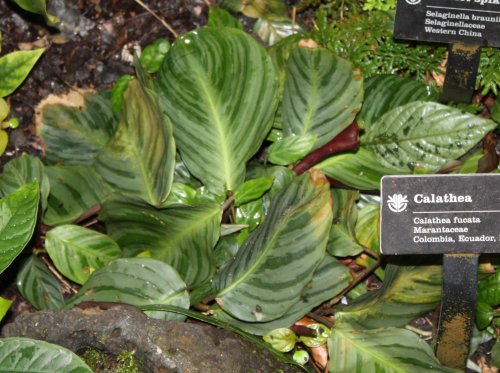 |
| Calathea fucata |
Calathea fucata (above) was one of the few species that was not in bloom. It leaves me all the more curious about what it's blooms might look like. I guess I'll just have to go back for another visit sometime...
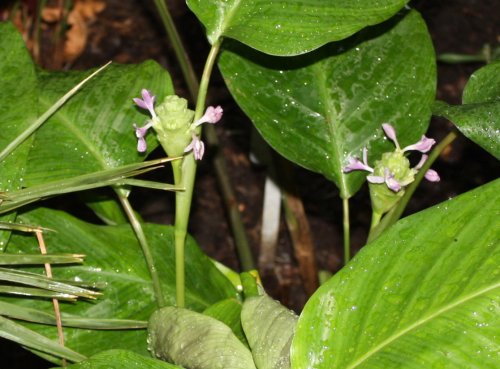 |
| Calathea violacea in bloom |
The plant below puzzles me a little bit. I didn't get an ID on the plant, but comparing the leaves, it is very similar to the identified
Calathea violacea (pictured above). The blooms look different, but I am wondering if I just caught the blooms at different stages and it is the same species. I'll try to recruit some expert
Calathea help to get that question answered.
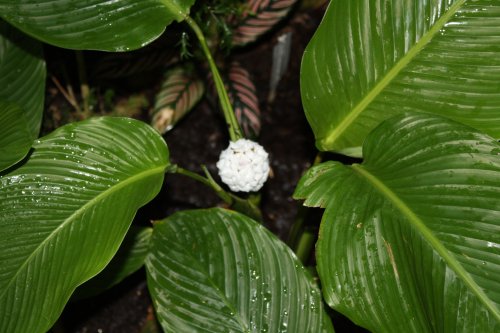 |
| Calathea violacea? in bloom |
Now
Calathea zebrina (below) is one of my favorite species. I have seen this plant a couple of times in person. There were some beautiful specimens at the Foster Botanic Gardens that were in bloom while we were there. The plants in the Climatron seemed monstrous in comparison, though. The
zebrina species has very velvety textured leaves with solid purple undersides. The thick stems of these plants almost reminded me of banana trees.
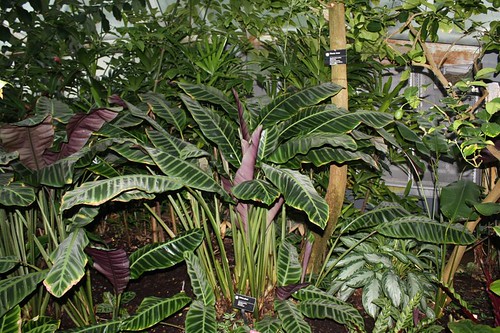 |
| Forest of tall Calathea zebrina - the tallest being 6 feet or more. |
One of the most common "prayer plants" is
Maranata leuconeura v. kerchoveana (below). Okay, so it's not the easiest name, but it is one of the more common house plants from this family. But you don't very often get to see these plants blooming in the house setting. Obviously these plants are grown for their striking foliage, but I think the blooms are pretty neat, anyway. Look at the closeup below.
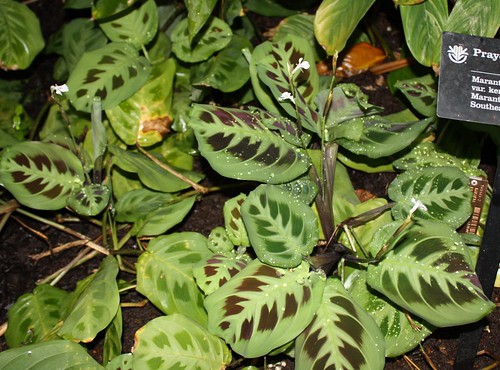 |
| Maranta leuconeura v. kerchoveana in bloom |
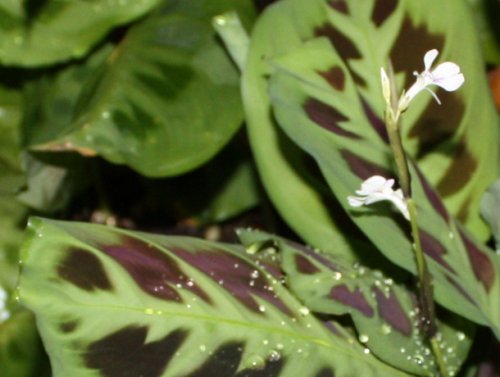 |
| Maranta leuconeura v. kerchoveana bloom closeup |