Monday, April 20, 2009

Trip Report: Spring Festival at the Fort Worth Botanic Gardens

Last weekend my wife and I drove down to Fort Worth, Texas to visit the Fort Worth Botanic Gardens for their annual Spring Festival.  The festival is held in one of their prized gardens: The Japanese Gardens.

fwbg_09895_35329824652_o
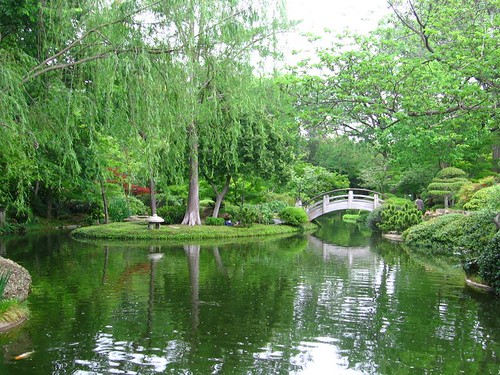
Bridge in the Japanese Garden
For this post, I have chosen just a small selection of 21 pictures from the 300 photographs that I took on Saturday.  There is a link at the bottom of this post to my full photo album, which I hope you'll view, whenever you have time.

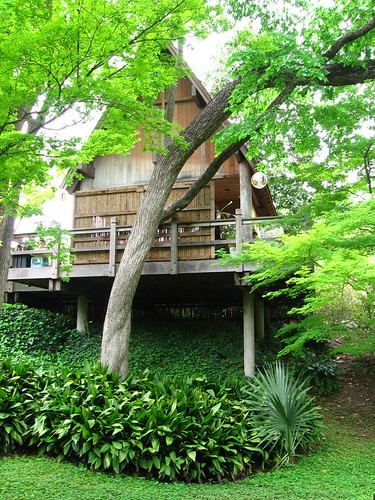
fwbg_10015_35457412426_o
One of about 8 structures in the Japanese gardens
The FWBG is a large complex of gardens, including a conservatory of tropical plants, rose gardens, tree groves, Texas natives, production and exhibition greenhouses, water gardens, a cactus garden and many others.  The Japanese Garden alone is 7 acres, while only being a small portion of the grounds.

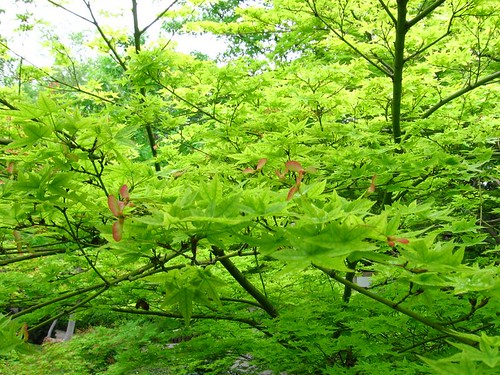
fwbg_10008_35329818172_o
Japanese Maple (Acer palmatum) with pink seeds above branches
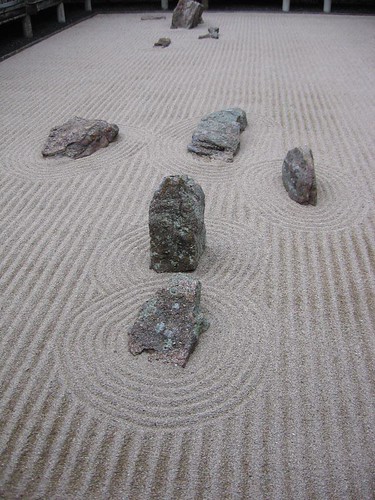
fwbg_10048_34655724874_o
Rock garden in the Japanese Garden
The Japanese Gardens are kept by only 3 gardens and a host of volunteers.  I simply can't believe the amount of work that lies in front of those 3 workers everyday.  The grounds are well manicured and a wonderful place to stroll and relax.  I have to admit I spent the whole time snapping pictures, though.  I guess I'll have to go back for another visit.

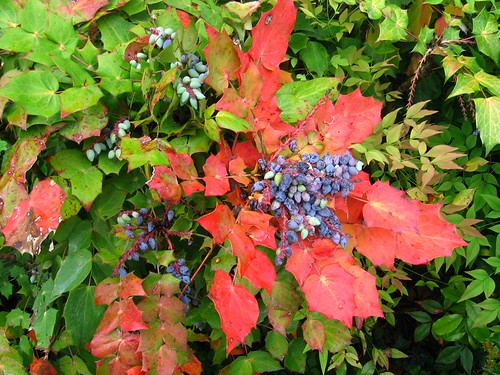
fwbg_09890_35329825992_o
Striking foliage and berries of Japanese Mahonia in the Japanese Gardens

fwbg_10026_35110354000_o
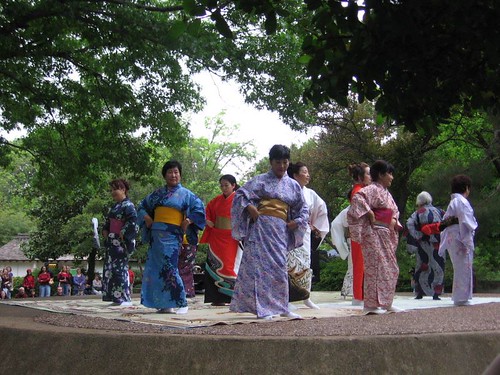
Traditional Japanese dancers performing at the Spring Festival
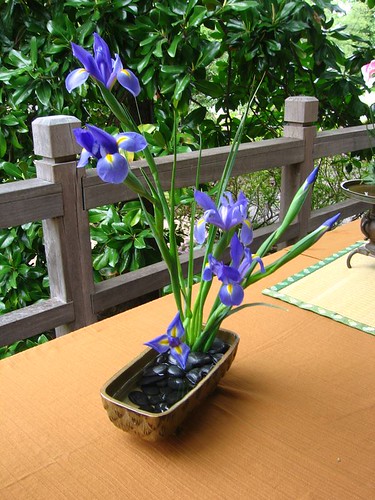
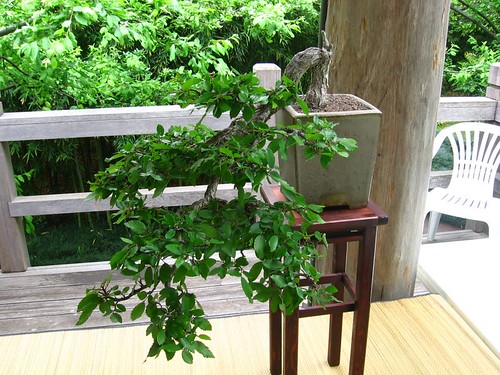
For the Spring Festival, there are events throughout the day, including traditional Japanese dancers, Japanese flower arranging, bonsai exhibits and other crafts (such as origami).

fwbg_10016_35457411946_o
Dutch Iris Ikebana - the art of Japanese flower arranging
fwbg_10012_35329814042_o
Drooping Bonsai tree on exhibit at the Spring Festival
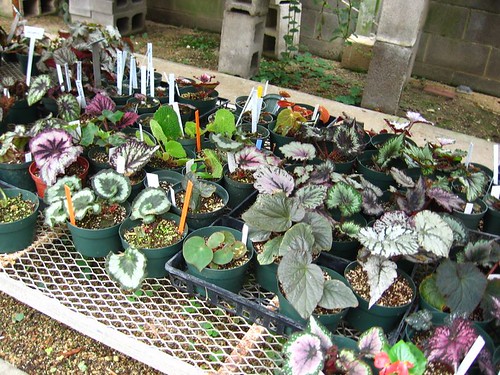
I was most excited about seeing the Japanese Gardens, the Conservatory and one of the greenhouses - the Begonia Species Bank.

fwbg_10223_35457206766_o
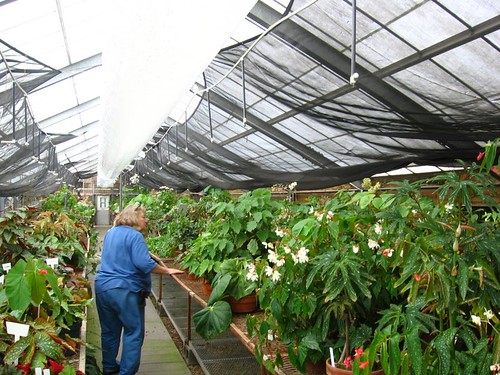
Curator and collection of the Begonia Species Bank at FW Botanic Gardens
The Begonia Species Bank was created to prevent the loss of Begonia species.  Since Begonias are very common houseplants, the true, natural species are at risk of being lost to all of the hybrids that have been created for our viewing pleasure.  The FWBG Begonia Bank is a large collection of Begonias as well as a library and source of information on this very popular plant genus.

fwbg_10241_35110184830_o
Rex Begonia hybrids in the Begonia Bank collection
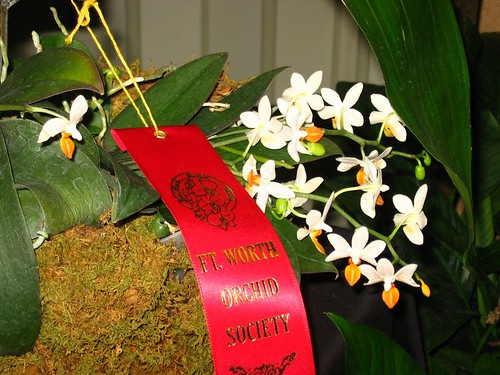
We timed our trip to the FW Botanical Gardens perfectly, arriving on the weekend of the Spring Festival, as well as the annual Forth Worth Orchid Society's Orchid Show and Sale!

fwbg_10102_34655697044_o
Prize-winning orchid at the annual Orchid Show and Sale
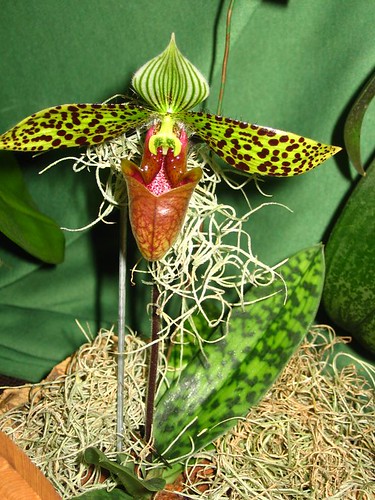
This event was held in the Garden Center, which is a very nice building in the center of the grounds, with rooms for meetings and events like this one.  There was one room setup with nice displays of orchids, including ribbons on those which had won prizes.  The range of sizes, colors, shapes and growth habits is just astounding.  I will never get over the diversity of the orchid family.

fwbg_10091_35110326690_o
Another Orchid on display
In a larger neighboring room there were long rows of tables crowded full with orchids for sale.  The growers had come from as far as the Chicago-area and the plants were reasonably priced.  I found myself walking away with 4 plants - 1 full grown miniature and 3 seedlings.  I'll have to post on those orchids in the next week or so.

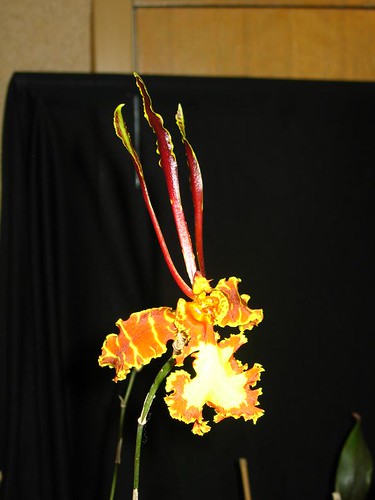
fwbg_10096_35457385286_o
I love the tall petals of this orchid bloom.  It looks horned.
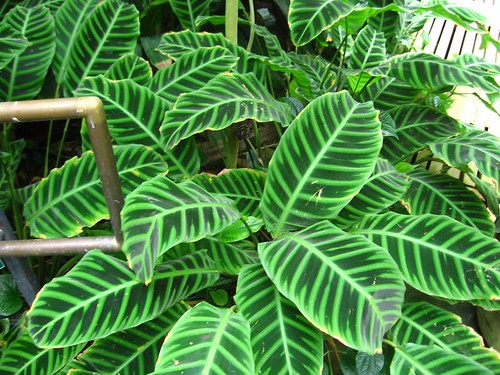
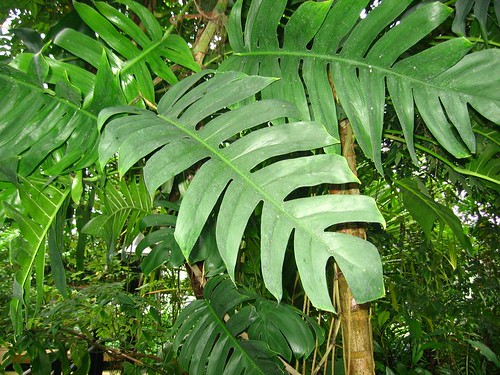
Attached to the Garden Center is a tropical Conservatory.  It is about 2/3 the size of the OKC Myriad Gardens, which I have visited several times and blogged about here, here and here.  The collection contains quite a few plants from the Marantaceae (Prayer Plant) and Araceae (Aroid) families, which made me very happy.

fwbg_10140_35329726432_o
One of the many Calathea zebrina housed in the tropical Conservatory
fwbg_10161_35366112121_o
An Aroid that might be Epipremnum pinnatum 'Cebu Blue'
Most of the FW Botanic Gardens are free and open to the public during daylight hours.  The admission price for the Conservatory is only $1!  The Japanese Garden ordinarily costs $2 admission and the other gardens are free.

fwbg_10109_34686918403_o
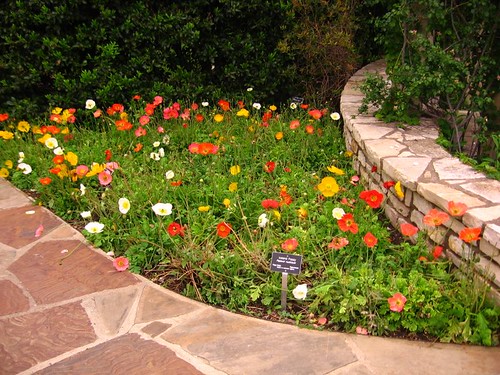
Iceland Poppies (Papaver nudicaule) in one of the outdoor gardens
fwbg_10106_34686922543_o
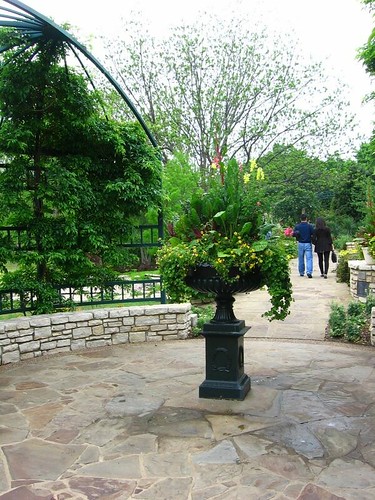
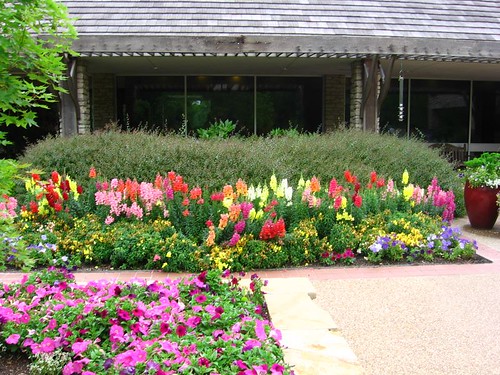
Overflowing container in the outdoor gardens

fwbg_10123_35457360516_o
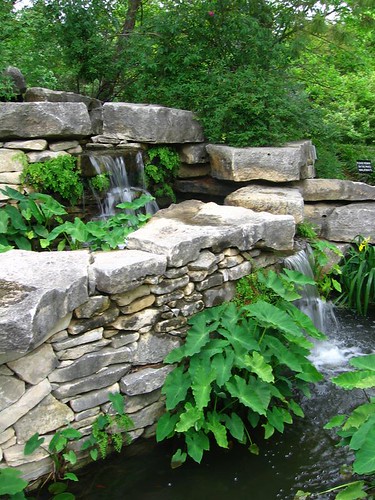
Waterfalls in one of the outdoor gardens
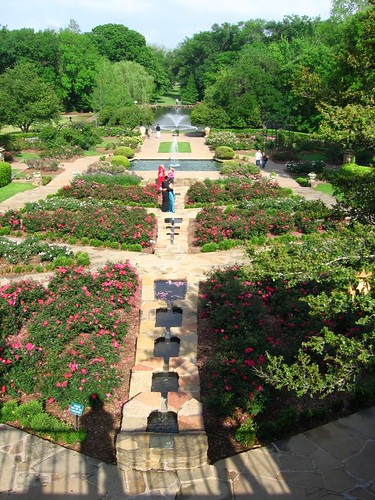
You could easily spend a full day exploring the outdoor gardens, or 2-3 days if you really wanted to be thorough.  We spent 6 hours at the FWBG on Saturday and most of that time was spent in the Japanese Gardens and the Conservatory.  We also enjoyed walking around the Perennial gardens and Rose gardens.  The Rose gardens are the oldest part of the FW Botanical Gardens, established by day workers during the Great Depression.

fwbg_10265_34655493524_o
The Rose Ramp at the Fort Worth Botanic Gardens
fwbg_10258_35365951151_o
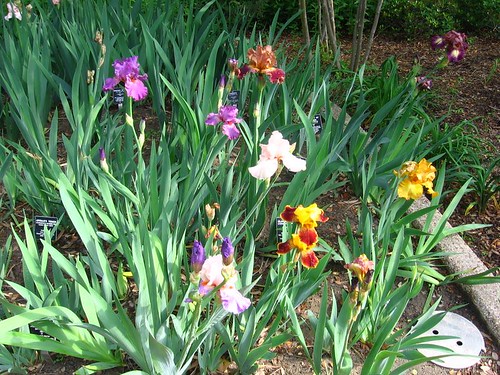
Many different Iris in bloom in the Four Seasons Garden

fwbg_10129_34655677364_o
Lupine were one of my favorite displays of color in the outdoor gardens
I would highly recommend a trip to the Fort Worth Botanic Gardens if you are within driving distance or happen to be in the area for other reasons.  It is a wonderful place to explore and there are so many different things to see.

To see many more pictures from my trip to the FWBG click on the image below.

Fort Worth Botanic Garden 2009

Friday, April 17, 2009

Corner garden additions

Last week I wrote about adding some plants to our corner garden.  Over the last couple of weeks we have carefully selected some plants and added them in.  Our main criteria are:

  • Colorful,

  • Not weedy-looking,

  • Season-long interest,

  • Emphasis on Perennials or self-seeding Annuals.

with_additions
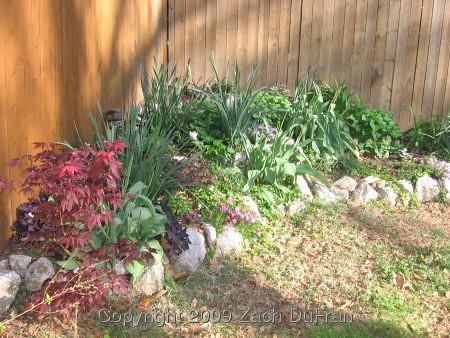
The corner garden in it's current state. It looks much fuller than it will in just a couple of weeks, when the Daffodil and Tulip stems die back.  Japanese Maple (Acer palmatum) in the foreground.
We did purchase some annuals that do not self-seed, but for the most part we chose plants that adhered to these criteria.

osteospermum
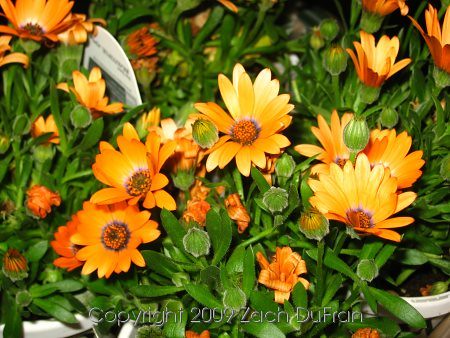
African Daisy - Osteospermum hybrid 'Orange Symphony' before planting in corner garden.
African Daisies were the annuals of choice for this year.  First we spotted the 'Orange Symphony' variety with its purple centers.  We bought four of these plants, but two of them quickly died, before we were able to put them in the ground.  Thankfully, Home Depot has a 1 year warranty on all of their plants.  We took back the two dead plants and replaced them with two of the purple variety 'Soprano Light Purple.'  These bright, annual flowers are grown by Proven Winners, that has produced creamy yellow, white, purple and orange flowers, all with purple centers.  You can see the color varieties grown by Proven Winners here.

purple_osteo
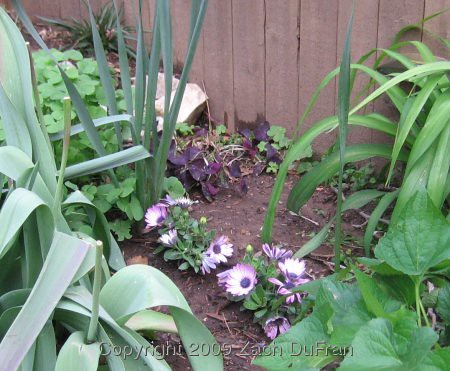
African Daisy - Osteospermum 'Soprano Light Purple' planted in the corner garden. The green clover shaped leaves in the top left corner and the purple clover shaped leaves in the top center are both Oxalis. Tulip, Daffodil, Daylily and Violet foliage are also in this picture.
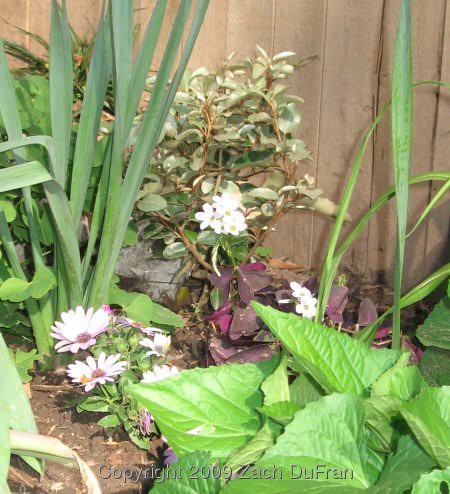
A couple of days after planting the purple African Daisies (Osteospermums), we found some more plants to add to our corner garden, including a wonderful little silvery shrub from the genus Elaeagnus (possibly Elaeagnus pungens).  I planted the Elaeagnus in the corner and moved the Oxalis to the foreground of the bush to provide good contrast with the silver foliage.  The purple Oxalis has actually started blooming since I moved them.  Their blooms are light pink, but look white in the picture below, due to some extra reflection.  Notice that the purple African Daisies are also much lighter looking in this picture.

elaeagnus_osteos
Silver shrub is an Elaeagnus (pungens?). The white blooms in front of the Elaeagnus are from the purple Oxalis lying in front of it.
I really like the silvery leaves of this little shrub.  It turns out that it is from the same genus as the Russian Olive Trees that I admired last May in Boulder, Colorado.  I wrote a little bit about them on my Desert Island Challenge post.  This shrub will provide great contrast to the purple foliage of the Oxalis planted in front of it and the cranberry red Barberry bush planted on the opposite side of the corner garden.

barberry_closeup
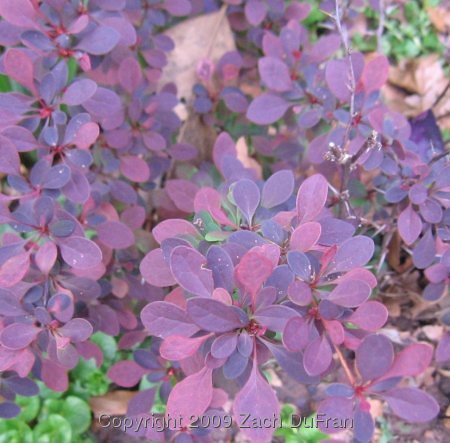
Rose glow Barberry bush (Berberis thunbergii v. atropurpurea), planted 2 years ago
The Barberry bush is not new.  We planted it two years ago and it is one of my favorite outdoor plantings.  The foliage is just stunning, with such a vivid color.  It immediately draws your attention when you look at the garden, even with other plants in bloom.  I highly recommend this bush.

euphorbia_planted
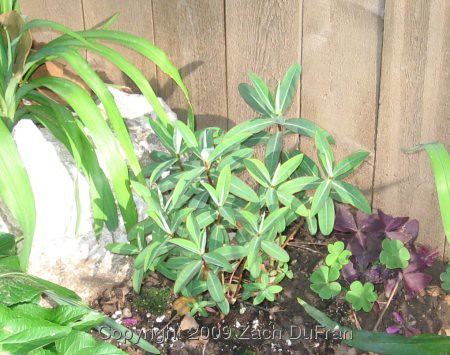
Another new addition - Euphorbia longifolia 'Excalibur'
I have just recently become aware of a group of Euphorbias that can be planted as perennial shrubs in temperate climates.  Most people know of a couple of species of Euphorbias - The Poinsettia (E. pulcherrima) and The Crown of Thorns (E. milii) - but would be surprised to find that this plant is from the same genus.  I am preparing a much more long-winded post on Euphorbias that I will probably have ready in the next 2 weeks.  The tag of this Euphorbia says "Abundant flower heads emerge red and turn a brilliant yellow, highlighting the mounded blue-green foliage.  A superb accent plant for the mixed border or rock garden."  So far we're just enjoying the blue-green foliage, which is a nice addition to our garden.

barberry_and_friends
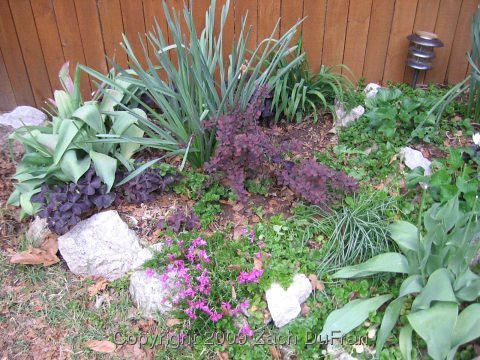
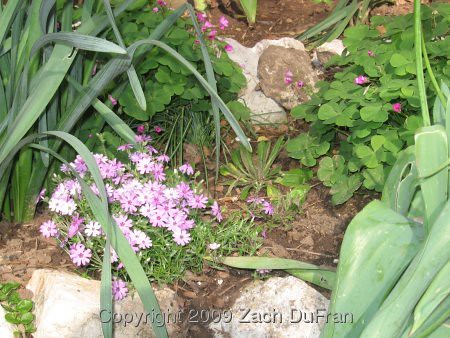
Pink creeping Phlox (Phlox subulata) in the foreground with contrasting foliage colors in background.
We planted several pots of creeping Phlox in our corner garden a couple of years ago, but for some reason they had trouble getting established.  It was probably due to a hot dry spell when we didn't stay on top of watering.  Only one of our Phlox survived from year's past - a pink one.  My wife's favorite Phlox are the blueish purple color.  So this year we bought three really healthy purple Phlox plants and mixed them into our corner garden.  We will stay on top of watering these, and hopefully have more Phlox every year.

phlox_oxalis
Newly planted Purple creeping Phlox (P. subulata) with Oxalis in bloom (small pink blooms) and small Rudbeckia plants.
Over a month ago I raved about some Rudbeckias called R. hirta 'Moreno.'  Well, I ordered three of these plants.  They aren't much to look at right now (see the little rosette just to the right of the Phlox above?), but hopefully they will mature nicely this year and then bloom next year.  If I take extra special care with them for two seasons, I hope that they will start to self-seed and I will have many more in the future.  I also ordered some seeds of the 'Cherry Brand' Rudbeckias, which are solid red.  I am going to start these seeds in the next week.

white_cyclamen
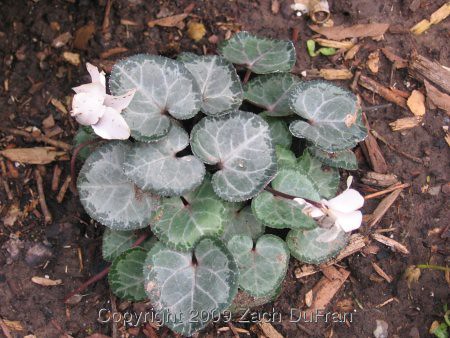
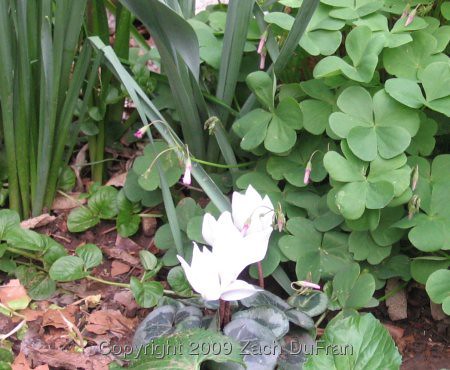
White Cyclamen planted in more open space on the right side of the garden.
Cyclamen are one of my favorite plants.  I couldn't resist getting a couple of these plants to add to the corner garden.  With amazing silver foliage and really unique blooms that look upside down, this just seems like the perfect plant.  Notice the difference in variegation of the leaves on the two plants I purchased.

cyclamen_oxalis
White Cyclamen planted in front of green Oxalis.
I just realized there are Oxalis in 8 of the 11 pictures in this post!  We were given two varieties of Oxalis by a coworker of my wife a couple of years ago.  One is a green leaf variety with bright pink blooms.  The other is a purple leaf variety with a light pink bloom.  They have multiplied each year and are doing really well in our garden.  We will probably have to thin them out soon, assuming they continue to multiply at the same rate.

Another new perennial that we planted is a Mexican Petunia (Ruellia brittoniana).  This plant has long, strappy leaves that are deep green and produces pink-purple blooms that resemble a Petunia.  We planted this plant on the nearly-empty top tier of the corner garden.

ruellia_oxalis
Mexican Petunia (Ruellia brittoniana 'Katie's Pink') planted on top tier of corner garden.  Green Oxalis in the foreground.
I also transplanted some of our Irises to the top tier.  I'm not sure why we have neglected to plant more back there, but now it is getting hard to get back there to do any planting, since our flowerbed is filling out.

What do you think of the new additions?

Wednesday, April 15, 2009

The Tulip Explosion

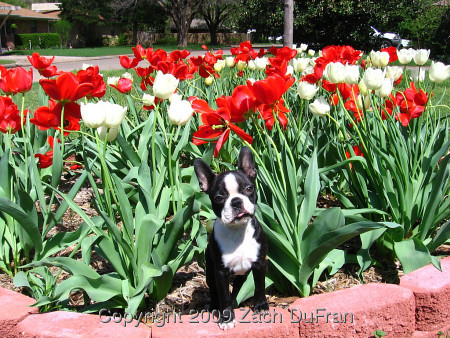
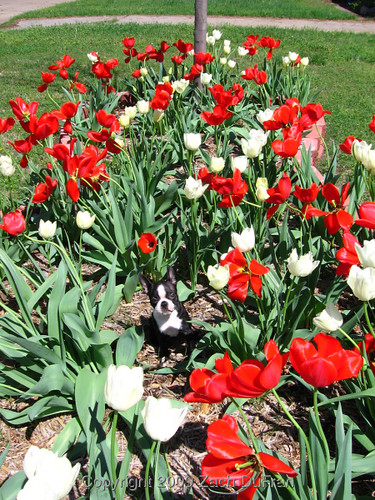
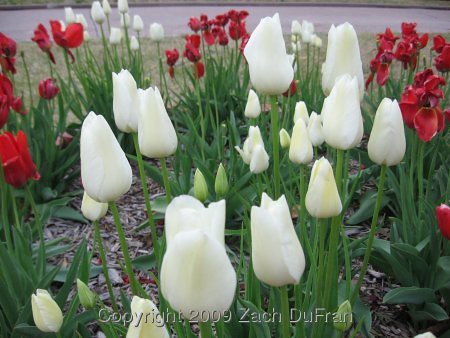
About 5 years ago I created a "figure 8" shaped garden in the front yard around a young maple tree that had just been planted.  Inside the flowerbed I planted 2 packages of tulips - 16 red and 16 white.  In April the tulips open, the red tulips first and the white ones about a week later.

pw_tulip_bed
Pee-Wee in front of the tulip bed - Spring 2006
This is an event we look forward to each year.  It is probably the most anticipated moment in our garden.

peewee_tulip_above
Pee-Wee in the tulip bed - Spring 2006
When I first planted the tulips I set them out geometrically.  I alternated between red and white, making 2 concentric circles in each half of the corner garden.  The outer circle of the larger half of the "figure 8" was planted with 7 whites and 7 reds.  The inner circle was planted with 3 of each.  In the smaller half of the "figure 8" I planted 4 of each in the outer circle and 2 of each in the inner circle.  Is my math correct?  That should be 16 of each color for the first year.

tulip_bed_house_2009
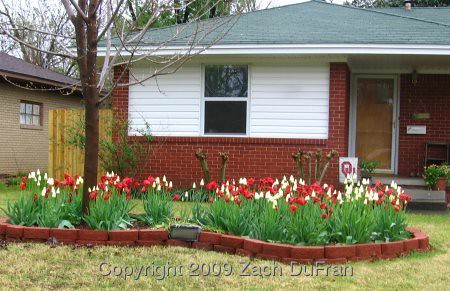
Our tulip bed in bloom - Spring 2009
We used red and white tulips because we live in Norman, Oklahoma, home of the the University of Oklahoma Sooners.  [See the OU flag in the picture above?]

tulip_bed_slant_2009
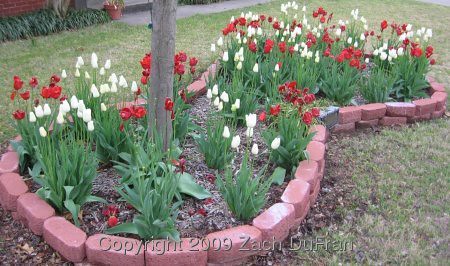
Partial bird's eye view of the tulip bed - Spring 2009
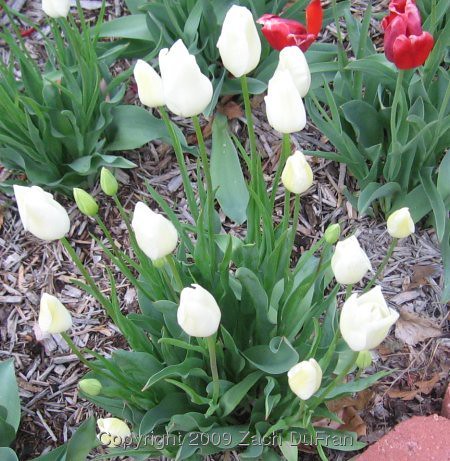
From the street, you don't really see a geometrical design, you just see a sea of red and white tulips.   But from above, you can see the pattern pretty well.  Each year they multiply and multiply.

white_tulip_foreground
And yet more tulip pictures - Spring 2009
This year, I counted as many as 21 blooms in one location!  In a perfect world, each tulip bulb would double each year.  This would mean that in year two a single tulip bulb would have multiplied to 2, in year three to 4, in year four to 8, in year five to 16, and in year six to 32.  If I'm doing the math correctly, either my tulip bulbs have produced more than one offset each year (which is possible) or I planted them more than 5 years ago.  But I think my memory is correct on how long ago they were planted.

21_white_tulips
The prolific white tulip.  See if you can count all 21 buds. They're all there!
Of course, the 21 blooms was the most I counted at any one location.  Other locations had as few as 6 or 8.  Last year we dug up some of the offsets at locations where there were many more than other locations and relocated some of the bulbs to fill in the bed a little bit.  We will probably want to do the same thing again this year, once the plants have tied back to the ground surface.

red_tulip_snow_2009
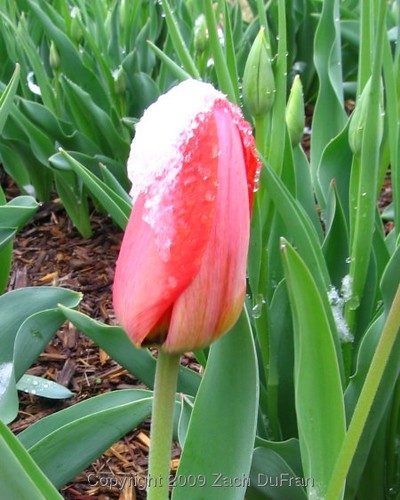
Light snow fell on the red tulip buds a couple of weeks ago, while the white tulip buds were still developing.

I was worried this year that the tulips would not all bloom because of the snow we got a couple of weeks ago after the buds were already exposed, but they weren't affected much by the quick cold snap.

open_red_tulip
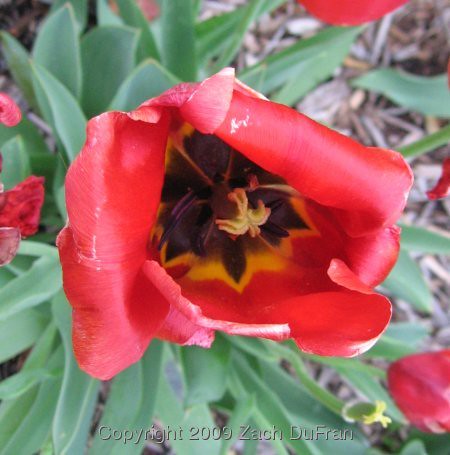
Open red tulip bud
But, as you can see, they turned out okay.  The first two pictures from this post are from 2 seasons ago simply because I didn't get a good picture of the tulip bed when both white and red tulips looked their best this year.

single_white_tulip
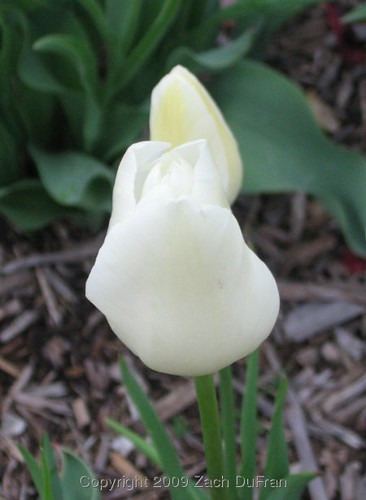
Single white tulip seeking long, cool blooming season (also, long walks on the beach, of course).

Friday, April 10, 2009

Long term planning for a "Paradise corner"

I started daydreaming a couple of weeks ago about some things we could do to further spruce up our backyard and make it more inviting.  As it is, my wife spends almost every lunch break lounging on our hammock in the backyard, enjoying the breeze, the sun, the birds, the squirrels and the plant life.

You can see pictures of our corner garden on this post.

I came up with some ambitious plans for the future of our backyard.  There are several improvements we are planning on making in the short term (over the next 5 years), but this vision for our backyard is more along the 10 year time frame.  It might happen sooner, but it will most likely be a slow progression.
paradise_corner
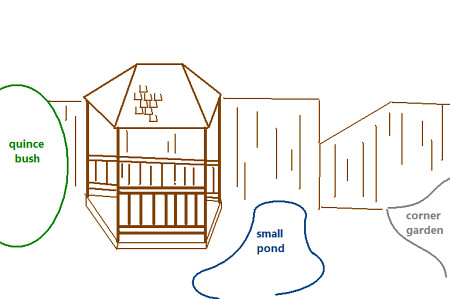
A sketch of my plans for a "paradise corner"
My sketch is a simplistic view of what I want the corner to look like.  The elements in the sketch would provide a nice place to sit and relax, but the elements that are missing from the sketch are those that will truly make it a paradise.  There will be lots of plant life surrounding all of these features.

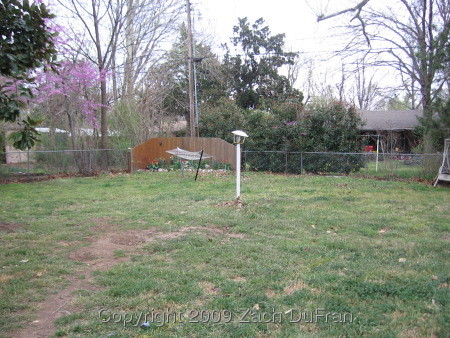
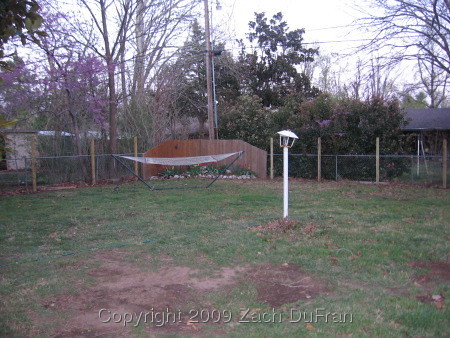
To see what the corner garden looks like now, with the new fence erected, check out the fourth picture in this post.

The Pond

I have the sketch labeled "small pond," but that's not very descriptive.  I think it will be about 8-10 feet in length and about 4 feet in width at the narrowest and about 6 feet at the wider bulge.  I will probably create the usual shelf so that the center of the pond is about 2-3 feet deep, while the outer ring is only about 1-1.5 feet deep.  There will probably be some aquatic plants, including: Cannas, black-stemmed Alocasia, Lotus (water lilies) and grasses.  I'm not sure yet whether we will have any fish, but I imagine we probably will.

In the middle of the pond will be a small fountain to keep the water circulating (cutting down on mosquitos) and to generate some nice splashing water sounds.

After I told my wife about my plan, she had something to add to my vision.  She suggested that we have a small bridge that steps over the pond, linking the gazebo to the corner garden.  We'll have to keep our eyes peeled for a small, sloped bridge (without railings).  I think it would look a little silly with railings, due to the scale of the pond.

The Half-Gazebo

I don't think I have ever seen a half-gazebo before, so I'm not sure where I got the idea.  I was just thinking how neat it would be to have a small gazebo in that part of our yard with our hammock inside of it.  Since the gazebo will be against the fence, it makes sense for it to be cut in half.  Also, we won't want it to cut very far into the yard.

The gazebo will be a wonderful place for us to sit and relax, looking at the flowers in our corner garden, listening to the gurgling water of our pond fountain and watching the birds and squirrels.  We will probably want to run electricity to the gazebo and put in an outlet so that we can plug in radios, or other things like that.  Also, we will need electricity for the pond fountain.

I would like to plant around the gazebo so that the structure blends into the environment.  I plan on planting a Passion Flower along the front side that will climb up the railings and posts of the gazebo.

The Corner Garden

I wrote a post earlier this week about expanding our "corner garden" along the right side.  This will help our paradise corner from being too heavy along the left fence line.

paradise_corner_birds_eye
Bird's eye view of the planned "paradise corner"
Rock Walk

The ground area joining the corner garden to the pond to the gazebo will be covered in flat stones.  Since the area is narrow, well-shaded and will probably be perpetually moist, it will be easier to maintain and more ascetically pleasing if this area is rock, rather than grass.  I will try to get some moss growing between and on top of the stones.  Hopefully we can find some rock locally that matches the rock used in the pond.

The Flowering Fence Line

Currently there are small flowering bushes planted all along the fence line where I am planning to build the half-gazebo.  In the first sketch in this post, I condensed the width of fence line that lies between the corner garden and the large quince bush.  There are about 5 or 6 small quince bushes along this fence that are offsets from the large quince.  Also there is an almond bush and a spirea.  If we decide to build the gazebo flush with the fence, we will relocate the flowering bushes to wrap around the gazebo.  Otherwise, we can build the gazebo about 4 feet into our yard and leave the bushes in place.  It all depends on how much yard we are willing to sacrifice.

Tuesday, April 7, 2009

Short term planning for the "Corner Garden"

Beginning

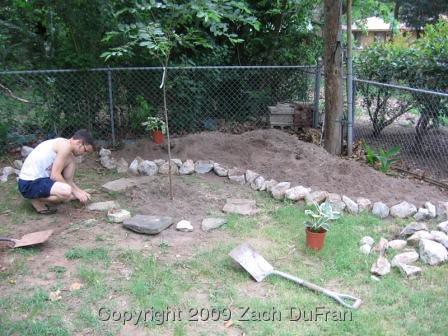
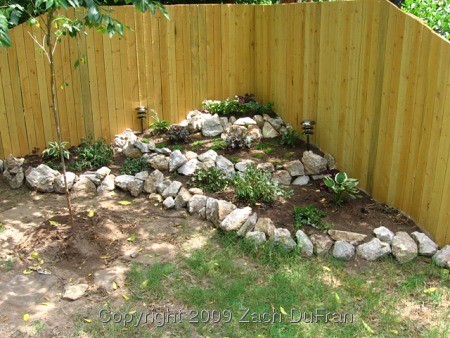
Our beloved "corner garden" was installed during the Summer of 2006.  One corner of our yard was particularly shady, so there wasn't any grass growing there.  Additionally, there is an unsightly utilities pole in that corner.  We decided to create a corner garden by erecting a wood fence inside of the corner of our yard and building a tiered garden in front of the fence.  We were lucky enough to have some neighbors doing some landscaping which left over a huge pile of dirt.  They were happy for us to haul it off and we were happy to have some free dirt.  We weren't as happy about the 50+ trips we made with the wheelbarrow to haul the dirt, though. :)  We also came across some free rocks from a relative who wanted them out of her garden.  Those we loaded in a truck.
before_corner_garden
Future site of the corner garden. Rocks were just being laid out to form the shape and dirt filled in.
We used the rocks to create 3 tiers and hold the dirt in place.  We were very happy with the outcome of our garden.
corner_garden_v1
The corner garden once it was first complete (summer 2006).  None of the plants pictured are still in the corner garden.  If you look closely you will notice that the entire flowerbed is shaded.
We vigorously planted the corner garden the first year and it looked very nice for the first two years.  The Hostas got larger and several of the Heuchera (Coral Bells) came back.  The garden was starting to mature.

Change

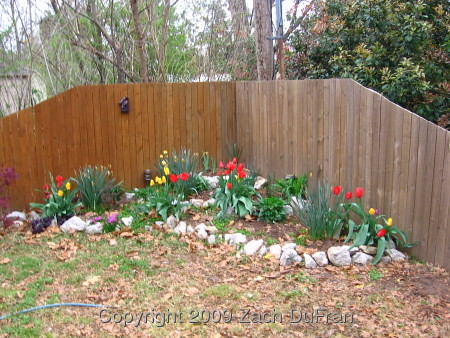
However, during December of 2007 central Oklahoma had a really bad ice storm, resulting in the loss of a lot of beautiful trees.  Several of the scraggly trees from our neighbor's yard lost limbs that were responsible for shading the corner garden.  As a result, last summer most of the shade plants that we had established began to die under the intense full sun.  Several plants were removed and relocated before it was too late.  But the plants left a void.
current_corner_garden
The current state of the corner garden.  It looks pretty good, but most everything green only lasts for a couple of months during the early Spring.  Soon it will all die back, leaving very little to look at during the Summer.
Right now the garden looks nice because it is filled with the colors of Spring bulbs.  But soon those will turn brown and die back until next Spring.  And there will be very little green left in our garden for the remainder of the Summer.

It's really sad, because the corner garden is a foundation of our backyard and one of our inspirations for continual improvement.  This year it needs some attention.

Revival

We are going to invest some of our gardening budget this year on reviving the corner garden with colorful perennials that are meant for a full-sun garden.  The goal is to have the corner garden looking great all year long.  At its current state, the corner garden only looks up to par during the Spring.

I have already ordered some Rudbeckias, which will provide color during the Summer.  We planted some creeping Phlox a couple of years ago, but it hasn't rebloomed until this year.  We're excited about that coming back.

I have also been thumbing through the plant catalogs and decided that the late Summer and Fall color will be attained by a collection of Asters.  Bluestone Perennials has an "Aster Collection," which includes 5 plants of different colors.  I can't remember the exact names of the plants, but there was a purple, a blue, a red and a white.  The value of the collection is that you get several different colors for a reduced price.  Lots of color and reduced cost sounds good to me!

Bluestone Perennials also has a bush to add vivid Fall color - Euonymus alatus compactus.  This shrub is commonly called "Burning Bush" because of it's bright red foliage in the Fall.  It also produces small red berries that remain after the leaves have fallen at the end of the Fall.

Euonymus alatus compactus - available from Bluestone Perennials
Dwarf Burning Bush (Euonymus alatus compactus), available from Bluestone Perennials.
And finally, we will need some evergreen plants mixed into our corner garden.  Sometimes I don't really consider green to be a color when it comes to plants, but compared to brown, dormant plants - green will do nicely.

I haven't figured out what type of evergreen plants to put in our garden.  I really like the junipers that we have planted around our garden waterfall.  Maybe I'll plant something like that, but I don't think the same type would fit with the feel of the corner garden.  I've got some time to think about that, though.

Expansion

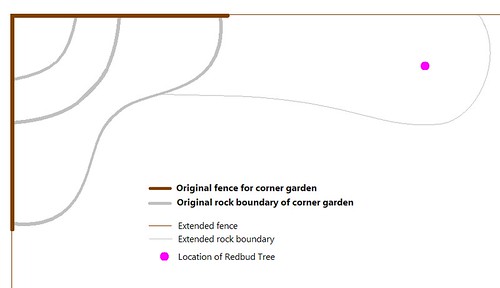
While the year-round color is a goal we expect to cover this year, we have another short-term goal that will probably be done in the next two years.  Last Spring we transplanted a Redbud tree along the fence line, about 10 feet away from our corner garden.  We have been talking about expanding the corner garden along the back fence line (to the right with respect to the corner) to enclose the Redbud tree.

Here's a little sketch of the existing corner garden and original fence backing (in bold) and the planned extension (fainter line).
corner_garden_expansion
Sketch of my plan for expanding the corner garden
The existing corner garden has 3 tiers, but the extension will only be for the lowest tier level.  It will allow us to plant some more things, including some larger items, like the small "Burning Bush" shrub shown above.

What do you think of our planned expansion?
Thursday, April 2, 2009

Backyard fencing project

Primarily, the content of the posts on The Variegated Thumb is centered on plants, or at least orbits around the topic of plants.  This post is in a more distant orbit than most of my others.

pup_portrait
Pippa (Boxer, left) and Pee-Wee (Boston Terrier, right) posing for the camera
Our dog, Pippa, likes to jump our 4 foot chain link fence.  We have tried keeping surveillance on her while she is outside but she'll jump the fence so quickly we just can't keep up with her.  We tried putting her on a chain the backyard, but she just broke it in two.  When we go out of town, Pippa (and Pee-Wee) get to stay with their grandparents.  But sometimes it is inconvenient for the grandparents or they might even be out of town at the same time as we are.  So, it has come time for us to invest in a taller fence that will allow us to keep the dogs without monitoring.

before_poles
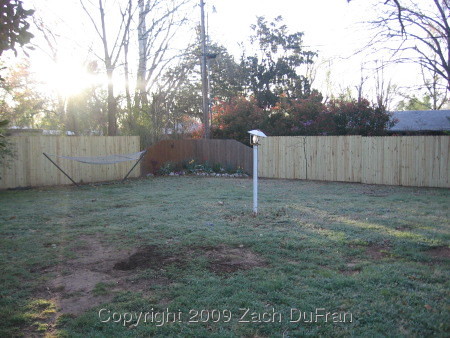
One corner of our yard before the wood fence was put in
The dogs are the impetus for erecting the fence now, but it is also a face-lift project for our backyard that we would have tackled eventually.  We have enjoyed having the open feel of the chain link fence.  We like being able to see beyond the fence and feel like we're out in the woods when we venture into our yard.  And we enjoy talking with our neighbors.  But the fence will help to make our backyard become more of the comfortable oasis we've been trying to create.

after_poles
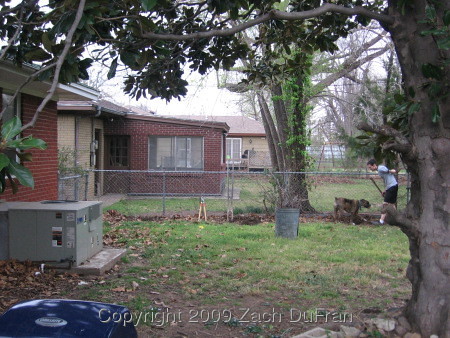
The same corner of our yard after the poles were erected
A couple of years ago we built an elevated, tiered corner garden with a fence backing.  Now the corner garden is not highlighted by the fence since we will have fence around the entire yard, but we have a long list of improvements that will help highlight the corner garden.  Actually we're planning on expanding the corner garden to run another 15 feet along the back fence (to the right) and meet the redbud tree that we planted last season.  As the overhanging trees fill out, some of our "corner" garden will be part-shade and some will be full-sun.

complete_fence
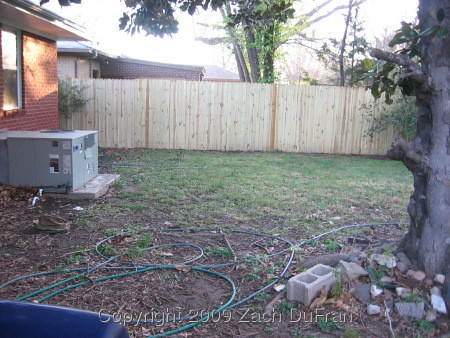
The same corner after fence has been completed
We have now completed 2/3 of our fence.  The side that remains to be built is at your back in pictures above.  We'll be tackling that portion this weekend.

For the most part, our yard is the same, we just installed the wood privacy fence inside of the chain link fence on the back of our yard and one of the sides.  We removed the chain link on the other side because our neighbor went in on the fence with us.

sideyard_before
Corner of our house prior to privacy fence.  Notice how the chain link fence was even with the back wall of our house (left side of the picture).
We also extended the fence along one side of our house, enclosing the side windows in our backyard for a little more privacy.  This has given the pups some more room to run and explore in the shade of our house.  The fence runs about 30' along the side of our house now, so that our side yard is now connected to the backyard instead of the front yard.

sideyard_after
Corner of our house with fence wrapping around side of house.  There is an extra 6' by 30' run enclosed by the wood fence that was previously part of our front yard.
We have been spending lots of time out in our yard already this summer - mainly working on the fence, but also discussing our future plans.  I will post some of my sketches and ideas a little later this month.

Plant Finds: Three new Calatheas

Last week I bid on some plants on eBay.  This was kind of a first for me and I am very satisfied with the quality of the plants and the speed in which I received them.  The auctions ended on Sunday and the plants arrived on my doorstep on Tuesday at lunchtime!

calathea_arrivals
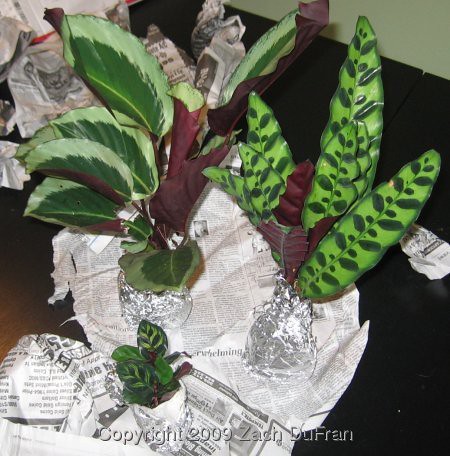
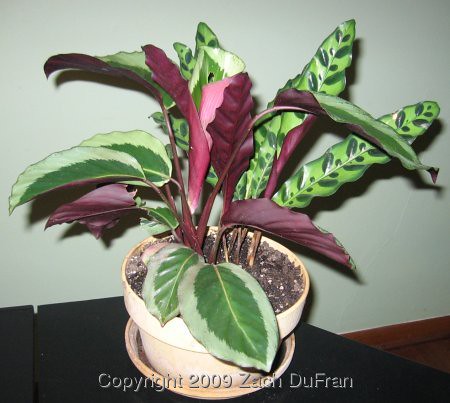
My three new Calatheas. Clockwise from top left: Calathea roseopicta 'Mia', Calathea lancifolia, Calathea makoyana.
The three plants I bought are all from the Calathea genus (commonly called Peacock plants), from the Marantaceae family (commonly called the Prayer Plants).  Since I am running low on pots, I potted the largest two species together in one medium sized pot.  I think they look pretty neat together and will look even better as they each fill out.

calatheas_mia_lancifolia
Calathea roseopicta 'Mia' and Calathea lancifolia jointly potted
Calathea lancifolia had been on my "to acquire" list for quite a while and I am really glad that I bought such a nice looking specimen.  It seems very healthy and happy.  The plant which was sold as Calathea 'Mia' looks to me like a variation of the species C. roseopicta.  I have another color variation of roseopicta, which is called 'Saturn' and has the opposite coloring on top of the leaf.  Saturn has light green center and a dark green band around the edge.

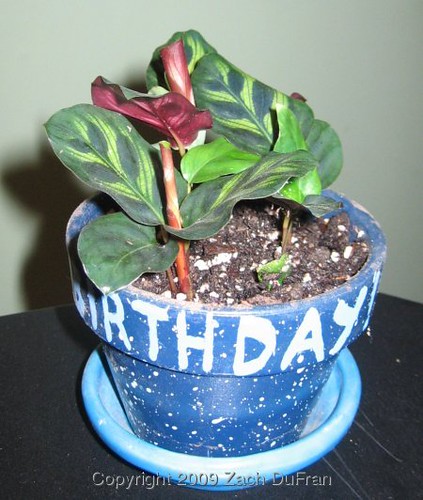
The smallest little critter I planted separately in this little pot I found in the garage.  Apparently I painted it for my wife a while back.  It says "Happy Birthday" and is a little bit too much color (in my opinion) for this plant.  I would prefer a simple pot, not to overshadow the colorful foliage of this little plant.  Anyway, that's where he will stay for now.  Maybe this summer I will move some things around and he will get a new pot.

makoyana_potted
Calathea makoyana potted
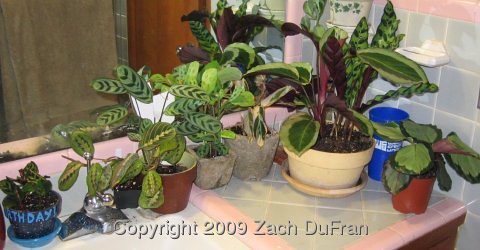
My collection of plants from the Marantaceae family is growing!  I now have plants from a total of 10 species - 4 Calathea, 3 Ctenanthe, 2 Maranta, and 1 Stromanthe species.  I moved pots around in the house this morning (it's still too cold to let them get some fresh air outdoors) and decided to move all of these plants to the bathroom counter, where most of them were already.  With the exception of my two large Ctenanthe species, all of Marantaceae plants are sitting together now.  I decided they should probably have a family portrait.

family_portrait
Marantaceae family portrait. Left to right: Calathea makoyana, Maranta leuconeura erythroneuro, Ctenenthe burle-marxii, Maranta leuconeura, Stromanthe sanguinea 'Triostar', Calathea roseopicta 'Mia', Calathea lancifolia, Calathea roseopicta 'Saturn'. [Not pictured: Ctenanthe lubbersiana 'Brazilian Snow' and Ctenanthe setosa 'Grey Star'
If you missed my other posts concerning Marantaceaes, you can see them here: